


Golden Triangle Tour Package: Delhi–Agra–Jaipur
21 stops across Delhi, Agra & Jaipur — Taj Mahal sunrise, Amber Fort, Red Fort, Qutub Minar and more. Insider timing, mistakes to avoid. Get a quote.
There's a reason most Golden Triangle trips feel rushed, and it isn't the distance — it's the sequencing. Delhi, Agra and Jaipur are close enough to do in five days, but most first-timers hit every monument at peak hours, see the Taj at the wrong gate, fight the Amber Fort crowds at noon, and spend half of Old Delhi dodging touts instead of eating. The triangle is India's most-visited route, and the gap between doing it well and doing it badly is almost entirely about when you show up and in what order.
You'll start in Delhi, where the trick is splitting old and new across mornings and evenings — Qutub Minar and Humayun's Tomb early, Red Fort and Jama Masjid when the old city wakes up, India Gate at dusk. Then Agra, where the only rule that matters is sunrise at the Taj from the east gate, first batch, no bag, no tripod — and Mehtab Bagh at sunset for the view from behind that nobody photographs properly. Then Jaipur, where Amber Fort at opening hour and the bazaars in the late afternoon are the difference between the city landing and the city exhausting you.
A few things carry the whole trip. Book monument tickets online the night before — the counter queues waste an hour you don't have. Carry small cash and water everywhere. Dress for walking, not for photos. And don't try to do all three cities in three days; four nights is the minimum for this to feel like travel instead of a dashboard tour. Get the rhythm right and the Golden Triangle is the single best introduction to North India. Get it wrong and it's a blur of car seats and crowds.
from₹9,500
Route
Home
MomentInternal Path, Seth Sarai, New Delhi

Qutub Minar
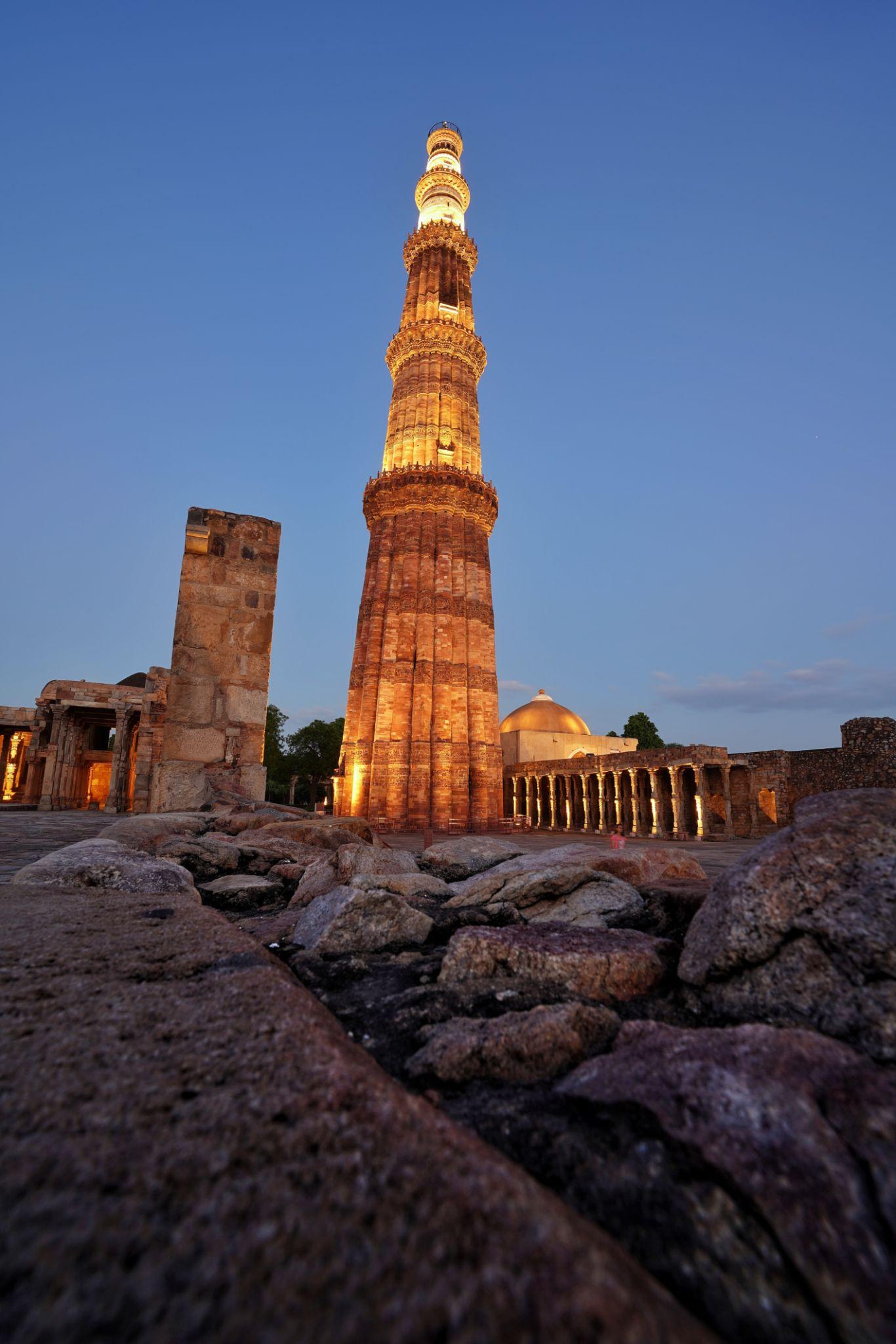
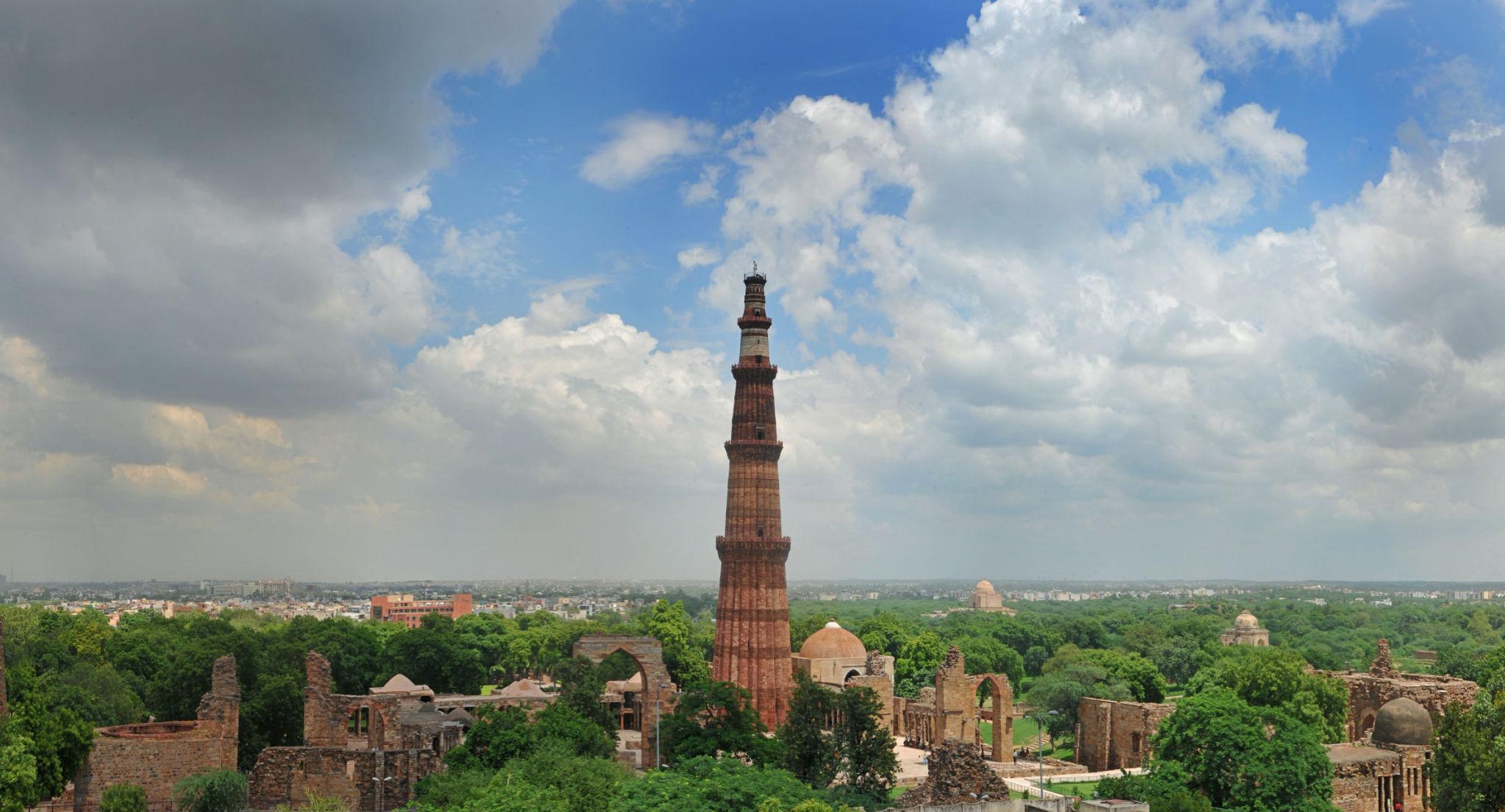
You've probably seen it on a fridge magnet. The tallest brick minaret in the world, red-and-buff sandstone spiralling up into the Delhi haze, tour groups clustered at the base. But here's the thing nobody tells you: turn up at noon on a Sunday and you'll queue in full sun, share every photo with a thousand other people, and never notice the older, stranger things scattered around the tower that are the real reason to come. A rushed midday visit to just the Minar is not the Qutub complex people remember.
Let's fix that. Here's how a visit to the Qutub Minar actually works, and how to get it right the first time.
Why early morning, and not any other hour
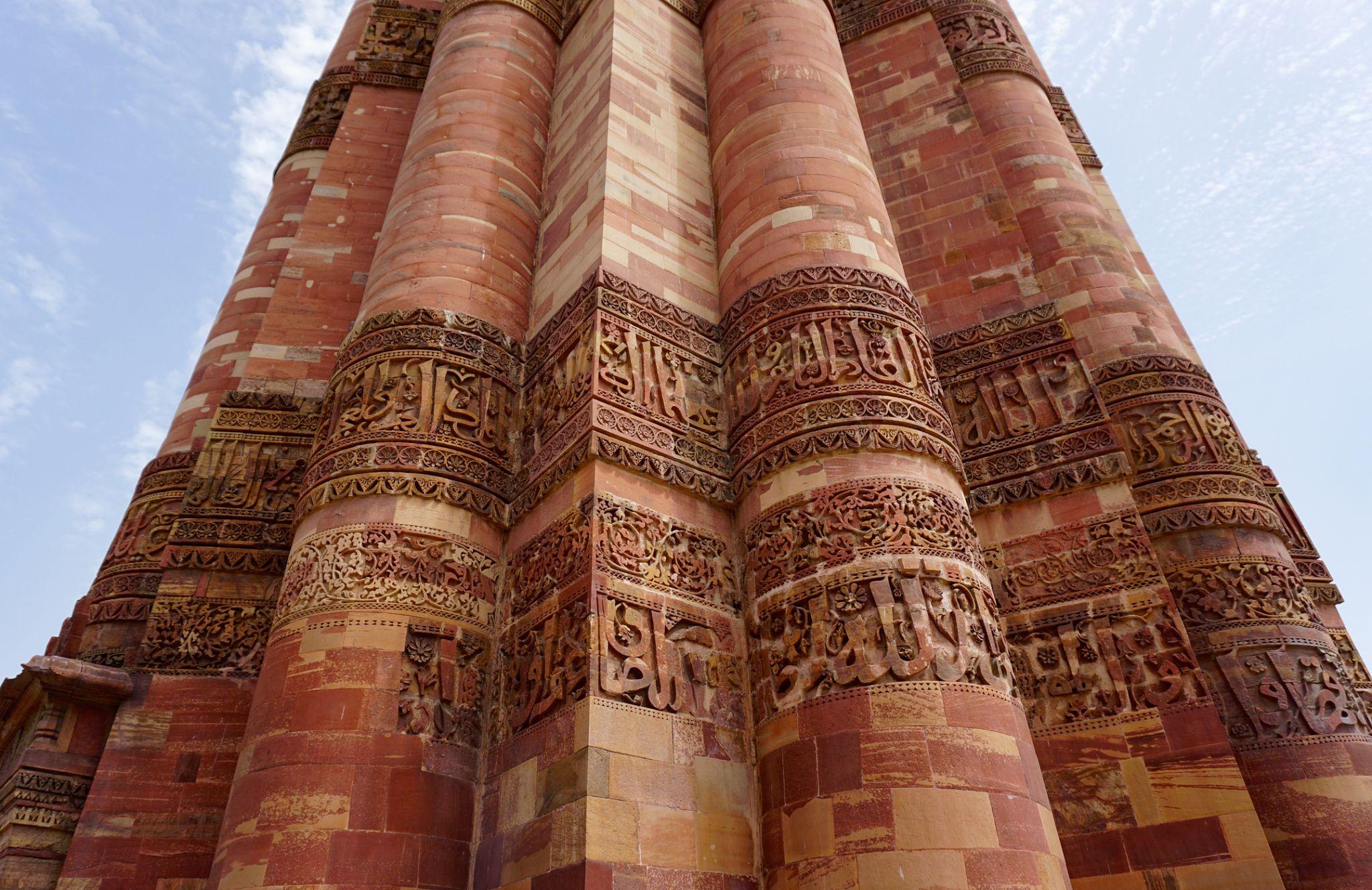
The complex opens at sunrise, and the first hour is a different place from the rest of the day. Early, the light is low and warm on the sandstone, the carving reads in sharp relief, and you can stand back far enough to actually frame the tower without a crowd in the shot. By ten or eleven the tour buses land, the light goes flat and harsh, and the lawns fill.
Delhi's heat makes this matter more than at most sites — from April to September, midday here is genuinely punishing, and the shade is thin. So aim to be at the gate when it opens, around sunrise, and you'll have the best light and the coolest, quietest hour of the day before the crowds arrive.
What you'll actually see
The Minar is the headline, but the complex around it is the real depth — allow a good ninety minutes:
The Qutub Minar — the 73-metre victory tower begun by Qutb-ud-din Aibak around 1199, its balconies and fluting carved with inscriptions.
The Iron Pillar — a 1,600-year-old iron column that famously hasn't rusted, a genuine metallurgical mystery.
Quwwat-ul-Islam Mosque — one of India's earliest mosques, built partly from the carved stone of demolished earlier temples, which you can still read in the pillars.
Alai Darwaza and Alai Minar — the ornate gateway, and the stump of a second tower meant to dwarf the first, abandoned unfinished.
Carry water and something for the sun even in the cooler months. There's little shade, and the complex is bigger than it looks.
And keep your phone down for the first few minutes. Travellers who've been will tell you the same thing: the urge is to shoot the tower straight away, but the scale and the carving land differently when you just look first. The height of it, the detail worked into stone eight centuries old, the quiet before the crowds — that's the part the photos never quite catch.
Pro tip: Book your ticket online in advance to skip the counter queue, and note you can no longer climb the tower — entry to the interior stairs has been closed to the public for years, so come for the complex, not the climb. Hire a licensed guide at the gate or read up beforehand, because the Iron Pillar and the reused temple stone mean nothing without the story. And come on a weekday if you can; weekends and holidays multiply the crowds.
The mistakes that ruin the visit
Most first-timers trip over the same few things. They arrive at midday and melt in the queue. They photograph the tower and leave, missing the Iron Pillar and the mosque. Or they expect to climb it and are disappointed to find the interior closed.
The easy fix is to come early, give the whole complex time, and know what you're looking at — so it's a rich morning rather than a hot photo stop.
Want Qutub Minar timed to the quiet hour with the hidden Iron Pillar story included? Hit Get a quote — we'll plan the morning.
MomentJ-6, Nizamuddin, New Delhi

Humayun's Tomb
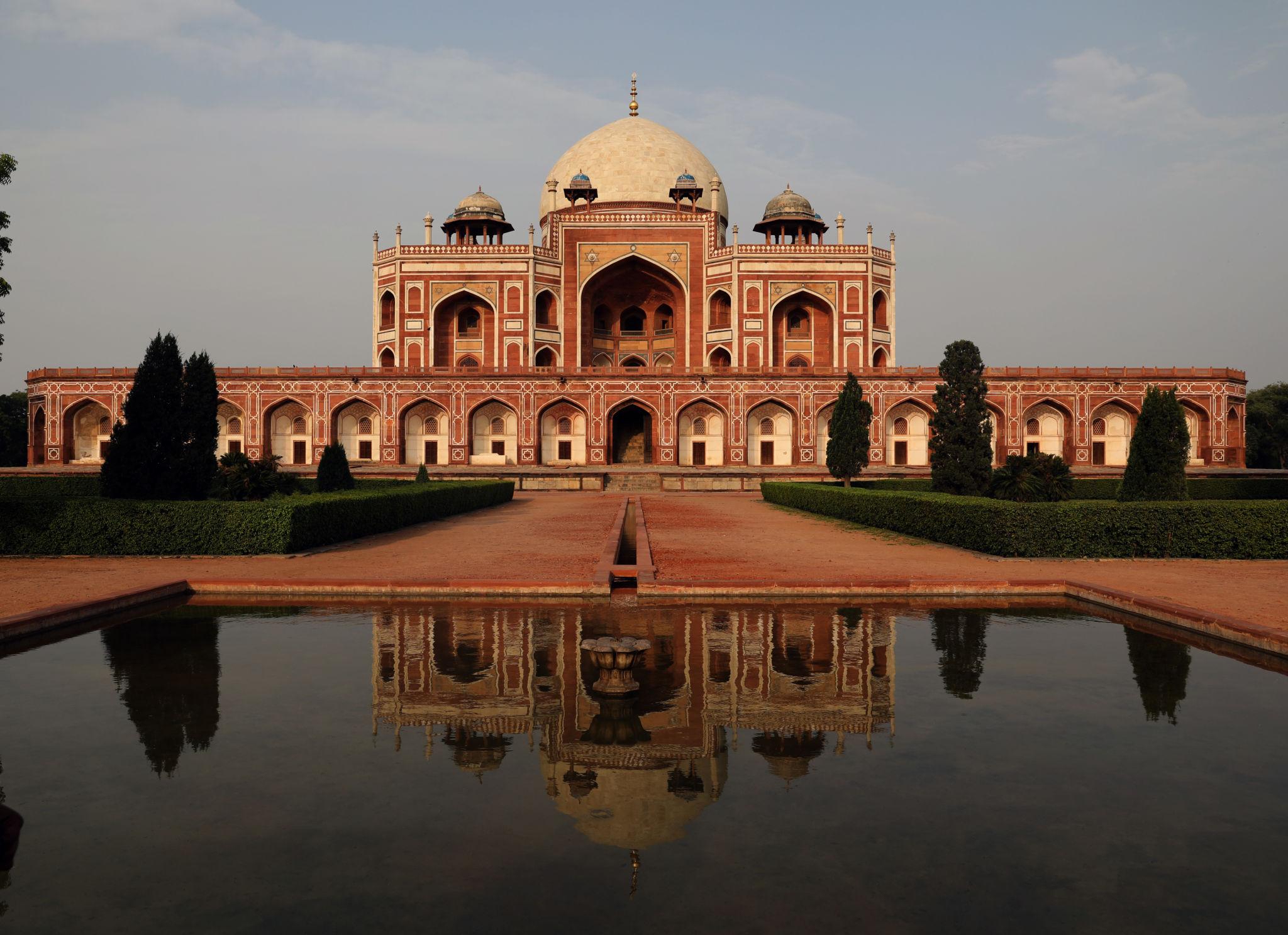
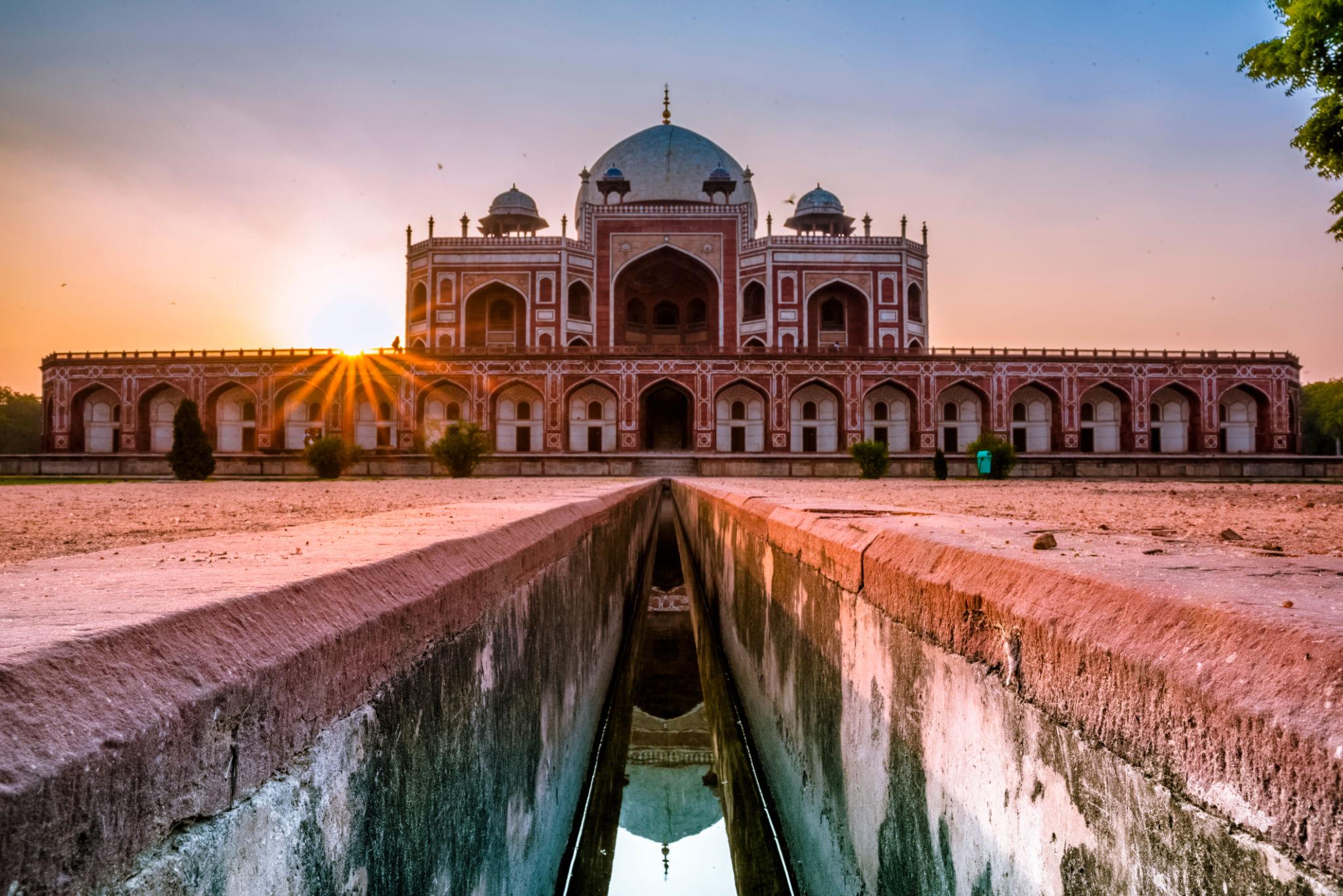
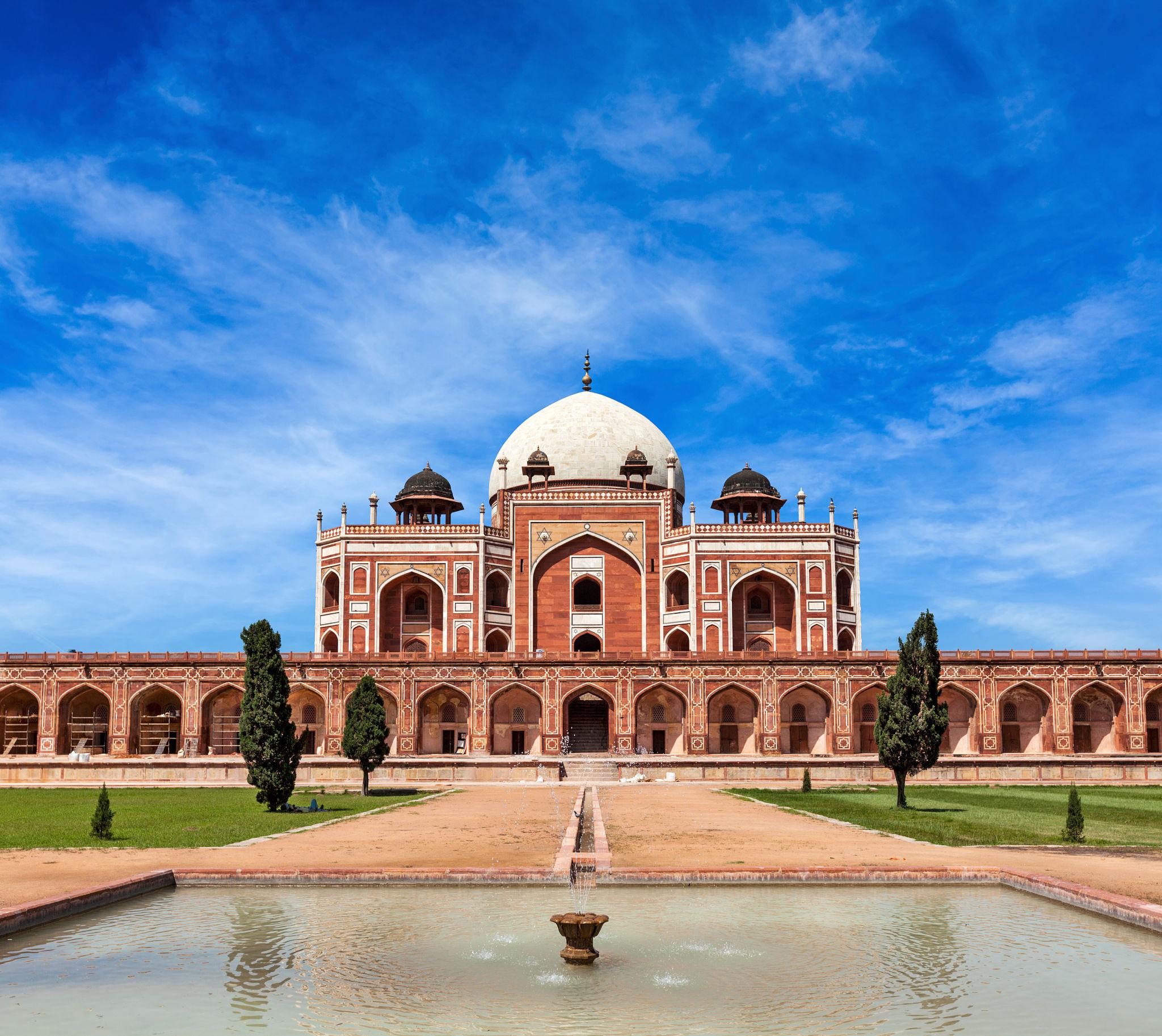
You've probably seen it called "the baby Taj." A great domed Mughal tomb in the middle of Delhi, red sandstone and white marble, gardens all around — and most people give it forty minutes on the way to somewhere else. But here's the thing nobody tells you: turn up at noon in a tour-bus crush and you'll trudge a hot, hard-lit monument in a hurry, miss the four other tombs hidden in the same complex, and never understand that this is the building the Taj Mahal was copied from. Rushed and mistimed, it's just a big dome.
Let's fix that. Here's how a visit to Humayun's Tomb actually works, and how to get it right the first time.
Why early or late, and not the middle of the day
The tomb sits in a classic charbagh — a four-part paradise garden — and it lives and dies by the light. At midday the sandstone glares, the marble goes flat, the lawns bleach out, and Delhi's heat makes the whole thing a slog. In the first hour after opening, or the last hour before close, the low sun warms the red stone, the dome catches gold, and the long garden axes throw shadow and depth.
So come at opening, around sunrise, or late afternoon toward golden hour — and give it more than a token half hour. This is a UNESCO World Heritage Site and the first great garden-tomb of the Mughals; it rewards the time the crowds don't give it.
What you'll actually see
The famous dome is only the centrepiece — the complex holds far more:
Humayun's Tomb itself — the 1570s mausoleum, built by the emperor's widow, the template for the Taj eighty years later.
Isa Khan's Tomb — an octagonal garden-tomb older than Humayun's, just inside the entrance, and often walked past.
The Bu Halima and Arab Sarai gardens — the sequence of courts you pass through to reach the main tomb.
Nila Gumbad and the wider complex — blue-tiled and lesser-visited, part of the restored heritage precinct.
Wear proper walking shoes and carry water and sun cover — the complex is large, open, and hot, and you'll be on your feet across gravel and lawn for a couple of hours.
And unlike a temple, this is a place built to be looked at, so do get the camera out — but look first. Travellers who rush it will tell you the same thing: everyone shoots the dome head-on from the entrance and leaves, and that single photo misses the symmetry, the receding arches, the way the garden channels the eye. Stand at the axis and take in the geometry before you frame it. The scale, the proportion, the quiet of the gardens early in the day — that's the part the head-on photo never quite catches.
Pro tip: Buy your ticket online to skip the queue, and come right at opening or late afternoon for the light and the calm. Don't miss Isa Khan's Tomb near the entrance — most people march straight past it to the big dome. And pair the visit with the Nizamuddin Dargah just next door, especially for the Thursday-evening qawwali, to round out a properly Mughal-Delhi afternoon.
The mistakes that ruin it
Most first-timers trip over the same few things. They come at midday and wilt in flat light and heat. They give it half an hour and see only the main tomb. Or they photograph the dome once from the gate and never walk the gardens or the side tombs.
The easy fix is to come early or late, give it a proper two hours, and let someone point you to the parts of the complex the crowds skip. is considered one of the finest examples of Mughal architecture.
Want Humayun's Tomb at golden hour with a guide who knows the hidden tombs most visitors walk past? Hit Get a quote.
MomentDelhi High Court, Delhi, New Delhi

India Gate
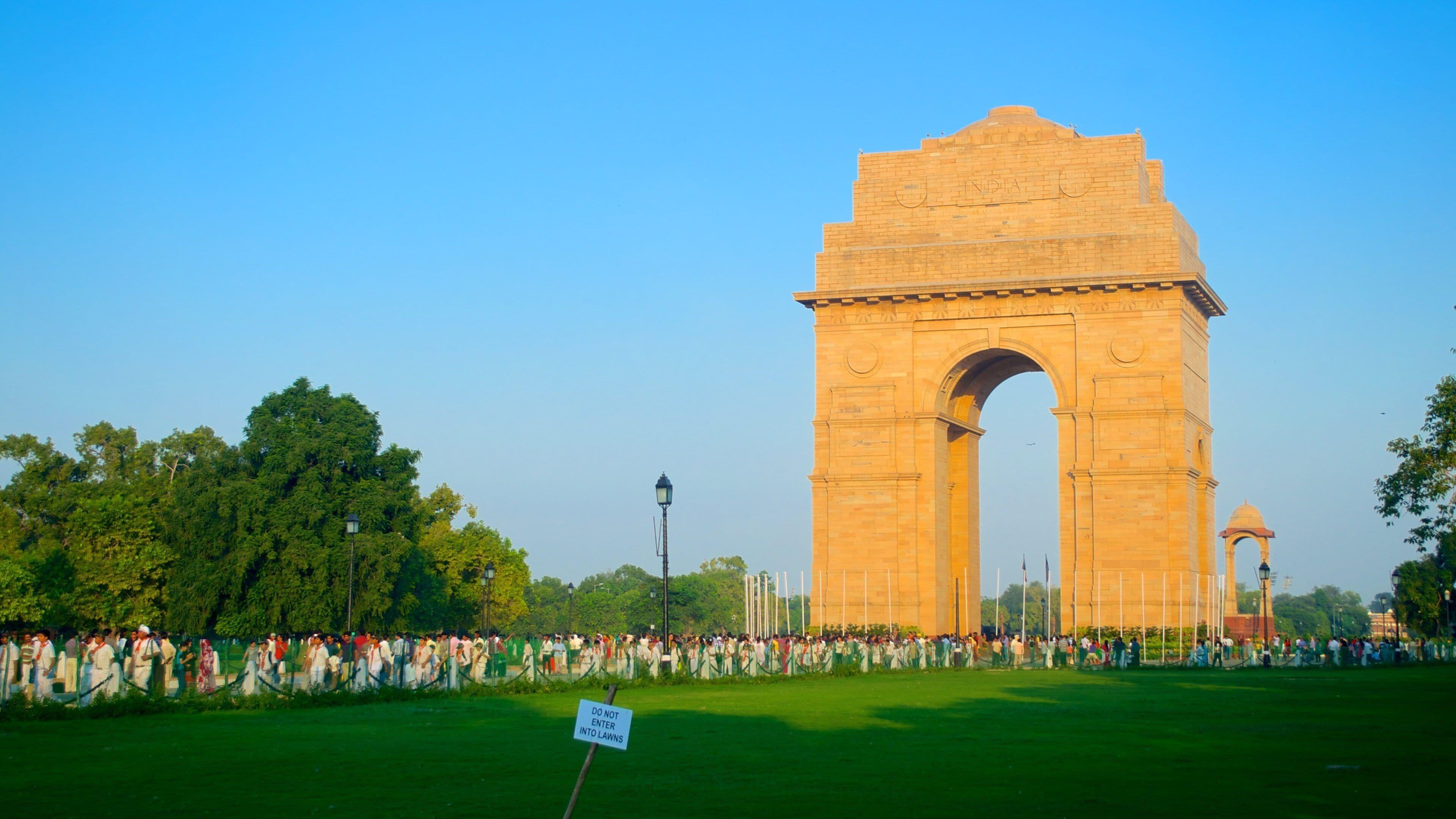
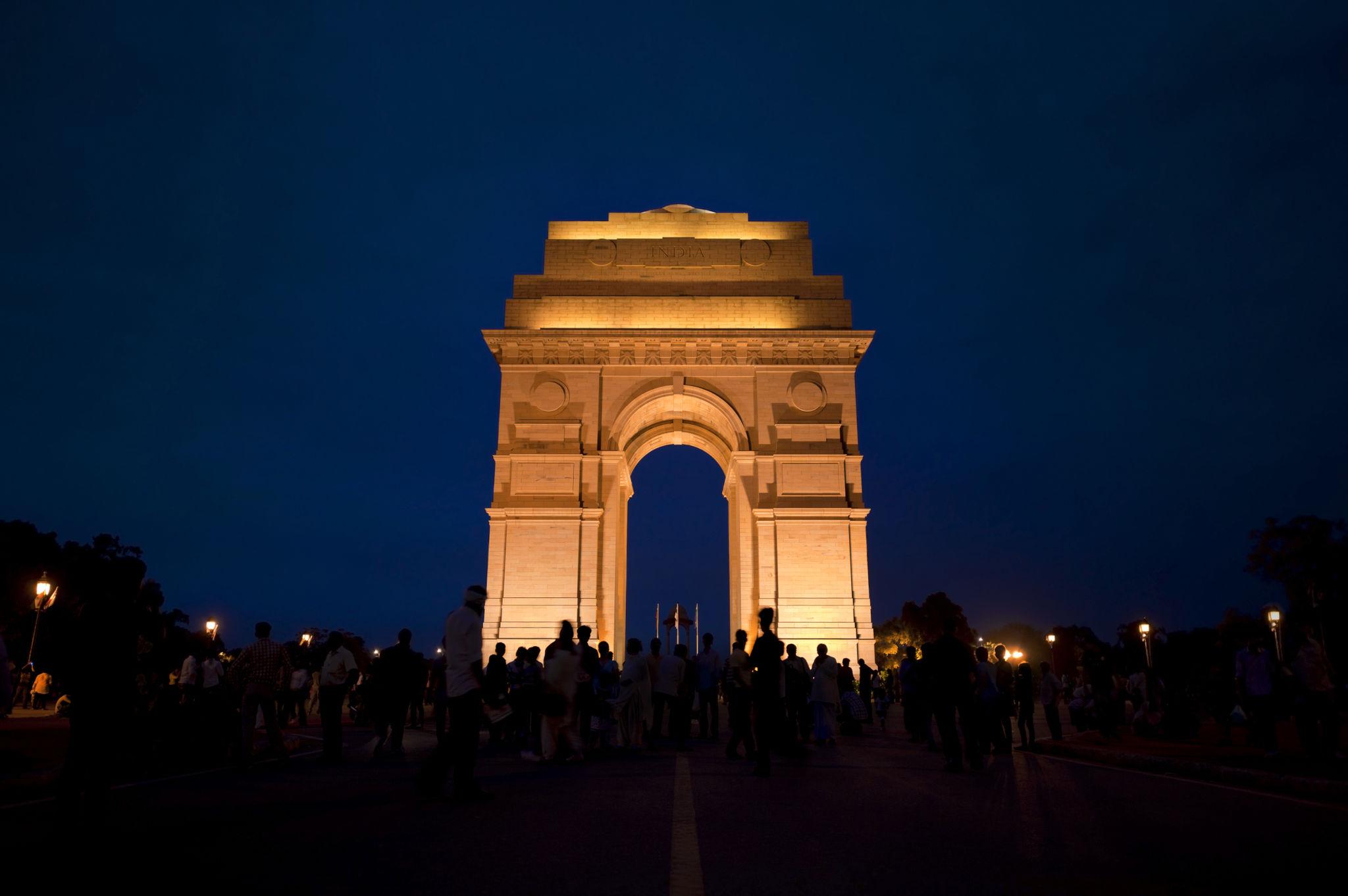
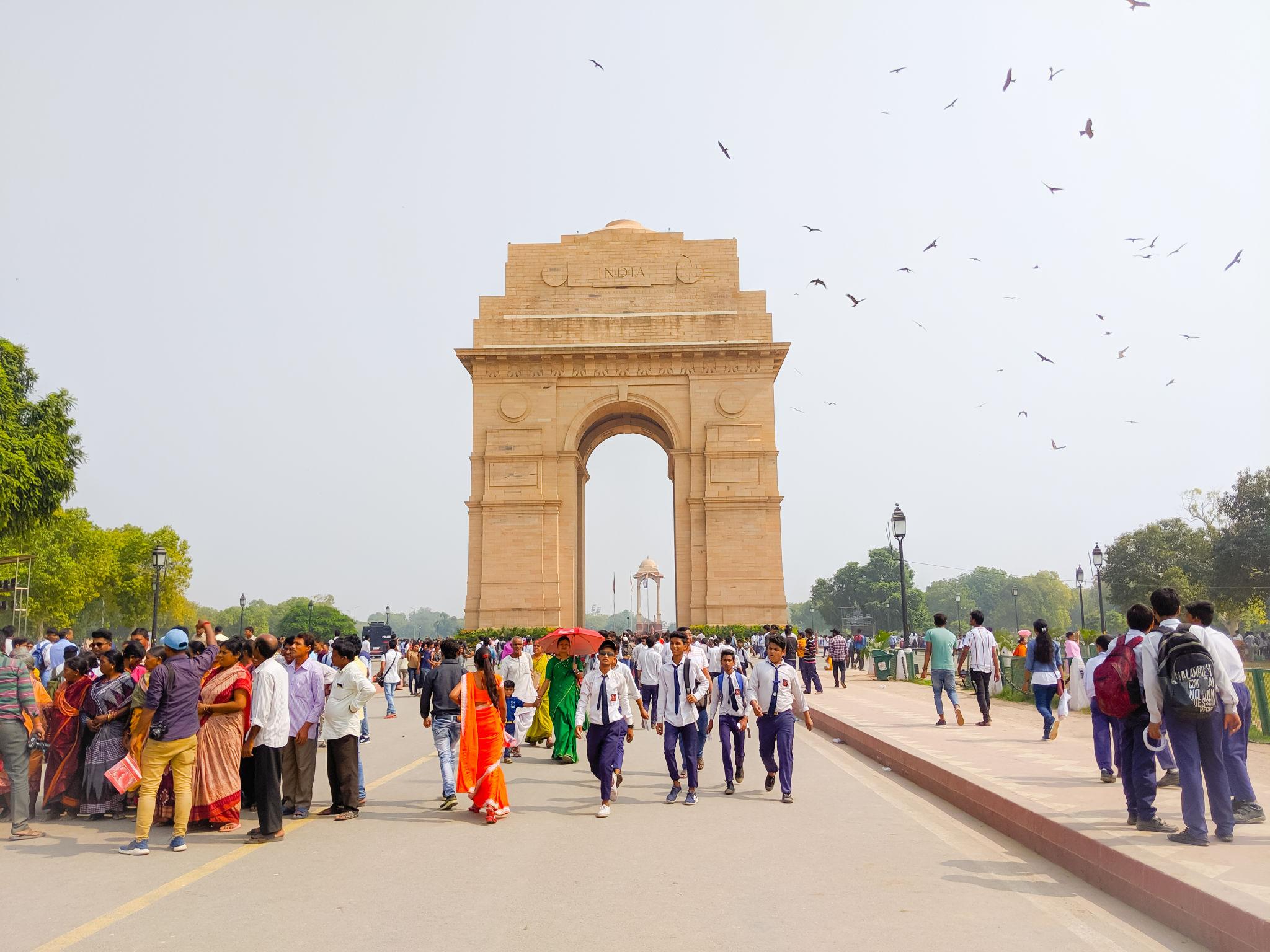
You've probably seen it lit up at night in a hundred photos — the great archway glowing against a dark sky, lawns full of families, ice-cream carts everywhere. But here's the thing nobody tells you: turn up at the wrong hour and you'll get a hazy silhouette in flat afternoon light, a car park's worth of crowds, and a war memorial reduced to a backdrop for selfies. The India Gate that actually moves people is a different experience, and it comes down to when you go.
Let's fix that. Here's how a visit to India Gate actually works, and how to get it right the first time.
Why evening, and not the middle of the day
India Gate changes character by the hour. Delhi's afternoons are hot, bright and hazy, and the monument washes out in the glare with heat shimmering off Kartavya Path. Come at dusk instead and it transforms — the sandstone warms in the low sun, the lights come on, the fountains along the promenade are lit, and the whole stretch fills with families out for the evening.
So you want to arrive in the last hour of daylight and stay into the night. That means late afternoon in winter, a little later in summer. It's also far cooler then, which matters more than you'd think on an exposed, treeless promenade. The monument by night is the one people remember.
What you'll actually see
Standing 42 metres tall at the end of Kartavya Path, India Gate is a war memorial to the soldiers of the British Indian Army who died in the First World War and the Third Anglo-Afghan War. Around it you'll find:
The arch itself — inscribed with the names of thousands of fallen soldiers, best seen lit after dark.
The Amar Jawan flame and the National War Memorial — the eternal-flame tribute now sits at the War Memorial just behind, honouring India's post-independence fallen.
Kartavya Path — the redeveloped ceremonial avenue running up toward Rashtrapati Bhavan, with lawns, fountains and food stalls.
The evening crowds — families, balloon sellers, and the chaat and ice-cream carts that are half the experience.
Carry water and, in winter, a layer for after sunset. It's an open, exposed space with little shade.
And keep your phone down for the first few minutes when you arrive. Travellers who've stood here will tell you the same thing: the urge is to photograph the arch straight away, but it lands differently when you take it in first — a memorial to tens of thousands of names, in the middle of a city treating it as an evening out. That contrast, and the flame burning at the National War Memorial behind, is the part the photos never quite catch.
Pro tip: Come at dusk to catch the monument in daylight and lit, rather than one or the other. Vehicle access right up to the gate is restricted, so plan to walk the last stretch along Kartavya Path — pleasant in the evening, brutal at midday. Use the Central Secretariat or Udyog Bhawan Metro rather than driving into the congestion. And keep it respectful near the National War Memorial: it's an active site of remembrance, not a photo prop.
The mistakes that ruin the visit
Most first-timers trip over the same few things. They come at 2 p.m. in the heat and haze and see a washed-out arch. They drive in and lose an hour to traffic and parking. Or they treat the National War Memorial like a backdrop rather than the solemn place it is.
The easy fix is to arrive in the evening, come by Metro, and give the memorial the few minutes of attention it asks for before the ice cream.
Want India Gate, Kartavya Path and Rashtrapati Bhavan timed to the evening light in one clean loop? Hit Get a quote.
MomentChhippy Wada, Chandni Chowk, Delhi


Delhi's Vibrant Dining Scene
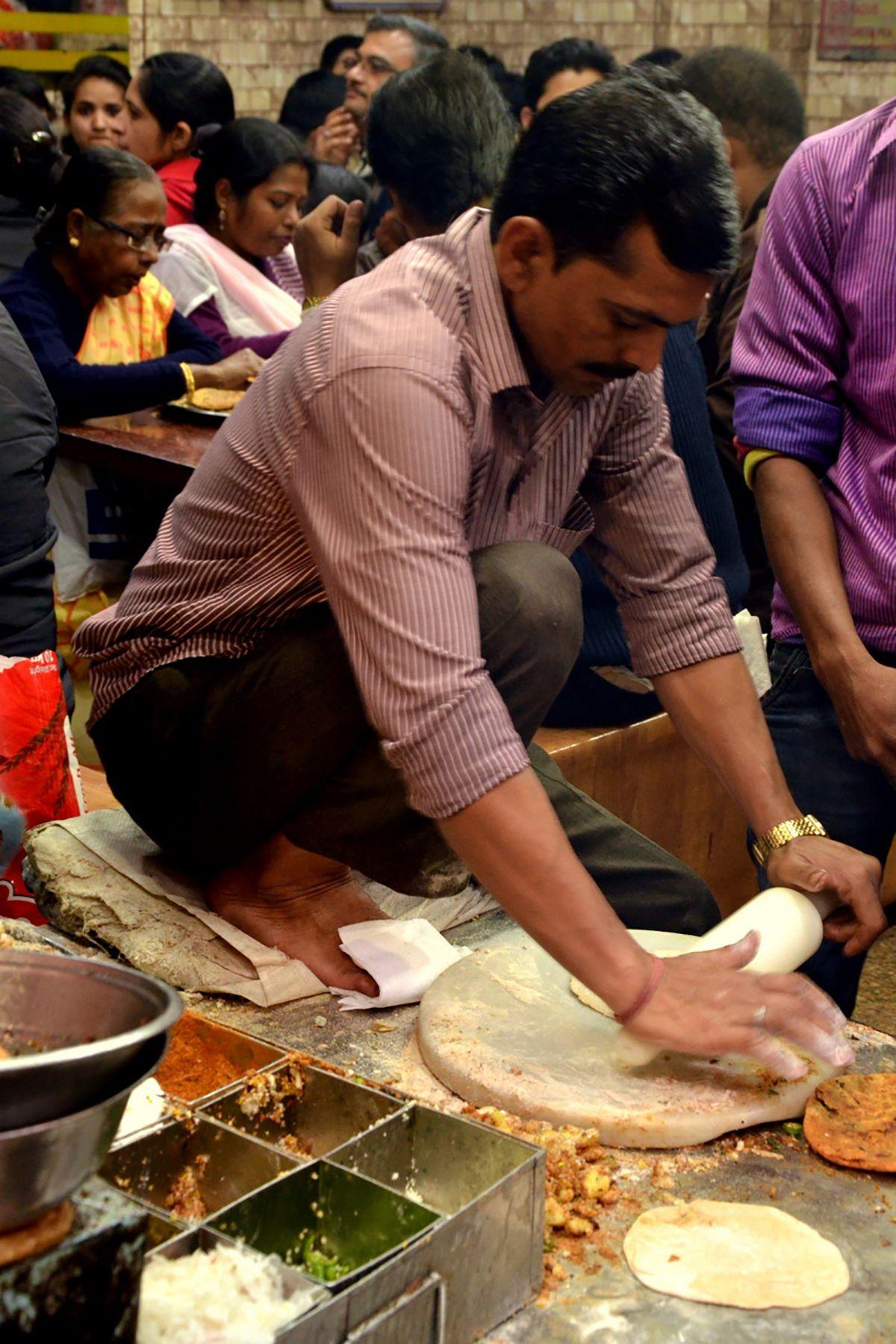
You've probably seen the reels. Overflowing plates of chaat, butter chicken glistening under lights, a paratha the size of a steering wheel. But here's the thing nobody tells you: wander into the first place that looks busy, order the same three dishes everyone photographs, and you'll eat a decent meal and miss the actual city. Delhi doesn't have a food scene — it has a dozen, layered by neighbourhood and century, and the tourist version is the thinnest one.
Let's fix that. Here's how eating in Delhi actually works, and how to get it right the first time.
Why the neighbourhood decides the meal
Delhi's food isn't spread evenly — it's pinned to place. Old Delhi, around Chandni Chowk and Jama Masjid, is the Mughlai and street-food heartland: kebabs, nihari, jalebi, the recipes that came with the empire. Central Delhi's markets — Khan Market, Connaught Place — are where the modern, cross-India, and international kitchens sit. South Delhi runs from Punjabi institutions to the city's fine-dining edge. And the little enclaves — the Tibetan food of Majnu-ka-Tila, the South Indian of a dozen Udupi halls — are cities of their own.
So the question isn't "what should I eat," it's "where am I, and what does this quarter do best." Go to Old Delhi for a fine-dining tasting menu and you've missed the point; order a kebab in a Khan Market café and you've paid triple for a lesser one.
What you'll actually eat
A few things Delhi does better than anywhere:
Old Delhi street food — parathas at Paranthe Wali Gali, kebabs and nihari around Jama Masjid, jalebi, and daulat ki chaat in winter.
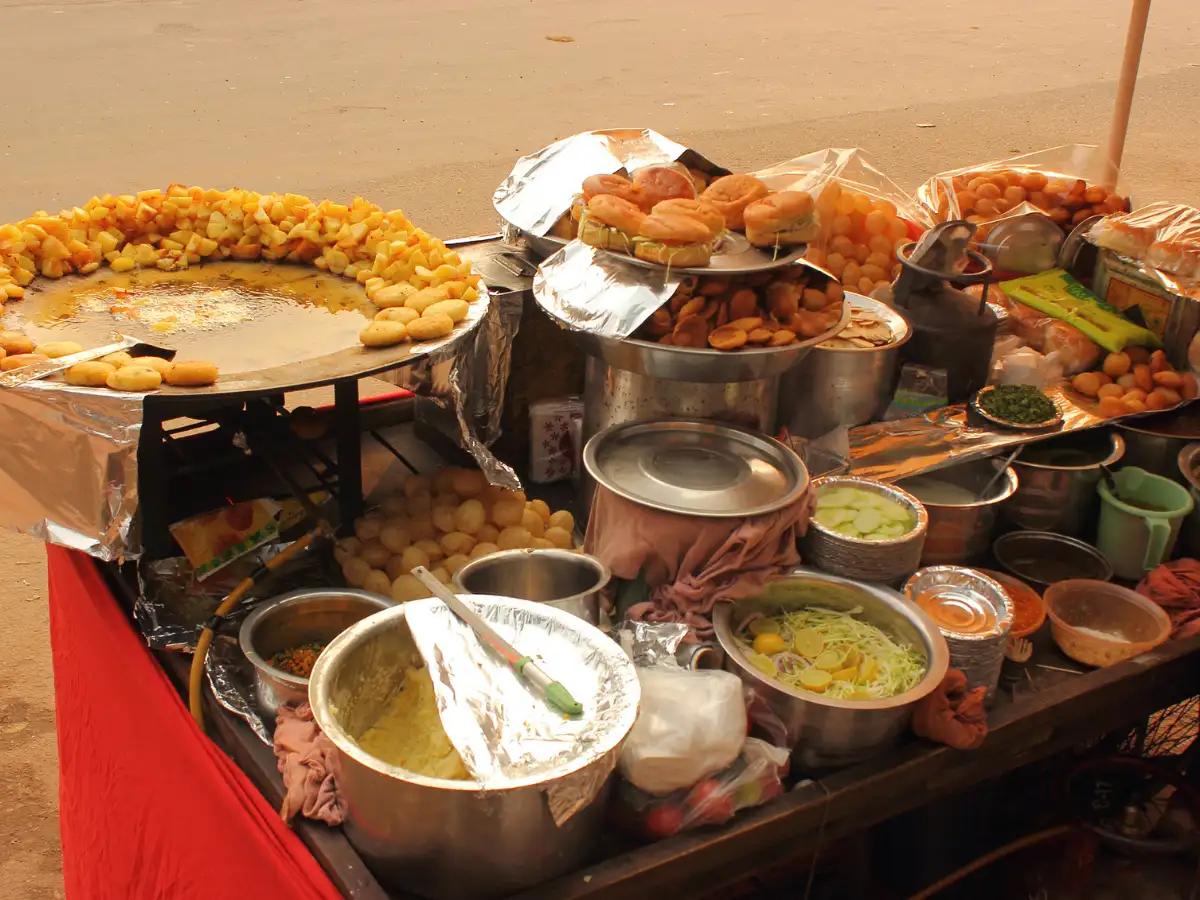
Chaat — golgappe, aloo tikki, papdi — best from a busy stall with high turnover, not a sit-down restaurant.
Mughlai — butter chicken (invented here), dal makhani, kebabs, biryani.
Regional India — South Indian, Bengali, Rajasthani, the Northeast, all with their own strongholds.
Come hungry and pace yourself — the mistake is filling up at the first stall. And carry cash in small notes; the best street vendors don't take cards.
And here's the one place the phone helps rather than hurts: use it. Travellers who eat well in Delhi will tell you the same thing — check where the locals queue, not where the photos are prettiest. A stall with a crowd of office workers at 1 p.m. is telling you something a filtered reel can't. That instinct for where the line is real is the part the photos never quite catch.
Pro tip: Eat where it's busy and fresh. High turnover means the food hasn't been sitting, which is your best defence against a bad stomach — and it's usually where the flavour is too. Start with cooked, hot, made-to-order food before raw chutneys and cut fruit if your gut isn't used to the water. Drink bottled or filtered water only, and go easy on ice. And do a guided food walk in Old Delhi on your first day if you can — a local leads you to the right stalls in a maze that's genuinely hard to navigate solo, and you'll eat far better for the rest of the trip.
The mistakes that ruin it
Most first-timers trip over the same few things. They eat only near their hotel and never reach the neighbourhoods that matter. They fill up on the first thing they see. Or they dive straight into raw street chaat on day one and spend day two in the bathroom.
The easy fix is to eat by neighbourhood, follow the local crowds, and ease your stomach in — or let a food-focused guide handle the where and the what on your first day so the rest of the trip is easy.
Want the real Old Delhi food walk — Chandni Chowk lanes, right stalls, no tourist traps? Hit Get a quote — we'll map the route.
MomentLal Qila, Chandni Chowk, Delhi

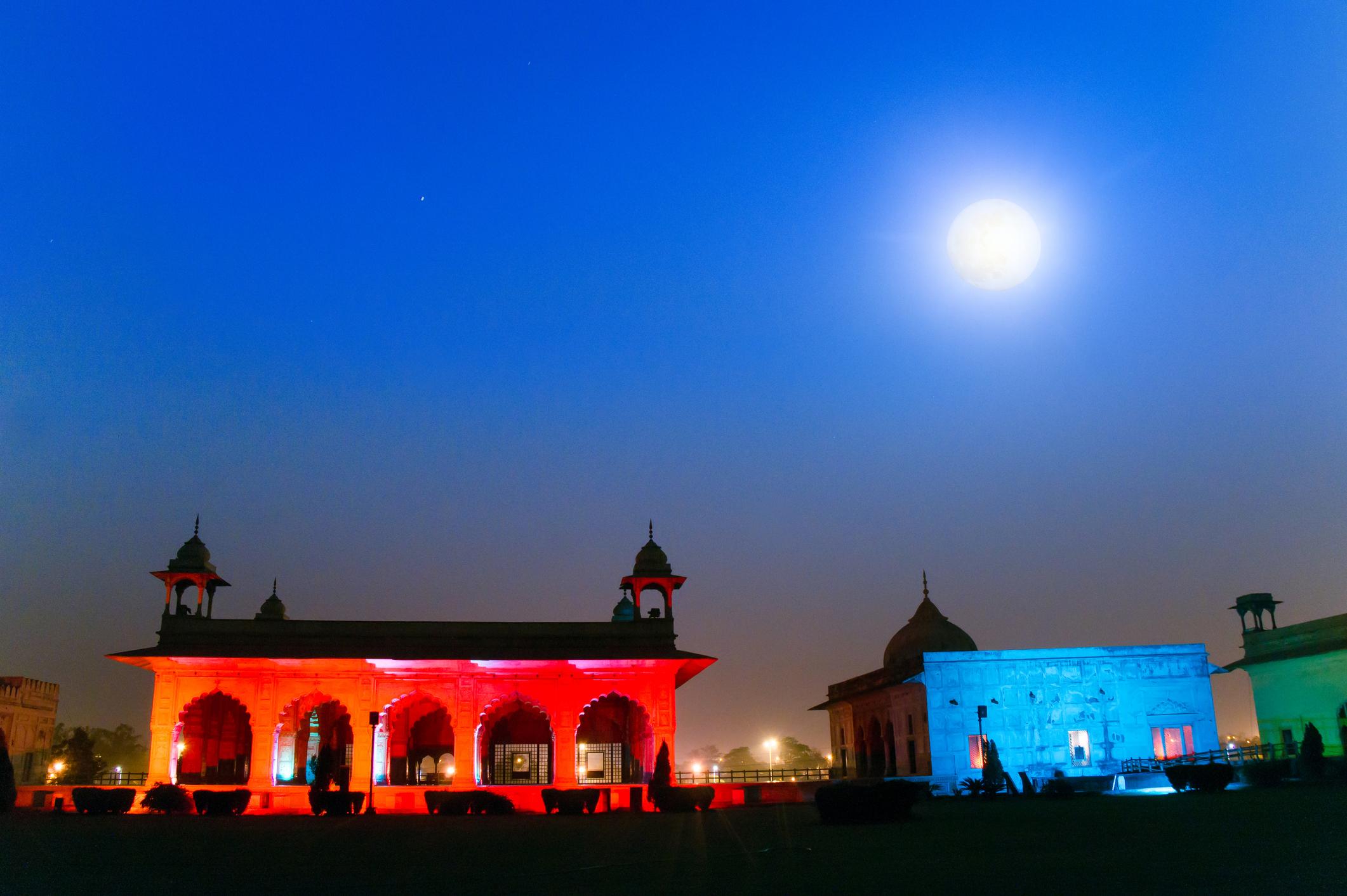
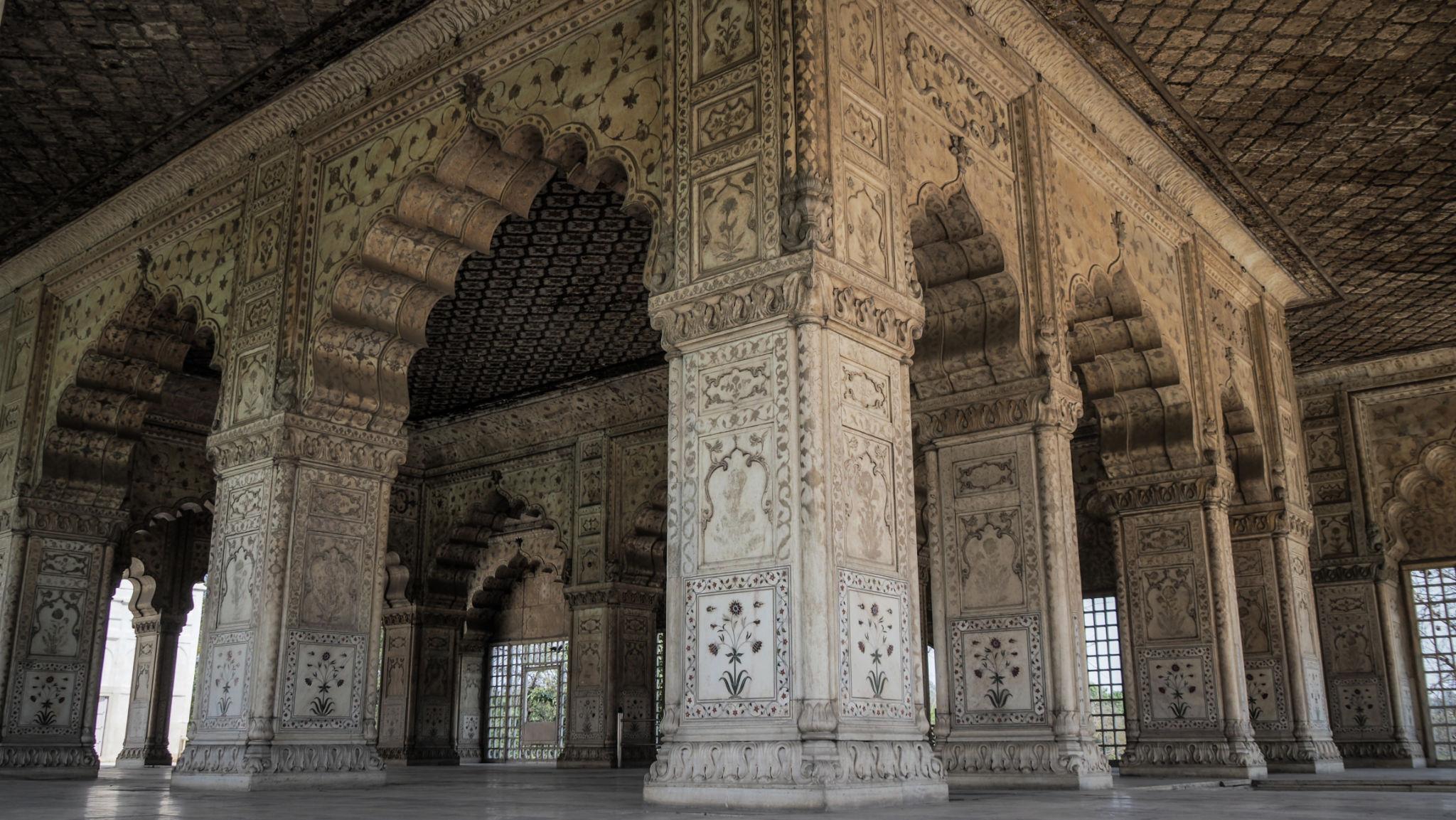
Red Fort Delhi
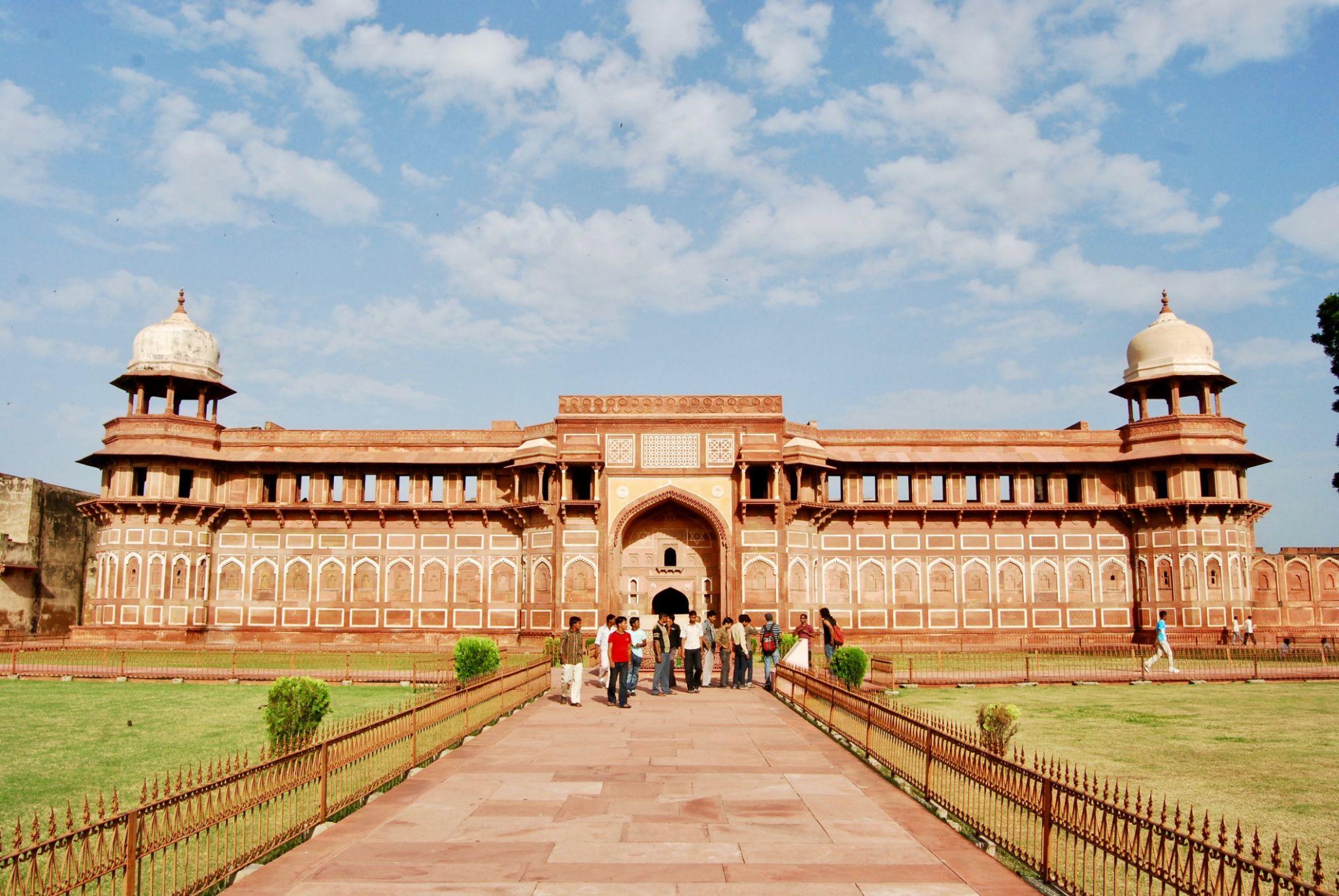
You've probably seen it a hundred times without going in. The long red sandstone wall on the news every Independence Day, the ramparts on the back of the old ten-rupee note. But here's the thing nobody tells you: turn up at noon in May, walk in without a plan, and you'll trudge a vast sunbaked complex in forty-degree heat, see the same souvenir stalls everyone photographs, and leave in an hour wondering what the fuss was. A rushed, midday Red Fort is not the Mughal capital people mean.
Let's fix that. Here's how a visit to the Red Fort actually works, and how to get it right the first time.
Why early morning, and not any other hour
The fort changes character by the hour. Right after it opens, it's cool, quiet, and the low sun sets the sandstone glowing red — the colour it's named for. You'll have the long approach through Lahori Gate and the Chatta Chowk bazaar almost to yourself, and the marble palaces along the far wall catch the morning light. By eleven the tour buses and school groups arrive, the heat builds, and the calm is gone.
So aim to be at the gate for opening, around sunrise-ish depending on the season — and note it's closed every Monday, which catches people out constantly. It's early, but it's the difference between a monument and a mob.
What you'll actually see
Entering through Lahori Gate, allow two to three hours. Along the way:
Chatta Chowk — the covered bazaar just inside the gate, once where the court's jewellers and weavers sold.
Diwan-i-Aam — the hall of public audience, where the emperor heard petitions.
Diwan-i-Khas — the hall of private audience, once home to the Peacock Throne; the inscription calling it "heaven on earth" is here.
Rang Mahal and the Khas Mahal — the marble palaces along the Yamuna-facing wall.
The museums — including the archaeological and the 1857 galleries.
Carry water and a hat even in the cooler months — the open courtyards have almost no shade.
And keep your phone away for the first few minutes at the Diwan-i-Khas. Travellers will tell you the same thing: the urge is to photograph the marble immediately, but it lands differently when you take in the pietra dura and the scale of it first. The inlay, the carved screens, the quiet of an empty audience hall — that's the part the photos never quite catch.
Pro tip: Book your ticket online in advance to skip the queue at the counter, and go early on a weekday that isn't Monday. Security is airport-tight — large bags aren't allowed and there's limited cloakroom, so travel light with just ID, water and a small camera. The paid evening sound-and-light show ("Son et Lumière") tells the fort's history well if you'd rather come at dusk, but check it's running and in a language you follow before you commit.
The mistakes that ruin the visit
Most first-timers trip over the same few things. They come on a Monday and find it shut. They arrive at midday in summer and wilt in the treeless courtyards. Or they walk in with no sense of what they're looking at and drift past the Diwan-i-Khas without knowing what happened there.
The easy fix is to come early on an open day with a ticket in hand and a little context — or take a guide, so the empty halls actually tell you their story.
Want Red Fort early with a guide who skips the crowd spots and finds the Mughal chambers? Hit Get a quote— we'll time it right.
MomentJama Masjid, Delhi, New Delhi

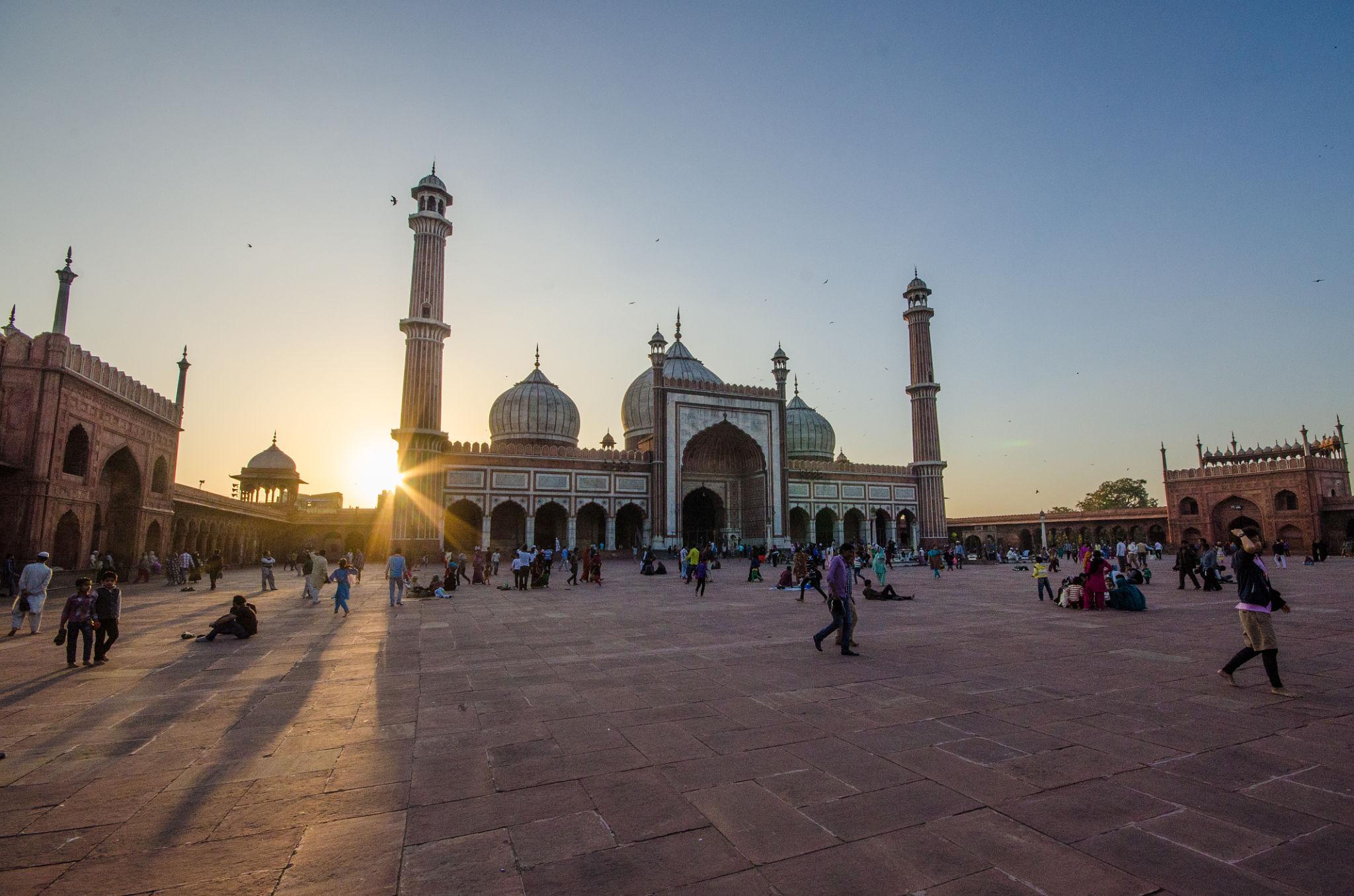
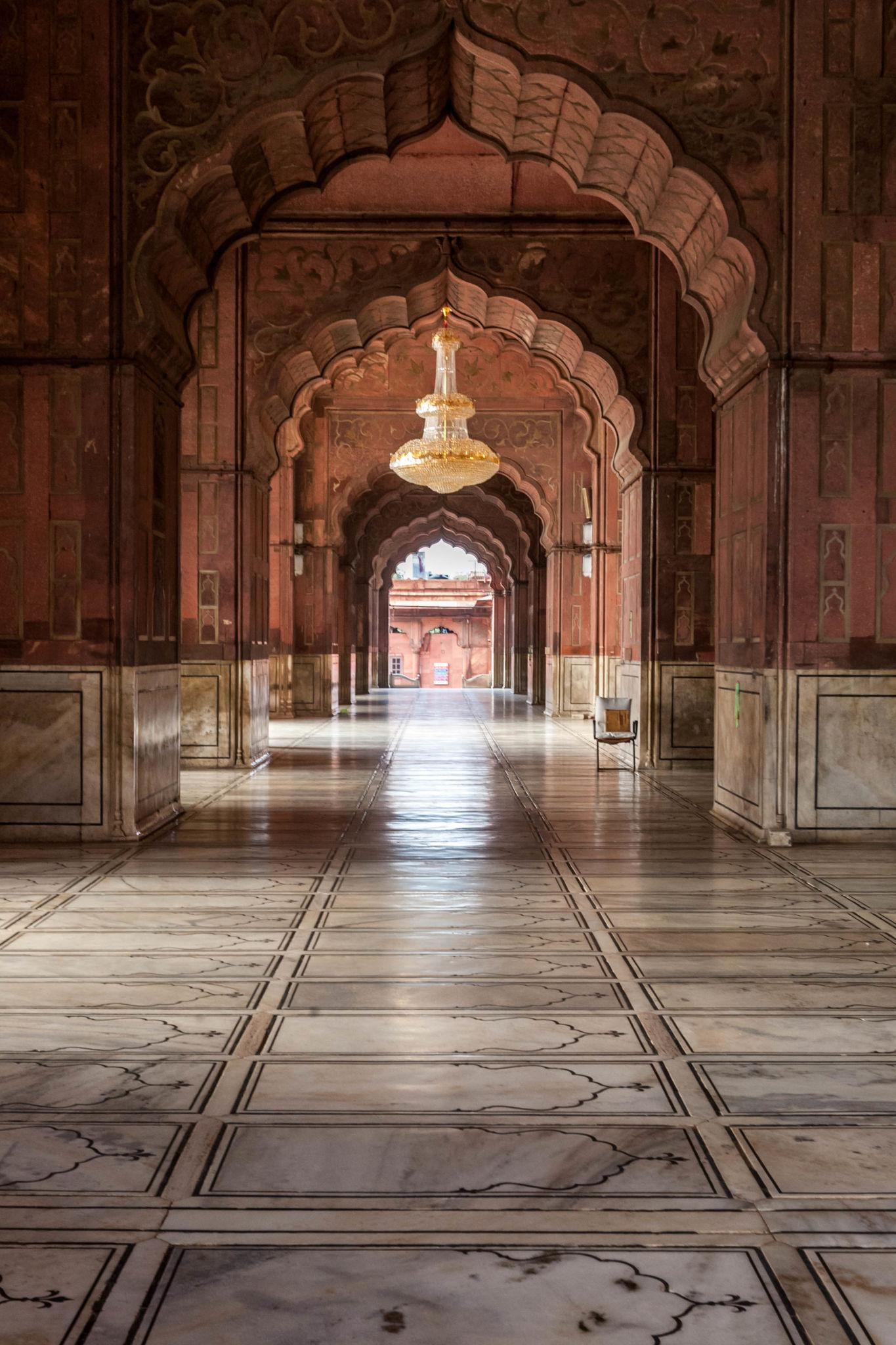
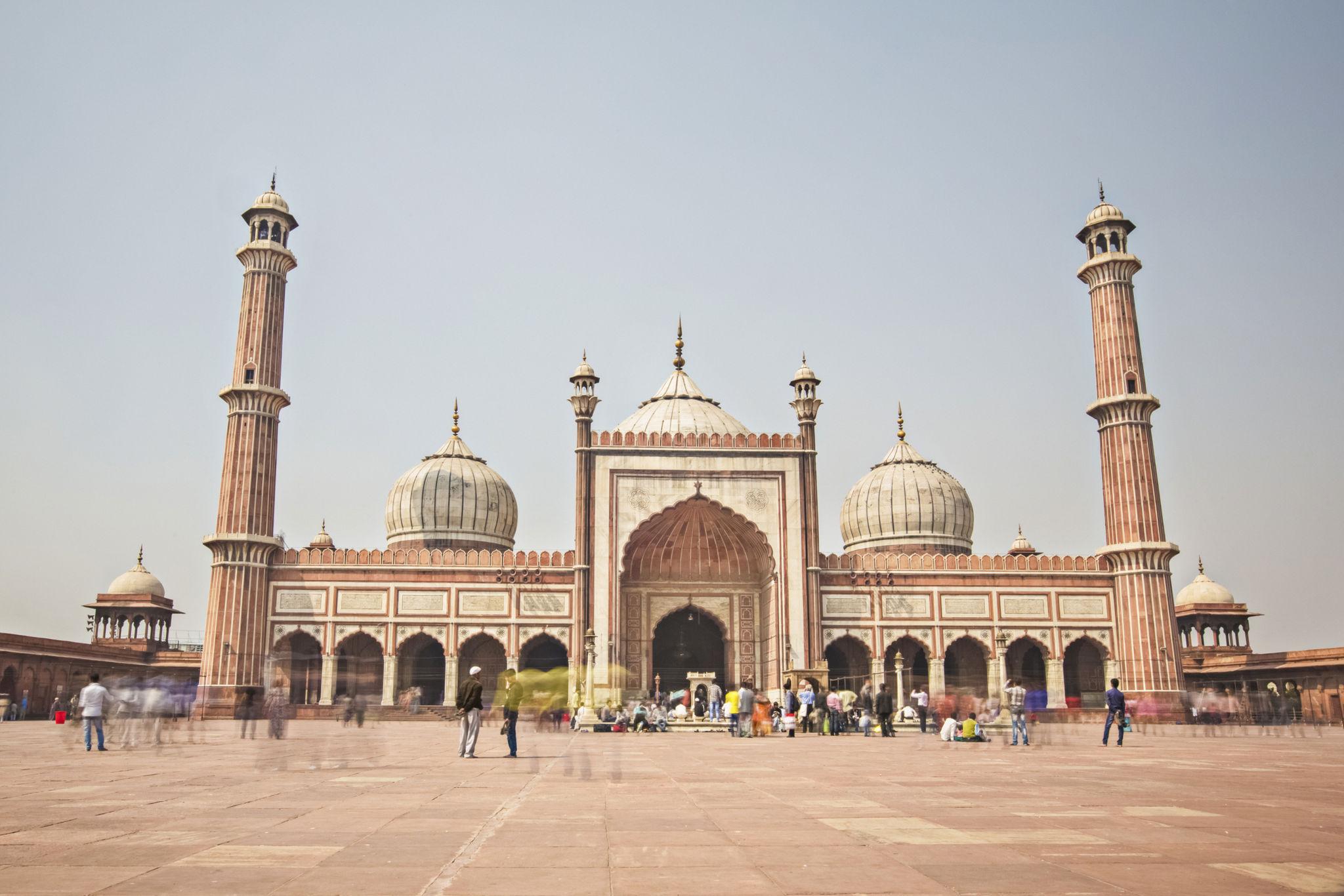
Jama Masjid Experience
You've probably seen the photos. The vast red-and-white courtyard, the domes floating above Old Delhi, the sea of people at Friday prayers. But here's the thing nobody tells you: turn up at the wrong moment and you'll be stopped at the gate and told to come back in an hour, because the mosque closes to visitors during each of the five daily prayers. Show up at midday and you'll cross a stone courtyard so hot in the sun it burns through socks, in the harshest light of the day, shoulder to shoulder with the crowds.
Let's fix that. Here's how a visit to Jama Masjid actually works, and how to get it right the first time.
Why early or late, and not the middle of the day
The mosque is open to visitors between prayers, and the gaps matter. Prayer times shift through the year, but the general rule holds: come mid-morning after the early prayer, or in the late afternoon before sunset, and avoid Friday around midday entirely, when the whole of Old Delhi comes to pray and tourism stops.
Light and heat push you the same way. The courtyard is open sandstone and marble with no shade — brutal at noon and beautiful at either end of the day, when the low sun warms the red stone and the domes catch gold. Late afternoon into golden hour is the finest time to be here, and the quietest.
What you'll actually see
Shah Jahan's last great work, finished in 1656, and the largest mosque in India:
The courtyard — a vast paved square that holds tens of thousands at prayer; empty between times, it's all scale and space.
The prayer hall — the striped marble-and-sandstone facade with its three great domes.
The southern minaret — you can climb it for a small fee; the view over Old Delhi's rooftops and the Red Fort is the reward.
Chandni Chowk below — the old bazaar at the foot of the steps, and Karim's and the Matia Mahal food lanes just beyond.
Dress modestly — shoulders and knees covered for everyone, a head covering for women — and be ready to leave your shoes at the gate. Robes are available to borrow or rent at the entrance if you're underdressed.
And here, unlike a temple sanctum, the camera is welcome — this is a monument built to be seen. But there's usually a fee for cameras (phones sometimes included), so ask at the gate rather than being surprised. Look before you shoot, though. Travellers who come here will tell you the same thing: the instinct is to photograph the domes and leave, but the mosque rewards sitting a while on the courtyard edge, watching the light move and the life of the place go on around you. That stillness in the middle of Old Delhi's noise is the part the photos never quite catch.
Pro tip: Go barefoot-ready and modestly dressed to skip the robe queue, carry small notes for the shoe minder, the camera fee and the minaret, and time your visit to land in golden hour outside prayer times. Pair it with a walk down into Chandni Chowk afterwards — the mosque and the food lanes below are one experience, not two, and dusk is when both are at their best.
The mistakes that ruin it
Most first-timers trip over the same few things. They arrive during prayer and get turned away. They come at midday and cross a scorching courtyard in flat light. Or they treat it as a ten-minute photo stop and miss the bazaar and food streets right beneath it.
The easy fix is to come early or late, dressed and prepared for the gate, with time to spill down into Old Delhi afterwards.
Want Jama Masjid paired with Red Fort and Chandni Chowk in one Old Delhi morning, timing sorted? Hit Get a quote.
MomentNagla Devjit, Agra

Mehtab Bagh Sunset View
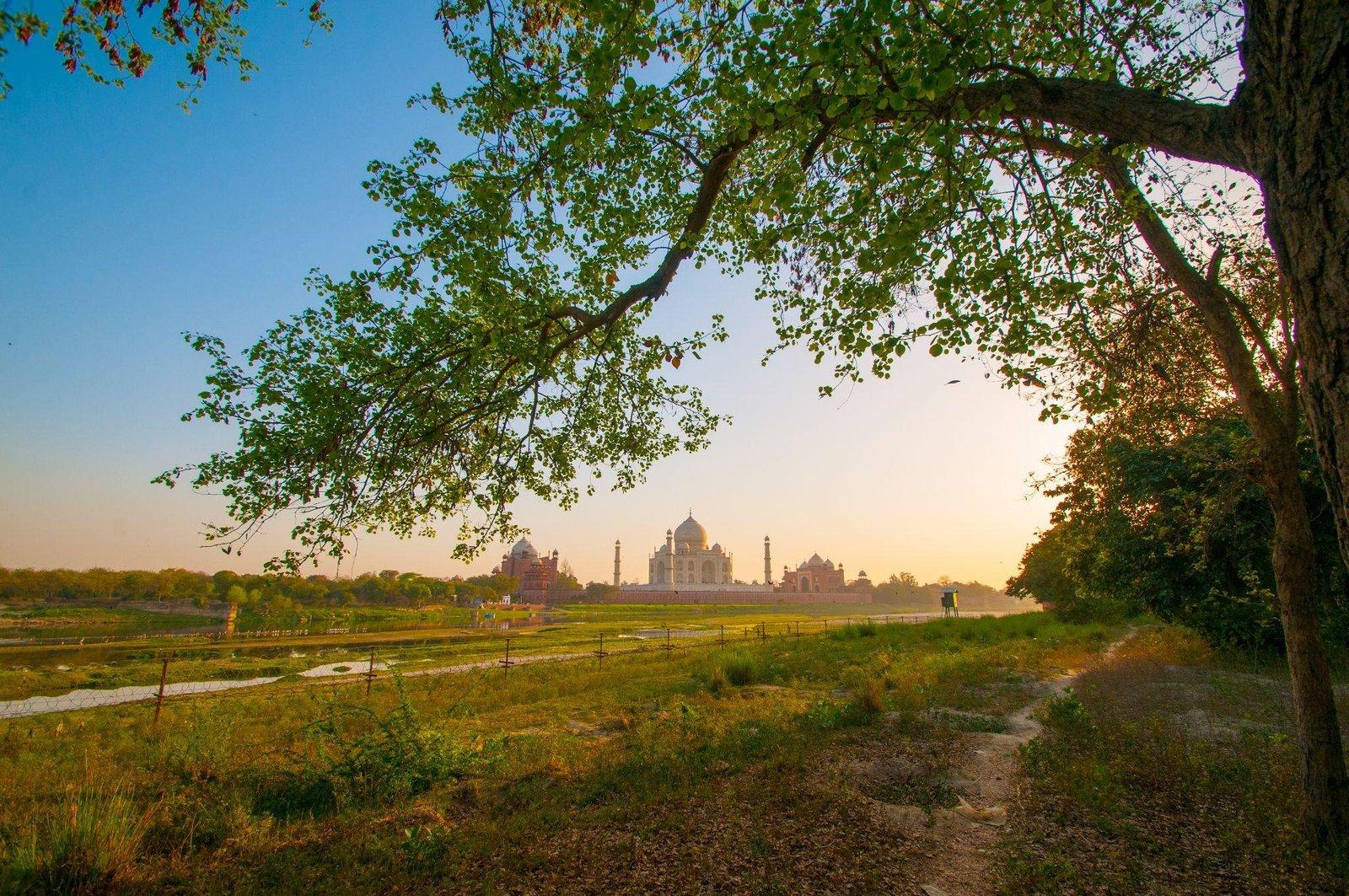
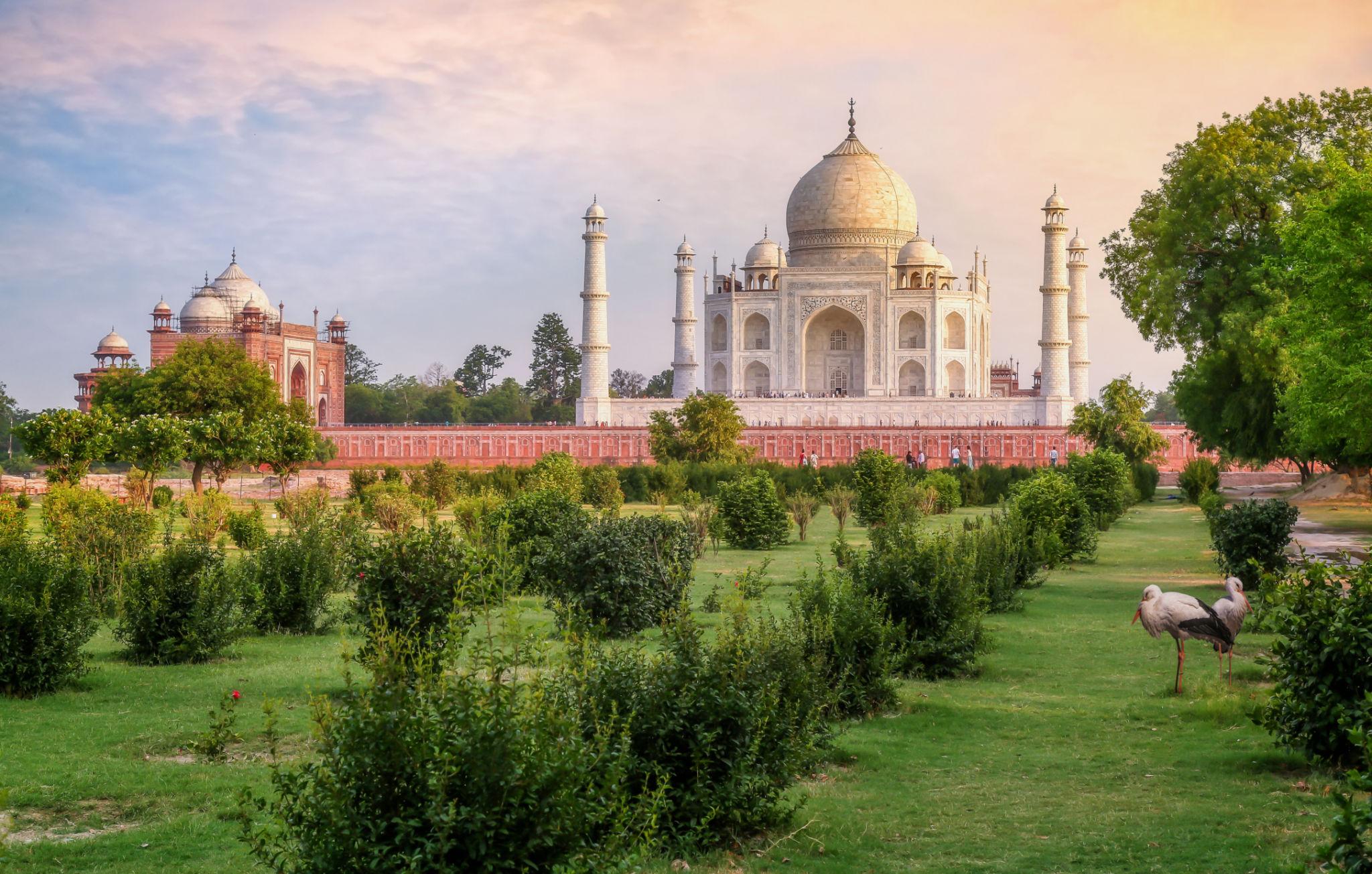
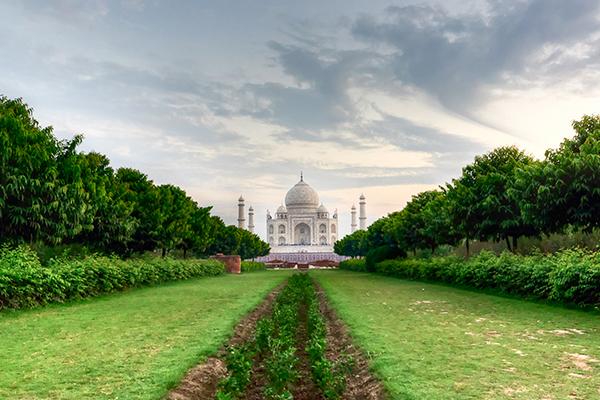
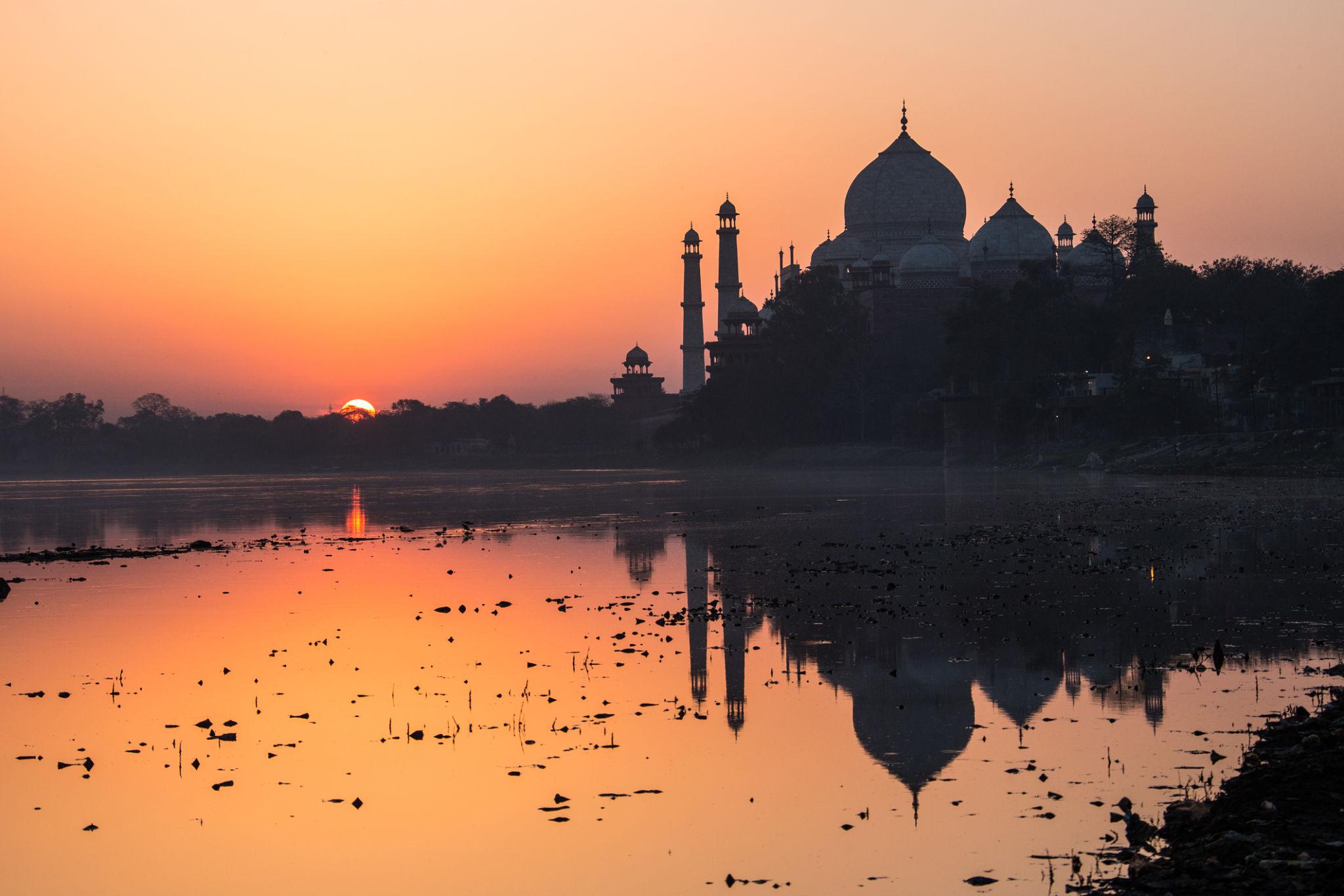
You've probably only ever seen the Taj from the front — the gate, the crowds, the queue for the perfect reflection shot. But here's the thing nobody tells you: directly across the Yamuna sits a quiet Mughal garden, Mehtab Bagh, that gives you the Taj from behind, glowing in the last light, with almost nobody around. Turn up at the wrong hour, though, or on a hazy afternoon, and you'll pay the ticket, walk to the riverbank, and find the monument flat, grey, and half-lost in murk. The "moonlight garden" only works when you time it right.
Let's fix that. Here's how the Mehtab Bagh sunset actually works, and how to get it right the first time.
Why the last hour, and not any other
Mehtab Bagh sits due north of the Taj across the river, which means you're looking at it side-lit and then back-lit as the sun goes down. In the flat glare of afternoon the marble reads as a dull white block against a pale sky. In the last hour, the low sun warms it — cream, then gold, then rose — and the river in front picks up the colour. That's the shot people cross the city for.
So you don't come at three. Aim to be at the riverbank inside the garden about an hour before sunset, with the light already turning. In winter that's around 5 p.m., later in summer. The garden closes near sunset, so you get the good light and then you're moved along — which is exactly why the timing has to be right, not approximate.
What you'll actually see
The garden is simple; the view is the whole point:
The Taj from the rear — the same perfect symmetry, minus the crowds and the entry queue.
The Yamuna in front — a reflection when the river is high; a broad sandbank when it's low.
The garden itself — Mughal charbagh layout, fountains and pathways, part of the same riverfront scheme as the Taj.
The birds — the far bank is quiet wetland; egrets and waders come in as the light fades.
Take something for the sun and, in winter, a layer — the riverbank cools fast once the sun is off it.
And put the phone down for the first few minutes when the light turns. Travellers who've stood here will tell you the same thing: the urge is to fire off frame after frame, and you end up with fifty near-identical Tajs and no memory of watching it change. Look first. The marble shifting colour, the river going still, the noise of Agra dropping away on the far bank — that's the part the photos never quite catch.
Pro tip: Check the haze and the river before you commit the evening. Agra's winter smog can grey out the Taj completely, and if the Yamuna is low there's no reflection — a local will know the day's conditions. Bring a zoom if you have one; the Taj is across the river, not up close, so phone-wide shots make it tiny. And go on a clear day just after monsoon (September–October) or a crisp winter evening for the best odds. Skip full-moon-night entry expectations here — that's the Taj's own scheme, not Mehtab Bagh.
The mistakes that ruin it
Most first-timers trip over the same few things. They arrive mid-afternoon and see the flat, grey version. They come on a hazy or low-river day and get no glow and no reflection. Or they expect a close-up and find the Taj is across a wide river.
The easy fix is to come in the last hour on a clear day, know the river's running, and treat it as a sunset vigil rather than a quick photo stop.
Want the Taj sunset from Mehtab Bagh with the right spot reserved and timing locked? Hit Get a quote —we'll plan the evening.
MomentAgra Fort, Agra

Agra Fort
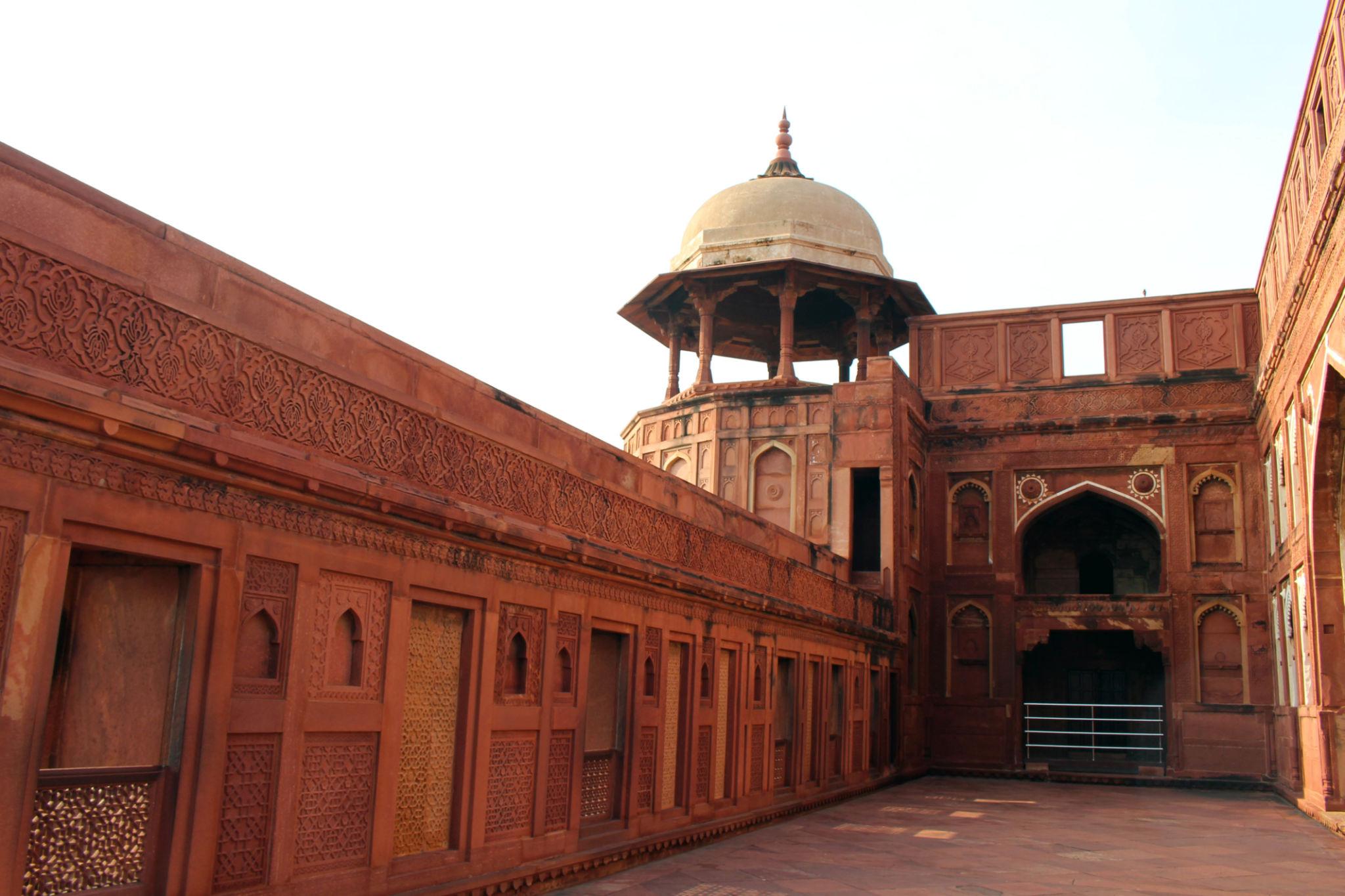
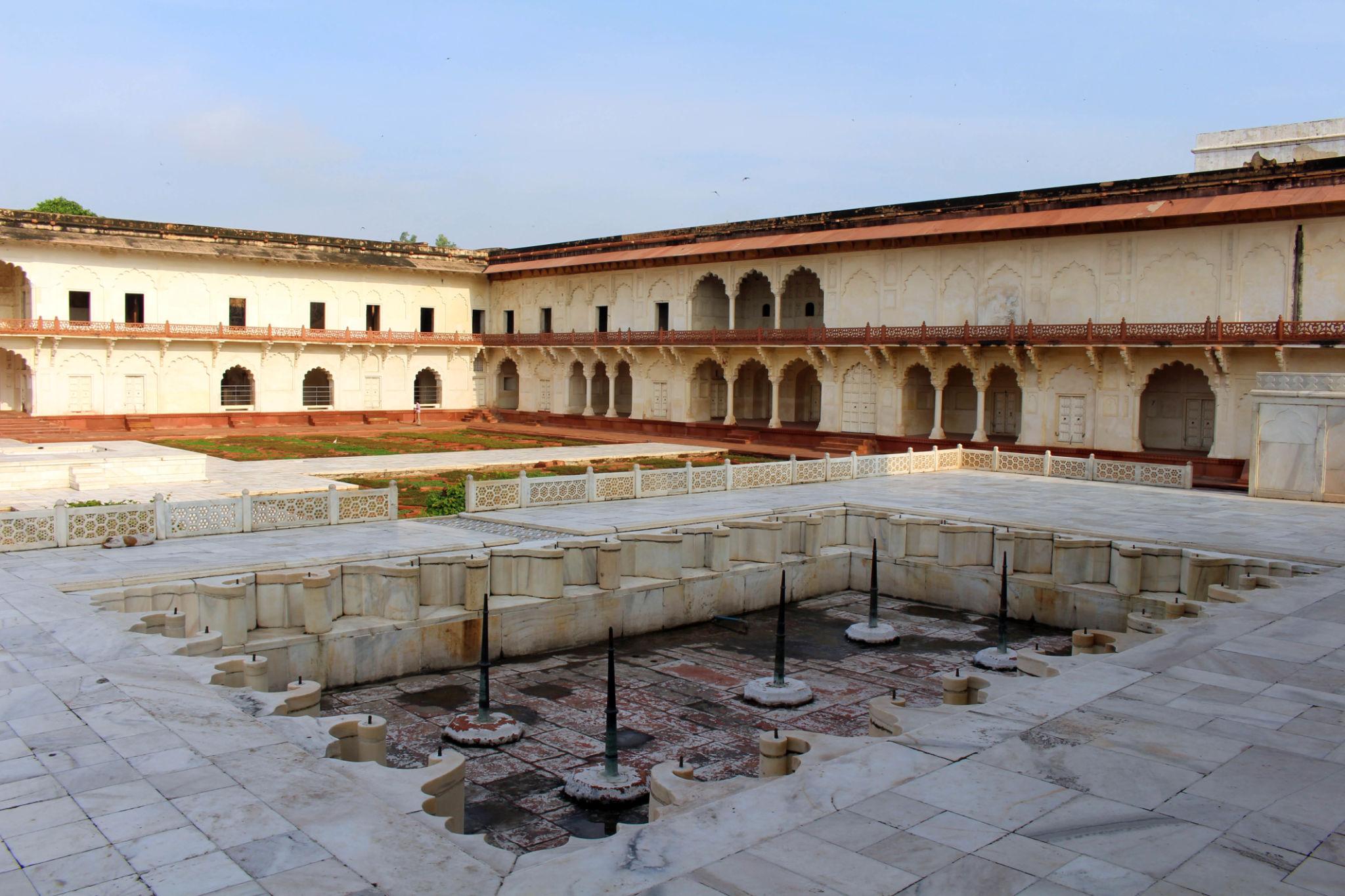
You've probably slotted it in as the warm-up act. See the Taj in the morning, tick off the "red fort" nearby, back on the bus by lunch. But here's the thing nobody tells you: rush Agra Fort in the flat midday heat, skip the audio or a guide, and you'll walk a lot of red sandstone wondering what you're looking at — missing that this is where the emperor who built the Taj Mahal spent his last years imprisoned, staring at it across the river. Done right, the fort isn't the Taj's sidekick. It's the other half of the same story.
Let's fix that. Here's how Agra Fort actually works, and how to get it right the first time.
Why the light, and the order, matter
Agra's monuments are punishing at midday — open sandstone, little shade, and a sun that bleaches every photo flat. The fort is at its best in early morning or the last hours before closing, when the red stone goes warm and gold and the marble palaces glow.
The classic mistake is timing. If you do the Taj at sunrise (which you should), don't stagger to the fort at noon half-cooked. Either come to the fort first thing on a separate morning, or save it for late afternoon when the crowds thin and the light returns. And do it after you've seen the Taj, not before — because the emotional heart of the fort is the tower where Shah Jahan was held by his son Aurangzeb, and it only lands once you know what he was looking at.
What you'll actually see
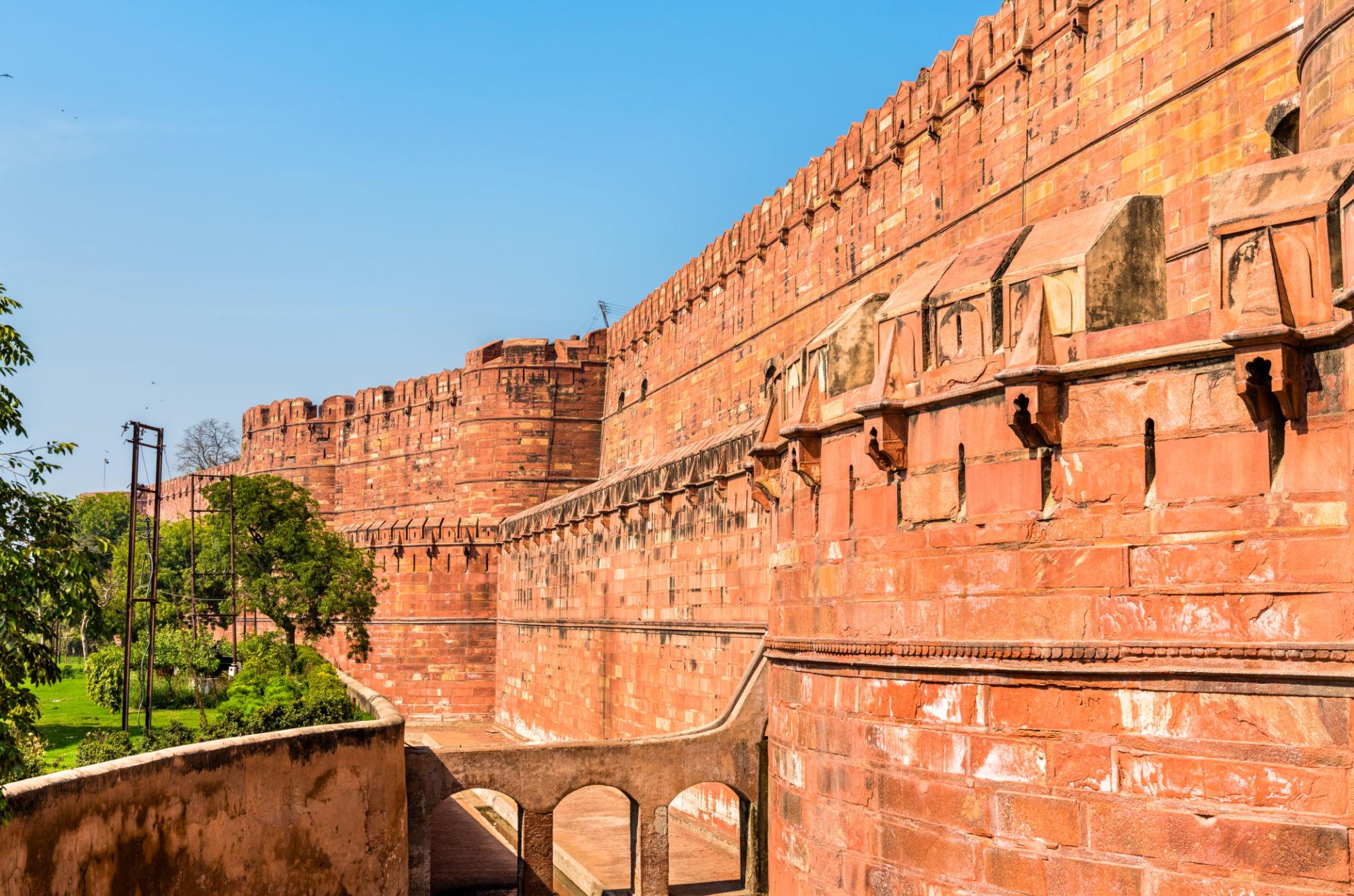
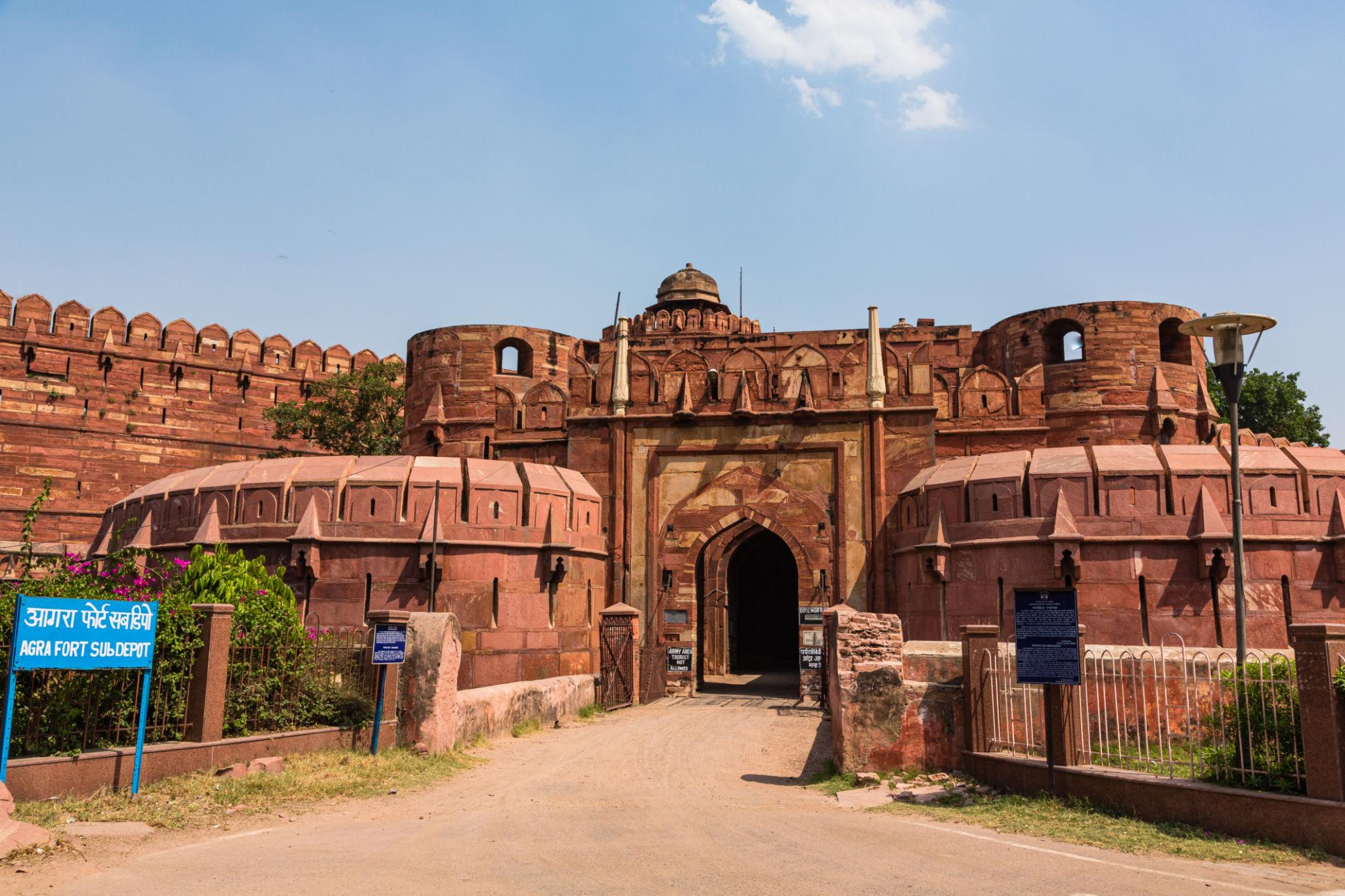
A walled city more than a fort, mostly built by Akbar from 1565 and added to by his successors:
Amar Singh Gate — the visitor entrance, up an angled ramp built to slow attackers.
Jahangir Mahal — Akbar's great red-sandstone palace, the fort's finest early building.
Diwan-i-Am — the hall of public audience, where the emperor heard petitions.
Khas Mahal & Sheesh Mahal — Shah Jahan's white-marble palaces and the mirrored bath chambers.
Musamman Burj — the octagonal marble tower where Shah Jahan was imprisoned, with its view down the Yamuna to the Taj.
Carry water and wear a hat — much of the circuit is unshaded. Note that a large part of the fort is still held by the Indian Army and closed to visitors; you see the southern palaces, not the whole thing.
And keep the phone down for the first few minutes at the Musamman Burj. Travellers who've stood there will tell you the same thing: the instinct is to photograph the Taj through the arches immediately, but the view lands differently when you take in first what it meant — a deposed emperor, held by his own son, spending his final years looking at the tomb he built for his wife. That weight is the part the photos never quite catch.
Pro tip: Take a guide or the audio tour — the fort is a maze of unlabelled halls and the stories are the whole point; without them it's handsome empty rooms. Buy a combined Taj-and-fort ticket if it's offered, which saves a little. Come early or late for the light and the smaller crowds, and check the Friday situation and any current closures before you go. And keep your Taj ticket — same-day entry sometimes gives a small discount at the other monuments.
The mistakes that ruin it
Most first-timers trip over the same few things. They come at noon and melt through it. They walk the palaces with no context and feel nothing. Or they do the fort before the Taj and miss the whole poignancy of Shah Jahan's tower.
The easy fix is to come in good light, with a guide or audio, after you've seen the Taj — so the fort reads as the story it is rather than a pile of pretty stone.
Want Agra Fort in the morning light with the Taj view framed from the Musamman Burj? Hit Get a quote— we'll sequence the day.
MomentSAROLI ROAD, Dharmapuri, Agra

Taj Mahal The Beauty Of Love
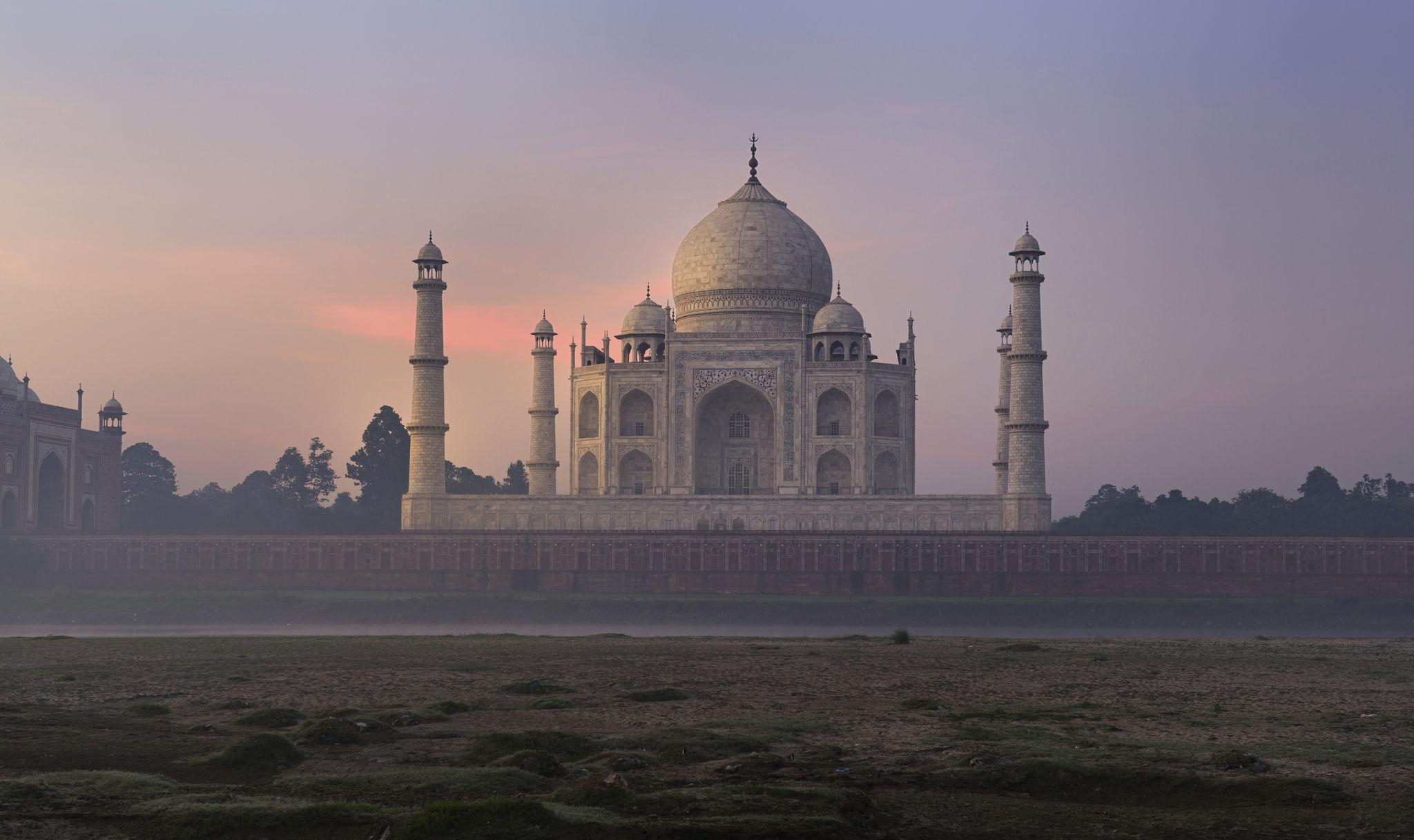
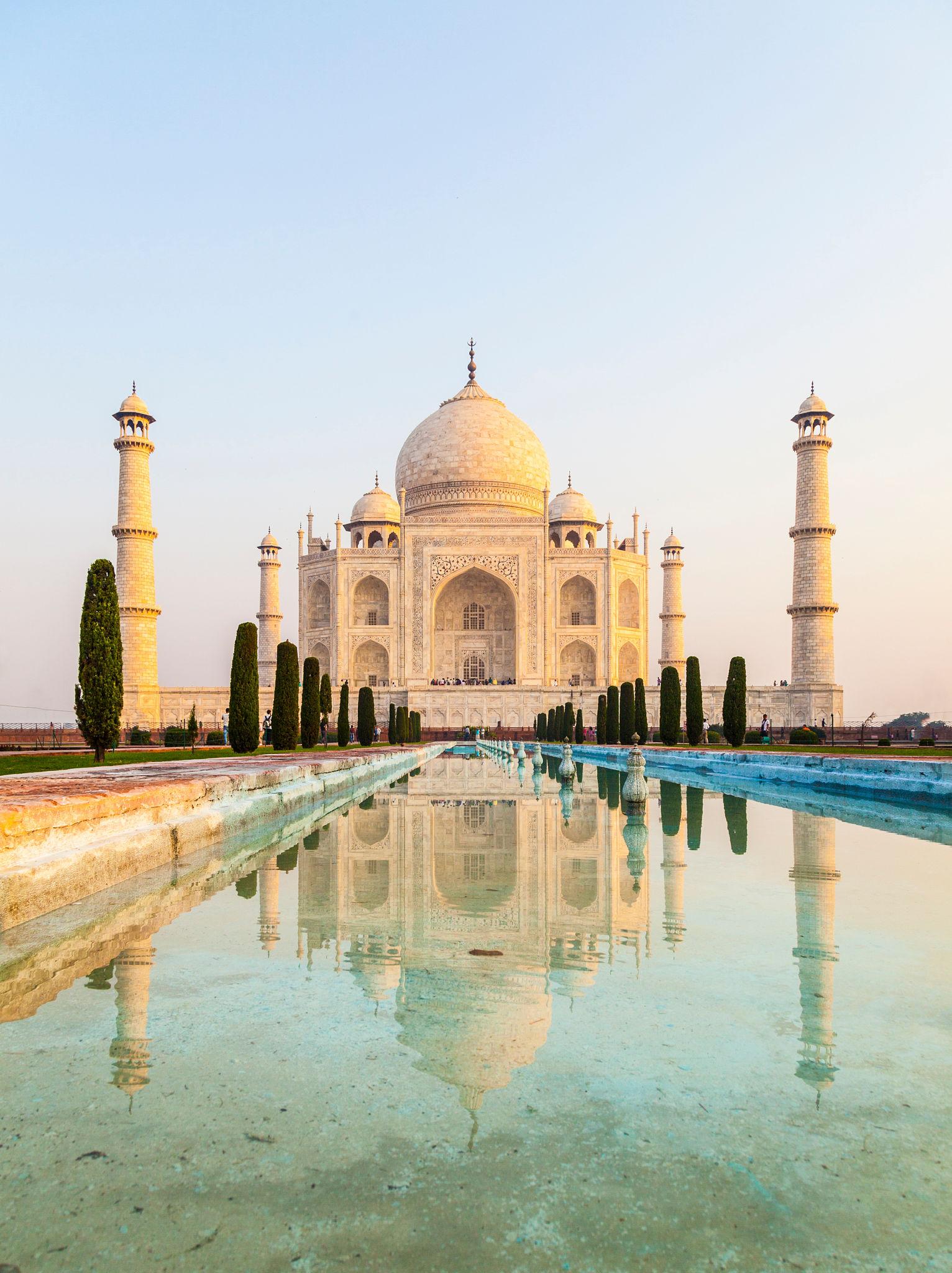
You've seen it a thousand times — the white dome, the reflecting pool, the perfect symmetry. So you assume you know what to expect. But here's the thing nobody tells you: turn up at noon with the day-tripper coach crowd and you'll shuffle through a hot, packed marble oven, queue an hour for the same photo everyone else is taking, and leave wondering why it didn't move you. A midday Taj in a crush of ten thousand people is not the Taj that people carry with them for life.
Let's fix that. Here's how a visit to the Taj Mahal actually works, and how to get it right the first time.
Why sunrise, and not any other hour
The Taj changes character by the hour, and it's really about the light and the crowd. At sunrise the marble glows soft pink and gold, the air is cool, the reflecting pools are still, and for a short window you can stand before it almost alone. By nine or ten the coaches arrive, the light goes hard and white, and the calm is gone.
So you want to be at the gate before it opens, about half an hour before sunrise, ticket already in hand. Yes, it's early. It's also the single best hour you'll spend in Agra — the difference between fighting a crowd and having the most famous building on earth quietly reveal itself.
What you'll actually see
Entering through the great red-sandstone gateway, the Taj appears framed in the arch, then opens out. Take your time with:
The main mausoleum — the white-marble tomb of Mumtaz Mahal, built by Shah Jahan, inlaid with semi-precious stones in floral pietra dura.
The reflecting pools — the classic mirror view; stillest and best at dawn.
The mosque and the jawab — the twin red buildings flanking the tomb, one a working mosque, one its symmetrical answer.
The riverfront and Yamuna view — behind the tomb, looking toward Agra Fort.
Carry as little as possible — many items aren't allowed in and the cloakroom queue eats time.
And keep your phone down for the first few minutes. Travellers who've stood here will tell you the same thing: the urge is to photograph it immediately, but it lands differently when you just look first. The scale, the stillness, the way the marble shifts colour as the sun climbs — that's the part the photos never quite catch.
Pro tip: Buy your ticket online in advance to skip the queue, and go straight for the main platform before the crowd builds, then work back to the gardens. The Taj is closed on Fridays for prayers, so never plan your Agra day around a Friday. Wear the shoe covers provided (or socks) for the marble platform, and know that tripods and larger bags are barred. If you can, pair a sunrise visit with a second look from Mehtab Bagh across the river at sunset — the Taj from the far bank, glowing, with no crowd at all.
The mistakes that ruin the visit
Most first-timers trip over the same few things. They come at midday with the coach tours and see it at its most crowded and least flattering. They arrive on a Friday to a closed monument. Or they queue on the day for tickets instead of booking ahead and lose the golden hour entirely.
The easy fix is to be at the east or west gate before sunrise with your ticket already booked — or let the early morning be arranged so you just show up, walk in, and watch the marble catch the light.
Want Taj Mahal at sunrise — east gate, first batch, no queue chaos, photography angles sorted? Hit Get a quote.
MomentTomb of Akbar The Great Area, Sikandra, Agra

Sikandra (Akbar's Tomb)
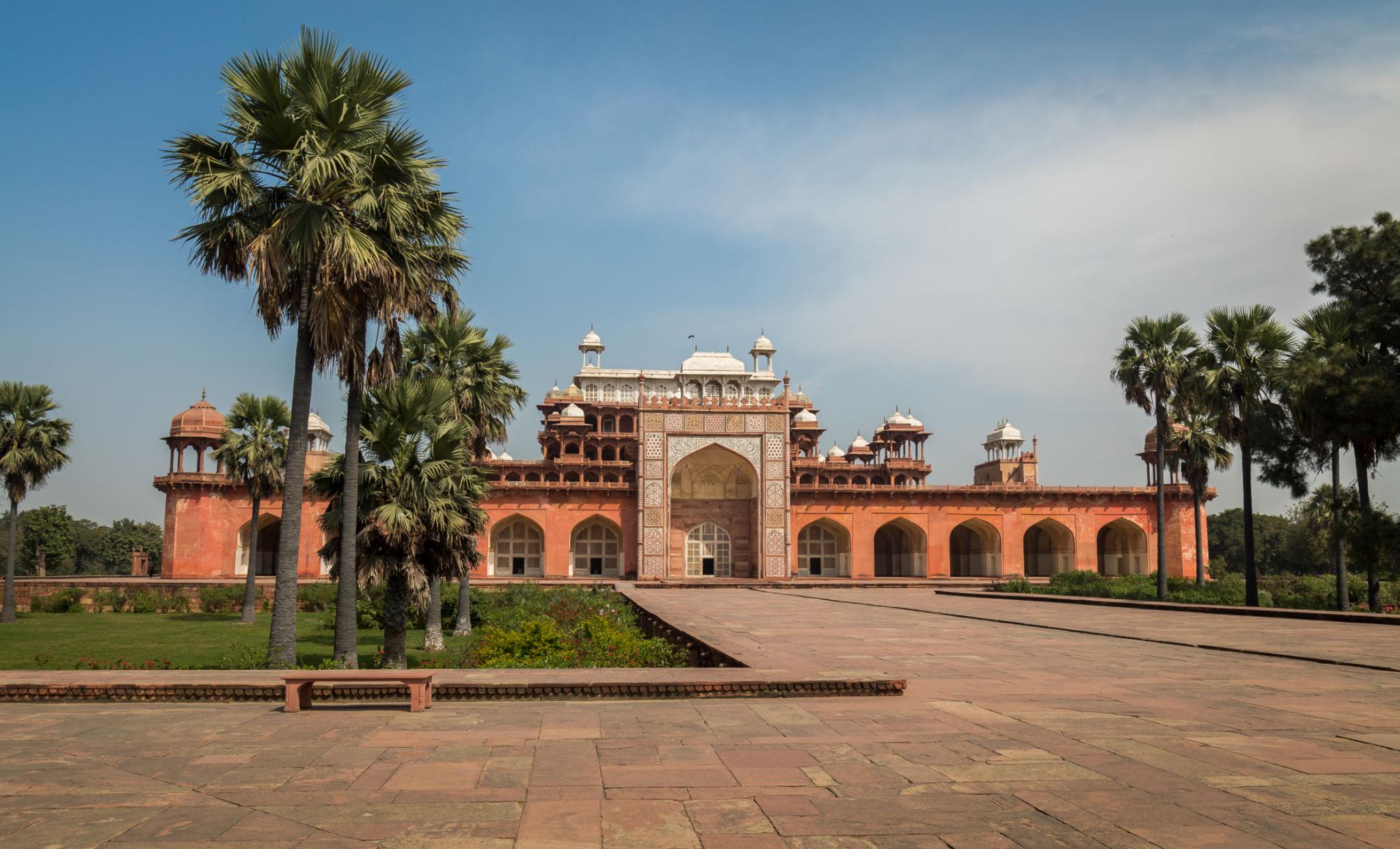
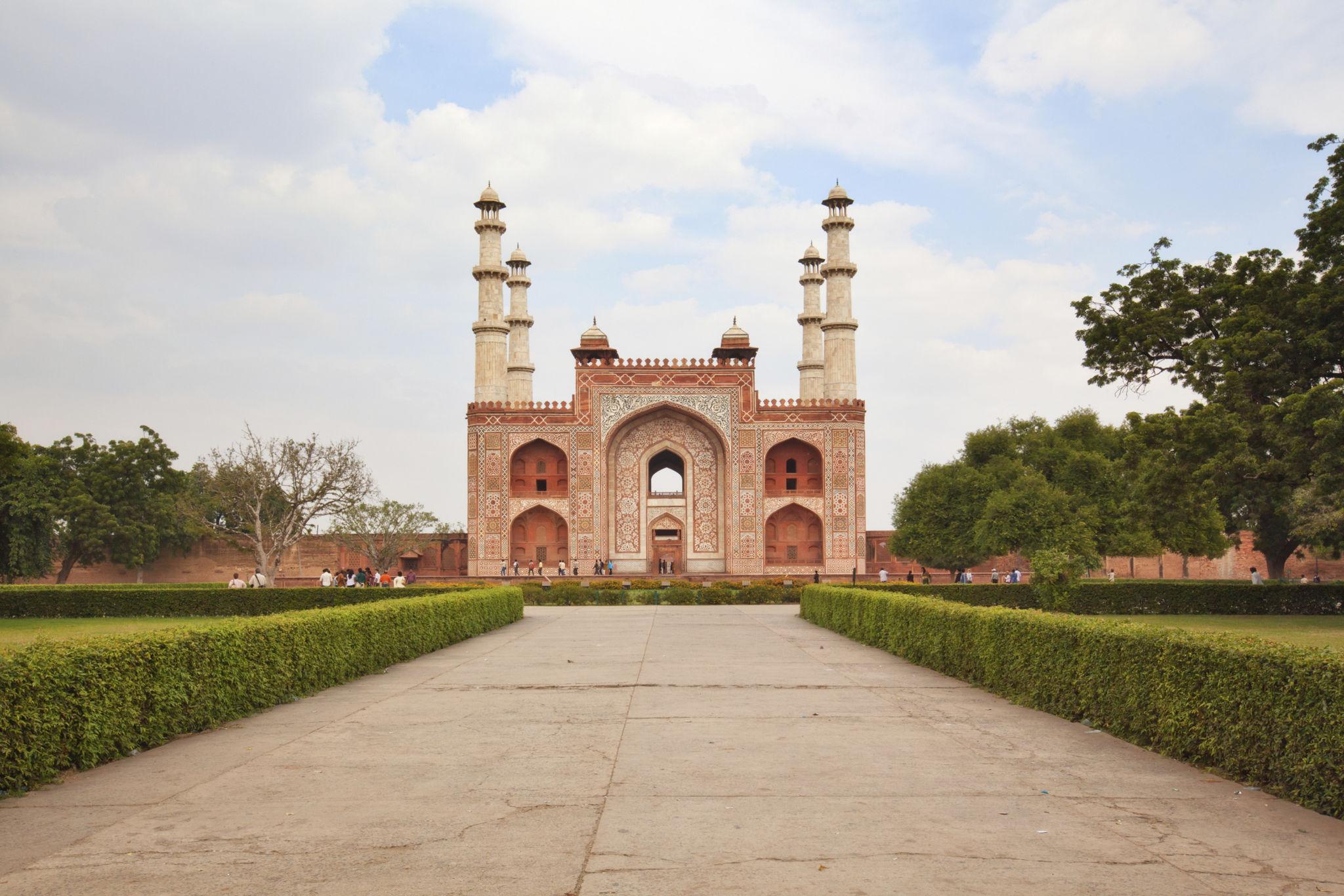
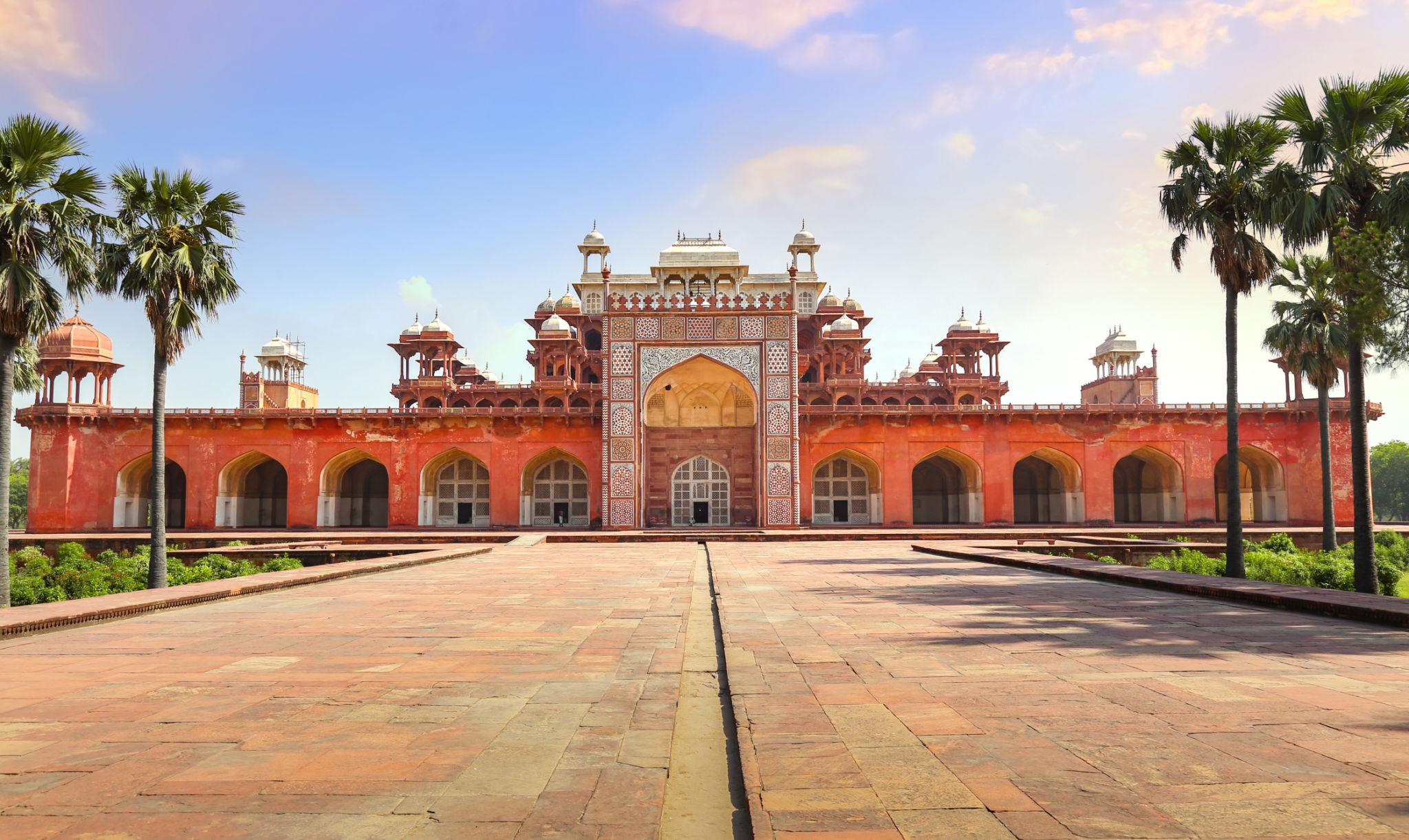
You've probably got this pencilled in as a quick stop on the way in or out of Agra. See the Taj, maybe Fatehpur Sikri, and squeeze Akbar's tomb into a spare hour. But here's the thing nobody tells you: rush Sikandra and you'll walk a grand gateway, glance at a building, and leave having completely missed why it's remarkable — a Mughal emperor's tomb with no dome, ringed by deer and langurs and peacocks in a walled Mughal garden, quiet in a way almost nowhere else around Agra is.
Let's fix that. Here's how a visit to Sikandra actually works, and how to get it right the first time.
Why the early hour, and not the middle of the day
Sikandra sits about 8 km from Agra on the Mathura road, and like everything here it's transformed by when you come. Arrive mid-morning with the tour buses and you share the gateway and gardens with the crowd, in flat, hard light, with the heat already building on the open lawns.
Come at opening, just after sunrise, and it's a different place. The soft light warms the red sandstone and inlaid marble, the gardens are cool and half-empty, and the resident wildlife — blackbuck, nilgai, langurs, peacocks — is active and unbothered. Sikandra opens from sunrise to sunset; the first hour is the one worth setting an alarm for.
What you'll actually see
The complex is a classic charbagh — a four-part Mughal garden — with the tomb at its centre:
The great south gateway — a spectacular red-sandstone gate inlaid with white-marble geometric patterns and topped with four marble minarets, arguably finer than the tomb itself.
The tomb building — an unusual tiered, pavilion-topped structure with no central dome, blending Hindu, Jain, Buddhist, Christian and Islamic motifs, exactly as the syncretic Akbar intended.
The cenotaph and the crypt — the ornate false tomb on the terrace, and the plain real grave in the cool chamber below.
The gardens and wildlife — wide lawns roamed by blackbuck and langurs, with peacocks calling in the early morning.
Wear shoes you can slip off for the tomb chamber, and carry water — the gardens are large and shade is limited.
And keep the phone down for the first few minutes. Travellers who come early will tell you the same thing: the instinct is to photograph the gateway straight off, but the place rewards a slow first look. Stand under the gate, take in the scale, watch the deer move across the lawns in the low light. That stillness — a garden tomb at dawn, animals grazing where an emperor is buried — is the part the photos never quite catch.
Pro tip: Combine Sikandra with Itmad-ud-Daulah (the "Baby Taj") and Mariam's Tomb, which are on the same side of Agra, for a proper Mughal-monuments morning away from the Taj crowds. Carry your ASI ticket and note that foreign-national and Indian entry fees differ. Watch your belongings and snacks around the langurs — they're bold. And go on any day but a national holiday if you want the gardens quiet.
The mistakes that ruin it
Most first-timers trip over the same few things. They come mid-morning and get heat, crowds and flat light. They photograph the gate and leave without going down to the crypt or walking the gardens. Or they treat it as a ten-minute box-tick between bigger sights and miss that it's a masterpiece in its own right.
The easy fix is to come early, give it a proper hour, and pair it with the nearby Mughal tombs — or let it be built into a planned Agra morning rather than squeezed into a gap.
Want Sikandra on the Agra–Jaipur drive with a guide who knows the hidden upper levels? Hit Get a quote— we'll route it in.
MomentBuland Gate, Dadupura, Fatehpur Sikri

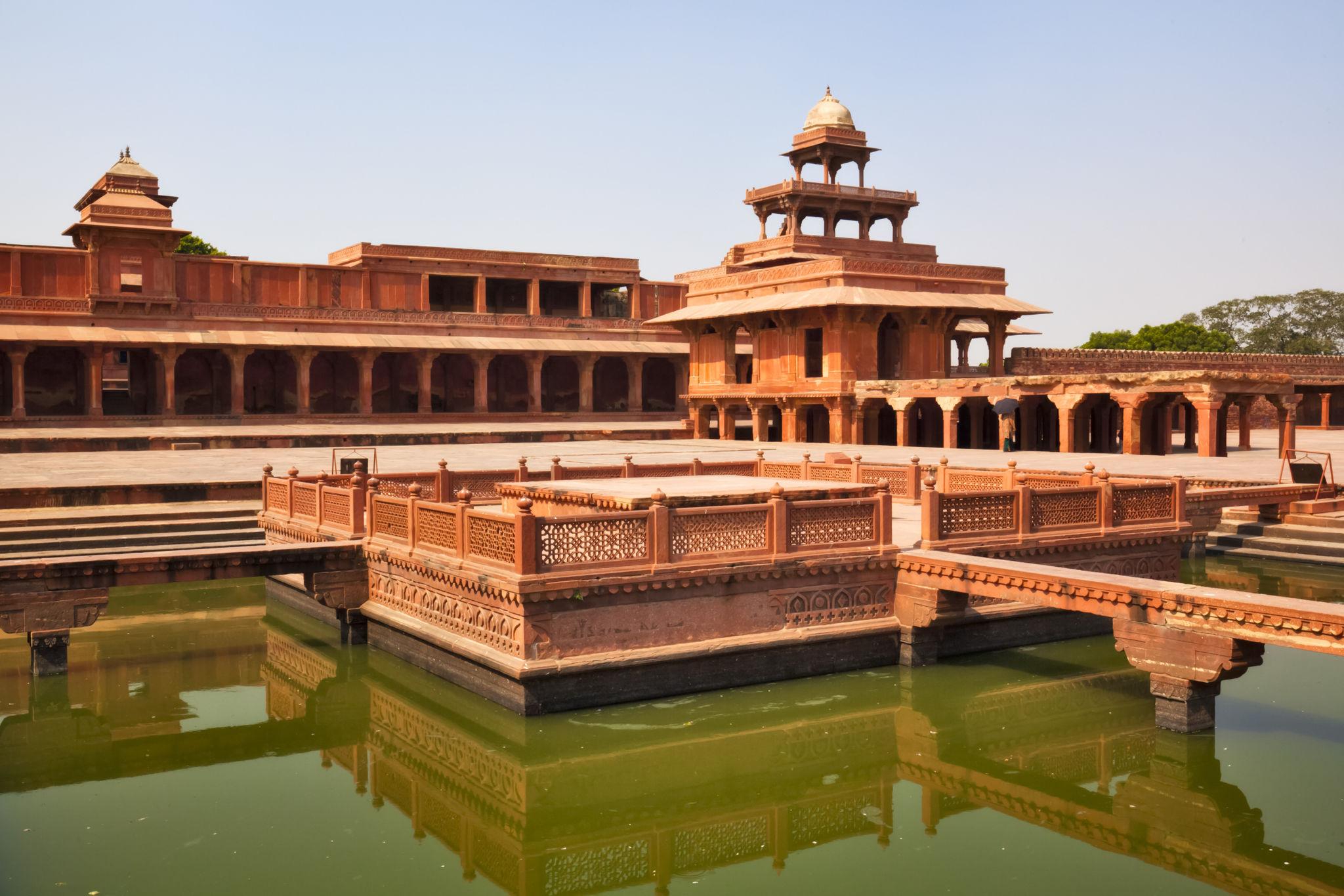
Buland Darwaza
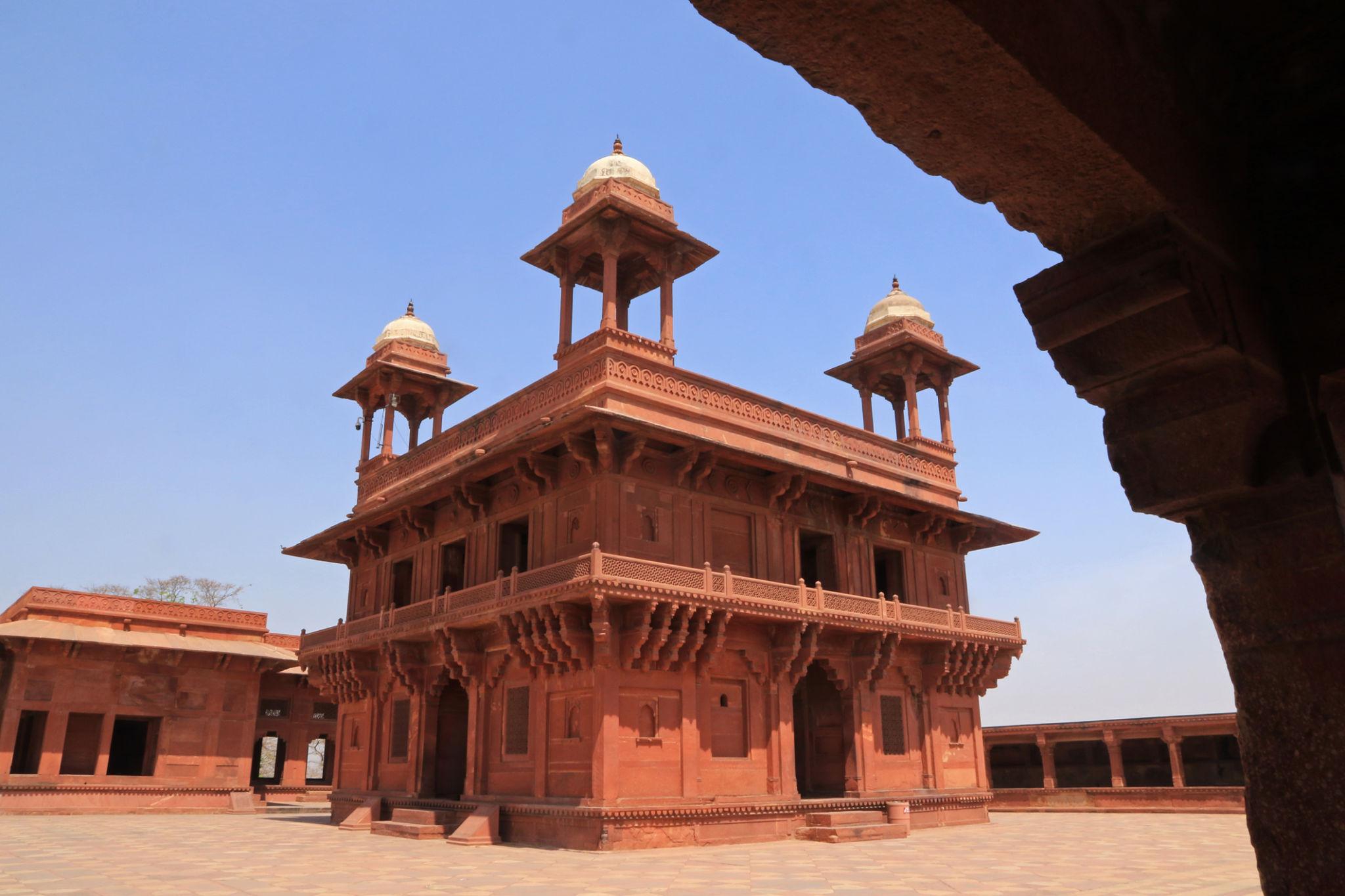
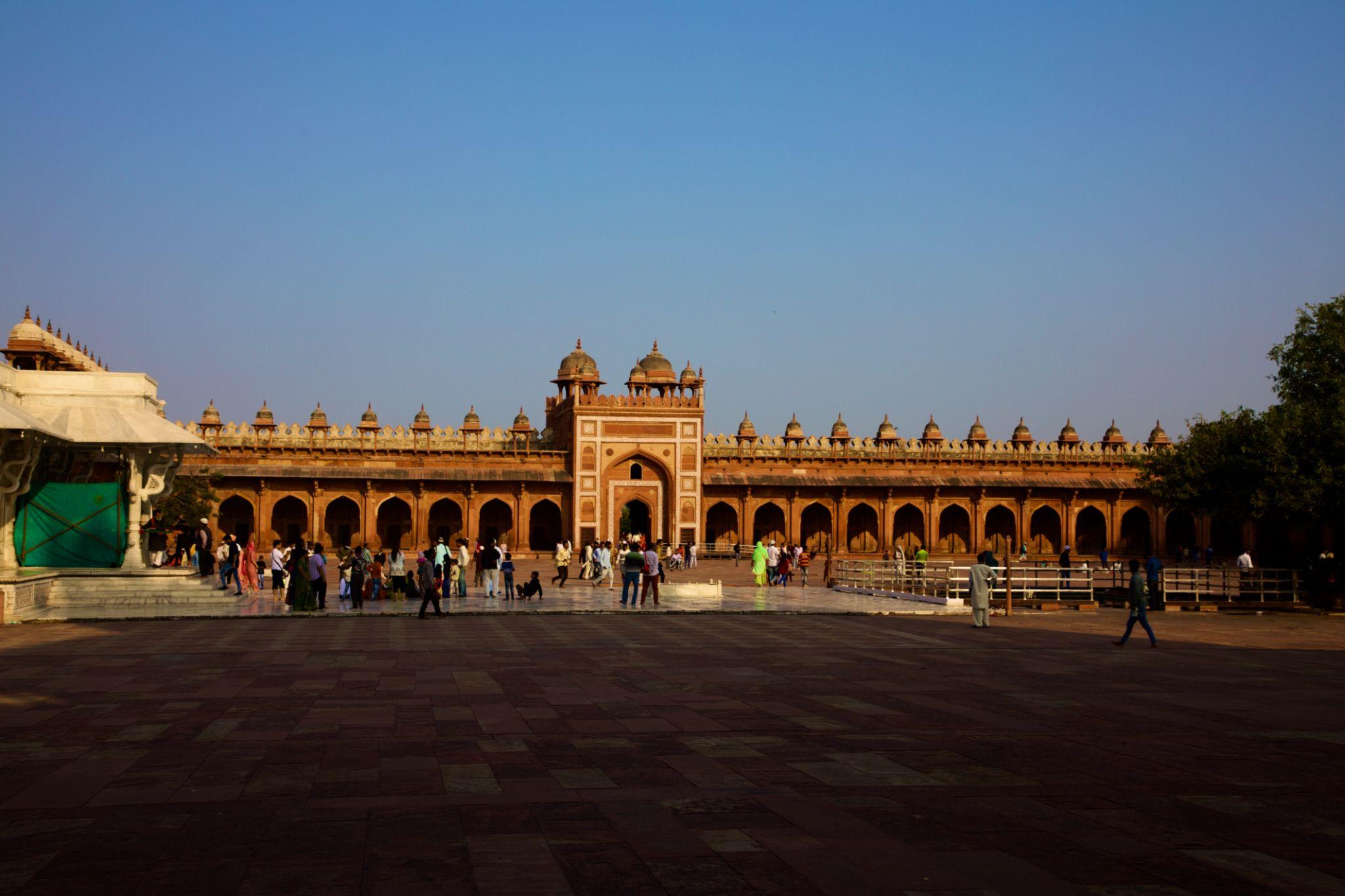
You've probably seen it in a textbook. A colossal red-and-buff gateway at the top of a long flight of steps, dwarfing everyone on them. But here's the thing nobody tells you: most people arrive at Fatehpur Sikri already tired from the palace complex next door, climb the steps in the midday glare, get swarmed by "guides" and souvenir sellers at the top, and rush through the greatest gateway in India in about four minutes. Done in a hurry, in hard light, with someone tugging your sleeve, the Buland Darwaza is a big door. Done right, it's one of the most staggering pieces of Mughal architecture you'll ever stand under.
Let's fix that. Here's how the Buland Darwaza actually works, and how to get it right the first time.
Why the light, and the hour, decide it
The gateway is built of red sandstone inlaid with white and black marble, and that colour only comes alive in soft light. In the flat, hammering sun of midday it goes hazy and washed out; in the low gold of early morning or late afternoon it glows, and the inlay and the calligraphy stand out crisp against the stone.
So come early, near opening, or late in the day. Fatehpur Sikri sits about 40 km from Agra, so an early start beats both the heat and the tour buses, which roll in mid-morning. Get there first and you'll have the steps and the great arch nearly to yourself, in the light that actually shows it off.
What you'll actually see
Give the gateway and the courtyard beyond it a proper hour:
The gateway itself — about 54 metres from the base of the steps, built by Akbar around 1576 to mark his conquest of Gujarat.
The Persian inscription — the famous words on the archway, attributed to Jesus: that the world is a bridge, to pass over but not to build a house upon.
The Jama Masjid courtyard — the vast mosque quadrangle the gateway leads into.
The Tomb of Salim Chishti — the delicate white-marble Sufi shrine within, its carved lattice screens extraordinary.
Take socks you don't mind on hot stone — you'll be barefoot from the shoe stand across the mosque courtyard, and the paving bakes.
And put the phone away for the first few minutes when you reach the top of the steps. Travellers who've stood here will tell you the same thing: the instinct is to shoot straight up at the arch, and the scale simply won't fit a frame — it comes out as a flat wall. Stand still and look up instead. The height of it, the way it dwarfs the people on the steps, the inscription running across the top of the arch — that's the part the photos never quite catch.
Pro tip: Fix a price and terms with any guide before you start, or better, arrange a proper licensed one in advance — the men who swarm the steps are not official and the "free" tour ends in a hard sell. Go barefoot-ready, carry small notes for the shoe stand, and be firm and polite with the souvenir sellers; a clear "no" works. And treat the mosque and the Salim Chishti shrine as the active places of worship they are — cover up, lower your voice, and ask before photographing anyone praying.
The mistakes that ruin it
Most first-timers trip over the same few things. They come at midday, in flat light and full heat. They get talked into an unofficial "guide" on the steps and spend the visit being sold to. Or they rush the gateway to get back to Agra and never walk into the courtyard or the Chishti shrine beyond it.
The easy fix is to come early with your guiding sorted, and give the gateway, the mosque and the shrine the hour they deserve — rather than treating it as a photo stop on the way somewhere else.
Want Buland Darwaza and Fatehpur Sikri as a proper half-day stop, not a rushed highway break? Hit Get a quote.
MomentMahatma Gandhi Rd, Chanderi, Agra

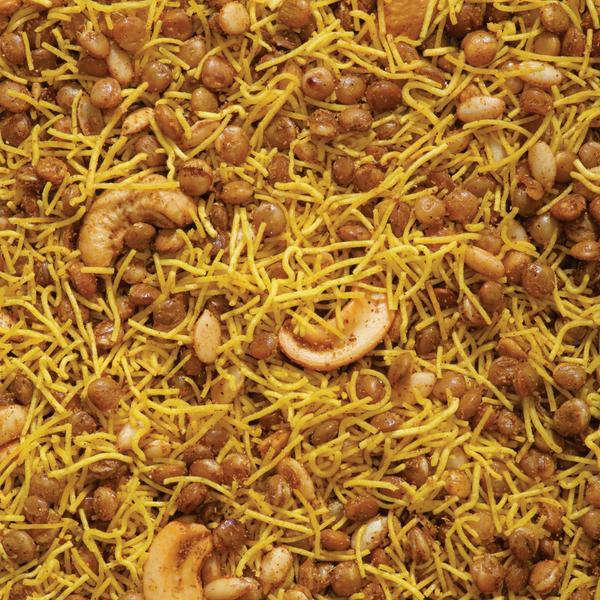


Agra's Famous Culinary Petha
You've probably seen it stacked in shop windows. Glassy translucent cubes, some clear, some soaked amber in syrup, boxed up by the kilo all along the road out of the Taj. But here's the thing nobody tells you: grab the first roadside box a tout waves at you, and you'll carry home a sticky, one-note slab that has nothing to do with the soft, fragrant petha Agra is actually famous for. A bad petha is sugar and not much else. The real thing is a different sweet entirely.
Let's fix that. Here's how Agra's petha actually works, and how to get it right the first time.
Why the shop matters more than anything
Petha is made from ash gourd — winter melon — cut into cubes, cooked and candied until it turns translucent. That's the whole craft, and it lives or dies on who made it. The tourist-strip boxes near the monuments are often mass-made, over-sweet and stale; the good stuff comes from the old family confectioners who've been doing it for generations, most of them clustered around Noori Darwaza and the Panchhi Petha name in the old city.
So don't buy where the buses stop. A little detour to a proper shop is the difference between a gift people actually finish and a box that sits in a cupboard. Buy it fresh, near the end of your trip, so it travels well.
What you'll actually find
Petha isn't one sweet — it's a whole family, and the fun is tasting across them:
Dry petha — firm, less syrupy, the most travel-friendly.
Angoori petha — smaller "grape" pieces soaked in light syrup, softer and juicier.
Kesar / saffron petha — richer, perfumed, a step up in flavour.
Paan, chocolate, coconut and rose — the modern flavoured versions, hit or miss but fun to sample.
Ask for a taste before you commit — reputable shops offer it freely, and it's the fastest way to tell fresh from stale.
And here's where the phone advice inverts completely: at a good petha shop, do get it out — to check the shop, not to photograph the sweets. Travellers who get this right will tell you the same thing: a two-minute look at reviews and the "since 19-something" on the board saves you from the tourist-trap version. But once you've bought, put it away and actually taste properly — the good angoori petha, cold, is a small revelation, and the difference between real and roadside is something no photo of a shop window ever shows you.
Pro tip: Buy from an established old-city confectioner rather than a monument-gate stall, and be aware the famous "Panchhi" name is widely imitated — check you're at a genuine outlet, not a copycat with a similar board. Taste before buying, choose dry petha if it's got a long journey home, and get it fresh in the last day or two of your trip. And don't over-buy on day one; petha is cheap, so you can always grab more.
The mistakes that ruin it
Most first-timers trip over the same few things. They buy the first box outside the Taj and get the stale, over-sweet version. They pick a copycat shop trading on a famous name. Or they load up on day one and carry a softening box around for a week.
The easy fix is to buy from a known confectioner in the old city, taste first, and pick it up fresh near the end — or let a local guide point you to the shop they'd actually buy from themselves.
Want the real petha shops — Panchhi, not the tourist knockoffs — plus Agra's chaat trail sorted? Hit Get a quote.
MomentHawa Mahal Rd, Badi Choupad, Jaipur

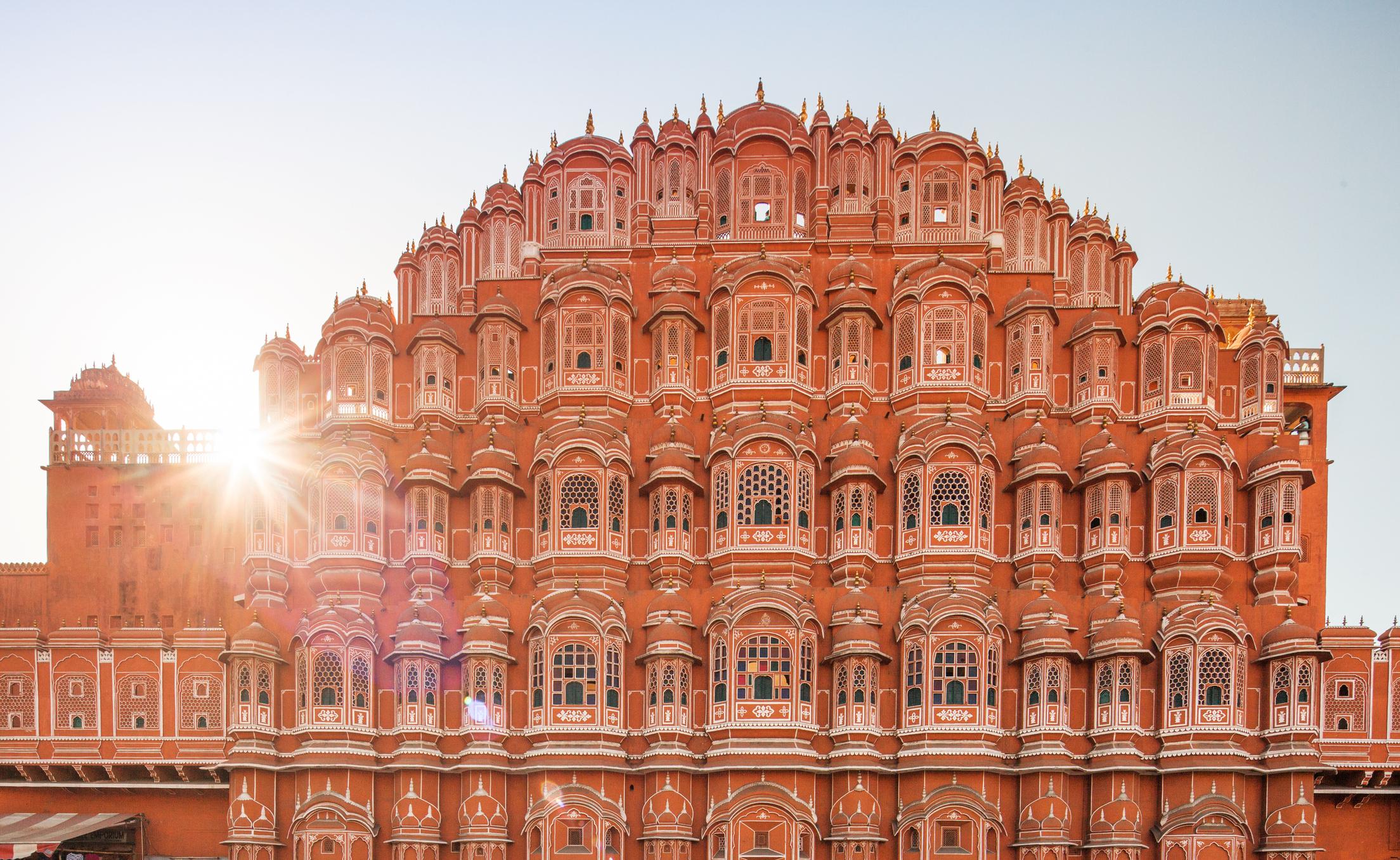
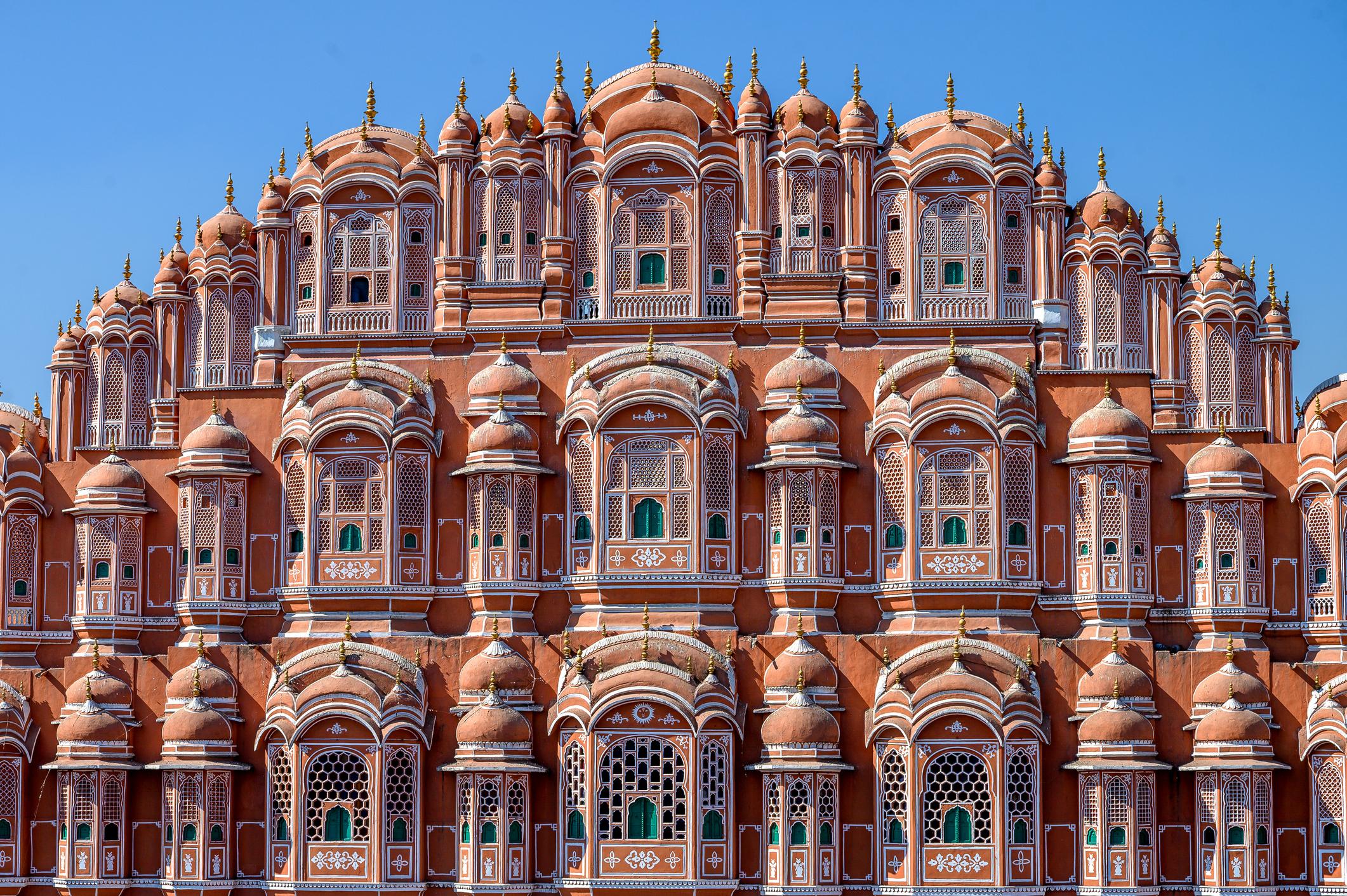
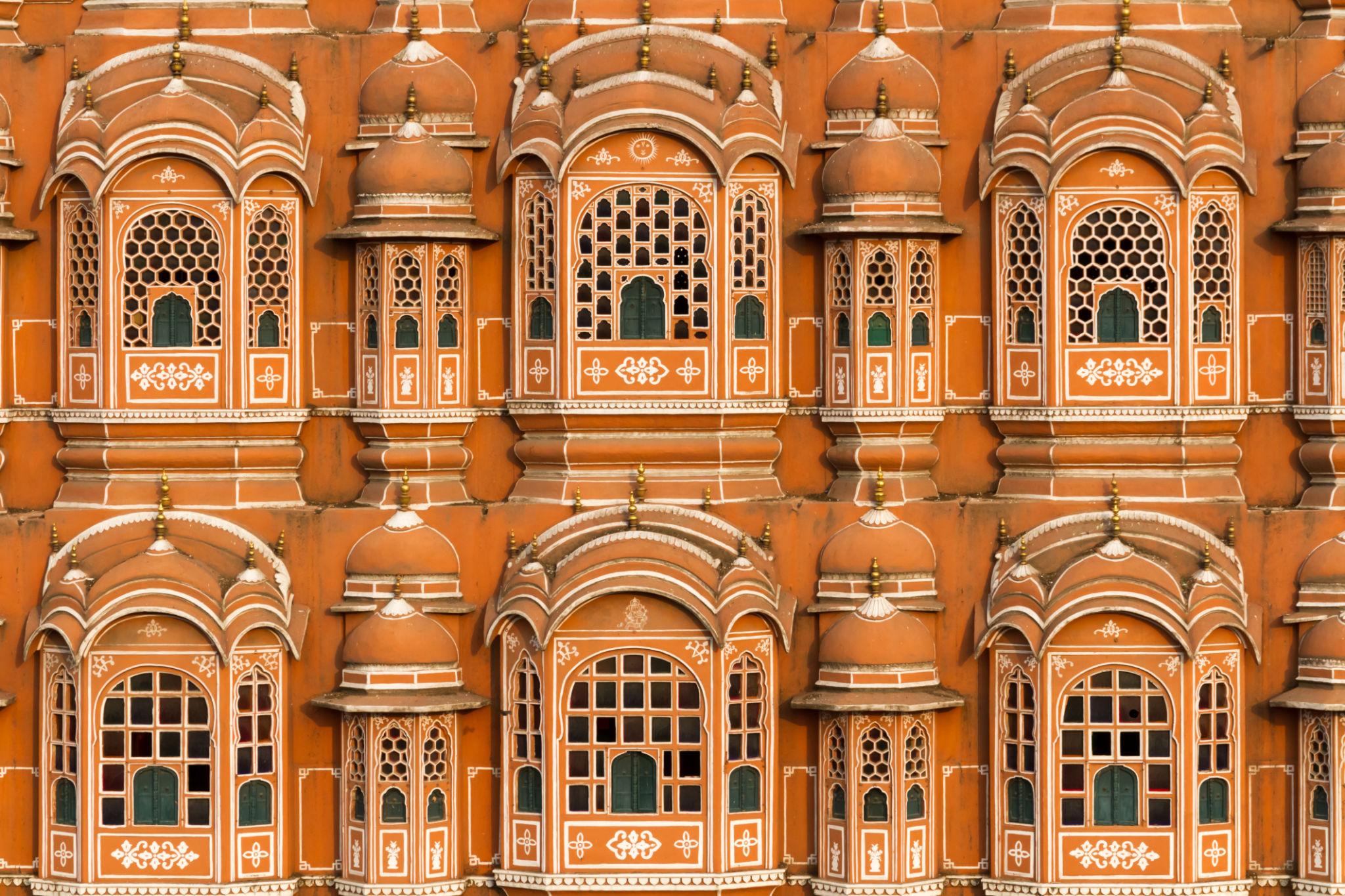
Hawa Mahal
You've probably seen the photo — that honeycomb wall of pink windows, five storeys of tiny screened balconies stacked like a wedding cake. So you rock up mid-afternoon, stand on the traffic-choked street opposite, take the same shot everyone takes into the glare, and wonder why it looks flat and disappointing. Here's the thing nobody tells you: that famous facade faces east, which means by afternoon it's in its own shadow. Photograph it at 4 p.m. and you're shooting a silhouette against the sun.
Let's fix that. Here's how Hawa Mahal actually works, and how to get it right the first time.
Why sunrise, and not any other hour
The Palace of Winds catches light like nothing else in Jaipur — but only in the morning. Because the pink-and-red sandstone facade faces east, the rising sun hits it head-on and sets the whole honeycomb glowing, every one of its 953 little windows picked out in warm light. By midday the sun is overhead and it goes flat; by afternoon the facade is backlit and sinks into shade.
So you want to be on the street opposite, or up on a café terrace, not long after the sun is up — roughly 7 to 9 a.m. That's also before the tour buses and the crowds arrive, when you can actually see the building instead of the scrum in front of it. Yes, it's early. It's also the only hour the facade truly performs.
What you'll actually see
Most people photograph the front and leave. Go inside and it's a different building:
The facade from across the street — the classic view, best from one of the rooftop cafés opposite that were built precisely for it.
The interior ramps and chambers — no stairs; gentle ramps climb the five floors.
The top-floor views — out over the City Palace, Jantar Mantar and the pink old city toward the hills.
The jharokha windows up close — the screens the palace women once watched street processions through, unseen.
Bring water and go early for the cool; the upper floors get warm and airless by mid-morning.
And keep your phone down for the first few minutes once you're inside. Travellers who rush it will tell you the same thing: everyone shoots the front and never feels the strange, honeycombed hush of the interior. Stand at one of the lattice windows first, in the breeze the building was designed to funnel — that constant cool draft is where "Palace of Winds" comes from — and just look out through the screen the way the women of the court once did. That's the part the photos never quite catch.
Pro tip: Shoot the facade from a rooftop café opposite (there are several; you'll pay for a chai and it's worth it), then cross to go inside — the entrance is around the back, not through the famous front, which catches a lot of first-timers out. Buy the composite ticket if you're also doing Jantar Mantar and Amber Fort; it's much cheaper than separate entries. And come at opening, around 9 a.m., to have the ramps to yourself.
The mistakes that ruin it
Most first-timers trip over the same few things. They come in the afternoon and shoot a shadowed facade. They photograph the front and never go inside. Or they hunt for the entrance on the busy main road, not realising it's tucked around the back.
The easy fix is to come early for the light, know the entrance is at the rear, and give the interior the half hour it deserves — or let it be part of a planned old-city morning so the timing's handled.
Want Hawa Mahal from the right angle at the right hour, plus the rooftop cafe view most miss? Hit Get a quote.
MomentPALACE ATELIER, CITY PALACE, Jaipur

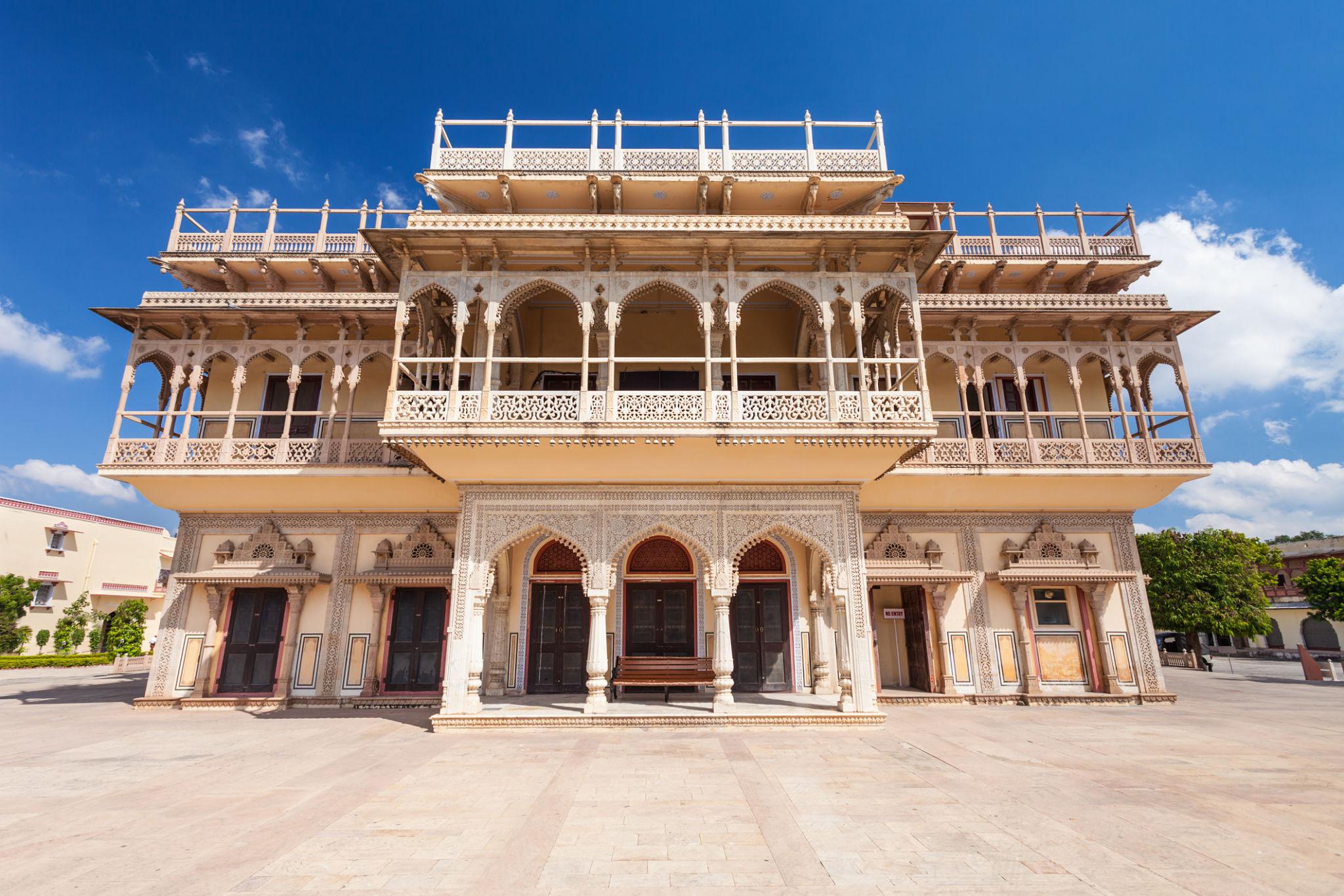
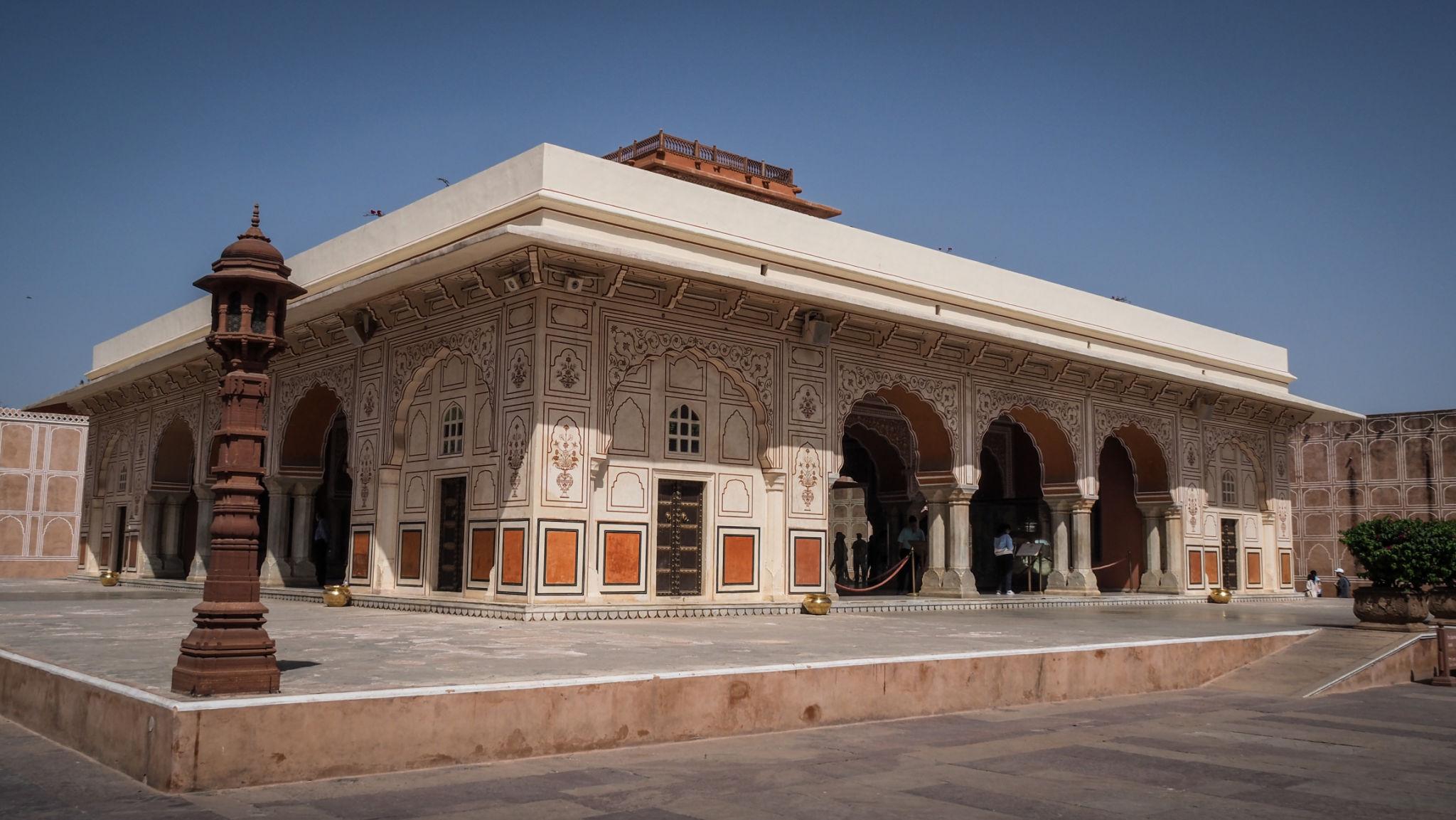
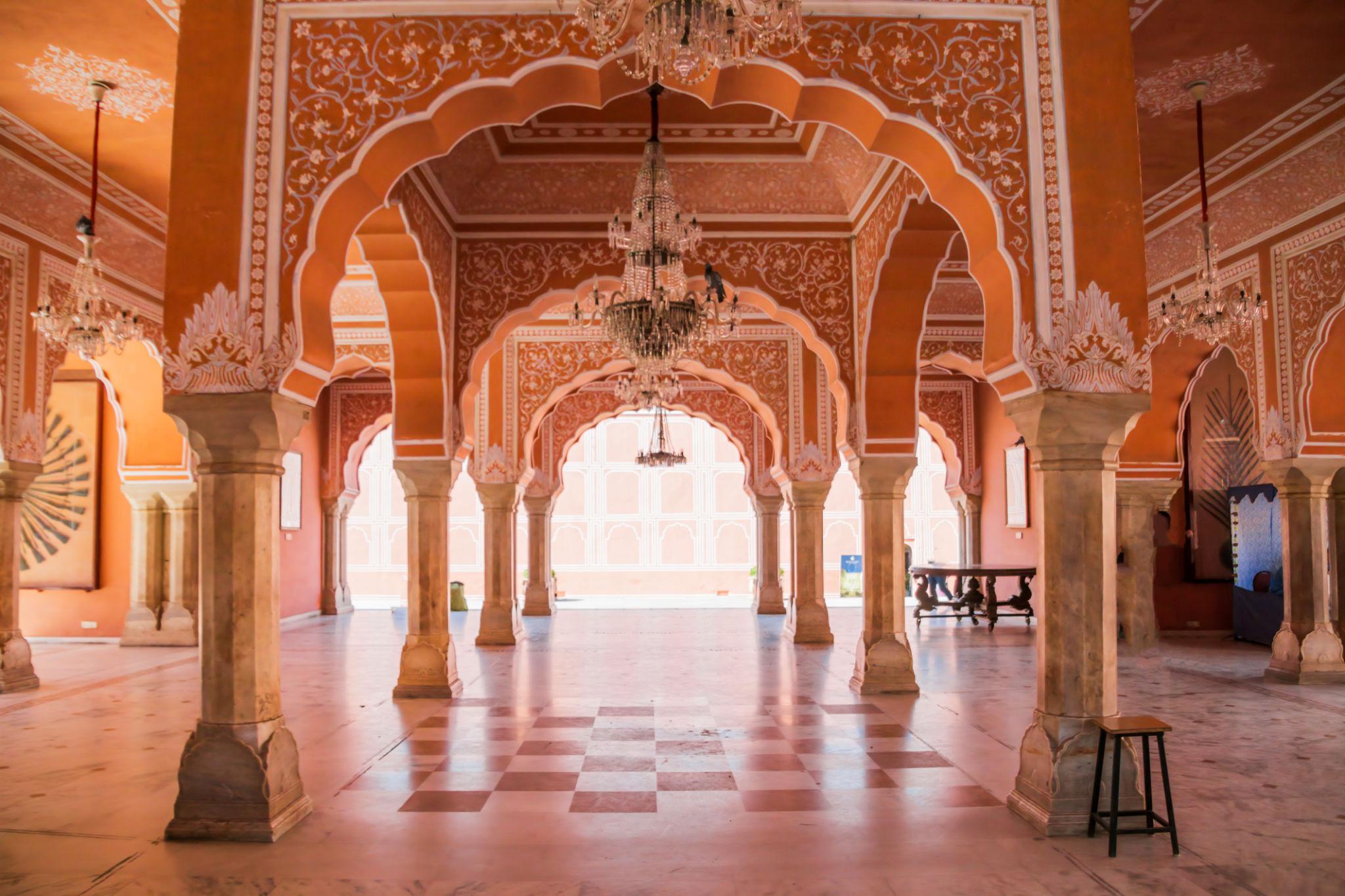
City Palace Jaipur
You've probably seen the blue gate. That impossibly detailed peacock doorway everyone poses in front of, flooding your feed every time someone visits Jaipur. But here's the thing nobody tells you: turn up at noon with the day-trippers and you'll queue for that one courtyard, shuffle past the highlights in a crowd, and leave having seen a fraction of a palace that's still a working royal residence. A rushed midday visit is not the City Palace people rave about.
Let's fix that. Here's how a visit to the City Palace actually works, and how to get it right the first time.
Why you go at opening, and not any other hour
The palace changes character by the hour. Right at opening it's cool, calm, and the light is soft on the pink-and-white stonework. You'll have the famous courtyards nearly to yourself, the guides aren't yet hoarse, and you can actually stand still in front of the Pritam Niwas Chowk gates. By late morning the tour buses land, the queues build at every photo spot, and the heat in the open courtyards turns brutal.
So aim to be at the gate for opening, around 9:30 a.m. Jaipur's a desert city — the earlier you're in, the kinder the sun and the thinner the crowd. It's the difference between a palace and a scrum.
What you'll actually see
The complex is huge, a maze of courtyards, palaces and museums built by the Kachhwaha rulers from the 1720s. The highlights:
Pritam Niwas Chowk — the inner courtyard with the four painted seasonal gates, the Peacock Gate the most famous.
Chandra Mahal — the seven-storey royal residence, still home to the family; the upper floors need a separate premium ticket.
Mubarak Mahal — the reception palace, now the textile and costume museum.
The Diwan-i-Khas — home to two vast silver urns, said to be the largest silver vessels in the world.
The Sarvato Bhadra — the armoury, with one of the best royal weapon collections in India.
Carry water and something for the sun. Much of the visit is open courtyard, and shade is scarce once the day heats up.
And keep your phone down for the first few minutes in each courtyard. Travellers who've been will tell you the same thing: the urge is to shoot the gate immediately, but the detail lands differently when you look first. The fresco-work, the inlay, the sheer scale of it overhead — that's the part a quick photo in a crowd never quite catches.
Pro tip: Buy a composite ticket if you're also doing Jantar Mantar and Amber Fort — it's cheaper than separate entries. Decide up front whether the Chandra Mahal premium tour is worth it to you; it gets you the royal apartments and rooftop views the standard ticket doesn't. And consider a licensed guide at the entrance or an audio guide — the palace is dense with history and means far more with context than without.
The mistakes that ruin the visit
Most first-timers trip over the same few things. They arrive at midday into the heat and the crowds. They do only the free courtyards and miss the museums that are the point. Or they rush the Peacock Gate photo and skip the armoury and the silver urns entirely.
The easy fix is to arrive at opening, buy the right ticket for what you want to see, and take a guide or audio guide so the rooms mean something — or let the visit be part of a planned Jaipur day so you're not working it out at the gate.
Want City Palace with museum access timed to avoid the tour-bus crush and a guide who knows the rooms? Hit Get a quote.
MomentMalve Nagar, J.D.A. Market, Jaipur

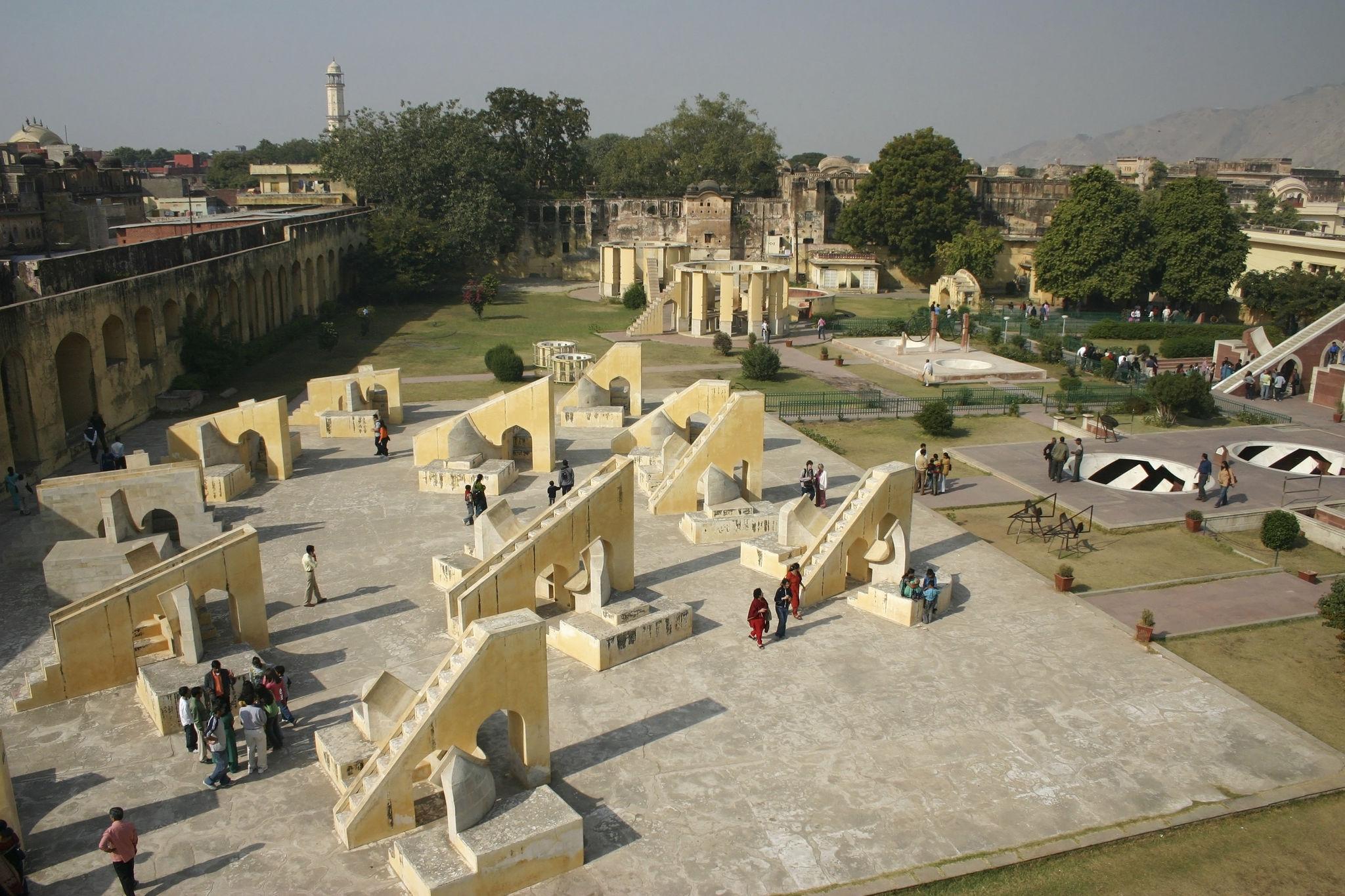
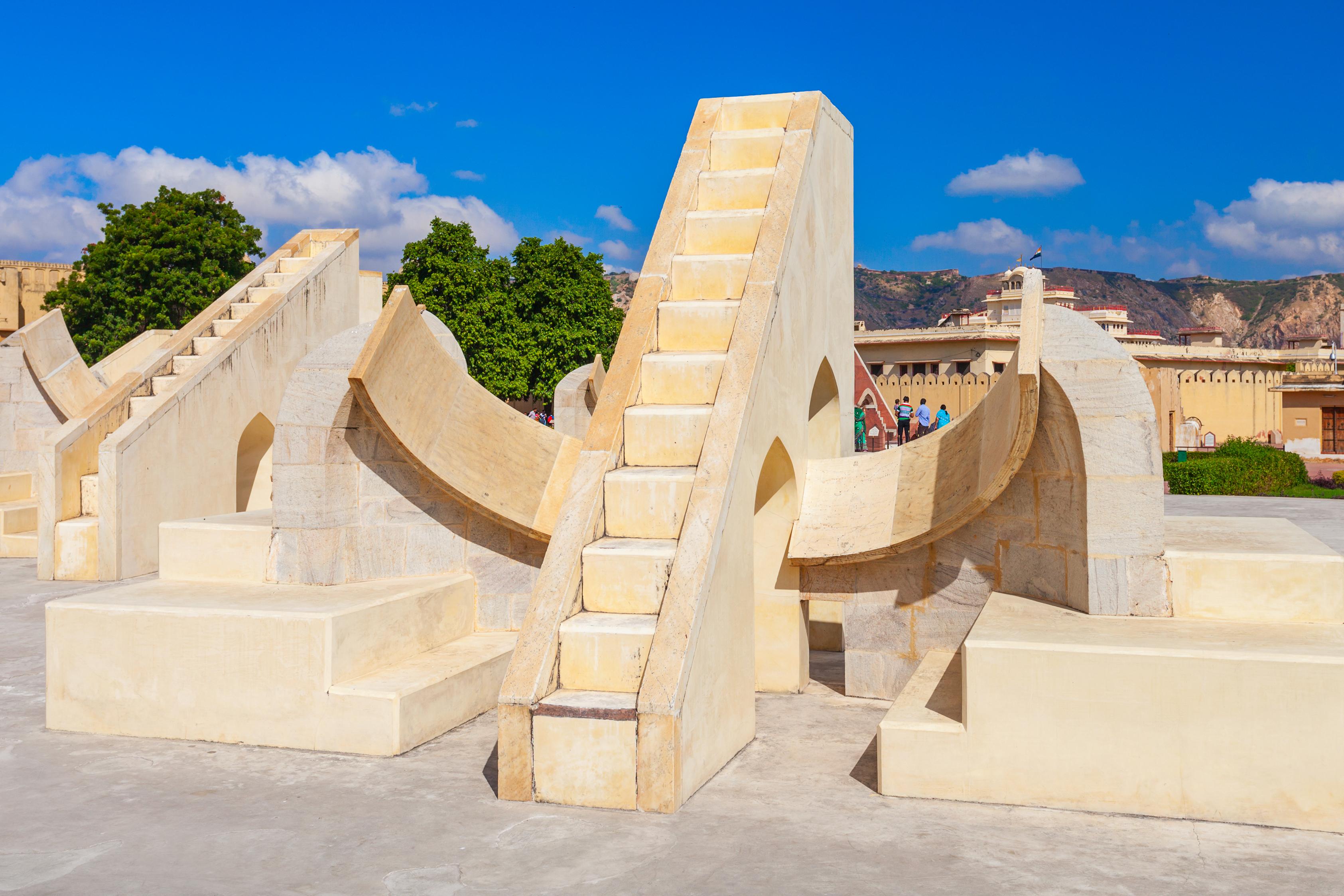
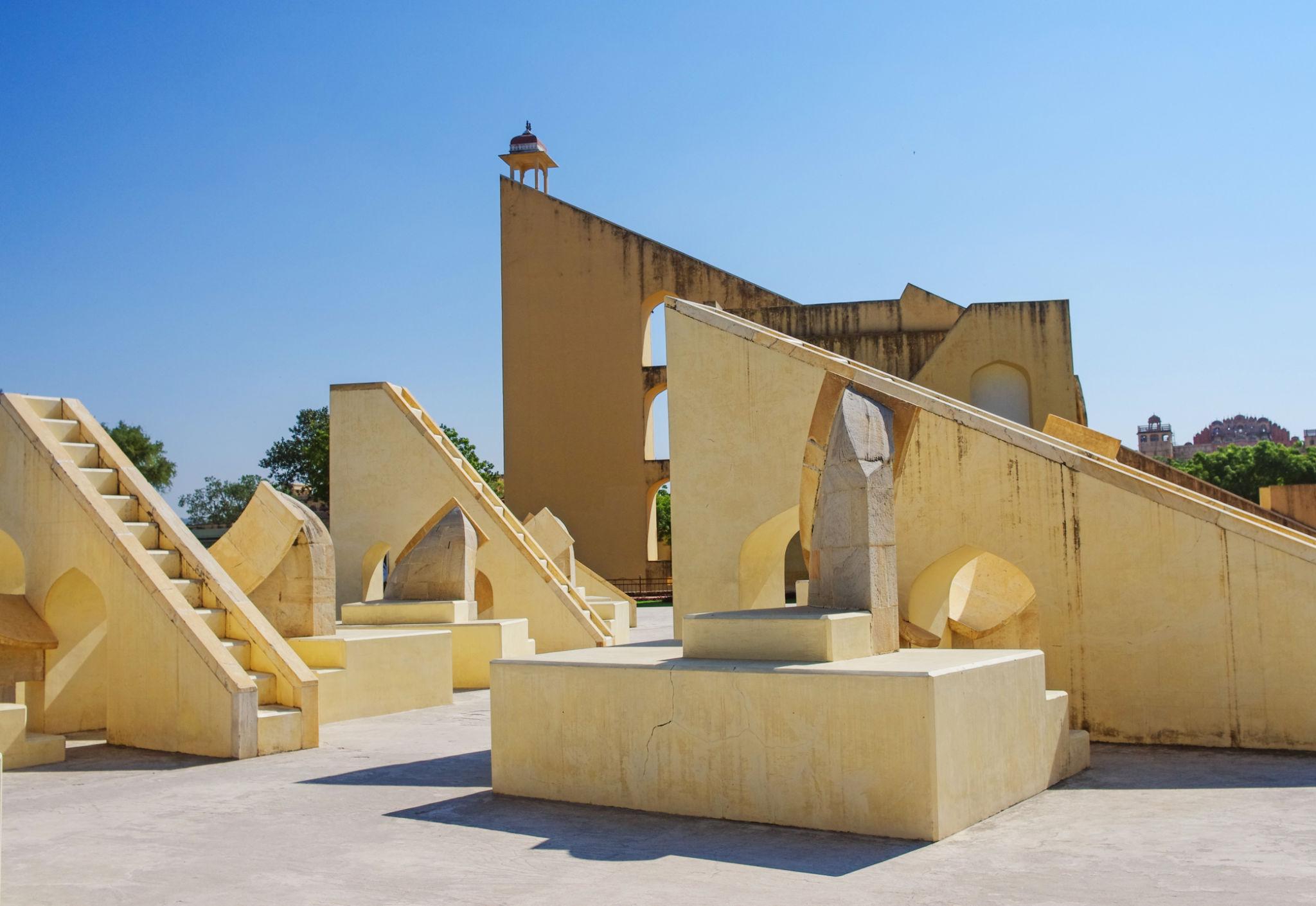
Jantar Mantar Jaipur
You've probably seen it written off as "some old sundials." A courtyard of odd stone shapes, a quick walk-through between the City Palace and Hawa Mahal, twenty minutes and out. But here's the thing nobody tells you: turn up at noon with no context and that's exactly what you'll get — a baffling sculpture garden you photograph and forget. Show up understanding what you're looking at, and it's a working observatory where you can read the time to the second off a shadow, built three hundred years ago. The difference is entirely in how you arrive.
Let's fix that. Here's how Jantar Mantar actually works, and how to get it right the first time.
Why a guide matters more than the hour
Unlike most sights, this one isn't about light or crowds — it's about comprehension. Jantar Mantar is a set of nineteen giant masonry instruments built by Maharaja Jai Singh II in the 1720s–30s to track time, predict eclipses, and follow the stars and planets. Every strange shape has a precise astronomical job. Without someone to explain them, they're abstract; with five minutes of explanation, they come alive.
So the single best thing you can do is take the government-approved guide or the audio guide at the gate. Go in the morning when it's cooler and the courtyard is quieter — Jaipur gets fierce heat and there's almost no shade here — and give it an hour, not twenty minutes.
What you'll actually see
Nineteen instruments, and a handful you shouldn't miss:
The Samrat Yantra — the world's largest stone sundial, a 27-metre gnomon that tells local time to about two seconds.
The Jai Prakash Yantra — sunken hemispherical bowls that map the sky onto the ground.
The Rashivalayas — twelve instruments, one per zodiac sign, for tracking celestial latitude.
The Ram Yantras and Nadivalaya — for measuring altitude, azimuth and the sun's position.
Wear a hat, sunglasses and sunscreen, and carry water — the courtyard is open stone and the sun is relentless by mid-morning.
And here's the rare stop where the phone earns its keep: unlike a temple or a ceremony, this is a monument built to be examined, so photograph away. But understand before you shoot. Travellers who've done it will tell you the same thing — the instruments look like abstract art until someone shows you the Samrat Yantra's shadow visibly moving down the scale, and then you can't unsee it. Watching a three-hundred-year-old machine tell you the exact time off the sun is the part a quick photo skips entirely.
Pro tip: Take the guide — this is the one Jaipur monument that's genuinely diminished without one, and it's a small price for turning stone shapes into working machines. Buy the combined ticket if you're also doing the City Palace, Hawa Mahal and Amber Fort; it's cheaper than separate entries. Come early in the day for the heat and the light, and try to be at the Samrat Yantra near noon if you can, when the shadow is sharpest and a guide can show you the reading. It's a UNESCO World Heritage Site, so it's well kept and clearly laid out once you know what you're seeing.
The mistakes that ruin it
Most first-timers trip over the same few things. They walk through with no guide and leave baffled. They come at midday in summer and wilt in the shadeless heat. Or they give it twenty minutes as a box to tick and miss the one place in India where you can read the time off a shadow.
The easy fix is to come in the morning with a guide or audio guide and give it a proper hour — because with context, this is one of the most extraordinary things Jaipur has.
Want Jantar Mantar with a guide who can actually explain how the instruments work? Hit Get a quote — we'll pair it with City Palace.
Moment1/77/632, Devisinghpura, Jaipur

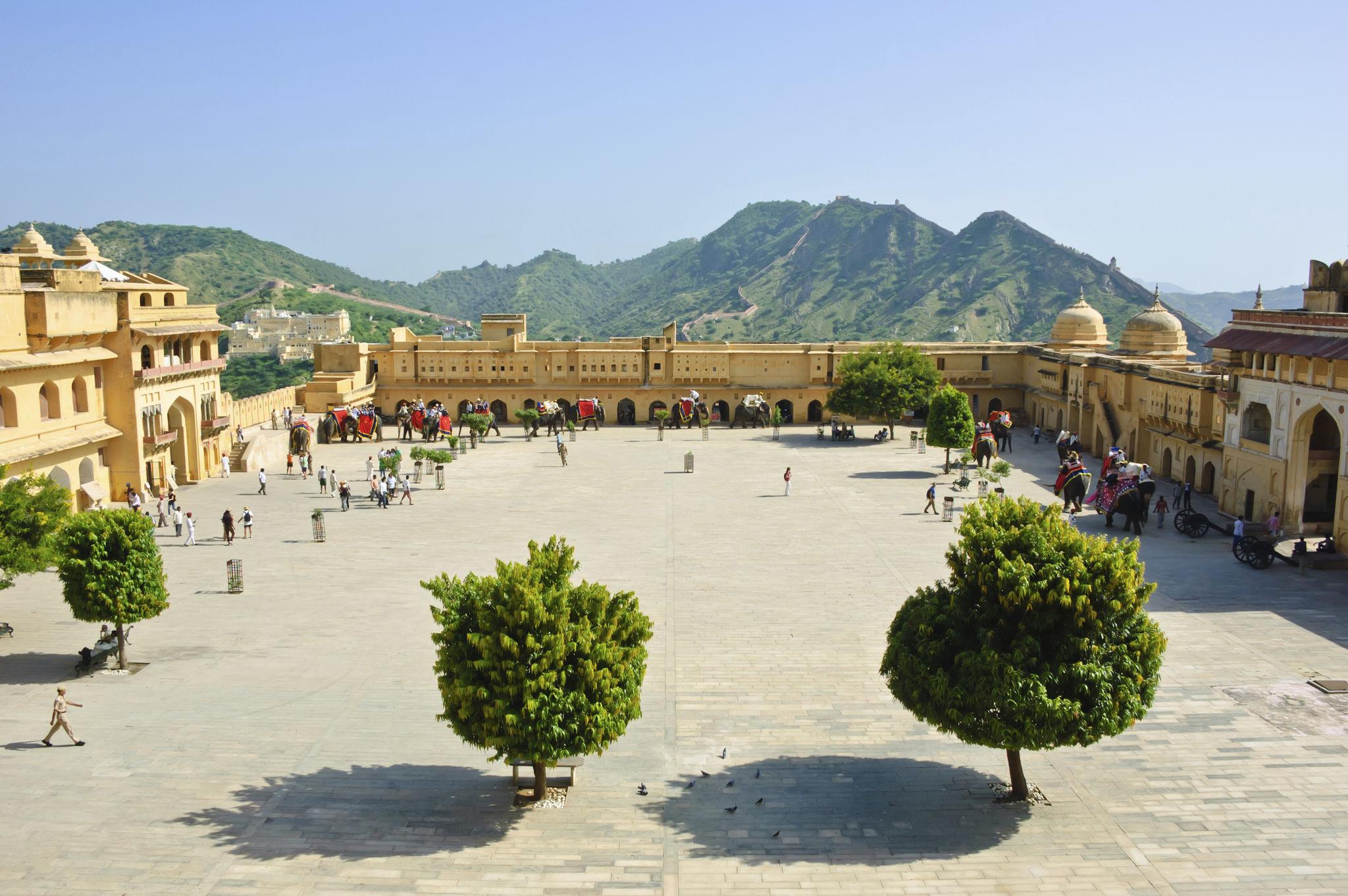
Amber Fort
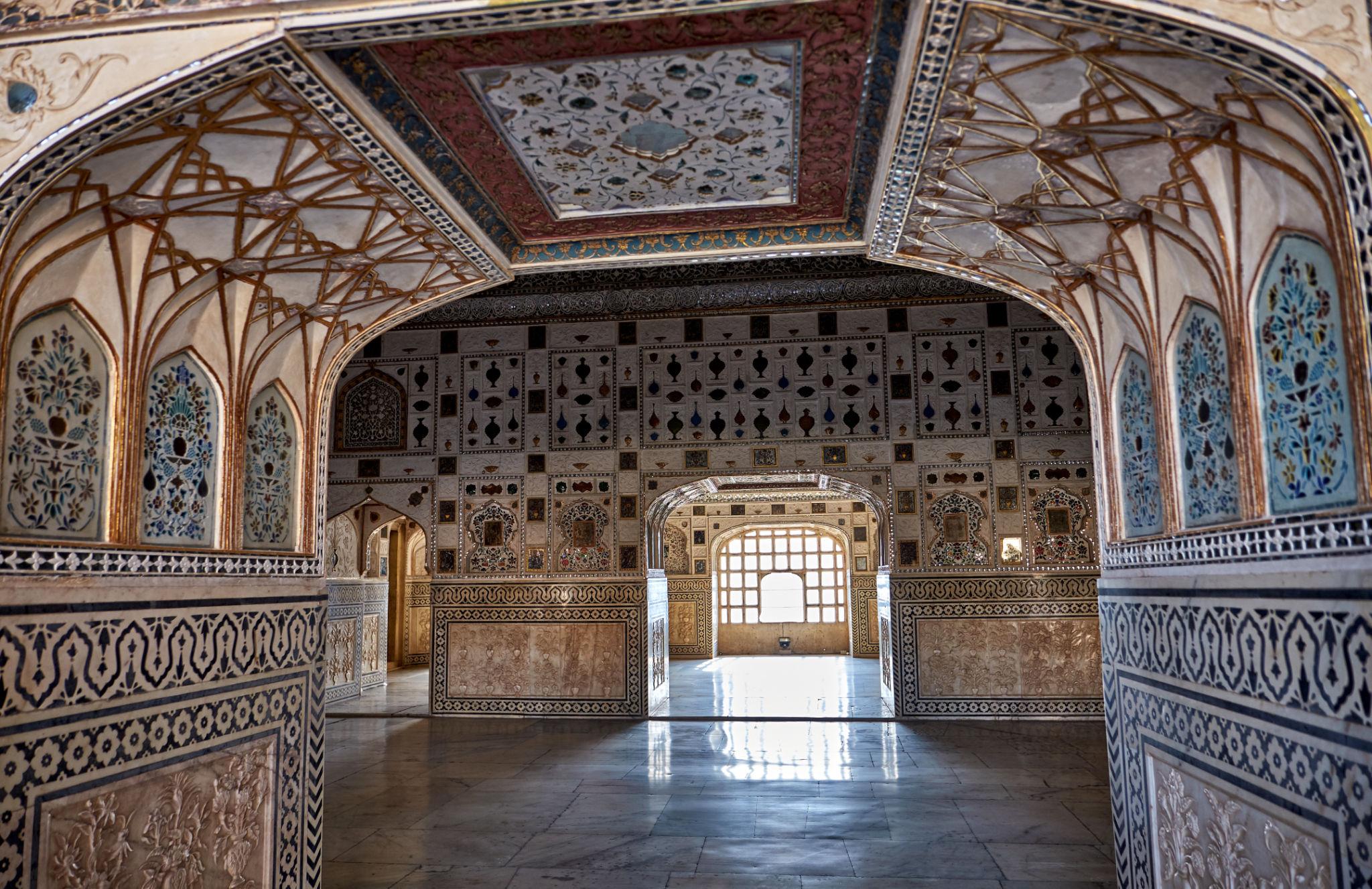
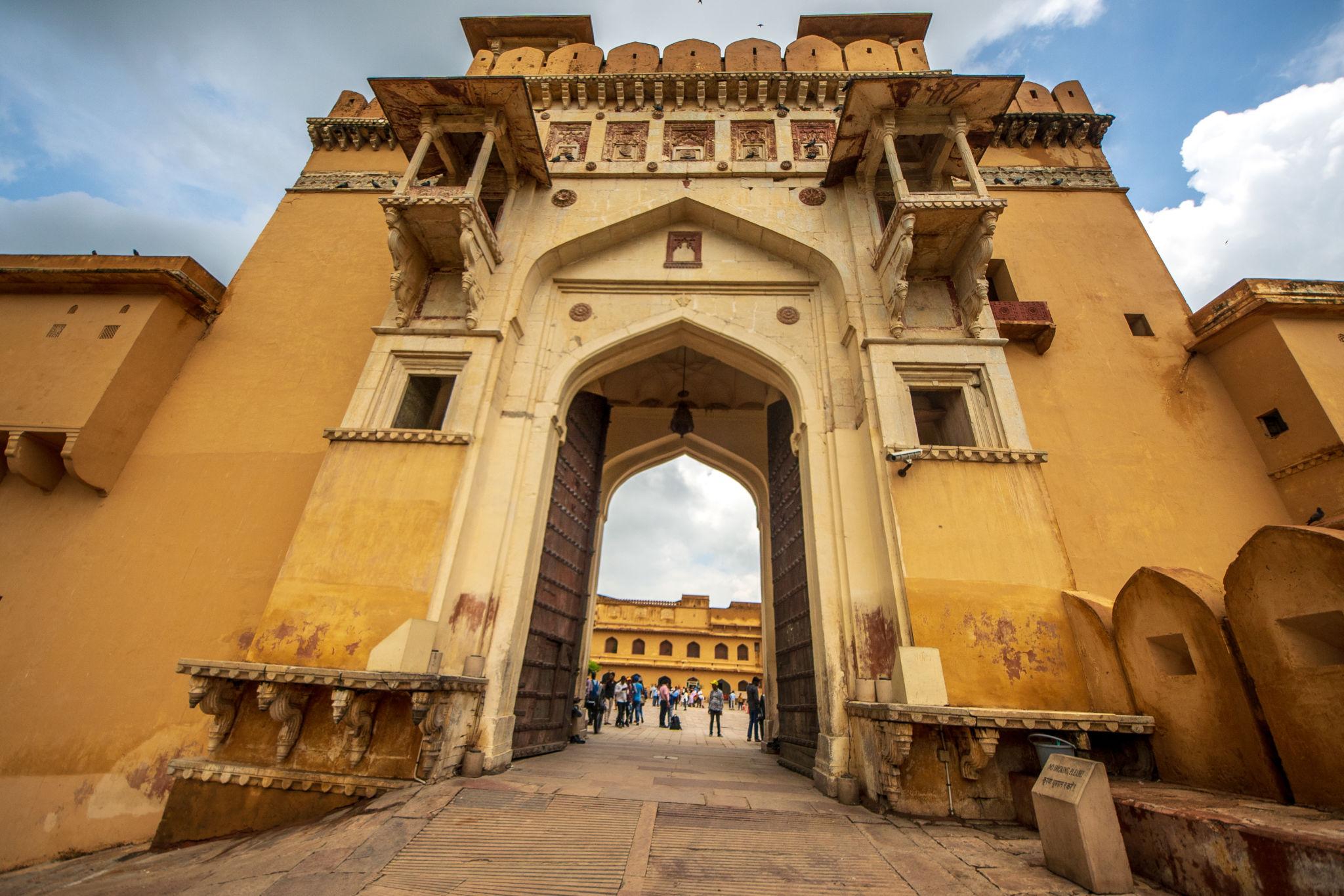
You've probably seen the shot — the honey-coloured fort spread across a ridge above a lake, elephants plodding up to the gate. But here's the thing nobody tells you: turn up at eleven with the tour buses and you'll queue in the sun, share every courtyard with a thousand people, shuffle through the Sheesh Mahal at a crawl, and leave wondering why it looked so much better in the photos. A midday Amber is a hot, crowded slog. It doesn't have to be.
Let's fix that. Here's how a visit to Amber Fort actually works, and how to get it right the first time.
Why you go at opening, and not any other hour
Amber sits on a hillside outside Jaipur, all sandstone and marble, and it bakes. It opens around 8 a.m., and the first hour is a different place entirely — cool, soft-lit, and nearly empty before the coach tours roll in around ten or eleven. The low morning sun turns the stone gold and lights the Maota Lake below the ramparts, which is exactly the view that sold you on it.
So be at the gate for opening. You'll walk the courtyards before the crowds, get the Sheesh Mahal almost to yourself, and be back down before the worst of the heat. Yes, it's an early start. It's also the difference between the fort in the brochure and a sweaty scrum.
What you'll actually see
Allow two to three hours to do it properly. The fort climbs through four courtyards:
Diwan-i-Aam — the hall of public audience, a colonnade open to the hills.
Ganesh Pol — the painted gateway into the private palace, one of the most beautiful in Rajasthan.
Sheesh Mahal — the mirror palace, its walls and ceiling set with thousands of tiny mirror tiles.
Sukh Niwas and the garden — the pleasure hall with its early cooling channels, across the char-bagh.
The view — back down to Maota Lake and the walls snaking along the ridge toward Jaigarh above.
Wear proper shoes — there's a lot of climbing on uneven stone — and carry water and a hat, because shade is scarce once the sun is up.
And keep the phone down for the first few minutes when you step into a courtyard. Travellers who've been will tell you the same thing: the urge is to photograph every wall, but the scale and the light land differently when you just look first. The cool of the mirror hall, the painted gate, the hills falling away beyond the ramparts — that's the part the photos never quite catch.
Pro tip: Please don't take the elephant ride up. It looks romantic, but the animals are widely reported to be overworked in the heat, and the welfare concerns are real — walk up the ramp, or take a jeep, both of which are quick and easy. Buy tickets online or use the Jaipur composite ticket if you're also seeing Jantar Mantar and the City Palace; it saves money and a queue. And do the Sheesh Mahal first thing, before the crowds, because it's the one spot that becomes unbearable when full.
The mistakes that ruin the visit
Most first-timers trip over the same few things. They arrive mid-morning into the coach-tour crush. They underestimate the climbing and the heat and wilt halfway up. Or they take the elephant ride not knowing the welfare issues, and regret it later.
The easy fix is to come at opening, wear the right shoes, walk or jeep up, and give it a couple of unhurried hours — or fold it into a guided Jaipur day so the tickets and timing are already sorted.
Want Amber Fort at opening hour — Sheesh Mahal, Ganesh Pol, no crowd — with the return through Panna Meena? Hit Get a quote.
MomentAmer Fort, Swai madhopur

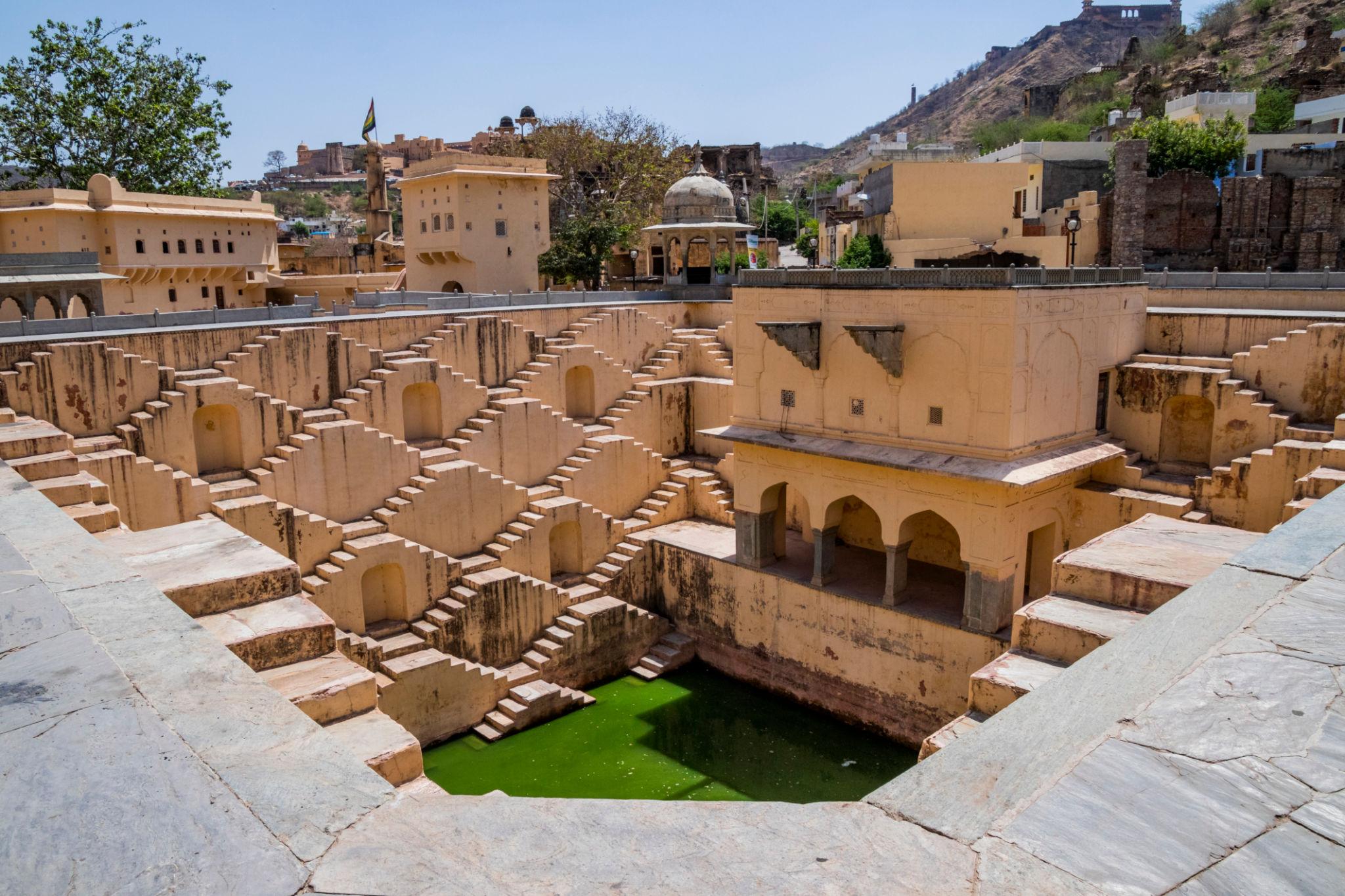
Panna Meena ka Kund
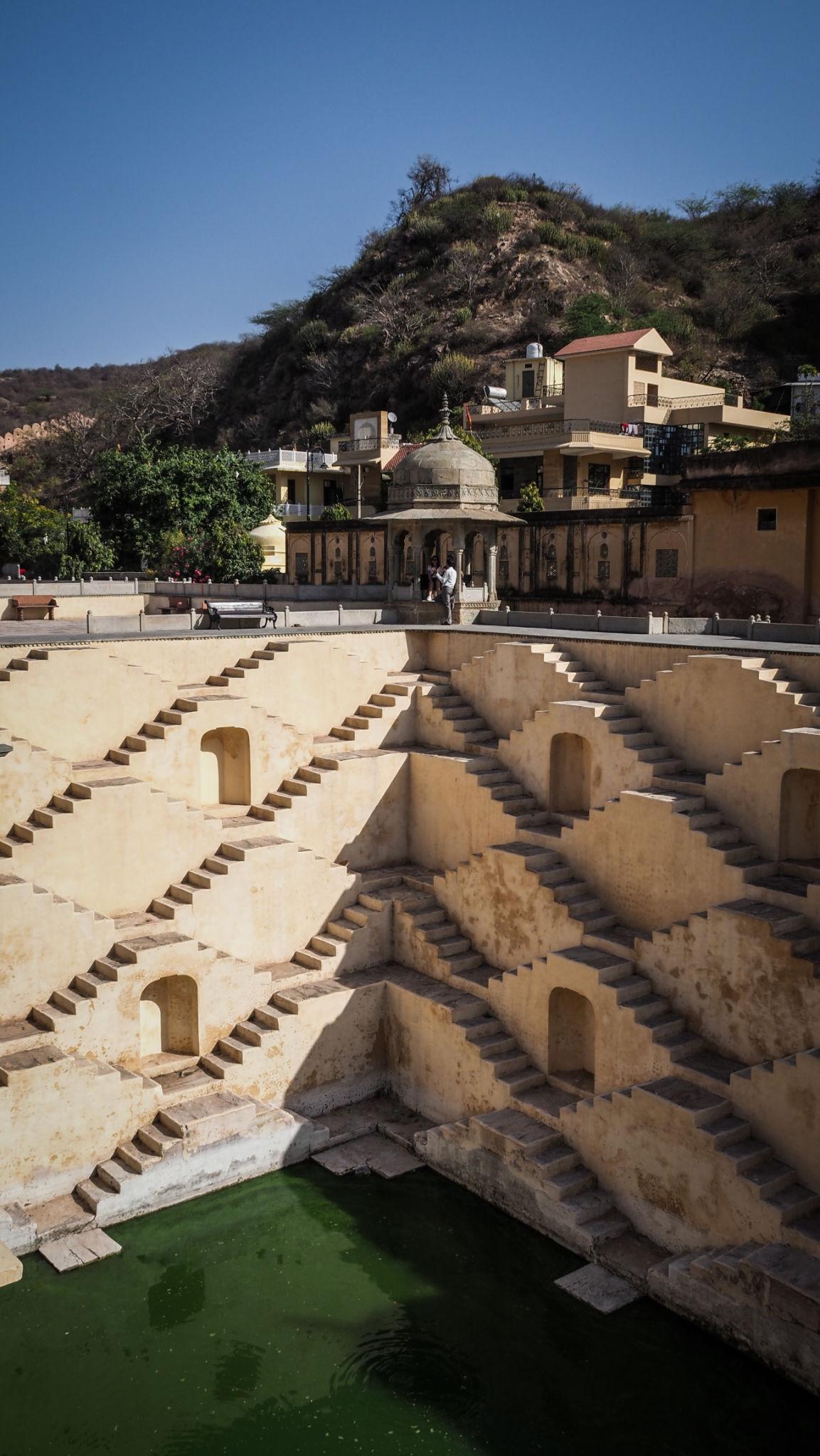
You've probably seen it on a reel. Those perfectly symmetrical criss-cross staircases zigzagging down into a square pool, someone in a bright dress posed halfway down. But here's the thing nobody tells you: turn up at eleven with the tour buses from Amer Fort, and you'll be queuing to stand on a step for a photo while twenty other people wait to do the same, with harsh overhead sun flattening the whole thing. The stepwell everyone raves about is an early-morning stepwell.
Let's fix that. Here's how a visit to Panna Meena ka Kund actually works, and how to get it right the first time.
Why early morning, and not any other hour
Panna Meena sits just below Amer Fort, so it runs on the fort's rhythm — quiet at opening, mobbed by mid-morning once the coaches roll in. Get there soon after sunrise and you may have the whole eight-storey well nearly to yourself, with soft side-light picking out the geometry of the steps. By ten or eleven, it's crowded, hot, and every frame has strangers in it.
So come first thing, ideally before you go up to the fort rather than after. The light is better, the crowds are thin, and the symmetry actually reads. It's a short stop — twenty or thirty minutes is plenty — but the hour you pick decides whether it's magic or a scrum.
What you'll actually see
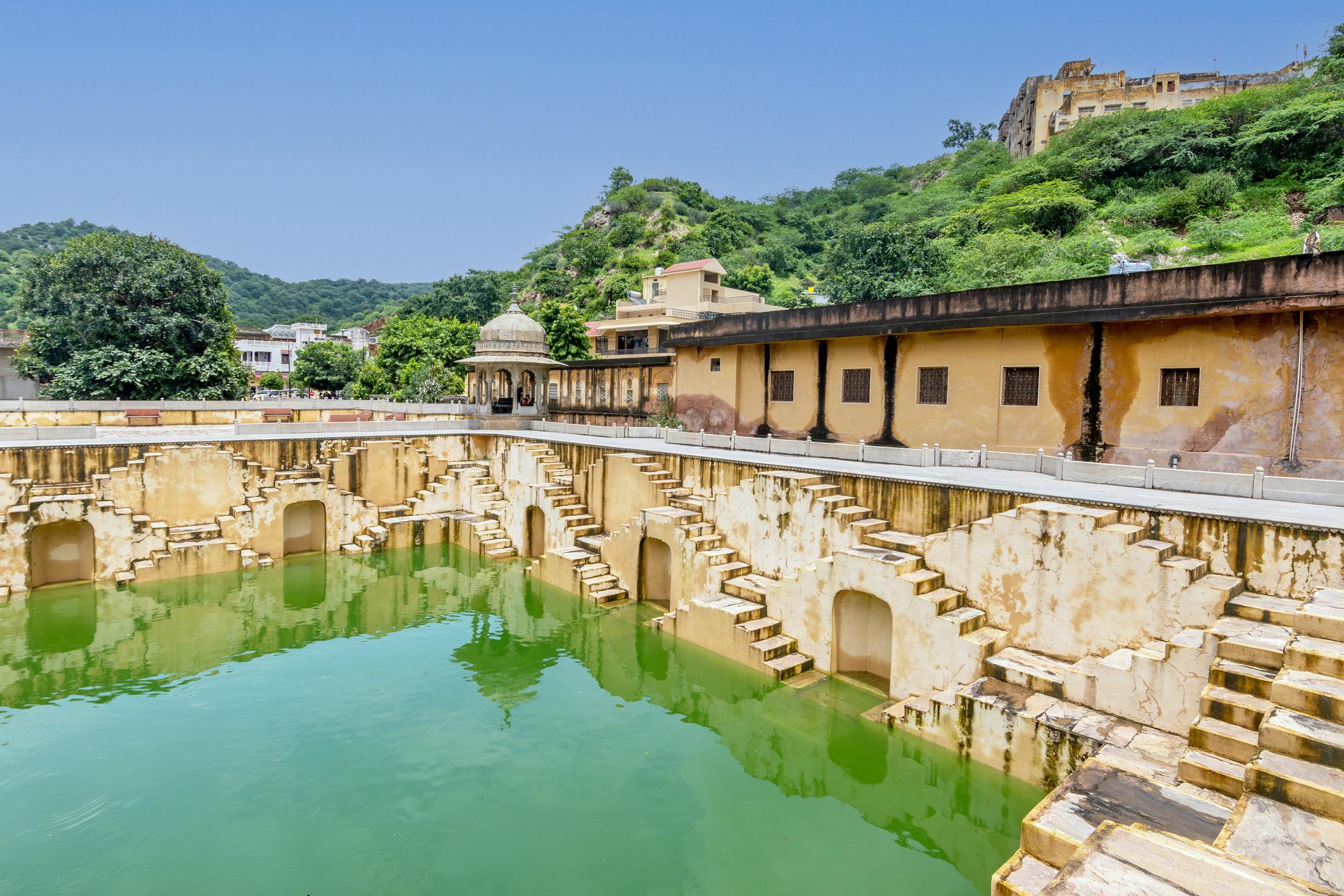
Built in the 16th century as a water source and community gathering place, it's a square tank ringed on three sides by those interlocking stairs:
The criss-cross steps — the reason you came, best seen from the entrance corner where the geometry lines up.
The depth — around eight levels down; the water sits at the bottom, its height rising and falling with the season.
The resting alcove — the small shaded pavilion on the fourth side, where people once sat out the heat.
Amer Fort above — right there, so pair the two in one morning.
Wear something with grip. The steps are uneven old stone and there's no railing.
And here, unlike a temple, the phone earns its place — this is a monument built to be looked at, and the geometry genuinely photographs. But look first. Travellers who come will tell you the same thing: everyone rushes straight to a step to pose, but the stepwell is more striking when you take a moment to see the whole pattern before you're standing in it. The scale, the repetition, the quiet of an old water source that once kept a whole community alive — that's the part the posed photo skips.
Pro tip: You are not allowed to walk down the steps — descending into the well is prohibited for safety and preservation, and the "person on the stairs" shots you've seen mostly predate the rule or ignore it. Shoot from the top and the entrance rather than expecting to climb in. Go early, combine it with Amer Fort and the nearby Panna Meena lane, and check whether there's a small entry fee or a camera charge when you arrive.
The mistakes that ruin it
Most first-timers trip over the same few things. They come mid-morning with the fort crowds and the harsh light. They expect to pose halfway down and find it's not permitted. Or they treat it as a standalone trip rather than folding it into an Amer morning ten minutes away.
The easy fix is to come early, shoot from the top, and pair it with Amer Fort — or let it be built into a Jaipur morning so the timing's handled.
Want Panna Meena ka Kund paired with Amber Fort in one calm morning before the Instagram crowds arrive? Hit Get a quote.
MomentAmer Rd, Jal Mahal, Jaipur

Jal Mahal Royal heritage
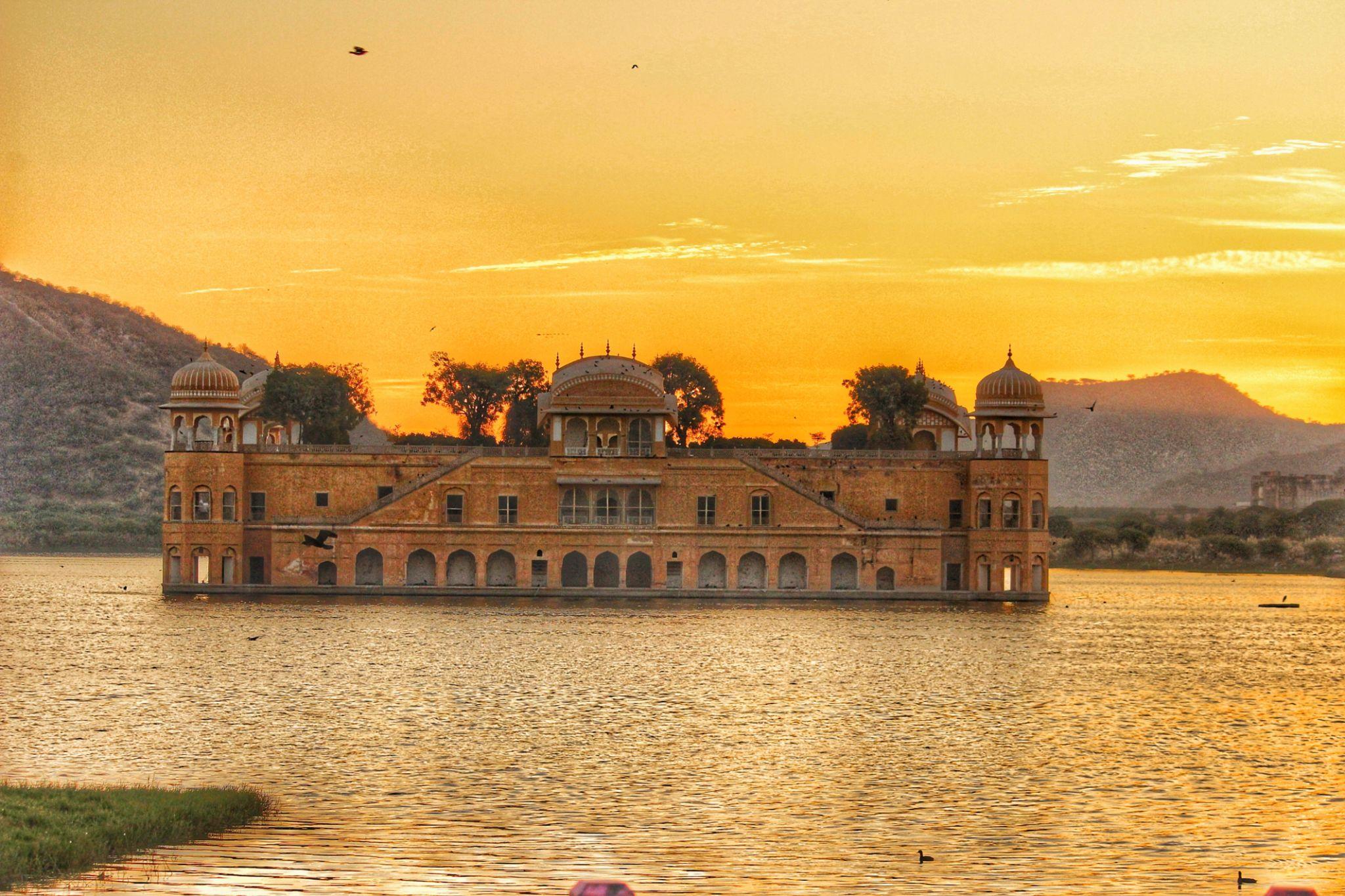
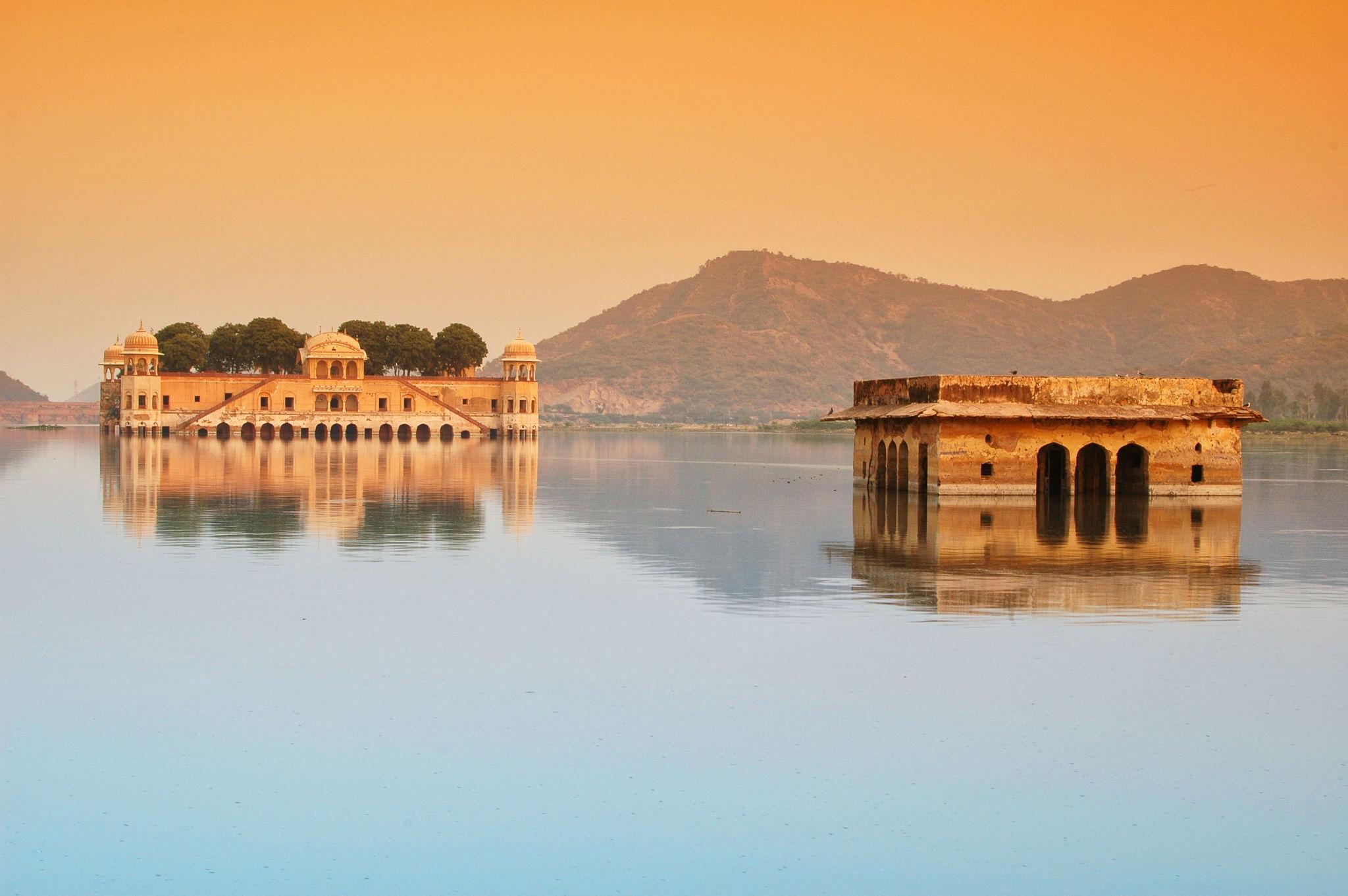
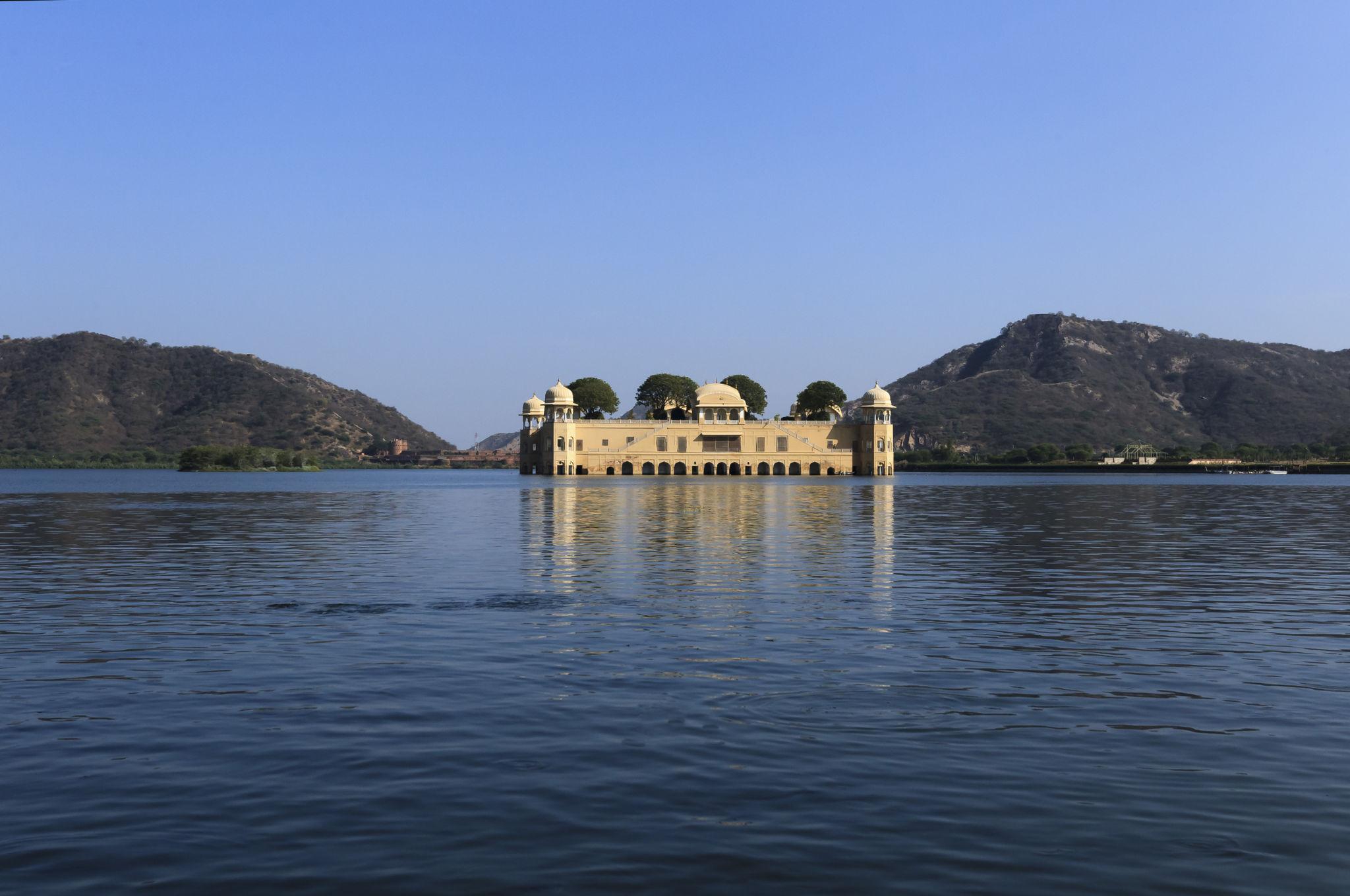
You've probably seen the photo. A honey-coloured palace sitting dead centre in a lake, mirrored perfectly in still water, the Aravalli hills behind it. So you picture gliding up to it in a boat, wandering its halls, standing on that rooftop garden. Then you arrive, discover you can't actually go in — the palace has been closed to the public for years — and find yourself on a roadside promenade with a hundred other people photographing a building you can't reach. The disappointment is entirely avoidable if you know what Jal Mahal is before you come.
Let's fix that. Here's how Jal Mahal actually works, and how to get it right the first time.
Why it's a view, not a visit
Here's the thing nobody tells you upfront: Jal Mahal is a building you look at, not one you go into. The "Water Palace" sits in the middle of Man Sagar Lake on the Amer road, and boating out to it and entry are not currently open to general tourists. So the entire experience is the view from the shore — which is genuinely lovely, as long as that's what you came for.
And the view has a best hour. In the flat light of midday the palace looks washed-out and the lake goes hazy. At sunrise it's mirror-still and glowing, with migratory birds on the water and almost nobody around. At sunset it turns gold and the promenade fills with people and food carts. Early morning is the connoisseur's choice; golden-hour evening is the livelier one.
What you'll actually see
From the lakeside promenade, give it twenty minutes to half an hour:
The palace — a five-storey Rajput-Mughal building, four floors of which sit underwater when the lake is full; only the top storey and its rooftop garden show.
Man Sagar Lake — with the Aravalli hills and the Nahargarh fort ridge behind, a proper Jaipur backdrop.
The birds — the lake is a birdwatching spot; winter mornings bring migratory flocks.
The promenade — restored lakefront walkway, with chaat stalls and camel-cart photo-ops in the evening.
Take water and something for the sun — the promenade is open and unshaded.
And here, unlike a temple or a cremation ghat, the phone earns its place: this is a building made to be photographed. But look before you shoot. Travellers who stop here will tell you the same thing — the reflection is the whole picture, so wait for the water to go still between breezes, get low to catch the mirror, and then frame it. A hurried snap through a crowd at midday never captures why the place is famous; the stillness at dawn does.
Pro tip: Come at sunrise if you want the palace to yourself and the mirror-perfect reflection, or at sunset if you want the atmosphere, the lights and the food. It's right on the Amer road, so fold it into the trip out to Amer Fort rather than a special journey — ten minutes' drive apart. Don't pay anyone promising a boat ride or interior entry; it isn't currently available and the offer is a scam. And skip the middle of the day entirely.
The mistakes that ruin it
Most first-timers trip over the same few things. They arrive expecting to go inside and leave let down. They come at noon and get the flat, hazy version. Or they make a dedicated trip for it instead of pairing it with Amer, and feel it didn't justify the detour.
The easy fix is to come at the right hour, on your way to or from Amer, knowing it's a view rather than a visit — and then it's exactly as lovely as the photo promised.
Want Jal Mahal timed to sunset with the Nahargarh ridge behind it and a photo stop that works? Hit Get a quote.
MomentMahadev Nagar Rd, Hawa Sadak, Jaipur

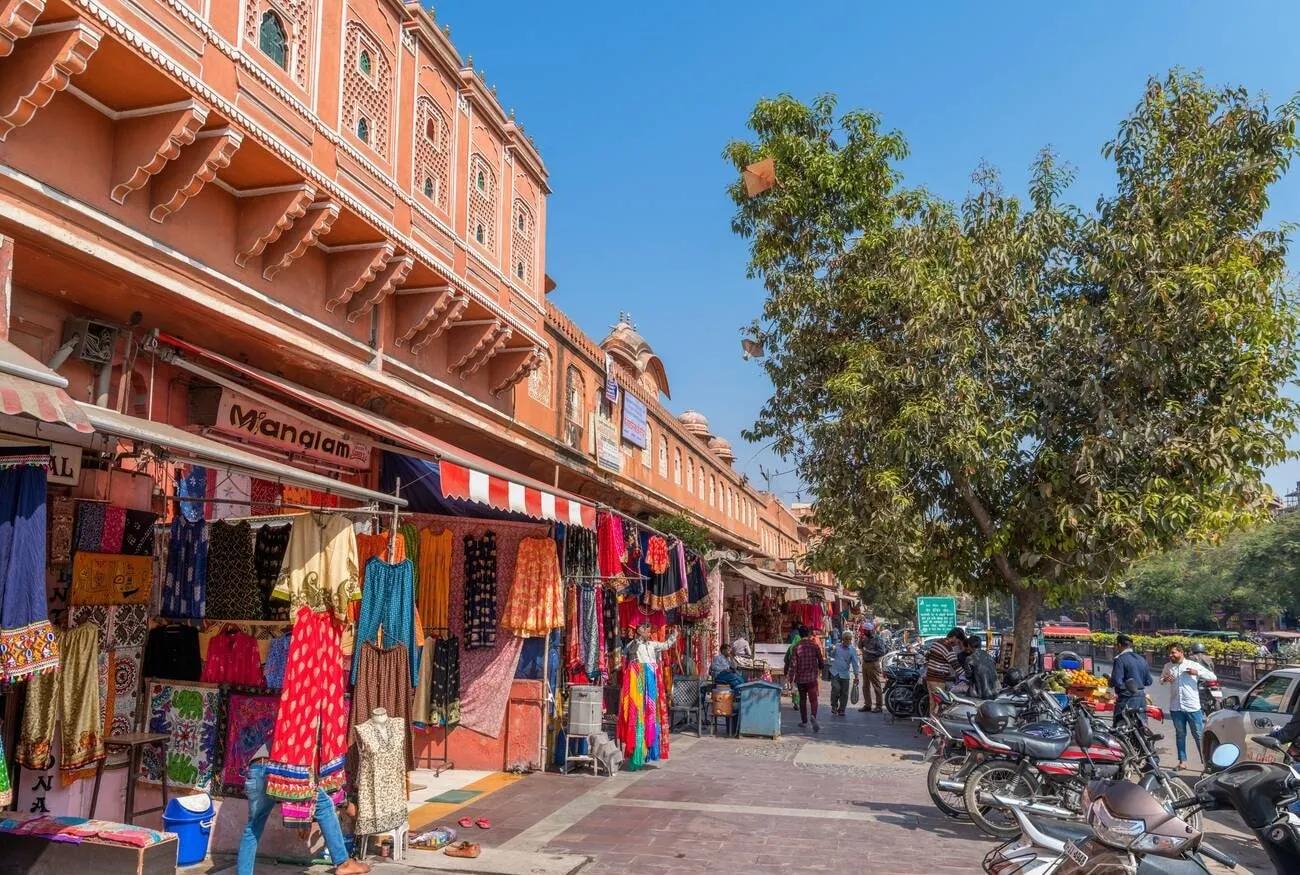
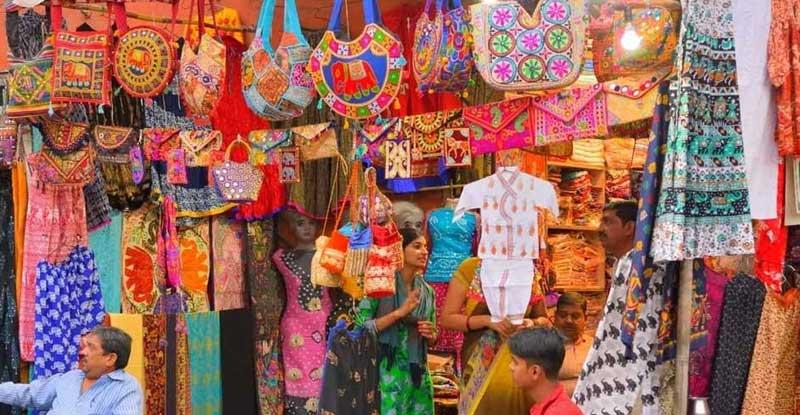
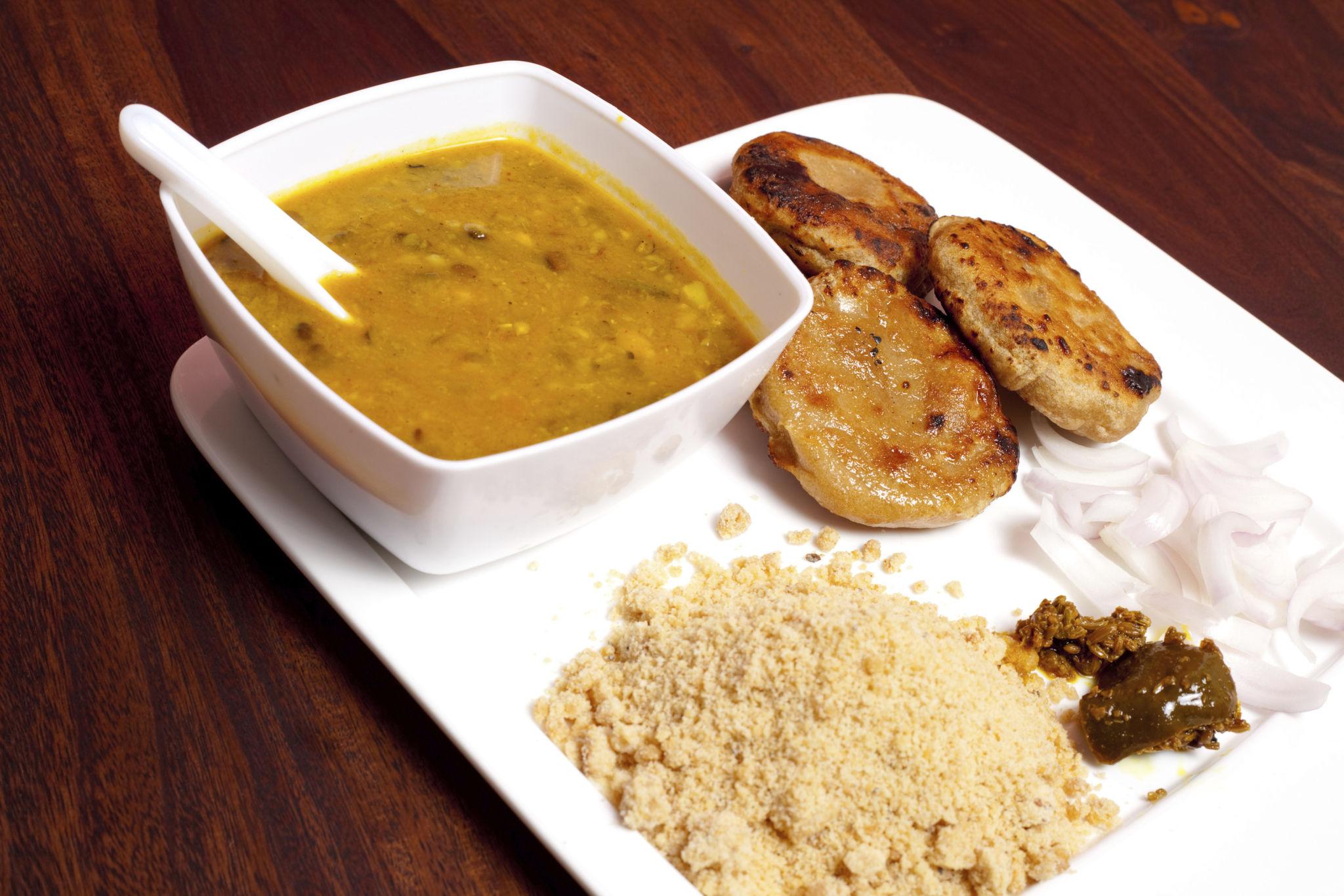
Local Bazaars & Rajasthani Cuisine
You've probably pictured the bazaar as shopping and the food as a hotel buffet. But here's the thing nobody tells you: wander into the first shiny emporium a driver drops you at, eat your dal baati churma in an air-conditioned resort restaurant, and you'll pay three times over for a fraction of the real thing. The bazaars that matter aren't on the tourist strip, and the best Rajasthani food isn't in a hotel — it's in a sweet shop that's been frying kachoris on the same corner for sixty years.
Let's fix that. Here's how the bazaars and the food actually work, and how to get it right the first time.
Why the hour and the lane decide everything
Rajasthan's old-city markets run on their own clock. Mornings are for produce, flowers and calm browsing; the bazaars come properly alive in the evening, when the heat drops, the lights come on, and the whole city seems to be out shopping and eating. Midday, in the hot months, half the shutters are down and the streets are punishing.
And the where matters as much as the when. The commission-driven "government emporiums" your driver suggests are not the market — they're a cut of your wallet. The real bazaars are the specialised old-city lanes: one for textiles, one for jewellery, one for spices, one for sweets. Go to those, in the evening, and you're in the actual thing.
What you'll actually find
Every Rajasthani city has its own famous lanes — Jaipur's Johari and Bapu bazaars, Jodhpur's Sardar Market under the clock tower, Udaipur's Bada Bazaar — but the categories repeat:
Textiles — block-printed cotton, bandhani tie-dye, mirror-work, and Jaipur's blue pottery.
Jewellery — silver by weight, lac bangles, and Jaipur's famous gemstones (buy stones only from a trusted, certified shop).
The food stalls — pyaaz kachori, mirchi bada, mawa kachori, and jalebi fried in front of you.
A proper thali house — dal baati churma, gatte ki sabzi, ker sangri and laal maas, at a local institution rather than a hotel.
Come hungry and go easy on the first stall — you'll want room for four more.
And here's where the phone helps rather than hinders. Travellers who shop these lanes will tell you the same thing: check the going rate before you buy, and don't be shy about walking away — bargaining is expected, the first price is theatre, and a smile and a slow exit will halve it. But once the haggling's done, put the phone down at the food stall. The smell of ghee and cardamom, the clatter of the kachori pan, a hot jalebi handed to you in a leaf bowl — that's the part the photos never quite catch.
Pro tip: Eat where the locals queue, not where the tour buses park. A busy sweet shop with high turnover is both tastier and safer than a quiet tourist café. Skip the commission emporiums entirely and go to the specialised bazaars. And if you have a weak stomach, ease into the street food — start with fried, freshly-cooked things (kachoris, jalebi) rather than anything watery or pre-cut, and drink bottled or filtered water.
The mistakes that ruin it
Most first-timers trip over the same few things. They get driven to a commission emporium and think they've seen the bazaar. They eat Rajasthani food in a hotel and miss the real version. Or they pay the first quoted price because they didn't know it was meant to be halved.
The easy fix is to hit the specialised lanes in the evening with someone who knows which shop is which — and which sweet shop the whole city trusts.
Want the real Jaipur bazaar walk — Johari, Bapu, Tripolia — with a local who knows the craftsmen? Hit Get a quote.
Moment1/77/632, Devisinghpura, Jaipur

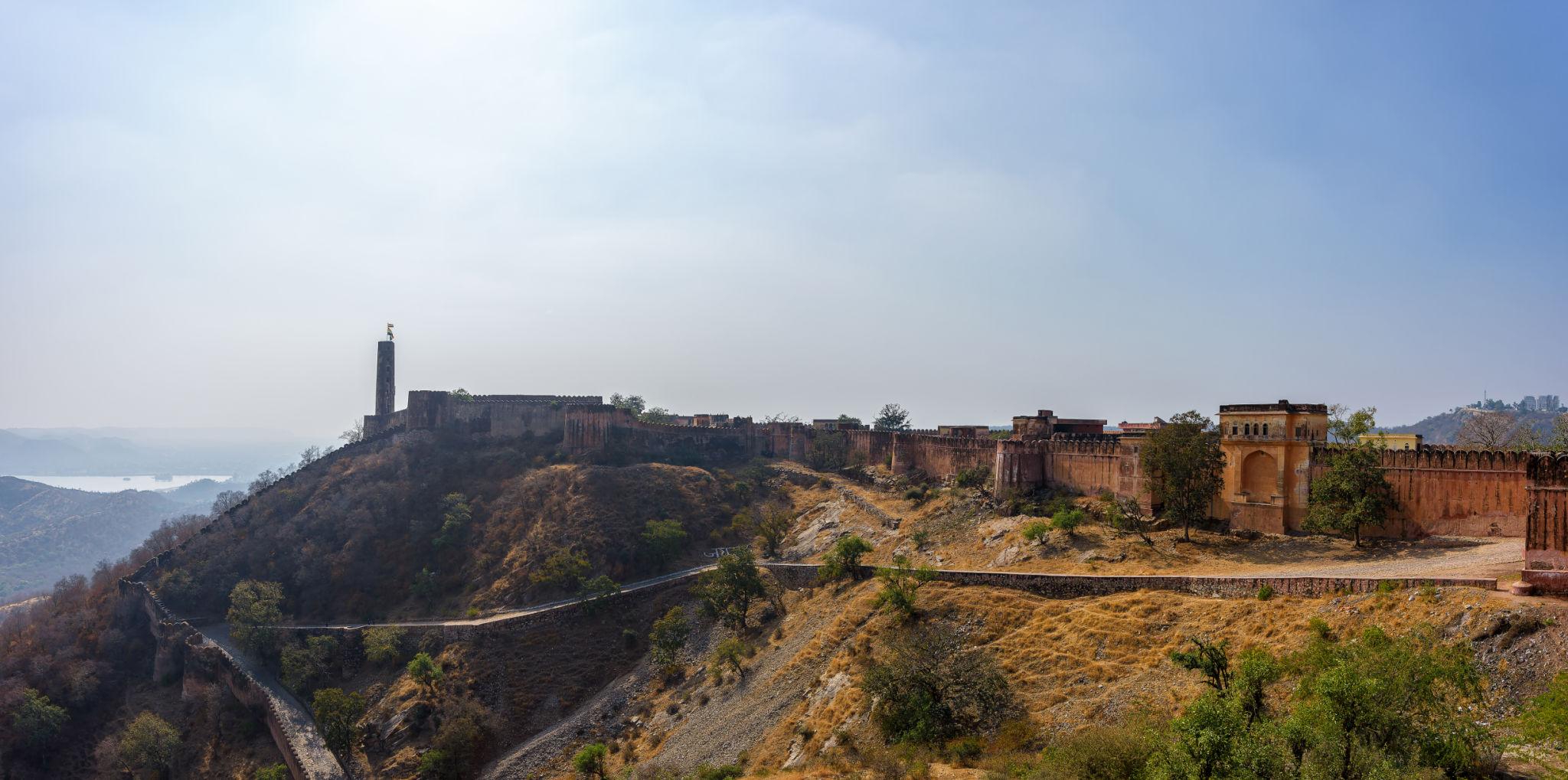
Jaigarh Fort
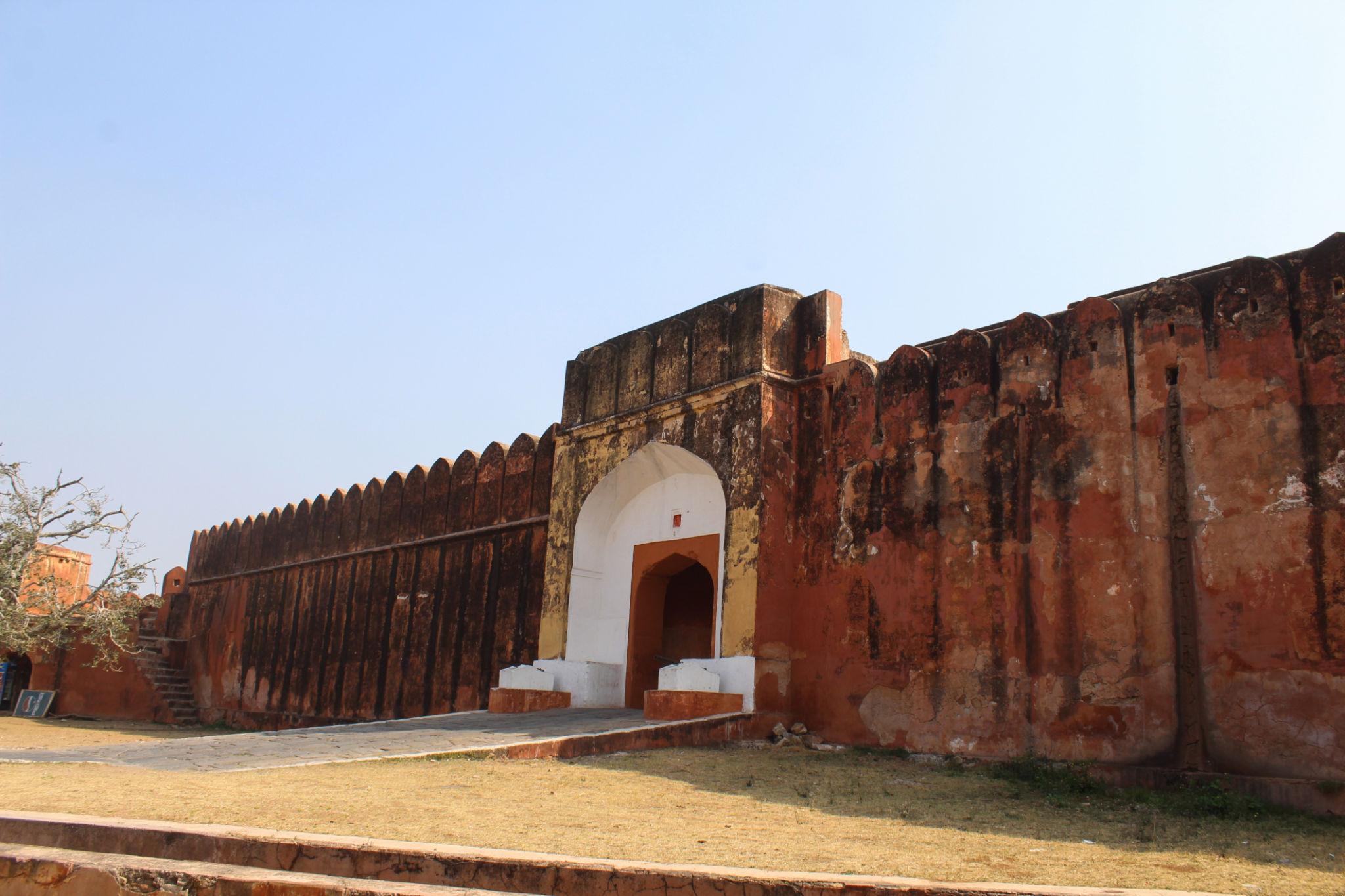
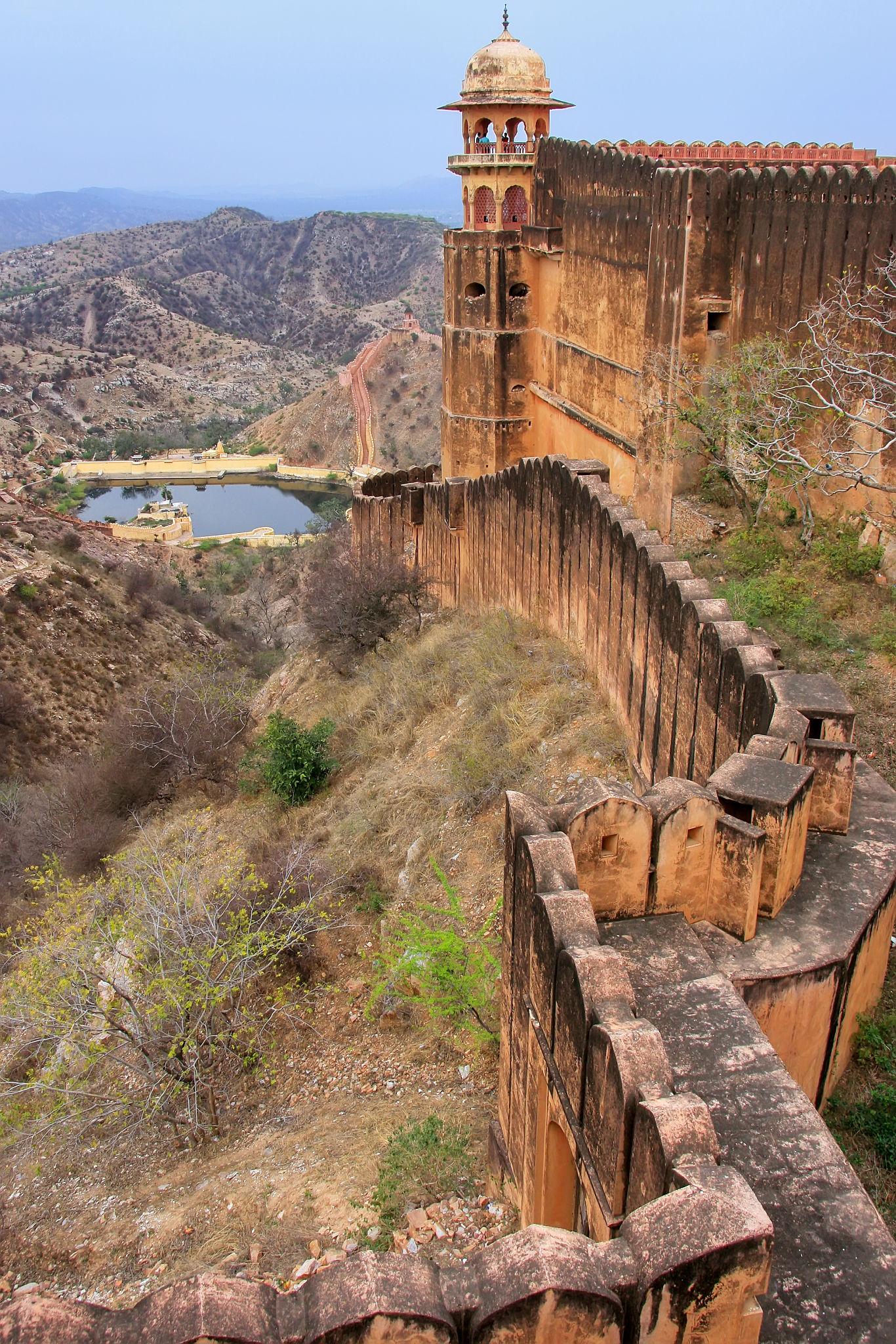
You've probably seen it looming above Amber and assumed it's the same visit. Do Amber Fort, glance up at the walls on the ridge, tick Jaipur's forts off. But here's the thing nobody tells you: Jaigarh is the military fort — the one that guarded Amber, held the royal treasury, and still has the largest cannon on wheels ever built sitting on its ramparts. Skip it, rush it, or arrive baked at midday, and you miss the most intact fort in the whole Jaipur cluster.
Let's fix that. Here's how a visit to Jaigarh Fort actually works, and how to get it right the first time.
Why the morning, and not the middle of the day
Jaigarh sits high on the Aravalli ridge above Amber, exposed, with almost no shade on its long ramparts. By midday in the Rajasthan sun those open walls and the walk out to the cannon become genuinely punishing. In the cool of the morning they're a pleasure — clear light on the honey-coloured stone, the whole valley laid out below, and the fort mostly to yourself before the Amber crowds drift up.
So come early, ideally right as it opens, and do the exposed parts first while it's cool. Pair it with Amber if you like, but give Jaigarh its own proper hour rather than treating it as an afterthought to the palace below.
What you'll actually see
The fort is big and genuinely worth the climb. Along the way you'll find:
Jaivana Cannon — the largest cannon on wheels ever made, cast in the fort's own foundry. The signature sight.
The ramparts and watchtowers — long walls with sweeping views over Amber, Maota Lake and the Jaipur plains.
The armoury and museum — swords, shields, muskets, and old royal artefacts.
The water-harvesting system — vast underground tanks that made the fort self-sufficient (and long rumoured to have hidden the Kachhwaha treasure).
Bring water and a hat even in cooler months. The ramparts are open and the walk out to the cannon and around the walls is longer than it looks.
And keep your phone down for the first few minutes when you reach the ramparts. Travellers who've been will tell you the same thing: the urge is to photograph the view immediately, but it lands differently when you take it in first — Amber Fort spread out directly below, the wall snaking along the ridge, the plains running to the horizon. That sense of scale and command, of why they built a fort exactly here, is the part the photos never quite catch.
Pro tip: Keep your Amber Fort ticket — a combined ticket often covers Jaigarh, and the two forts are linked by fortified passages and a subterranean tunnel. You can drive right up to Jaigarh's gate, which saves the steep climb if you're short on time or energy. And check whether there's a separate small camera fee at the entrance, and carry a little cash for it.
The mistakes that ruin the visit
Most first-timers trip over the same few things. They do Amber and skip Jaigarh entirely, not realising it's the more intact fort. They come at midday and wilt on the shadeless ramparts. Or they rush the walk and never reach the Jaivana cannon, which is the whole point.
The easy fix is to come in the morning, allow a proper hour or two, and walk out to the cannon and the far ramparts rather than turning back early.
Want Jaigarh paired with Amber Fort and the cannon that never fired, plus the hilltop Jaipur views? Hit Get a quote.
MomentShiv Marg, ram nagar colony, Jaipur

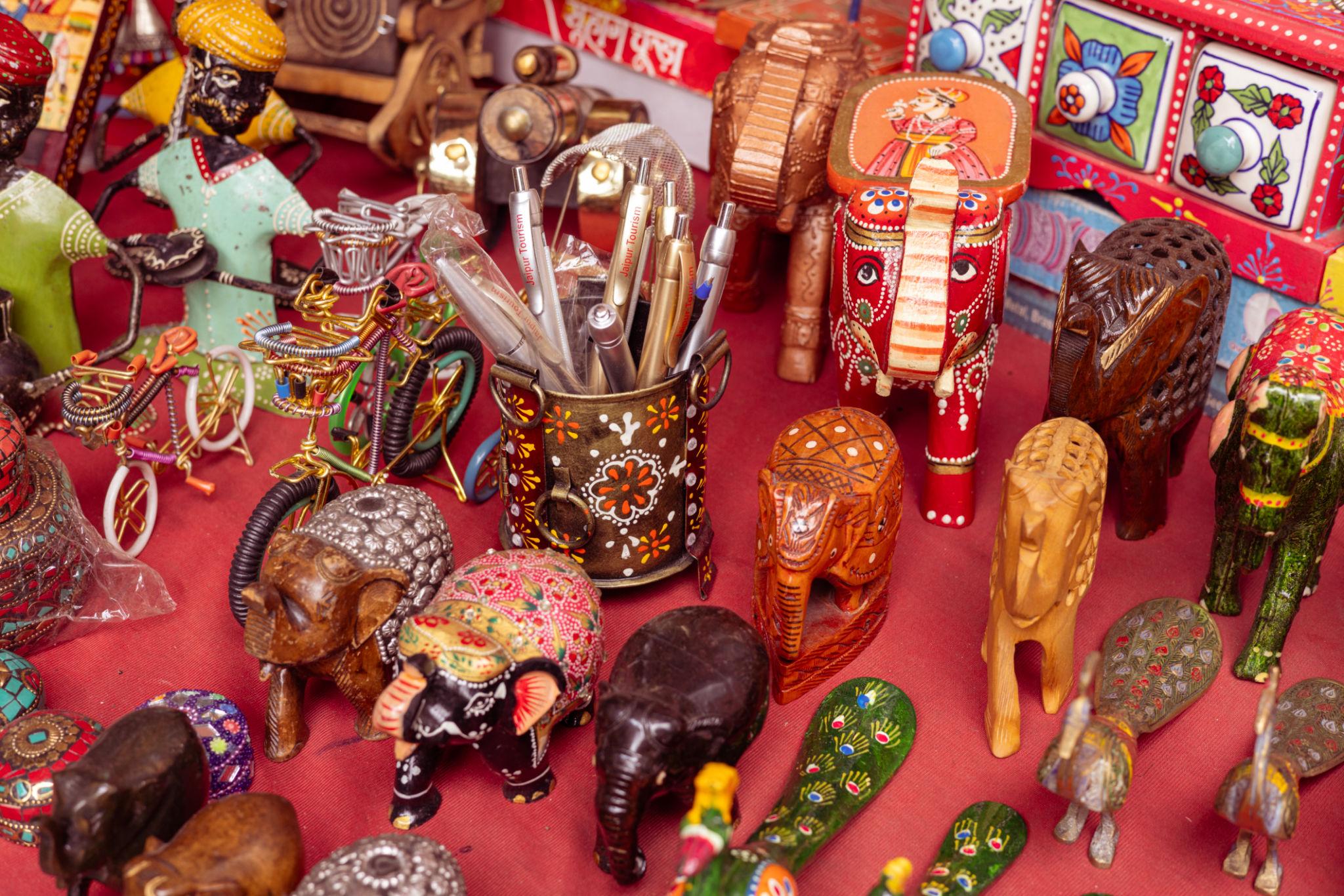
Souvenir Shopping Jaipur
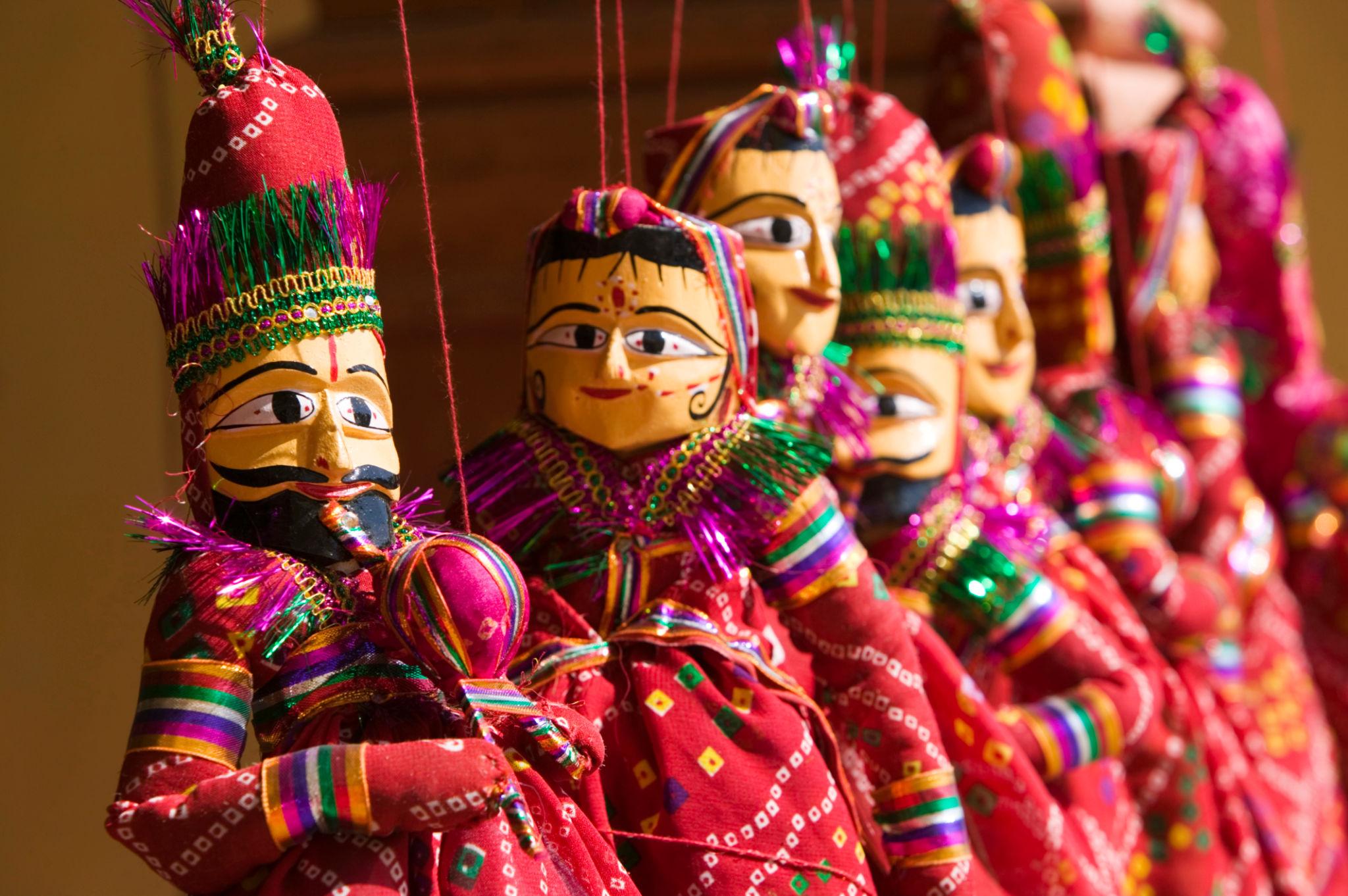
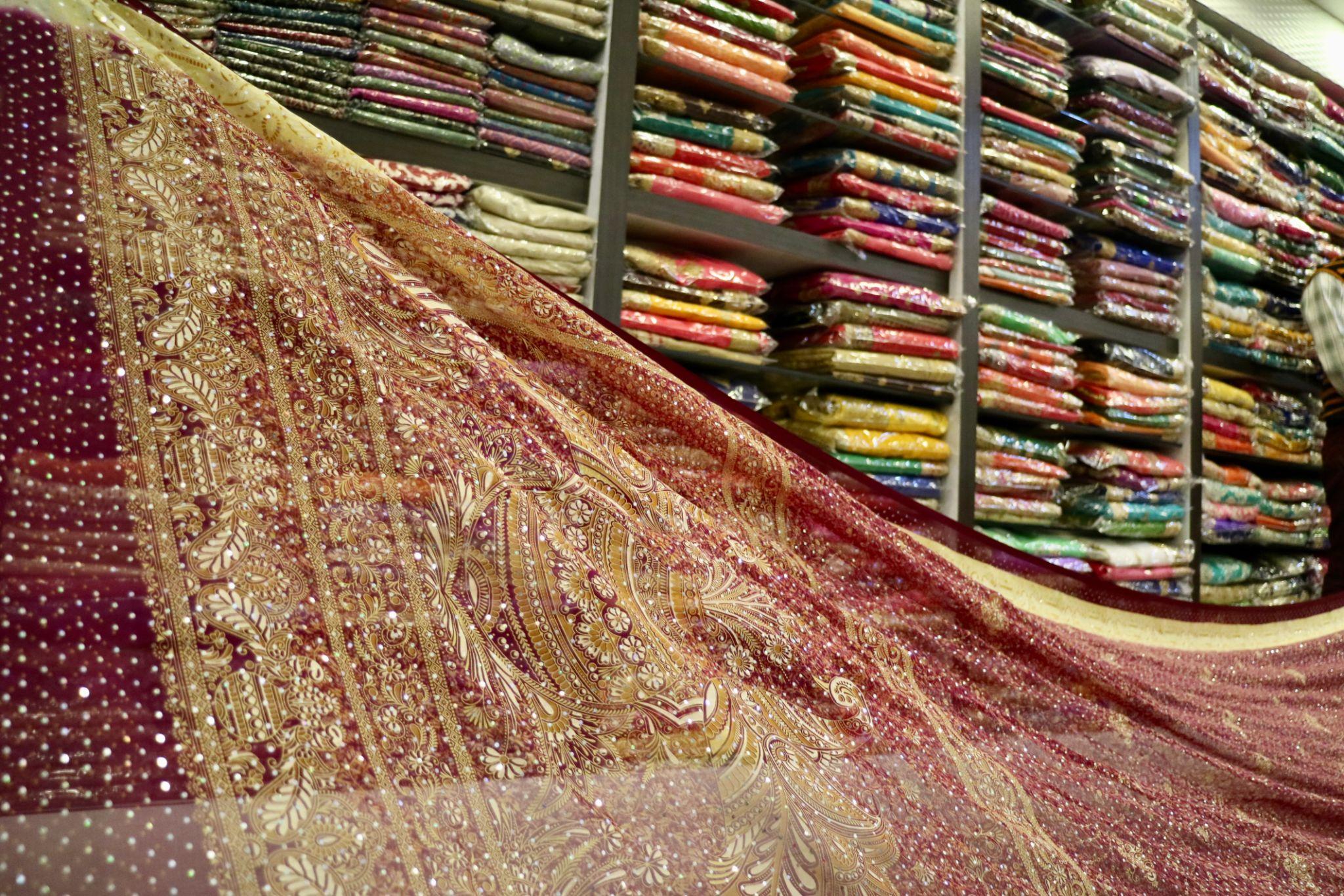
You've probably pictured it already. Block-printed textiles, blue pottery, silver jhumkas, a jute bag of little treasures to carry home. But here's the thing nobody tells you: walk into the first glittering emporium your driver suggests, or buy on the main tourist drag without a clue what things cost, and you'll pay three times the going rate for the same gemstone or the same "handmade" scarf that came off a machine. A rushed, overpriced Jaipur shopping spree is not the Pink City people rave about.
Let's fix that. Here's how souvenir shopping in Jaipur actually works, and how to get it right the first time.
Why the where matters more than the how much
Jaipur isn't one market — it's several, each known for one thing, and knowing which is which is the whole game. The old-city bazaars around Johari and Bapu are where locals actually shop, at local prices. The polished emporiums on the tourist circuit, where drivers and guides get a commission for bringing you, are where those prices double.
So decide what you want before you set out, and go to the market that specialises in it: Johari Bazaar for jewellery, Bapu Bazaar for textiles and jutis, Tripolia for lac bangles and ironwork, Kishanpol for tie-dye. Mornings are calmer and the shopkeepers fresher; by late afternoon the lanes are a crush. Go where the thing is made, not where you're driven.
What you'll actually find
Each bazaar has its speciality:
Johari Bazaar — gemstones, kundan and meenakari jewellery, silver. Also where the fakes hide, so buy carefully.
Bapu Bazaar — block-printed and bandhani textiles, mojari/juti shoes, perfumes.
Tripolia Bazaar — lac bangles, brassware and ironwork.
Blue pottery — the city's signature craft; best from Kripal Kumbh or dedicated studios, not street stalls.
Sanganer and Bagru — the villages just outside where the block-printing actually happens, if you want the real thing at the source.
Carry cash in small notes and a cloth bag — many old-city shops don't take cards, and the ones that do sometimes add a fee.
And put the phone down for the first few minutes in a shop, before you start photographing everything for later. Traders who've dealt with visitors will tell you the same thing: the ones who rush in filming get read instantly as tourists to be marked up. Slow down, look, touch the cloth, ask how it's made. The feel of hand-blocked cotton, the weight of real silver, the smell of a genuine attar — that's the part a quick photo and a fast bargain never quite catch.
Pro tip: Always agree the price before you commit, and don't be shy to counter — in the bazaars, the first number is an opening, and settling around half to two-thirds is normal (the fixed-price emporiums are a different game). Learn the tells: real silver is stamped, hand block-printing has tiny irregularities a machine print doesn't, and a "government emporium" your driver insists on is usually neither. And skip anyone offering to take you somewhere with a commission — go to the market yourself.
The mistakes that ruin it
Most first-timers trip over the same few things. They let a driver steer them to a commission shop and overpay. They buy gemstones with no idea how to spot glass or dyed stone. Or they accept the first price on the tourist strip without knowing the bazaar rate half a kilometre away.
The easy fix is to know your market, carry cash, bargain without apology, and skip the "let me show you a place" offers — or shop with someone who has no stake in where you spend.
Want a curated shopping list — block prints, lac bangles, blue pottery — from the real workshops, not the marked-up tourist shops? Hit
Get a quote.
Destination