


Jantar Mantar Jaipur
Malve Nagar, J.D.A. Market, Jaipur, India
You've probably seen it written off as "some old sundials." A courtyard of odd stone shapes, a quick walk-through between the City Palace and Hawa Mahal, twenty minutes and out. But here's the thing nobody tells you: turn up at noon with no context and that's exactly what you'll get — a baffling sculpture garden you photograph and forget. Show up understanding what you're looking at, and it's a working observatory where you can read the time to the second off a shadow, built three hundred years ago. The difference is entirely in how you arrive.
Let's fix that. Here's how Jantar Mantar actually works, and how to get it right the first time.
Why a guide matters more than the hour
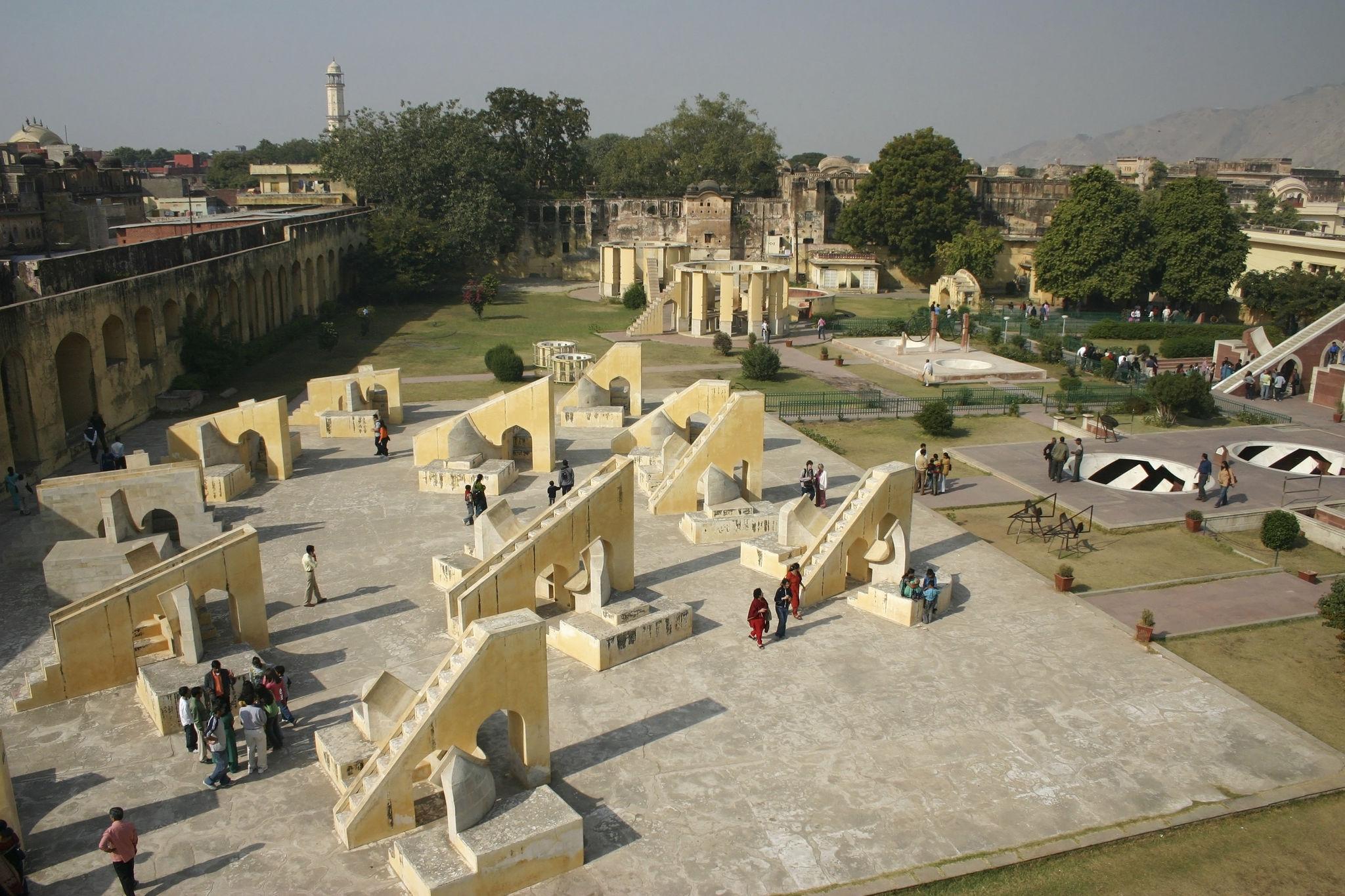
Unlike most sights, this one isn't about light or crowds — it's about comprehension. Jantar Mantar is a set of nineteen giant masonry instruments built by Maharaja Jai Singh II in the 1720s–30s to track time, predict eclipses, and follow the stars and planets. Every strange shape has a precise astronomical job. Without someone to explain them, they're abstract; with five minutes of explanation, they come alive.
So the single best thing you can do is take the government-approved guide or the audio guide at the gate. Go in the morning when it's cooler and the courtyard is quieter — Jaipur gets fierce heat and there's almost no shade here — and give it an hour, not twenty minutes.
What you'll actually see
Nineteen instruments, and a handful you shouldn't miss:
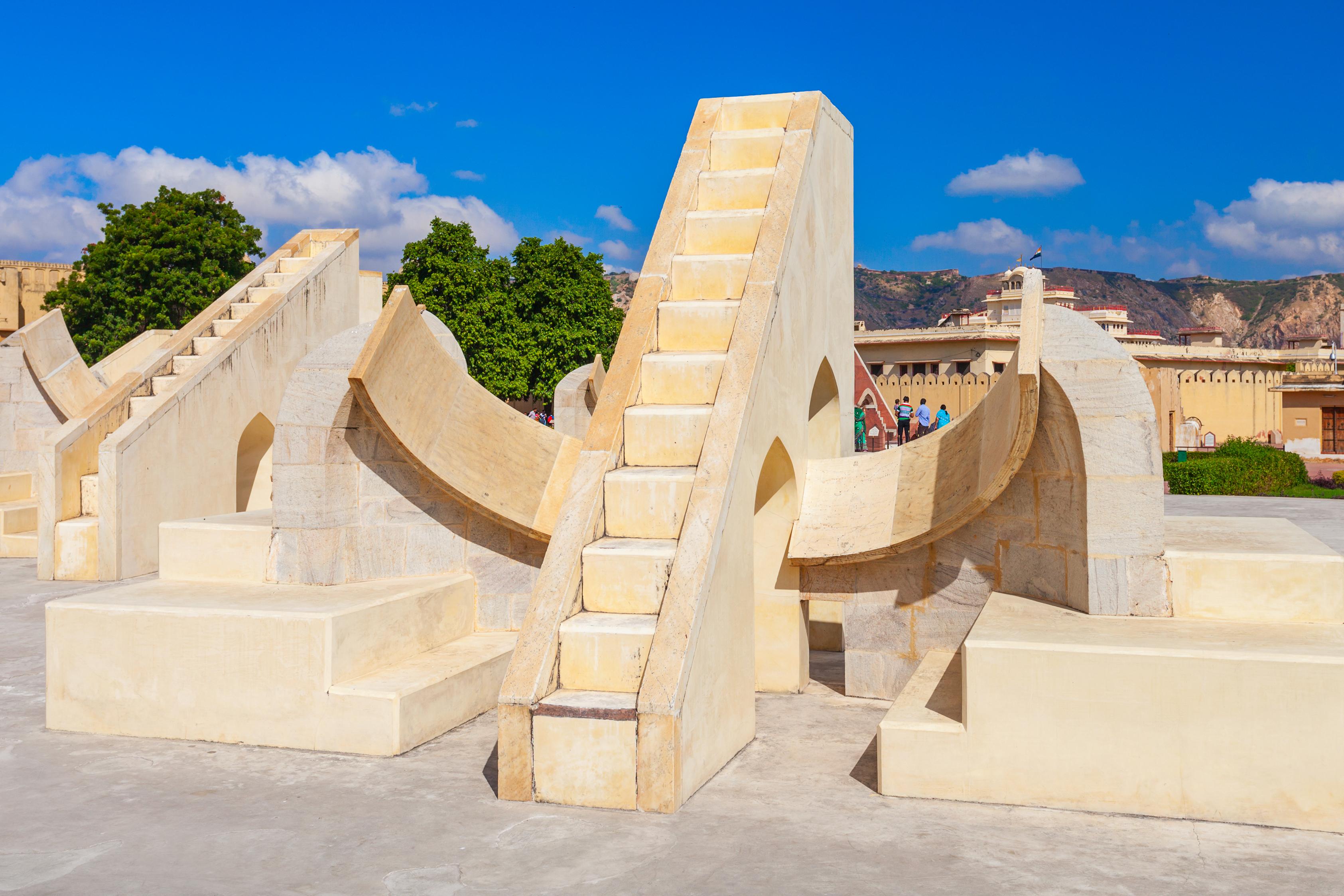
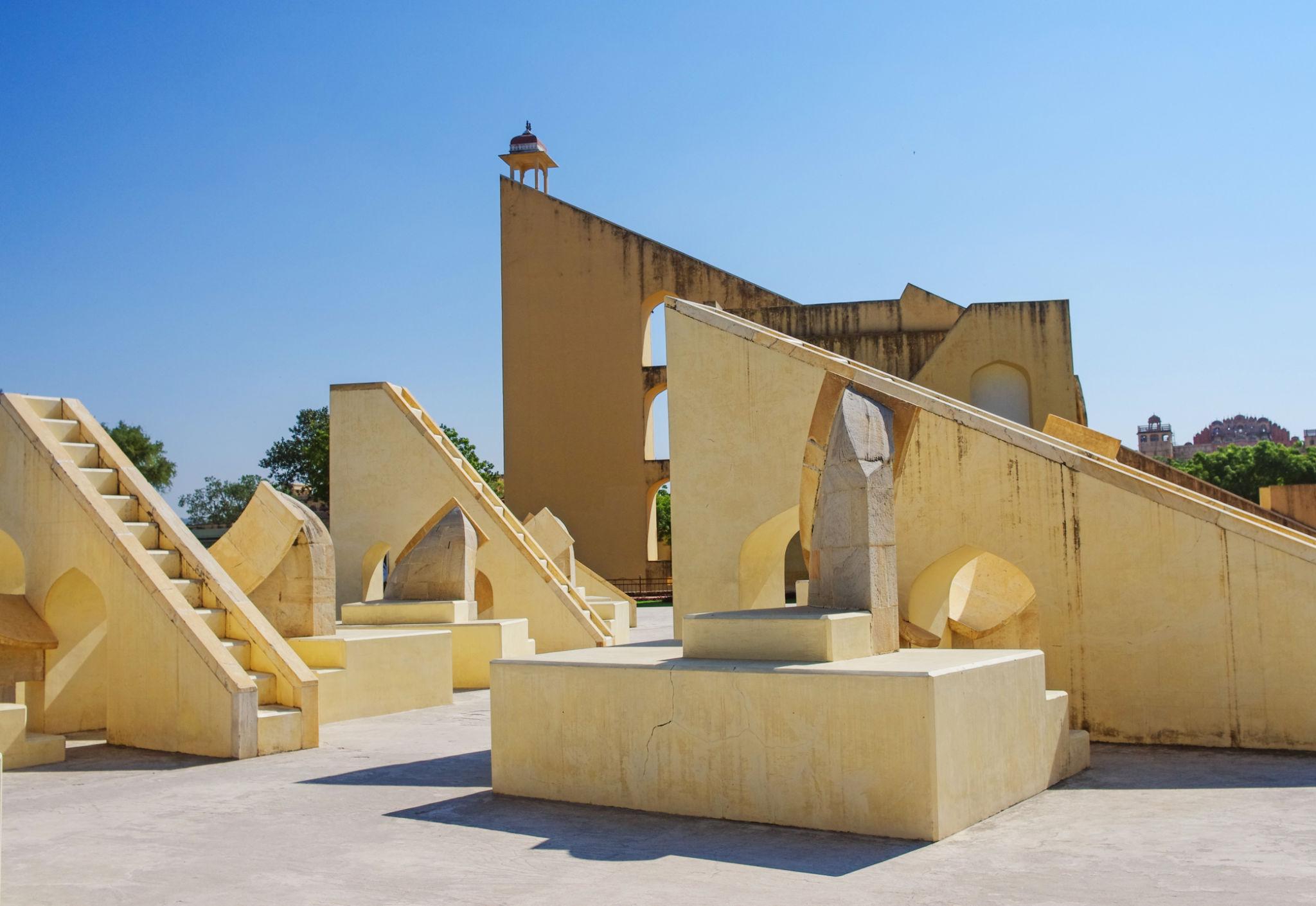
The Samrat Yantra — the world's largest stone sundial, a 27-metre gnomon that tells local time to about two seconds.
The Jai Prakash Yantra — sunken hemispherical bowls that map the sky onto the ground.
The Rashivalayas — twelve instruments, one per zodiac sign, for tracking celestial latitude.
The Ram Yantras and Nadivalaya — for measuring altitude, azimuth and the sun's position.
Wear a hat, sunglasses and sunscreen, and carry water — the courtyard is open stone and the sun is relentless by mid-morning.
And here's the rare stop where the phone earns its keep: unlike a temple or a ceremony, this is a monument built to be examined, so photograph away. But understand before you shoot. Travellers who've done it will tell you the same thing — the instruments look like abstract art until someone shows you the Samrat Yantra's shadow visibly moving down the scale, and then you can't unsee it. Watching a three-hundred-year-old machine tell you the exact time off the sun is the part a quick photo skips entirely.
Pro tip: Take the guide — this is the one Jaipur monument that's genuinely diminished without one, and it's a small price for turning stone shapes into working machines. Buy the combined ticket if you're also doing the City Palace, Hawa Mahal and Amber Fort; it's cheaper than separate entries. Come early in the day for the heat and the light, and try to be at the Samrat Yantra near noon if you can, when the shadow is sharpest and a guide can show you the reading. It's a UNESCO World Heritage Site, so it's well kept and clearly laid out once you know what you're seeing.
The mistakes that ruin it
Most first-timers trip over the same few things. They walk through with no guide and leave baffled. They come at midday in summer and wilt in the shadeless heat. Or they give it twenty minutes as a box to tick and miss the one place in India where you can read the time off a shadow.
The easy fix is to come in the morning with a guide or audio guide and give it a proper hour — because with context, this is one of the most extraordinary things Jaipur has.
Want Jantar Mantar with a guide who can actually explain how the instruments work? Hit Get a quote — we'll pair it with City Palace.