

Buland Darwaza
Buland Gate, Dadupura, Fatehpur Sikri, India
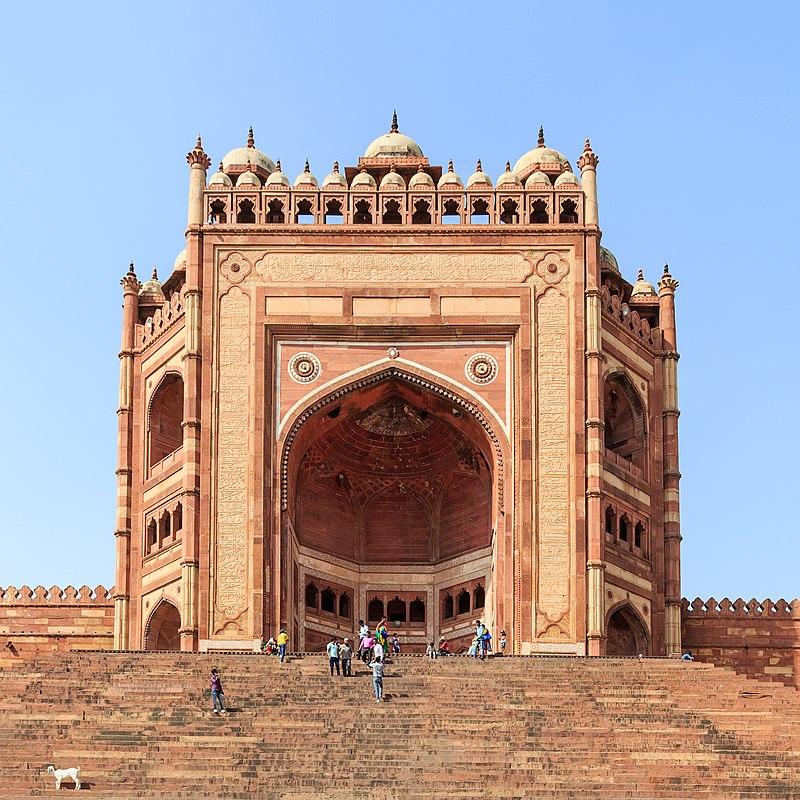
You've probably seen it in a textbook. A colossal red-and-buff gateway at the top of a long flight of steps, dwarfing everyone on them. But here's the thing nobody tells you: most people arrive at Fatehpur Sikri already tired from the palace complex next door, climb the steps in the midday glare, get swarmed by "guides" and souvenir sellers at the top, and rush through the greatest gateway in India in about four minutes. Done in a hurry, in hard light, with someone tugging your sleeve, the Buland Darwaza is a big door. Done right, it's one of the most staggering pieces of Mughal architecture you'll ever stand under.
Let's fix that. Here's how the Buland Darwaza actually works, and how to get it right the first time.
Why the light, and the hour, decide it
The gateway is built of red sandstone inlaid with white and black marble, and that colour only comes alive in soft light. In the flat, hammering sun of midday it goes hazy and washed out; in the low gold of early morning or late afternoon it glows, and the inlay and the calligraphy stand out crisp against the stone.
So come early, near opening, or late in the day. Fatehpur Sikri sits about 40 km from Agra, so an early start beats both the heat and the tour buses, which roll in mid-morning. Get there first and you'll have the steps and the great arch nearly to yourself, in the light that actually shows it off.
What you'll actually see
Give the gateway and the courtyard beyond it a proper hour:
The gateway itself — about 54 metres from the base of the steps, built by Akbar around 1576 to mark his conquest of Gujarat.
The Persian inscription — the famous words on the archway, attributed to Jesus: that the world is a bridge, to pass over but not to build a house upon.
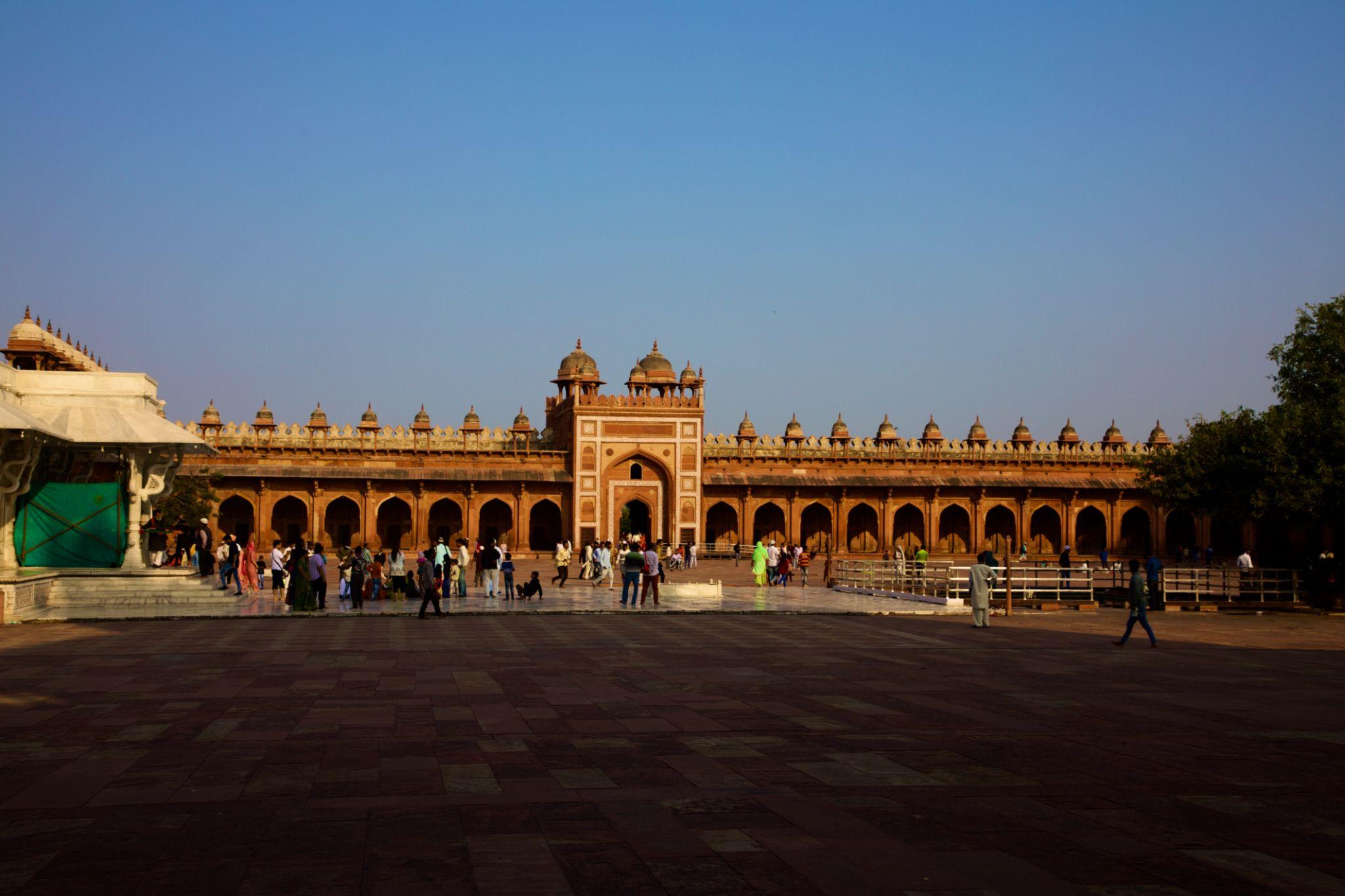
The Jama Masjid courtyard — the vast mosque quadrangle the gateway leads into.
The Tomb of Salim Chishti — the delicate white-marble Sufi shrine within, its carved lattice screens extraordinary.
Take socks you don't mind on hot stone — you'll be barefoot from the shoe stand across the mosque courtyard, and the paving bakes.
And put the phone away for the first few minutes when you reach the top of the steps. Travellers who've stood here will tell you the same thing: the instinct is to shoot straight up at the arch, and the scale simply won't fit a frame — it comes out as a flat wall. Stand still and look up instead. The height of it, the way it dwarfs the people on the steps, the inscription running across the top of the arch — that's the part the photos never quite catch.
Pro tip: Fix a price and terms with any guide before you start, or better, arrange a proper licensed one in advance — the men who swarm the steps are not official and the "free" tour ends in a hard sell. Go barefoot-ready, carry small notes for the shoe stand, and be firm and polite with the souvenir sellers; a clear "no" works. And treat the mosque and the Salim Chishti shrine as the active places of worship they are — cover up, lower your voice, and ask before photographing anyone praying.
The mistakes that ruin it
Most first-timers trip over the same few things. They come at midday, in flat light and full heat. They get talked into an unofficial "guide" on the steps and spend the visit being sold to. Or they rush the gateway to get back to Agra and never walk into the courtyard or the Chishti shrine beyond it.
The easy fix is to come early with your guiding sorted, and give the gateway, the mosque and the shrine the hour they deserve — rather than treating it as a photo stop on the way somewhere else.
Want Buland Darwaza and Fatehpur Sikri as a proper half-day stop, not a rushed highway break? Hit Get a quote.