


Sikandra (Akbar's Tomb)
Tomb of Akbar The Great Area, Sikandra, Agra, India
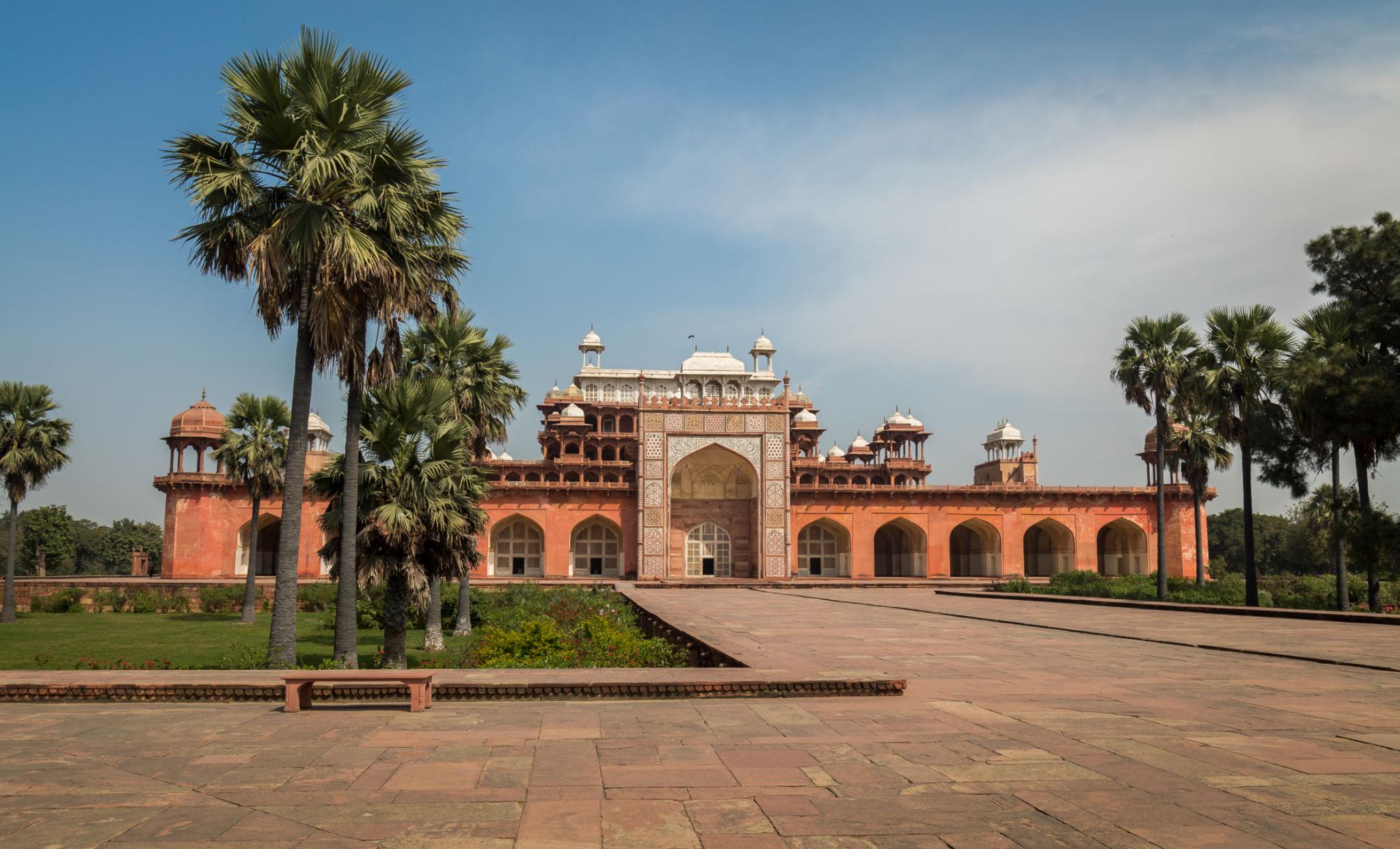
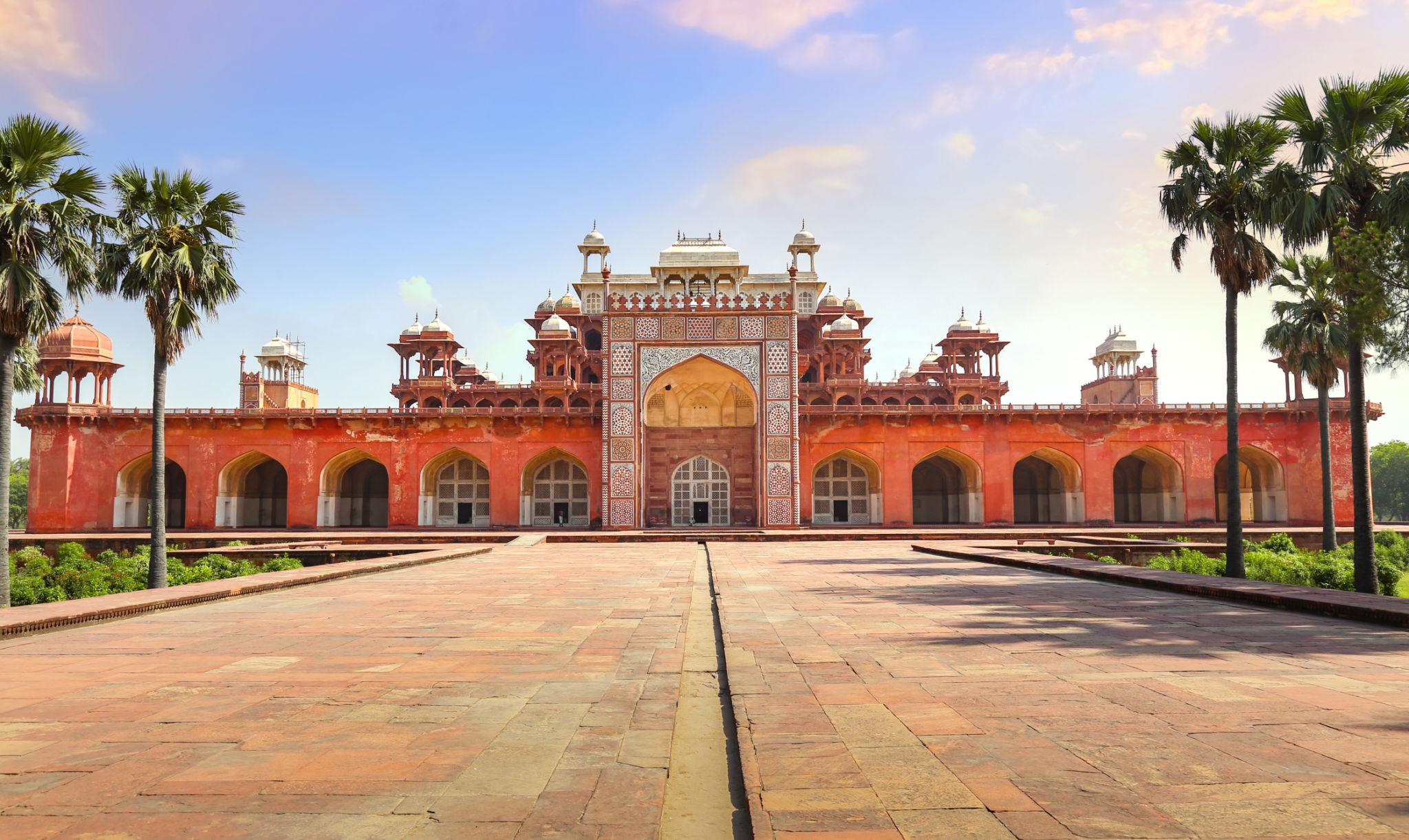
You've probably got this pencilled in as a quick stop on the way in or out of Agra. See the Taj, maybe Fatehpur Sikri, and squeeze Akbar's tomb into a spare hour. But here's the thing nobody tells you: rush Sikandra and you'll walk a grand gateway, glance at a building, and leave having completely missed why it's remarkable — a Mughal emperor's tomb with no dome, ringed by deer and langurs and peacocks in a walled Mughal garden, quiet in a way almost nowhere else around Agra is.
Let's fix that. Here's how a visit to Sikandra actually works, and how to get it right the first time.
Why the early hour, and not the middle of the day
Sikandra sits about 8 km from Agra on the Mathura road, and like everything here it's transformed by when you come. Arrive mid-morning with the tour buses and you share the gateway and gardens with the crowd, in flat, hard light, with the heat already building on the open lawns.
Come at opening, just after sunrise, and it's a different place. The soft light warms the red sandstone and inlaid marble, the gardens are cool and half-empty, and the resident wildlife — blackbuck, nilgai, langurs, peacocks — is active and unbothered. Sikandra opens from sunrise to sunset; the first hour is the one worth setting an alarm for.
What you'll actually see
The complex is a classic charbagh — a four-part Mughal garden — with the tomb at its centre:
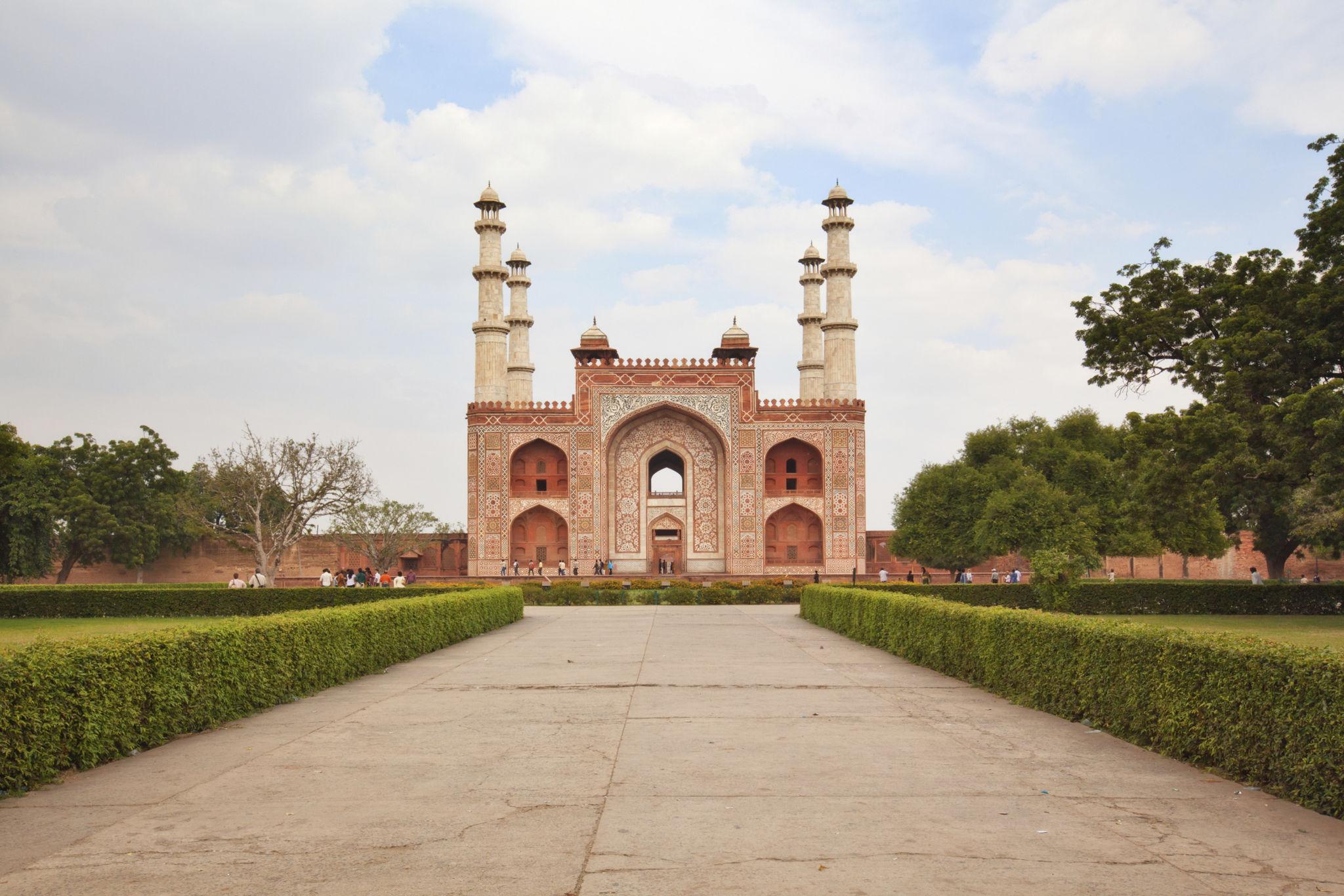
The great south gateway — a spectacular red-sandstone gate inlaid with white-marble geometric patterns and topped with four marble minarets, arguably finer than the tomb itself.
The tomb building — an unusual tiered, pavilion-topped structure with no central dome, blending Hindu, Jain, Buddhist, Christian and Islamic motifs, exactly as the syncretic Akbar intended.
The cenotaph and the crypt — the ornate false tomb on the terrace, and the plain real grave in the cool chamber below.
The gardens and wildlife — wide lawns roamed by blackbuck and langurs, with peacocks calling in the early morning.
Wear shoes you can slip off for the tomb chamber, and carry water — the gardens are large and shade is limited.
And keep the phone down for the first few minutes. Travellers who come early will tell you the same thing: the instinct is to photograph the gateway straight off, but the place rewards a slow first look. Stand under the gate, take in the scale, watch the deer move across the lawns in the low light. That stillness — a garden tomb at dawn, animals grazing where an emperor is buried — is the part the photos never quite catch.
Pro tip: Combine Sikandra with Itmad-ud-Daulah (the "Baby Taj") and Mariam's Tomb, which are on the same side of Agra, for a proper Mughal-monuments morning away from the Taj crowds. Carry your ASI ticket and note that foreign-national and Indian entry fees differ. Watch your belongings and snacks around the langurs — they're bold. And go on any day but a national holiday if you want the gardens quiet.
The mistakes that ruin it
Most first-timers trip over the same few things. They come mid-morning and get heat, crowds and flat light. They photograph the gate and leave without going down to the crypt or walking the gardens. Or they treat it as a ten-minute box-tick between bigger sights and miss that it's a masterpiece in its own right.
The easy fix is to come early, give it a proper hour, and pair it with the nearby Mughal tombs — or let it be built into a planned Agra morning rather than squeezed into a gap.
Want Sikandra on the Agra–Jaipur drive with a guide who knows the hidden upper levels? Hit Get a quote— we'll route it in.