
Agra Fort
Agra Fort, Agra, India
You've probably slotted it in as the warm-up act. See the Taj in the morning, tick off the "red fort" nearby, back on the bus by lunch. But here's the thing nobody tells you: rush Agra Fort in the flat midday heat, skip the audio or a guide, and you'll walk a lot of red sandstone wondering what you're looking at — missing that this is where the emperor who built the Taj Mahal spent his last years imprisoned, staring at it across the river. Done right, the fort isn't the Taj's sidekick. It's the other half of the same story.
Let's fix that. Here's how Agra Fort actually works, and how to get it right the first time.
Why the light, and the order, matter
Agra's monuments are punishing at midday — open sandstone, little shade, and a sun that bleaches every photo flat. The fort is at its best in early morning or the last hours before closing, when the red stone goes warm and gold and the marble palaces glow.
The classic mistake is timing. If you do the Taj at sunrise (which you should), don't stagger to the fort at noon half-cooked. Either come to the fort first thing on a separate morning, or save it for late afternoon when the crowds thin and the light returns. And do it after you've seen the Taj, not before — because the emotional heart of the fort is the tower where Shah Jahan was held by his son Aurangzeb, and it only lands once you know what he was looking at.
What you'll actually see
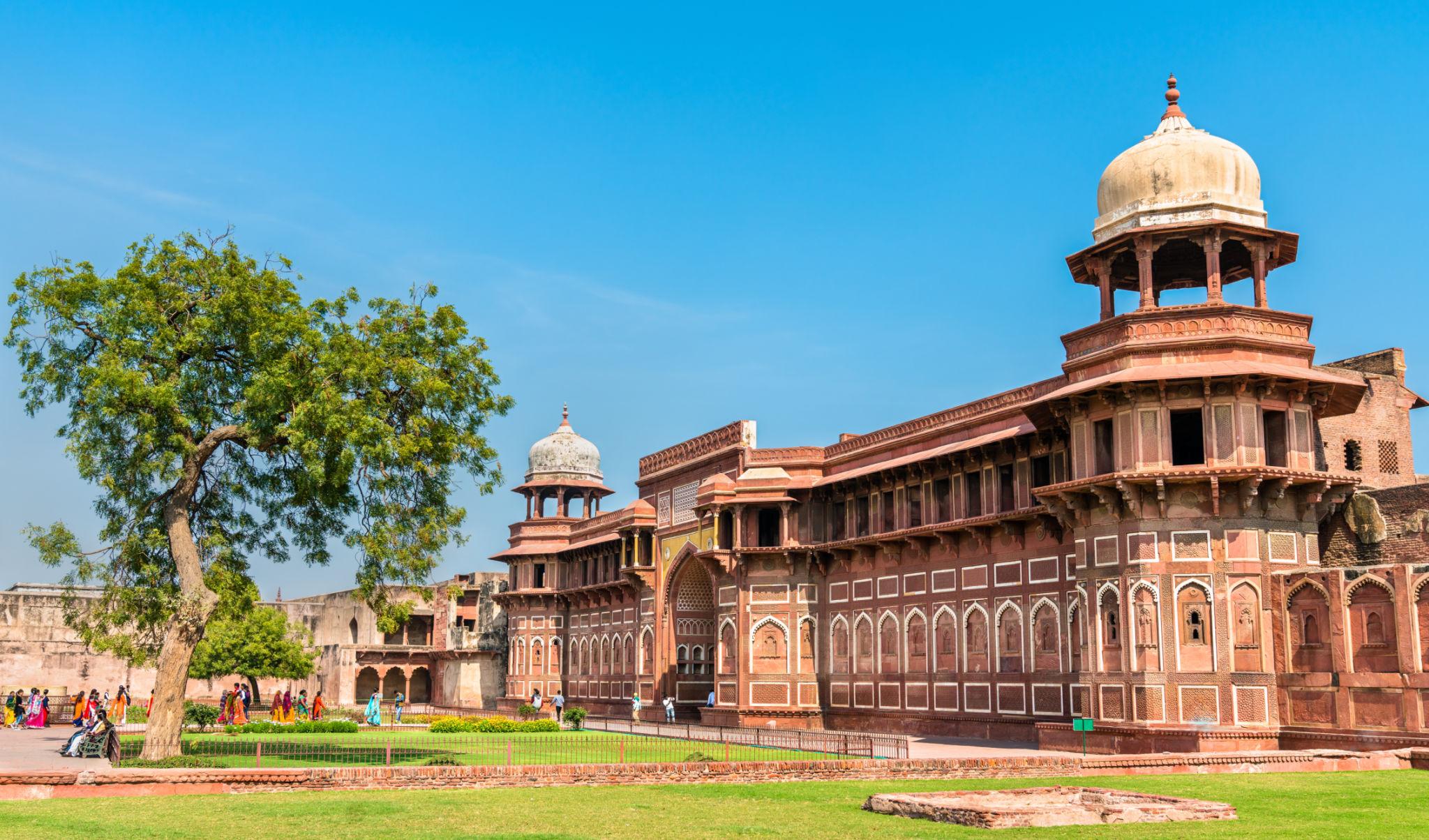
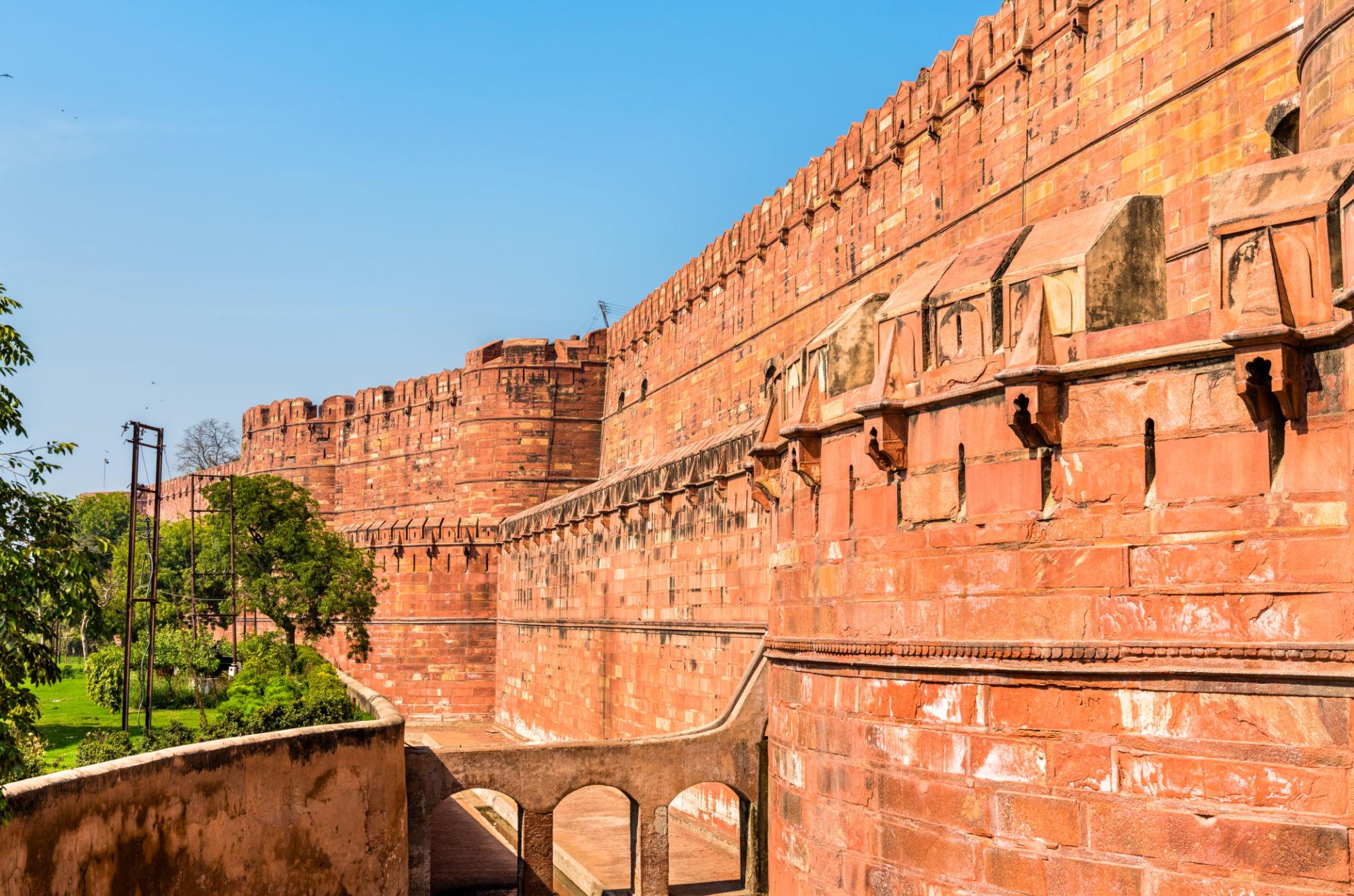
A walled city more than a fort, mostly built by Akbar from 1565 and added to by his successors:
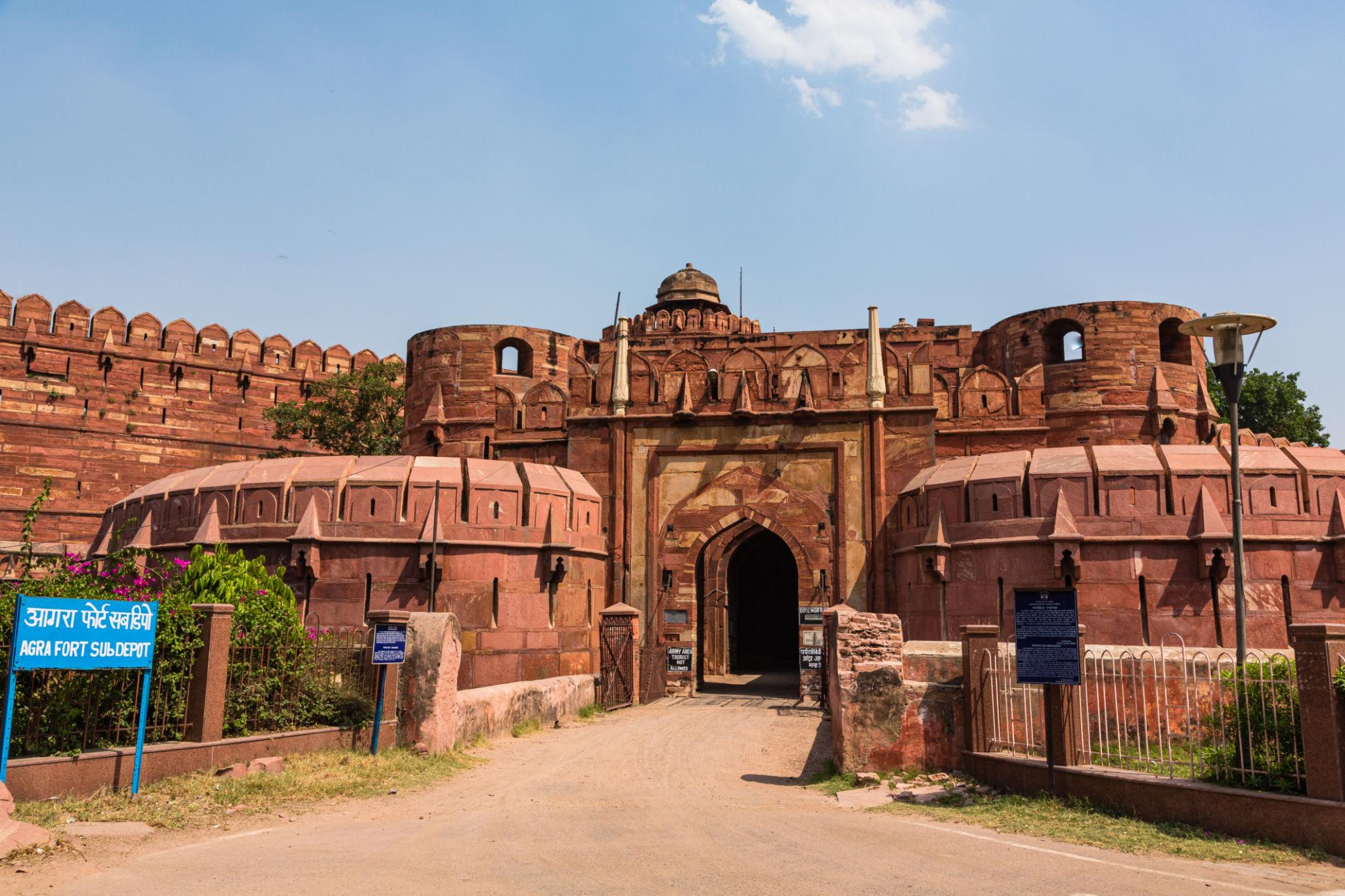
Amar Singh Gate — the visitor entrance, up an angled ramp built to slow attackers.
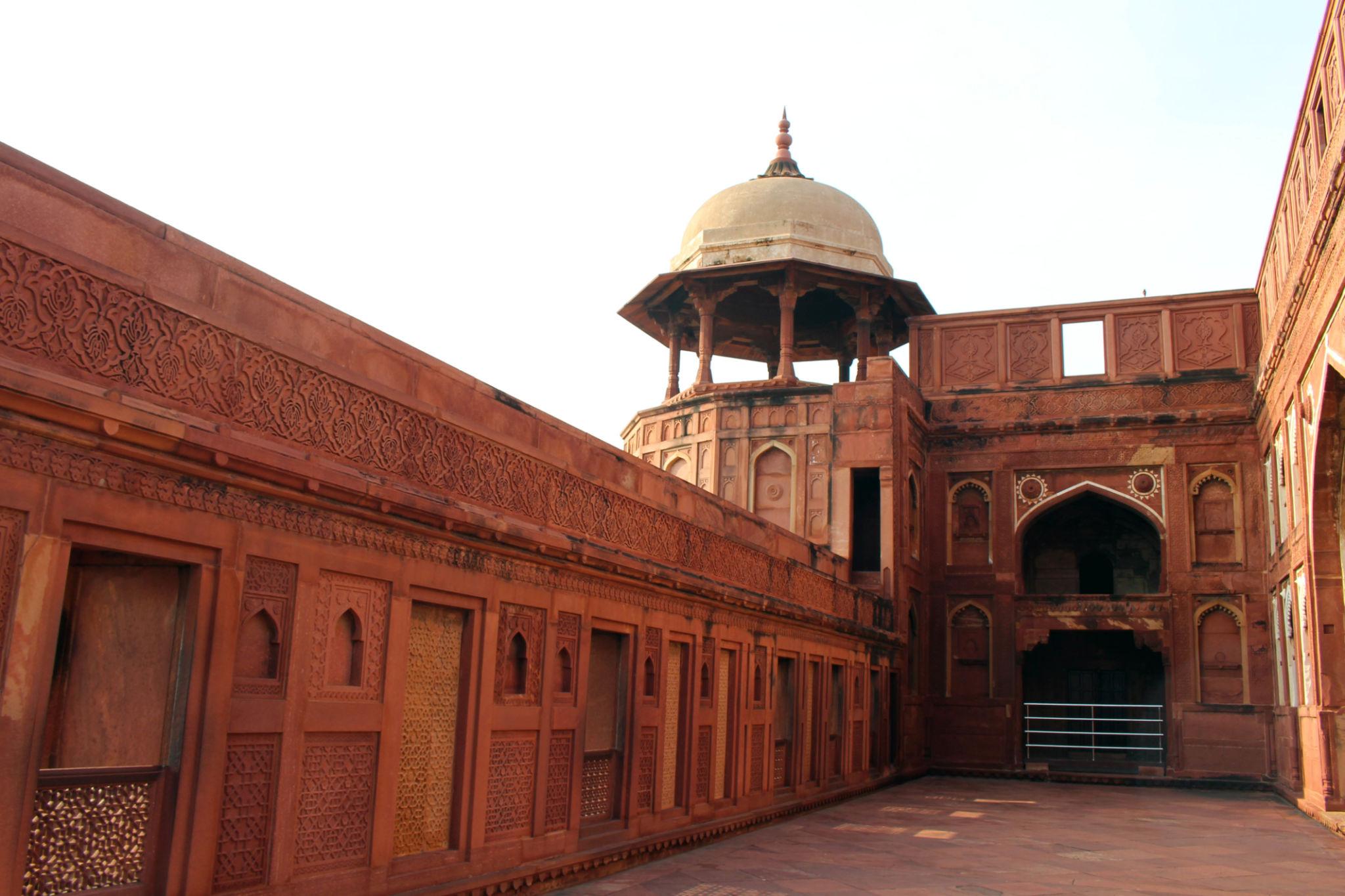
Jahangir Mahal — Akbar's great red-sandstone palace, the fort's finest early building.
Diwan-i-Am — the hall of public audience, where the emperor heard petitions.
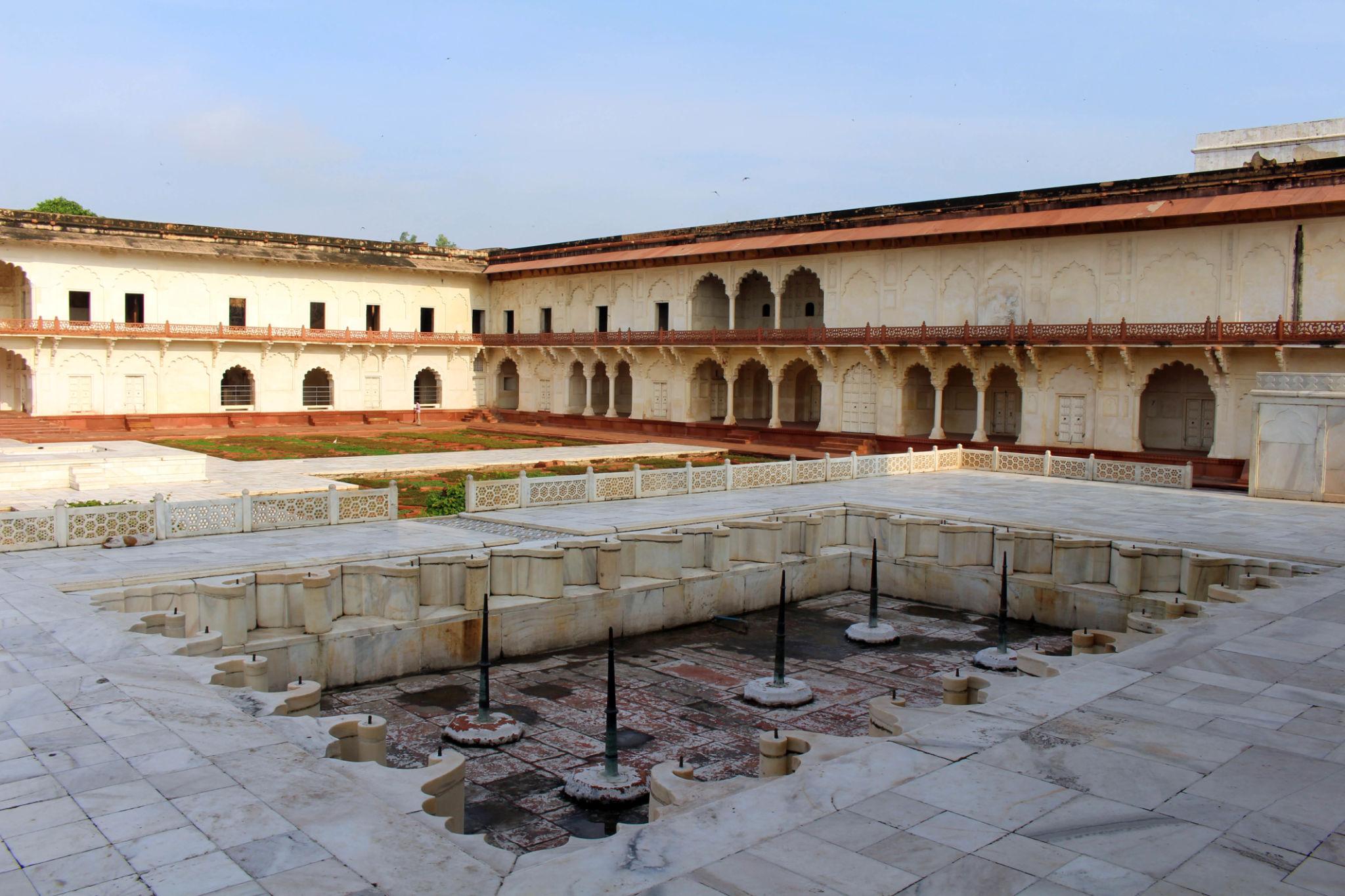
Khas Mahal & Sheesh Mahal — Shah Jahan's white-marble palaces and the mirrored bath chambers.
Musamman Burj — the octagonal marble tower where Shah Jahan was imprisoned, with its view down the Yamuna to the Taj.
Carry water and wear a hat — much of the circuit is unshaded. Note that a large part of the fort is still held by the Indian Army and closed to visitors; you see the southern palaces, not the whole thing.
And keep the phone down for the first few minutes at the Musamman Burj. Travellers who've stood there will tell you the same thing: the instinct is to photograph the Taj through the arches immediately, but the view lands differently when you take in first what it meant — a deposed emperor, held by his own son, spending his final years looking at the tomb he built for his wife. That weight is the part the photos never quite catch.
Pro tip: Take a guide or the audio tour — the fort is a maze of unlabelled halls and the stories are the whole point; without them it's handsome empty rooms. Buy a combined Taj-and-fort ticket if it's offered, which saves a little. Come early or late for the light and the smaller crowds, and check the Friday situation and any current closures before you go. And keep your Taj ticket — same-day entry sometimes gives a small discount at the other monuments.
The mistakes that ruin it
Most first-timers trip over the same few things. They come at noon and melt through it. They walk the palaces with no context and feel nothing. Or they do the fort before the Taj and miss the whole poignancy of Shah Jahan's tower.
The easy fix is to come in good light, with a guide or audio, after you've seen the Taj — so the fort reads as the story it is rather than a pile of pretty stone.
Want Agra Fort in the morning light with the Taj view framed from the Musamman Burj? Hit Get a quote— we'll sequence the day.