

Jama Masjid Experience
Jama Masjid, Delhi, New Delhi, India
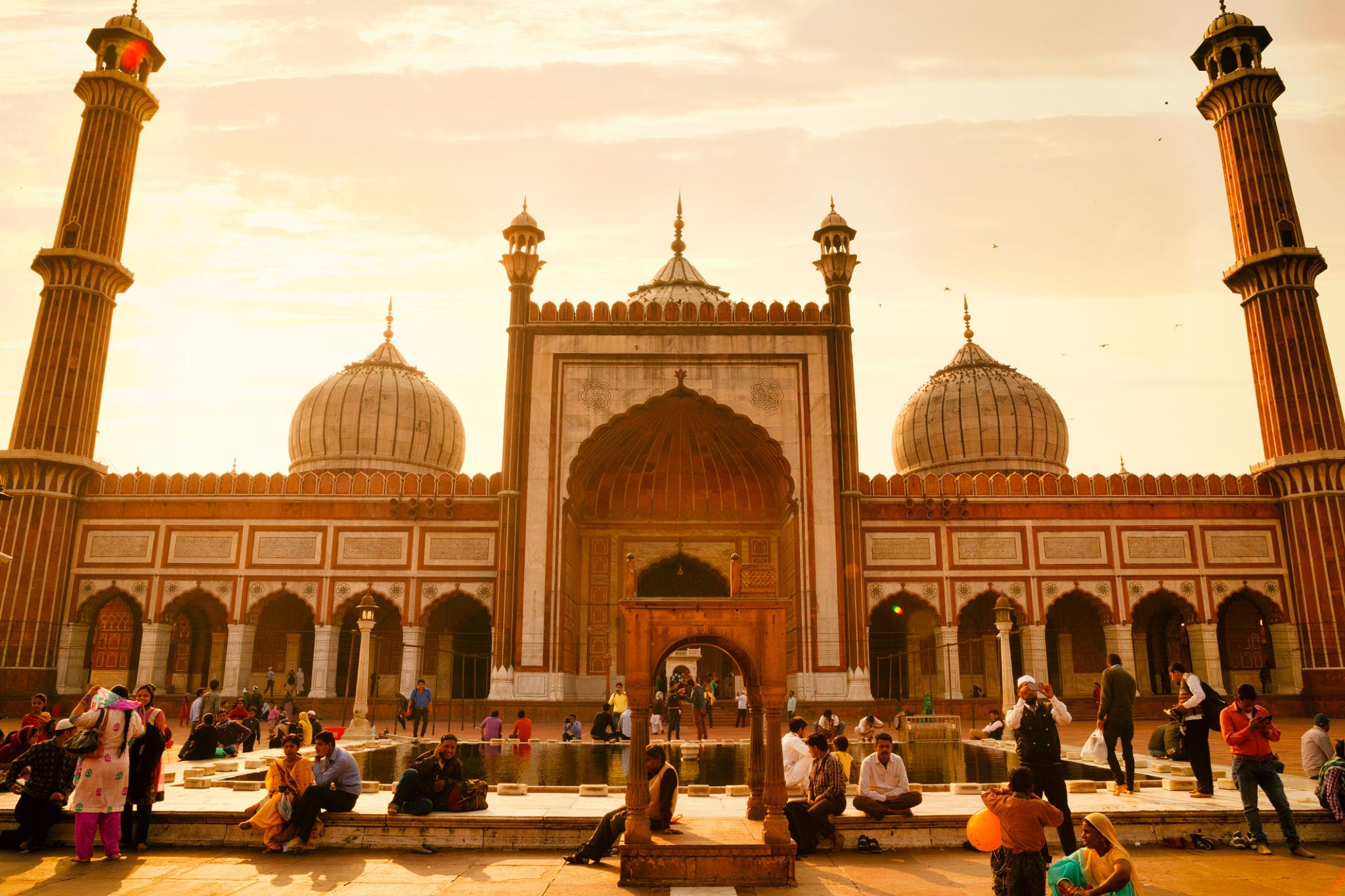
You've probably seen the photos. The vast red-and-white courtyard, the domes floating above Old Delhi, the sea of people at Friday prayers. But here's the thing nobody tells you: turn up at the wrong moment and you'll be stopped at the gate and told to come back in an hour, because the mosque closes to visitors during each of the five daily prayers. Show up at midday and you'll cross a stone courtyard so hot in the sun it burns through socks, in the harshest light of the day, shoulder to shoulder with the crowds.
Let's fix that. Here's how a visit to Jama Masjid actually works, and how to get it right the first time.
Why early or late, and not the middle of the day
The mosque is open to visitors between prayers, and the gaps matter. Prayer times shift through the year, but the general rule holds: come mid-morning after the early prayer, or in the late afternoon before sunset, and avoid Friday around midday entirely, when the whole of Old Delhi comes to pray and tourism stops.
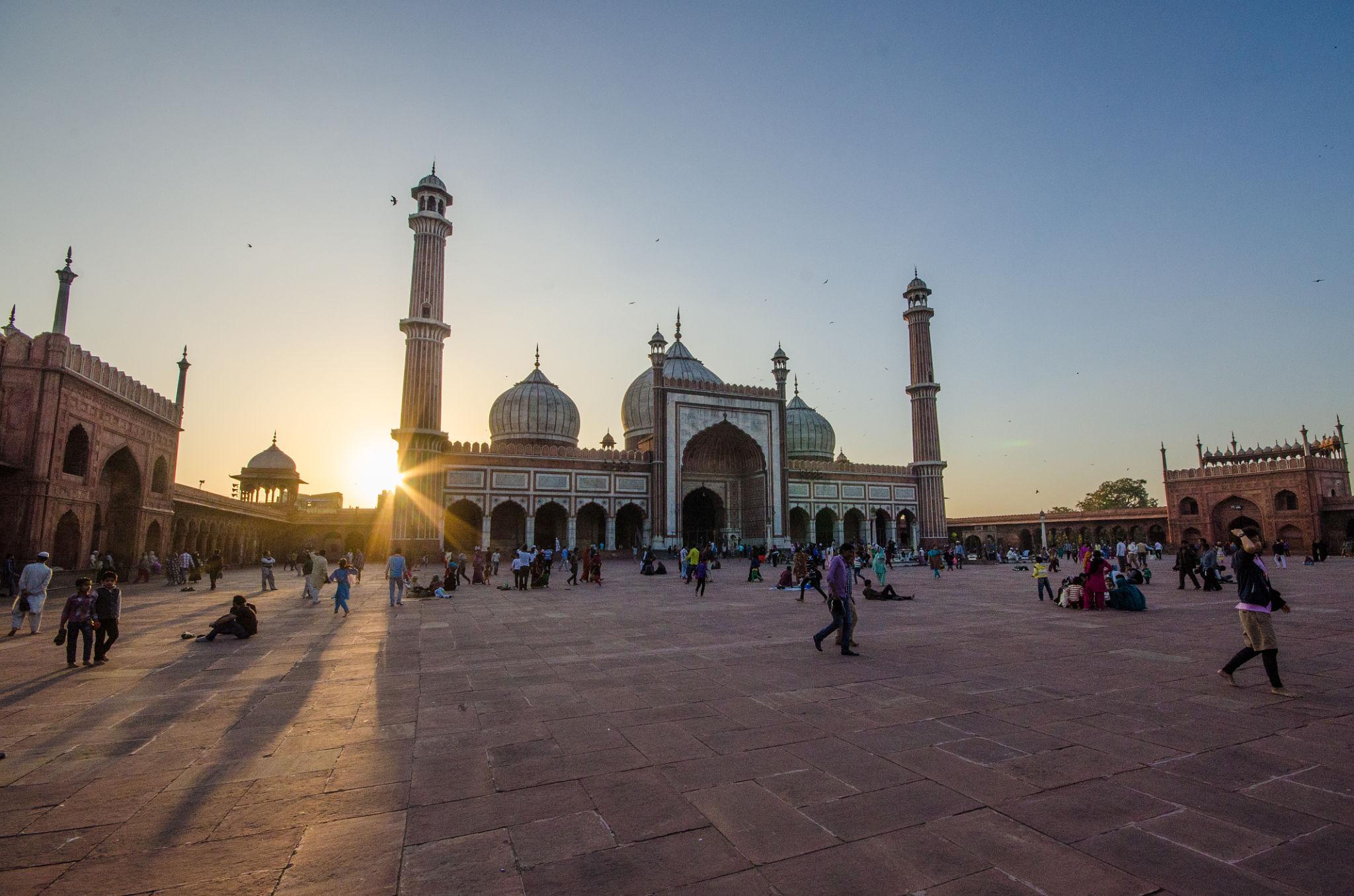
Light and heat push you the same way. The courtyard is open sandstone and marble with no shade — brutal at noon and beautiful at either end of the day, when the low sun warms the red stone and the domes catch gold. Late afternoon into golden hour is the finest time to be here, and the quietest.
What you'll actually see
Shah Jahan's last great work, finished in 1656, and the largest mosque in India:
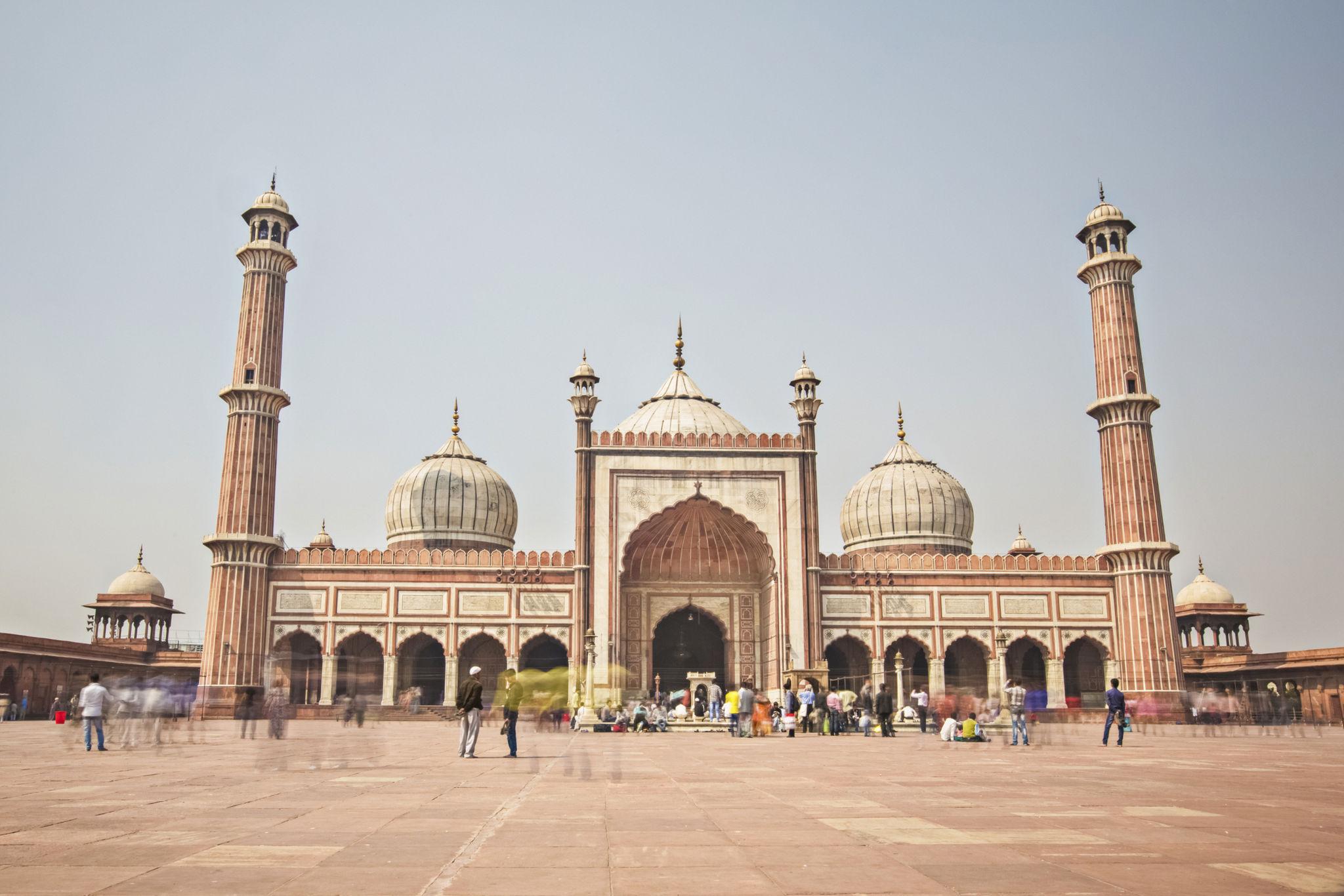
The courtyard — a vast paved square that holds tens of thousands at prayer; empty between times, it's all scale and space.
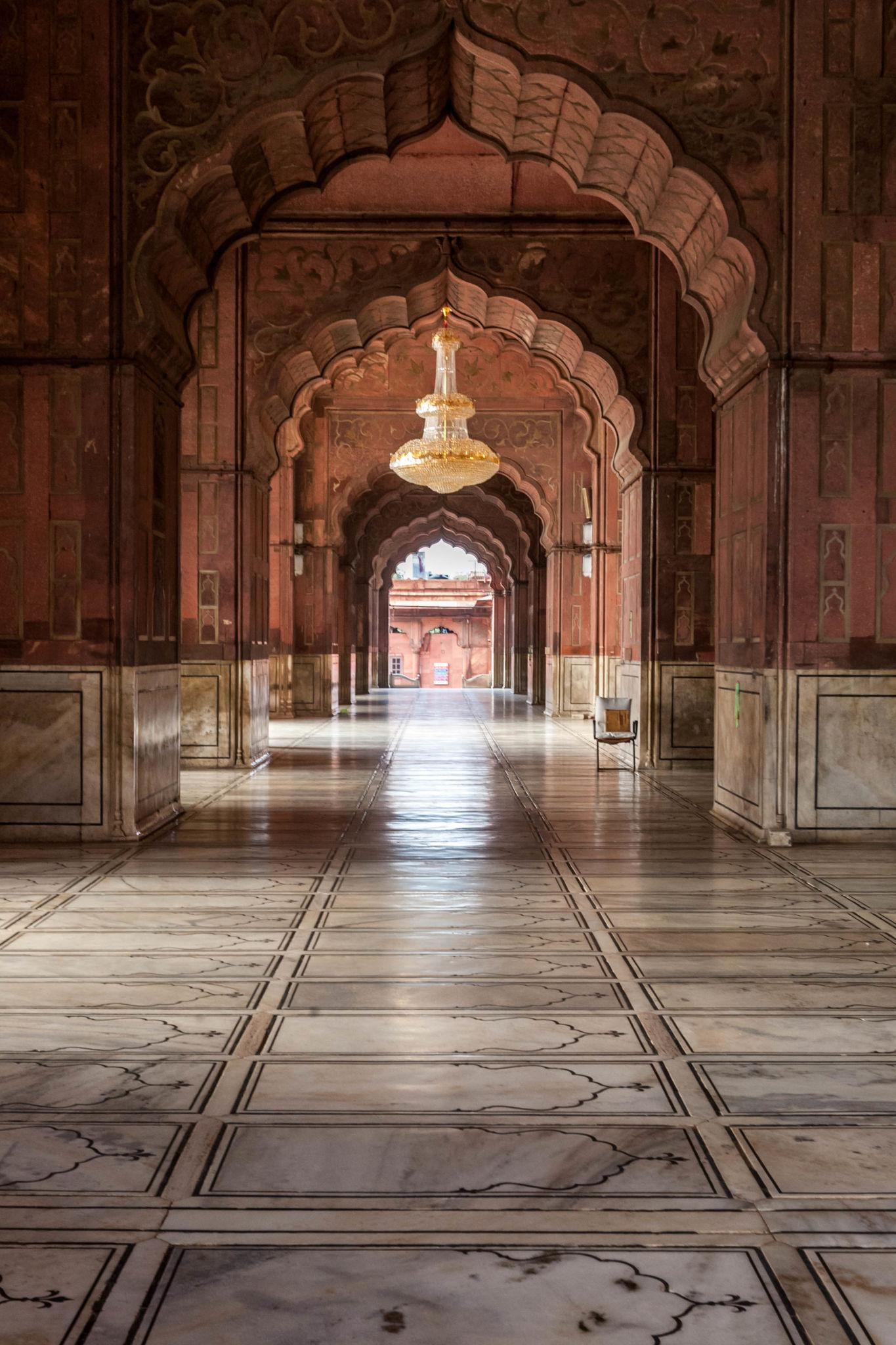
The prayer hall — the striped marble-and-sandstone facade with its three great domes.
The southern minaret — you can climb it for a small fee; the view over Old Delhi's rooftops and the Red Fort is the reward.
Chandni Chowk below — the old bazaar at the foot of the steps, and Karim's and the Matia Mahal food lanes just beyond.
Dress modestly — shoulders and knees covered for everyone, a head covering for women — and be ready to leave your shoes at the gate. Robes are available to borrow or rent at the entrance if you're underdressed.
And here, unlike a temple sanctum, the camera is welcome — this is a monument built to be seen. But there's usually a fee for cameras (phones sometimes included), so ask at the gate rather than being surprised. Look before you shoot, though. Travellers who come here will tell you the same thing: the instinct is to photograph the domes and leave, but the mosque rewards sitting a while on the courtyard edge, watching the light move and the life of the place go on around you. That stillness in the middle of Old Delhi's noise is the part the photos never quite catch.
Pro tip: Go barefoot-ready and modestly dressed to skip the robe queue, carry small notes for the shoe minder, the camera fee and the minaret, and time your visit to land in golden hour outside prayer times. Pair it with a walk down into Chandni Chowk afterwards — the mosque and the food lanes below are one experience, not two, and dusk is when both are at their best.
The mistakes that ruin it
Most first-timers trip over the same few things. They arrive during prayer and get turned away. They come at midday and cross a scorching courtyard in flat light. Or they treat it as a ten-minute photo stop and miss the bazaar and food streets right beneath it.
The easy fix is to come early or late, dressed and prepared for the gate, with time to spill down into Old Delhi afterwards.
Want Jama Masjid paired with Red Fort and Chandni Chowk in one Old Delhi morning, timing sorted? Hit Get a quote.