
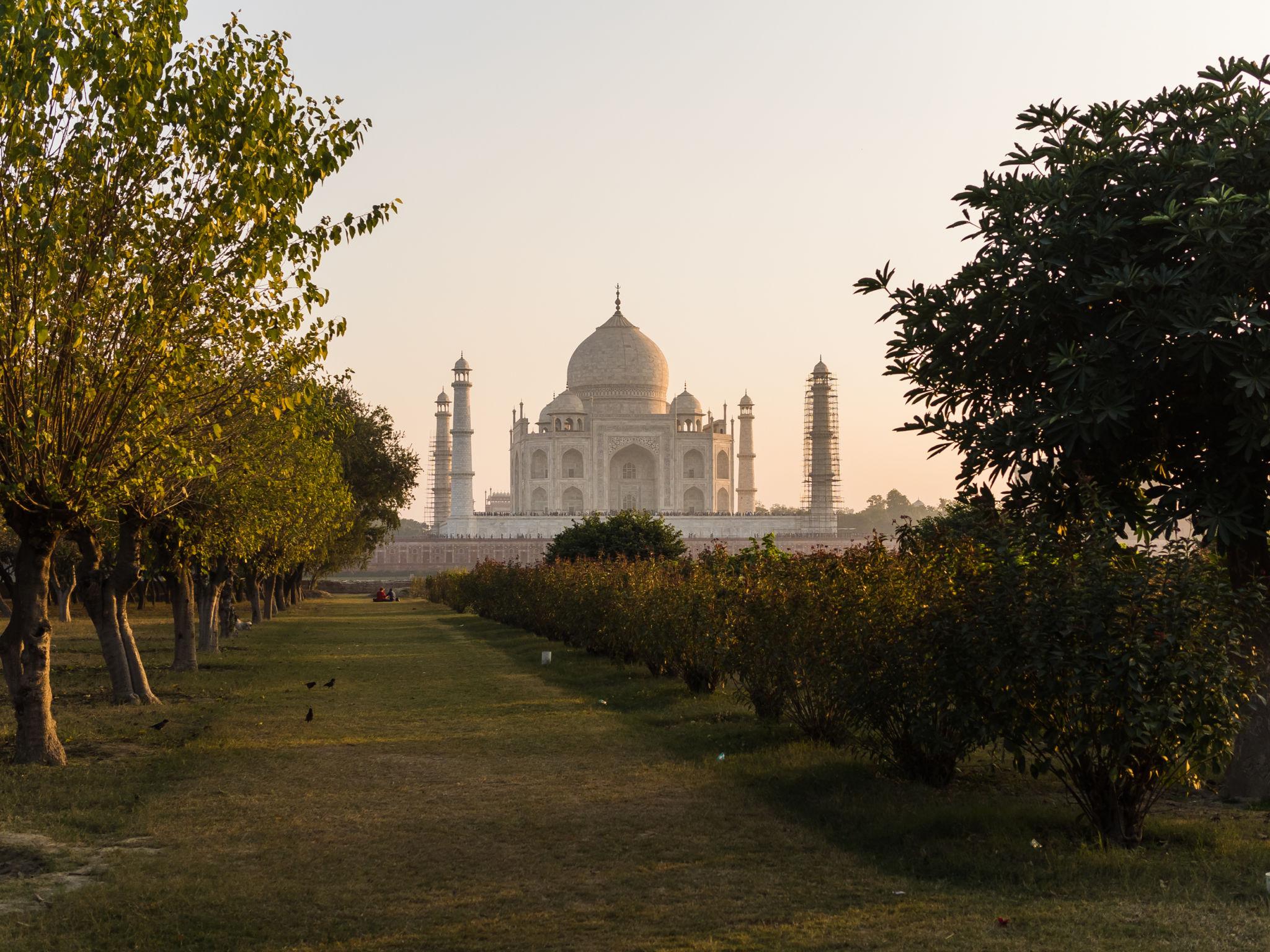
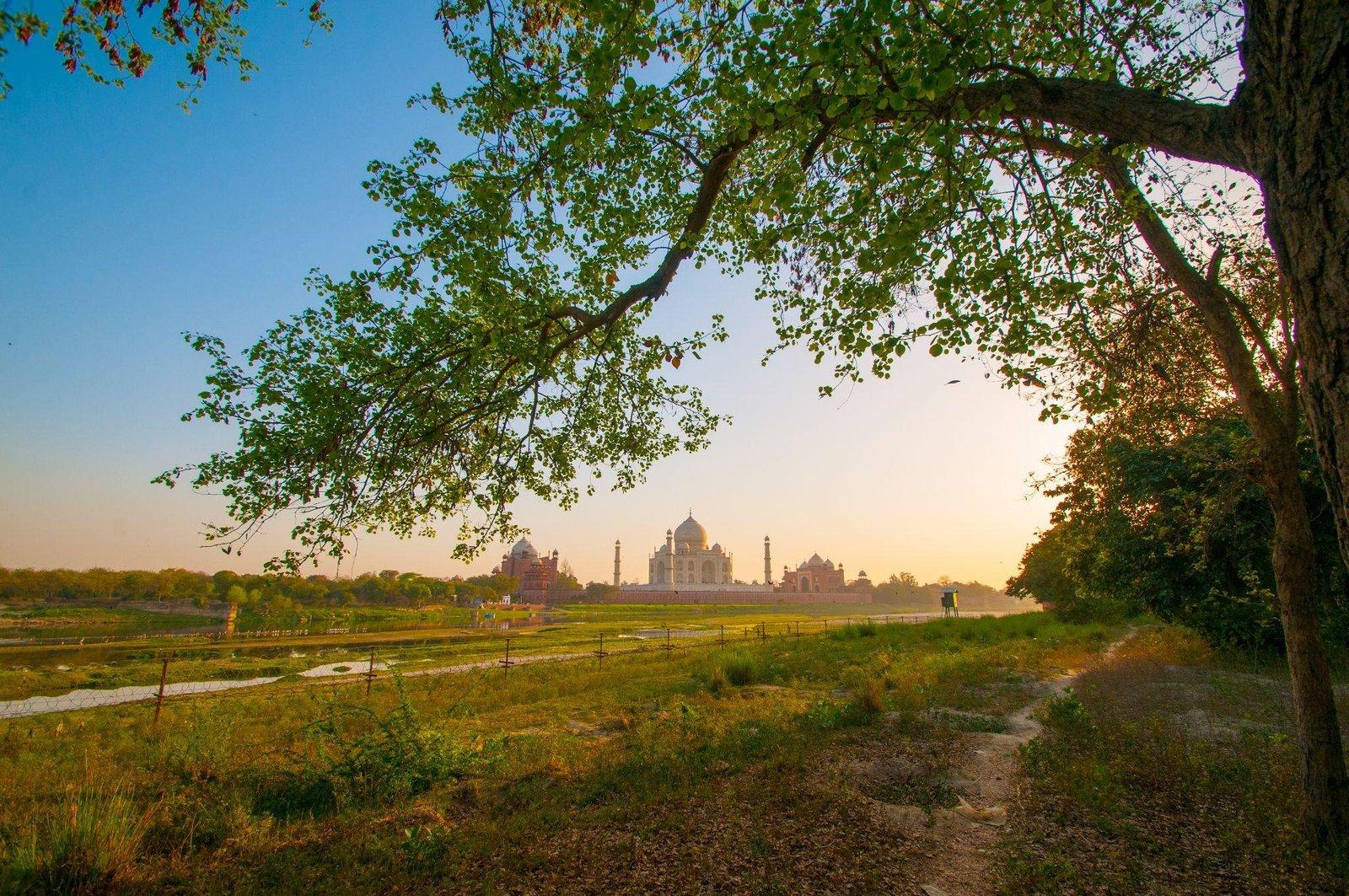
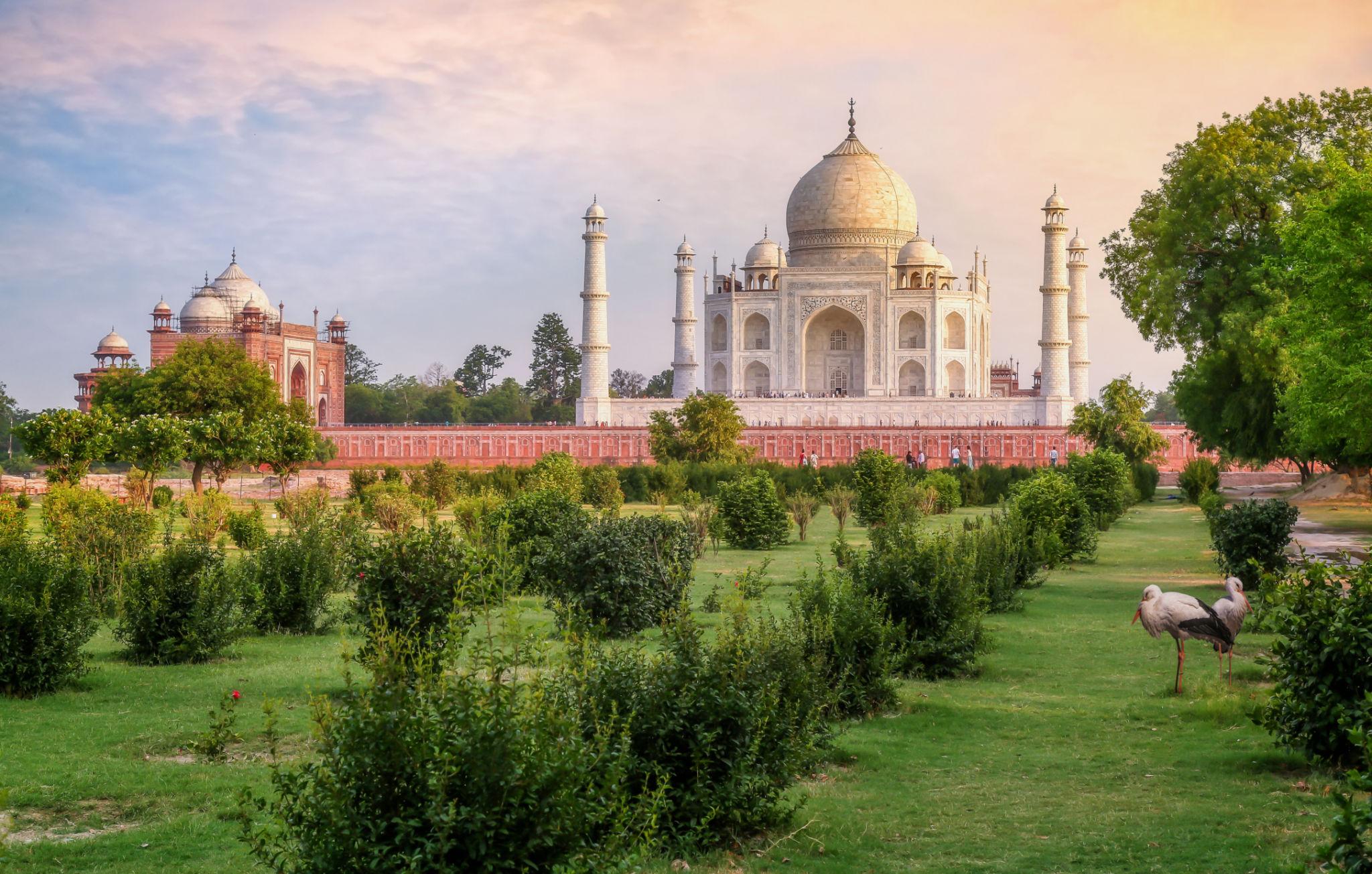
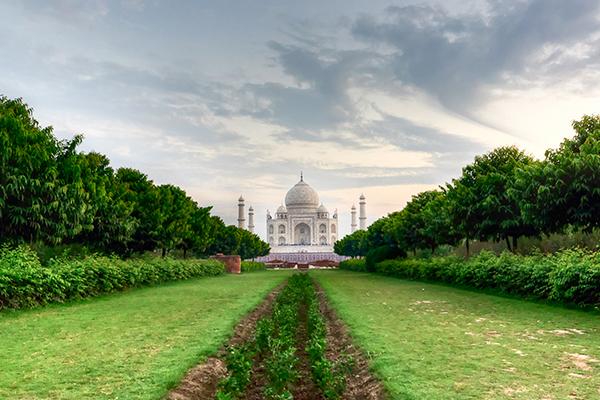
Mehtab Bagh Sunset View
Nagla Devjit, Agra, India
You've probably only ever seen the Taj from the front — the gate, the crowds, the queue for the perfect reflection shot. But here's the thing nobody tells you: directly across the Yamuna sits a quiet Mughal garden, Mehtab Bagh, that gives you the Taj from behind, glowing in the last light, with almost nobody around. Turn up at the wrong hour, though, or on a hazy afternoon, and you'll pay the ticket, walk to the riverbank, and find the monument flat, grey, and half-lost in murk. The "moonlight garden" only works when you time it right.
Let's fix that. Here's how the Mehtab Bagh sunset actually works, and how to get it right the first time.
Why the last hour, and not any other
Mehtab Bagh sits due north of the Taj across the river, which means you're looking at it side-lit and then back-lit as the sun goes down. In the flat glare of afternoon the marble reads as a dull white block against a pale sky. In the last hour, the low sun warms it — cream, then gold, then rose — and the river in front picks up the colour. That's the shot people cross the city for.
So you don't come at three. Aim to be at the riverbank inside the garden about an hour before sunset, with the light already turning. In winter that's around 5 p.m., later in summer. The garden closes near sunset, so you get the good light and then you're moved along — which is exactly why the timing has to be right, not approximate.
What you'll actually see
The garden is simple; the view is the whole point:
The Taj from the rear — the same perfect symmetry, minus the crowds and the entry queue.
The Yamuna in front — a reflection when the river is high; a broad sandbank when it's low.
The garden itself — Mughal charbagh layout, fountains and pathways, part of the same riverfront scheme as the Taj.
The birds — the far bank is quiet wetland; egrets and waders come in as the light fades.
Take something for the sun and, in winter, a layer — the riverbank cools fast once the sun is off it.
And put the phone down for the first few minutes when the light turns. Travellers who've stood here will tell you the same thing: the urge is to fire off frame after frame, and you end up with fifty near-identical Tajs and no memory of watching it change. Look first. The marble shifting colour, the river going still, the noise of Agra dropping away on the far bank — that's the part the photos never quite catch.
Pro tip: Check the haze and the river before you commit the evening. Agra's winter smog can grey out the Taj completely, and if the Yamuna is low there's no reflection — a local will know the day's conditions. Bring a zoom if you have one; the Taj is across the river, not up close, so phone-wide shots make it tiny. And go on a clear day just after monsoon (September–October) or a crisp winter evening for the best odds. Skip full-moon-night entry expectations here — that's the Taj's own scheme, not Mehtab Bagh.
The mistakes that ruin it
Most first-timers trip over the same few things. They arrive mid-afternoon and see the flat, grey version. They come on a hazy or low-river day and get no glow and no reflection. Or they expect a close-up and find the Taj is across a wide river.
The easy fix is to come in the last hour on a clear day, know the river's running, and treat it as a sunset vigil rather than a quick photo stop.
Want the Taj sunset from Mehtab Bagh with the right spot reserved and timing locked? Hit Get a quote —we'll plan the evening.