

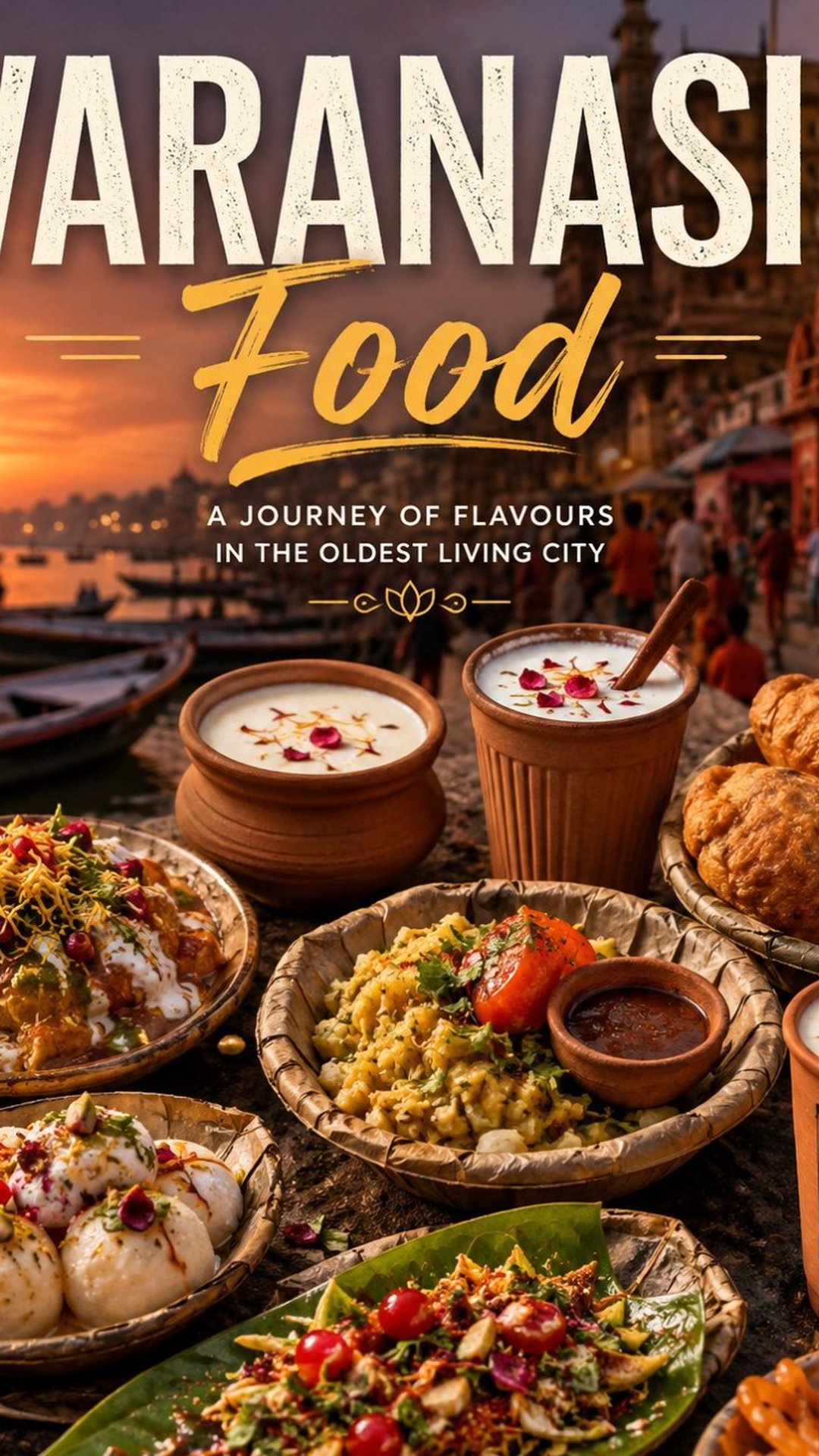
Varanasi Food Guide: Best Street Eats, Sweets & Where to Eat
Kachori sabzi, tamatar chaat, malaiyo, blue-lassi and banarasi paan
— what to eat in Varanasi, where the real thing is, and how to eat
it safely.
Varanasi is not a city you simply visit for food — you experience it one meal, one gali, and one kulhad at a time. From an early-morning plate of hot kachori-sabzi after a sunrise boat ride to evening tamatar chaat, winter-only malaiyo, creamy lassi, smoky baati chokha and a Banarasi paan to finish, the city's food culture is deeply woven into everyday life. Official tourism sources also highlight kachori-sabzi, tamatar chaat, choora matar, malaiyyo, chena dahi vada, lassi and chai among Banaras's signature flavours.
Morning — Kachori, jalebi & chai
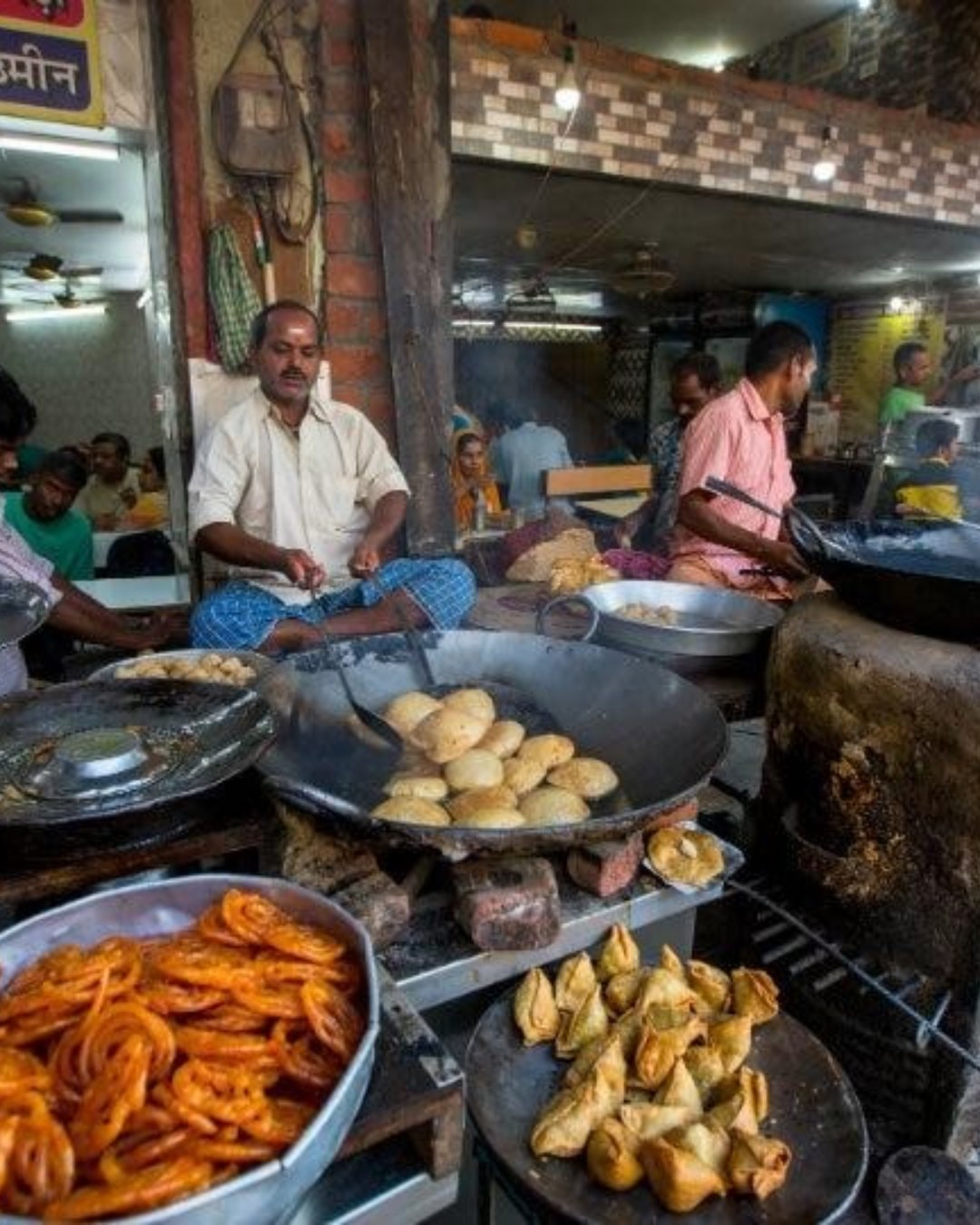
Begin in the old city while the lanes are still waking up. Hot kachori-sabzi, jalebi and chai make the perfect breakfast after a sunrise experience on the Ganga. A current local listing for The Ram Bhandar shows its breakfast hours beginning around 7:30 a.m., while Neelu Kachori Bhandar operates in Kachori Gali from the morning into the afternoon.
Late morning — Malaiyo in winter
If you're visiting between roughly November and February, make malaiyo a priority. This delicate milk-foam sweet is strongly associated with winter in Banaras and is best experienced fresh rather than carried around. The Kashi official portal specifically identifies malaiyyo as a winter specialty.
Afternoon — Baati chokha & a proper meal
After exploring the ghats and temples, slow down for baati chokha: roasted wheat baati with smoky chokha and generous ghee. Baati Chokha Restaurant is one current option, while Banarasi Baati Chokha is another.
Evening — The Chaat Belt
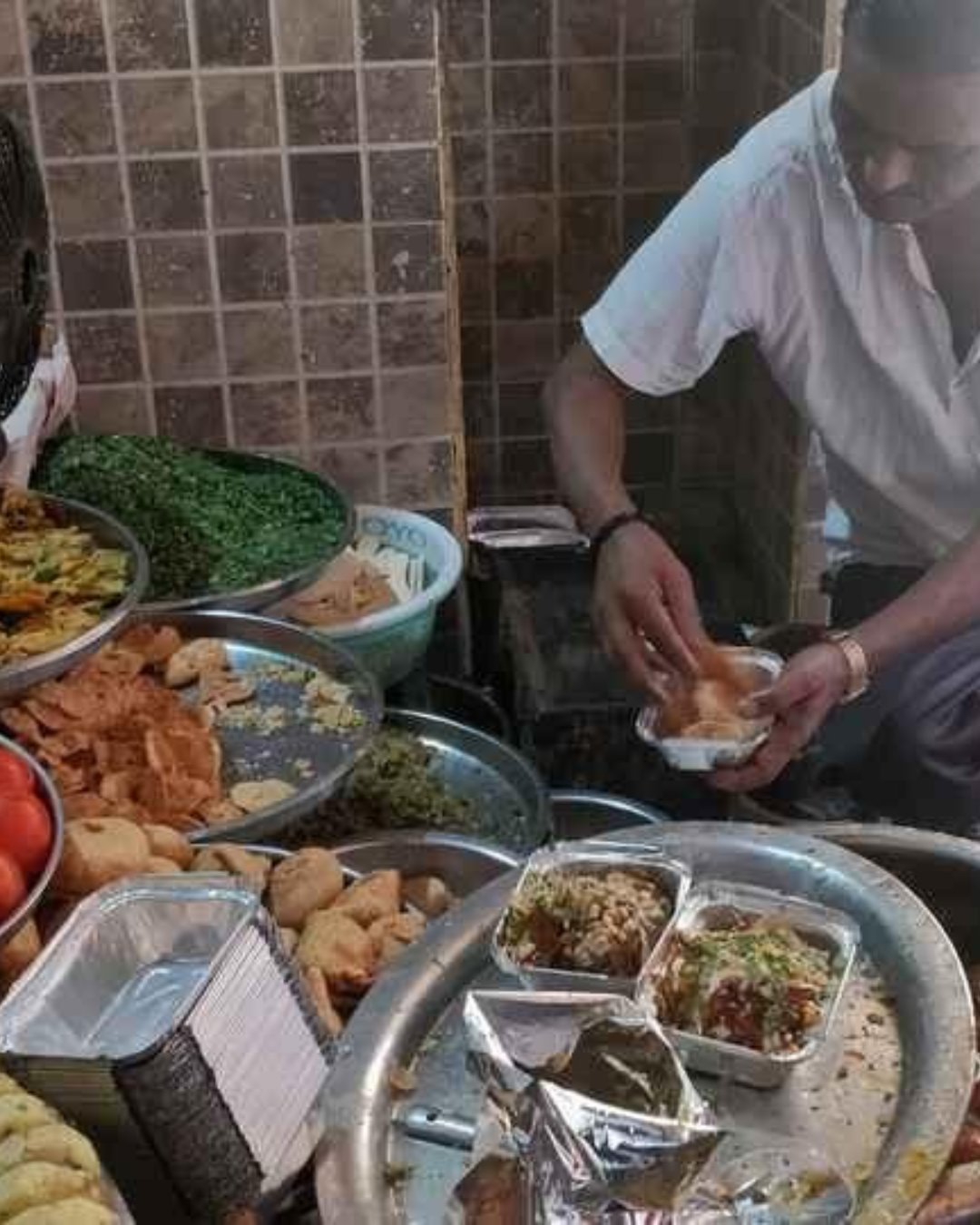
As the day cools, move toward the chaat stalls around Godowlia and the old city. Tamatar chaat, aloo tikki, palak chaat and other Banarasi variations turn the evening into a food crawl. Kashi Chat Bhandar is a well-known option, and Deena Chaat Bhandar is another established choice. Official tourism material also specifically highlights tamatar chaat and chooda matar as Varanasi specialties.
Night — Lassi, paan & the final gali walk
Finish slowly with a thick Banarasi lassi or a meetha paan without tobacco. The paan tradition is part of the city's culinary identity, and official tourism information lists several traditional paan shops.
The real secret
The best way to explore Varanasi's food is not to eat everything at once. Follow the city's rhythm:
Dawn → Kachori & Jalebi → Winter Malaiyo → Temple/vegetarian lunch → Evening Chaat → Lassi → Paan
Choose busy stalls with high food turnover, eat freshly prepared food hot, drink safe water, and give yourself time between dishes. That way, the food becomes part of the Varanasi journey rather than simply another checklist.
250
Stops
Home
MomentVishwanath Gali, Varanasi
Kachori Gali at Dawn
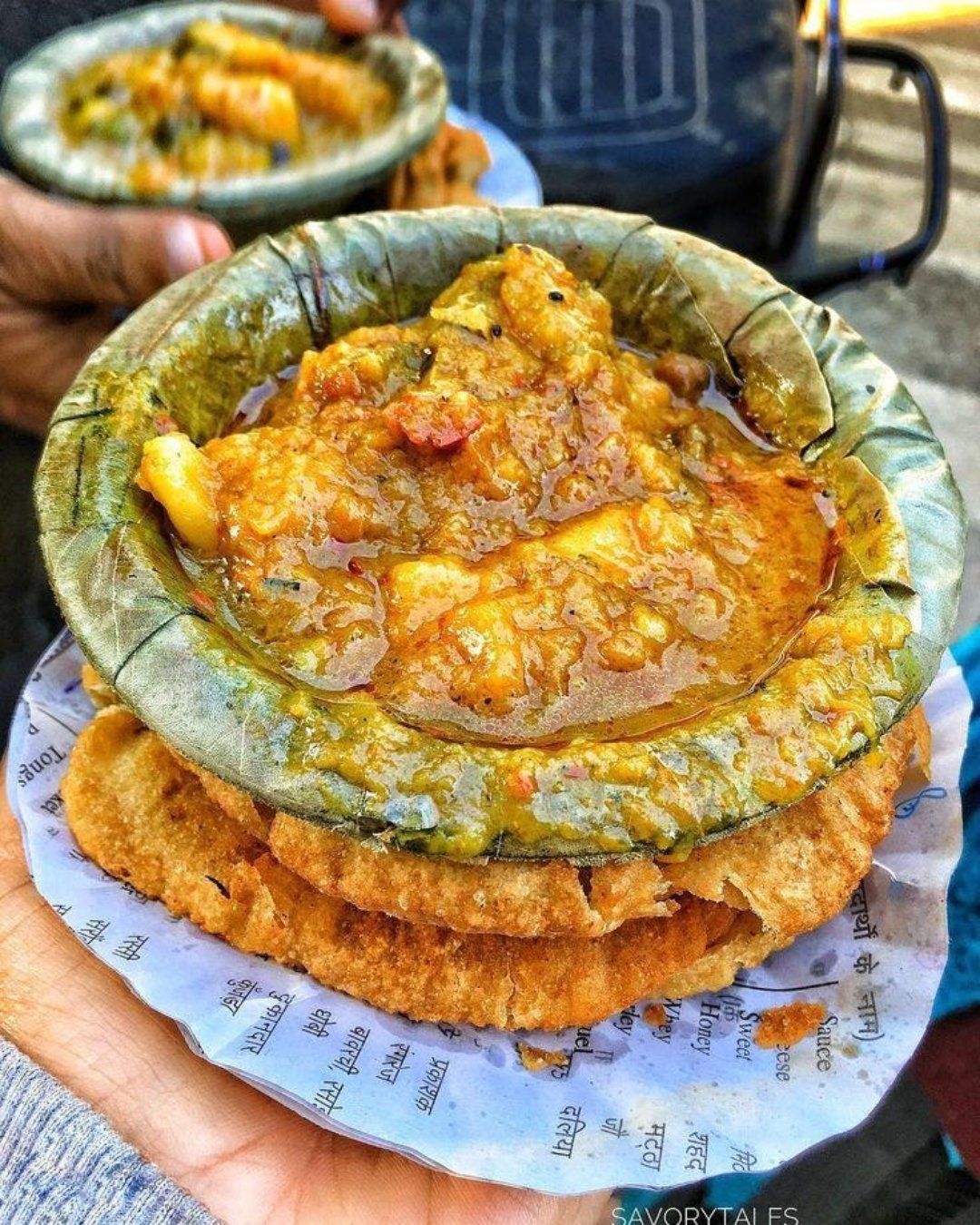
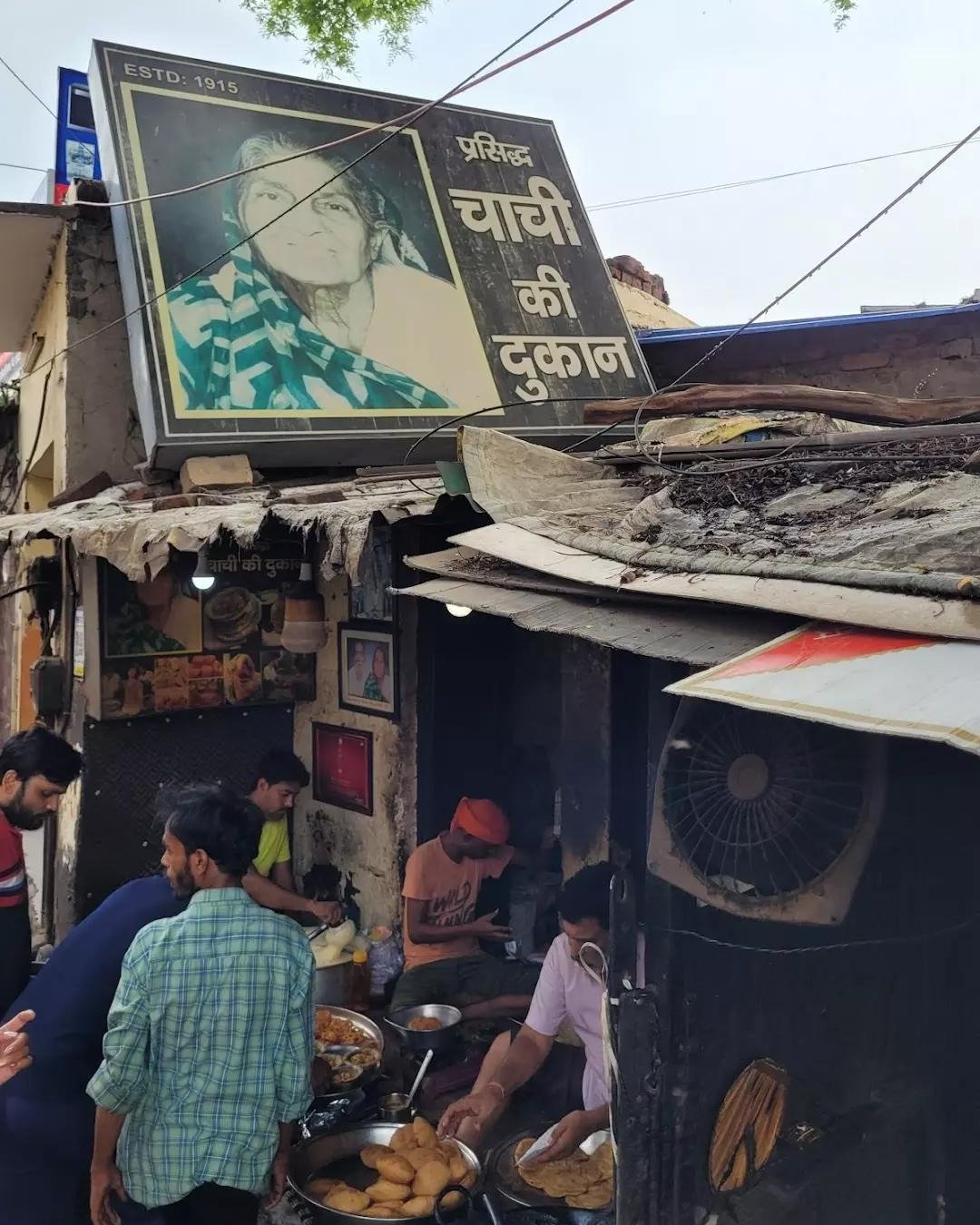
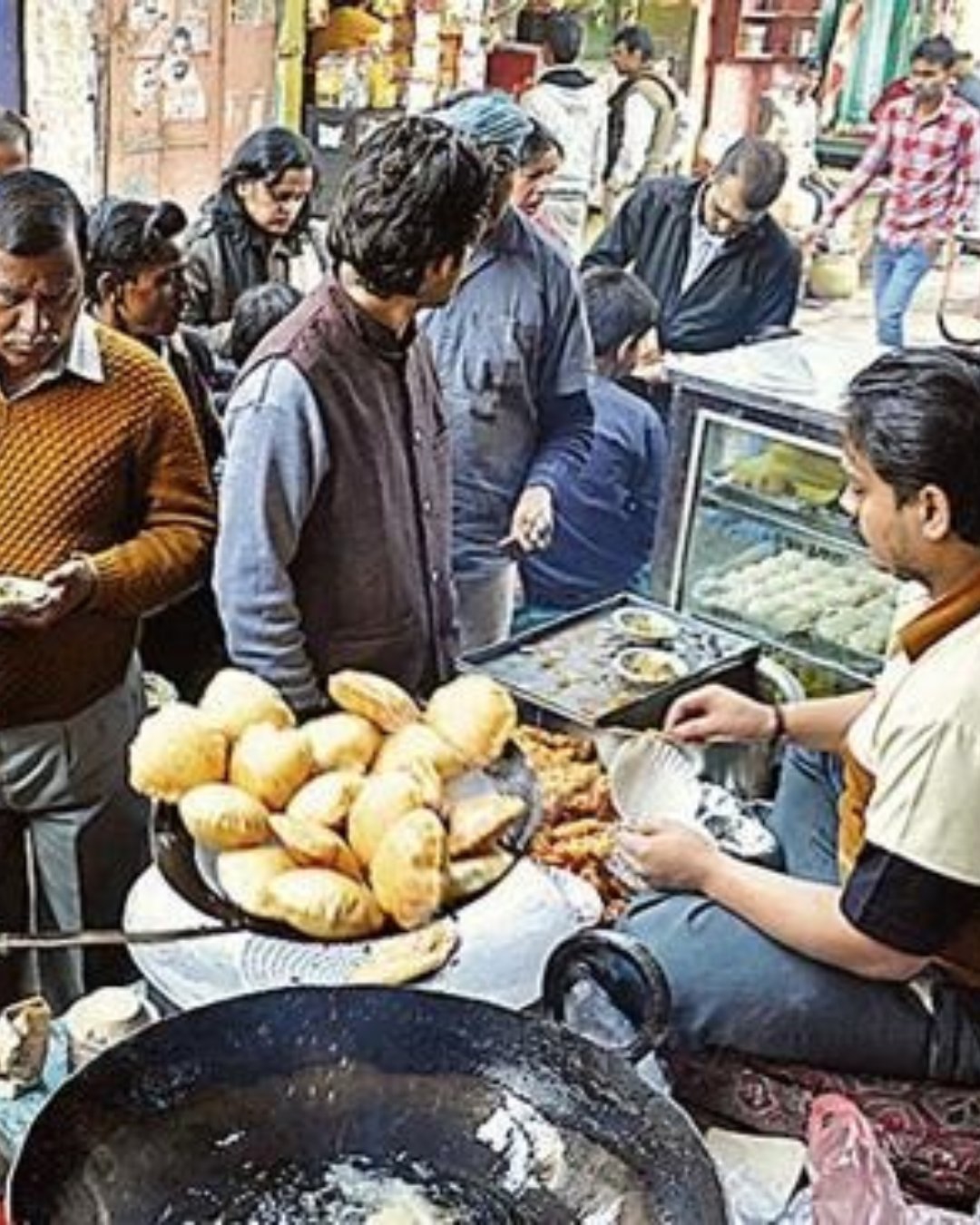
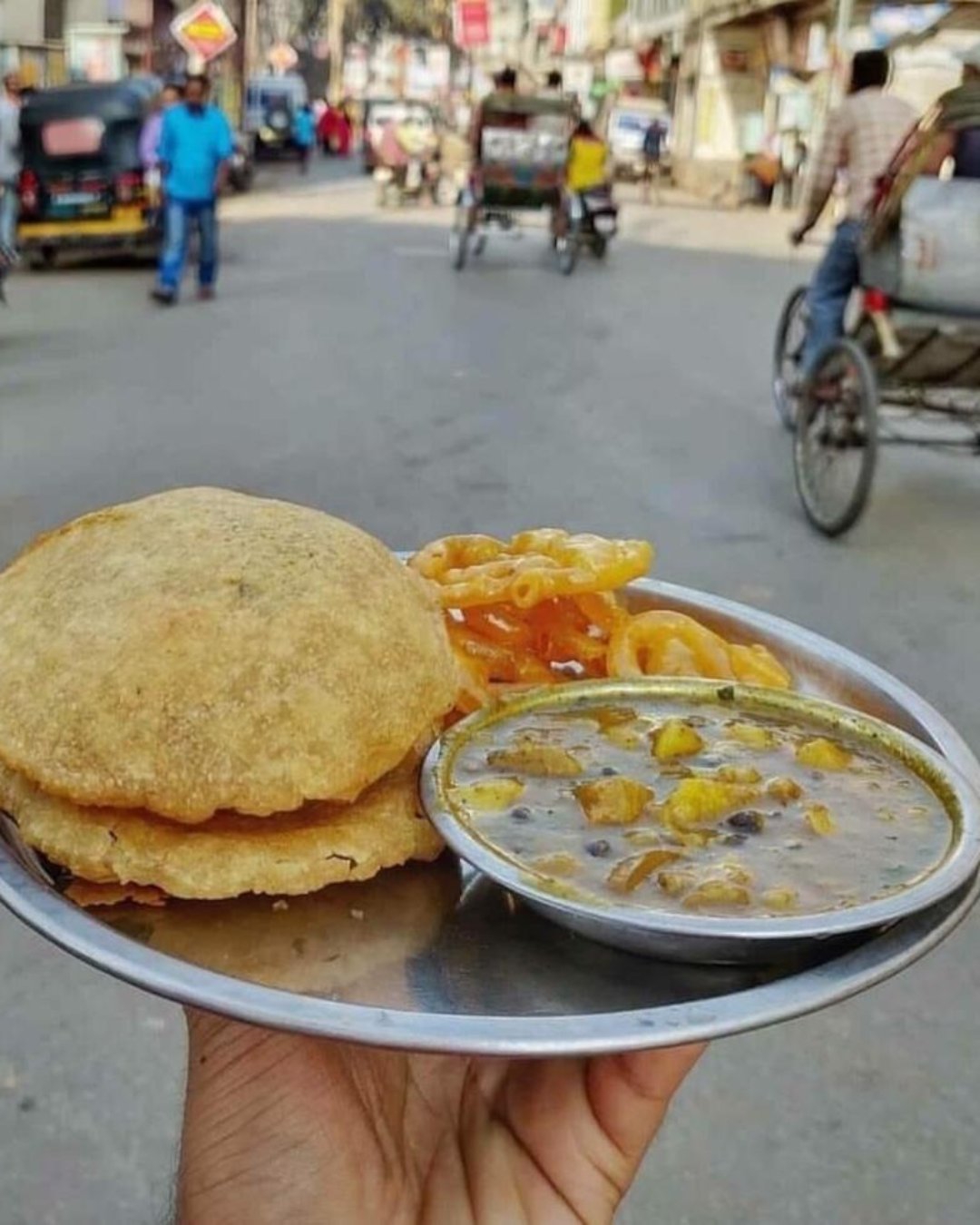
It's 6 a.m. in Kachori Gali, the first kadhai is already spitting oil, and by the time most visitors think about breakfast, the good stalls will be shuttered. A guide, a list of famous shops, lunch worked into the afternoon. But here's the thing nobody tells you: Kachori Gali is a breakfast street, and it's already winding down by the time most visitors think to look for it. Turn up at eleven expecting the scene from the reels and you'll find sold-out kadhais, shutters half-down, and the crowd long gone. The city eats this early, and if you're not there early, you've missed it.
Let's fix that. Here's how Kachori Gali at dawn actually works, and how to get it right the first time.
Why dawn, and not any other hour
The kachori-sabzi breakfast is made fresh and made once. The halwais fire up their kadhais before sunrise, the first batches come out hot around six, and the good shops sell through their morning stock by mid-morning. What you want is the first hour — the oil clean, the kachoris crisp, the jalebis coming straight out of the syrup.
It also pairs perfectly with the river. You're already up before dawn for the boat ride; step off the water, walk up into the old city, and Kachori Gali is breakfast at exactly the right moment. Come after the ghats, not instead of them. By the time the tour groups arrive at ten, you'll have eaten the best of it and moved on.
What you'll actually eat
The lane near Vishwanath, Godowlia and the Chowk end is lined with tiny halwai stalls. Work your way through:
Kachori-sabzi — the signature: puffed, spiced deep-fried bread with a runny potato curry, eaten off a leaf plate.
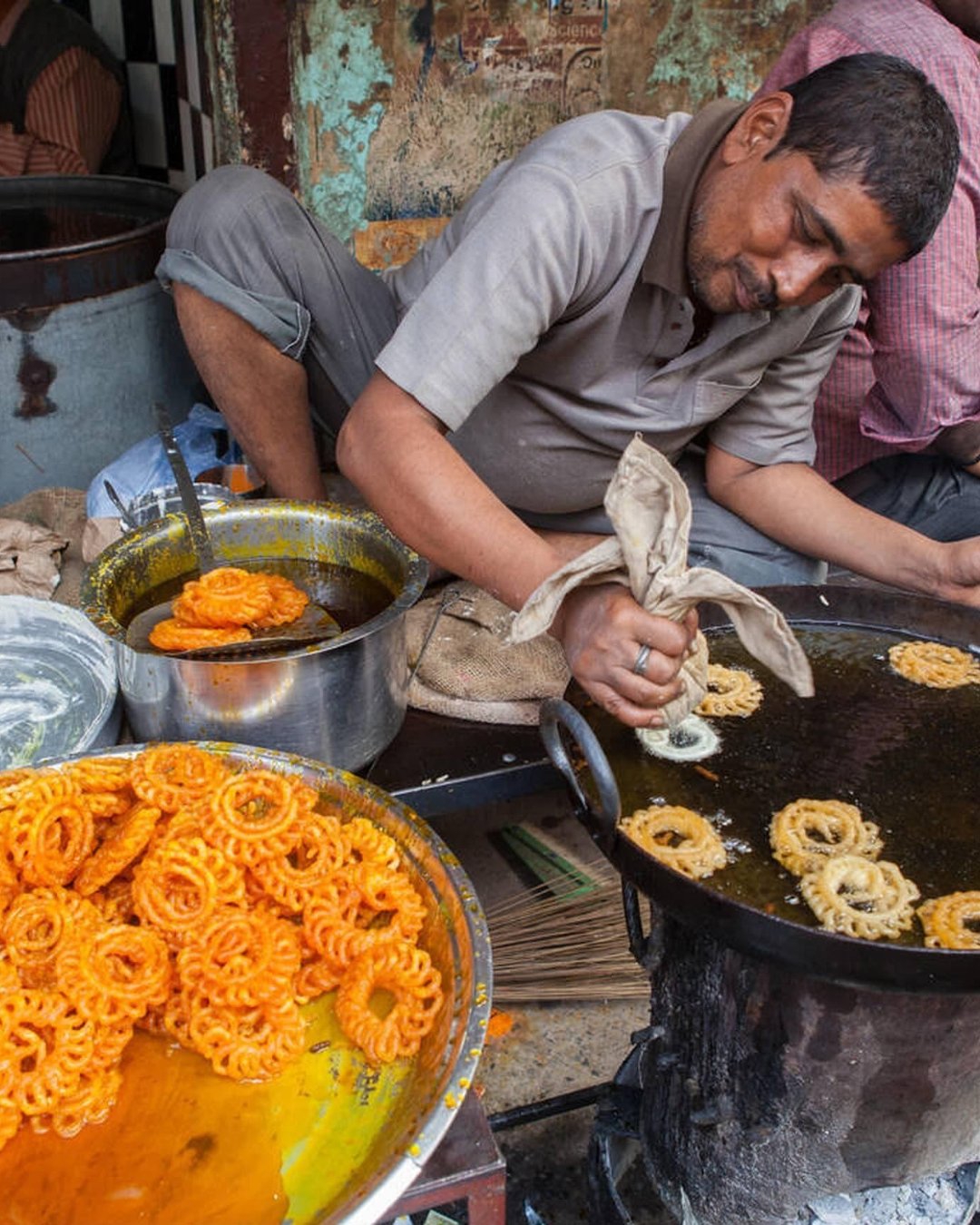
Jalebi and imarti — hot, orange, dripping; the sweet counterpoint.
Malaiyo — the legendary winter-only saffron milk foam, if you're here Nov–Feb. Gone by mid-morning and gone by March.
Chena dahi-vada and a kulhad of chai — to finish.
Come genuinely hungry, and carry small notes — these are cash stalls that don't want to break big bills at 6 a.m.
And this once, the phone earns its place — but eat first. Travellers who've done this will tell you the same thing: the instinct is to photograph every plate, and the food goes cold while you frame it. Eat the first kachori hot, off the leaf, standing up in the lane with everyone else, before you shoot anything. The steam, the noise of the kadhai, the crush of locals getting their breakfast — that's the part the photos never quite catch.
Pro tip: Eat where the locals queue, not where the English signboard points. A stall with a crowd of Banarasis and a fast-moving kadhai is turning over fresh oil; an empty one with a laminated menu is waiting for tourists. Point at what the person ahead of you ordered. And if you're here in winter, make malaiyo the mission — it's a Banaras-only, dawn-only, season-only thing that most visitors never even hear about.
The mistakes that ruin it
Most first-timers trip over the same few things. They come mid-morning, after the fresh batches and the crowd have gone. They eat at the tourist-signposted stall instead of the busy local one. Or they photograph everything cold instead of eating it hot.
The easy fix is to come at dawn, straight off the boat, and eat where the locals eat — or let the morning be planned so breakfast lands at the right hour in the right lane.
81
MomentGodowlia, Varanasi
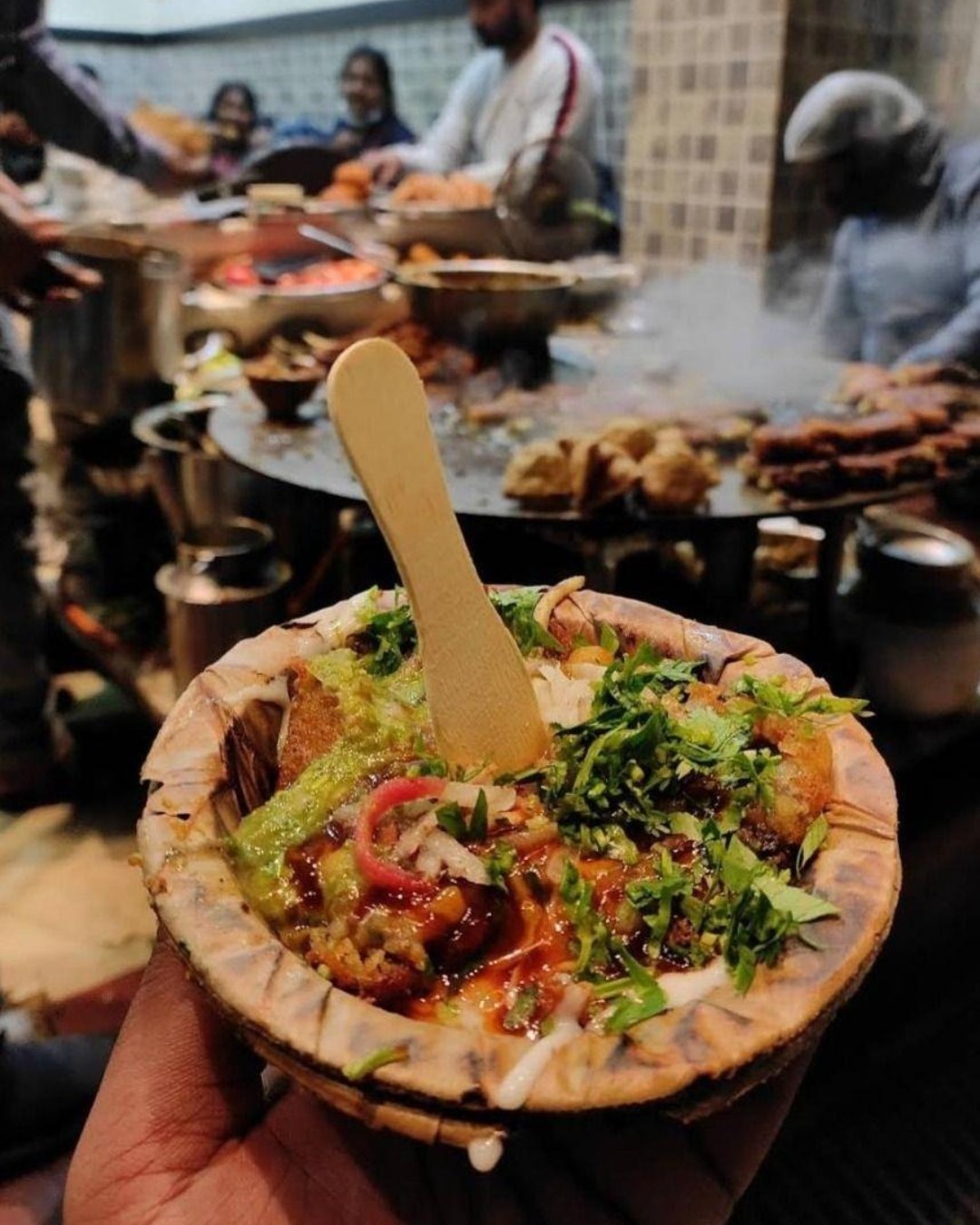
Tamatar Chaat & the Chaat Belt
One dish in this city exists almost nowhere else in India — tamatar chaat — and it only comes alive on the Godowlia belt after dark. Then you get here, and it's overwhelming — a hundred stalls, no idea which are clean, which are famous, or which will leave you in bed for two days. So you either play it too safe and eat nothing memorable, or you point at the busiest cart, hope for the best, and roll the dice on your stomach. Either way, you miss the thing Varanasi actually does better than almost anywhere: chaat.
Let's fix that. Here's how eating the Banarasi chaat belt actually works, and how to get it right the first time.
Why the evening, and not any other hour
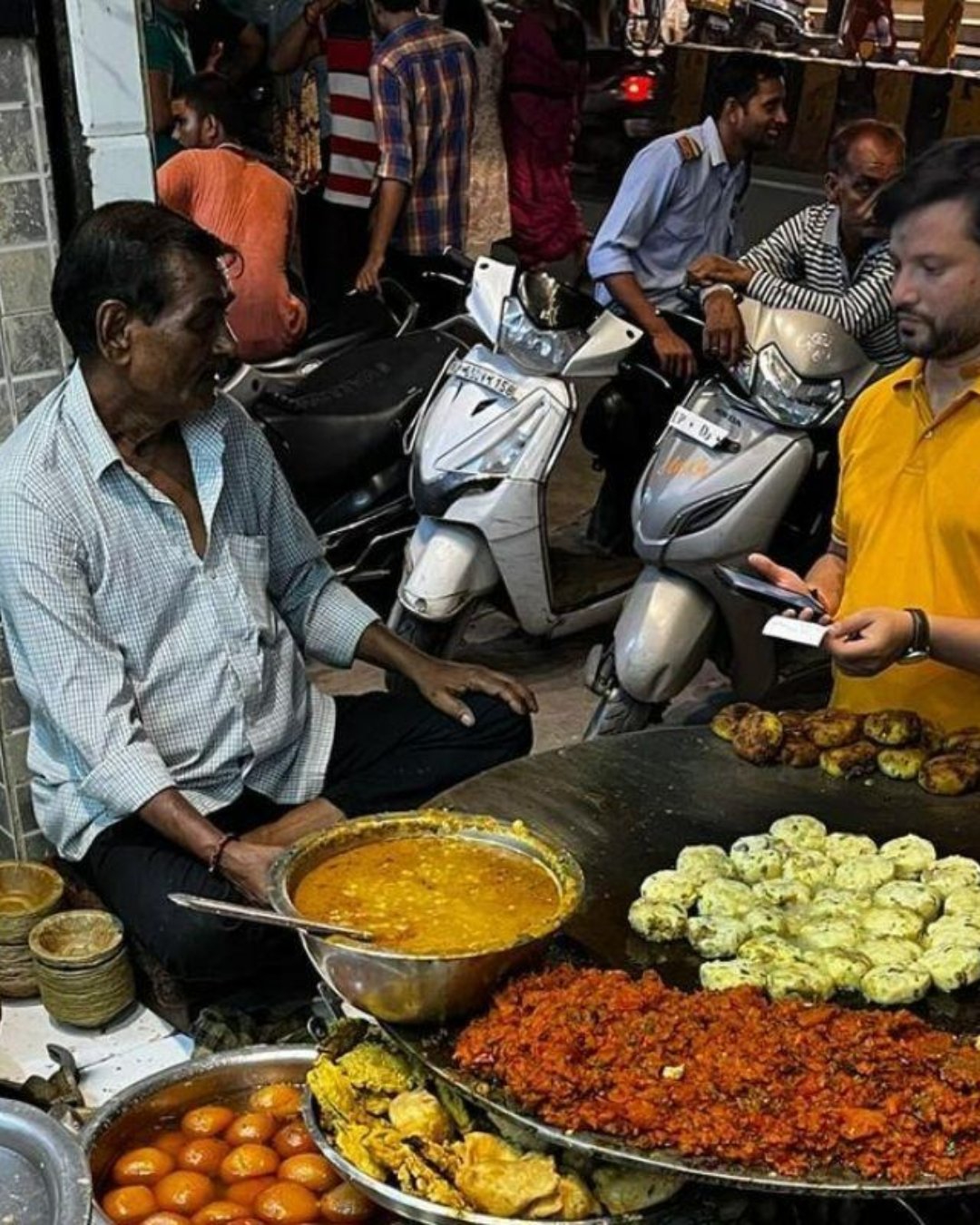
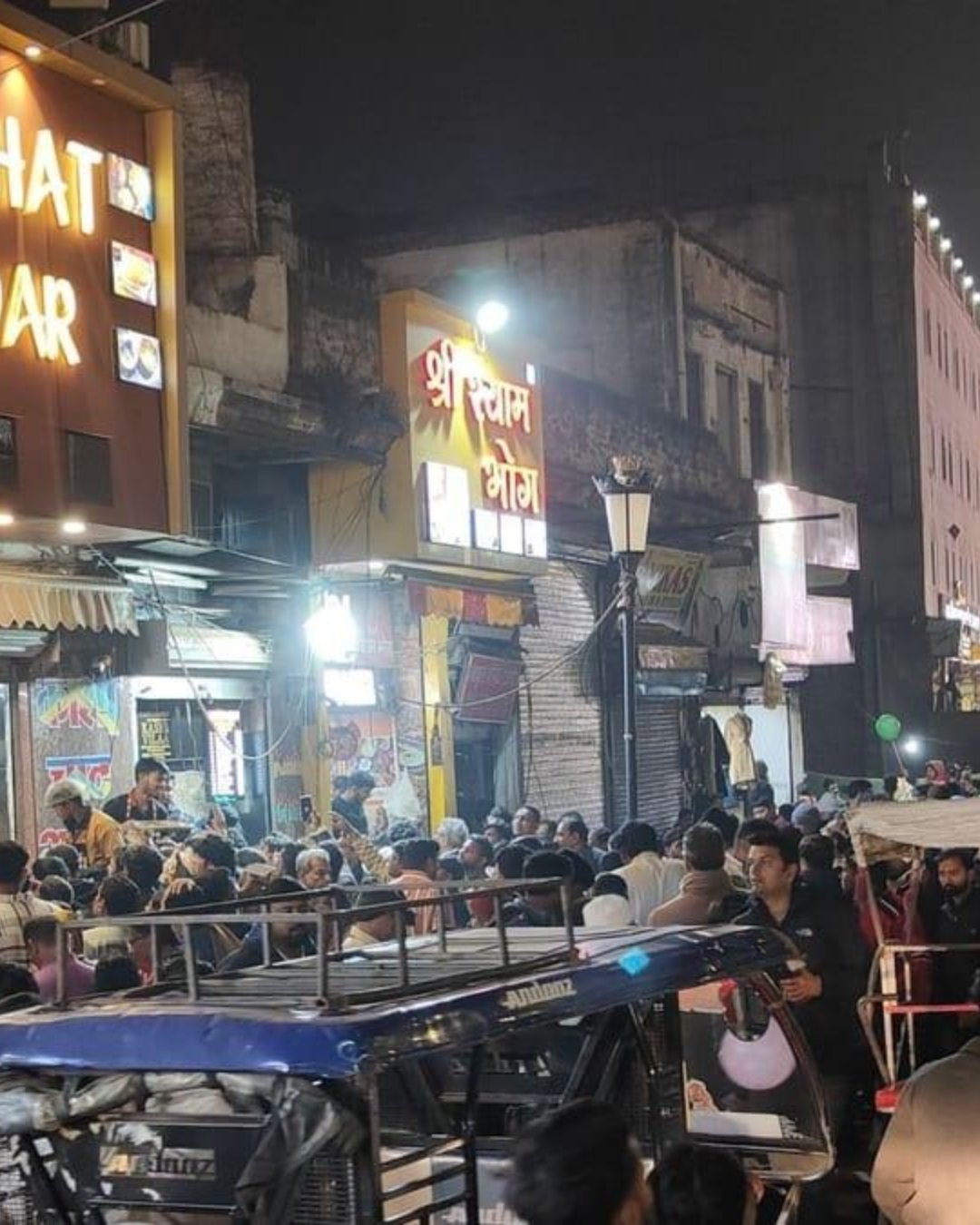
Chaat is an evening thing in Varanasi. The carts fire up in the late afternoon and the belt around Godowlia, Kachori Gali and Thatheri Bazaar comes alive from about 5 p.m. onward. Come at lunchtime and half the good stalls aren't set up; come at 8 p.m. and you're eating in the thick of it, with the crowd that tells you which counter is worth the wait.
There's a food-safety logic to the hour too: the busiest stalls turn over their oil and their toppings fastest, so the batch you're eating is fresher and hotter. In a city where hygiene is the real risk, high turnover is your best friend — and turnover peaks in the evening.
What you'll actually eat
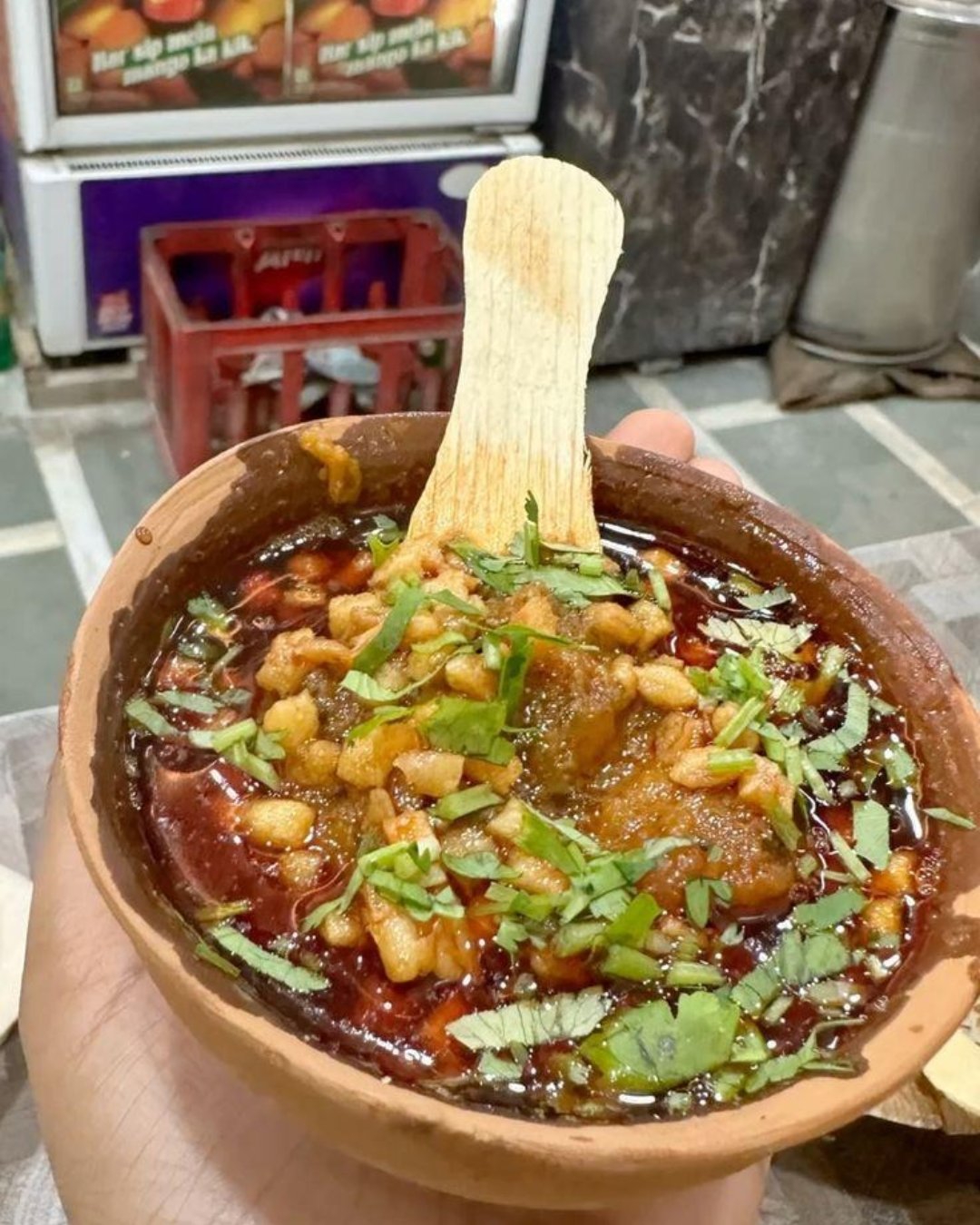
Banaras has its own chaat grammar, and tamatar chaat is the one outsiders never see coming:
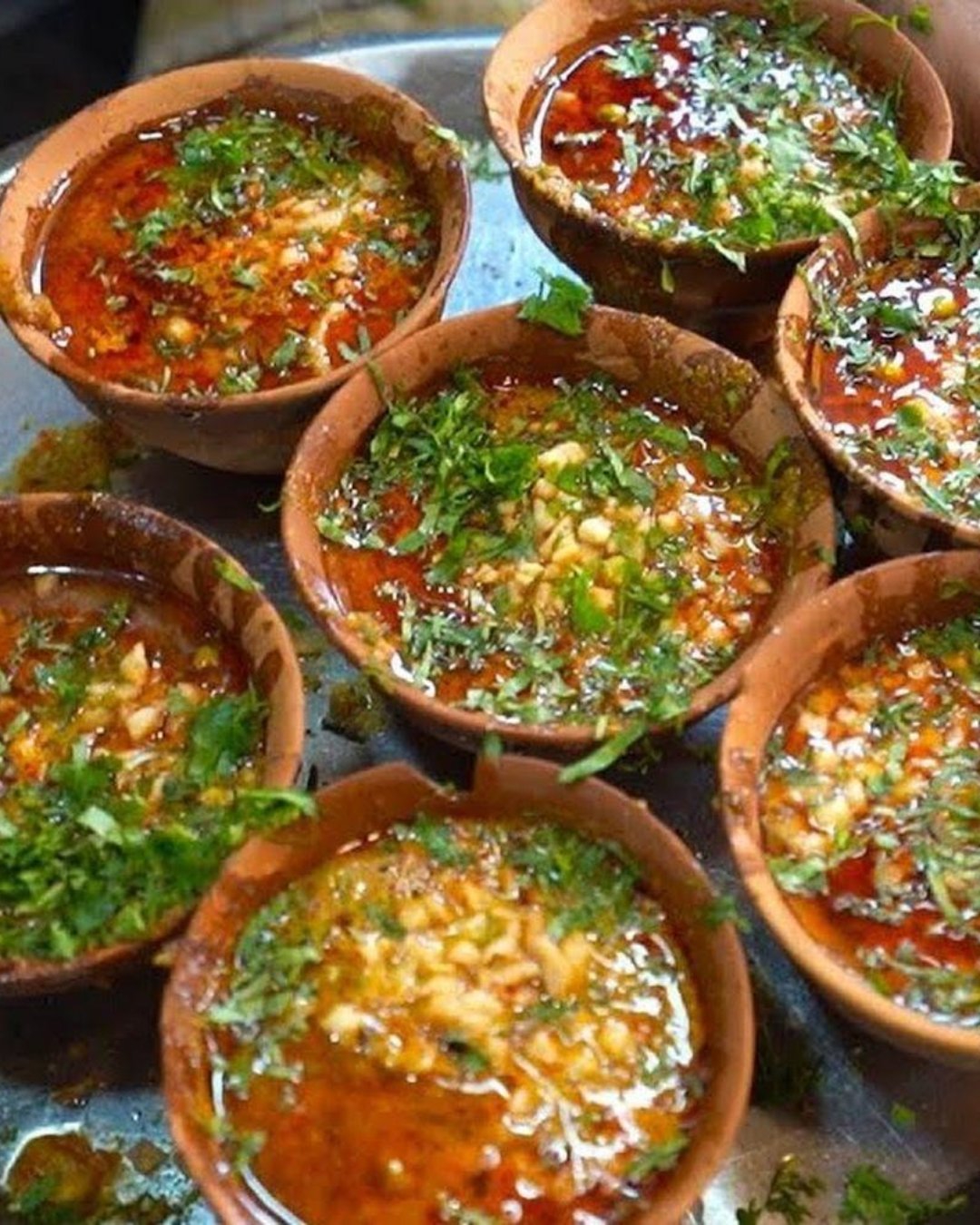
Tamatar chaat — the local signature: tomatoes cooked down to a spiced mash, served in a clay bowl, topped with crushed namak para and crisp bits. Unlike anything called chaat elsewhere.
Palak chaat — spinach leaves fried into crisp fritters, then dressed. Godowlia does the famous version.
Choora matar — a winter-only breakfast of flattened rice and green peas in ghee. Seasonal, and worth chasing.
Kachori-sabzi and jalebi — the classic morning plate, and the sweet that ends any chaat crawl.
Carry small notes and hand sanitiser. Eat it fresh off the pan, in the clay bowls, and skip anything with raw water, pre-cut salad or old chutney sitting out.
And here, unlike the ghats, keep your phone half out — but use it to watch first. Travellers who eat their way through this belt will tell you the same thing: the move is to stand back, see which stall the locals are three-deep at, and eat there. The photo can wait; the queue is the review. The sizzle, the clatter of the ladle on the pan, the first spoon of hot tamatar chaat in a cool clay bowl — that's the part the photos never quite catch.
Pro tip: Eat where the crowd is thickest and the pan never stops — turnover is both the flavour and the safety. Go with an empty stomach and share plates rather than filling up at one stall, so you can try five things instead of one. Start gentle if your stomach isn't road-tested, carry your own water, and end on a hot jalebi or a Banarasi paan. And go in the evening, when the belt is fully lit and fully busy.
The mistakes that ruin it
Most first-timers trip over the same few things. They come at the wrong hour and find half the carts cold. They pick an empty stall out of caution and get the stalest food, not the safest. Or they overfill on the first thing and miss the range.
The easy fix is to walk the belt in the evening with someone who knows which counters have earned their queue — so you eat the best of it without gambling on your stomach.
68
MomentBhelupur, वाराणसी
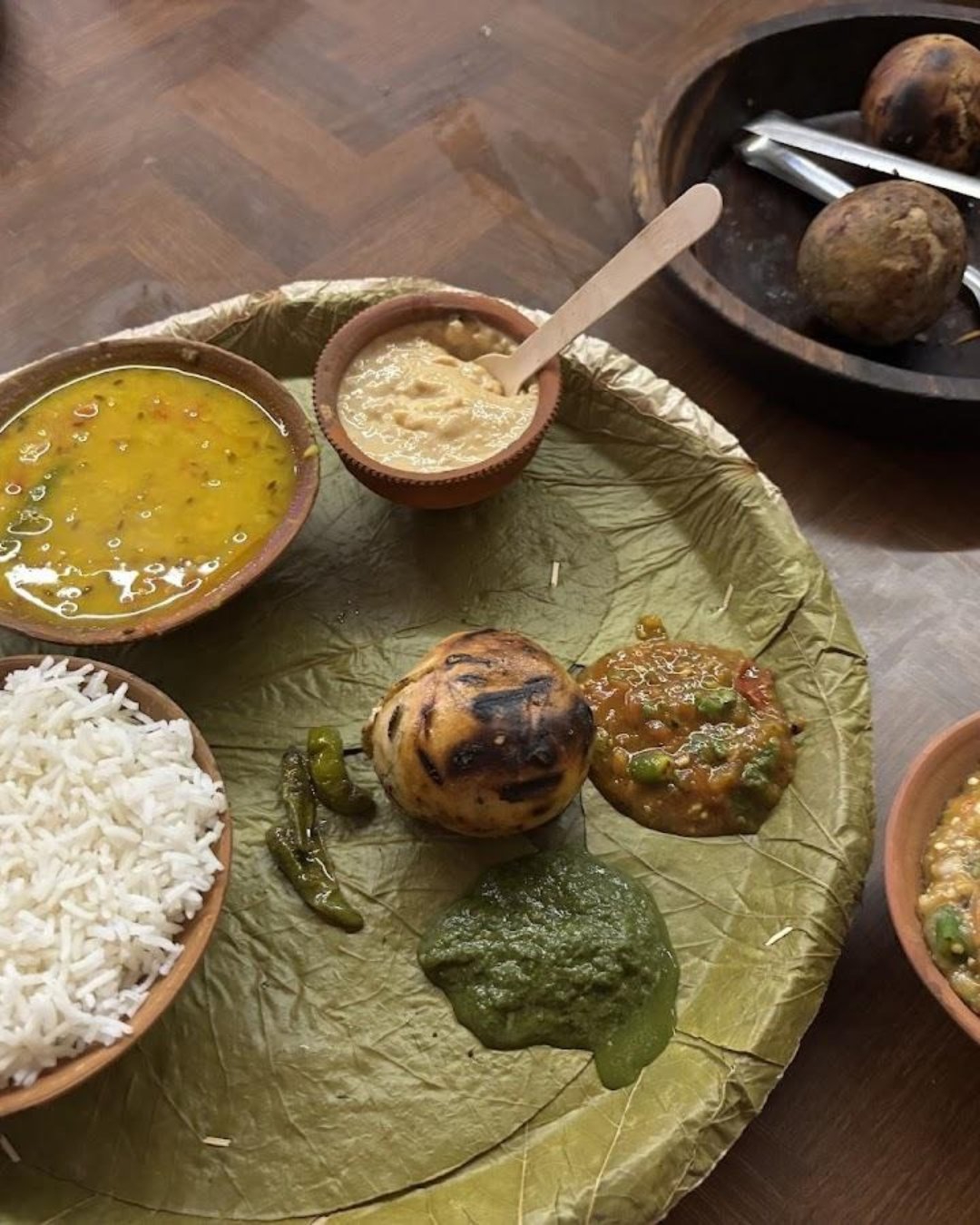
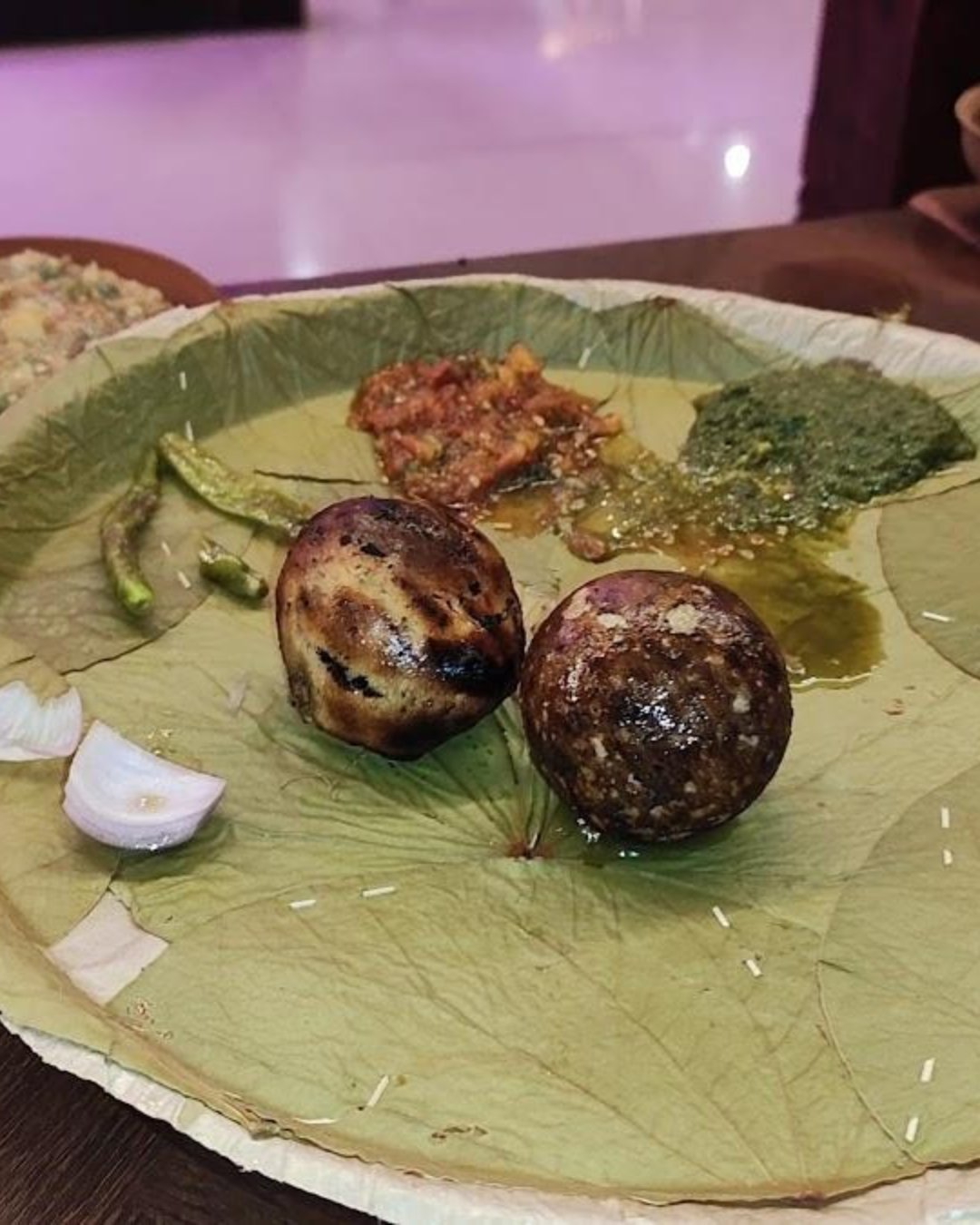
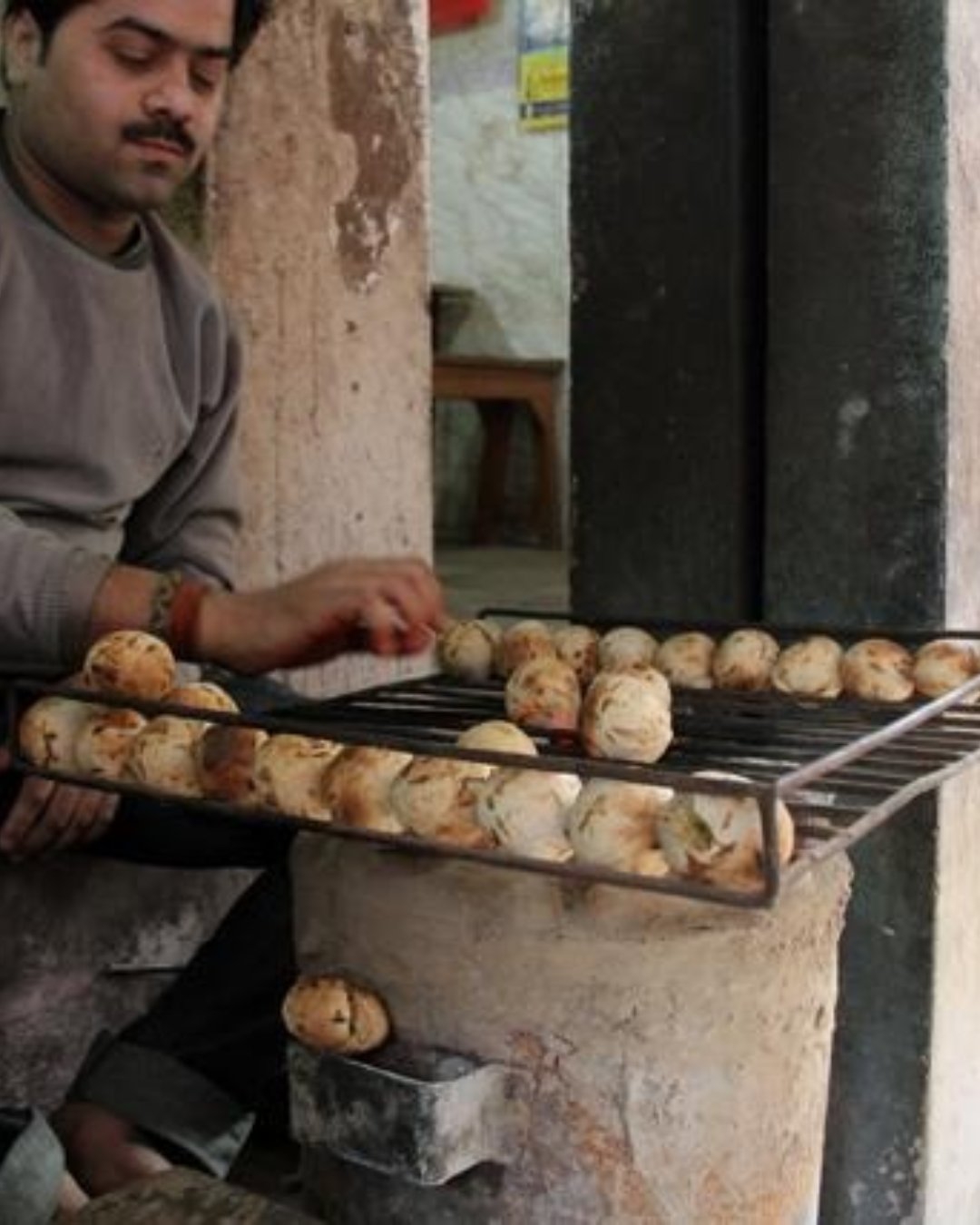
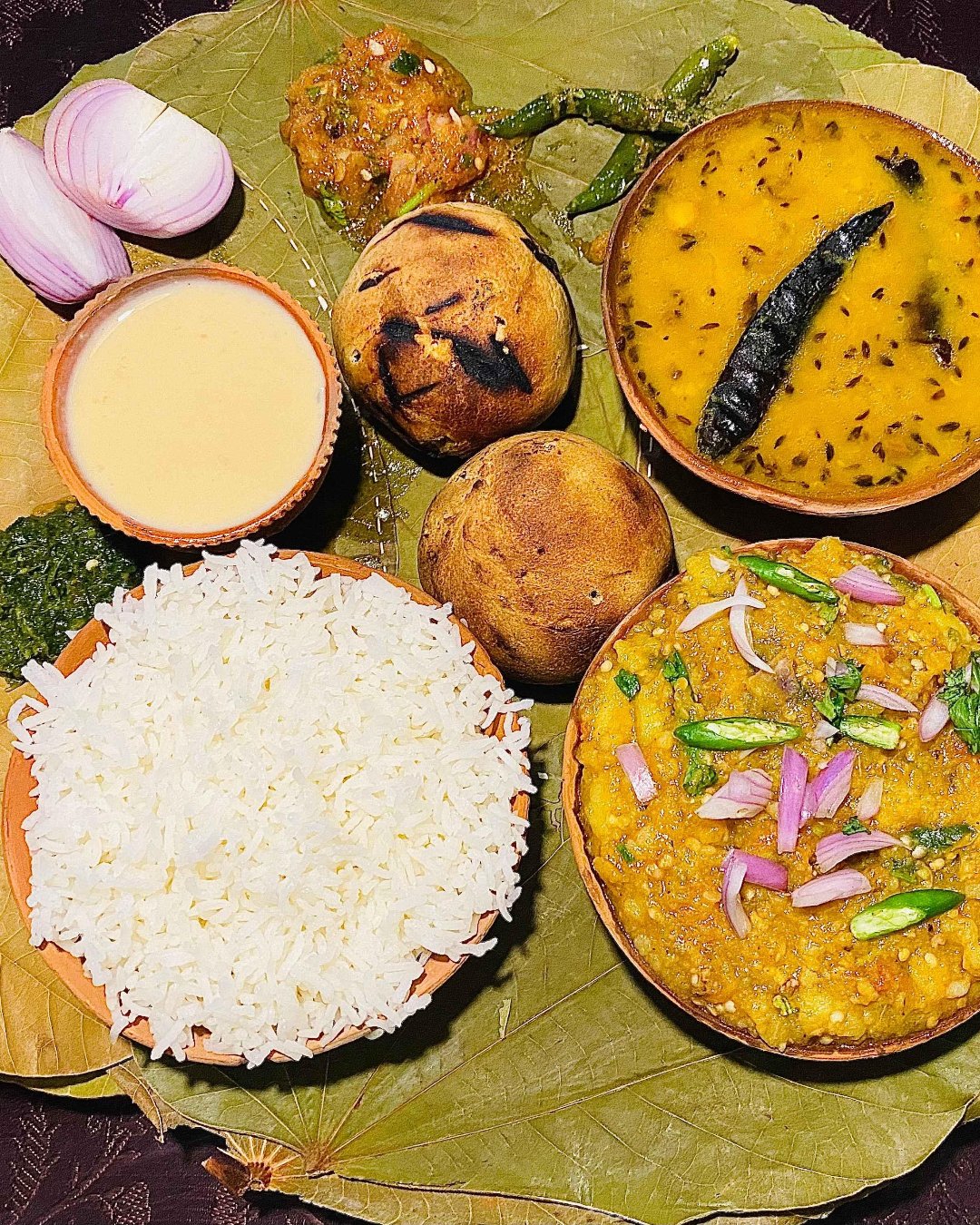
Baati Chokha — The Hearty One
Skip the restaurant. The baati chokha worth eating is cracked open over a coal fire, not plated under a tandoor light. in a fancy restaurant, and thought that was it. A neat plate, a ball of baked dough, a side of mash, done. But here's the thing nobody tells you: eat baati chokha off a white tablecloth and you've missed most of what makes it worth eating. This is coarse, smoky, fire-cooked village food — the taste is in the char, the fresh ghee and the roasted brinjal, and the polished restaurant version sands all of that off. Get the setting wrong and you'll wonder what everyone's fussing about.
Let's fix that. Here's how baati chokha actually works, and how to get it right the first time.
Why the fire, and not the fine dining
The dish is simple by design: wheat-flour dough (the baati) baked hard over coals or cow-dung cakes until it cracks and smokes, then split and drowned in ghee, served with chokha — brinjal, tomato and potato roasted over the same fire, mashed with mustard oil, green chilli, garlic and raw onion. It's peasant food, built to be filling and cheap, and that's exactly its strength.
Which means the plush restaurant with the tandoor loses the plot. The real thing needs actual fire and a generous, unfussy hand — a place where the baati is cracked open in front of you, doused in ghee without counting, and the chokha is smoky rather than saucy. Kashi has dedicated baati-chokha halls that do precisely this, and that's where you go.
What you'll actually get
A proper plate lands heavy and hot:
The baati — round, hard-baked, blistered from the fire, split and soaked in ghee. Break it with your hands.
The chokha — the roasted-brinjal-and-tomato mash, smoky and sharp with mustard oil and raw onion.
Sattu-stuffed baati — some come filled with spiced roasted-gram flour, and they're the better version. Ask.
The sides — raw onion, green chilli, a wedge of lemon, sometimes a thin dal poured over.
Eat it with your hands and eat it hot — baati goes dense and heavy as it cools, and this is a dish that rewards the first ten minutes.
And this is a meal to put the phone down for, not photograph. Travellers who eat it right will tell you the same thing: it looks plain on a plate and photographs worse, so the picture will never sell it. Just eat. The crack of the crust, the ghee, the smoke coming off the chokha, the heat of the raw onion and chilli — that's the part the photo never catches, because it isn't a looker, it's a taste.
Pro tip: Go where they bake over real fire, not a gas tandoor, and go hungry — a full plate is genuinely heavy and you won't want lunch after. Eat it fresh off the fire rather than letting it sit. Ask for extra ghee; the locals do. And if your stomach isn't used to Indian street kitchens, ease in — this is rich, oily, garlicky food, so pair it with plenty of water and don't make it your first meal off the plane.
The mistakes that ruin it
Most first-timers trip over the same few things. They order it in a smart restaurant and get a sanded-down version. They let it go cold and find it heavy and dull. Or they make it their arrival-day meal and pay for the richness later.
The easy fix is to eat it at a proper baati-chokha house, hot off the fire, midway through your trip when your stomach's settled — or let a food-savvy guide take you where the locals actually go.
66
MomentVishwanath Gali, Varanasi
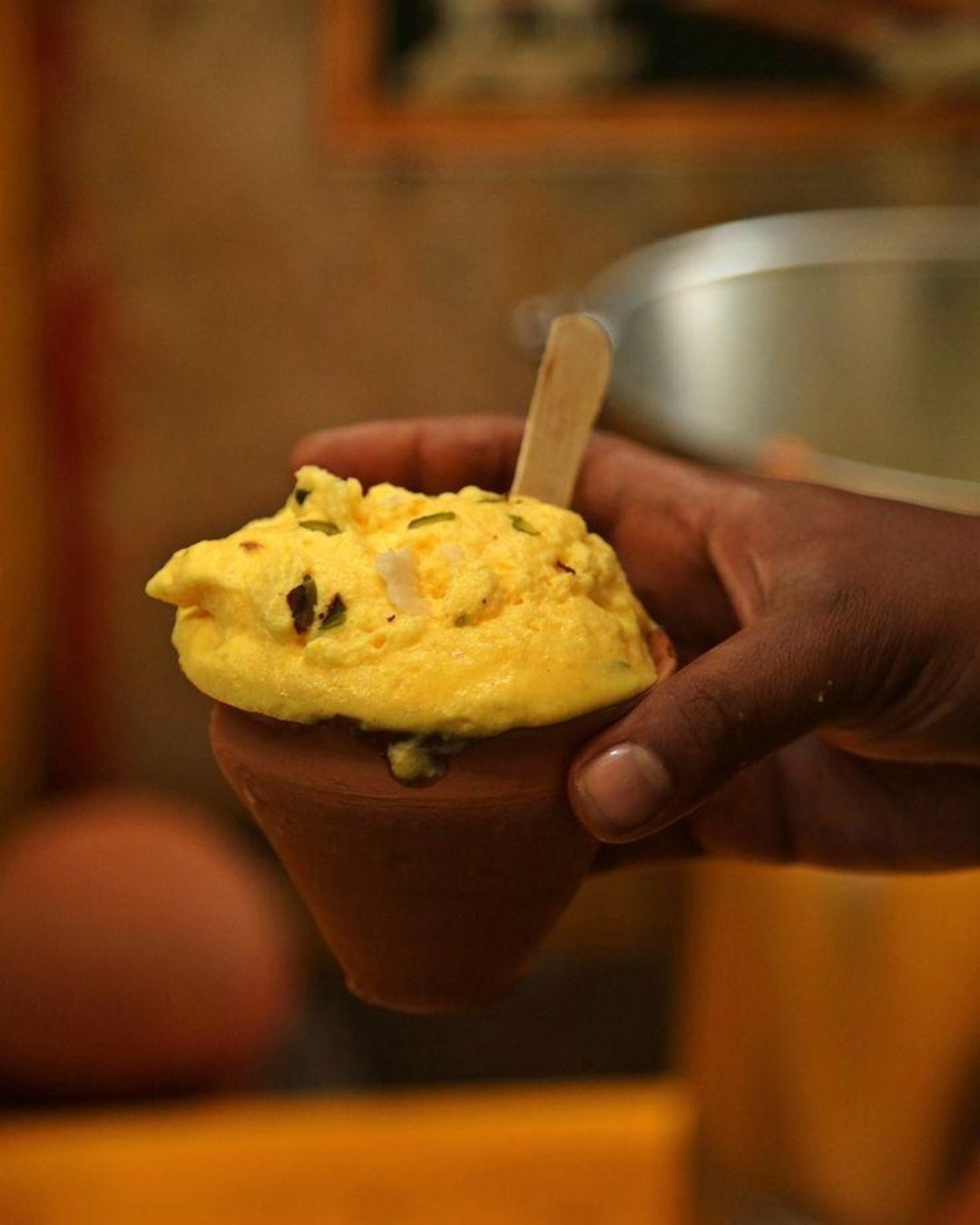
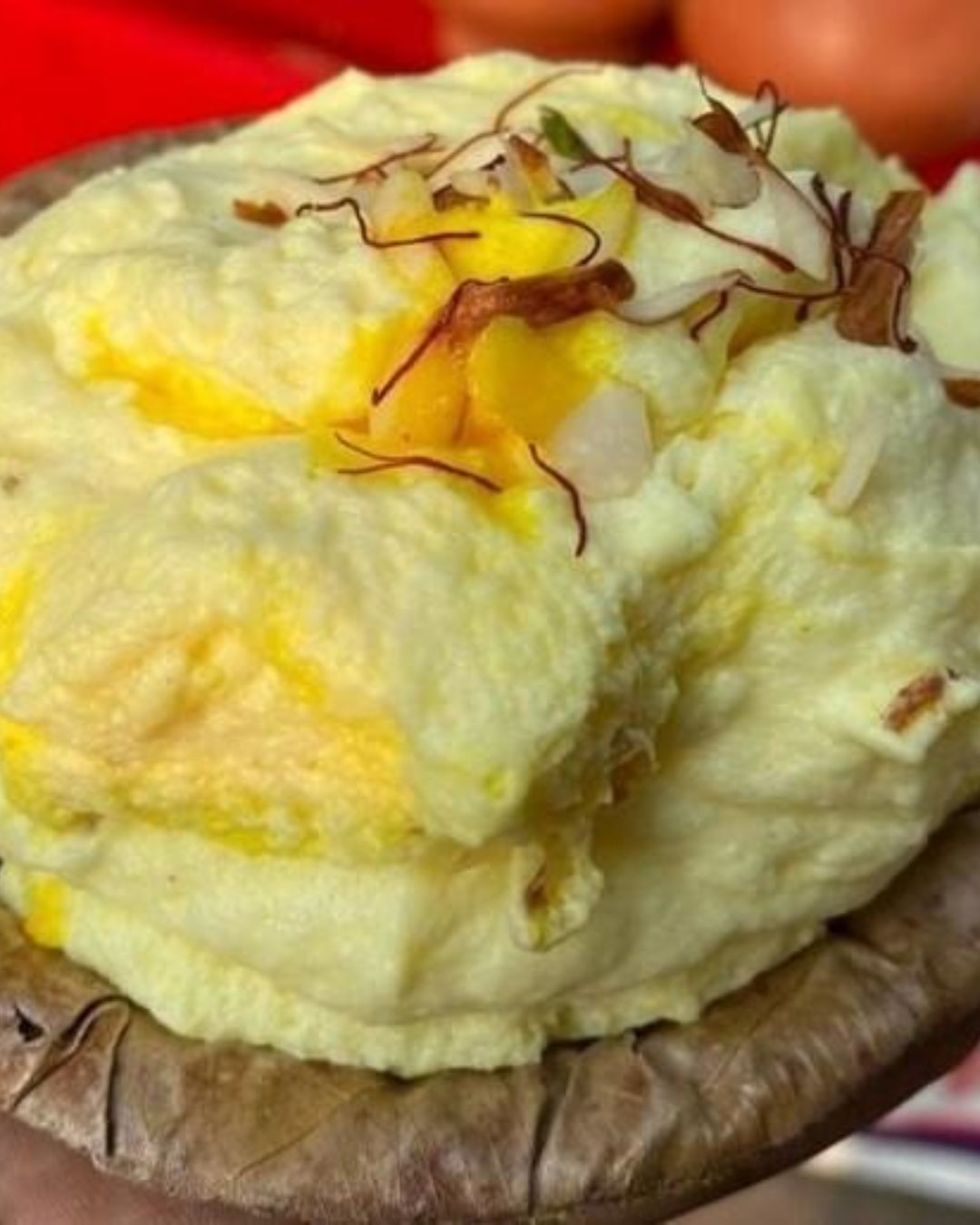
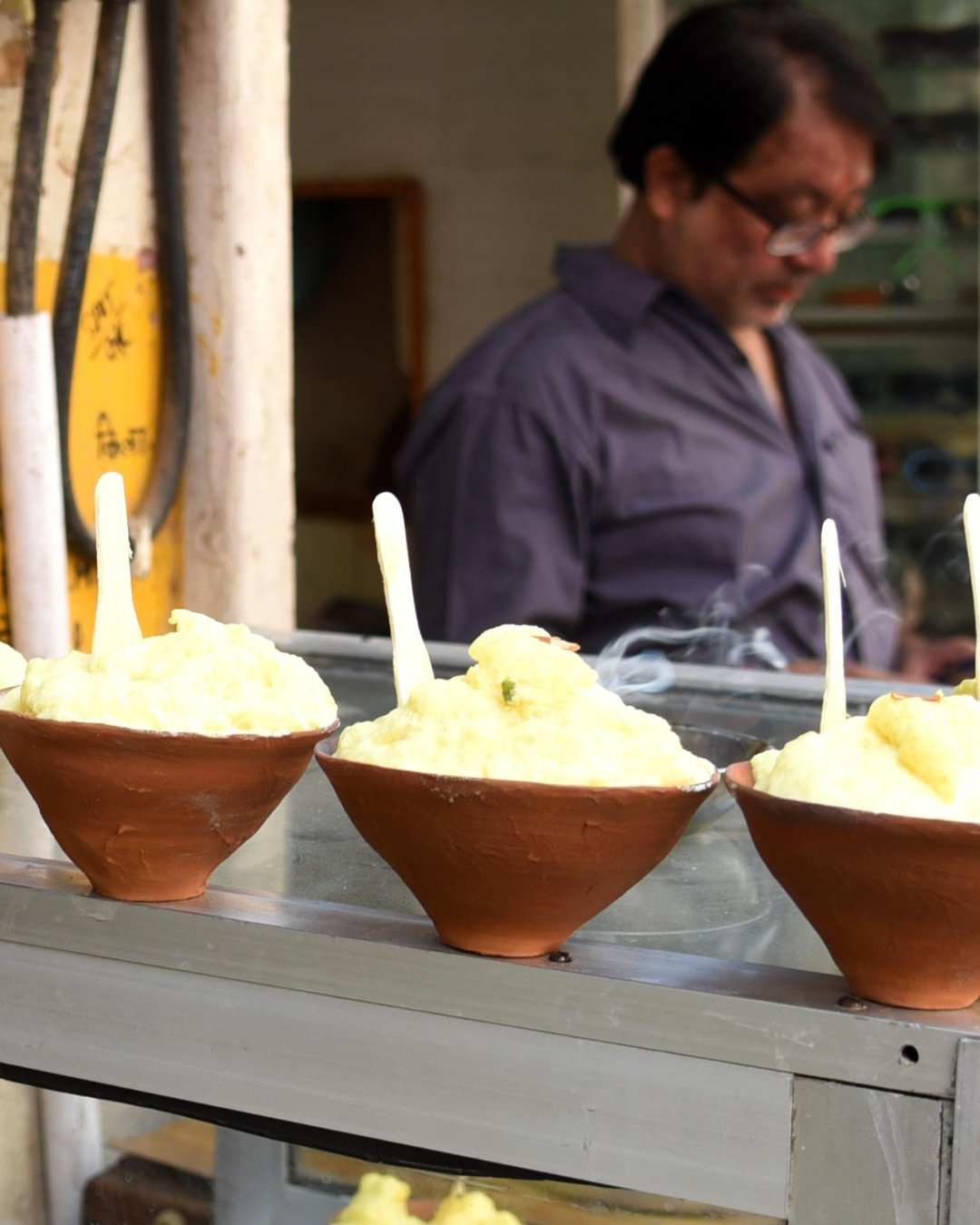
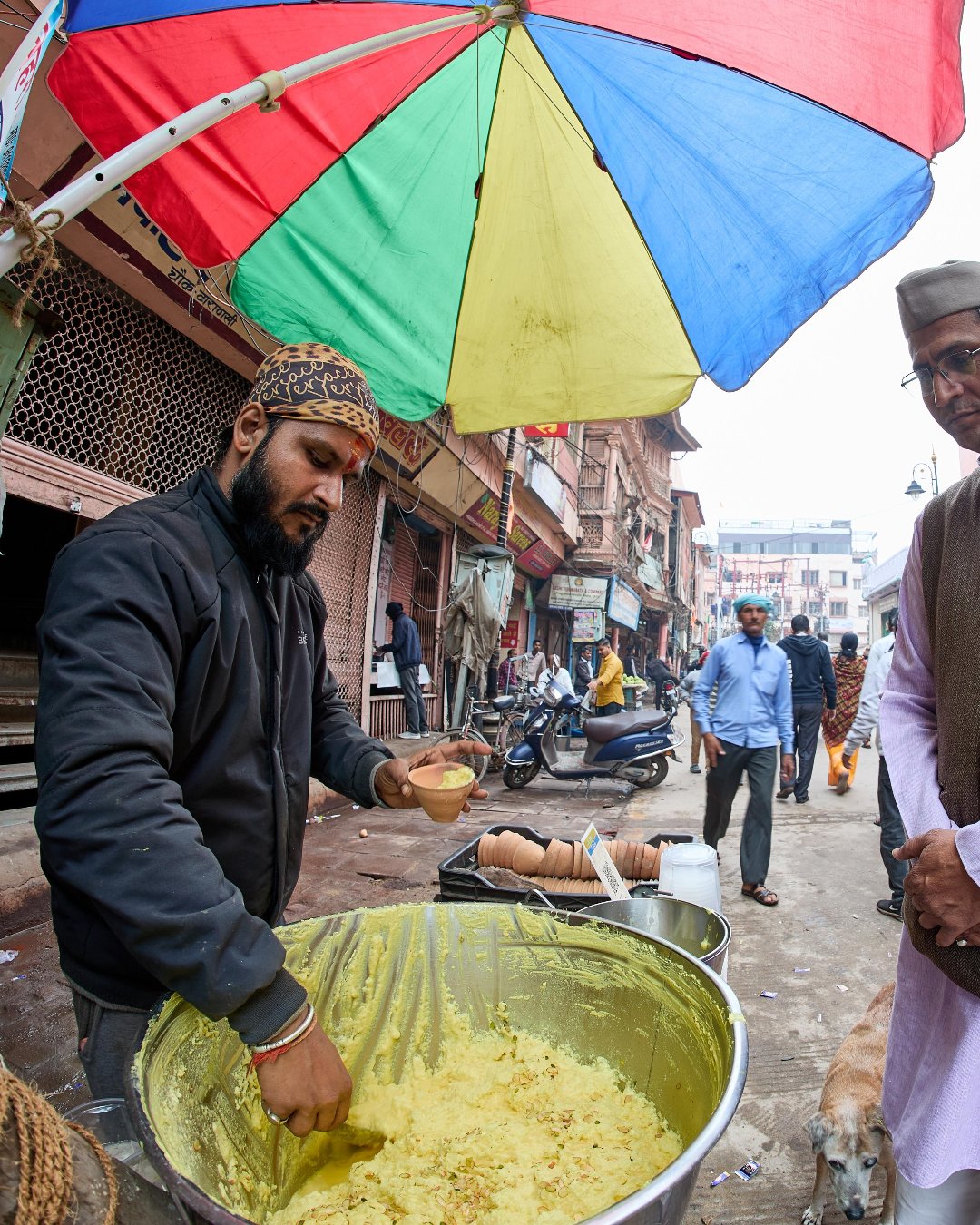
Malaiyo — Winter Foam You Can Miss
Malaiyo might be the most extraordinary thing you eat in Varanasi — and you get roughly three winter months, and three morning hours, to do it, and that's the whole problem. Malaiyo is Varanasi's great winter secret — a cloud of saffron-scented milk foam, so light it barely exists, sold on the old-city lanes on cold mornings and gone by the time most tourists finish breakfast. But here's the thing nobody tells you: it's there for maybe three months of the year, for maybe three hours of the day, and it dissolves the moment it warms up. Come in April, or come at noon, and you'll never even know Varanasi makes one of the most extraordinary sweets in India.
Let's fix that. Here's how malaiyo actually works, and how to get it right the first time.
Why the season and the hour are everything
Malaiyo is made by the weather, not just the halwai. Milk is simmered, frothed, and left out overnight under the winter sky, where the cold and the dew whip it into a foam — then it's scooped up at dawn, dusted with saffron, cardamom and crushed nuts, and sold before the sun kills it. No cold night, no malaiyo. That's why it exists only from roughly November to February, and vanishes entirely in the heat.
And it's a morning thing. The vendors set up early in the old city and sell until the foam collapses, usually by nine or ten. Sleep in, and it's gone. So this is a cold-season, early-morning mission — pair it with a sunrise on the ghats, when you're already up and out.
What you'll actually get
Find a malaiyo seller in the lanes and you'll get a small clay cup or leaf bowl of something that's more air than substance:
The foam itself — pale, barely sweet, melting on the tongue before you've tasted it. Texture, not sugar, is the point.
The saffron and cardamom — scenting it, with a faint richness underneath.
The nut topping — slivered pistachio and almond, sometimes a little khoya at the base.
The clay cup — part of the taste; the earthenware matters.
Eat it immediately. This is not a walking snack — malaiyo waits for no one, and a cup carried around for ten minutes is a cup of warm milk.
And here's the one food stop where you genuinely should put the phone away. Travellers who find it will tell you the same thing: malaiyo doesn't photograph — it's pale foam in a brown cup, and the picture looks like nothing while the real thing is remarkable. Worse, it's collapsing while you frame the shot. Just eat it, the second it's handed over, before the air goes out of it. That first spoonful of something that's barely there — that's the part no photo was ever going to hold.
Pro tip: Go early and go into the old city — the lanes around Kachori Gali, Thatheri Bazaar and the Chowk-Vishwanath area are where you'll find it, not the tourist cafés. Ask for it by name (malaiyo, or malaiyyo), because you won't see it unless you know to look. It's a few rupees a cup; eat it standing at the stall. And check it's actually winter — vendors genuinely don't make it once the nights warm up, so nobody can conjure you one in March.
The mistakes that ruin it
Most first-timers trip over the same few things. They visit in the wrong season and never encounter it. They come to the lanes at eleven, after it's sold out and melted. Or they carry it around for photos until it's just milk.
The easy fix is to come in winter, go early into the old city, and eat it on the spot — or have someone who knows the lanes take you straight to a good stall at the right hour.
56
MomentVishwanath Gali, Varanasi
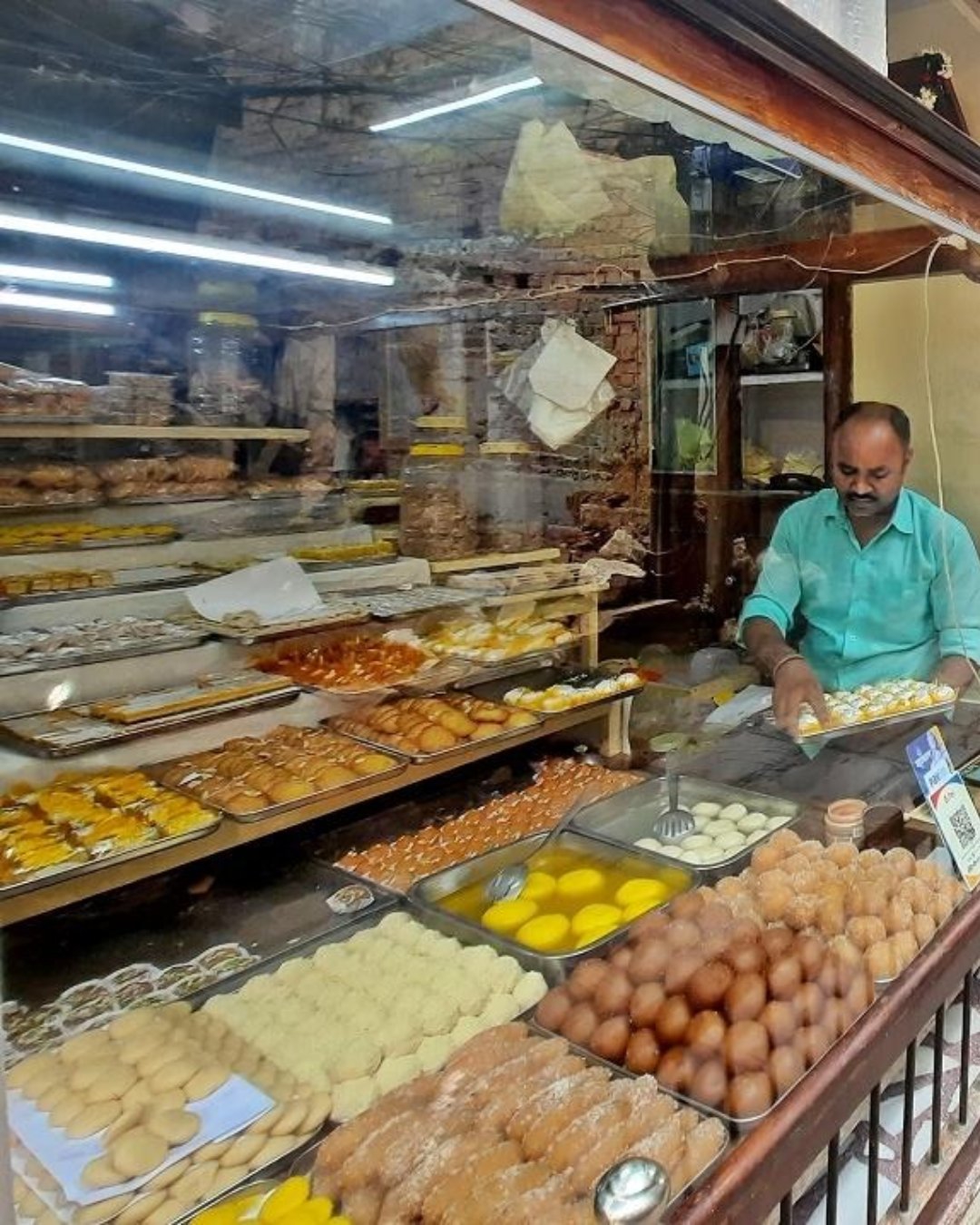
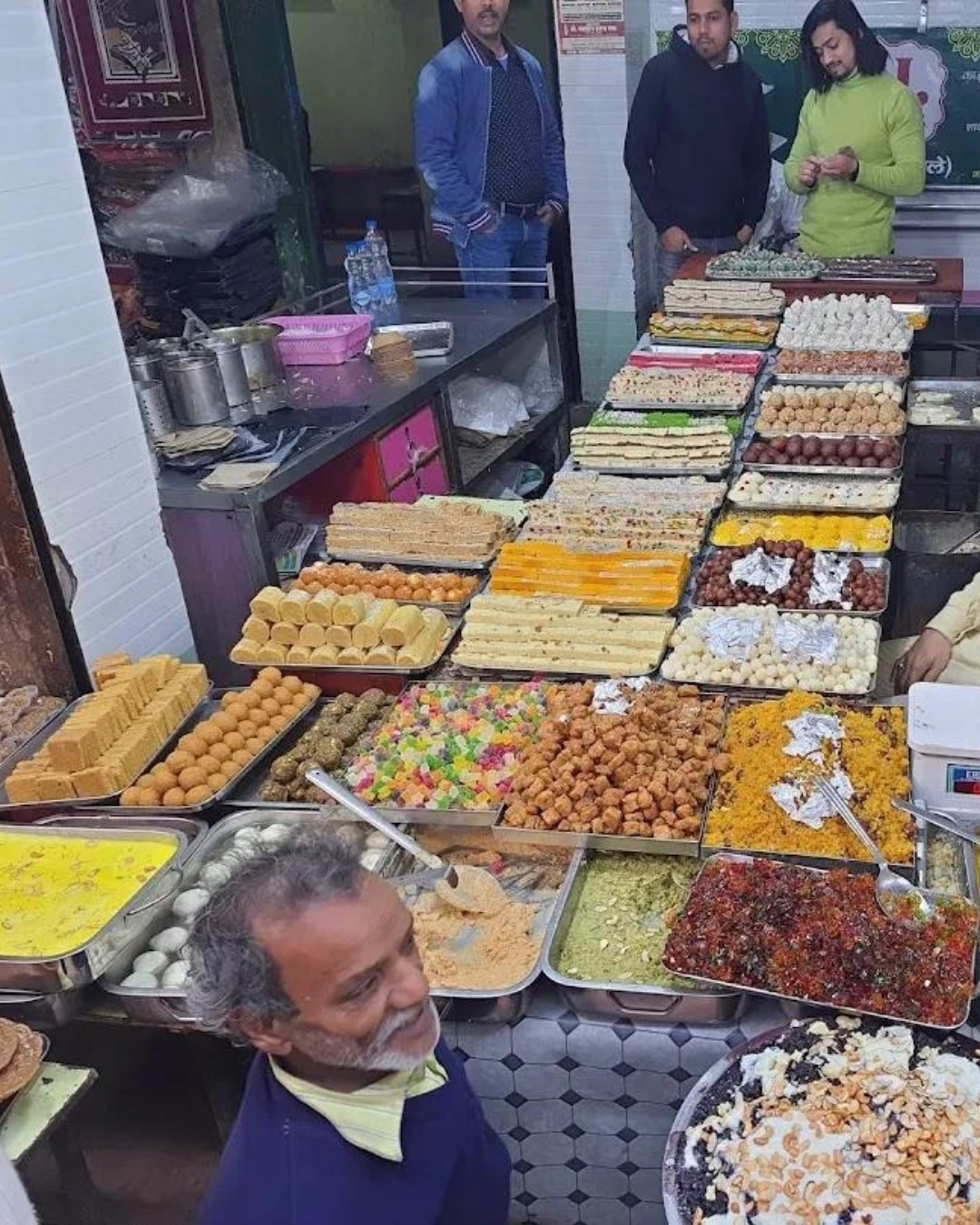
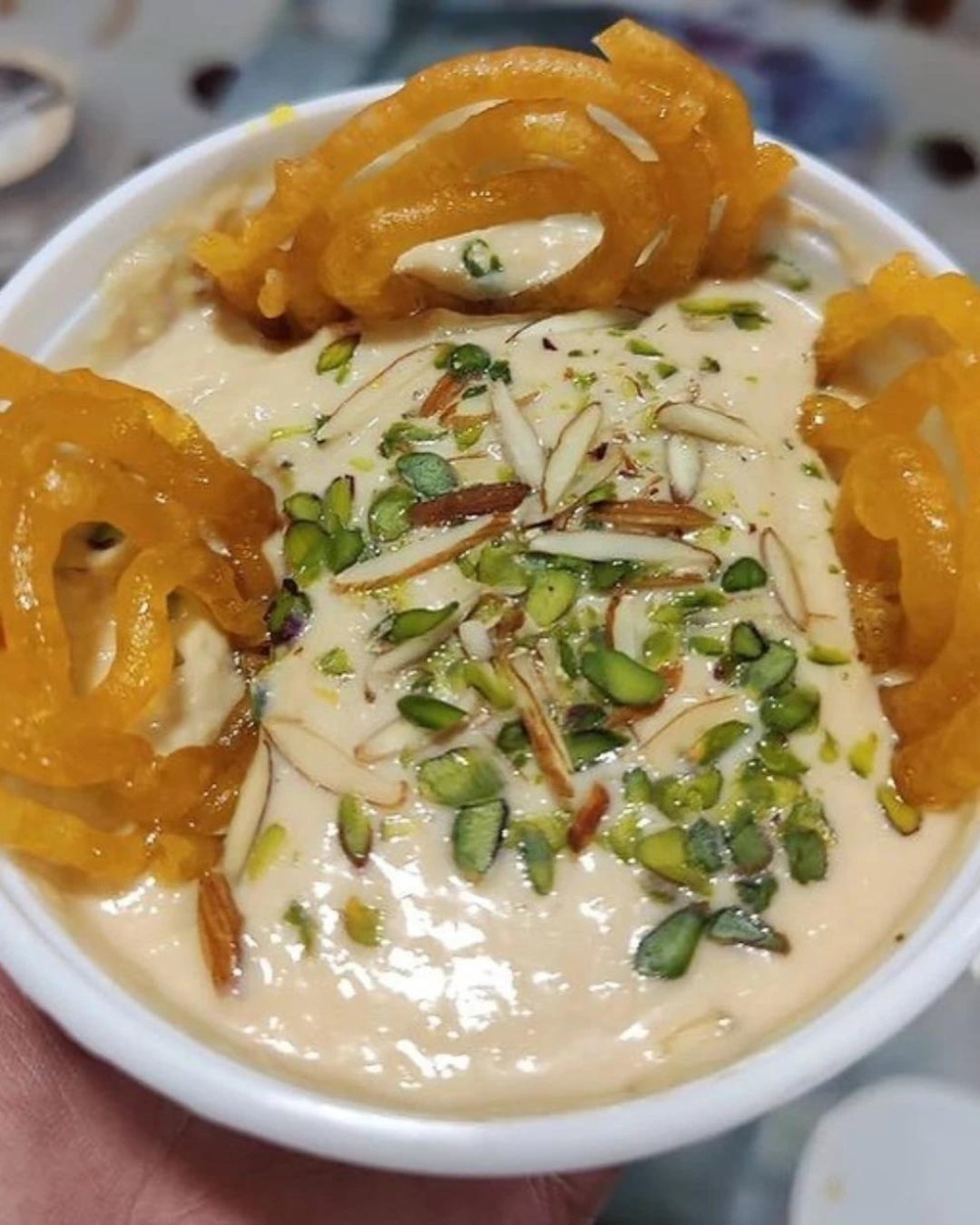
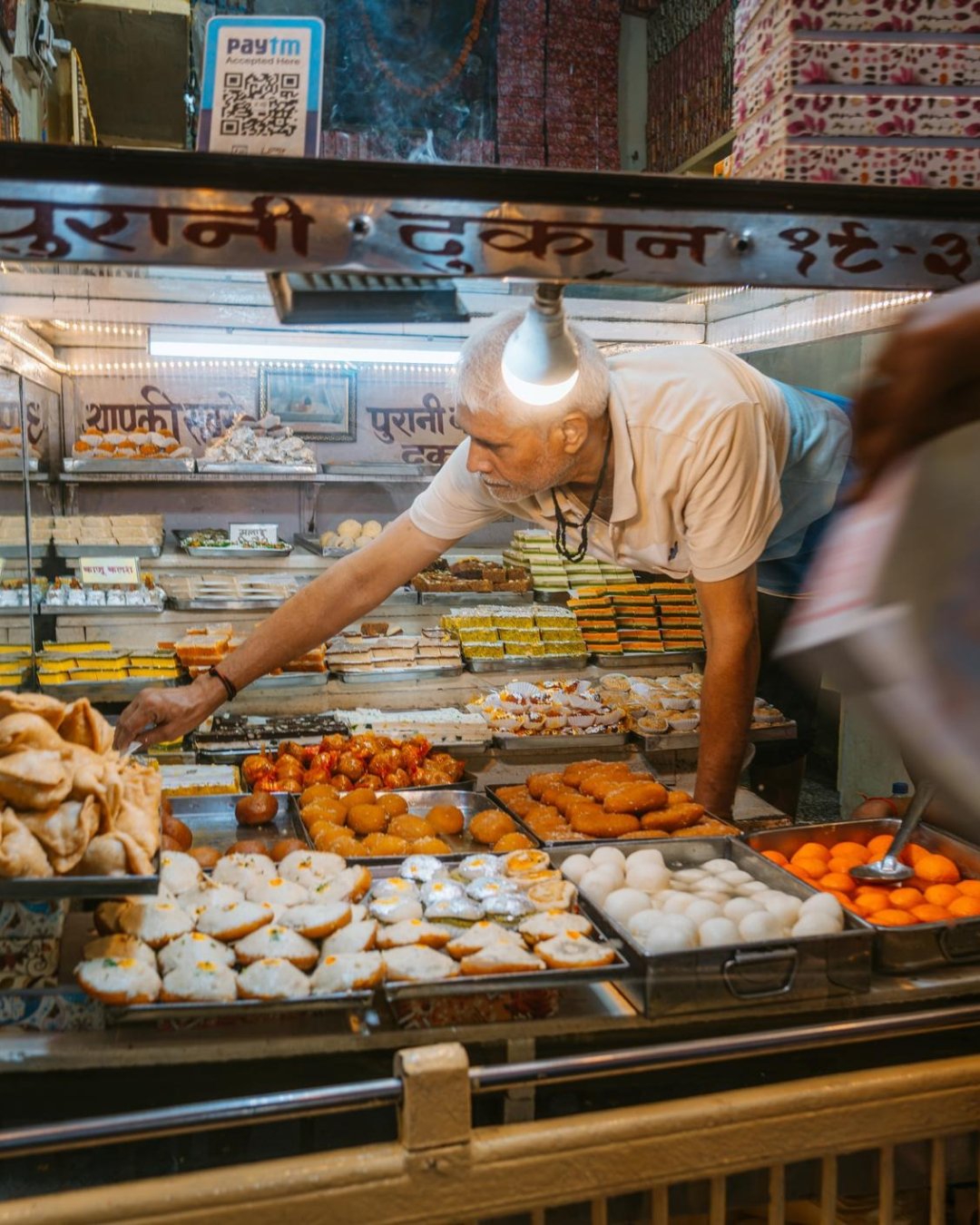
The Sweet Shops of Banaras
Everyone says 'try the local sweets.' Nobody tells you the best one is made only overnight, sold only at dawn, and gone before your second chai. Grab a box of something milky from a shop near the hotel, tick it off, move on. But here's the thing nobody tells you: the single most extraordinary sweet in Banaras is made only in winter, only at dawn, and it's gone by mid-morning — dissolved, sold out, finished for the day. Come in the wrong season or wander in at noon, and you'll eat perfectly nice barfi and never know you missed the thing people actually rave about.
Let's fix that. Here's how the sweet shops of Banaras actually work, and how to get it right the first time.
Why the season and the hour decide everything
The sweet you're after is malaiyo — a cloud of sweetened, saffron-flecked milk foam, whipped up overnight in the winter dew and served in little clay cups. It's barely a food; it's air. And it exists only from roughly November to February, made in the small hours and sold from dawn until it melts in the rising warmth, usually by ten or eleven.
So this isn't an afternoon errand. If malaiyo is on your list, you go early on a winter morning — ideally straight off your sunrise boat ride, into the old-city lanes, while it's still cold and the trays are still full. Every other sweet here keeps its own hours too, but malaiyo is the one that punishes lateness.
What you'll actually eat
Beyond malaiyo, Banaras runs deep on milk and syrup. Worth seeking out:
Malaiyo — the winter dawn foam, in a clay cup. The one to plan around.
Launglata — a folded, clove-pinned pastry soaked in syrup.
Rabri and khurchan — thickened, layered reduced milk, dense and slow.
Kheer / chhena dahi — set milk sweets, often in earthen pots.
Jalebi and imarti — best hot and fresh off the pan in the morning.
Carry small notes and eat where the turnover is high — a busy counter means fresh product, and freshness is the whole game with milk sweets.
And here, unlike the boat ride, put the phone down for a different reason: eat it now, don't photograph it first. Travellers who get this right will tell you the same thing — malaiyo collapses in minutes and rabri waits for no one; the ten seconds you spend framing a photo is ten seconds the texture is quietly dying. Taste it the instant it's handed over, in the clay cup, standing at the counter. That first spoonful, before the air goes out of it, is the part the photos never quite catch — literally, because a photo of foam is just a photo of white.
Pro tip: Go to the old, named shops with a line out front, not the quiet one next to your hotel — reputation here is earned over generations and the busy counter is busy for a reason. Ask for the day's fresh batch rather than what's sitting out. If your stomach isn't used to Indian street food, ease in: milk sweets from a high-turnover shop are low-risk, but pace yourself. And save the clay cup — it's part of it.
The mistakes that ruin it
Most first-timers trip over the same few things. They come in summer and never even hear of malaiyo. They eat at a convenient shop instead of a good one. Or they show up mid-morning and find the best trays already empty.
The easy fix is to go early on a winter morning, to the shops that have earned their name, ideally with someone who knows which counter does which sweet best — because the difference between a tourist box and the real thing is entirely in where and when you buy it.
62
MomentLahori Tola, Varanasi
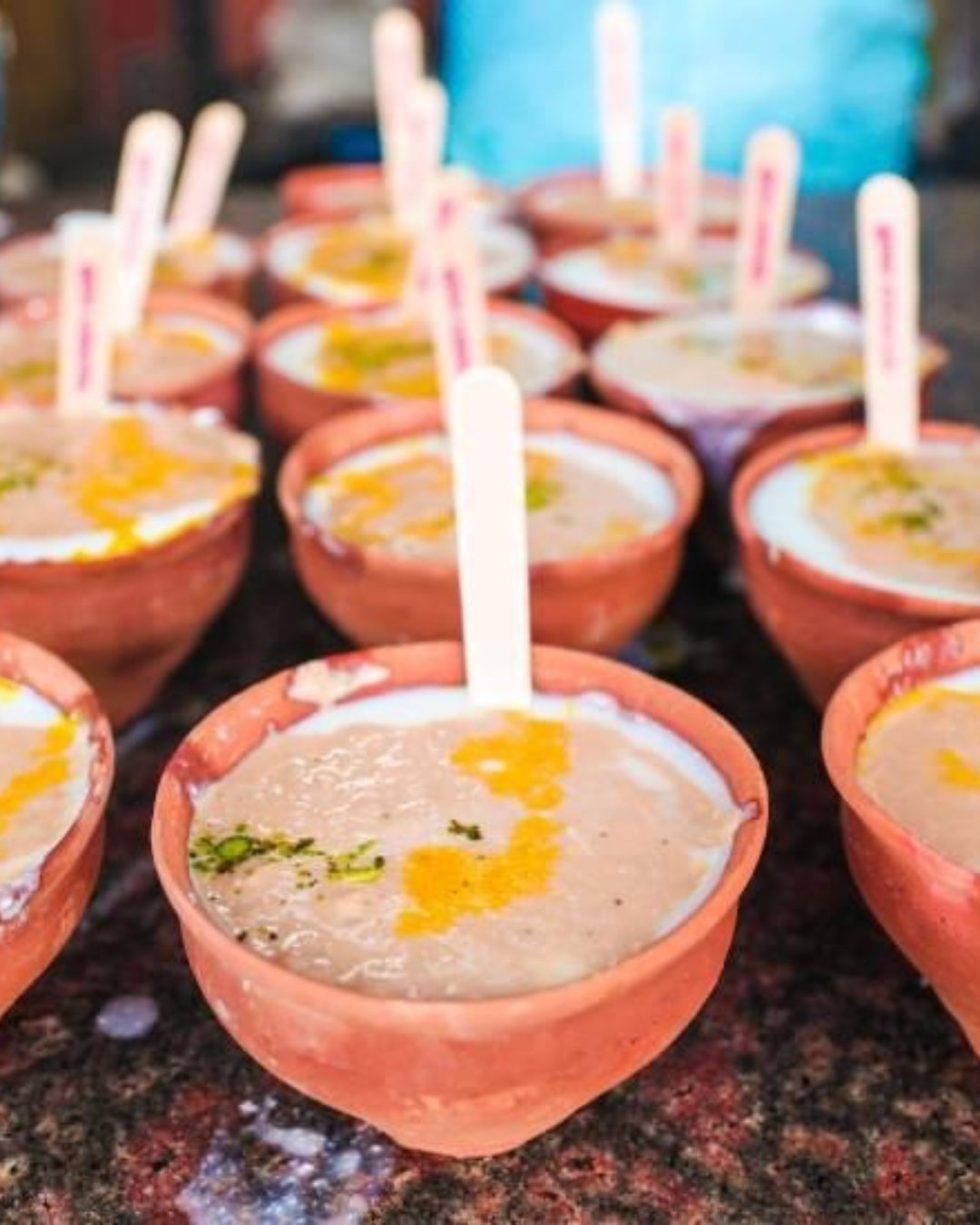
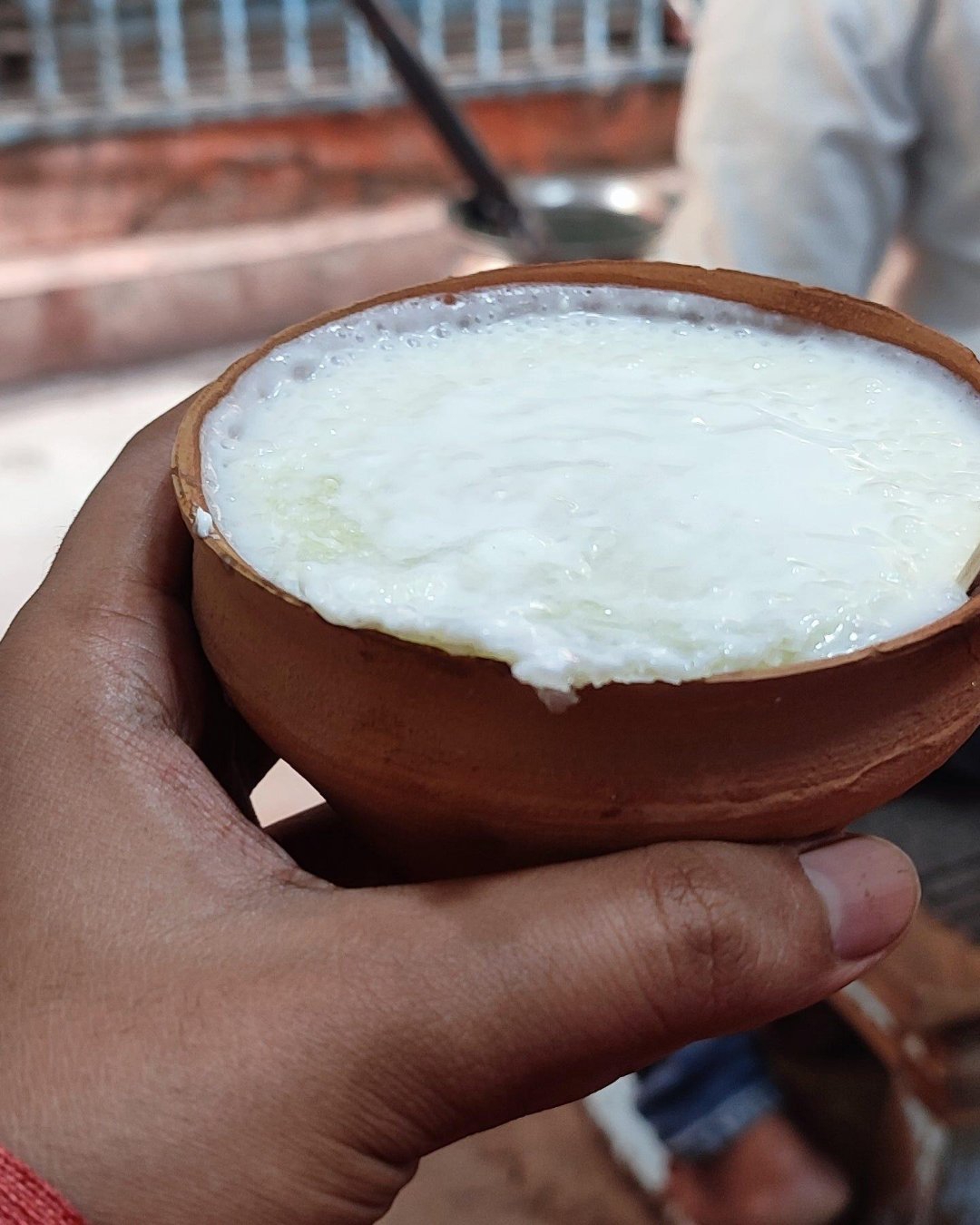
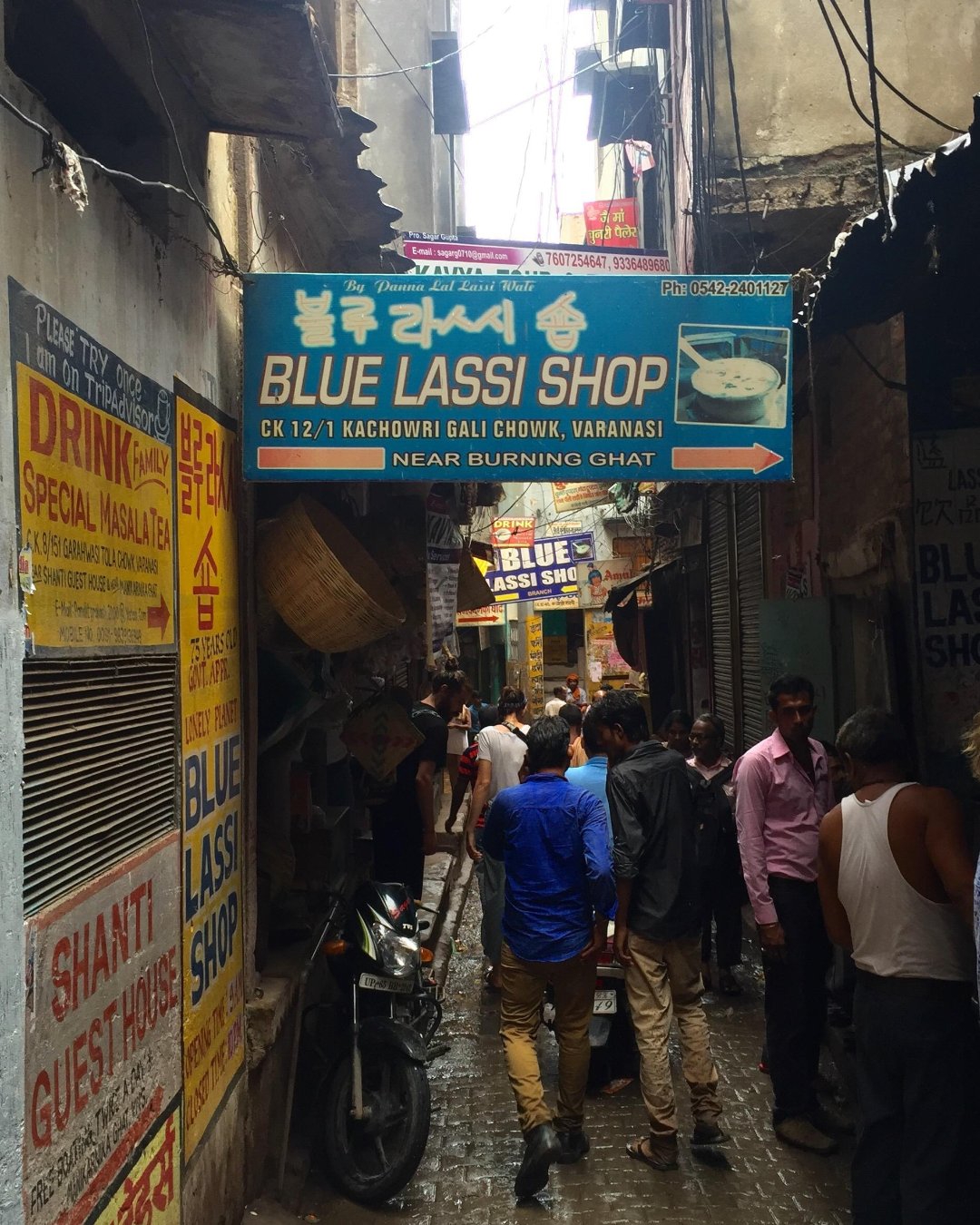
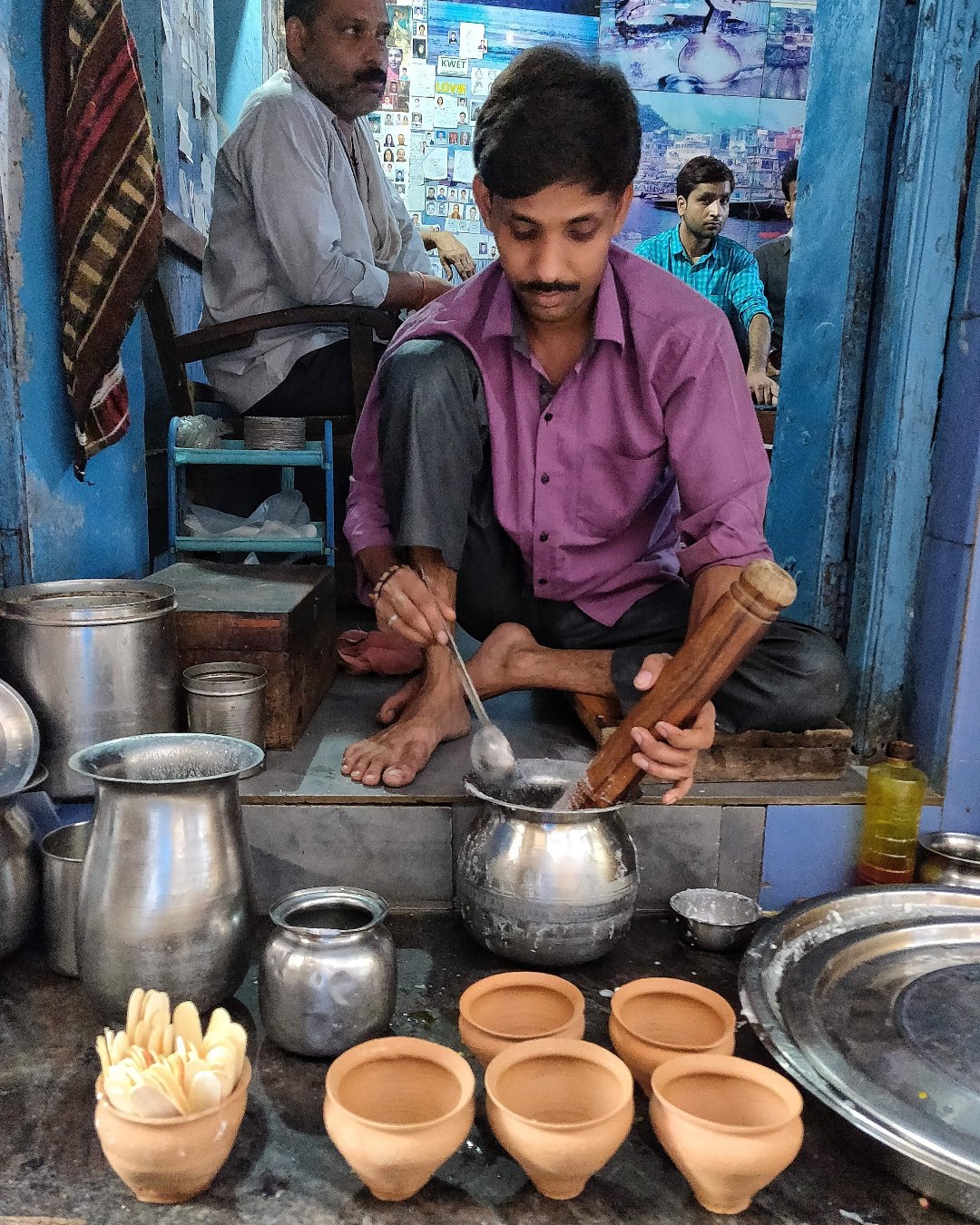
Blue Lassi & the Kulhad Culture
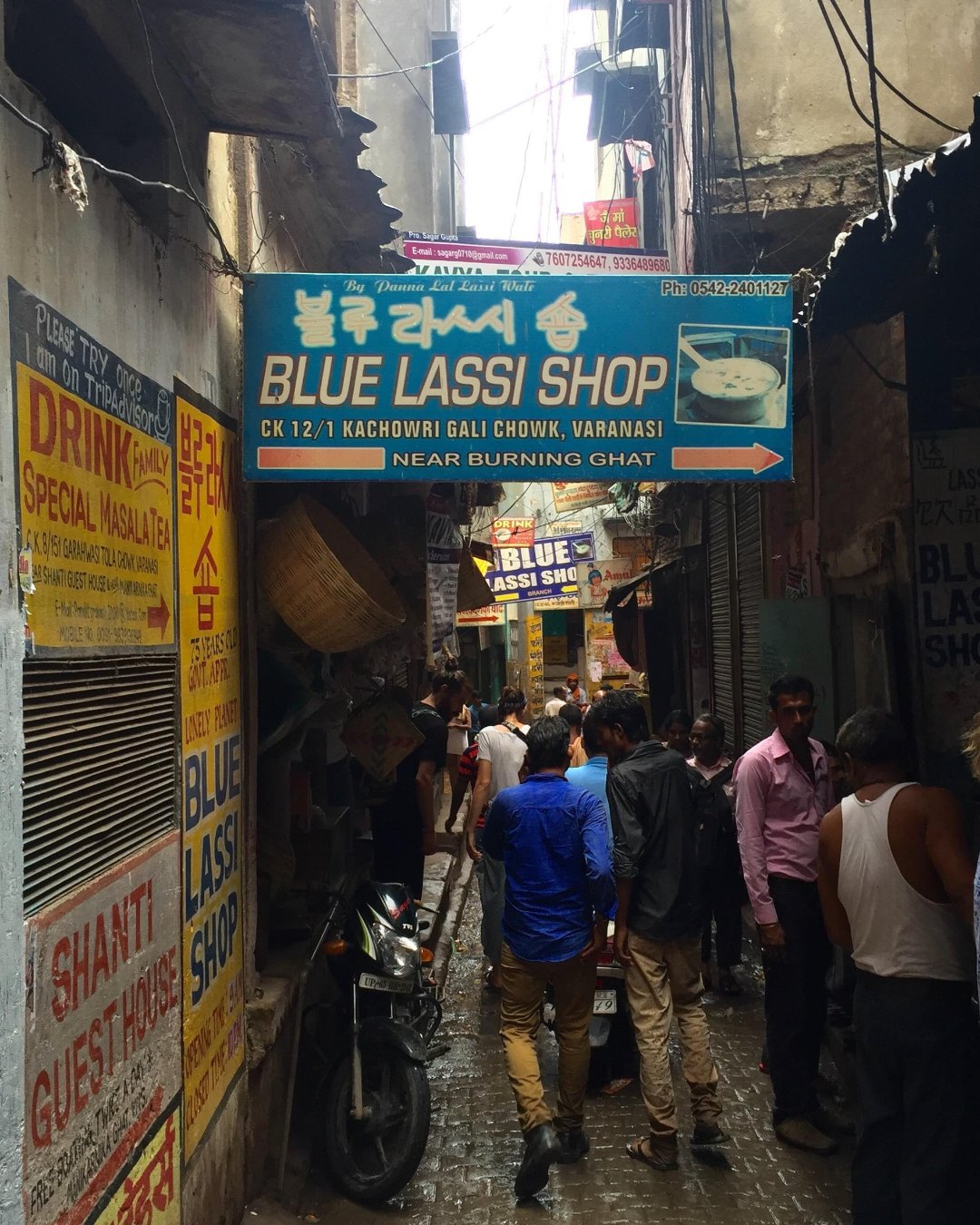
You've probably saved the photo — the tiny blue shop, the walls plastered with travellers' pictures, a thick lassi in a little clay cup. So you plan to swing by, grab one, tick it off. But here's the thing nobody tells you: Blue Lassi sits deep in the old-city galis right on the route to Manikarnika, it's cash-only, it shuts by evening, and the queue at peak hours is longer than the lane is wide. Turn up hungry at the wrong moment and you'll stand sweating in an alley for forty minutes for a cup you could have timed right.
Let's fix that. Here's how Blue Lassi and the kulhad culture actually work, and how to get it right the first time.
Why the timing and the walk matter
Blue Lassi has been run by the same family for something like ninety years, in a shoebox of a shop in the labyrinth behind the ghats. That location is the catch. You reach it on foot through the galis — narrow, twisting lanes with no signage worth the name — and it's on the same path the funeral processions take to the burning ghat, so you'll likely pass one.
Come mid-morning or mid-afternoon, not at the lunch crush and not late — it typically closes by early evening. The lassi is made fresh and thick, set with curd, topped with fruit and a layer of malai, and served in a kulhad, the unglazed clay cup that's the whole point of the ritual: you drink, then you throw it to the ground, where it breaks and returns to the earth it came from.
What you'll actually order and see
The lassi itself — thick enough to eat with the little wooden spoon, in plain, banana, apple, pomegranate, saffron and more.
The kulhad — fired clay, single-use, unlined. It gives the drink a faint earthy taste that plastic never will.
The walls — decades of photographs of travellers who've sat on this bench, a kind of accidental archive.
The gali outside — the working old city: cows, motorbikes, sweet shops, and processions heading for the ghat.
Bring small cash — no cards — and a bit of patience for the wait and the heat of the lane.
And here's the one where you put the phone down before you start filming the shop for your own reel. Travellers who sit here will tell you the same thing: the walls are already covered in everyone else's photos, and yours won't add much. What you'll actually remember is the taste, the wooden spoon, the throw of the empty cup, and the extraordinary ordinary life of the gali going past two feet away. That — the clay in your hand, the lane at your elbow — is the part the photos never quite catch.
Pro tip: Order fewer, richer cups than you think — the lassi is a meal, not a drink, and one banana-malai will defeat most people. Ask for less or no sugar if you don't want it very sweet; the default is generous. And lean into the kulhad ritual: drink, then break the cup on the ground like everyone else. It isn't litter, it's clay going back to earth, and it's the small piece of Banaras you came for. Watch your bag in the tight lanes and don't photograph the funeral processions that pass.
The mistakes that ruin it
Most first-timers trip over the same few things. They come at peak lunch and queue in the heat. They arrive after it's closed. Or they turn up with only a card and no cash and have to walk away.
The easy fix is to fold it into a mid-morning old-city walk, carry cash, and treat it as a sit-down rather than a grab-and-go — or let it be built into a galis walk so you're not navigating the lanes blind.
56
MomentGodowlia, Varanasi
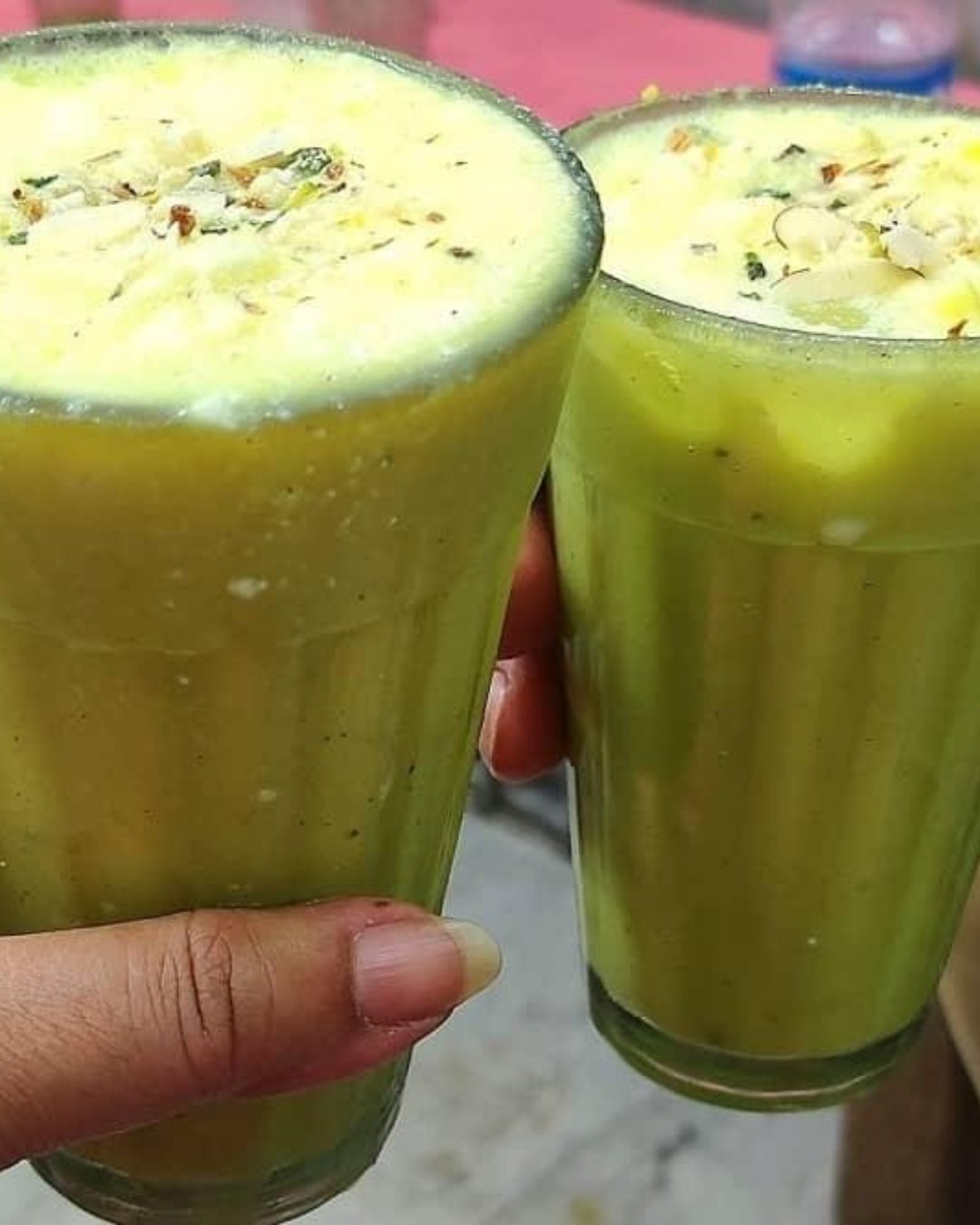
Banarasi Thandai
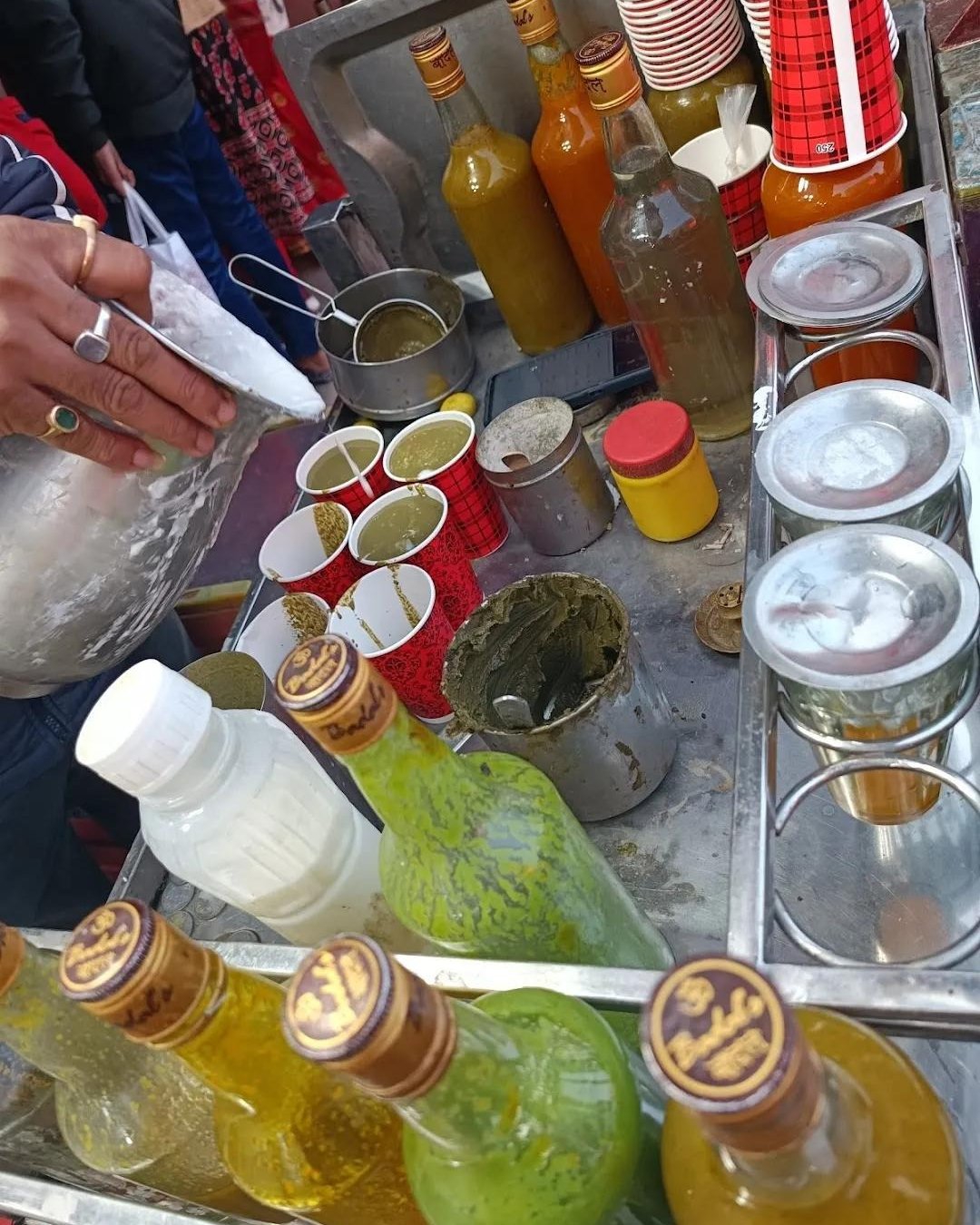
Two completely different drinks share one name here, and ordering the wrong 'special' thandai is how travellers lose an afternoon they meant to spend on the ghat. A cold, sweet, almond-and-saffron drink in a clay cup, the perfect thing after a hot morning on the ghats. And the plain version is exactly that — one of the great drinks of India. But here's the thing nobody tells you: in Banaras, some thandai is bhang thandai, spiked with a cannabis paste, and every year travellers order the "special" one without realising what "special" means, drink it like a lassi, feel nothing for an hour, order another — and then lose the rest of their day, or worse.
Let's fix that. Here's how Banarasi thandai actually works, and how to get it right the first time.
Why you need to know which one you're ordering
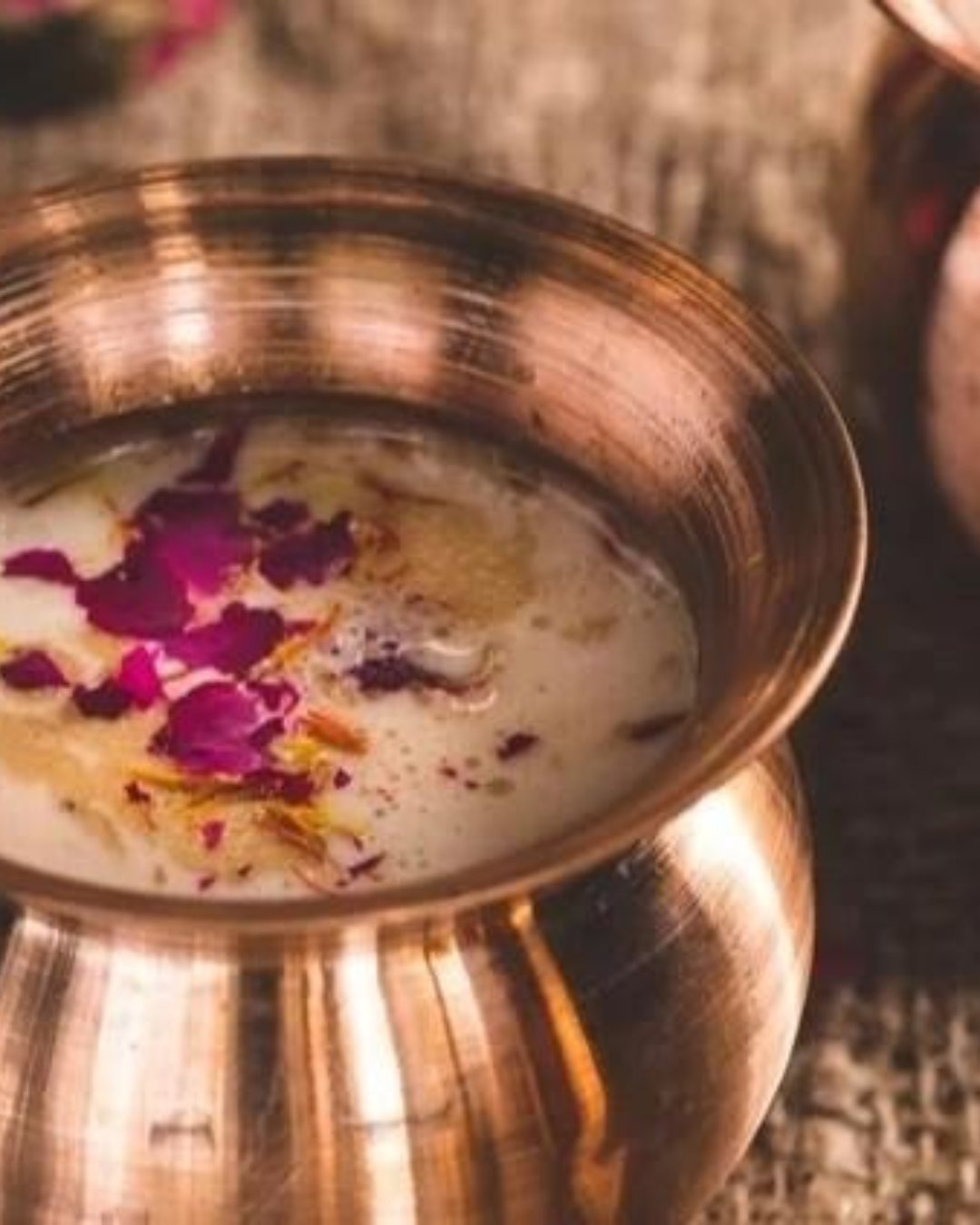
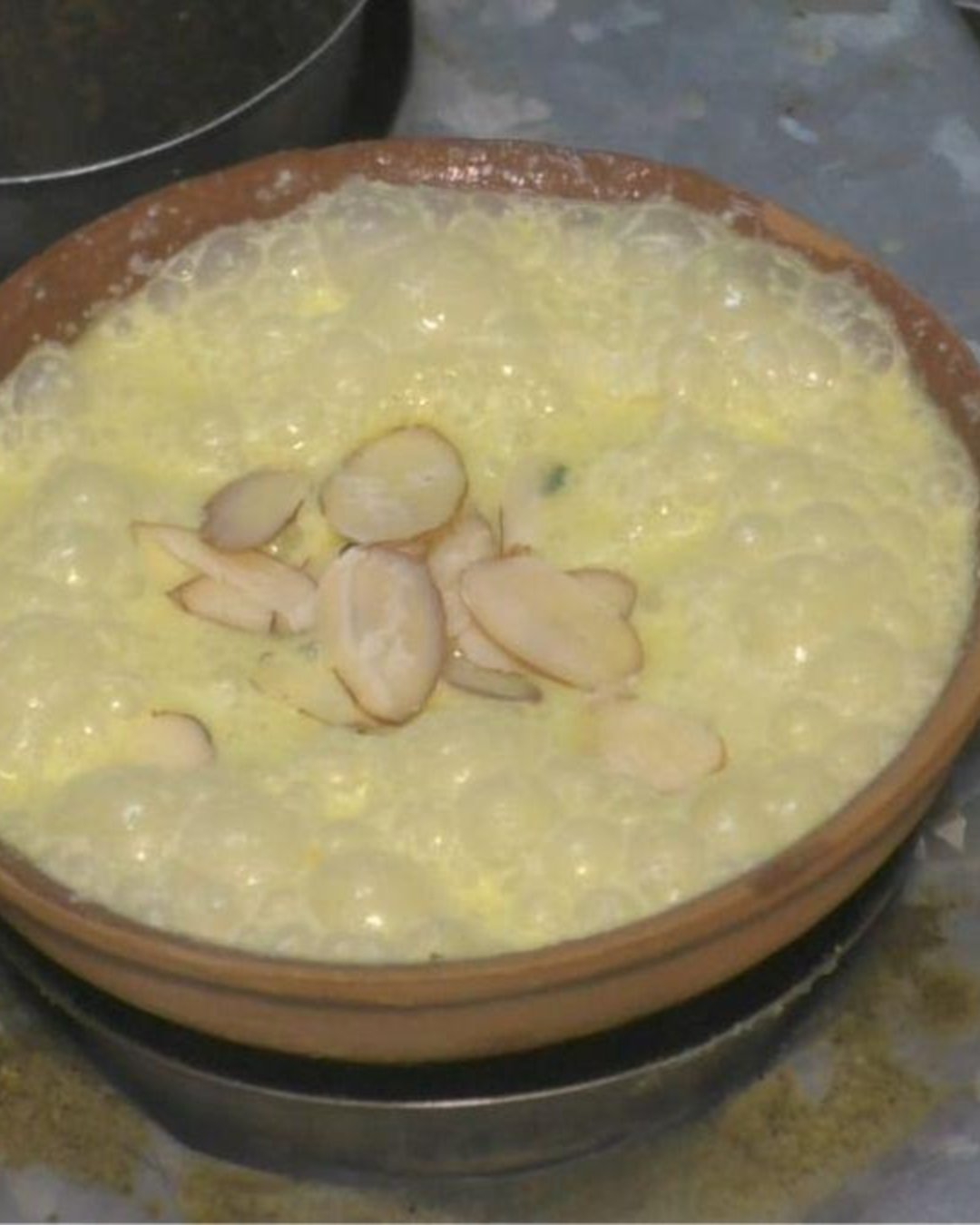
There are two drinks sharing one name. Plain thandai is a cold milk drink ground with almonds, fennel, poppy and melon seeds, peppercorn, cardamom, rose and saffron — cooling, festive, completely wholesome, and the everyday pride of the city. Bhang thandai is the same drink with a preparation of cannabis worked in, sold at government-licensed bhang shops and tied to the worship of Shiva, whose city this is.
The confusion is the whole danger. Bhang eaten in a drink hits slowly — often 30 to 90 minutes later — and unpredictably, so people assume it didn't work and take more. By the time it lands, they've had far too much. So the single most important thing is to ask plainly and know exactly what's in your cup before you drink it.
What you'll actually taste
A good plain thandai is a genuinely special thing:
The base — chilled milk, thick with ground almonds and melon seeds.
The spice — fennel and cardamom for cooling, a little black pepper for warmth.
The perfume — rose and kewra water, and saffron for colour and scent.
The festival link — it's the drink of Holi and of Shivratri, deeply woven into the city's calendar.
Ask for it thanda (cold) and freshly ground rather than from a pre-mixed bottle, and you'll taste the difference immediately.
And this is a stop where you do pull the phone out — to read, not to shoot. Travellers who get caught out will tell you the same thing: the trouble always starts with not knowing what "special," "sardai," or "government thandai" means on the board. Look it up, or just ask the vendor directly: does this contain bhang? A good shop will tell you straight. That one question is the part that keeps a lovely drink from ruining your afternoon.
Pro tip: If you only want the classic drink, ask explicitly for plain thandai, no bhang — and if a shop is a licensed bhang seller, order the plain one deliberately rather than assuming. If you're curious about bhang, understand first that it's an intoxicant with a long delay and an unreliable dose, that it's legal here in a way it isn't elsewhere in India, and that the sensible approach is a very small amount, never on a day you're travelling, driving, alone, or short on time — or simply to skip it. Anyone unwell, pregnant, on medication, or under 18 should not touch it at all.
The mistakes that ruin it
Most first-timers trip over the same few things. They order the "special" thandai not knowing it's bhang. They feel nothing after twenty minutes and drink more, then get hit by all of it at once. Or they have it on a day they're catching a train and spend the journey in a fog.
The easy fix is to know the two versions apart, ask directly what's in your cup, and treat bhang — if at all — as a slow, strong thing to approach with real caution.
49
MomentGodowlia, Varanasi
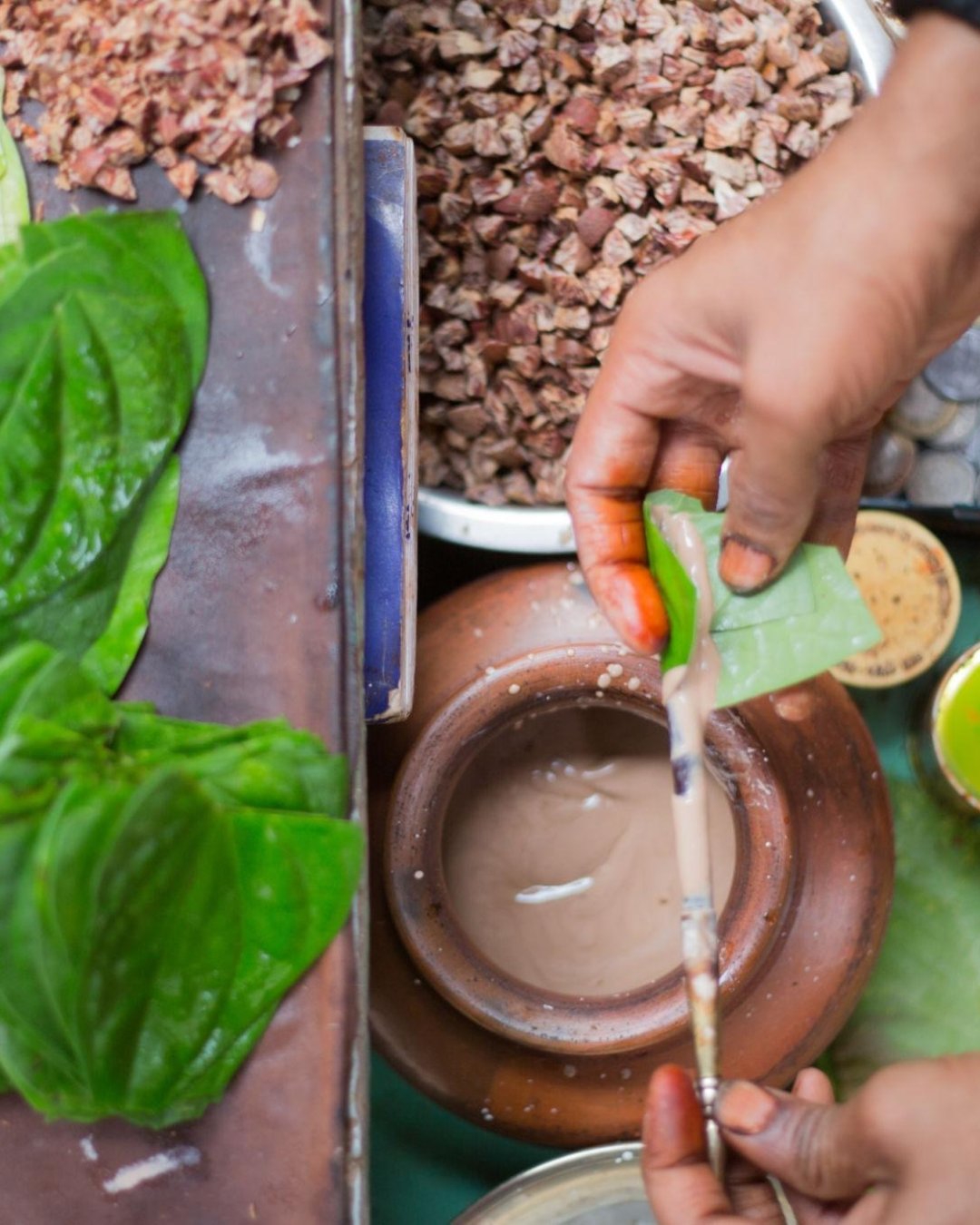
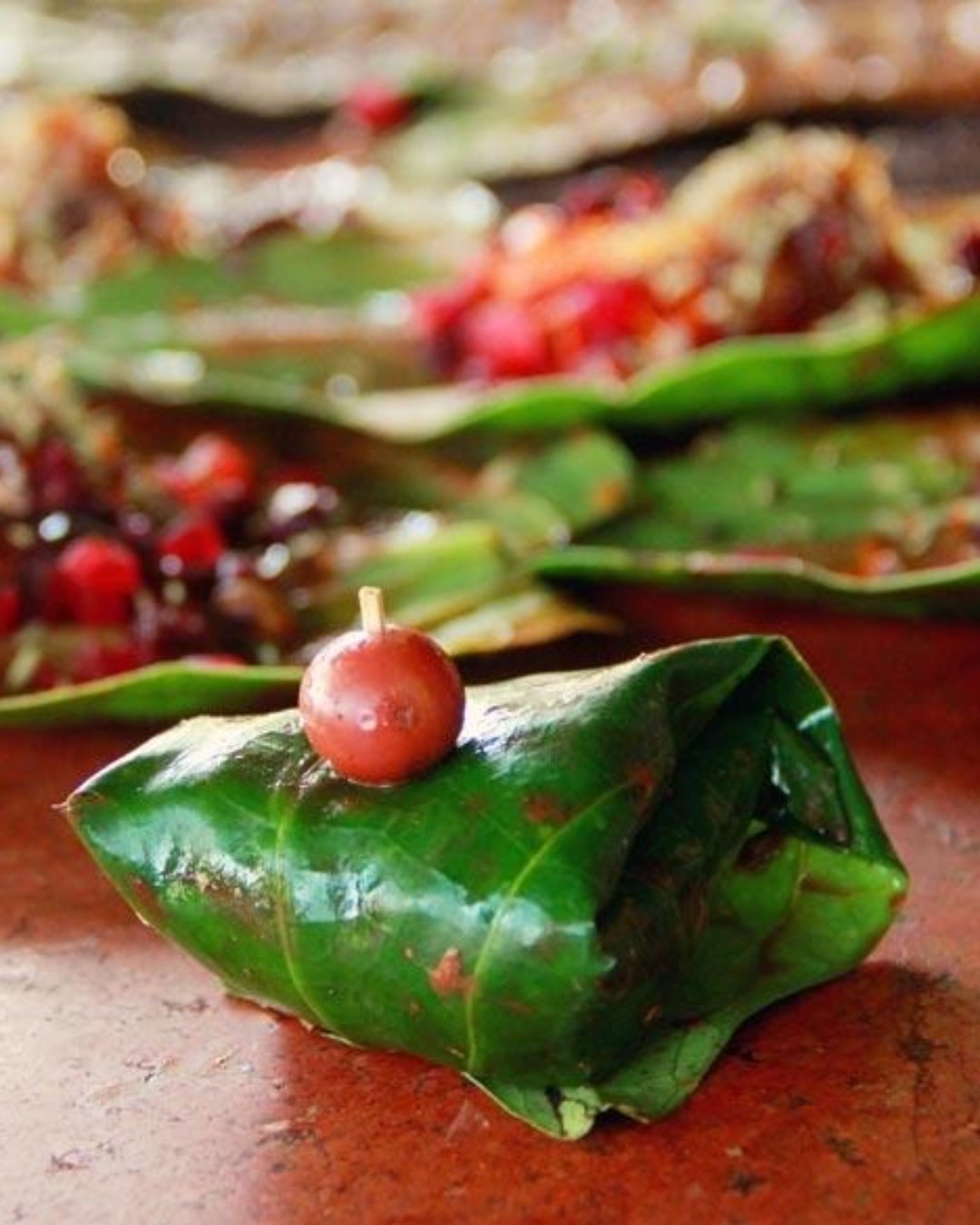
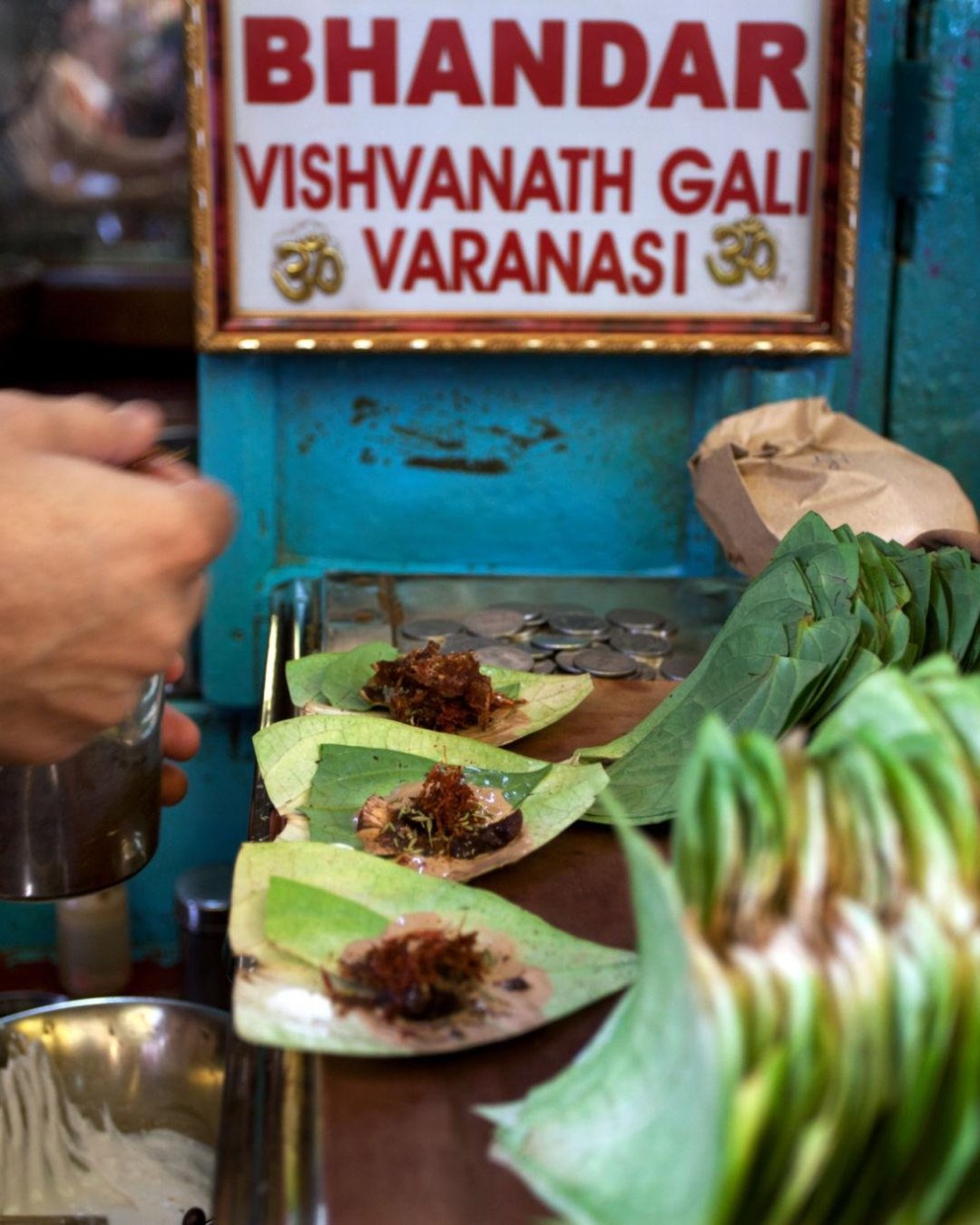
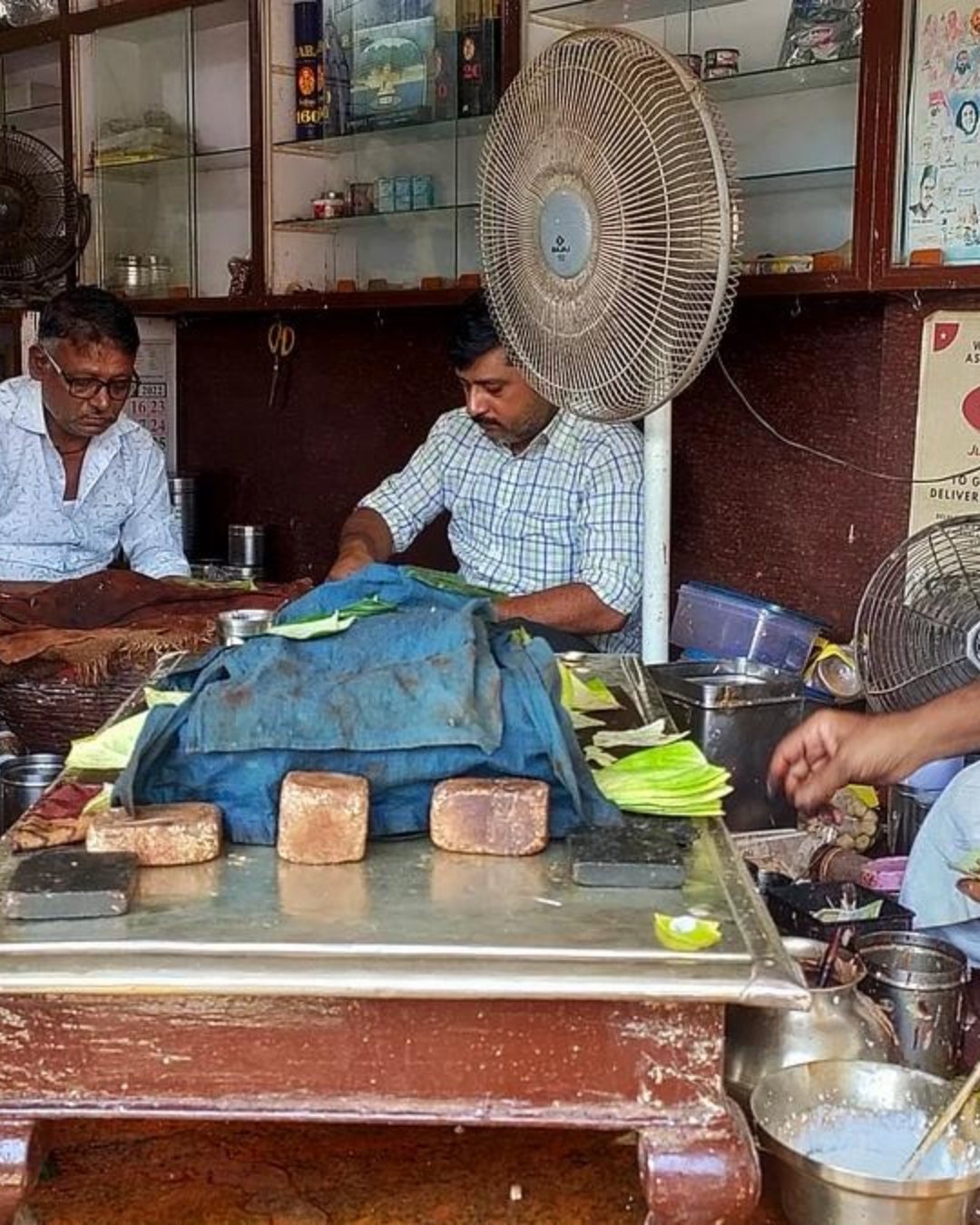
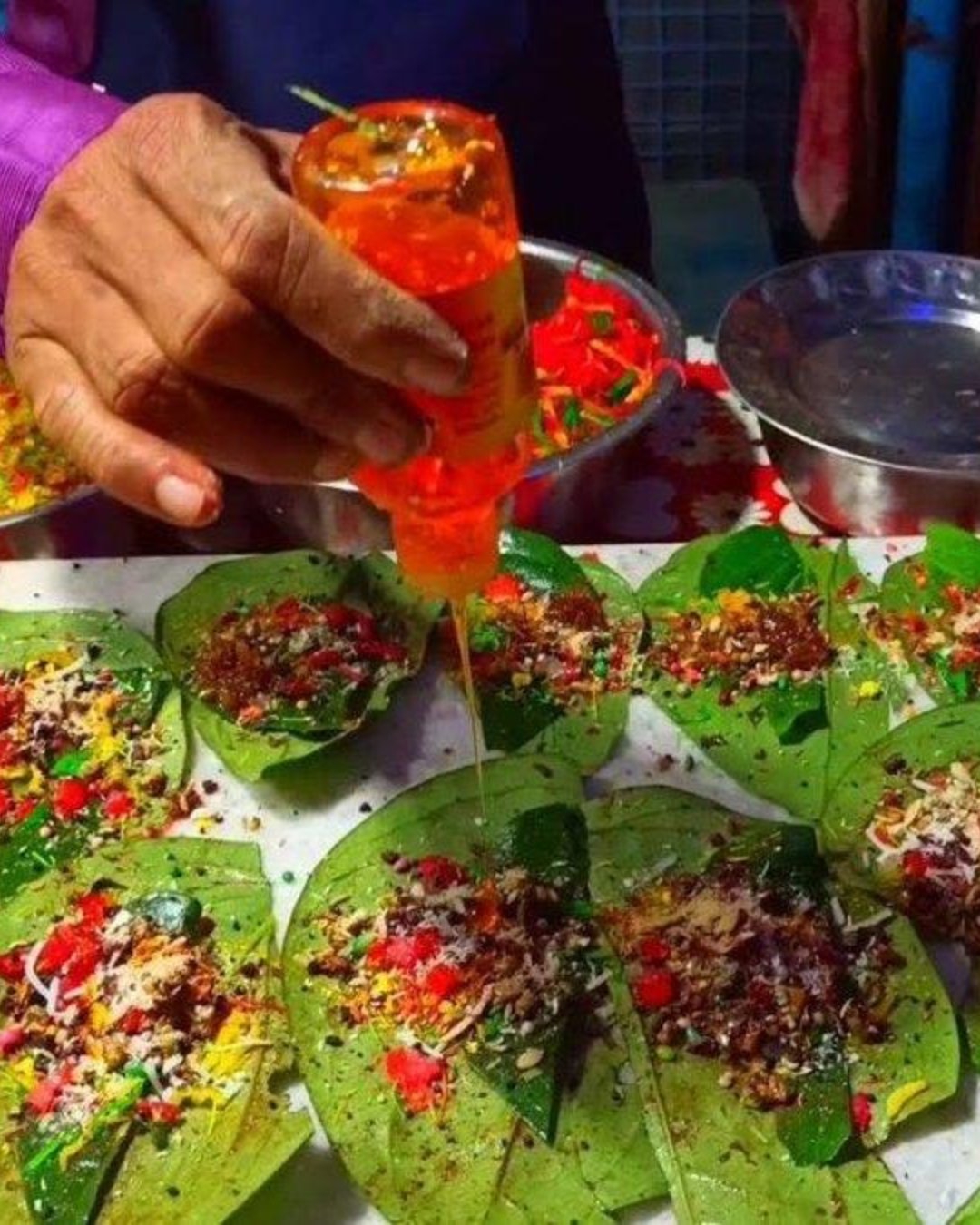
Banarasi Paan — The Full Stop
What do you actually order at a paan counter when you've never had paan — and how do you avoid the tobacco-laced version that has you spitting red and wondering what the fuss is? Everyone says you have to, so you'll grab a paan from the first stall you pass, chew it, and tick the box. But here's the thing nobody tells you: half the "Banarasi paan" sold to tourists is a sugary, tobacco-laced mouthful that'll have you spitting red on the steps and wondering what the fuss is about — and the real thing, the melt-in-the-mouth Banarasi maghai the city built its reputation on, is a completely different experience you have to know how to order.
Let's fix that. Here's how Banarasi paan actually works, and how to get it right the first time.
Why it's the full stop, not a snack
In Banaras, paan isn't street food you eat on the move. It's the punctuation mark at the end of things — after a meal, after the aarti, after a conversation. The whole culture of Banarasi-pan (the city's famous laid-back swagger) is wrapped up in it: the unhurried folding of the leaf, the pause while it dissolves, the deliberate refusal to rush.
So you don't grab one and walk. You order it at the right moment — after dinner, or as the evening winds down — and you let the paanwala make it properly. Eaten as the last thing of the day, the way locals do, it's a small ritual. Eaten as a rushed novelty at noon, it's just a strange mouthful.
What you'll actually get
Ask, and a good paanwala will build it in front of you on a fresh betel leaf:
Maghai or desi leaf — the soft, prized Banarasi leaf, the base of the real thing.
Meetha (sweet) paan — gulkand (rose petal jam), coconut, fennel, cherry, no tobacco. This is the one to start with.
Sada or saada — plain, with just katha and chuna, milder.
Tambaku paan — with tobacco. Strong, harsh, and genuinely not for first-timers.
The theatrics — some shops do a chilled or even a "fire" paan; fun once, not the point.
Say clearly: "meetha paan, no tobacco, no supari" if you want the gentle, sweet version — and specify if you'd rather chew and swallow than spit.
And here's the one where you should have the phone out — but ask first. Watching a Banarasi paanwala work is half the pleasure: the flick of the leaf, the little dabs of paste, the folding into a neat triangle. Most are happy to be filmed if you ask; some are performers who'll ham it up. But put it away to actually eat the thing. The slow dissolve, the cool sweetness, the way the whole day seems to pause around it — that's the part the photos never quite catch.
Pro tip: Start with a meetha paan, no tobacco — it's sweet, gentle, and the true Banarasi flavour without the harsh hit that puts people off. Go to an established shop (Keshav Tambul Bhandar, Kesari, or any busy old-city counter with a queue of locals) rather than a tourist stall by the ghats. And know that paan stains — your lips and teeth go red, tobacco versions are addictive and carry real oral-cancer risk, and the red spitting you see everywhere is exactly this. A sweet, swallow-it paan avoids all of that.
The mistakes that ruin it
Most first-timers trip over the same few things. They grab a random tobacco paan and hate it. They eat it on the run at midday instead of savouring it after a meal. Or they don't specify, and get supari and tobacco they didn't want.
The easy fix is to order a sweet, tobacco-free paan from a proper shop, at the end of a meal, and let it be the small ceremony it's meant to be — or have someone point you to the counter locals actually use.
52
MomentVishwanath Gali, Varanasi
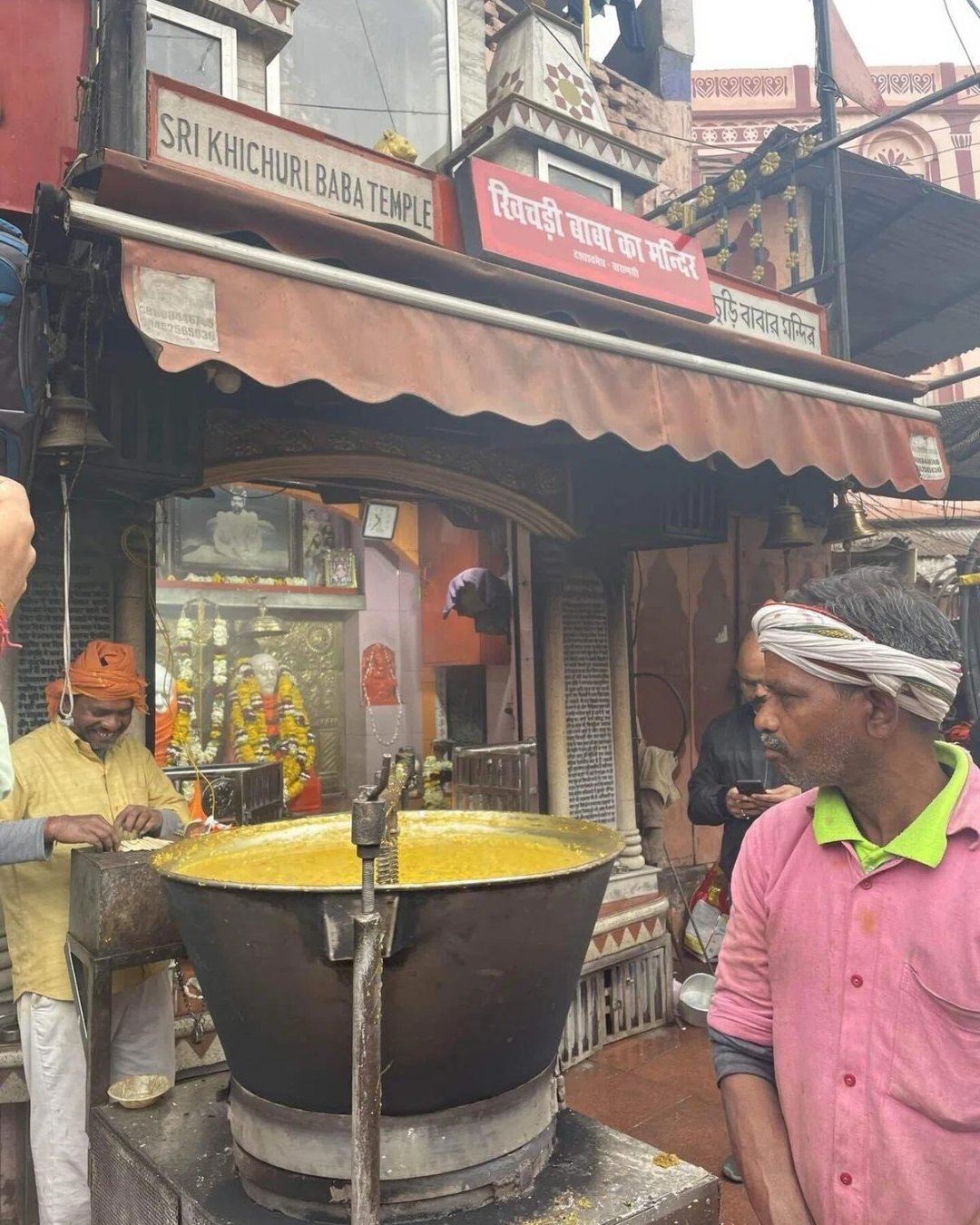
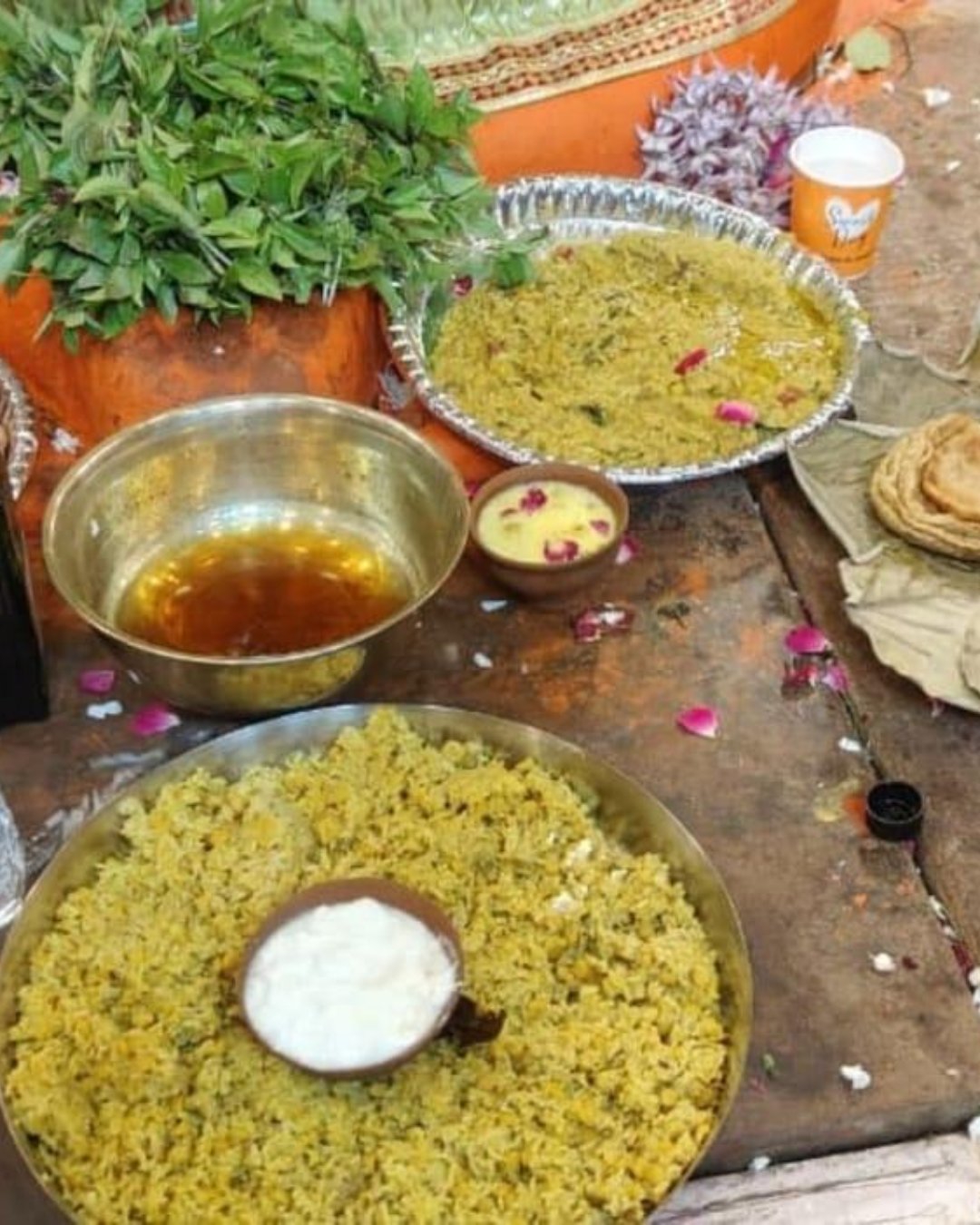
Temple Food & the Satvik Table
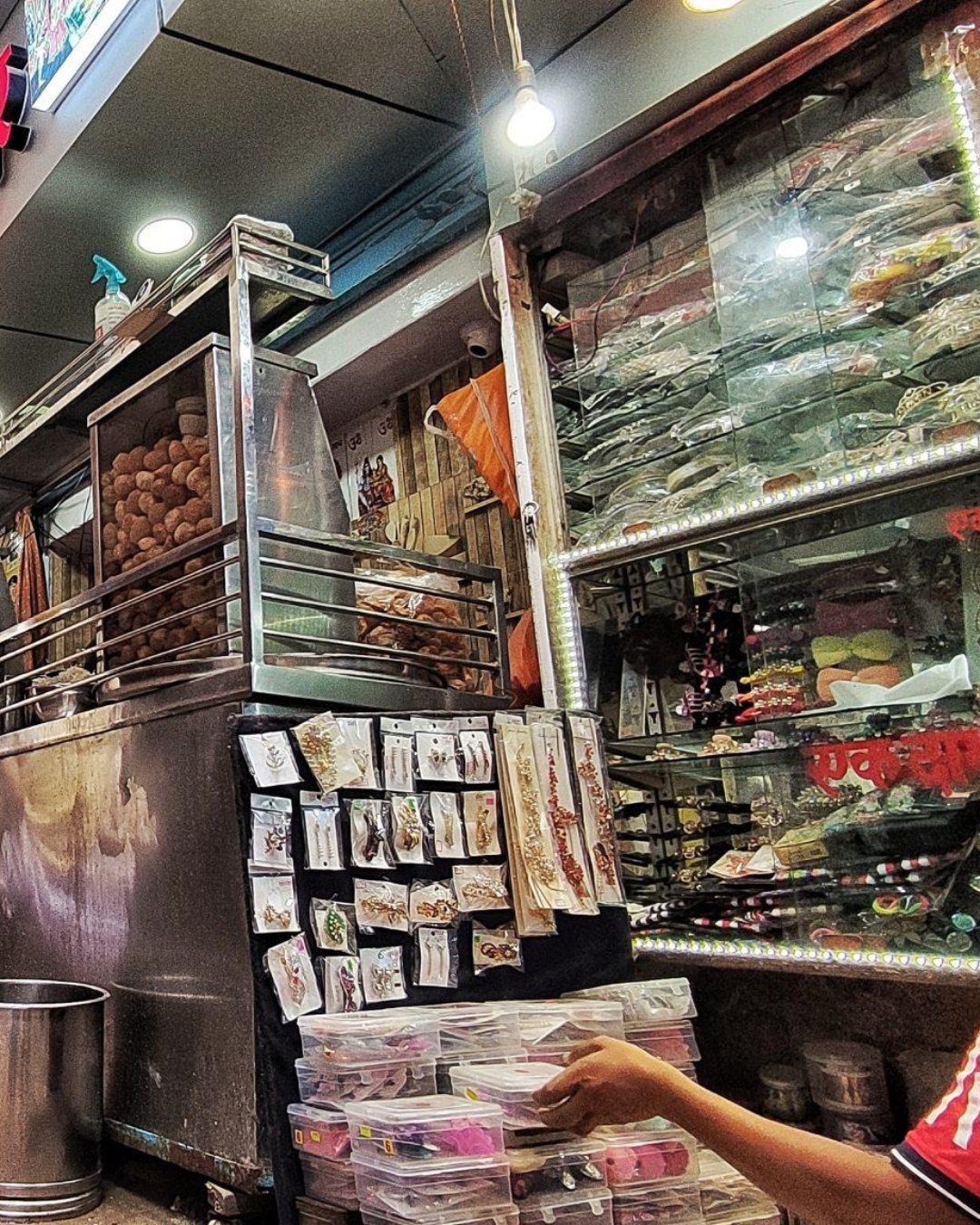
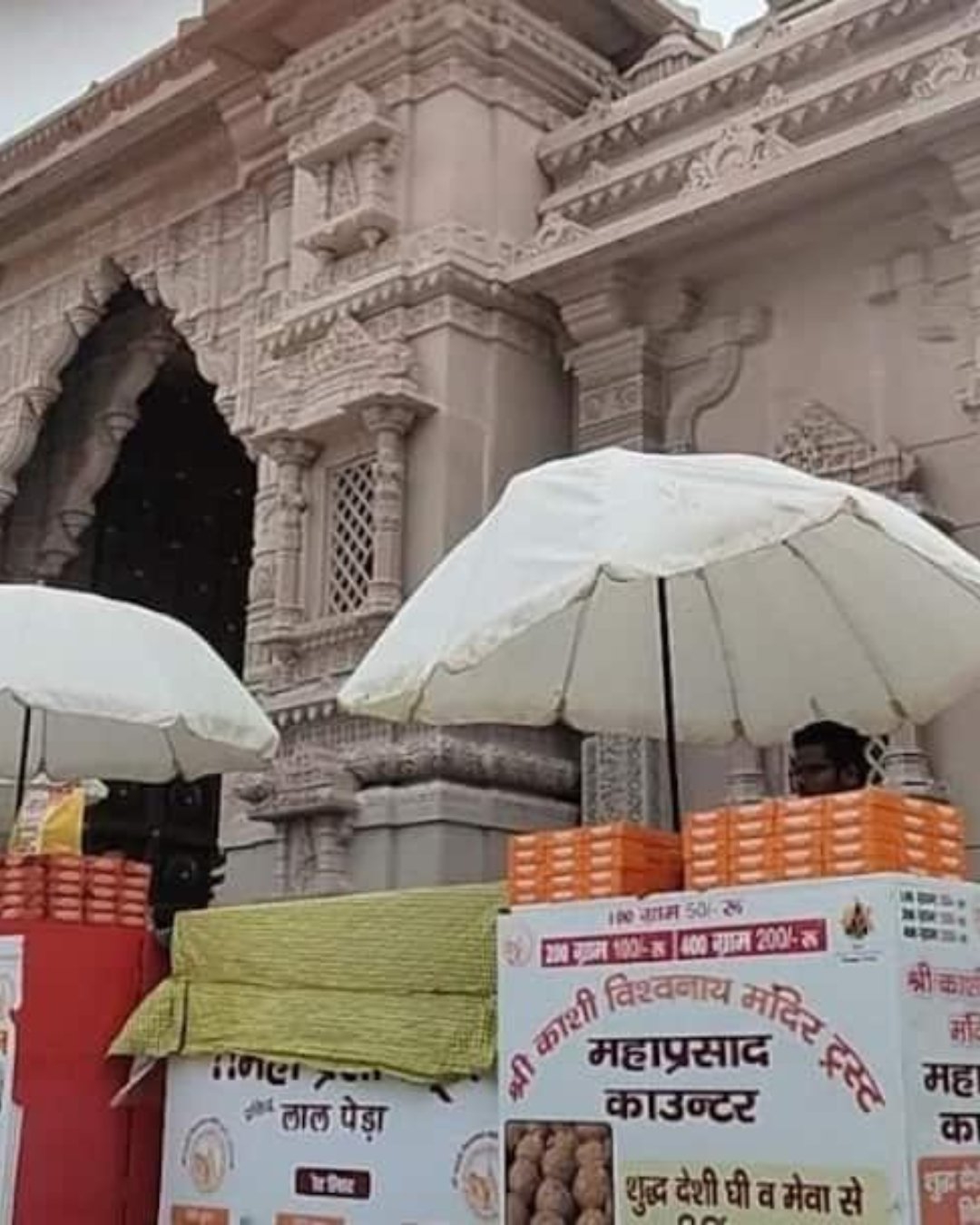
The food this pilgrimage city actually runs on isn't the deep-fried street plate sold at noon — it's satvik, cooked without onion or garlic and offered to the deity before anyone eats. Kachori, chaat, sweets, the works. But here's the thing nobody tells you: the food this pilgrimage city actually runs on isn't the deep-fried stuff sold to tourists at midday — it's satvik, the pure temple-kitchen cooking made without onion, garlic or heat, offered to the deity before anyone eats it. Miss that, chase only the oily street plates, and you'll get the version that leaves half of first-timers in bed with a bad stomach and none of the version the city is built around.
Let's fix that. Here's how the satvik table in Varanasi actually works, and how to get it right the first time.
Why satvik, and not just "Banarasi street food"
In a temple city, food is worship. Satvik cooking follows that logic — no onion, no garlic, nothing that agitates the body, cooked fresh and offered as bhog before it's served as prasad. It's the diet of pilgrims, priests and devotees here, and it's everywhere once you know to look.
It also happens to be the traveller's friend. Freshly cooked, served hot, vegetarian, and made in kitchens that turn food over fast — it's often easier on a stomach still adjusting to India than a plate of chaat that's been sitting out since morning. So you eat satvik not only because it's the real Banaras, but because it's the food most closely connected to the city's religious culture.
What you'll actually eat
The satvik Banarasi table runs from dawn breakfasts to temple thalis:
Kachori-sabzi — the classic Banarasi breakfast; the traditional aloo sabzi is often prepared without onion or garlic.
Poori-sabzi and chana — the everyday pilgrim breakfast, simple and filling.
Temple prasad — from Kashi Vishwanath and smaller shrines; laddoo, pedha, and dried-fruit offerings.
The satvik thali — dal, seasonal sabzi, rice, roti and kheer, served at vegetarian bhojanalayas.
Malaiyo — the winter milk-foam dessert, made only on cold mornings; a Banaras specialty you'll find nowhere else.
Carry small notes, because much of this food is bought at counters and temple kitchens rather than places that take cards.
And here, unusually, the phone earns its place — you'll want photos of a malaiyo before it collapses. Travellers who eat their way through the satvik side will tell you the same thing: the pull is to snap every plate, but taste it hot first, the second it's handed over, because some of this food is at its best for only a short time. The warmth, the ghee, the fact that it was prepared as part of a devotional food tradition — that's the part the photos never quite catch.
Pro tip: Eat where the pilgrims and locals eat, not where the tour buses stop. A temple bhojanalaya or a busy morning kachori counter with a queue of locals can be a better choice than an empty tourist café. Ask for food bina pyaaz-lehsun (without onion and garlic) if you want it properly satvik. Drink bottled or properly filtered water, go easy on rich food during your first day, and treat malaiyo and thandai as seasonal specialties — malaiyo is winter-only, while thandai is especially associated with festivals such as Holi and Maha Shivratri.
The mistakes that ruin it
Most first-timers trip over the same few things. They eat only heavy fried street food and pay for it. They drink untreated water or eat poorly handled cut fruit and spend the next day feeling unwell. Or they never find the satvik table at all, because nobody pointed them past the chaat stalls.
The easy fix is to explore Varanasi's vegetarian and satvik food traditions from the start, choose busy, freshly prepared kitchens, and balance the famous street food with simple temple-style meals — so the food becomes one of the highlights of the trip rather than something you have to recover from.
49
MomentKachaudi Gali, Varanasi
How to Eat the Old City
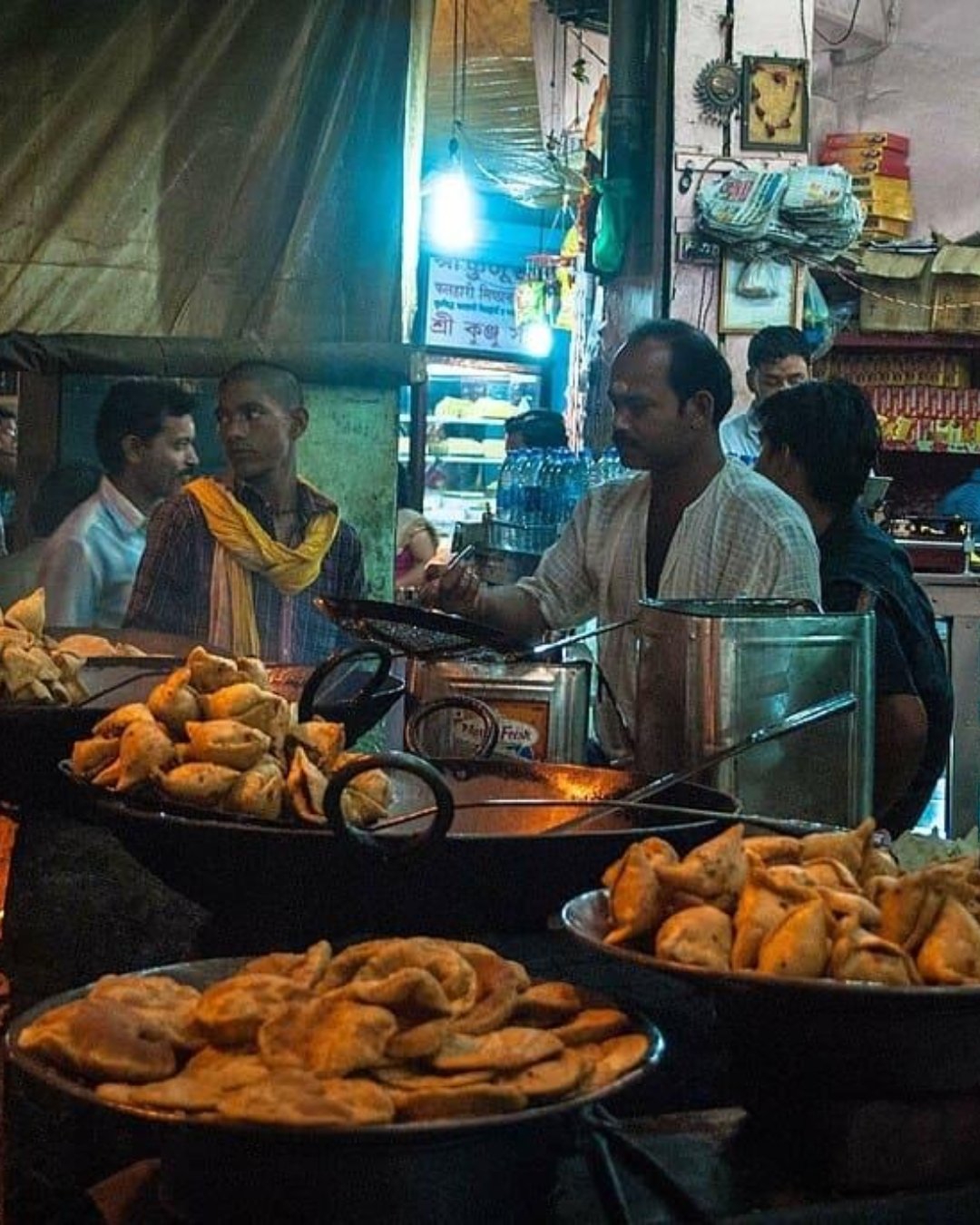
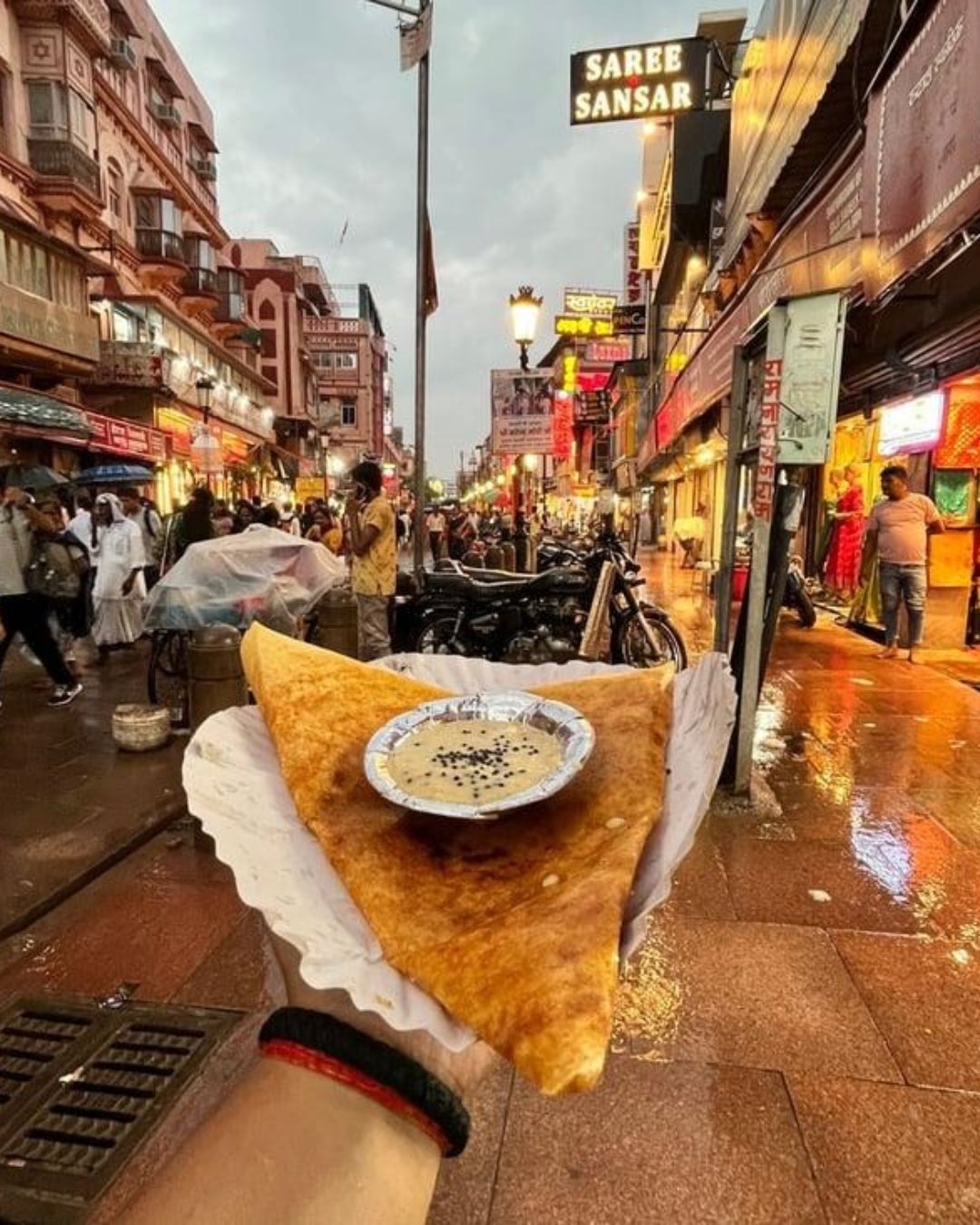
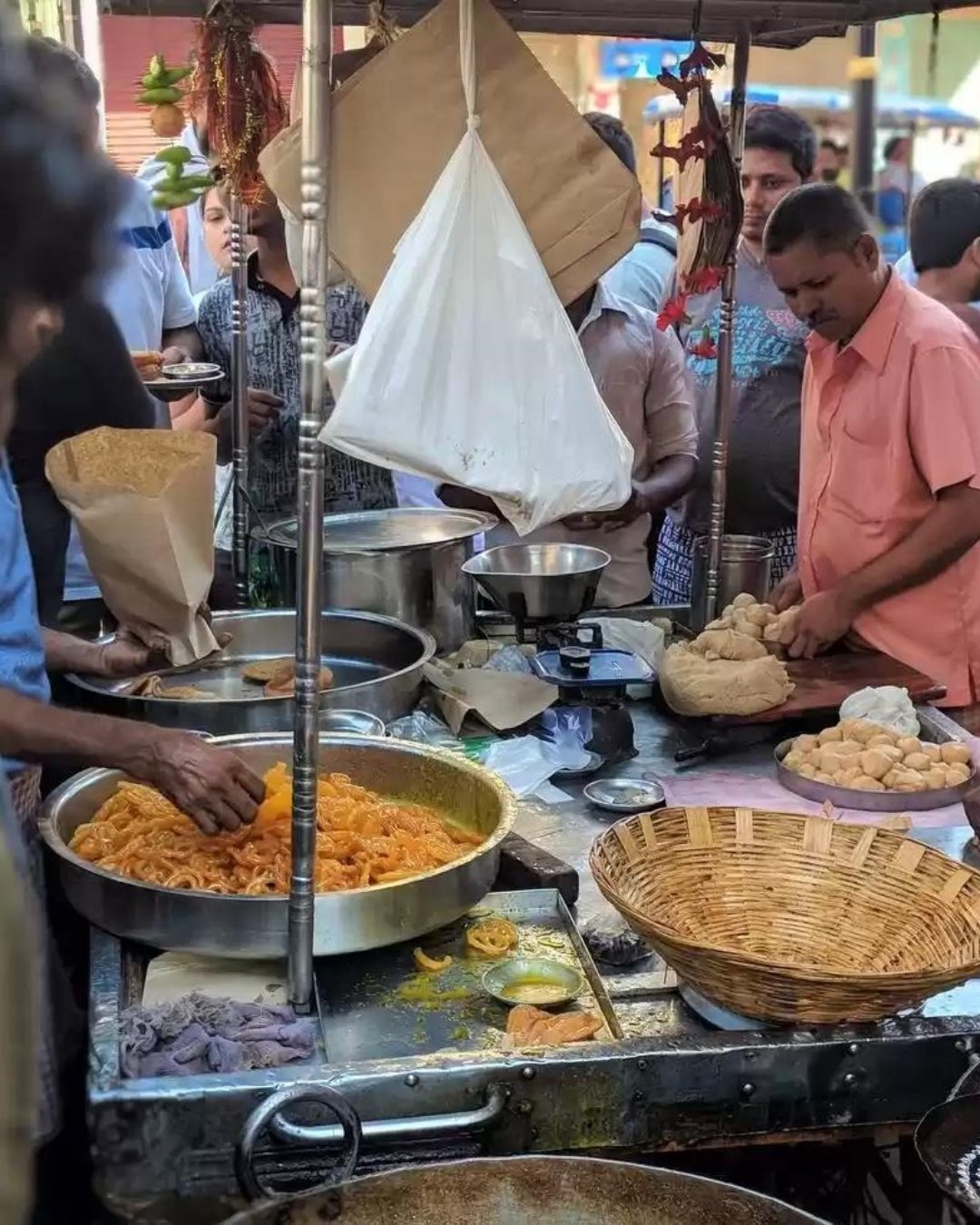
A leaf plate of kachori sabzi, a clay cup of malaiyo, jalebis straight off the pan — the old city serves all of it, but only if you show up at the right hour in the right gali. A leaf plate of kachori sabzi, a clay cup of thick malaiyo, jalebis coming out of the pan. But here's the thing nobody tells you: wander into the galis hungry, point at the first busy-looking stall, and you'll either miss the real thing entirely or spend day two of your trip in the bathroom. Banaras has some of the best street food in India — and the way most visitors approach it, they get neither the best of it nor a clean stomach.
Let's fix that. Here's how eating the old city actually works, and how to get it right the first time.
Why the hour decides the dish
Banarasi street food runs on a timetable, and it isn't the one you'd guess. The famous things are morning things. Kachori sabzi — the breakfast the city runs on — is a dawn-to-mid-morning affair, and the good shops sell out and shut by ten. Malaiyo, the impossibly light saffron milk foam, is winter-only and gone by nine, collected off the overnight dew. Chaat and tamatar chaat come alive in the evening. Show up at 1 p.m. expecting the full spread and you'll find half of it packed away.
So you eat to the clock: kachori and jalebi early, malaiyo at dawn in winter, chaat and a paan after dark. Miss the window and you miss the dish.
What you'll actually eat
Work the old city in order, and pace yourself — portions are small so you can graze:
Kachori sabzi — flaky fried bread with spiced potato, the classic Banarasi breakfast.
Malaiyo / malaiyyo — a winter-only cloud of sweetened, saffron-scented milk foam. Unmissable if you're here Nov–Feb.
Tamatar chaat & chooda matar — the city's own tangy chaat, and a winter poha with peas.
Baati chokha, kachori, jalebi, imarti — the sit-down and sweet ends of it.
Banarasi paan & thandai — the full stop at the end of the meal (skip bhang thandai unless you know exactly what you're ordering).
Come with a light stomach and small notes — most of this is cash, and relatively inexpensive.
And here, unlike the river, the phone absolutely comes out — but let the plate arrive first. Travellers who eat well here will tell you the same thing: the good stalls are the ones mobbed with locals, not the ones with an English menu, so watch where Banarasis queue and eat what they eat. Photograph it after you've tasted it, not before it goes cold for a shot. The steam, the leaf plate, the crowd around a two-burner stall at dawn — that's the part the reels flatten.
Pro tip: Eat where it's busy and freshly cooked in front of you — high turnover is your best safety net, far more than a clean-looking counter. Hot, just-fried and just-boiled food is generally a better choice; pre-cut fruit, untreated water, ice and raw chutneys sitting out for long periods are where hygiene risks increase. Drink sealed bottled water, ease in over a couple of days rather than eating everything at once on arrival, and go with someone who knows which specific shop is the one — in Banaras the difference between the legendary kachori and the forgettable one is often two doors apart.
The mistakes that ruin it
Most first-timers trip over the same few things. They eat only at the hotel and miss the whole point of the city. They dive into everything at once on the first day and pay for it. Or they show up at the wrong hour and find the famous dish sold out and shuttered.
The easy fix is to eat to the clock, follow the local crowds, and let someone who knows the galis lead you to the right stall rather than the nearest one.
51
MomentVaranasi, Haldwani
Eating Safely Without Missing Out
You've probably been warned off it completely. "Don't eat the street food in Varanasi, you'll be sick for a week." So you play it safe, stick to the hotel buffet, and go home having skipped kachori-sabzi at dawn, a clay cup of thick malaiyo in winter, and the best lassi you'll ever have. But here's the thing nobody tells you: the blanket "don't eat anything" advice is as wrong as eating everything blind. The travellers who get sick and the ones who eat gloriously well are separated by a handful of simple rules, not by luck.
Let's fix that. Here's how eating in Varanasi actually works, and how to get it right the first time.
Why where and when matters more than what
Varanasi's street food is extraordinary, and much of it can be enjoyed safely if you follow the heat and the turnover. The rule is simple: eat food that's cooked hot in front of you, fried, or freshly boiled, preferably from a stall with a steady queue. A busy stall sells out and restocks constantly, so food is less likely to sit around. An empty stall may have food that's been waiting, and prolonged holding at room temperature increases the risk of contamination.
Timing follows the same logic. Kachori-sabzi is a breakfast thing, made in the morning and best eaten then. Sweets move quickly at busy shops. What you avoid isn't the cuisine itself, but foods that have been standing around: pre-cut fruit, uncovered food at room temperature, and water that isn't sealed or properly treated.
What you'll actually want to eat
Varanasi's food is worth coming for on its own. The stars:
Kachori-sabzi — deep-fried, breakfast standard, best eaten hot and fresh from the stall.
Banarasi lassi — thick, traditionally served in a clay cup, from a busy shop in the old city.
Malaiyo — a winter-only saffron milk foam, sold at dawn and gone by mid-morning. Seasonal magic.
Tamatar chaat and chooda matar — Banaras specialities you won't find done quite this way elsewhere.
Baati chokha, and a paan to finish — the meal and its full stop.
Carry sealed bottled water and hand sanitiser, and be cautious with ice unless you know it was made from safe water.
And here's where you do pull the phone out — but to check, not to shoot. Travellers who eat well here will tell you the same thing: a quick look at recent reviews, or simply counting the locals in the queue, can tell you more than a generic guidebook. A busy stall full of regular customers is often a useful signal that food is turning over quickly. That crowd of regulars is the part the photos never quite catch — it's the safety signal hiding in plain sight.
Pro tip: Ease in. Give your stomach a day or two before you go deep, start with freshly cooked hot foods, and build up gradually. Eat where the locals eat and at the hours they eat — a stall doing brisk morning trade is more likely to have rapid turnover. Carry oral rehydration salts just in case, and don't let one nervous traveller in your group talk everyone out of the food they'll most regret missing.
The mistakes that ruin it
Most first-timers trip over the same few things. They avoid everything and miss the best of the city. Or they swing the other way — pre-cut fruit from a cart, ice made from uncertain water, a cold samosa from an empty stall — and pay for it. And they eat the heaviest, richest food on day one instead of easing in.
The easy fix is to follow the heat, the queue and the hour — or go with someone who knows which stalls have a strong local following, so you can experience the real food while reducing the avoidable risks.
Destination
Varanasi, Uttar Pradesh, India
Common questions
01Question
What food is Varanasi famous for?
Varanasi is famous for a vibrant vegetarian street-food culture deeply connected with its old-city lanes, temples and ghats. The city's must-try foods include kachori-sabzi, tamatar chaat, baati chokha, Banarasi lassi, malaiyyo, chooda matar, Banarasi thandai, sweets and Banarasi paan.
02Question
What is the famous breakfast in Varanasi?
The most famous breakfast in Varanasi is Kachori-Sabzi, traditionally enjoyed with hot jalebi. It is one of the city's quintessential morning food experiences, with freshly fried, crisp kachoris served alongside a spicy, tangy potato-based sabzi.
03Question
Is street food in Varanasi safe to eat?
You can enjoy Varanasi's famous street food safely if you choose busy, popular stalls where food is prepared fresh and served hot. The main risk isn't the food itself; it's poor hygiene, contaminated water, food sitting uncovered, and questionable ice or raw ingredients. Current travel guidance for Varanasi recommends freshly cooked food from clean, reputable places and bottled or purified water.
04Question
What is malaiyo and when can you eat it?
Malaiyo is a famous winter-only milk dessert from Varanasi, known for its extremely light, airy, cloud-like texture. It is also known as Makhan Malai or Nimish in other parts of North India. It is traditionally made by preparing milk and leaving it under the cool night air, allowing the delicate foam to develop before it is whipped and flavored. Saffron, cardamom and chopped nuts are commonly added.
05Question
What is Banarasi paan made of?
If you're trying Banarasi paan for the first time, meetha paan is generally the sweeter, more approachable version. It can contain gulkand, fennel, cardamom, coconut, sweetened fruit and other flavourings. Recipes vary from one shop to another
06Question
Where is the best street food area in Varanasi?
The best overall street-food area in Varanasi is the Old City around Kachori Gali, Vishwanath Gali, Godowlia Chowk and the Dashashwamedh area. These interconnected lanes give you the widest mix of classic Banarasi foods—from kachori-sabzi and jalebi in the morning to chaat, lassi, sweets, thandai and paan later in the day.
07Question
Is Varanasi good for vegetarians?
Absolutely. Varanasi is one of the best Indian cities for vegetarian travelers. Its food culture is strongly influenced by its spiritual and temple traditions, and many popular local dishes are naturally vegetarian. Official tourism sources highlight classics such as kachori-sabzi, tamatar chaat, baati chokha, lassi, malaiyyo and Banarasi paan.
More to explore
Go further into one part of this trip.