

Temple Food & the Satvik Table
Vishwanath Gali, Varanasi, India
The food this pilgrimage city actually runs on isn't the deep-fried street plate sold at noon — it's satvik, cooked without onion or garlic and offered to the deity before anyone eats. Kachori, chaat, sweets, the works. But here's the thing nobody tells you: the food this pilgrimage city actually runs on isn't the deep-fried stuff sold to tourists at midday — it's satvik, the pure temple-kitchen cooking made without onion, garlic or heat, offered to the deity before anyone eats it. Miss that, chase only the oily street plates, and you'll get the version that leaves half of first-timers in bed with a bad stomach and none of the version the city is built around.
Let's fix that. Here's how the satvik table in Varanasi actually works, and how to get it right the first time.
Why satvik, and not just "Banarasi street food"
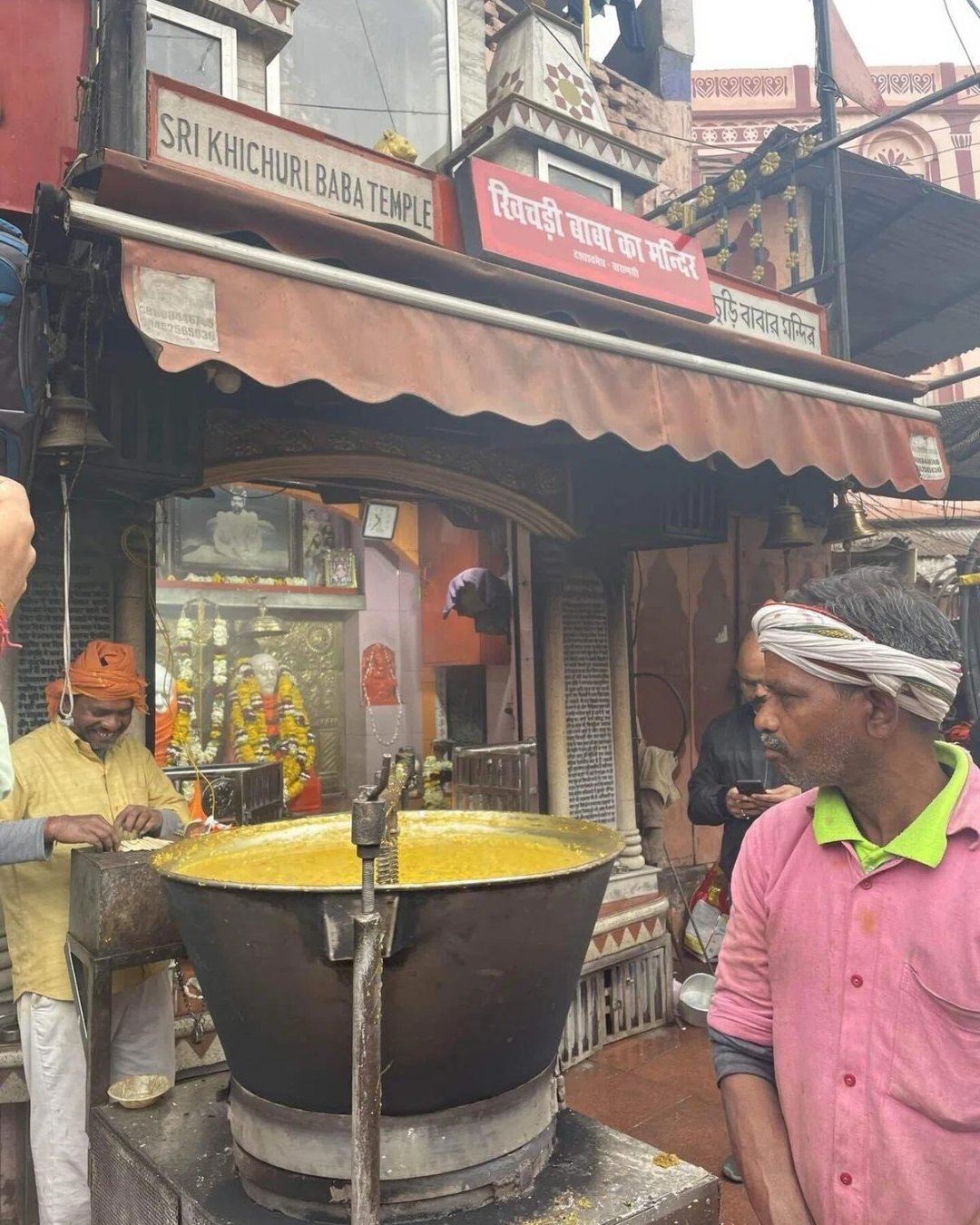
In a temple city, food is worship. Satvik cooking follows that logic — no onion, no garlic, nothing that agitates the body, cooked fresh and offered as bhog before it's served as prasad. It's the diet of pilgrims, priests and devotees here, and it's everywhere once you know to look.
It also happens to be the traveller's friend. Freshly cooked, served hot, vegetarian, and made in kitchens that turn food over fast — it's often easier on a stomach still adjusting to India than a plate of chaat that's been sitting out since morning. So you eat satvik not only because it's the real Banaras, but because it's the food most closely connected to the city's religious culture.
What you'll actually eat
The satvik Banarasi table runs from dawn breakfasts to temple thalis:
Kachori-sabzi — the classic Banarasi breakfast; the traditional aloo sabzi is often prepared without onion or garlic.
Poori-sabzi and chana — the everyday pilgrim breakfast, simple and filling.
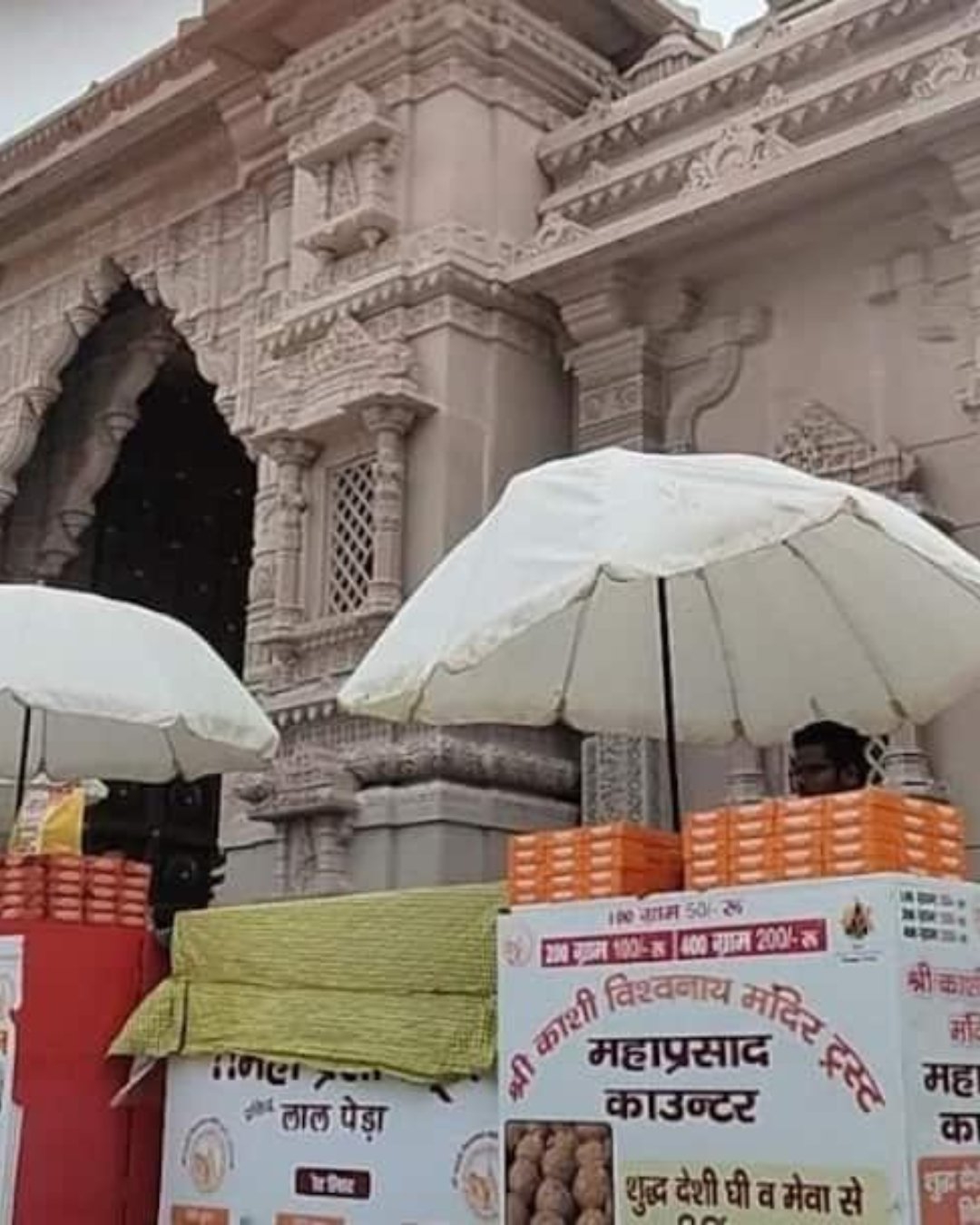
Temple prasad — from Kashi Vishwanath and smaller shrines; laddoo, pedha, and dried-fruit offerings.
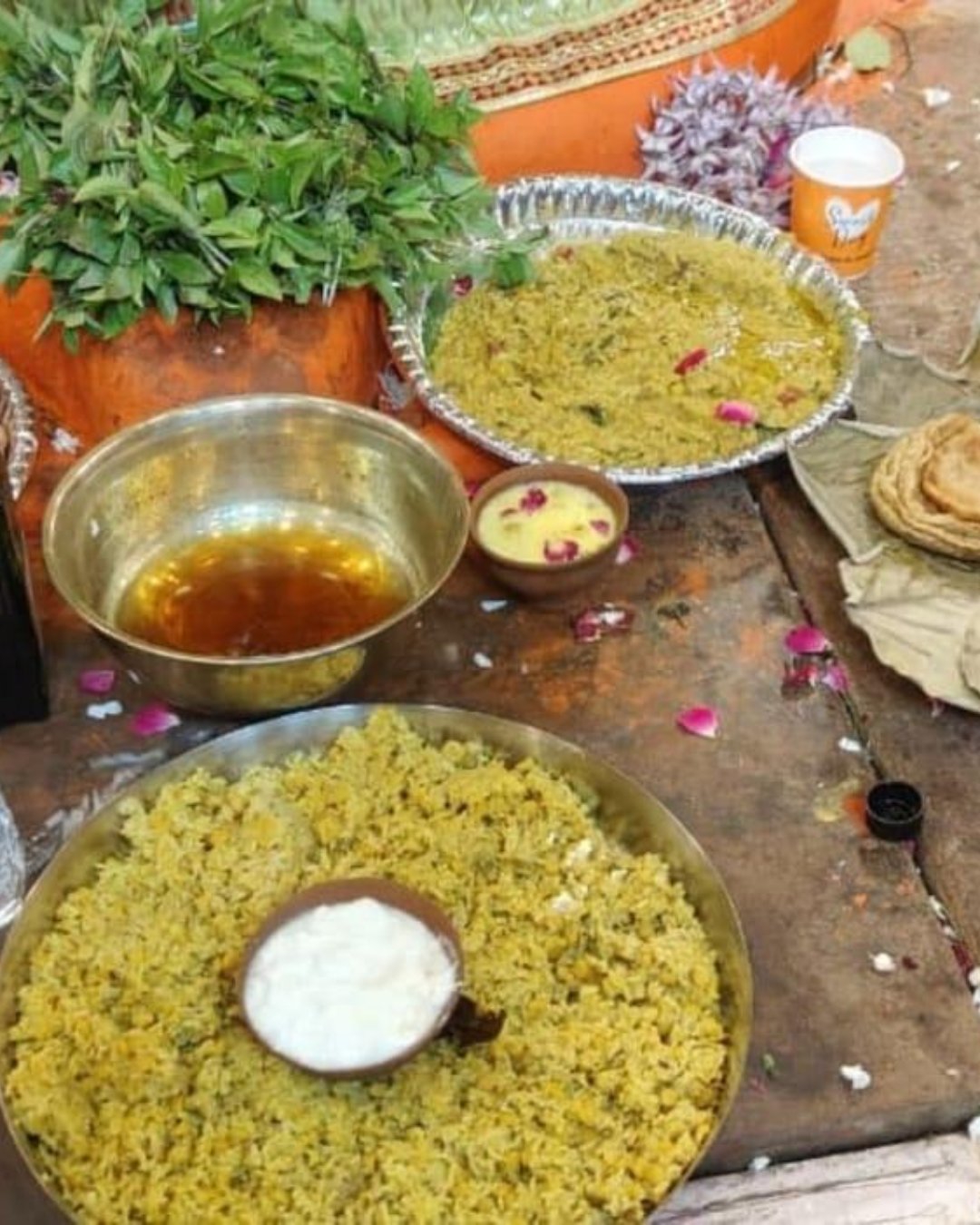
The satvik thali — dal, seasonal sabzi, rice, roti and kheer, served at vegetarian bhojanalayas.
Malaiyo — the winter milk-foam dessert, made only on cold mornings; a Banaras specialty you'll find nowhere else.
Carry small notes, because much of this food is bought at counters and temple kitchens rather than places that take cards.
And here, unusually, the phone earns its place — you'll want photos of a malaiyo before it collapses. Travellers who eat their way through the satvik side will tell you the same thing: the pull is to snap every plate, but taste it hot first, the second it's handed over, because some of this food is at its best for only a short time. The warmth, the ghee, the fact that it was prepared as part of a devotional food tradition — that's the part the photos never quite catch.
Pro tip: Eat where the pilgrims and locals eat, not where the tour buses stop. A temple bhojanalaya or a busy morning kachori counter with a queue of locals can be a better choice than an empty tourist café. Ask for food bina pyaaz-lehsun (without onion and garlic) if you want it properly satvik. Drink bottled or properly filtered water, go easy on rich food during your first day, and treat malaiyo and thandai as seasonal specialties — malaiyo is winter-only, while thandai is especially associated with festivals such as Holi and Maha Shivratri.
The mistakes that ruin it
Most first-timers trip over the same few things. They eat only heavy fried street food and pay for it. They drink untreated water or eat poorly handled cut fruit and spend the next day feeling unwell. Or they never find the satvik table at all, because nobody pointed them past the chaat stalls.
The easy fix is to explore Varanasi's vegetarian and satvik food traditions from the start, choose busy, freshly prepared kitchens, and balance the famous street food with simple temple-style meals — so the food becomes one of the highlights of the trip rather than something you have to recover from.