

Malaiyo — Winter Foam You Can Miss
Vishwanath Gali, Varanasi, India
Malaiyo might be the most extraordinary thing you eat in Varanasi — and you get roughly three winter months, and three morning hours, to do it, and that's the whole problem. Malaiyo is Varanasi's great winter secret — a cloud of saffron-scented milk foam, so light it barely exists, sold on the old-city lanes on cold mornings and gone by the time most tourists finish breakfast. But here's the thing nobody tells you: it's there for maybe three months of the year, for maybe three hours of the day, and it dissolves the moment it warms up. Come in April, or come at noon, and you'll never even know Varanasi makes one of the most extraordinary sweets in India.
Let's fix that. Here's how malaiyo actually works, and how to get it right the first time.
Why the season and the hour are everything
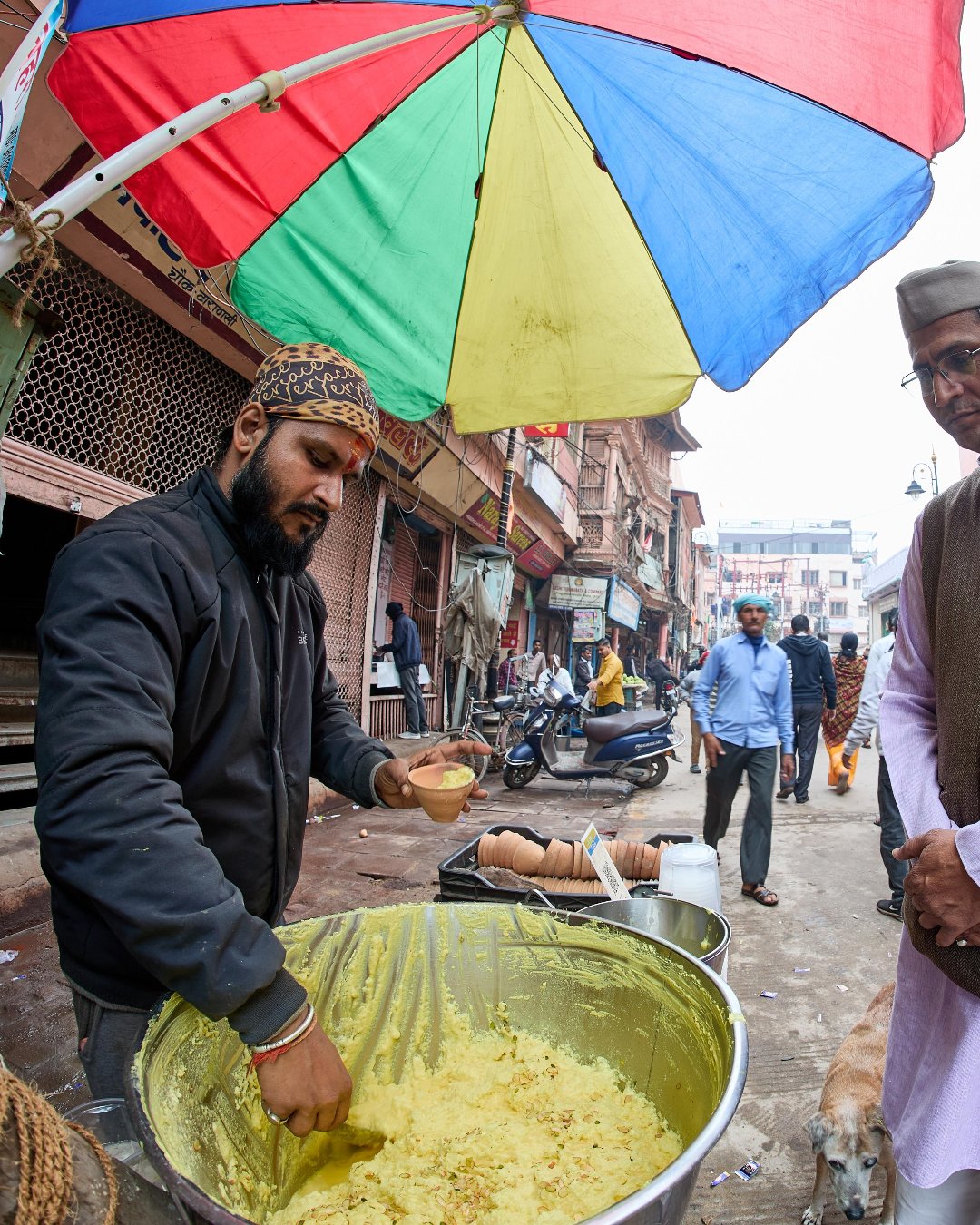
Malaiyo is made by the weather, not just the halwai. Milk is simmered, frothed, and left out overnight under the winter sky, where the cold and the dew whip it into a foam — then it's scooped up at dawn, dusted with saffron, cardamom and crushed nuts, and sold before the sun kills it. No cold night, no malaiyo. That's why it exists only from roughly November to February, and vanishes entirely in the heat.
And it's a morning thing. The vendors set up early in the old city and sell until the foam collapses, usually by nine or ten. Sleep in, and it's gone. So this is a cold-season, early-morning mission — pair it with a sunrise on the ghats, when you're already up and out.
What you'll actually get
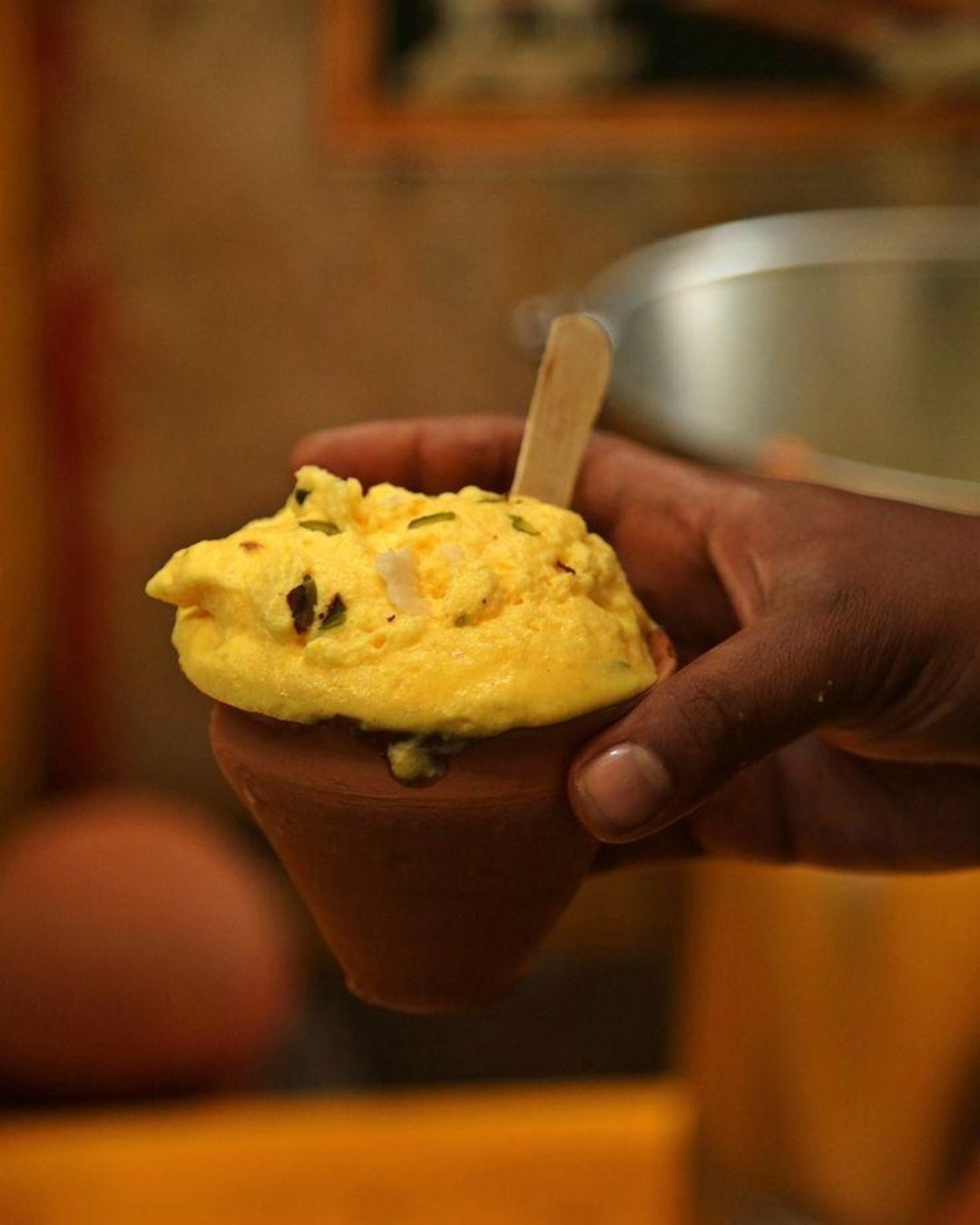
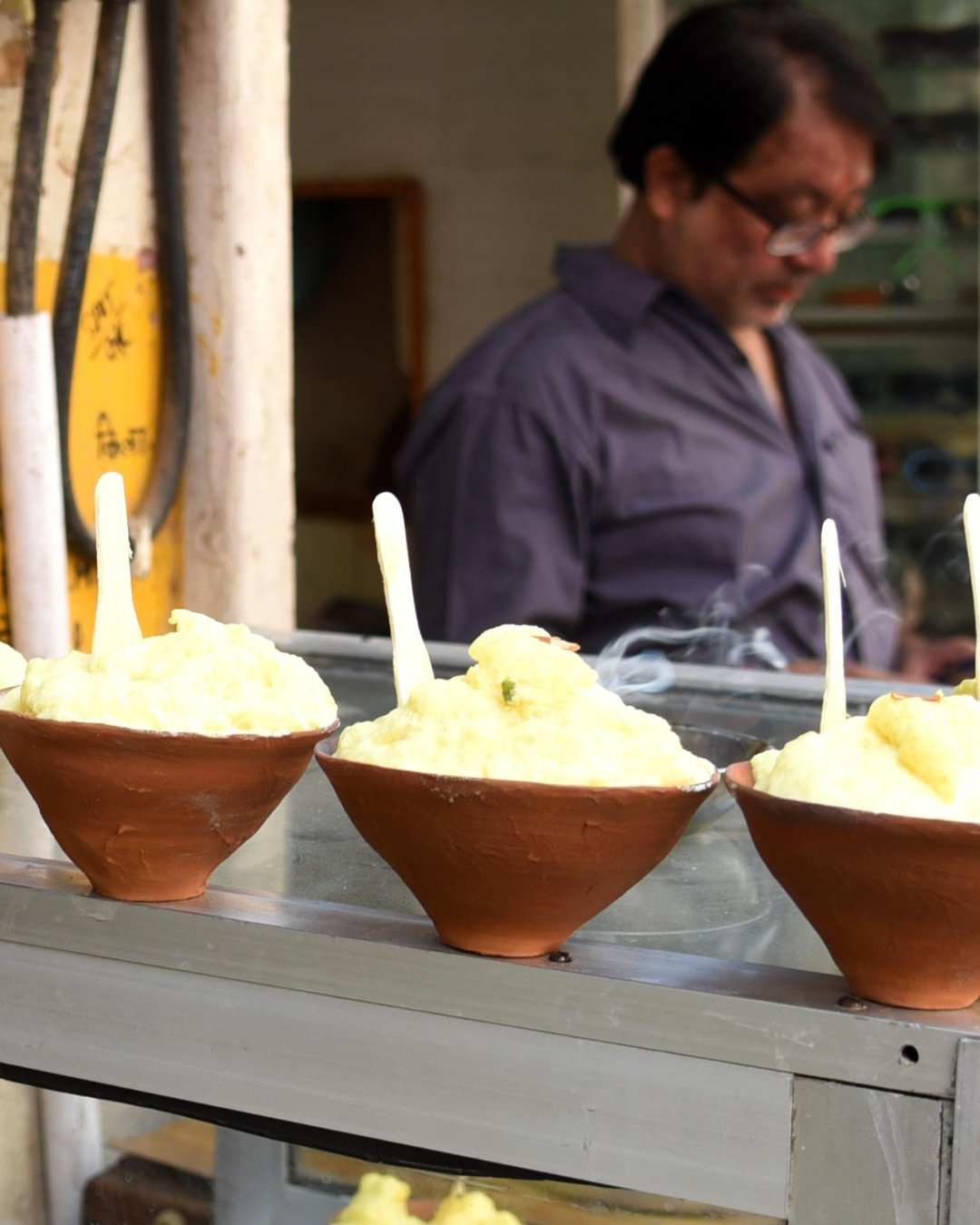
Find a malaiyo seller in the lanes and you'll get a small clay cup or leaf bowl of something that's more air than substance:
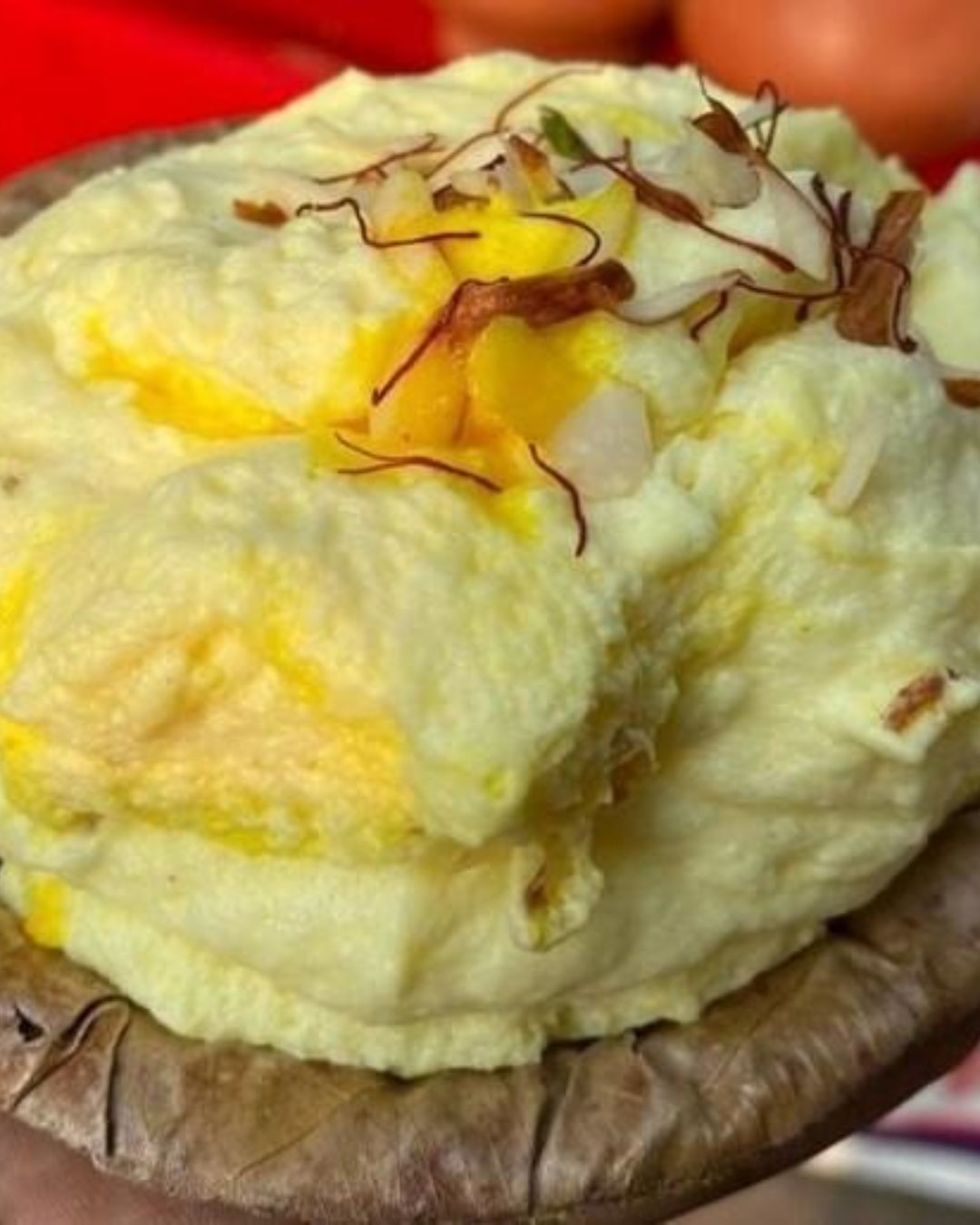
The foam itself — pale, barely sweet, melting on the tongue before you've tasted it. Texture, not sugar, is the point.
The saffron and cardamom — scenting it, with a faint richness underneath.
The nut topping — slivered pistachio and almond, sometimes a little khoya at the base.
The clay cup — part of the taste; the earthenware matters.
Eat it immediately. This is not a walking snack — malaiyo waits for no one, and a cup carried around for ten minutes is a cup of warm milk.
And here's the one food stop where you genuinely should put the phone away. Travellers who find it will tell you the same thing: malaiyo doesn't photograph — it's pale foam in a brown cup, and the picture looks like nothing while the real thing is remarkable. Worse, it's collapsing while you frame the shot. Just eat it, the second it's handed over, before the air goes out of it. That first spoonful of something that's barely there — that's the part no photo was ever going to hold.
Pro tip: Go early and go into the old city — the lanes around Kachori Gali, Thatheri Bazaar and the Chowk-Vishwanath area are where you'll find it, not the tourist cafés. Ask for it by name (malaiyo, or malaiyyo), because you won't see it unless you know to look. It's a few rupees a cup; eat it standing at the stall. And check it's actually winter — vendors genuinely don't make it once the nights warm up, so nobody can conjure you one in March.
The mistakes that ruin it
Most first-timers trip over the same few things. They visit in the wrong season and never encounter it. They come to the lanes at eleven, after it's sold out and melted. Or they carry it around for photos until it's just milk.
The easy fix is to come in winter, go early into the old city, and eat it on the spot — or have someone who knows the lanes take you straight to a good stall at the right hour.