

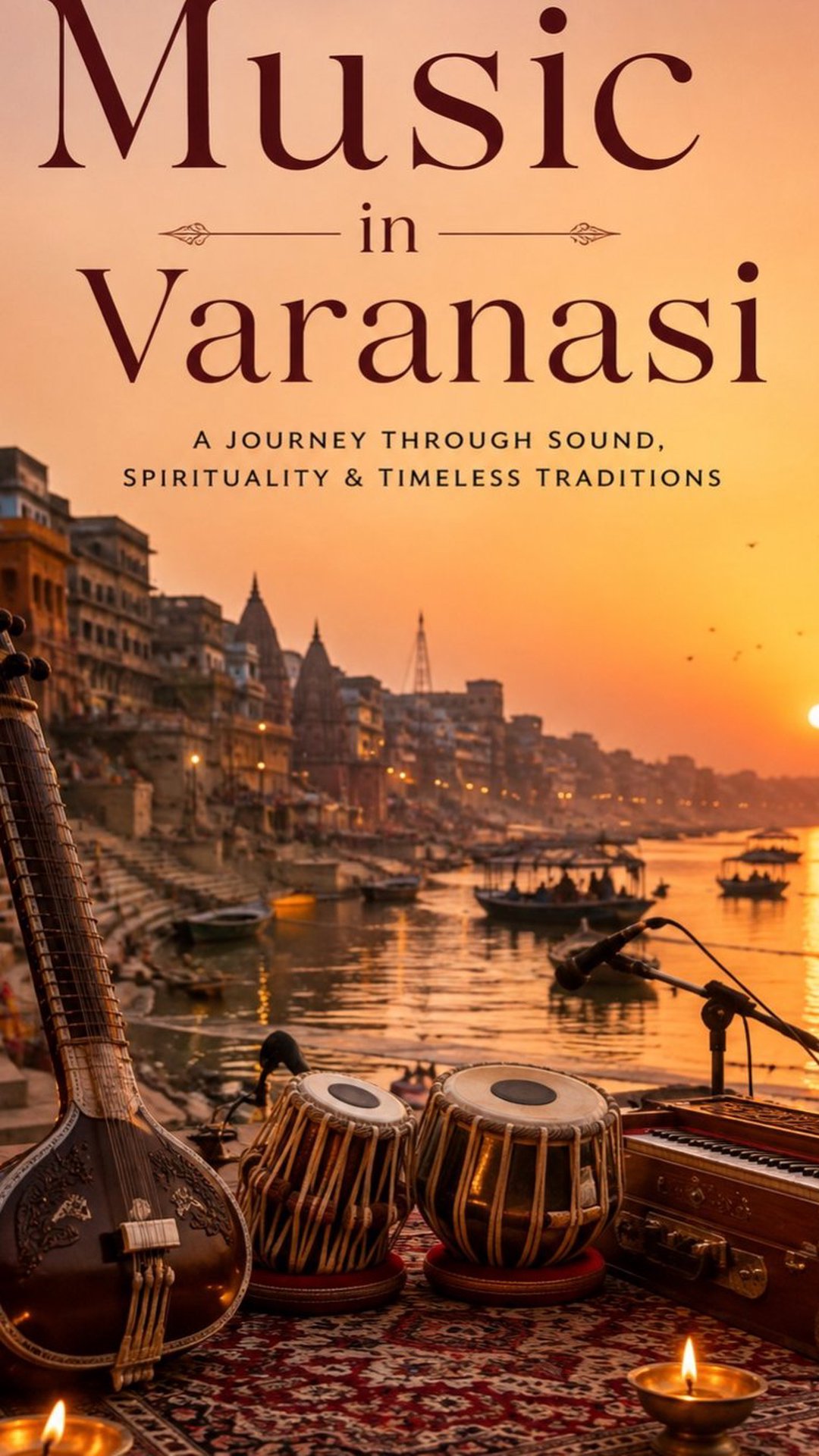
Music in Varanasi: Banaras Gharana, Concerts & Lessons
The Banaras Gharana, where to hear live classical music tonight,
the free all-night Sankat Mochan festival, and how to take a first
tabla lesson.
Music in Varanasi takes you beyond sightseeing and into one of the deepest cultural traditions of Kashi. This journey is about discovering a city where music has grown alongside temples, rituals, the Ganga and everyday life for centuries. From the powerful rhythms of the Banaras Gharana to the emotional world of Thumri, Dadra and Kajri, we'll help you experience Varanasi not just as a place you see, but as a place you listen to.
Your journey begins with the extraordinary atmosphere of Sankat Mochan Sangeet Samaroh, one of Varanasi's most celebrated classical music and dance festivals. If your travel dates coincide with the festival, you'll experience long evenings of music in a deeply spiritual setting. We'll help you understand the practical side too — including checking the festival dates, arriving prepared and respecting venue rules.
We'll then take you deeper into what the Banaras Gharana actually means. Rather than treating it as just another musical label, you'll discover the tradition of teachers, students and generations of musicians who developed distinctive styles of rhythm, melody and performance in Varanasi. The journey introduces you to the city's important connection with tabla, Hindustani classical music, vocal traditions and semi-classical forms.
One of the most emotional parts of the experience is discovering Thumri, Dadra and Kajri. You don't need to be a trained musician to enjoy them. We'll help you listen to the feeling behind the music — the expressive voice, the conversation between instruments, the changing rhythm and the moods connected with love, longing, devotion and the monsoon.
No journey through Banaras music would be complete without Ustad Bismillah Khan and the shehnai. We'll explore how the legendary musician became inseparable from the musical identity of Varanasi and helped bring the shehnai from ceremonial settings into the world of classical concert music. It is an opportunity to understand how one instrument and one extraordinary musician became part of India's cultural memory.
For travellers who are completely new to Indian classical music, we'll make the experience approachable through “How to Listen Without Being Lost.” You won't need to memorise complicated ragas or understand every technical term. Instead, we'll encourage you to follow the melody as it develops, listen to the rhythm of the tabla and notice how musicians communicate with one another through improvisation. The aim is simple: stop worrying about understanding everything and start enjoying what you hear.
We'll also help you find live music beyond major festivals. Depending on your travel dates, cultural programmes around Assi Ghat and other venues in Varanasi can provide opportunities to hear music and experience the city's artistic atmosphere.
Route
Home
MomentShri Sankat Mochan Hanuman Temple, Varanasi
Six Nights, No Phones, No Tickets
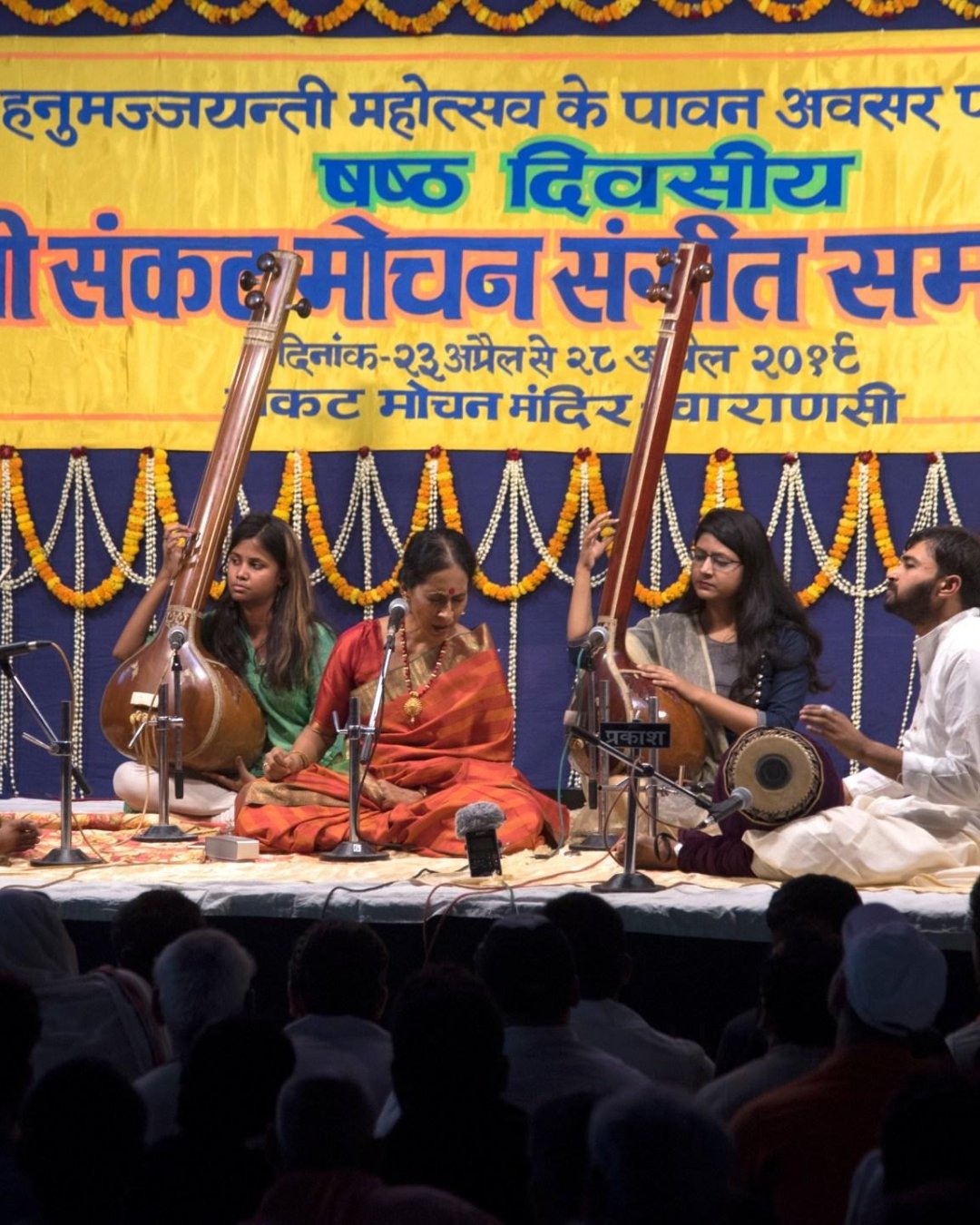
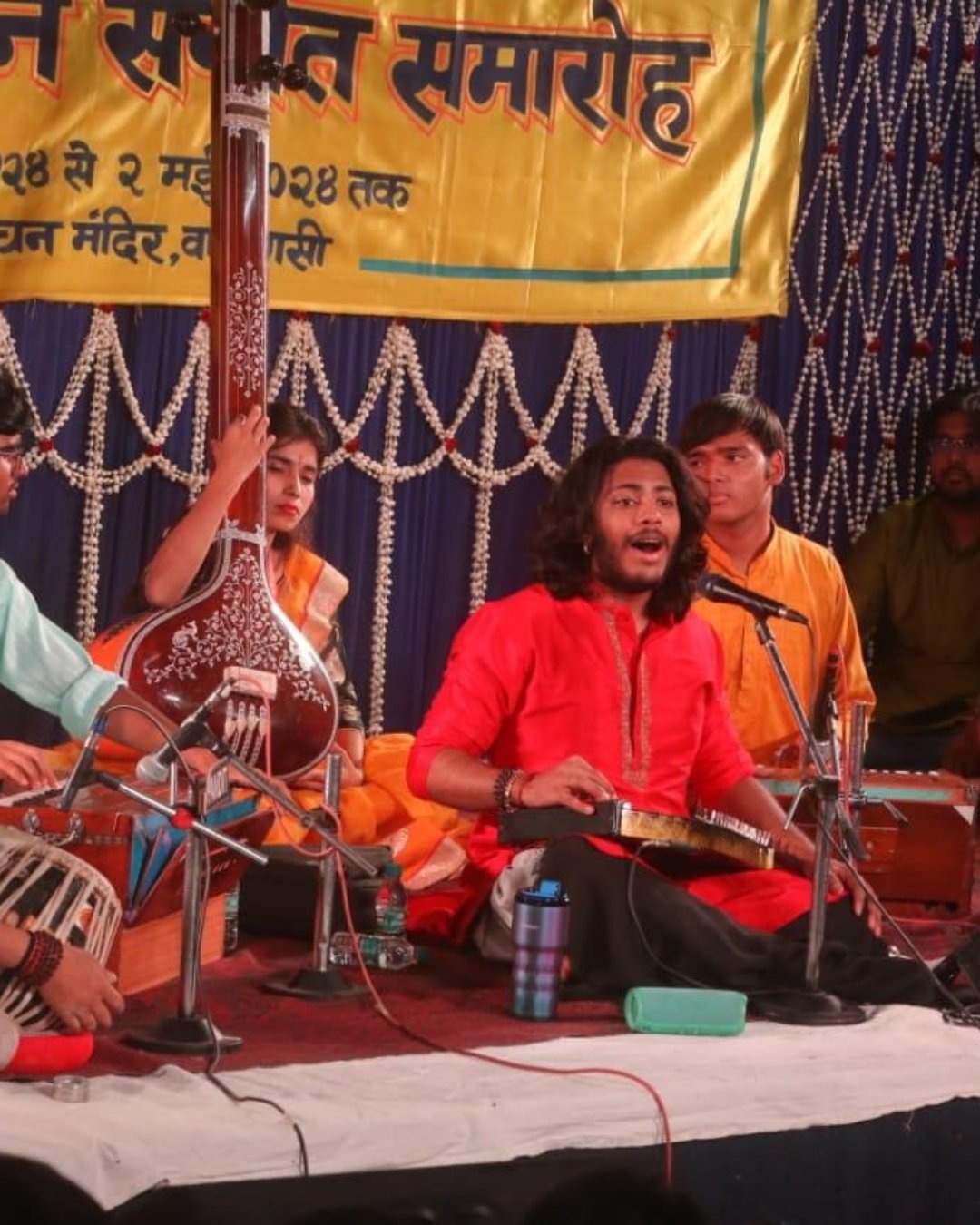
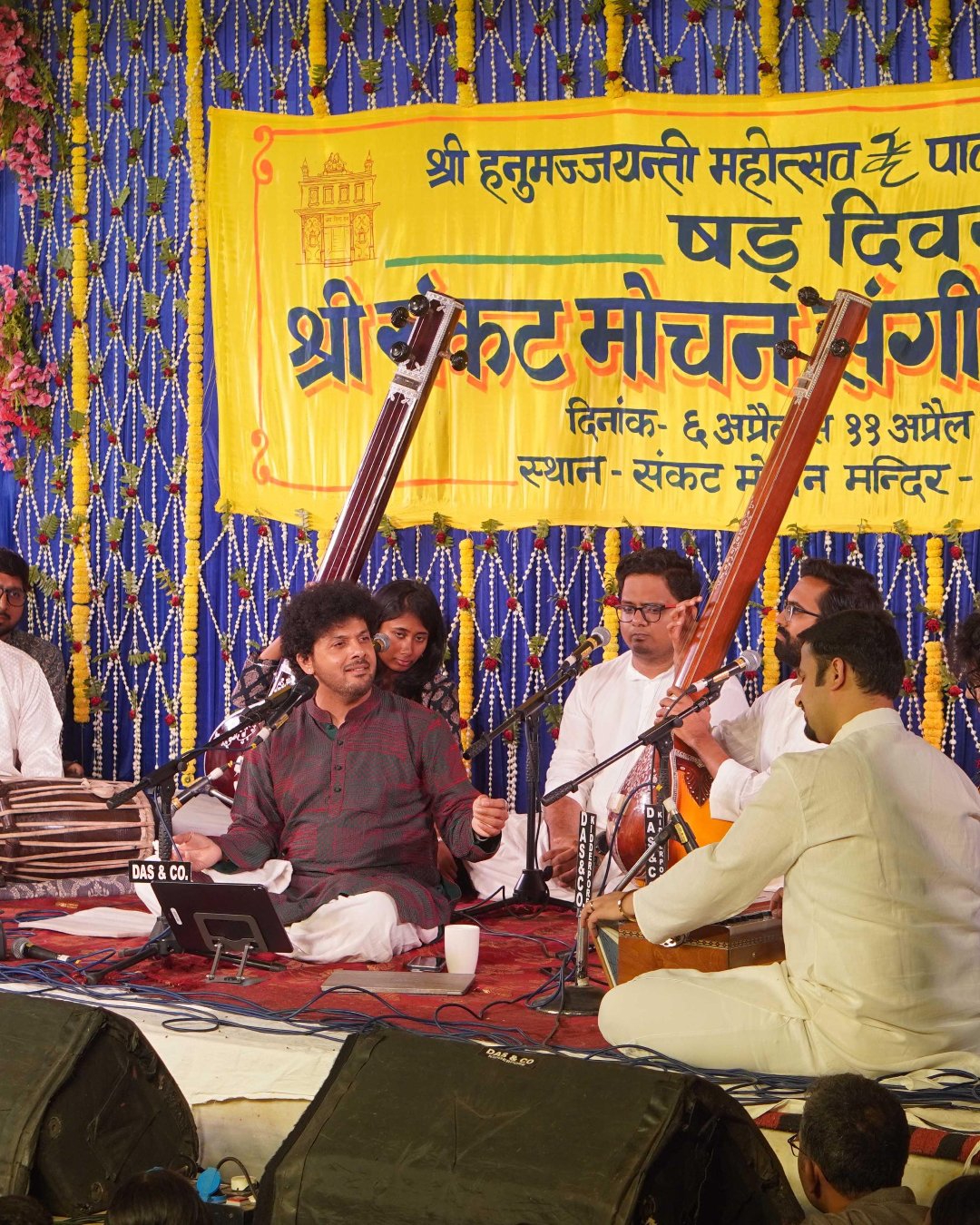
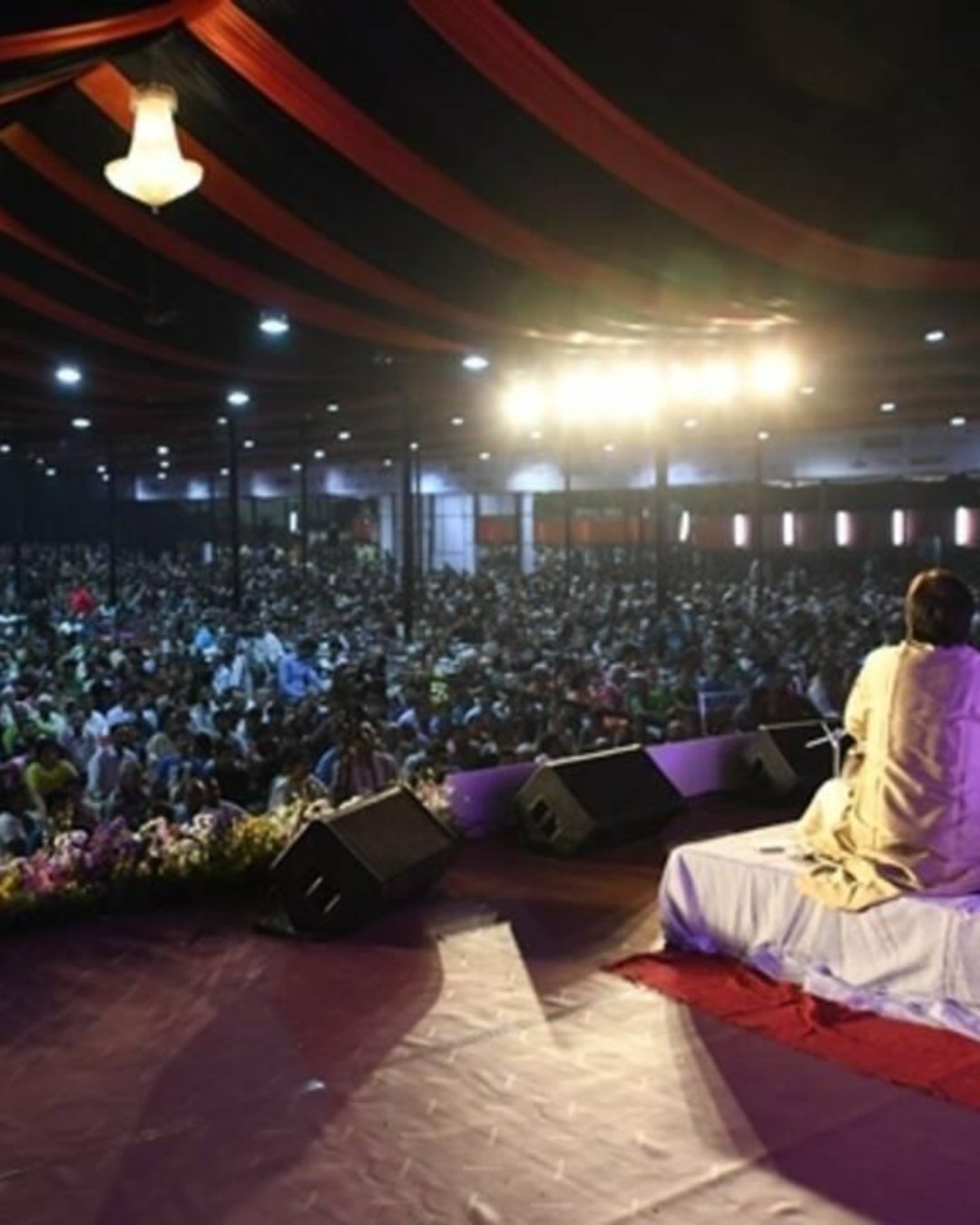
Once a year, for six nights each April, the Sankat Mochan Hanuman temple stops being only a place of worship and becomes the setting for one of India's greatest classical music festivals — the Sankat Mochan Sangeet Samaroh. It's timed to Hanuman Jayanti, so the exact dates shift from year to year with the Hindu calendar, but the shape never changes: night after night of Hindustani classical music and dance, running from around 7:30 in the evening until dawn, in the courtyard of the temple itself.
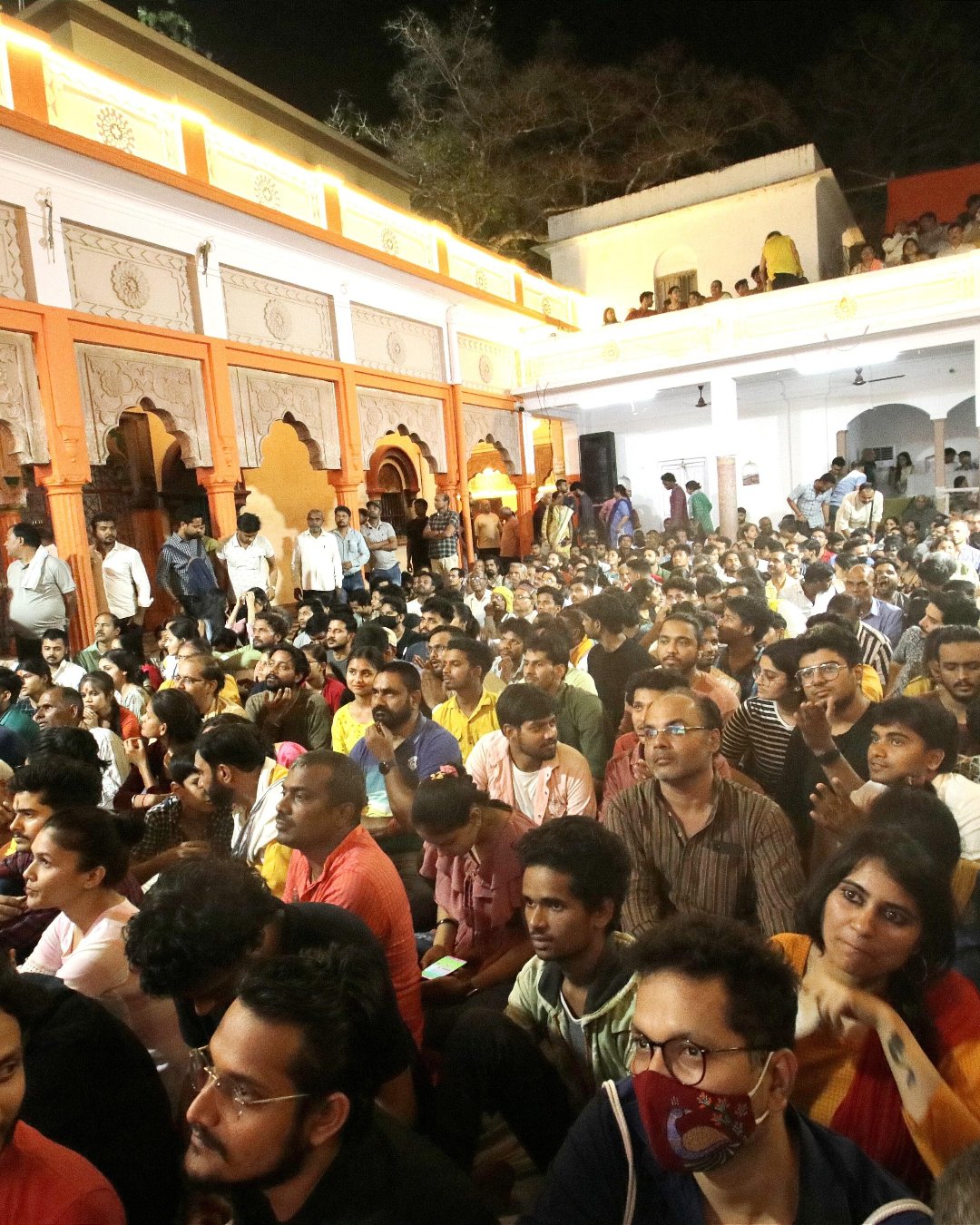
What makes it unlike any concert you've been to starts with the two things it doesn't have. There are no tickets — entry is free, and the roughly sixty artists who perform across the week, many of them Padma awardees and the biggest names in Indian classical music, take no fee. They come because performing here is understood as an offering to Hanuman, not a booking. And there are no phones: devices are banned, so there are no glowing screens, no recording, no one half-watching through a lens. You simply sit and listen, which is the whole point.
The stage tells you what the festival really is. It sits on the temple veranda, facing the sanctum, so the musicians play toward the deity rather than out at the crowd — you are, in effect, watching an act of devotion from behind, invited to overhear it. The audience settles on the floor of the courtyard and stays, sometimes through the entire night, as one master follows another and a raga unfolds slowly in the dark. By the small hours, when the crowd has thinned to the truly devoted and a great vocalist or a bansuri is filling the temple, it becomes something people remember for the rest of their lives.
To take it in, come as a guest of the temple rather than a spectator. Arrive early if you want a place near the front, be ready to sit on the floor and to stay a while, and dress modestly as you would for any temple. Leave the phone behind or resign yourself to handing it over — this is not a night for photos. Bring patience and an open ear rather than a plan to catch one act and leave; the festival rewards those who let the night carry them. Free, unticketed, unrecorded, and utterly alive, it's the rare event that asks nothing of you but your presence — and gives back a night you couldn't have bought at any price.
46
MomentKabir Nagar Churaha, Varanasi
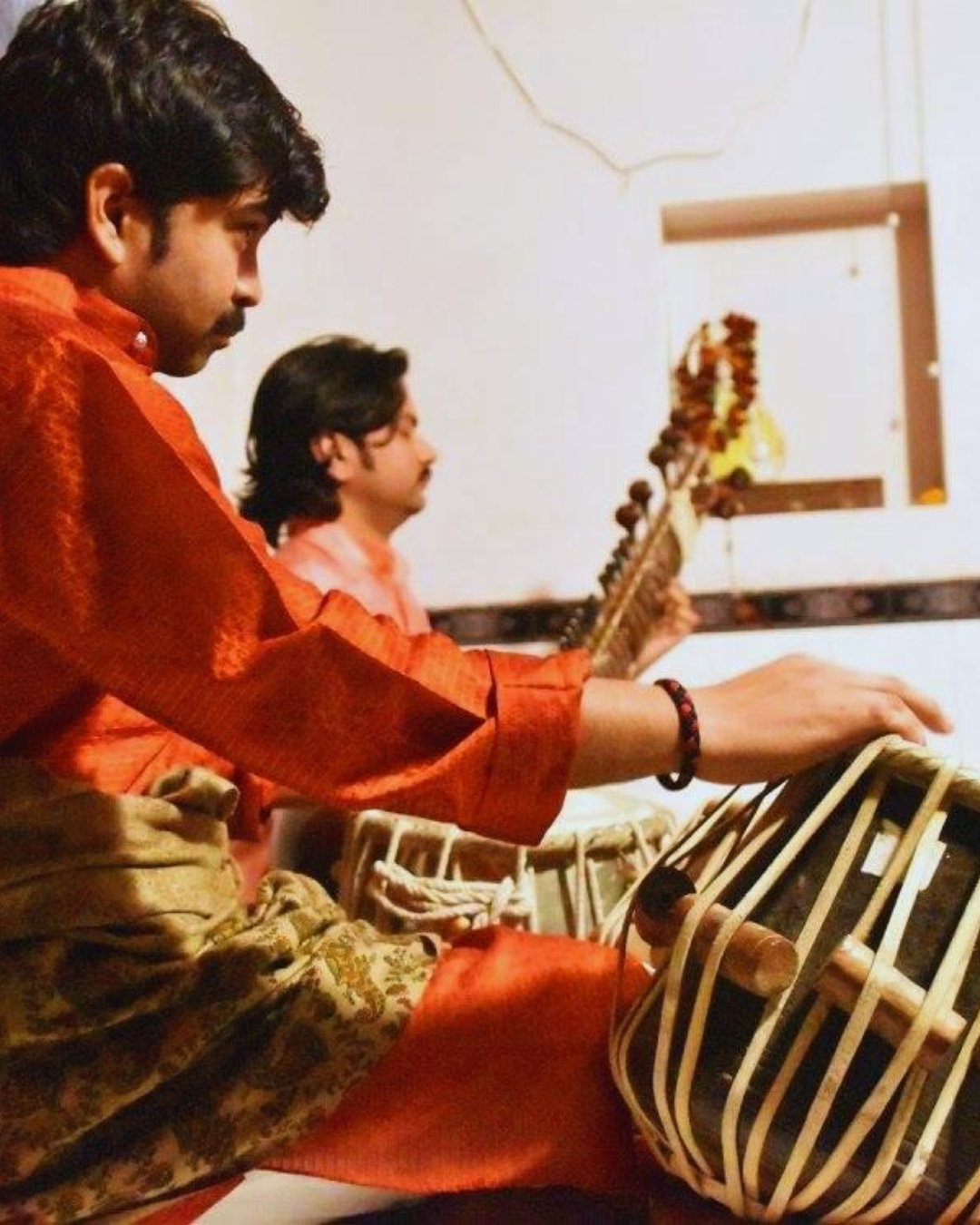
What the Banaras Gharana Actually Is
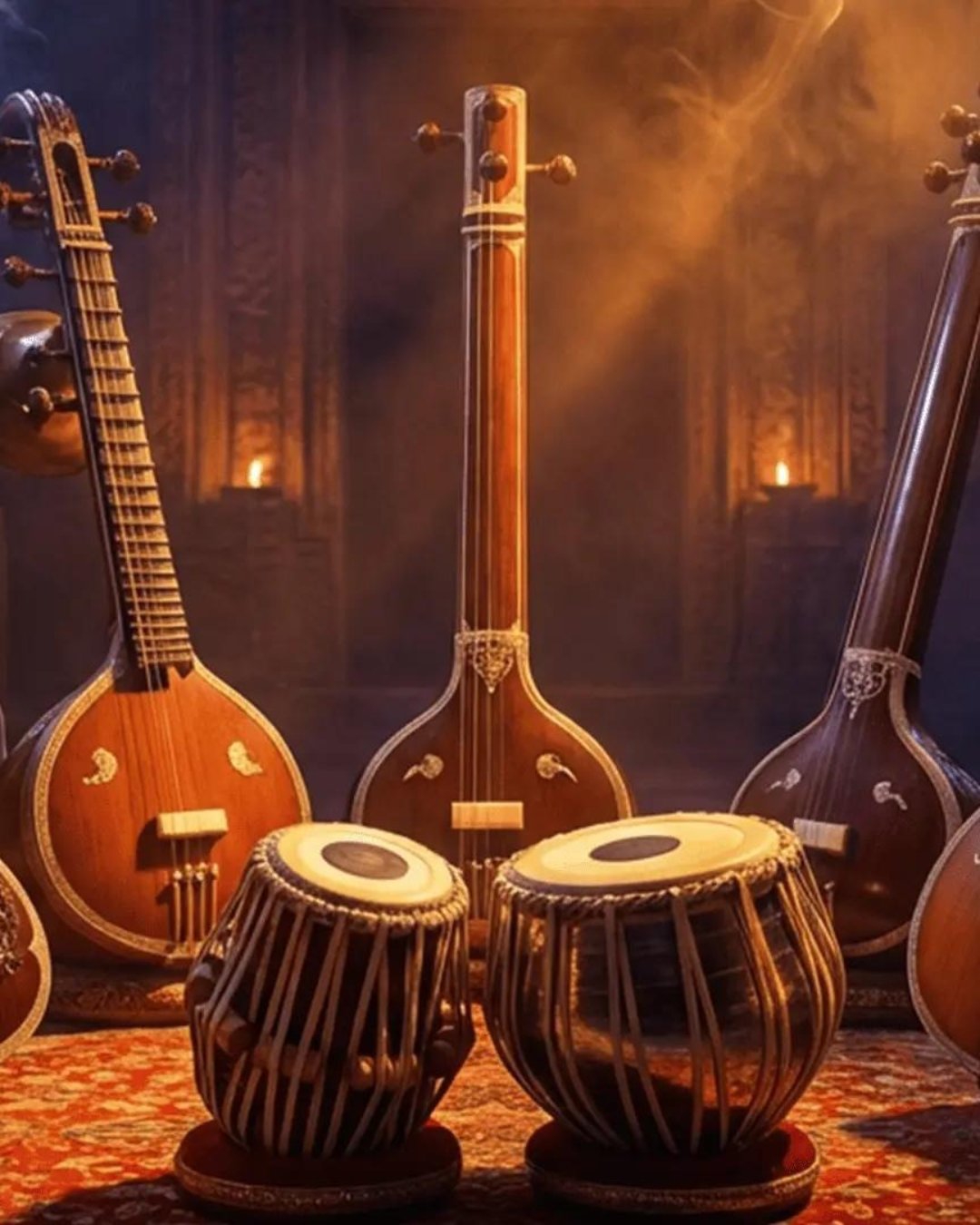
When people tell you Varanasi is a great seat of Indian classical music, the word you'll keep hearing is gharana — and it helps to know what that word actually means before you go looking for a teacher. A gharana is not a school with a building or a syllabus. It's a lineage: a distinct style of playing or singing, developed by a founding master and handed down, teacher to disciple, for generations. To study in a gharana is to join a family tree of sound. The Banaras gharana — Benares is the old name — is one of the most important of these lineages, and the city is where it lives.
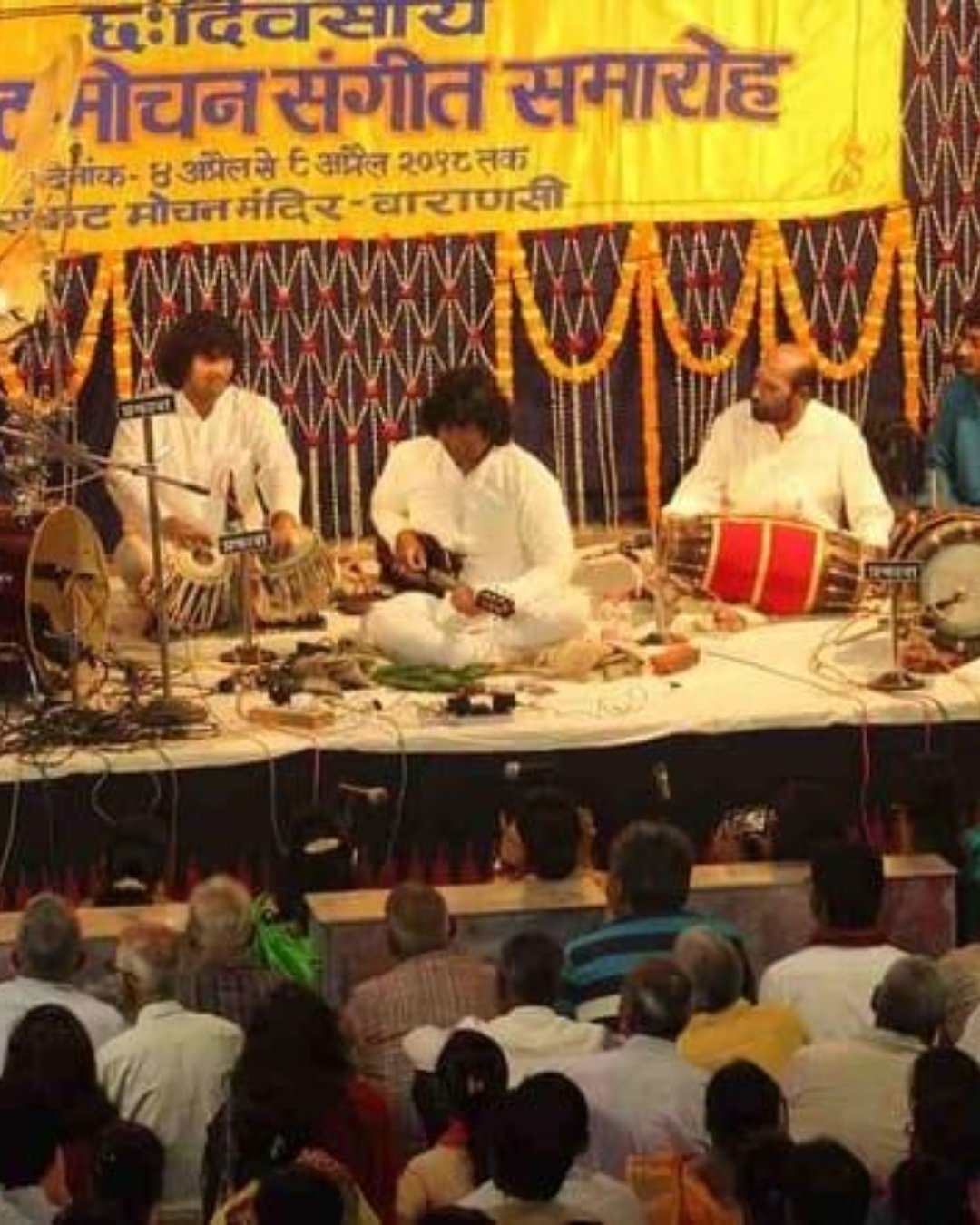
Its most famous branch is tabla. The Banaras tabla gharana traces to Pandit Ram Sahai in the early nineteenth century, who shaped a bold, resonant, open-handed style built for solo performance as much as accompaniment. If you've heard tabla played as a commanding solo voice — long compositions, thunderous bols, a sound that carries — you've heard the Banaras baaj, or something descended from it. Of the handful of major tabla lineages in North India, the Banaras baaj is the one developed most fully for the stage as a solo instrument, and it also drives the footwork of Kathak dance. The tradition runs through legendary names like Pandit Samta Prasad and Pandit Kishan Maharaj, and it's still taught in the lanes today.
But the gharana is more than drums. Varanasi is the home of thumri, the tender, romantic, semi-classical vocal form, and of its seasonal cousins — kajri, chaiti and dadra — songs tied to the monsoon, to spring, to the moods of the year. This is the city of Girija Devi, the "Thumri Queen," and of a vocal tradition prized for feeling over fireworks. Add to that the shehnai, carried to the world by Varanasi's own Ustad Bismillah Khan, and the sitar and sarangi taught across the old city — the sitar maestro Ravi Shankar was himself born in Varanasi — and you begin to see why students have come here for two centuries. The city's temples, festivals and all-night music sittings mean the tradition isn't kept in a museum; you can still hear it being played, most freely around the ghats and at seasonal festivals, which is half the education in itself.
What matters for you, as someone who might actually learn here, is what the gharana implies about how you'll be taught. This is an oral tradition, guru to shishya — you learn by ear and by repetition, sitting beside the teacher, not from a book. Progress is measured in riyaz, patient daily practice, not in certificates. A teacher rooted in a real gharana can tell you exactly whose disciple they are and which line they belong to, and they'll be proud to. That lineage is the thing worth asking about — not a title on a signboard, but the living thread of teachers behind the sound. When you understand that the gharana is a genealogy as much as a style, you understand what you're really being offered: not a course, but a place in a very long conversation.
37
MomentAssi Ghat, Varanasi
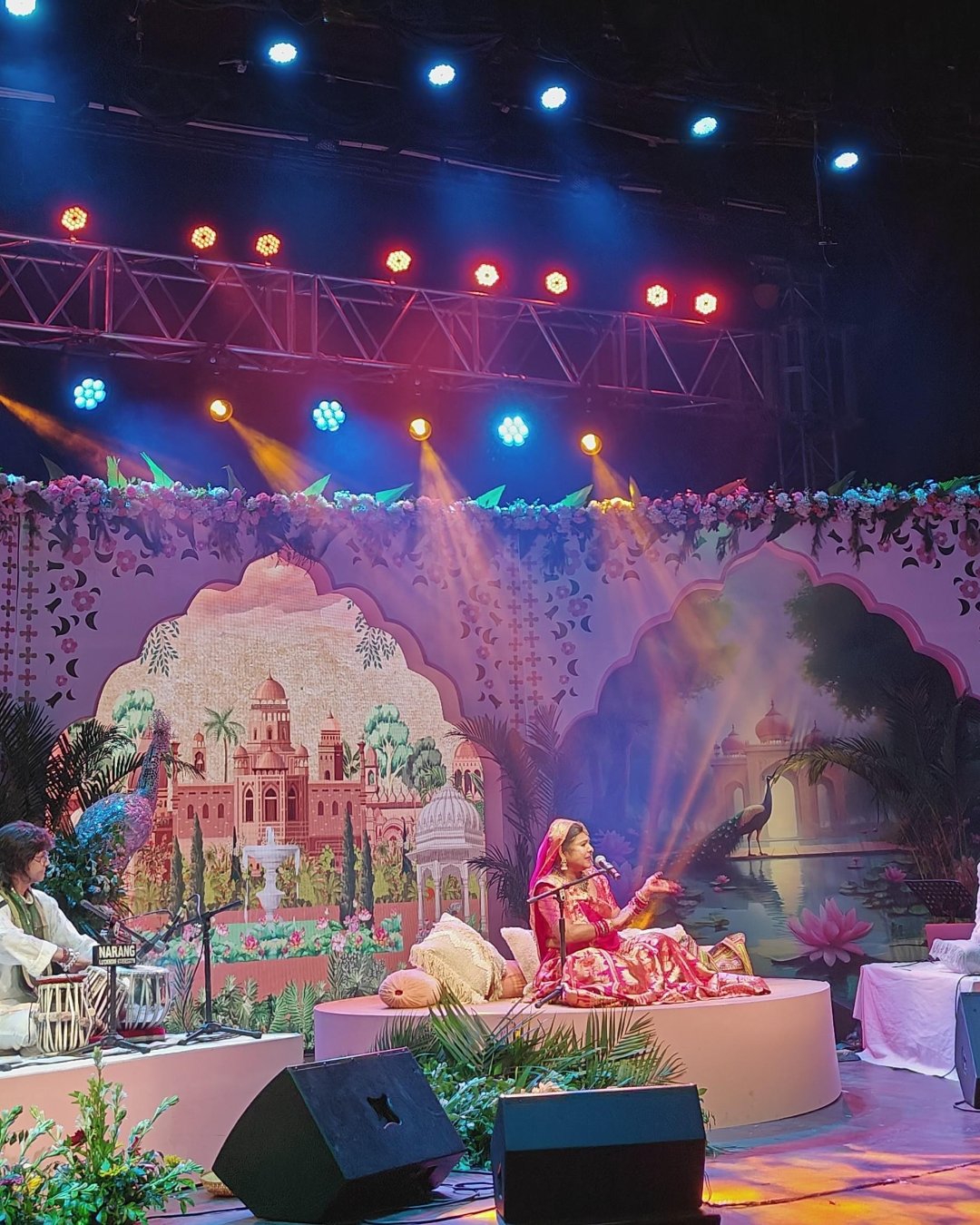
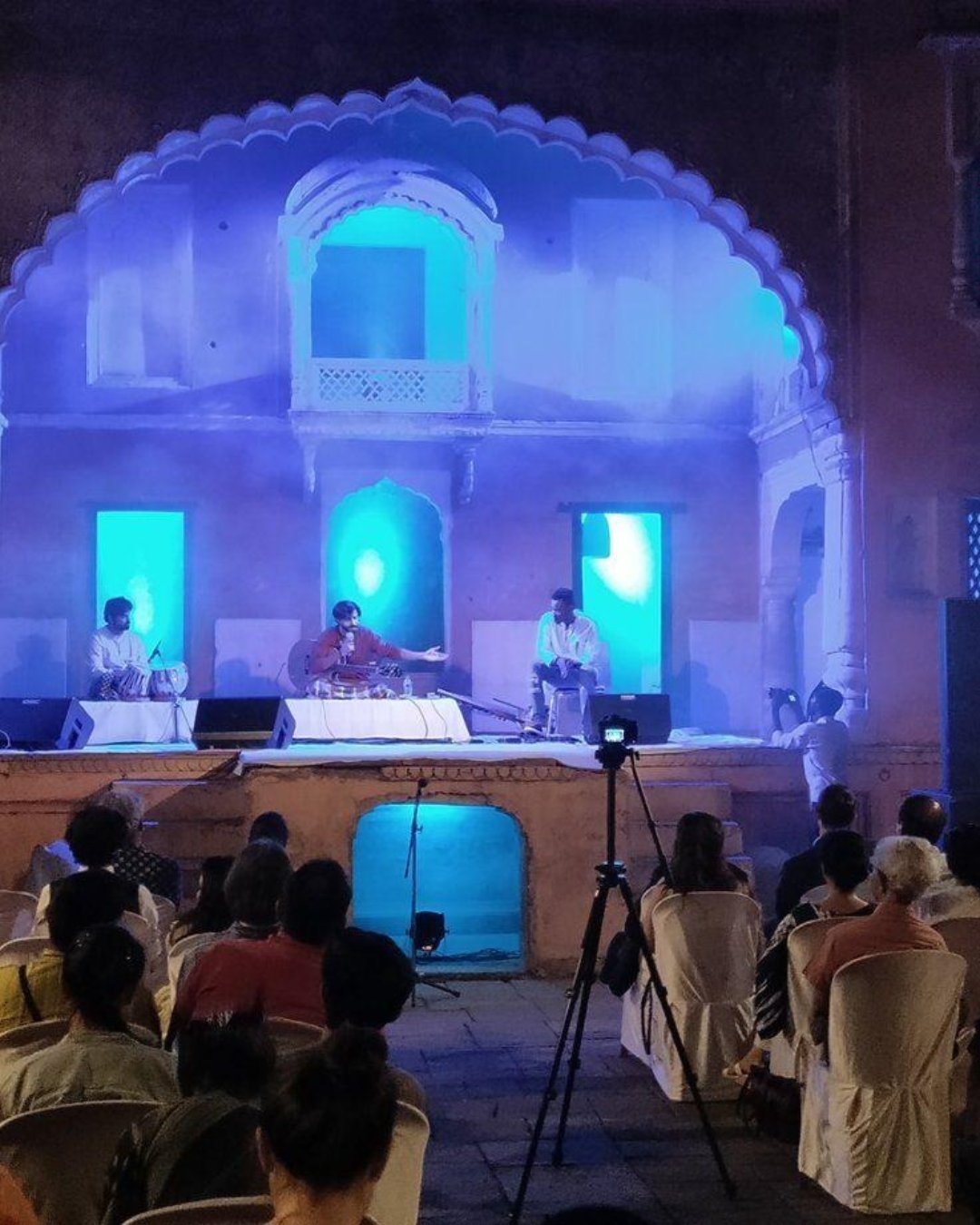
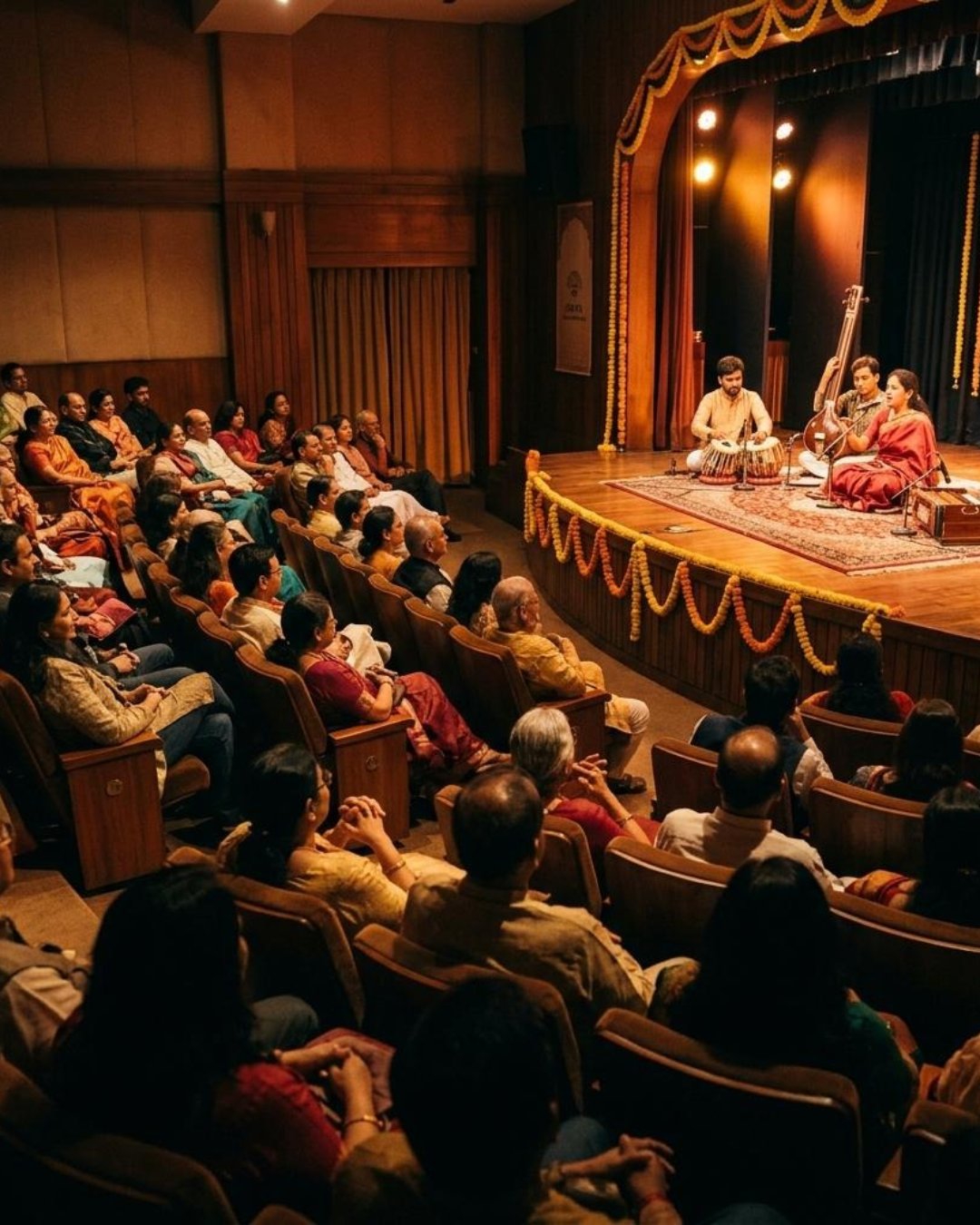
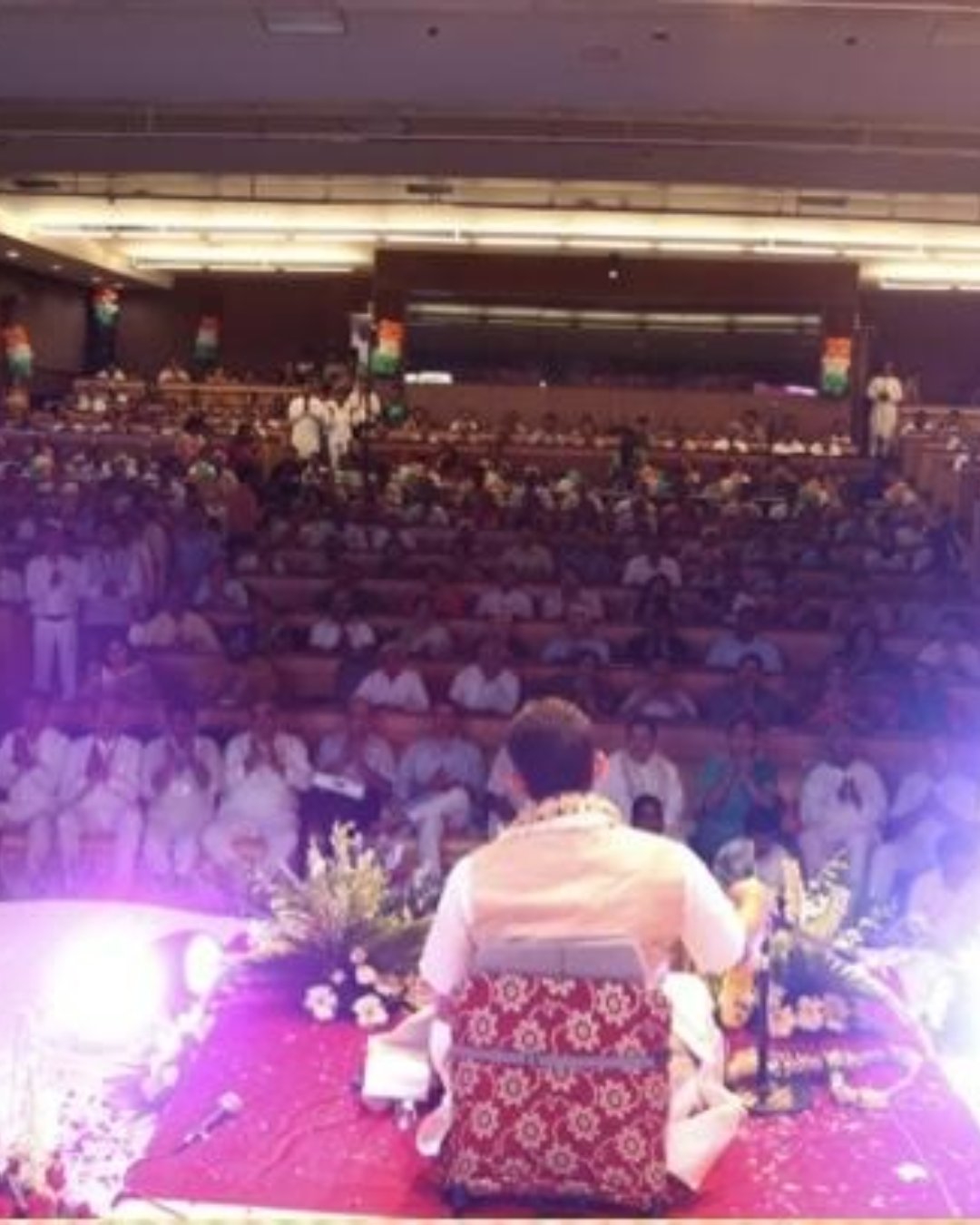
Thumri, Dadra & Kajri
Thumri, dadra and kajri are Varanasi's own voice — semi-classical and seasonal forms the Benares gharana has carried for generations — and enjoying them, or learning them, rewards a little planning. Start with timing, because one of these forms is tied to the calendar. Kajri is a song of the monsoon: its verses of longing and the returning rains belong to Sawan, the wet months of roughly July and August, when you'll hear it at its most alive in courtyards and small gatherings. Thumri and dadra you can catch year-round, but the city's music runs hottest around its festivals — the springtime Sankat Mochan Sangeet Samaroh and the Dhrupad Mela on the ghats among them — so it's worth checking what's on for the dates you're in town. Evenings tend to be when the city sings, so build your listening into the hours after sunset rather than a packed daytime schedule.
Where you hear it matters as much as when. The real thing often happens not in a concert hall but in a baithak or mehfil — an intimate sitting in a music room, a guru's home, or a ghat-side hall, where a singer, a tabla player and a harmonium or sarangi perform for a small, attentive audience. Ask at your guesthouse, at music schools, or at the ghats about upcoming sittings, and go early; the best of it is unadvertised and word-of-mouth.
Behave as the room does. Take your shoes off where others do, silence your phone, and settle in — these performances unfold slowly and reward patience rather than applause between lines. When a phrase moves you, a soft "wah" or "kya baat" is the traditional way to show it. Always ask before recording or photographing; many artists don't mind, but it's their room and their art.
If you want to learn rather than only listen, treat it like any serious study here. Take a trial lesson before committing, ask the teacher plainly about their lineage and gharana, and pay per lesson or in small blocks rather than one large sum upfront. A tanpura or harmonium is usually provided; you bring your ears and your patience, since this music is taught by imitation, phrase by phrase, the way it always has been. It helps to know the lyrics are in Braj Bhasha, Awadhi or Bhojpuri, and that the themes — love, separation, Krishna, the monsoon — carry the feeling even when the words are unfamiliar.
A few plain practicalities smooth the rest. Carry cash, since lessons and small gatherings rarely take cards; dress modestly, especially in a home or on the ghats; and come curious rather than expert. Give it more than a single evening if you can: one baithak is a taste, but a few nights across a week — or a short run of lessons with the same teacher — is what lets the forms separate in your ear, so you start to feel where a thumri ends and a dadra or a kajri begins. You're not chasing a performance to tick off but a living tradition to sit inside for a while — and the more quietly and patiently you approach it, the more of itself Varanasi's music will show you.
23
MomentShri Kashi Vishwanath Temple, Varanasi
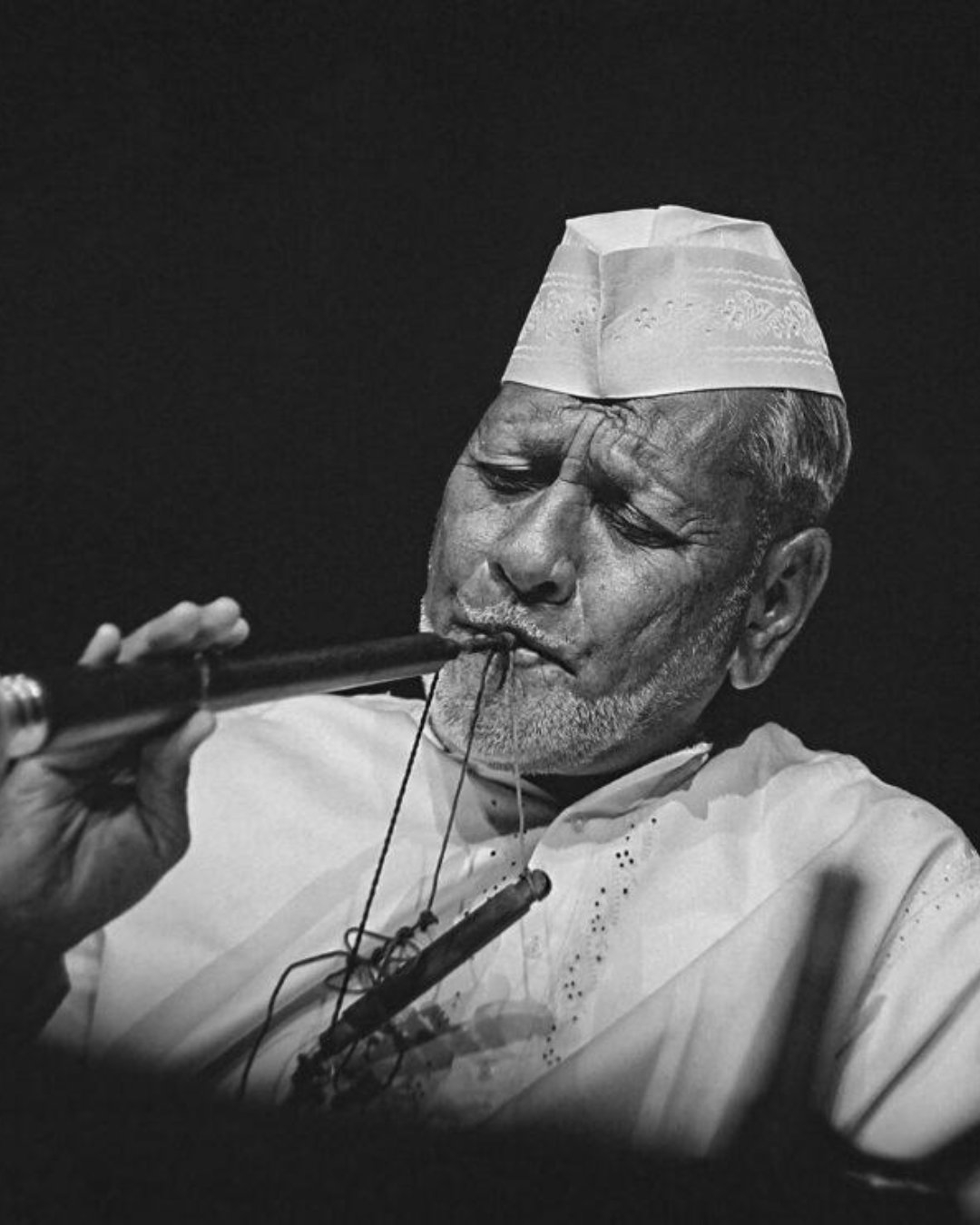
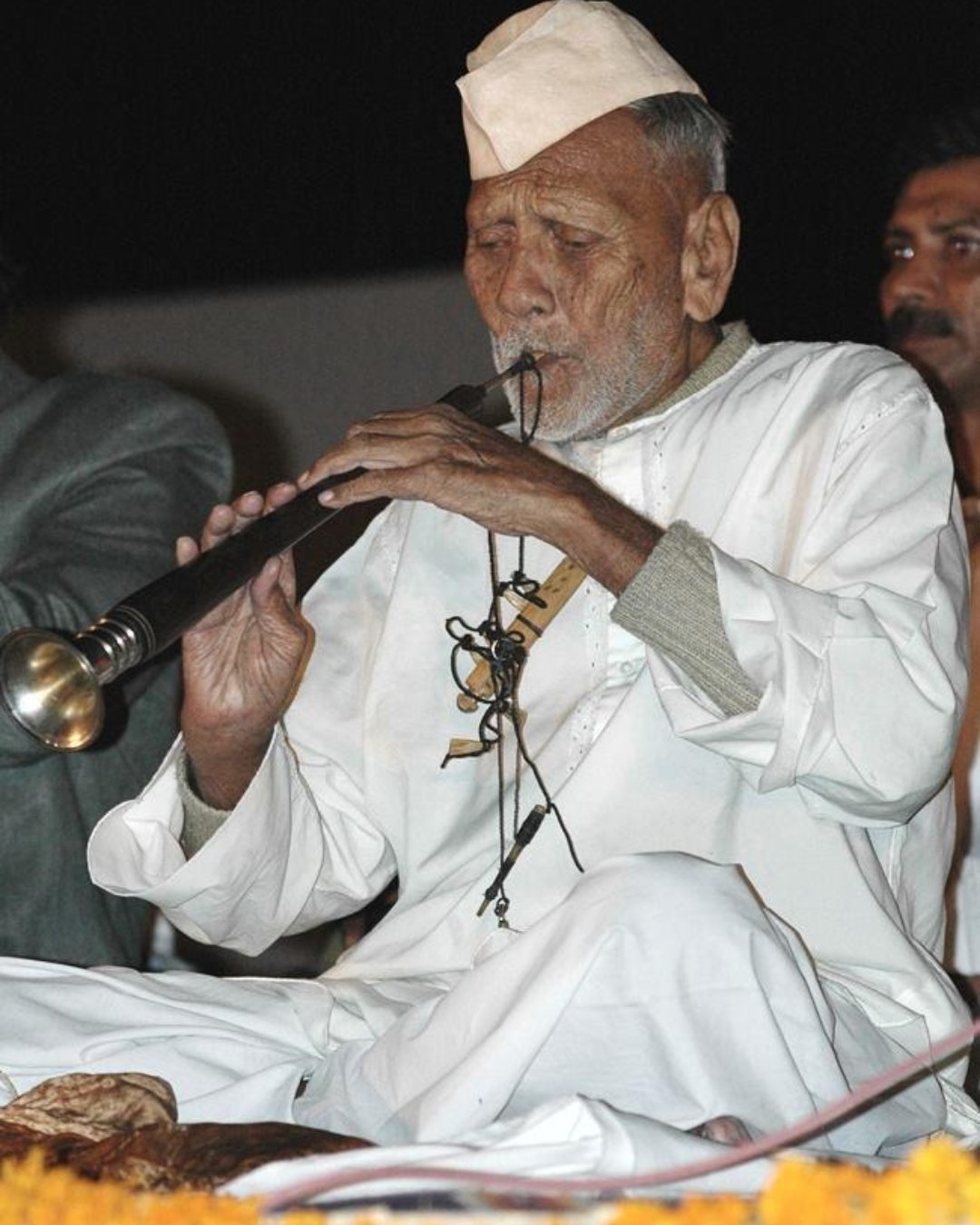
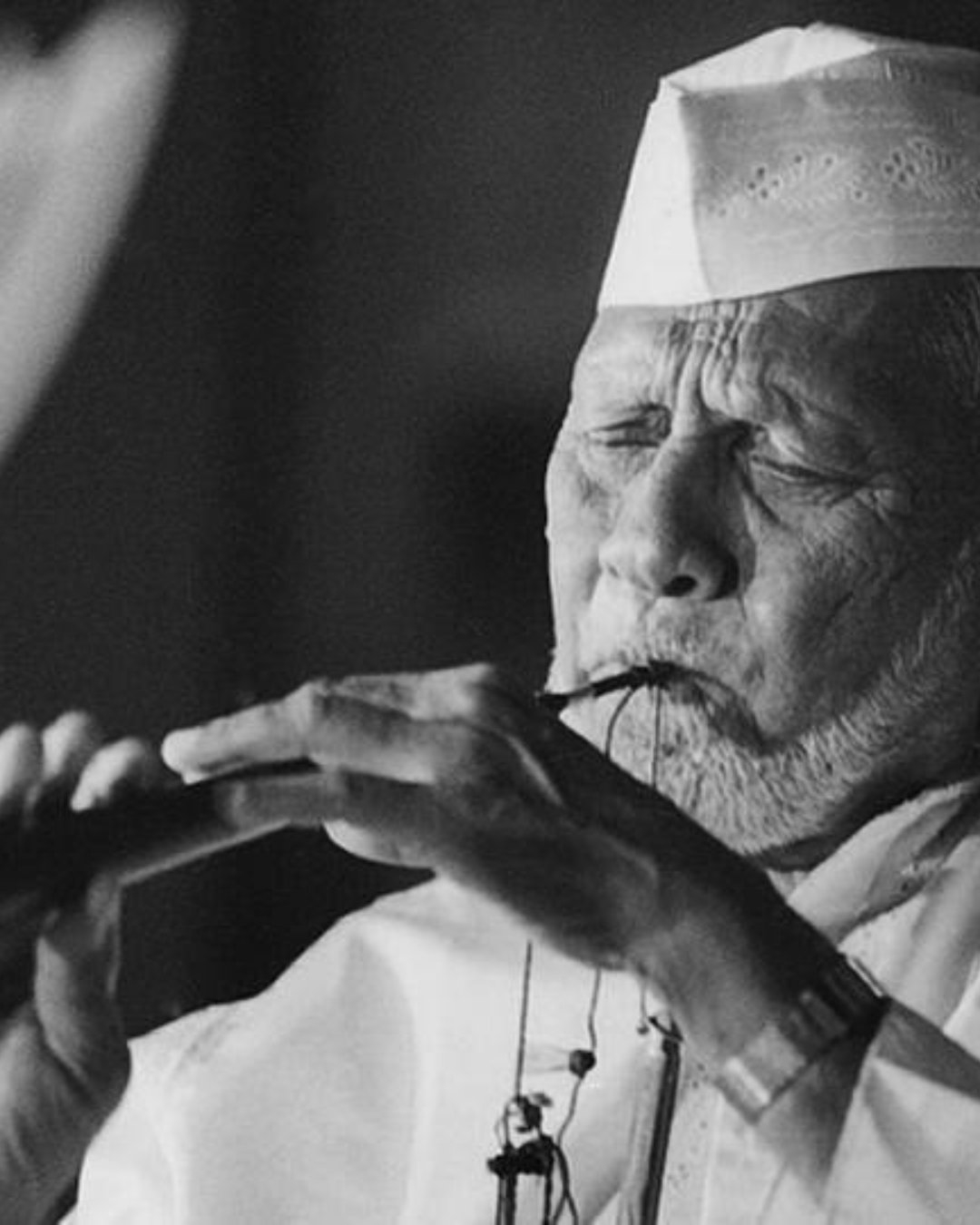
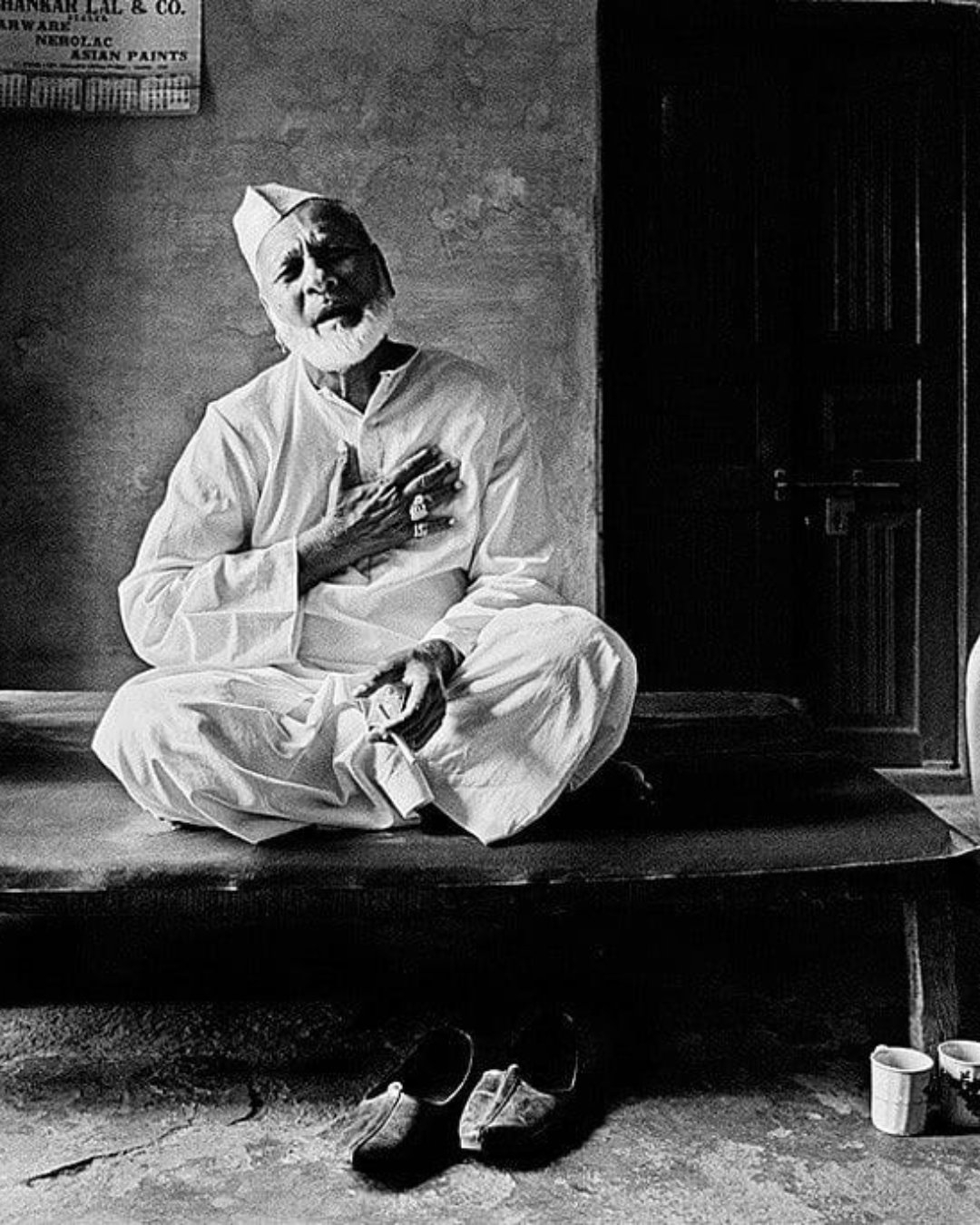
Bismillah Khan and the Shehnai
Ustad Bismillah Khan made the shehnai — a reedy temple-and-wedding pipe most Indians once heard only in the background — into a concert instrument, and he did it from Varanasi, the city he refused to leave even when the world offered him everywhere else. Engaging with that legacy takes a little planning, because it lives in performances, places and people rather than in a single monument you can turn up and tick off.
Start with timing, because live shehnai of that calibre is now rare and largely tied to the festival calendar. If hearing the city's classical tradition matters to you, build your trip around one of its music festivals: the Sankat Mochan Sangeet Samaroh, held over several nights at the Sankat Mochan temple each April, is free, all-night and legendary, and Ganga Mahotsav around November brings concerts to the ghats. Outside those windows, ask early and ask locally — your guesthouse, a music school, or the noticeboards around the temples will know of smaller recitals that never reach a tourist listing. At a concert, match the room: arrive before the main artist, keep your phone down and your flash off, and let the long silences sit rather than filling them.
To stand where the tradition breathes, go to Kabir Chaura, the old musicians' neighbourhood that has produced Varanasi's maestros for generations; it isn't a sight so much as a quarter where the craft still lives behind ordinary doors. Bismillah Khan played his morning shehnai for years at the Balaji temple near the ghats, and you can pay quiet respects at his grave in the Fatman cemetery, where he was buried beneath a neem tree in 2006 — go gently, dress modestly, and treat it as the resting place it is rather than a photo stop. His old neighbourhood around Beniabagh and Sarai Harha is workaday rather than curated, so go for the atmosphere, not a plaque.
If you want to go deeper, a few things reward the effort. Genuine shehnai teaching is niche; the surest routes are through Kabir Chaura or the music faculty at Banaras Hindu University, and a trial lesson tells you more than any claim. Should you want an instrument, buy from an established maker rather than a souvenir stall — a real shehnai is a made object, not a trinket. And carry a little context: Khan was a devout Muslim who gave his life to playing at Hindu temples, and that Ganga-Jamuni spirit is part of what you're hearing, not a footnote to it.
A few practicals tie it together. Move at the city's pace, since recitals run late and start loosely; carry cash and a shawl for long night concerts on cool stone; and if you can't catch a live performance, seek out his recordings — the raga Kajri and Bhairavi pieces especially — which are everywhere and worth a whole evening. Come curious rather than completist — you're following a thread of living culture through the lanes, and the reward is hearing, even once, what this city did to a single wooden pipe.
24
MomentVaranasi
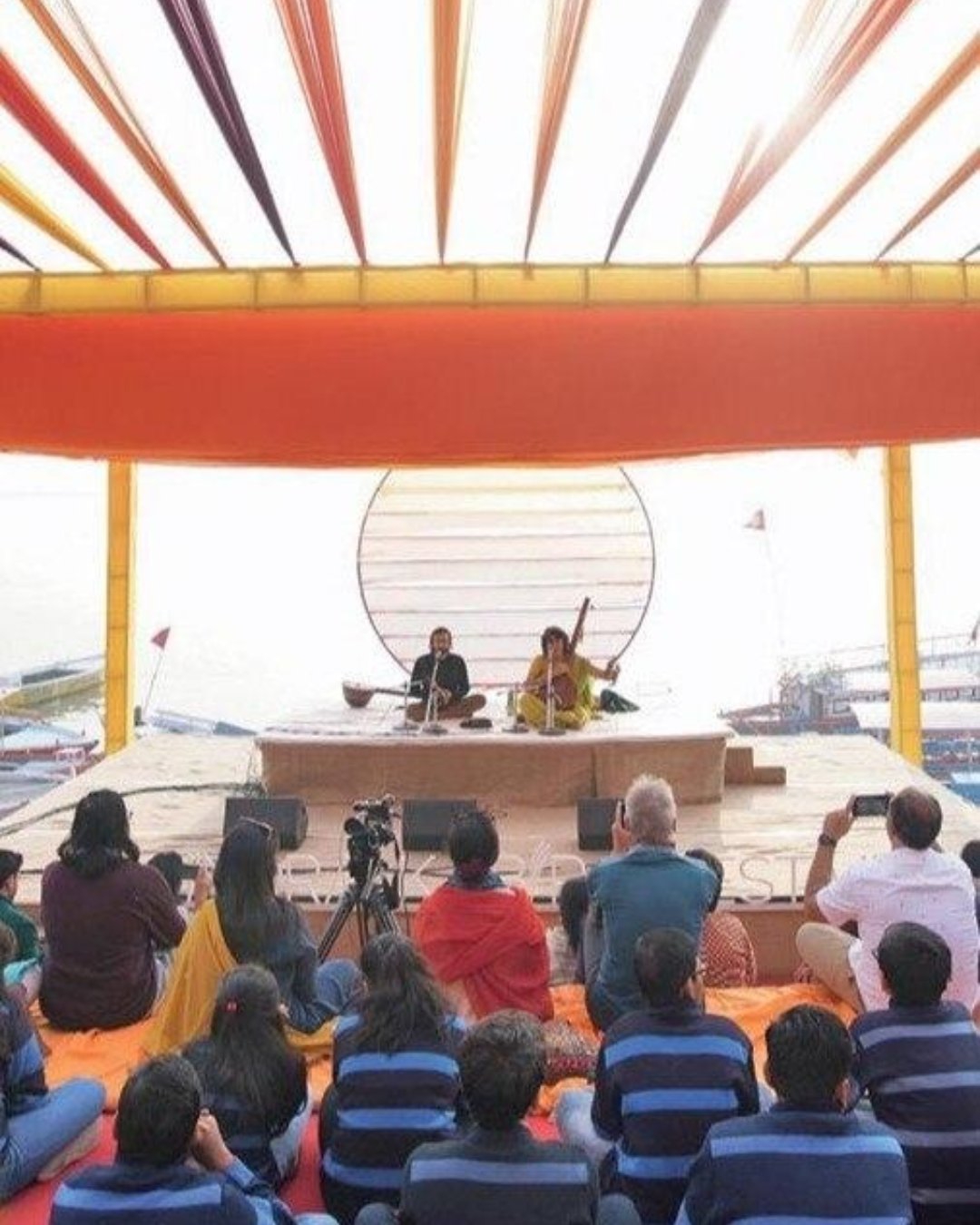
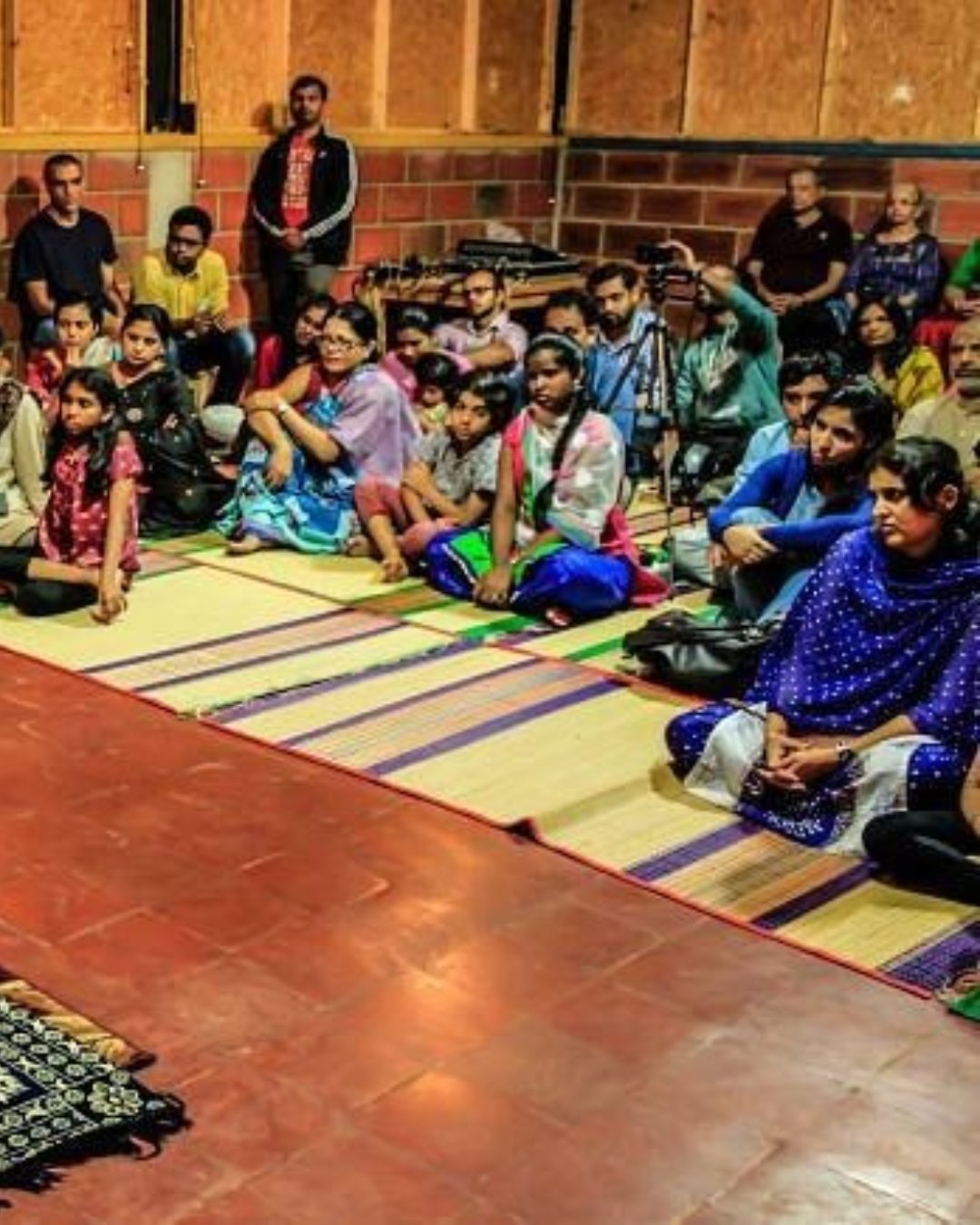
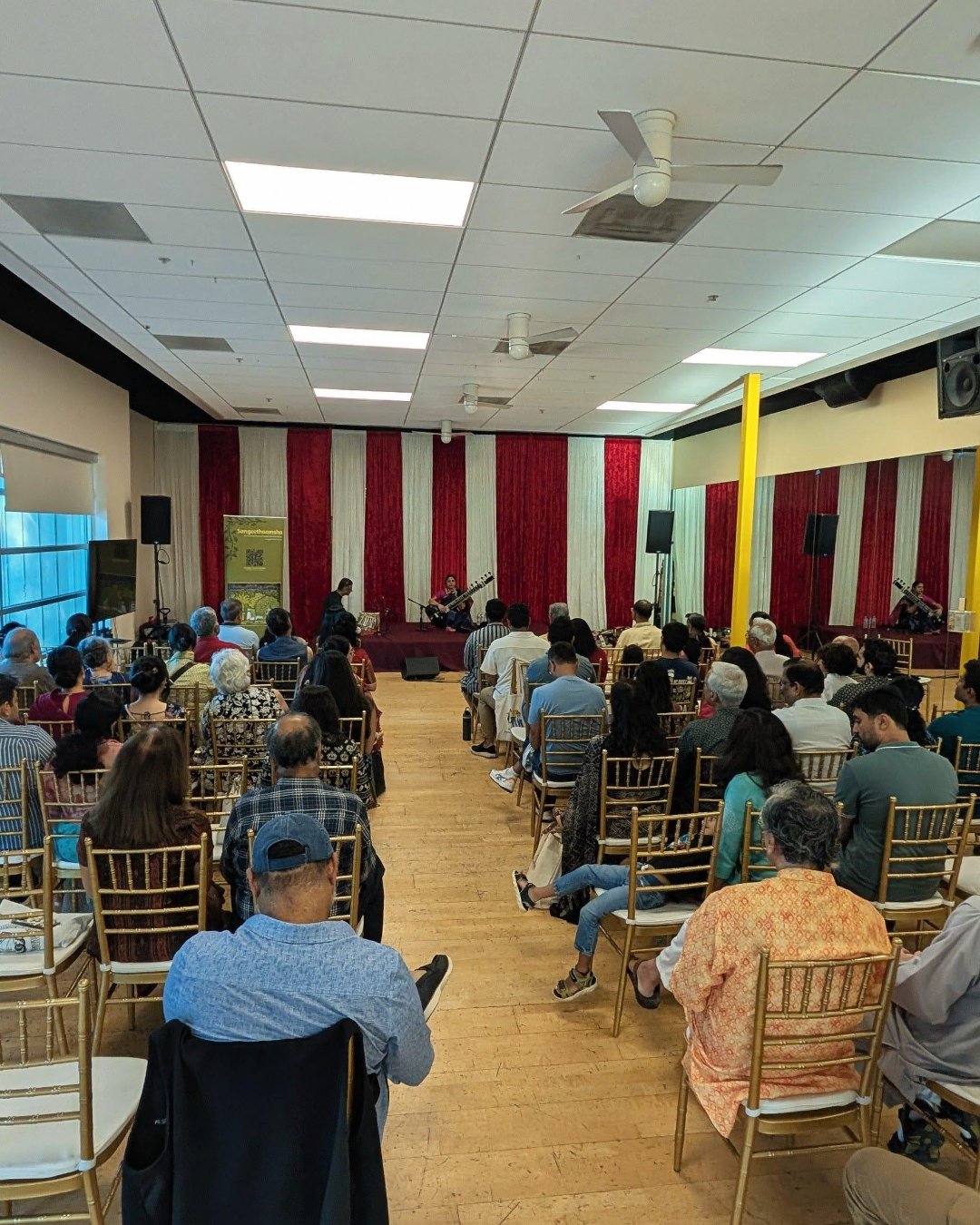
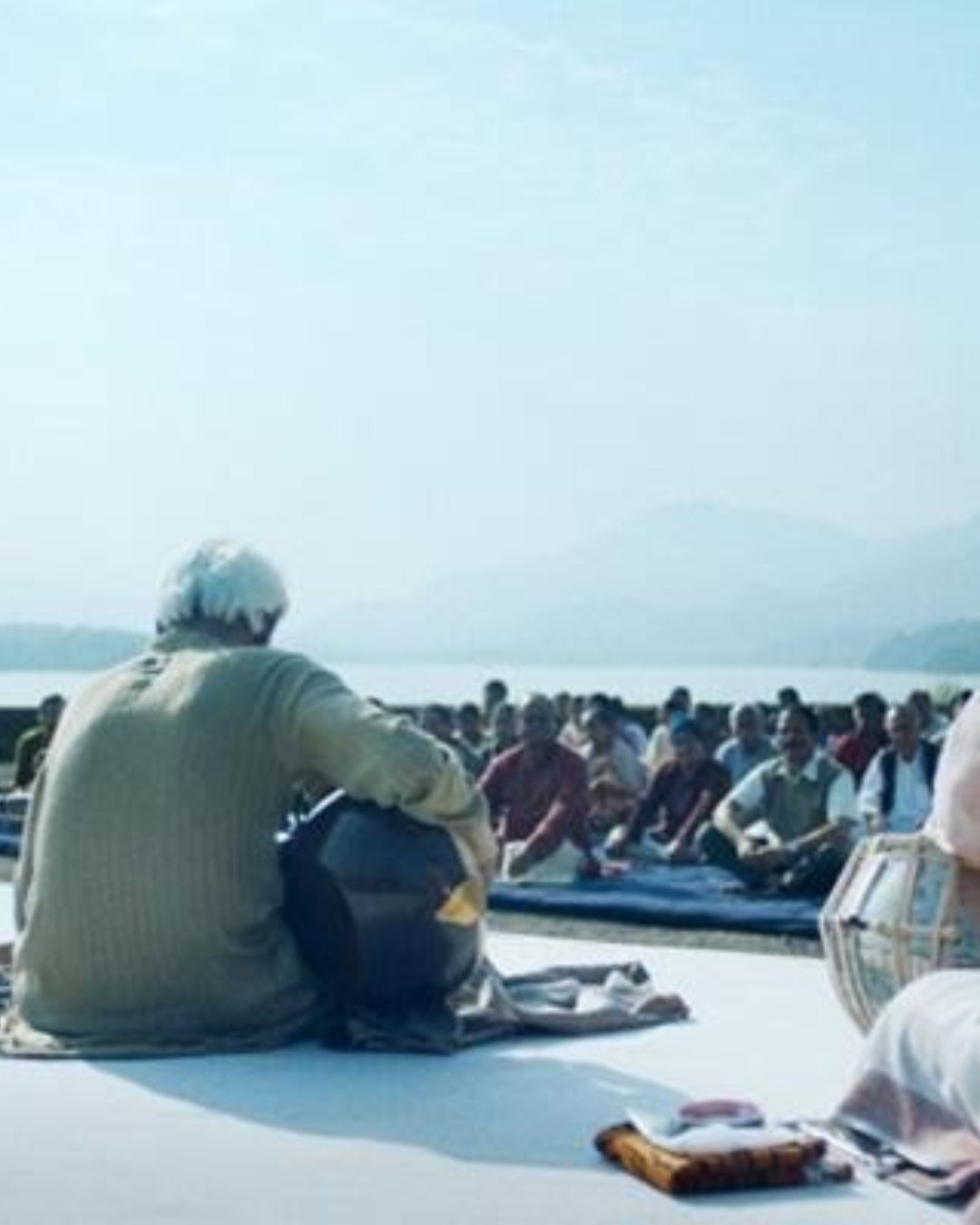
How to Listen Without Being Lost
The first time you sit down to a Hindustani classical performance in Varanasi, it's easy to feel lost — the music seems to have no obvious beginning, no chorus, and no clear end, and everyone around you appears to be following something you can't hear. You don't need theory to enjoy it. You just need to know the shape of what's unfolding, and then let go.
Start with the two ideas the whole tradition rests on. A raga is the melodic mood the musician is working inside — a set of notes with a particular colour and feeling, often tied to a time of day or a season. A tala is the rhythmic cycle the tabla keeps, a fixed number of beats that repeats. You don't have to name either one. You only have to notice that the player is exploring a single mood, and returning, again and again, to a home beat.
Most performances move through an arc, and following that arc is all the "understanding" you need. It usually opens with the alap — slow, free, almost formless, no drum yet, the artist simply unfolding the raga note by note. Stay with it; this is the stillness the rest will grow from. Then a pulse creeps in, the tabla enters, a composition takes shape, and the tempo climbs through call-and-response between soloist and drummer until it gathers into something fast and blazing. You are listening for that journey from quiet to fire, not for a tune to hum.
One thing to feel for is the sam — the emphatic first beat of the rhythmic cycle, the moment the soloist and tabla player land together after wandering apart. Watch the musicians: they'll often exchange a glance or a smile as they hit it, and knowing listeners nod or murmur right there. Once you start sensing that return, the music stops feeling shapeless and starts feeling like a conversation.
The etiquette is warmer and looser than a Western concert hall, which helps. You don't sit in frozen silence waiting for the end to clap. Appreciation is shown in the moment — a soft nod, a quiet "wah," a hand lifted, a sway — and it's welcome while the music plays, not only after. Performances can run long and open-ended, especially at a temple, an ashram, or an all-night festival, so settle in, let the sense of a fixed running time go, and let the raga set the pace instead of your watch.
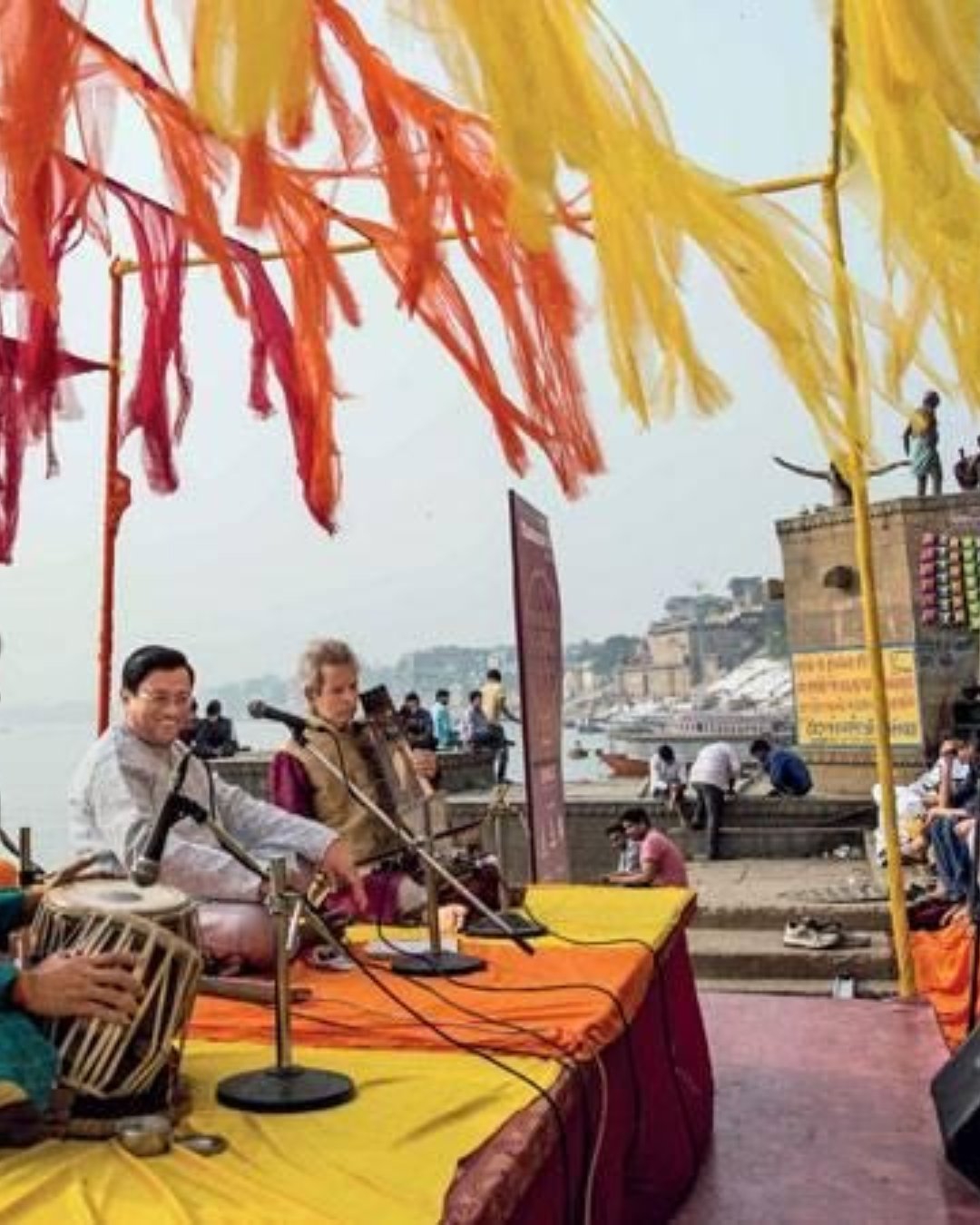
In Varanasi you'll find the music close to the source. The dawn programme at Assi Ghat often carries live song, temples and ashrams host recitals, festivals like the Dhrupad Mela draw serious artists, and many teachers welcome you to sit in on an evening baithak (an intimate sitting) or their own practice — often the most intimate way to hear it. Ask your guesthouse what's on while you're there.
Above all, stop trying to decode it and start tracking its mood and its arc. Notice when the artist lingers over a single phrase, when the tabla answers, and when the whole room leans in at once. Listen that way and you won't be lost — you'll simply be carried.
25
MomentAssi Ghat, Varanasi
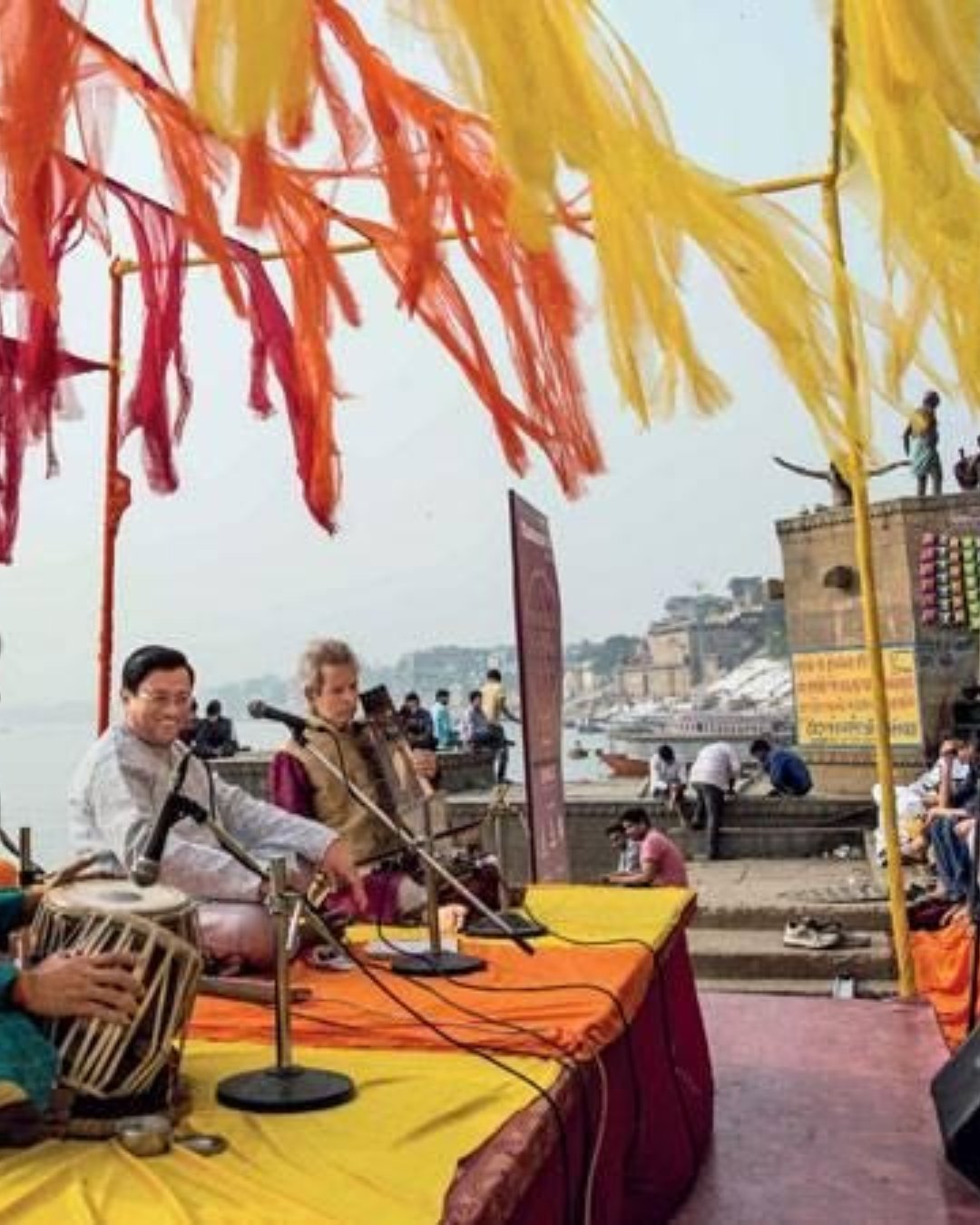

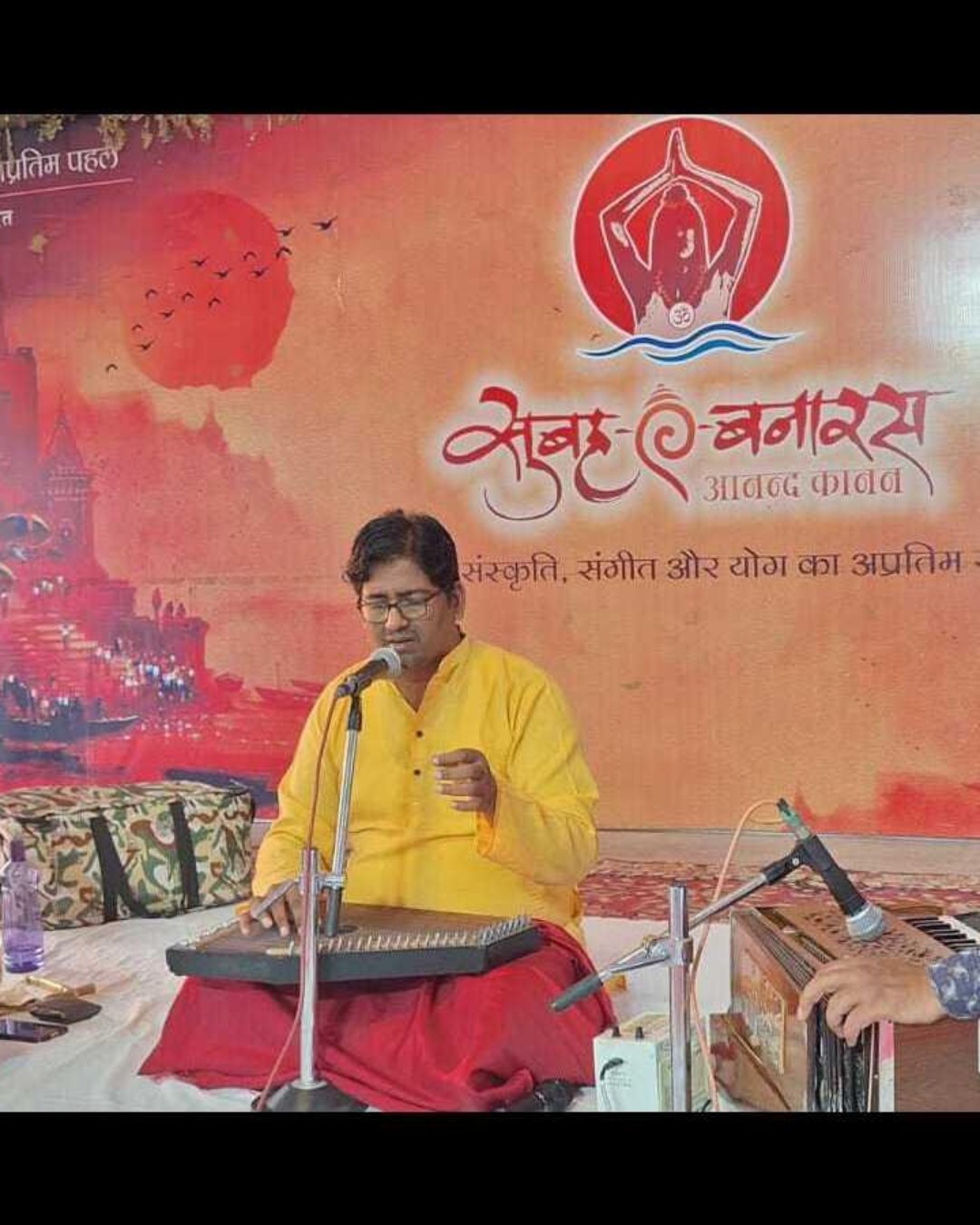
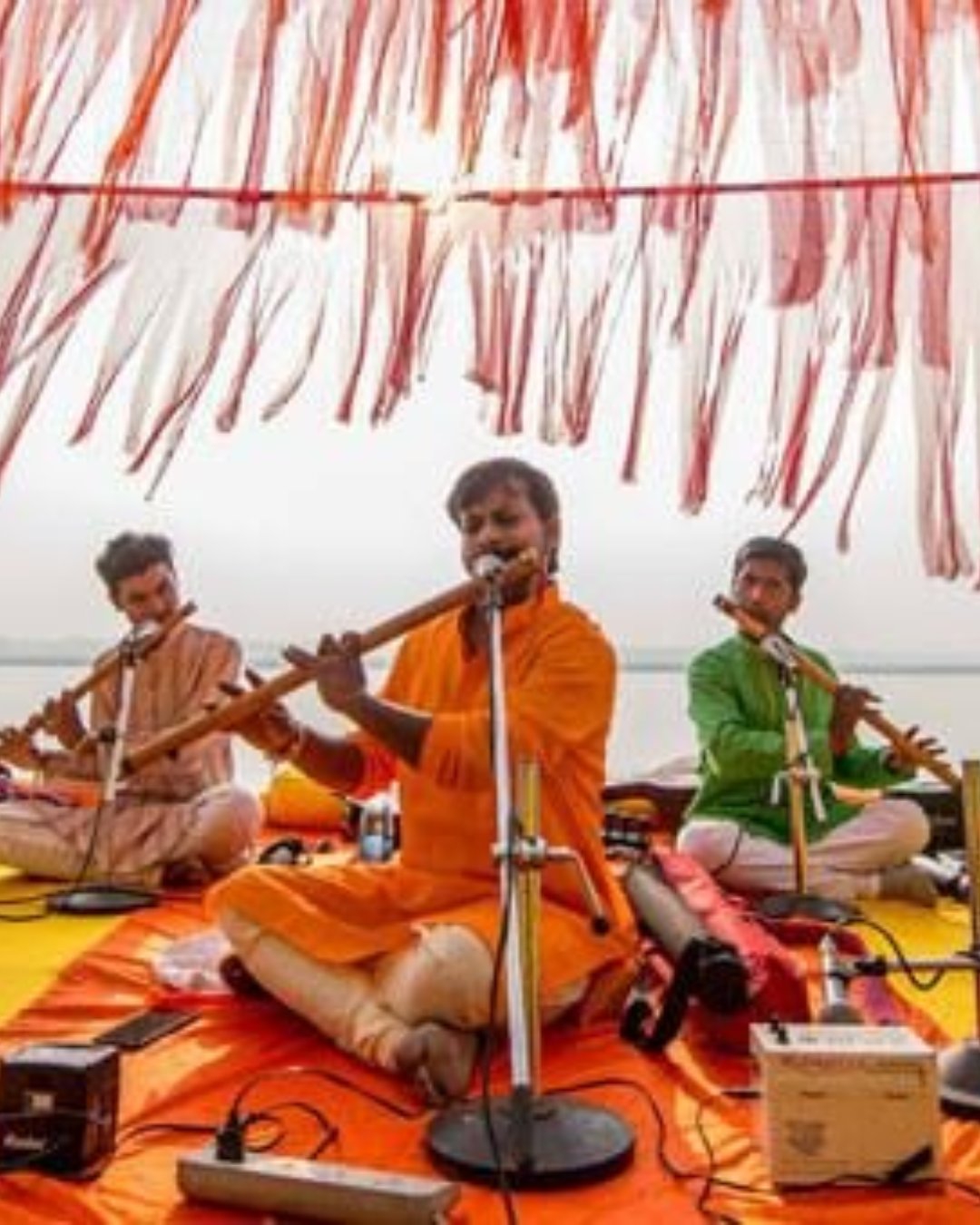
Where to Hear Music on an Ordinary Night
You don't have to wait for a festival to hear Varanasi play. This is the home of the Benares gharana, and its music lives in the everyday — in temples and ashrams, on the ghats, in small rooftop rooms and cafés where a tabla and a sitar are tuned most evenings of the week. The trick isn't finding a concert hall; it's knowing that the real thing usually happens somewhere small, informal, and easy to walk straight past.
Start at the river. Assi Ghat, at the southern end, is the most reliable place to catch music on an ordinary night: the ghat runs a regular evening programme of classical and devotional performance, free and open to anyone, and the same stretch wakes to music at dawn if you'd rather begin your day with it than end it. Sit on the steps after the evening Ganga Aarti, and the river does the rest; the cooler months from October to March are the liveliest, but something is usually playing year-round. Along the old-city ghats you'll also stumble on impromptu playing — a group of students, a lone flute — which is half the pleasure of simply wandering after dusk. A shared boat at sunset, with a musician aboard, is another way the city hands you a private concert for the price of the ride.
Then look inward, to the temples and ashrams. Devotional singing and instrumental offerings are woven into daily worship, and the Sankat Mochan Hanuman temple in particular has music in its bones, with informal sittings on ordinary evenings quite apart from its famous annual festival. Many ashrams and music schools hold small baithaks — intimate, floor-seated recitals — where teachers and advanced students perform for whoever turns up. These are often the finest listening in the city, and the least advertised.
The old-city cafés and guesthouses are your third seam. Around Assi and the lanes behind the main ghats, a number of rooftop cafés and family-run guesthouses host weekly or nightly sessions of tabla, sitar and Hindustani vocal — sometimes ticketed for a small sum, often just a suggested donation. Because these come and go, the way to find tonight's is old-fashioned: ask your guesthouse, read the noticeboards, and follow word of mouth from other travellers and from the teachers themselves, who will happily point you to where their peers are playing.
A little etiquette carries you a long way. Arrive early, since seating is on the floor and space is limited; keep your phone down and your voice lower; and give a small donation even where none is demanded, because these musicians are keeping a living tradition alive rather than running a show. Come with time rather than a schedule — a good baithak unfolds slowly, one raga stretching well past the hour you planned — and you'll understand why people say the city's music is best met not in a grand programme, but on an ordinary night, in a small room, with the river somewhere close by.
19
MomentBangali Tola, Varanasi
Taking a First Lesson
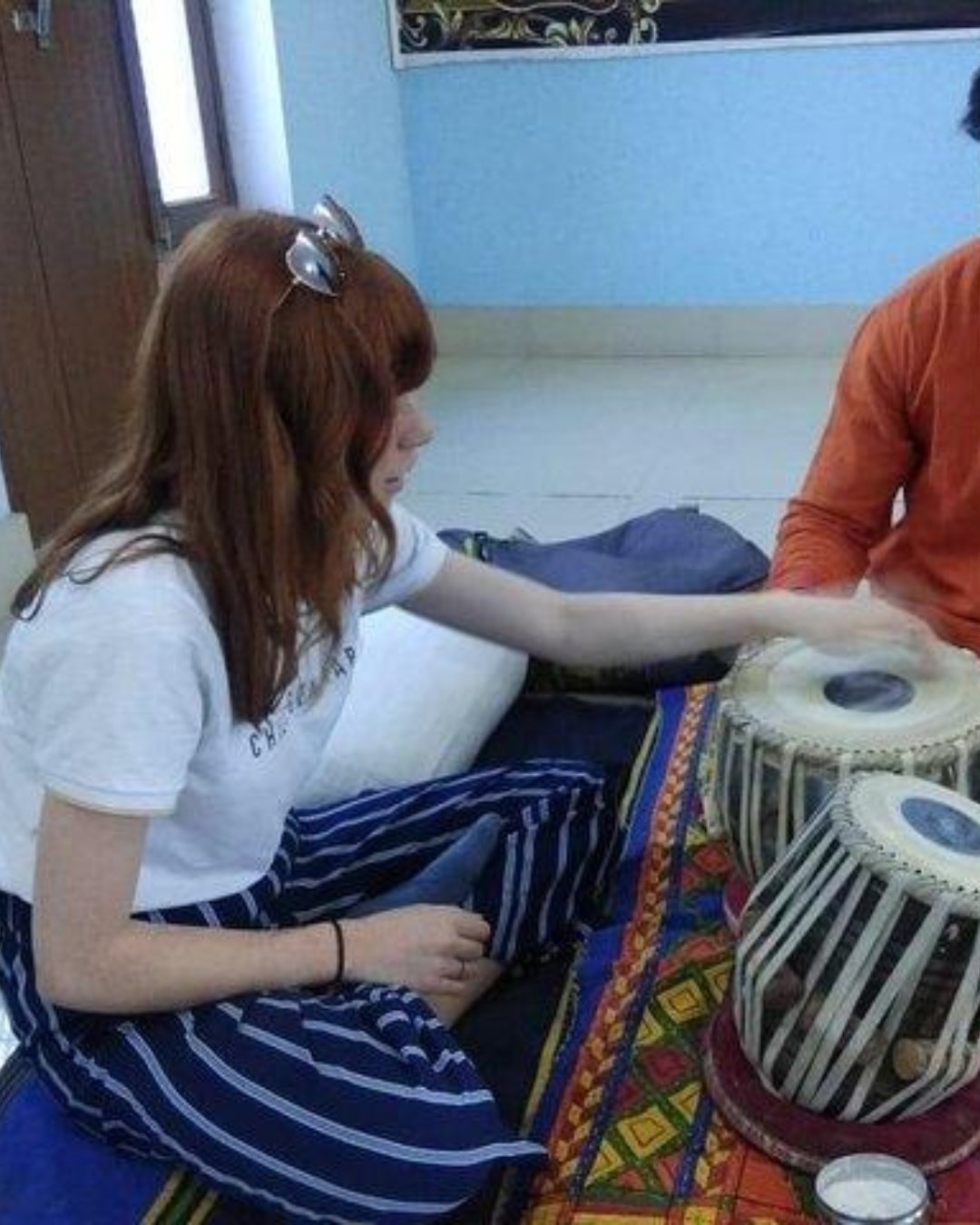
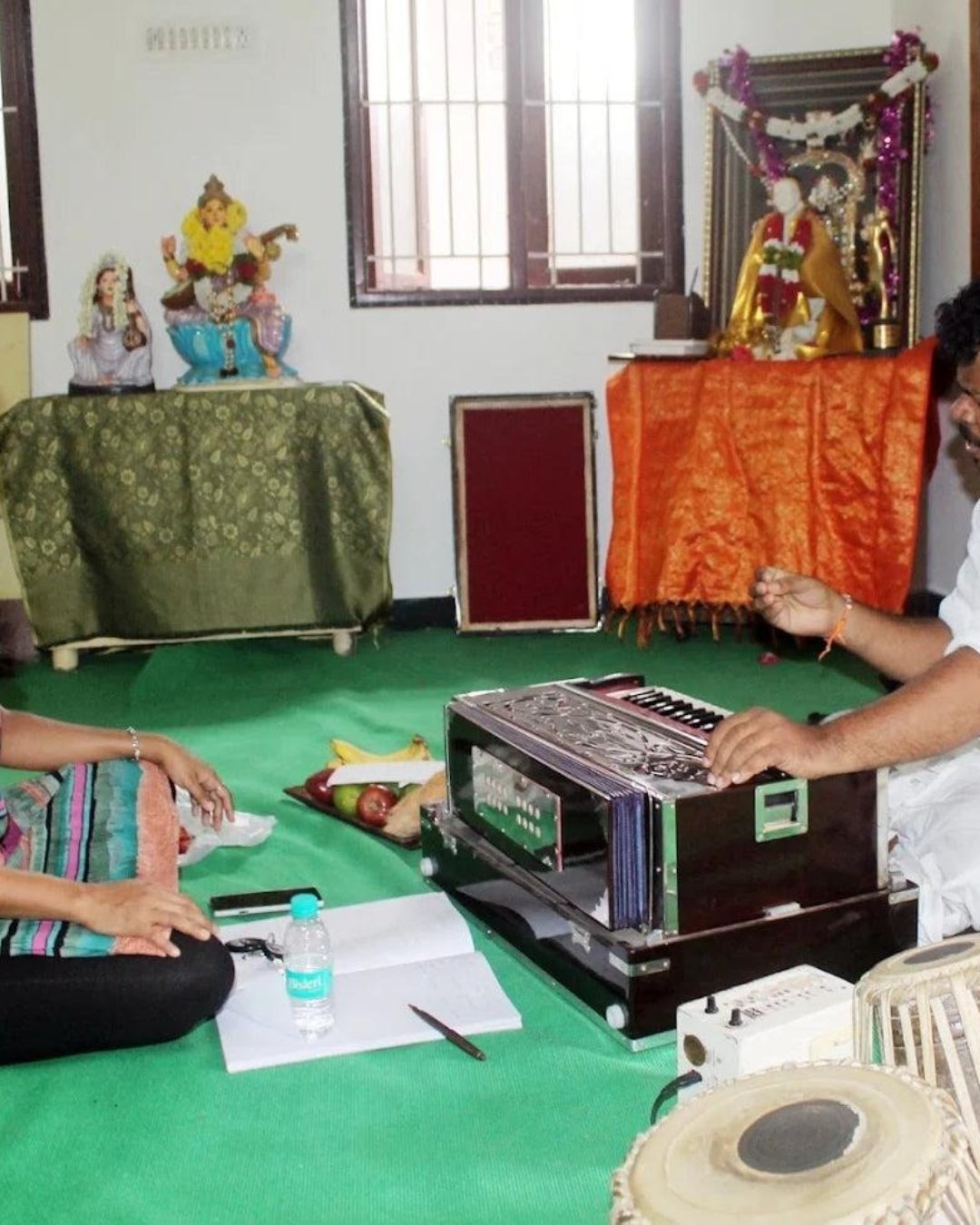
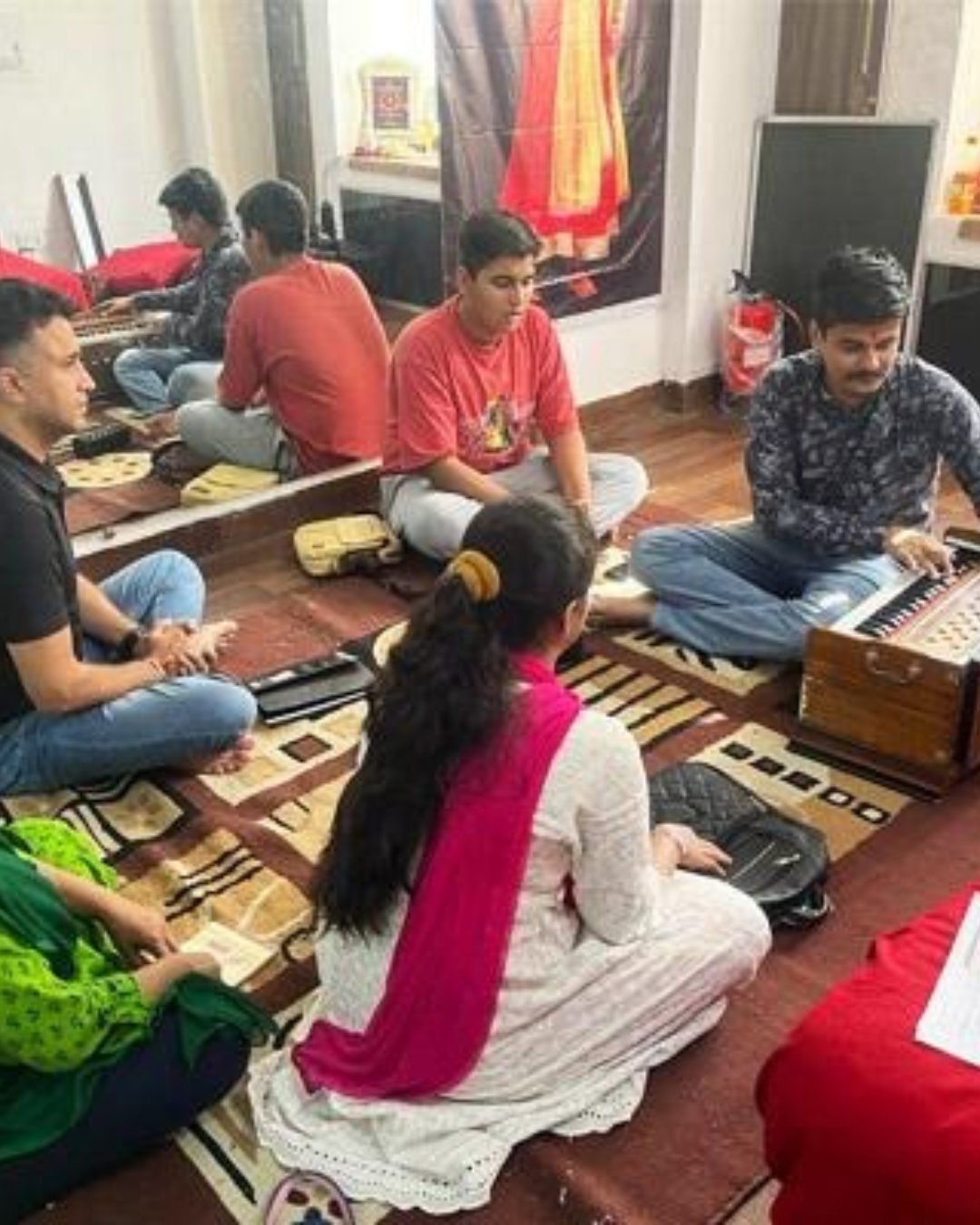
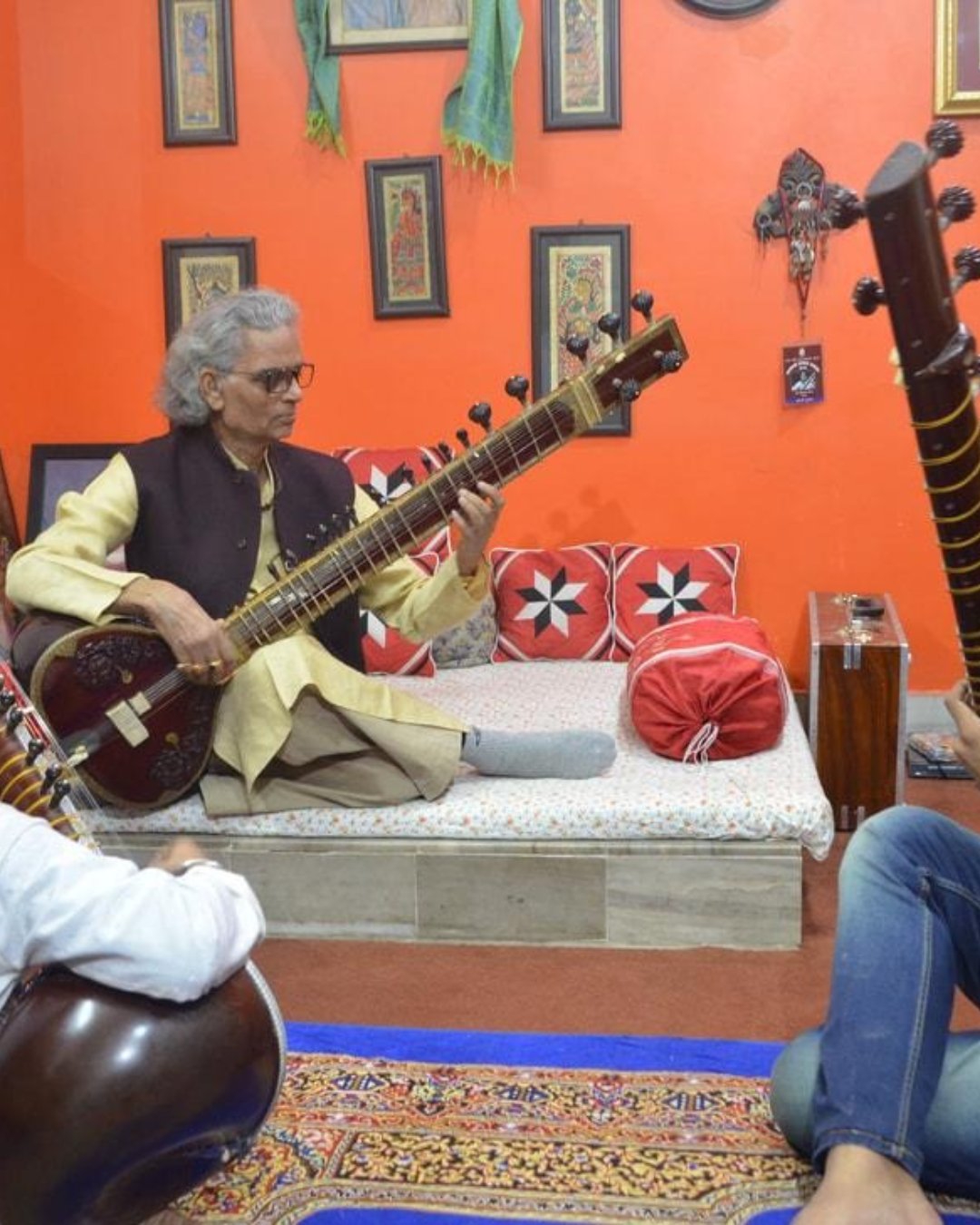
The first lesson is where you find out whether a teacher is right for you, so treat it as a trial rather than a commitment. Arrange a single session first — any genuine teacher will happily give you one — and go in planning to learn something small, not to sign up for a month on the spot. Book it directly where you can, through the school or your guesthouse, and confirm the time, the length and the price before you arrive so there are no surprises at the end. You almost never need your own instrument to begin: the school provides the tabla or sitar, and buying your own only comes up if you decide to keep going. Carry small notes to pay for the single lesson in cash, since most teachers don't take cards, and if your English or the teacher's is a worry, check that you'll actually understand each other first — teaching by ear depends on it.
Turn up a little early in loose, comfortable clothes you can sit cross-legged on the floor in. The first thing to do when you meet the teacher is to be honest about where you are, and here the good news is that no background is needed at all: say plainly that you're a beginner, and tell them whether it's tabla or sitar you're drawn to and what you're hoping for — a taste of the rhythm, a single raga, or the start of something longer. A good teacher takes that in and shapes the session around you, and will put the instrument in your hands on the very first day rather than lecturing you about it.
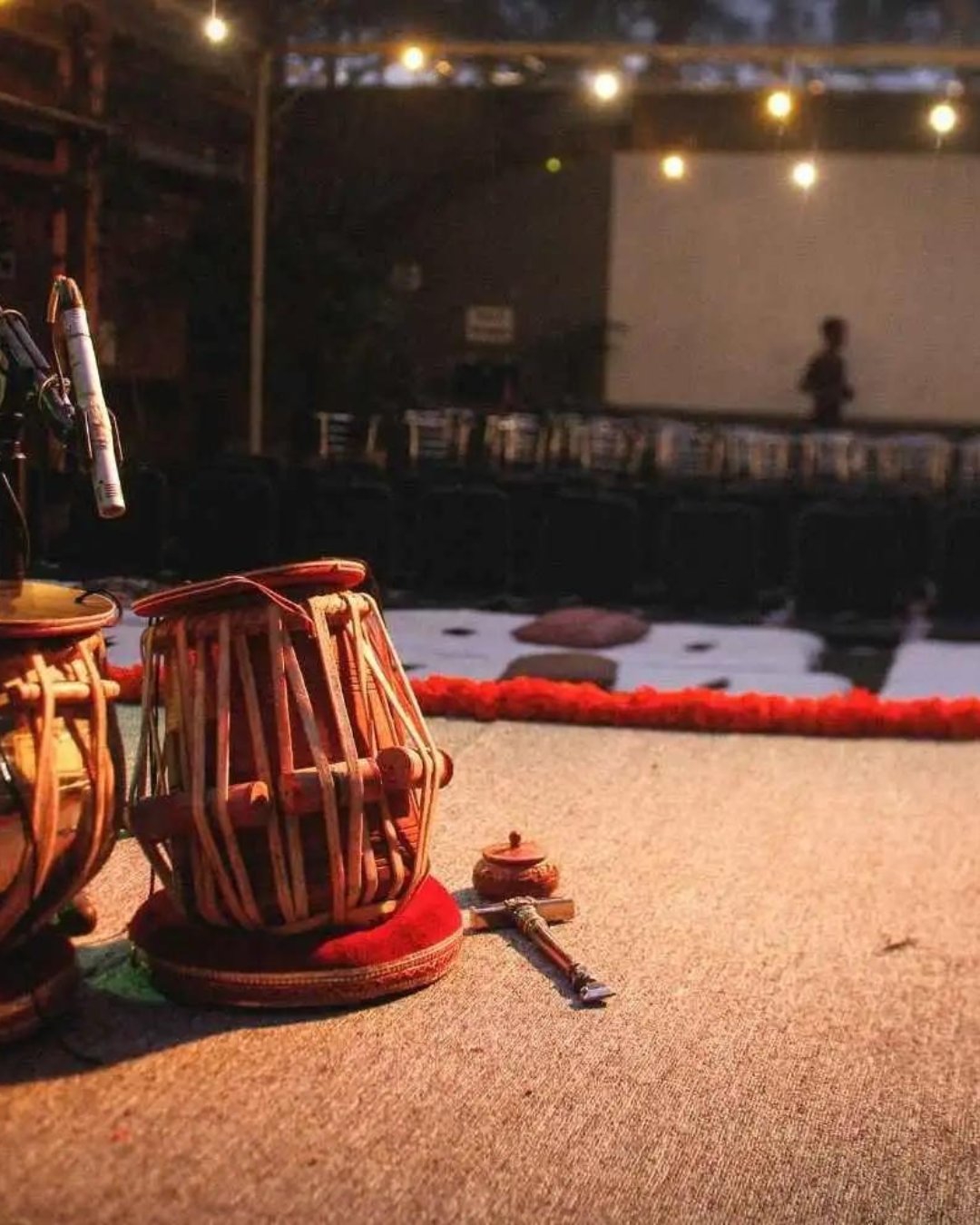
Expect a first lesson to feel slow, and let it. Hindustani music is an oral tradition, passed from teacher to student by ear and imitation for centuries, so there's no sheet music to decipher — the teacher plays a phrase, you copy it, they correct your hand, you copy it again. On tabla you'll meet the bols, the spoken drum syllables — dha, dhin, na, tin — that you learn to recite out loud before your hands can play them, so the rhythm lives in your voice first. On sitar it's the same spirit: the strokes of the right hand and the notes of a raga, sung as sargam and mirrored back. You'll learn as much by watching and copying as by being talked through it. If a teacher rushes you toward something "advanced" in a single sitting, or performs at you instead of correcting you, take note.
Use the lesson to judge the teaching, not just the music. Did they watch you, adjust your hand patiently, and explain the why as well as the how? Could you follow them? One question worth asking, gently, is about lineage — whom they studied under, which gharana or tradition they belong to, how long they've taught. Varanasi is the seat of the Benares gharana, and a real teacher is proud to share that history; in a city where anyone can hang a sign reading "guru," it's simply how you find teaching worth your time. Expect, too, to be sent off with something small to practise — this daily repetition has a name, riyaz, and it's the real engine of the music. If the lesson went well, arrange a few more with the same teacher so the thread carries from one day to the next; if it didn't, you've lost an hour and a small fee rather than a booked-and-paid fortnight — which is exactly why you took a single lesson first.
A few courtesies smooth the whole thing. Silence your phone and put it away, slip your shoes off where everyone else does, and keep your voice low around others who are practising. Handle the instrument you're lent with care — never step over a tabla or a sitar, and set it down gently. Come curious rather than accomplished, and that first lesson becomes the thread that pulls the rest of your time in Varanasi into something you actually carry home.
26
MomentAssi Ghat, Varanasi
Practicalities & Etiquette
Coming to Varanasi for its music asks a little more of you than sightseeing does — late nights instead of early ones, long hours sitting on stone floors, and a listening culture with its own quiet rules. Get a few practical things right and learn how an audience is meant to behave, and the music opens up to you rather than passing you by.
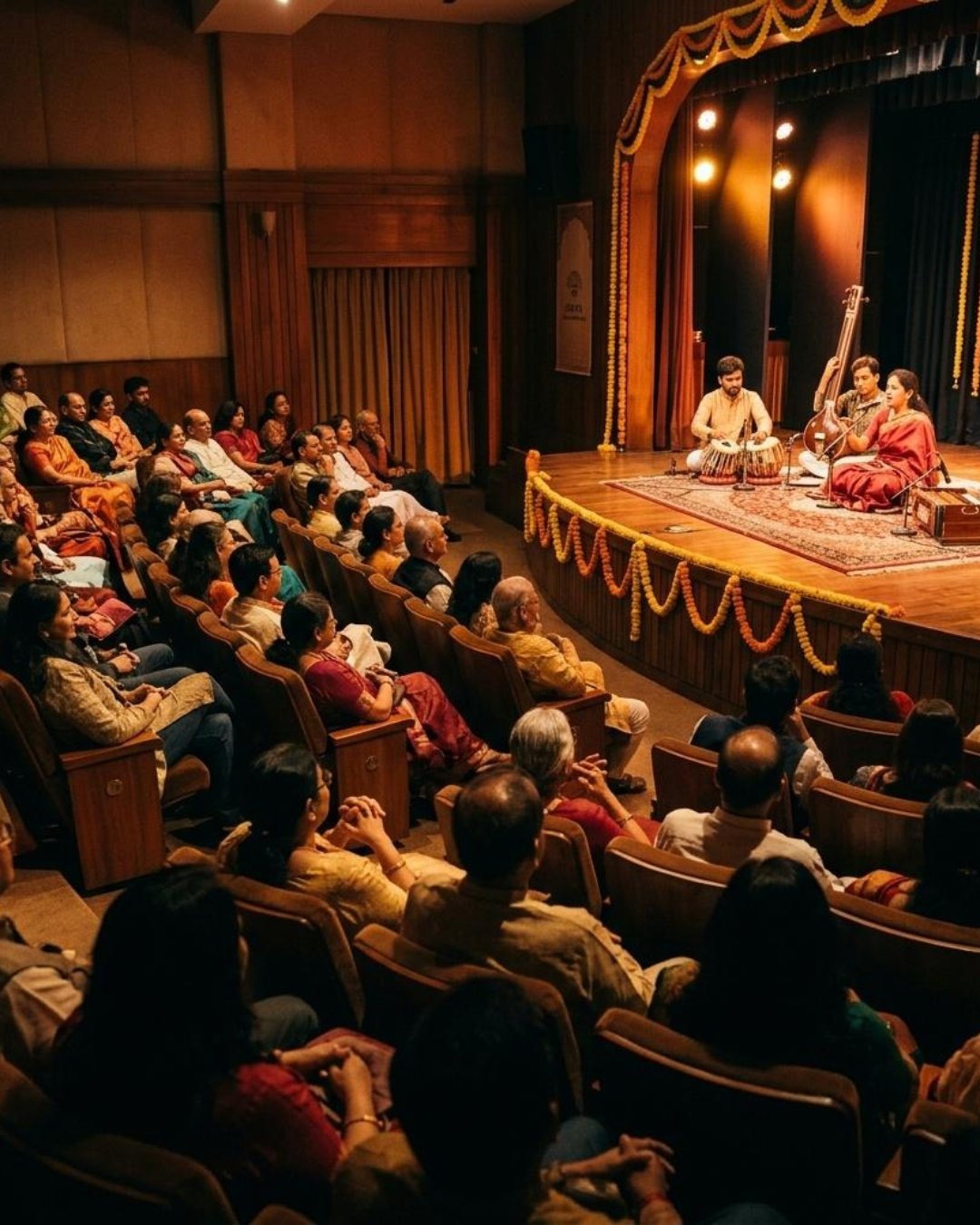
Start with timing. The great set-piece is the Sankat Mochan Sangeet Samaroh, six nights of classical music and dance each April, timed to Hanuman Jayanti — so the exact dates shift year to year with the Hindu calendar, and it's worth confirming them before you build a trip around it. Beyond the big festival, the cooler October-to-March months are thick with concerts, and smaller baithaks — intimate salon-style recitals in homes, courtyards and temples — happen year-round, usually in the evenings and often spread by word of mouth rather than advertised. However you find them, expect the real programme to be nocturnal: a concert may begin around dusk and run past midnight, sometimes to dawn, with the finest playing often saved for the small hours. Pace yourself for it. Eat before you go rather than during, and bring a shawl or wrap — you'll be sitting on cold stone for hours, and it doubles as something to sit on and something to keep the chill off near daybreak. Carry cash in small notes for autos, chai and donations, since cards are little use here.
The etiquette that matters most is how you listen. Hindustani audiences are not silent — appreciation is part of the music — but timing is everything. A soft "wah!", "wah wah" or "kya baat!", a nod or a gently raised hand is the right way to salute a beautiful phrase, a clever rhythmic landing, or a passage that lifts the whole room. But stay silent through the slow, unfolding alaap at the start and any delicate, quiet passage; never talk over the music, never let a phone ring, and take your cue from the seasoned listeners around you, who know exactly when to voice their delight and when to hold still. On recording: many settings ban phones outright — the Sankat Mochan festival among them — and at baithaks and in temples you should always ask before recording or photographing a musician, and accept a no gracefully. Dress modestly for temple and home settings, slip your shoes off where everyone else does, arrive early if you want a place near the front, and take care never to step over an instrument or a performer.
A word on money, because it's easily misjudged. The big festival is free — an offering, not a ticketed show — and intimate baithaks often run on donation or a discreet offering rather than a fixed fee, with the musicians sometimes taking nothing at all. Give what you can, quietly and with both hands or the right hand, and treat the whole thing as being welcomed into something rather than buying a seat. Come to listen rather than to collect performances, let the long nights carry you, and Varanasi's music gives back far more than it asks of you.
Destination
Varanasi, Uttar Pradesh, India
People also ask
01Question
What Is the Banaras Gharana?
The Banaras Gharana is a major musical tradition associated with Varanasi (Banaras/Kashi). A gharana means a musical lineage where styles, techniques and knowledge are traditionally passed from guru to disciple across generations. Banaras is particularly associated with traditions of tabla, Hindustani vocal music, Thumri, instrumental music and dance.
02Question
When is the Sankat Mochan Sangeet Samaroh?
The Sankat Mochan Sangeet Samaroh is an annual classical music and dance festival held around Hanuman Jayanti. In 2026, the 103rd festival was held from 6–11 April 2026, with performances running over six nights.
03Question
Is the Sankat Mochan music festival free?
Yes — the Sankat Mochan Sangeet Samaroh is free to attend. You generally do not need to buy an entry ticket for the festival at Sankat Mochan Hanuman Temple in Varanasi. The official temple event information describes it as a free event, and the Government of India's Utsav portal also lists ticket information as Free
04Question
What is thumri?
Thumri is a beautiful semi-classical style of Hindustani music known for emotion, love and longing. Unlike stricter classical forms, Thumri gives singers more freedom to express the meaning and feeling of the words. It is strongly associated with Lucknow and Varanasi, and the Banaras style is especially known for deep emotional expression.
05Question
Which famous musicians came from Varanasi?
Varanasi has produced or been closely associated with some of India's greatest classical musicians. The most famous include Pandit Ravi Shankar (sitar), Girija Devi (Thumri), Pandit Kishan Maharaj (tabla), and Pandits Rajan & Sajan Mishra (Hindustani classical vocals). Ustad Bismillah Khan, although born in Bihar, spent most of his life in Varanasi and became inseparable from the city's musical identity.
06Question
Can a beginner learn tabla or sitar in Varanasi?
Yes — absolutely. You don't need previous musical experience to take your first tabla or sitar lesson in Varanasi. Several music schools offer beginner-friendly and short-term lessons, making it possible for travellers to try the basics even during a short visit.
07Question
Where can I hear live classical music in Varanasi?
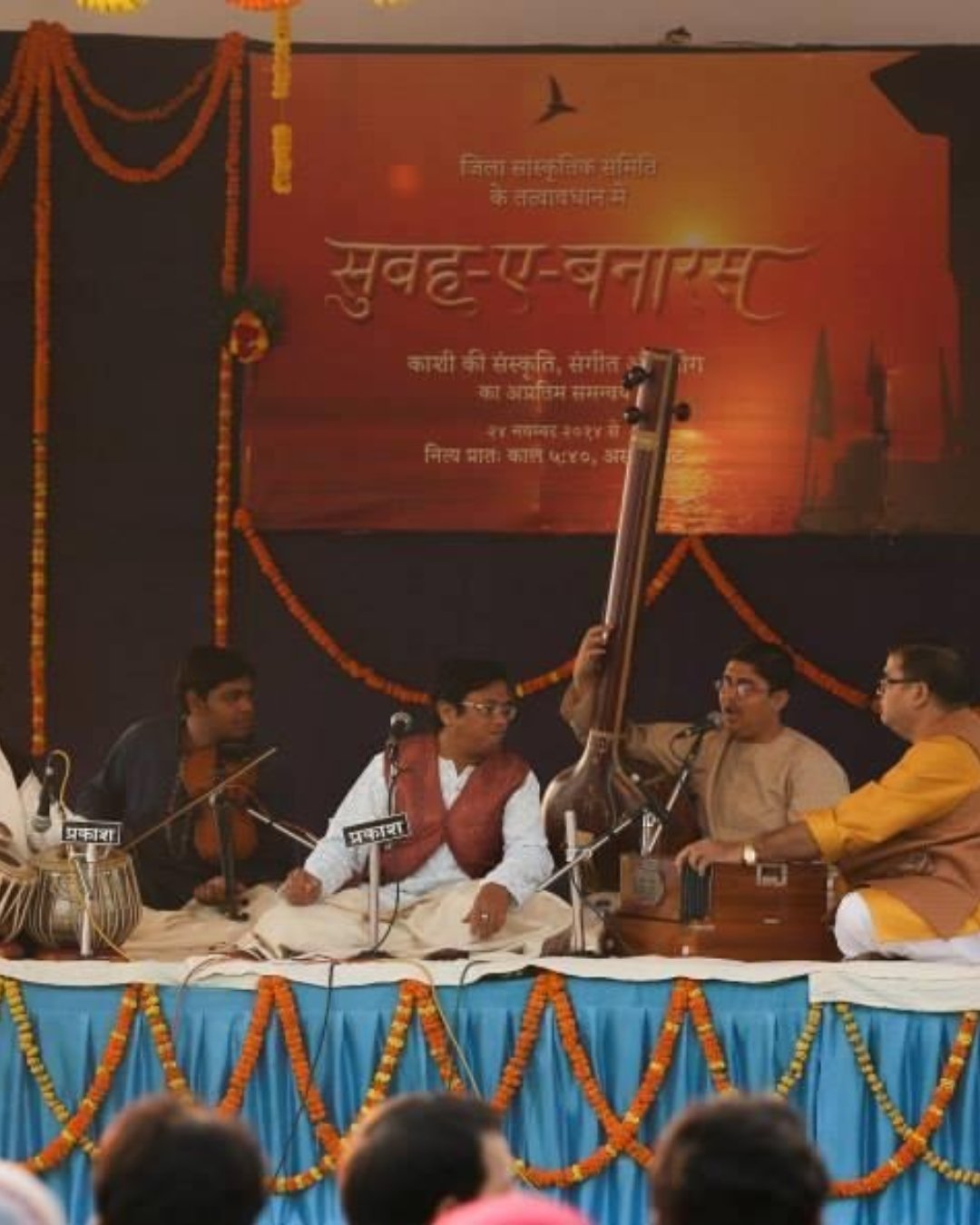
Your best options are Assi Ghat, especially the early-morning Subah-e-Banaras programme, and the annual Sankat Mochan Sangeet Samaroh for major classical performances.
📍 Assi Ghat — morning cultural and classical music atmosphere.
📍 Shri Sankat Mochan Hanuman Temple, (Varanasi) — famous for the annual classical music and dance festival.
Experience layers
Go further into one part of this trip.