

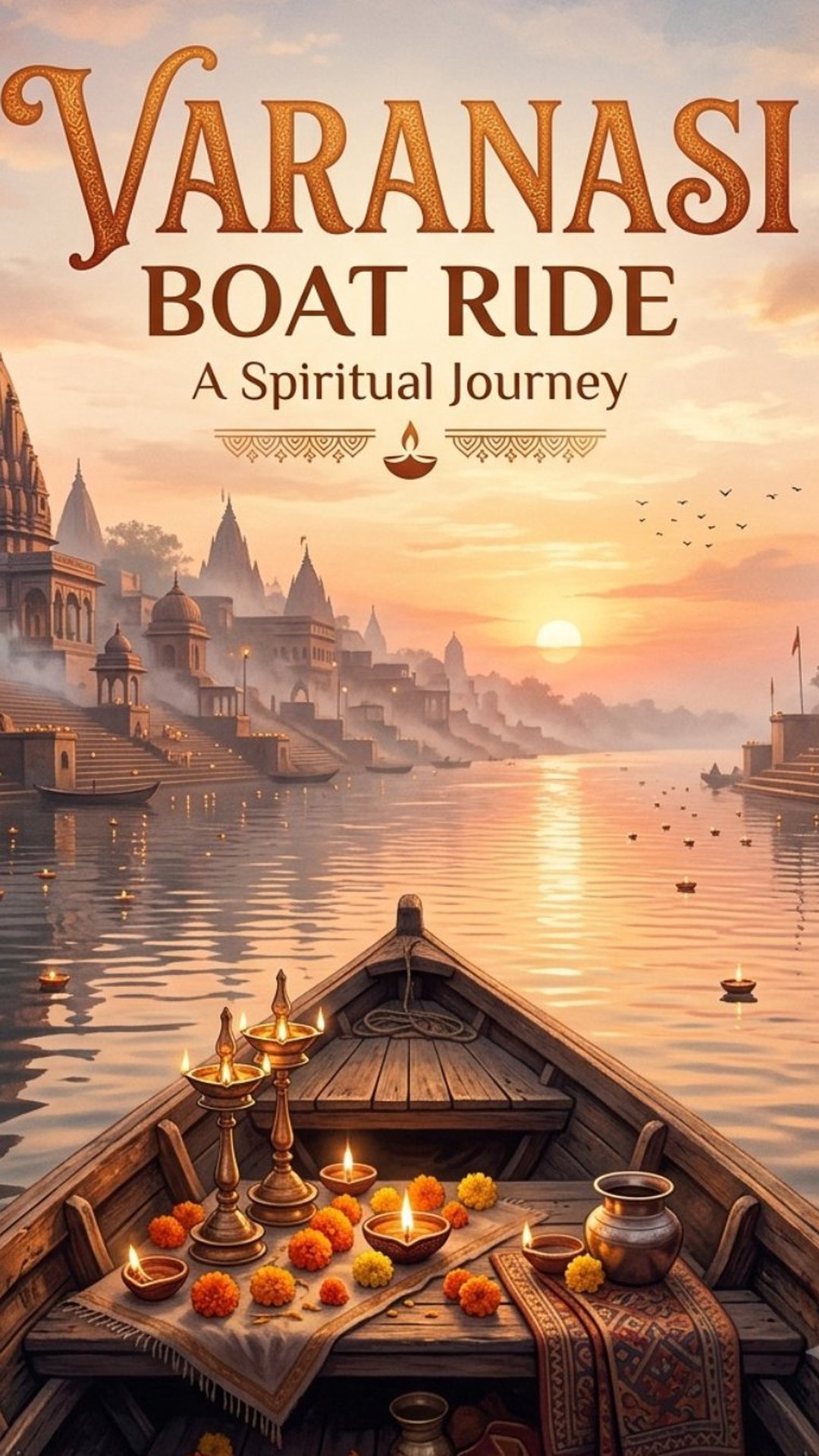
Varanasi Boat Ride: Sunrise, Aarti & Which Ghat to Choose
What a Varanasi boat ride costs, which ghat for sunrise vs the
Ganga Aarti, private vs shared rates, and how to book without
overpaying — honest 2026 guide.
A Varanasi boat ride on the Ganga is one of those experiences we'll build into your trip rather than treat as just another sightseeing activity. From the water, the city reveals itself differently — ancient temples, colourful ghats, morning prayers, cremation fires, palaces, wandering pilgrims and hundreds of years of history unfolding along the riverbank.
We'll choose the starting ghat, boat type and timing around the experience you want. For a peaceful introduction, we'll take you from Assi Ghat at sunrise, when the river is calm and the ghats begin to glow in the first light. For something more dramatic, we'll arrange an evening ride around Dashashwamedh Ghat, where you can experience the Ganga Aarti from the water.
You can choose between a private wooden boat for privacy and photography or a shared boat for a more affordable experience. Larger motorboats and Ganga cruises are also available when comfort, speed or a wider panoramic view is more important.
We'll also help you settle the boat fare and duration before boarding, check the operator and safety arrangements, and make sure life jackets and passenger limits are respected. During major celebrations such as Dev Deepawali, we'll recommend booking well ahead because the river becomes exceptionally busy and the illuminated ghats create one of Varanasi's most spectacular scenes.
And then there's the photography. From the middle of the Ganga, you'll have unobstructed views of the ghats, sunrise reflections, colourful boats, temple silhouettes and evening lights. But we'll also remind you to put the camera down occasionally — some moments on the Ganga are better experienced than photographed.
What we'll create for you:
Sunrise: Quiet river, golden ghats and Varanasi waking up.
Traditional boat: Slow, intimate and atmospheric.
Ganga Aarti: Watch the riverfront come alive with lamps from the water.
Ganga Cruise: A more spacious and panoramic alternative.
Dev Deepawali: See thousands of lamps reflected across the Ganga.
Photography: One of the best perspectives of the entire ghat landscape.
Safety: Life jackets, appropriate capacity and reputable operators come first.
Our goal isn't simply to take you for a boat ride. We'll put you on the Ganga at the moment when Varanasi looks and feels most magical — and let the river tell you the story of Kashi.
Stops
Home
MomentAssi Ghat, Varanasi
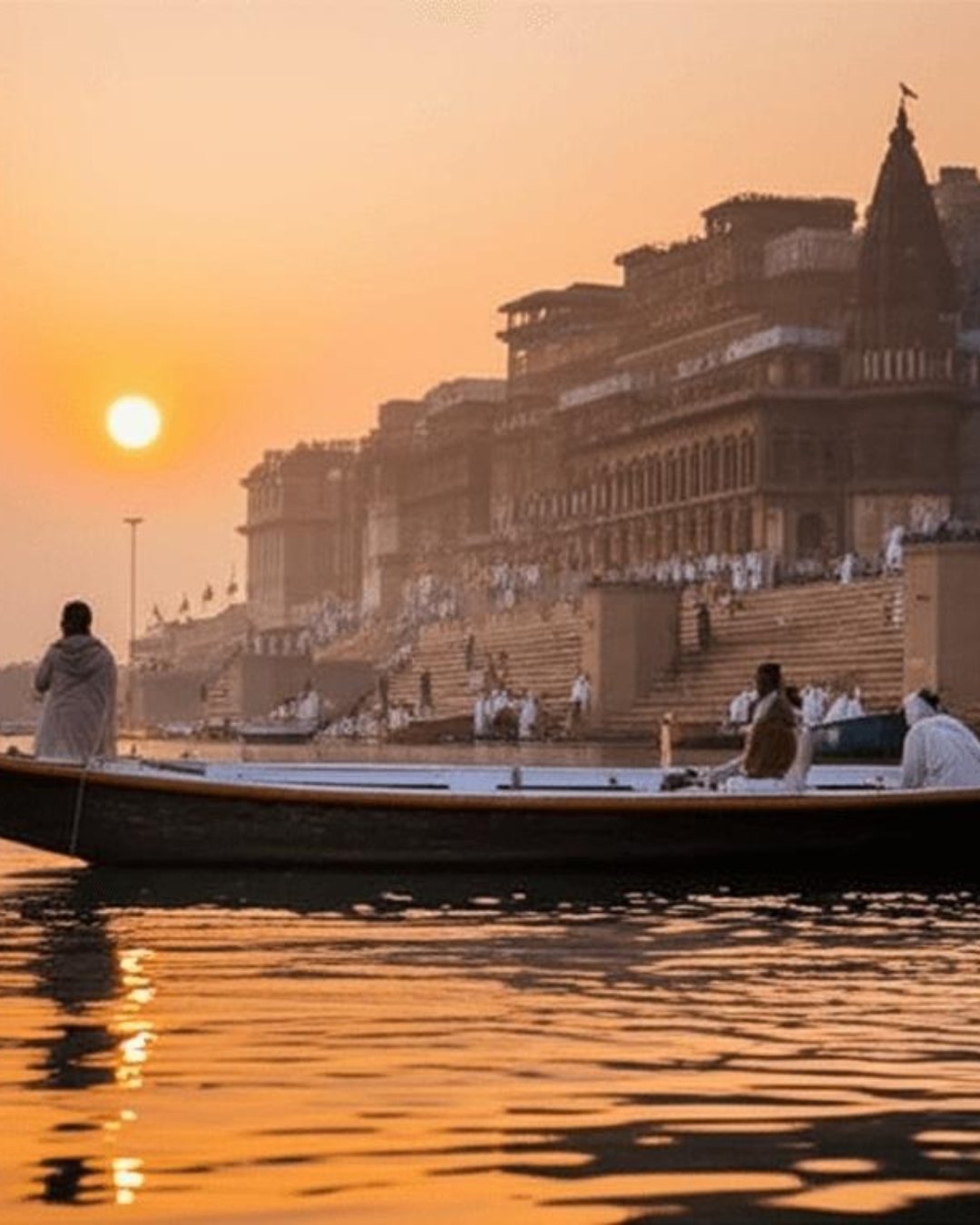
Sunrise or Sunset: Which Ride to Take.
5:10 a.m. at Assi Ghat, the boatman bails the dew out of the hull while the sky can't decide on a colour. Twelve hours later the same water will be a wall of fire and bells. Same Ganga, two completely different rides .
— you'll do one, at whatever hour the tour slots it in, and it'll be lovely. But here's the thing nobody tells you: sunrise and sunset on the Ganga are two completely different experiences, on different stretches of the river, with different crowds, different light and different points. Take the wrong one for what you're after — or worse, let someone book you a hot, flat midday ride between them — and you'll wonder why everyone else raves about theirs.
Let's fix that. Here's how the two rides actually differ, and how to pick the right one.
Why the hour changes the whole ride
Sunrise is the quiet one. You're on the water before the city wakes — pilgrims taking their first dip, priests beginning rituals, the sun climbing over the far bank, and a stillness that's gone by eight. It's the contemplative ride, and it faces east into the light, because the ghats all sit on the west bank.
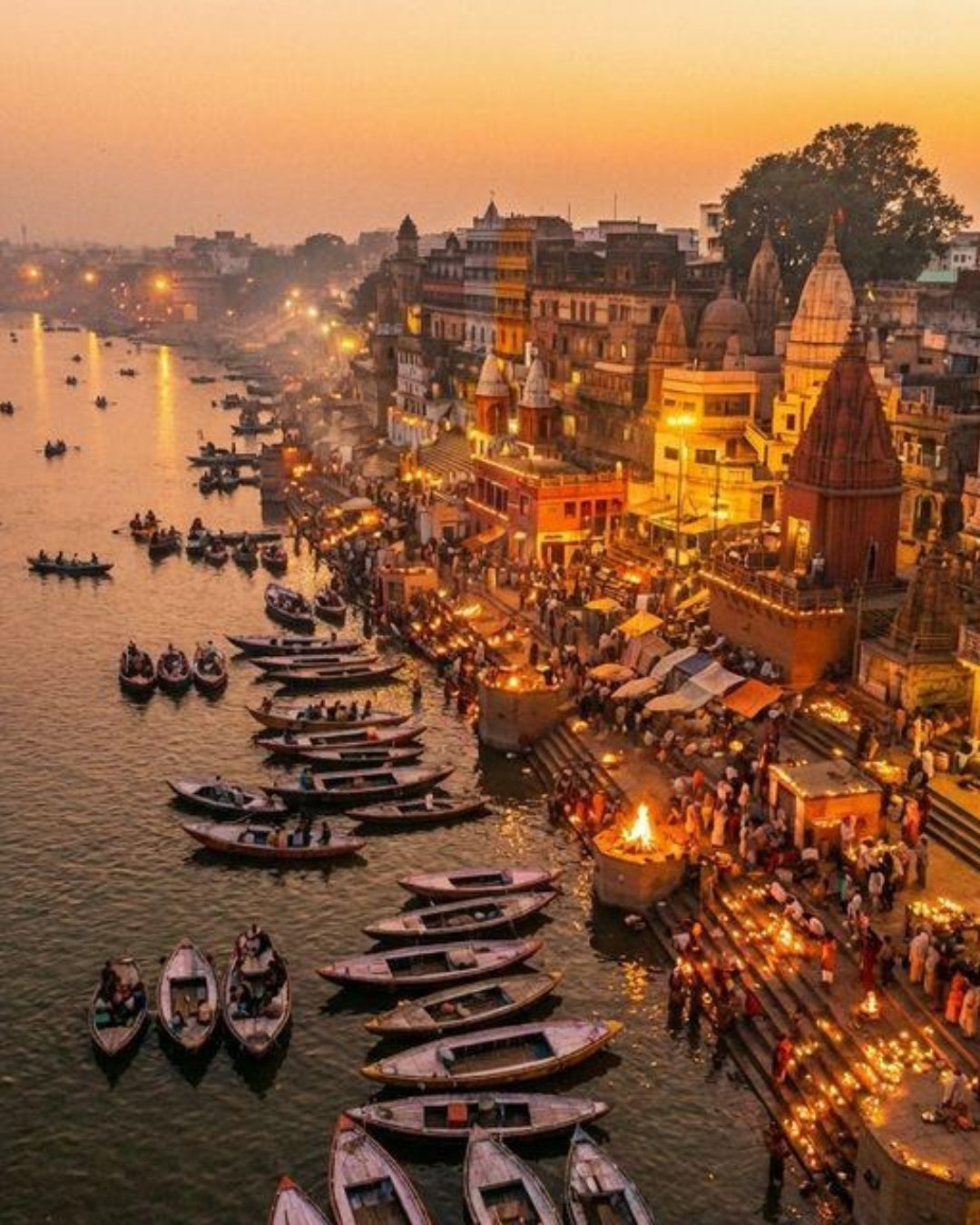
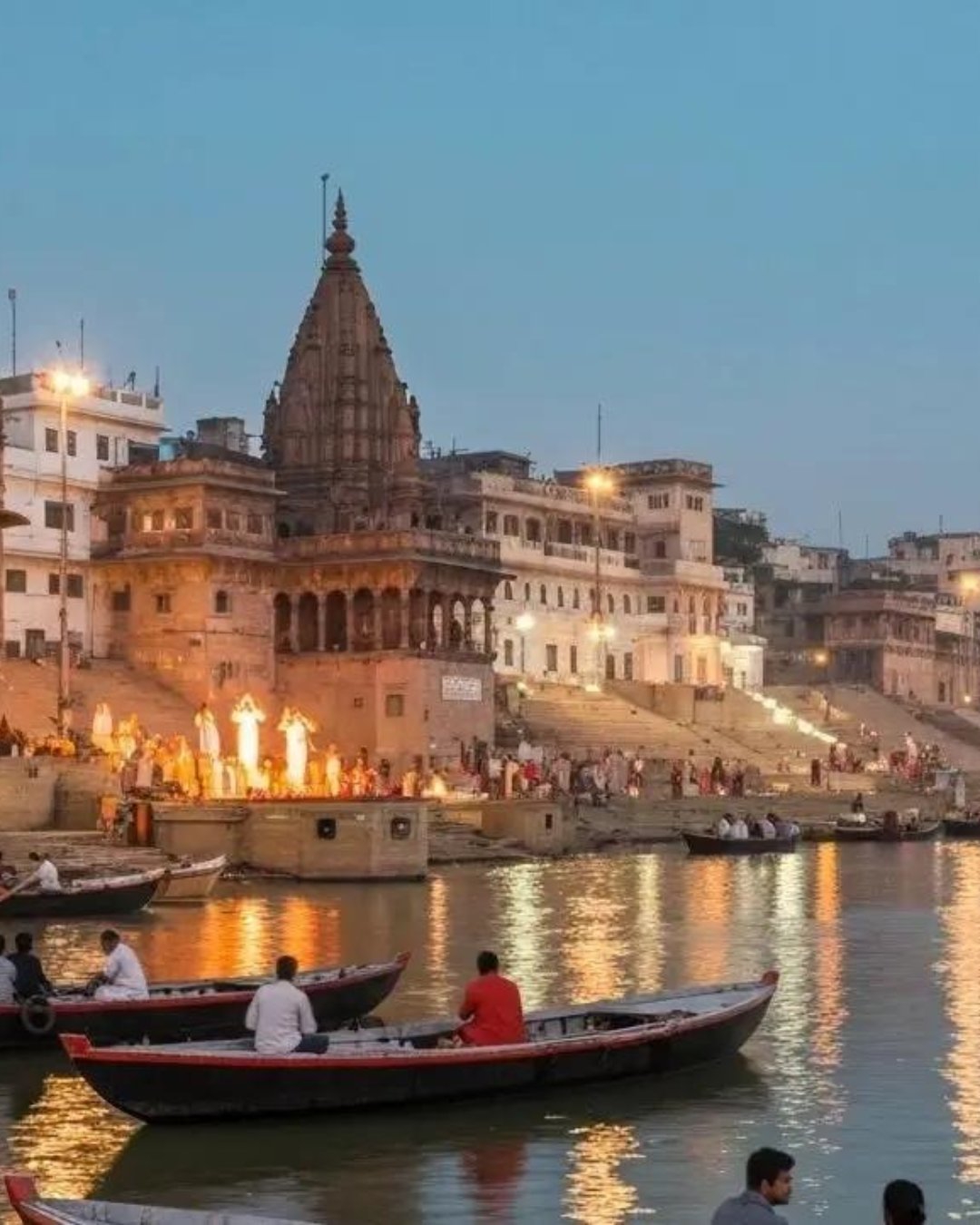
Sunset is the loud, golden one, and it builds toward the evening Ganga Aarti at Dashashwamedh rather than away from a sleeping river. The light rakes gold across the ghats, the crowds are out, and if you time it right your boat is sitting on the water, front-and-centre, as the aarti's lamps are lit. Same river, opposite mood: one empties toward silence, the other fills toward ceremony.
What you'll actually get from each
Sunrise — stillness, soft even light, bathers and morning rituals, the best photography light, and the fewest people. The classic Varanasi image.
Sunset — golden side-light on the ghats, a livelier river, and the run-up to the aarti seen from the water.
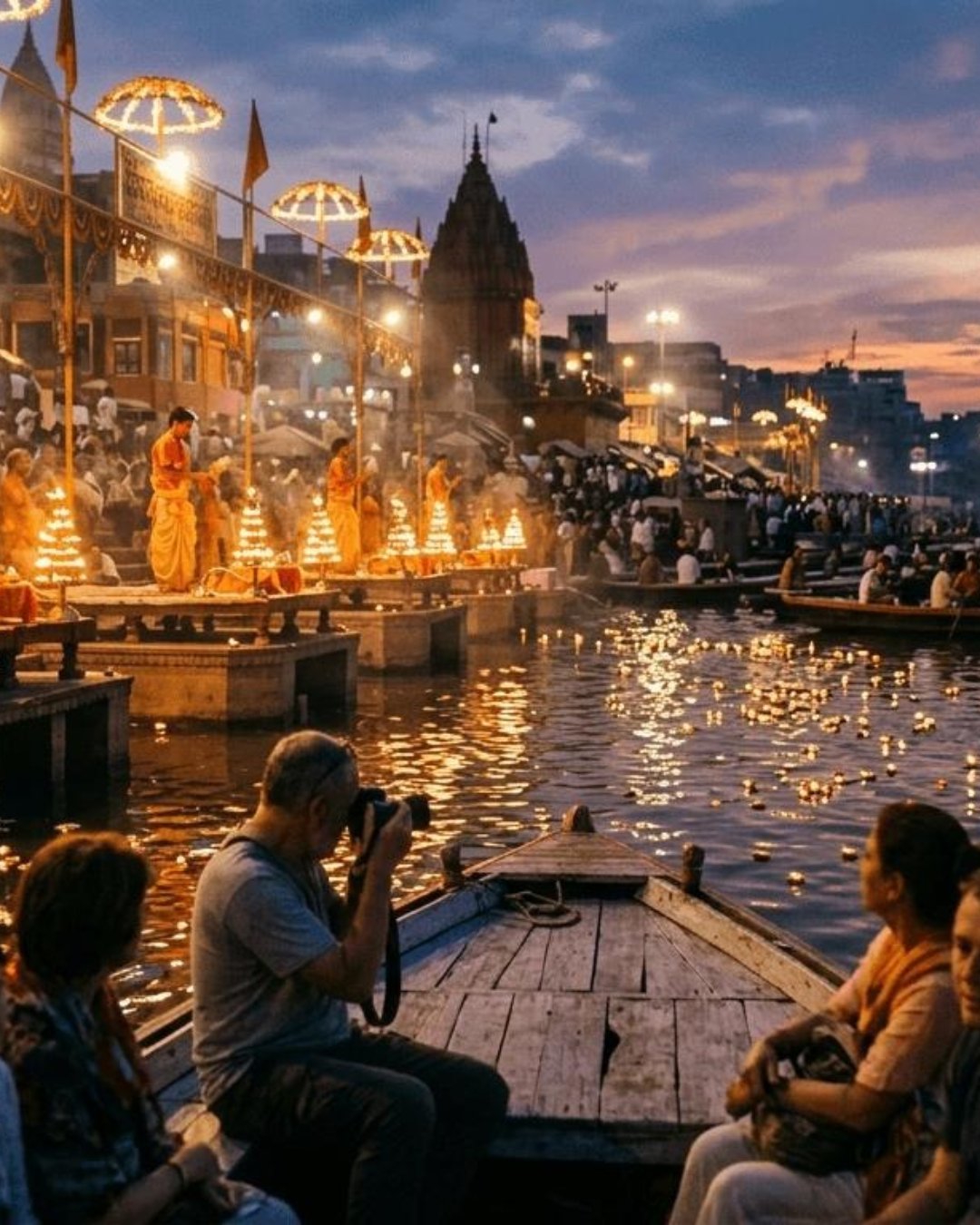
The aarti from the boat — the single best reason to take the evening ride: the lamps line up in front of you with no crowd in between.
Midday — neither. Hot, flat, and crowded. Skip it entirely.
Bring a light layer either way — it's breezier on the river than on land, cool at dawn and after dark.
And keep your phone down for the first ten minutes of whichever you choose. Travellers who've done both will tell you the same thing: the urge is to photograph everything, but each ride lands differently when you watch it first — the dawn hush, or the bells and fire building at dusk. That's the part the photos never quite catch.
Pro tip: If you can only do one, do sunrise — it's the quieter, more singular experience and the light is unbeatable. But if the Ganga Aarti is high on your list, take the sunset ride and watch the ceremony from the boat, which beats fighting the crowd on the steps. Better still, do both: sunrise on day one, sunset-into-aarti on another. Agree the price and duration before you step in, take a rowboat over a motorboat, and go private if you want to stop and linger.
The mistakes that ruin it
Most first-timers trip over the same few things. They let a tour book a midday ride and get the worst of both. They take the sunset ride but land before the aarti and miss the whole point. Or they do sunrise expecting the aarti and don't understand why there's no ceremony at dawn.
The easy fix is to match the ride to what you want — stillness or ceremony — and book the hour deliberately rather than taking whatever slot you're handed.
53
MomentAssi Ghat, Varanasi
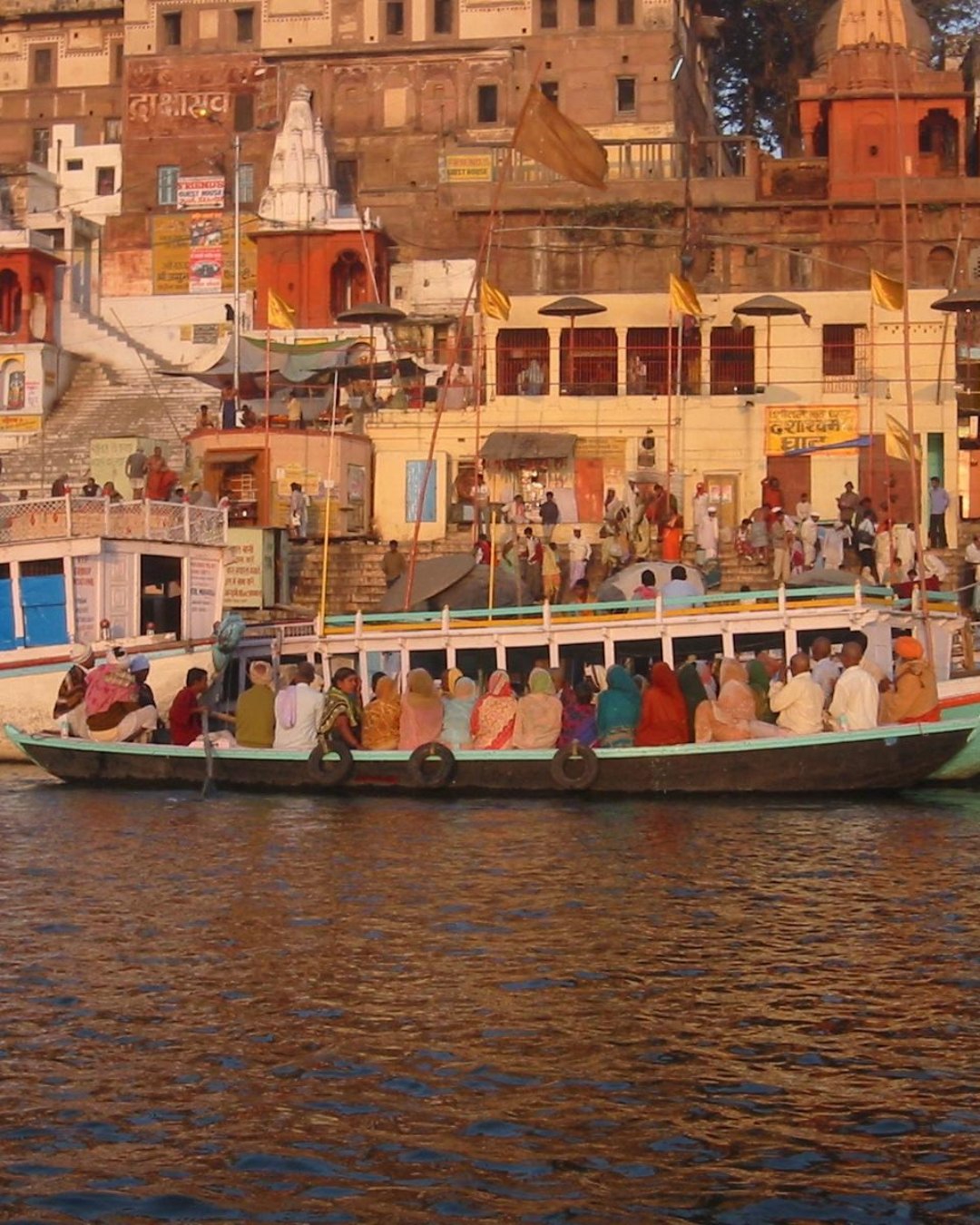
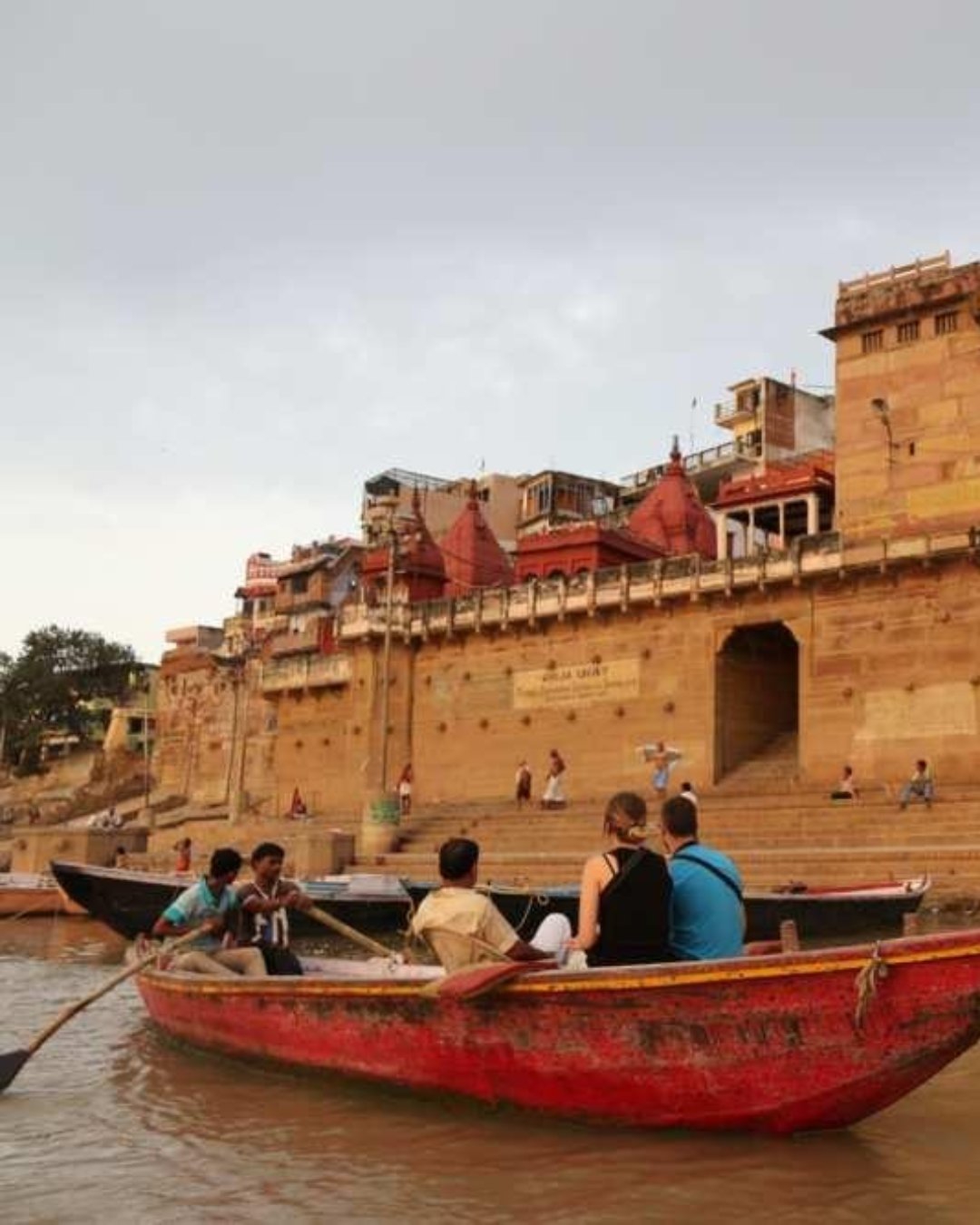
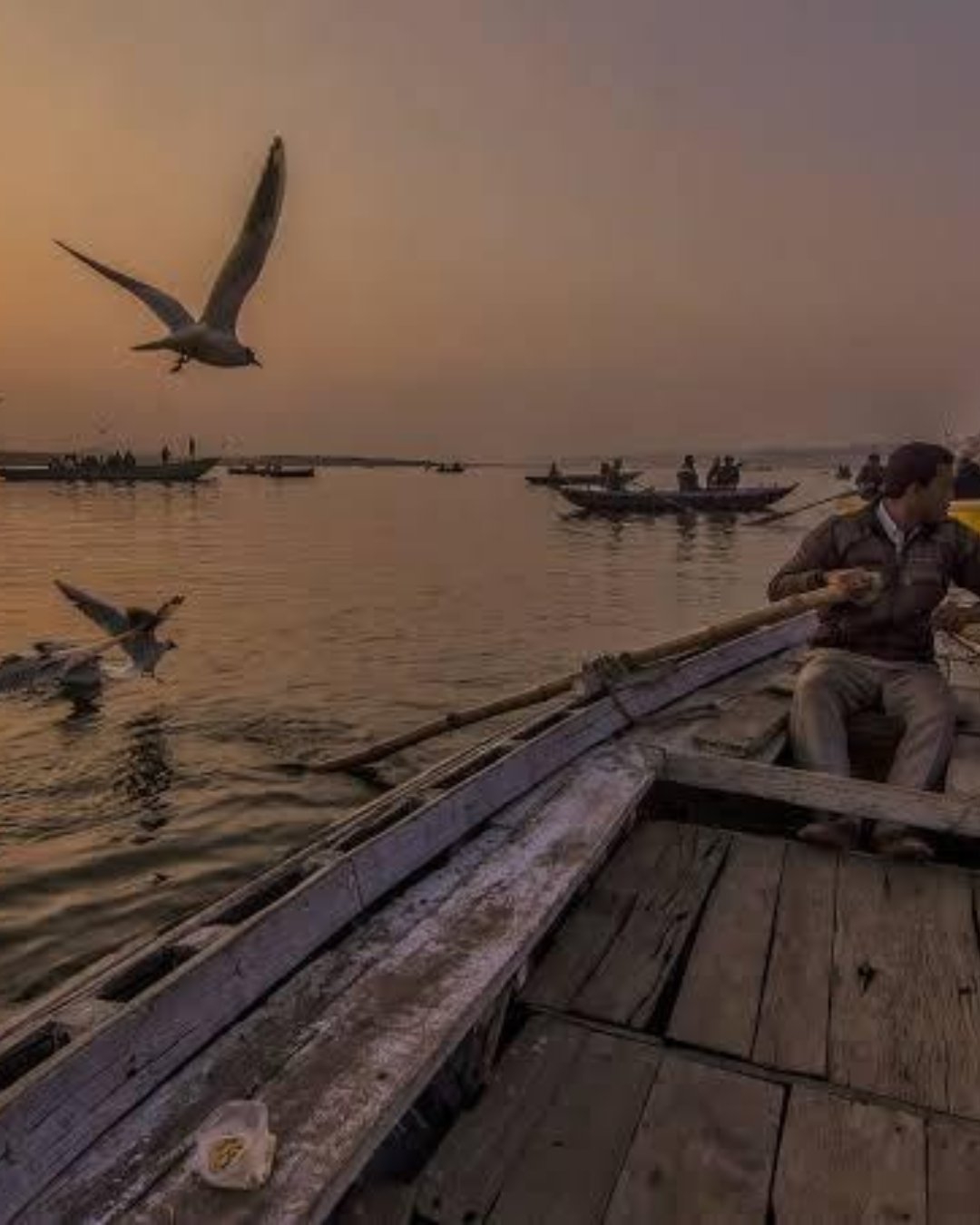
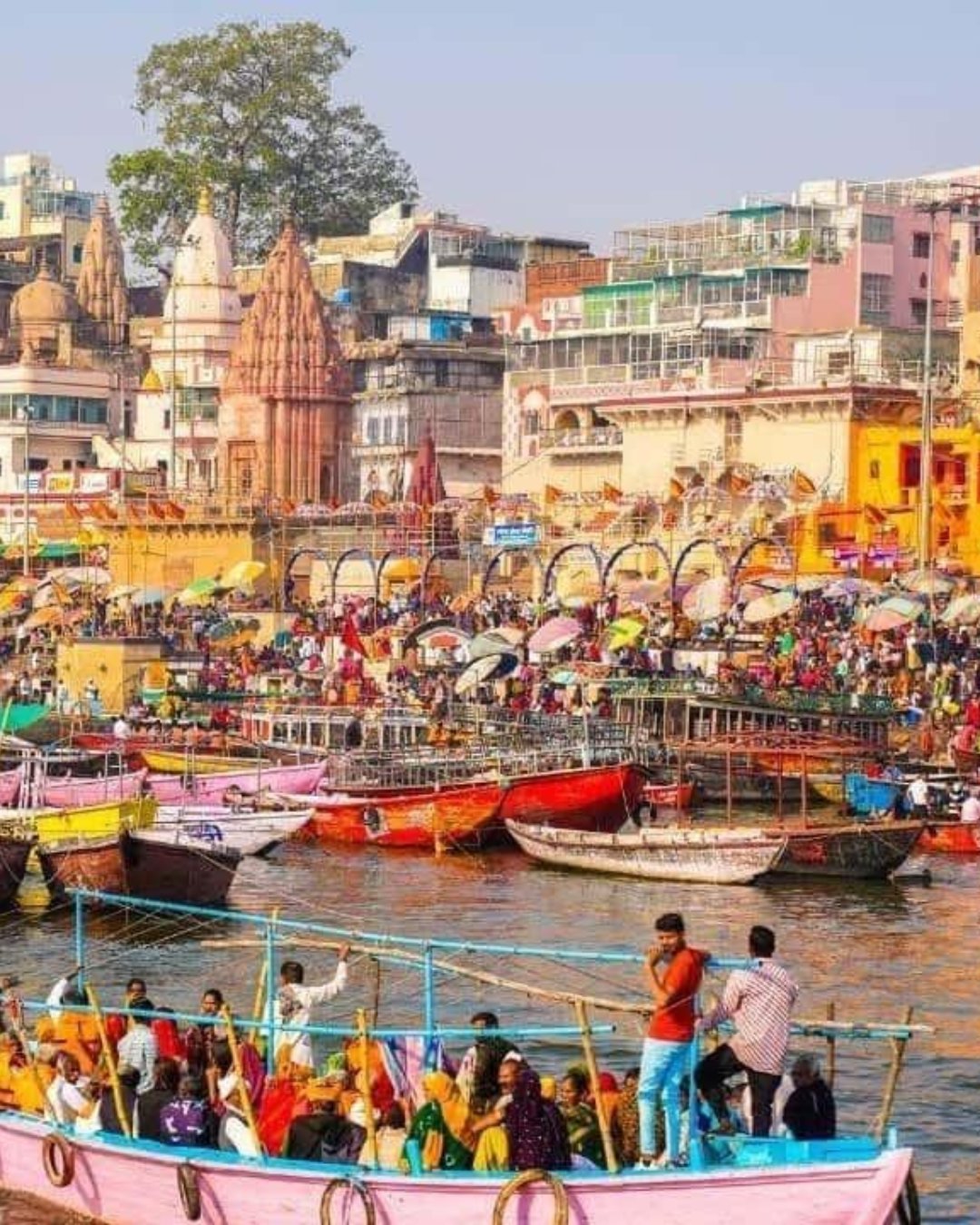
Which Ghat to Start From.
Assi or Dashashwamedh? It sounds like a detail, but the ghat you push off from decides how much of the golden hour you actually spend in the good stretch — and how much you waste just rowing toward it.
A ride's a ride — you turn up, you get in, you float. But here's the thing nobody tells you: the ghat you start from decides your whole morning. Launch from the wrong one and you'll spend the first fifteen minutes just getting to the interesting stretch, in flat light, with half your hour gone before anything happens. The two main launch points — Assi in the south, Dashashwamedh in the centre — give you completely different rides.
Let's fix that. Here's how to choose your starting ghat, and how to get it right the first time.
Why the launch point sets up everything
The famous ghats sit in the middle of the waterfront — Dashashwamedh, Manikarnika, Scindia. A dawn ride wants to move through that central stretch while the light is best, roughly the first forty minutes after you push off. So where you start determines whether you spend that golden window in the good stretch or rowing toward it.
From Assi, in the south, you row north into the current, passing the quieter southern ghats first and reaching the dramatic centre as the sun comes up — a slow build. From Dashashwamedh, you're dropped straight into the heart of it and go north toward the cremation ghats immediately — no warm-up, all payoff. Neither is wrong. They're just different films.
What each start actually gives you
Assi Ghat (south) — calmer, less crowded at dawn, and you pair the ride with Subah-e-Banaras on the steps afterward. The build-up is gentle; the trade-off is a longer row to the icons.
Dashashwamedh (central) — straight into the main event, closest to Manikarnika and Scindia, but the busiest, most tout-heavy launch point.
Direction matters — going north with the flow toward the cremation ghats is the classic route; ask your boatman which way before you commit.
Distance from your hotel — the ghat nearest where you're staying saves you a groggy pre-dawn auto ride across the old city.
Bring a light layer whichever you pick — it's breezier on the water than on land, at any launch point.
And keep the phone away for the first ten minutes regardless of where you start. Travellers who've done both will tell you the same thing: the urge is to shoot from the moment you push off, but the ride lands differently when you watch it first. The oar, the chanting drifting off the steps, the light coming up — that's the part the photos never quite catch, and it doesn't depend on which ghat you left from.
Pro tip: Start from Assi if you want the gentle build and the dawn programme on the steps afterward; start from Dashashwamedh if you want to be in the thick of it fast and your time is short. Either way, launch from the ghat closest to your hotel to protect your sleep, agree the price and direction before boarding, and confirm you're going north — that's where the icons are. A private rowboat lets you linger at the stretch you care about; a motorboat ruins the silence that's half the point.
The mistakes that ruin it
Most first-timers trip over the same few things. They launch from whichever ghat a tout steers them to and lose the light rowing to the good part. They start far from their hotel and arrive frazzled after a long pre-dawn ride. Or they don't confirm the direction and end up going the wrong way down the river.
The easy fix is to pick your launch point on purpose — matched to your hotel, your pace, and the ride you want — or let it be arranged so you just show up and step in.
49
MomentDashashwamedh Ghat, Varanasi
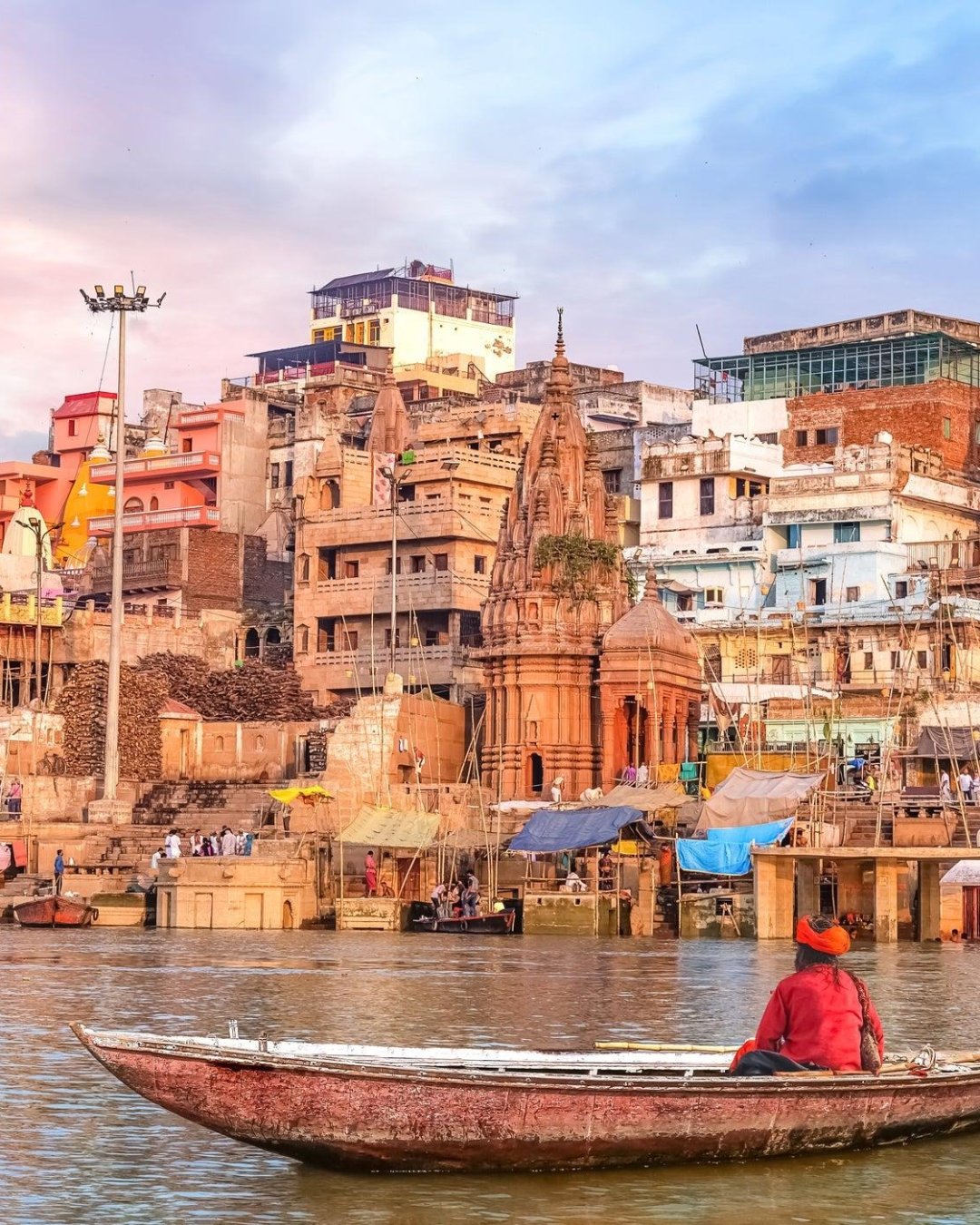
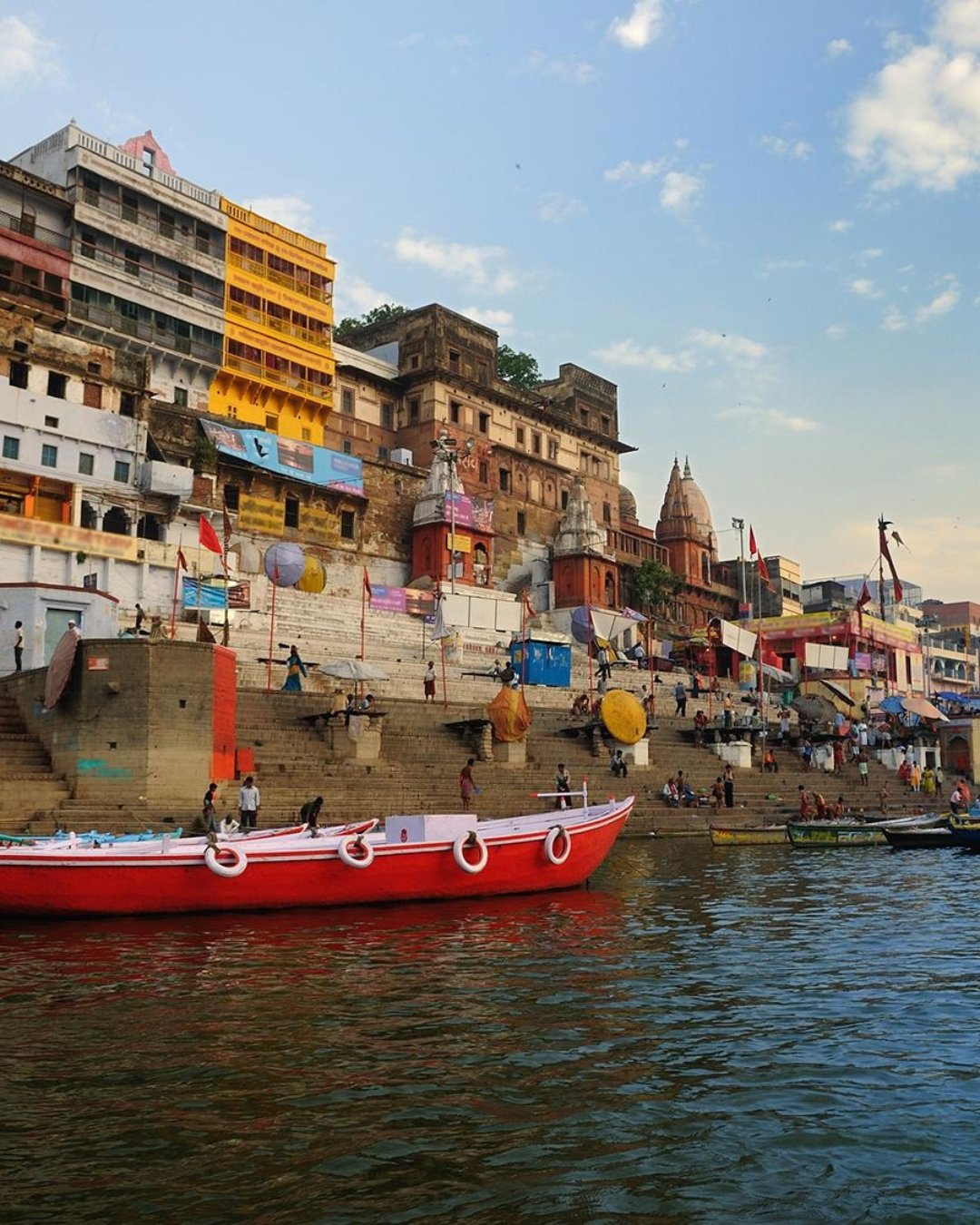
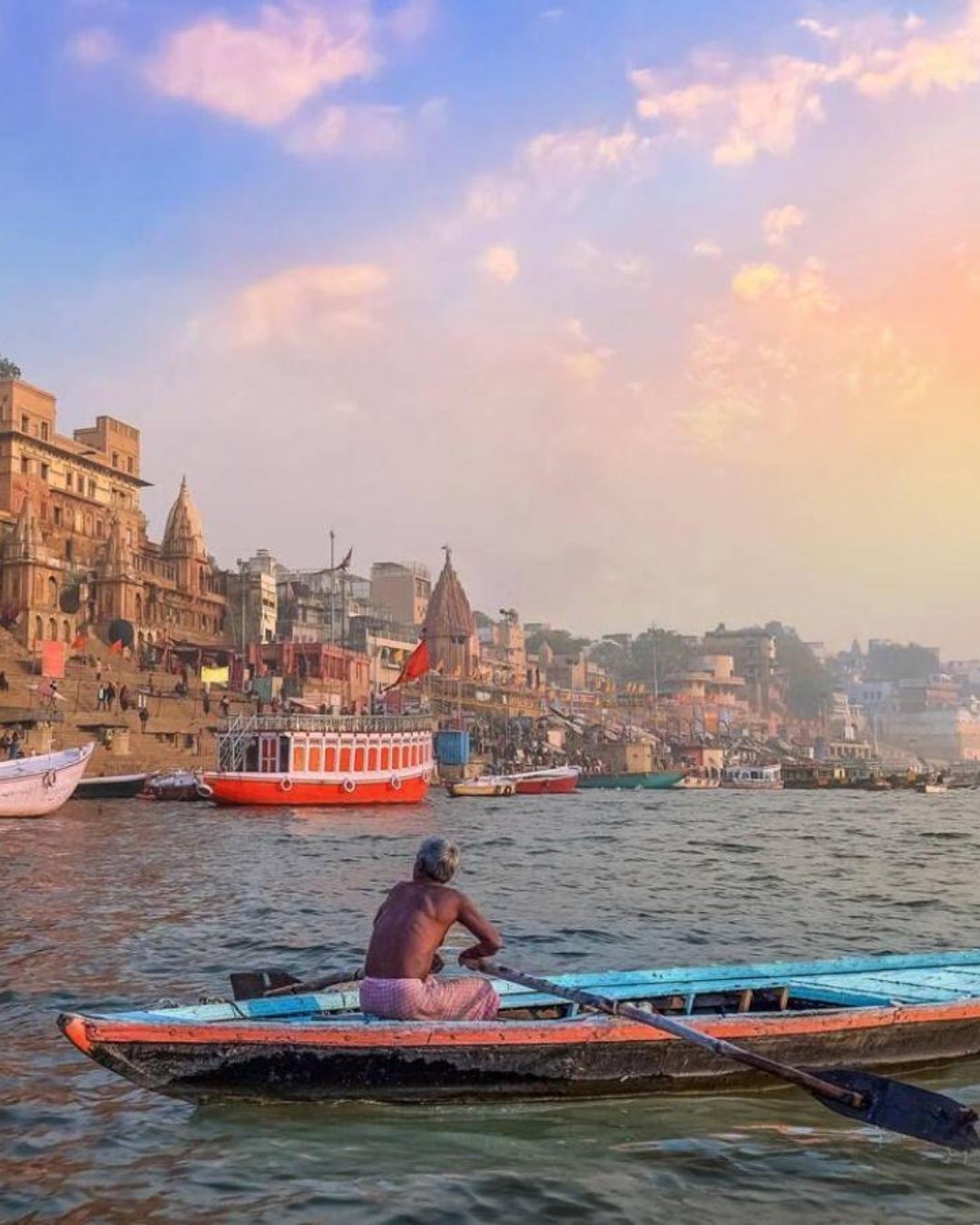
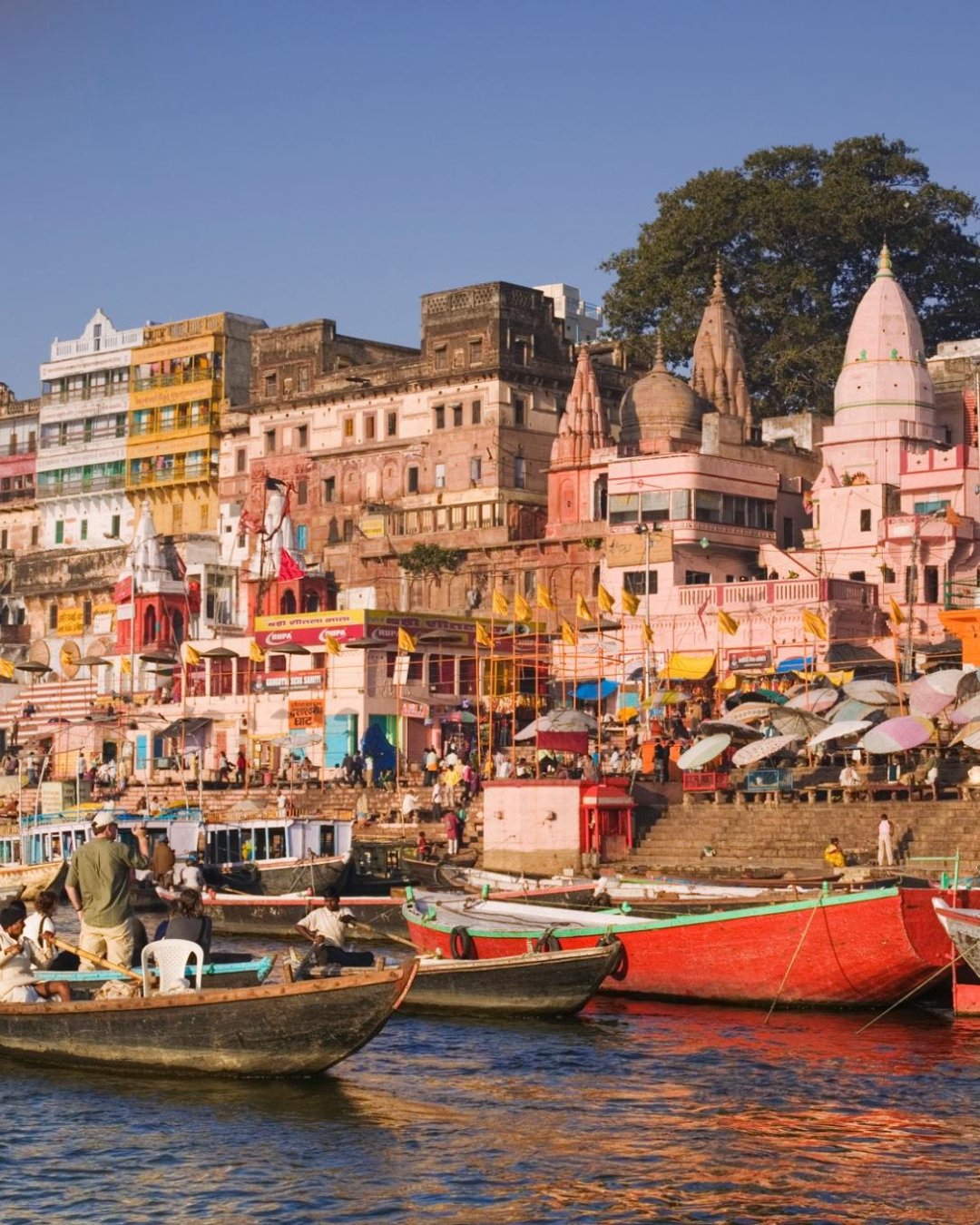
What a Boat Ride Costs.
One traveller pays ₹300, the next swears they were charged ₹2,000 for the same forty minutes. Neither was exactly lied to — there's just no fixed price on the Ganga, and that's the whole problem.
A friend paid a few hundred rupees; a review swears they were charged two thousand for the same trip. But here's the thing nobody tells you: there's no fixed price for a boat ride in Varanasi, and that's exactly the problem. What you pay depends on the boat, the hour, the season, your bargaining, and whether the man who approached you clocked you as a first-timer — and the ones who get fleeced are almost always the ones negotiating half-asleep on the steps at 5 a.m.
Let's fix that. Here's what a boat ride actually costs, and how to pay a fair price the first time.
Why there's no single price
The rate swings on a few things. A shared boat, where you join a dozen others, is cheap per head. A private rowboat, just your group, costs more but buys you silence and the freedom to linger. A motorboat is priced differently again — and worst at dawn, when the noise ruins the very thing you came for. Then there's timing: sunrise and the evening aarti are peak, and prices climb; midday is quiet and cheaper. And season matters — the wedding and festival months, and Dev Deepavali, push everything up.
So the honest answer to "what does it cost" is "it depends" — which is precisely why you settle it before you step in, not after.
What you'll actually pay, roughly
Treat these as ballpark, not gospel, and always confirm on the day:
Shared rowboat — the cheapest option, a per-person rate, fine if you don't mind company.
Private rowboat — a whole-boat rate for up to a handful of people; the sweet spot for most visitors.
Motorboat — priced by the boat and the distance; skip it at dawn regardless of price.
Peak surcharge — expect to pay more at sunrise, at the aarti, and through festival season.
Carry small notes. Nobody at the ghat has change for a large bill at 5 a.m., and "no change" is a classic way to round your fare up.
And here's the part people forget in the dark: agree the whole deal, not just a number. Travellers who've done this will tell you the same thing — the price is only half of it. Nail down the duration, the route, private versus shared, and whether it's per person or per boat, out loud, before you sit down. The disputes that sour a ride almost always come from a number agreed without the terms attached — "you said 500" meeting "that was per person, for 20 minutes." Settle all of it on the steps, and the ride itself is effortless.
Pro tip: Fix the price and the terms before you board — total cost, how long, which ghats, per boat or per head — and don't hand over money until you're back on the steps at the end. Skip the first tout who grabs your arm; walk a little, and the rate drops. And the single easiest fix: arrange the boat the night before, or through your hotel or a guide, so you're not bargaining in the dark at 5 a.m. against someone who does this every day.
The mistakes that cost you
Most first-timers trip over the same few things. They negotiate half-asleep on the steps and overpay. They agree a number but not the terms, and get a shorter ride than they thought. Or they pay upfront and lose their leverage the moment the boat pushes off.
The easy fix is to settle price and terms in advance, carry small notes, and pay at the end — or let the boat be arranged ahead so there's nothing to haggle at dawn.
Shared rowboat : ₹150–₹300/person
Private rowboat : ₹1,500–₹3,000/hour
Private motorboat : ₹3,500–₹5,000/ride
Shared motorboat : ₹300–₹500/person
Ganga Aarti boat : ₹3,000–₹5,100/boat
37
MomentDashashwamedh Ghat, Varanasi
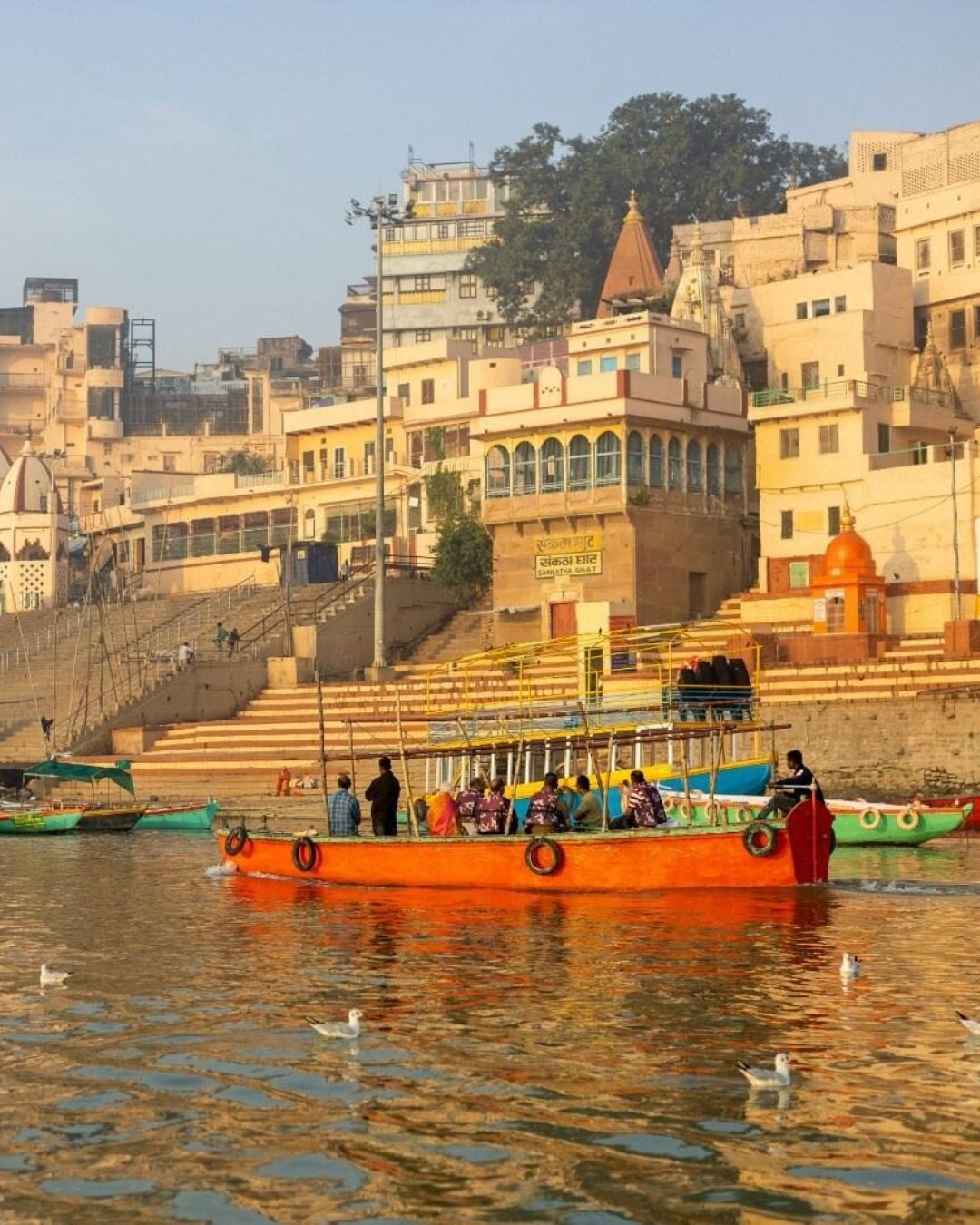
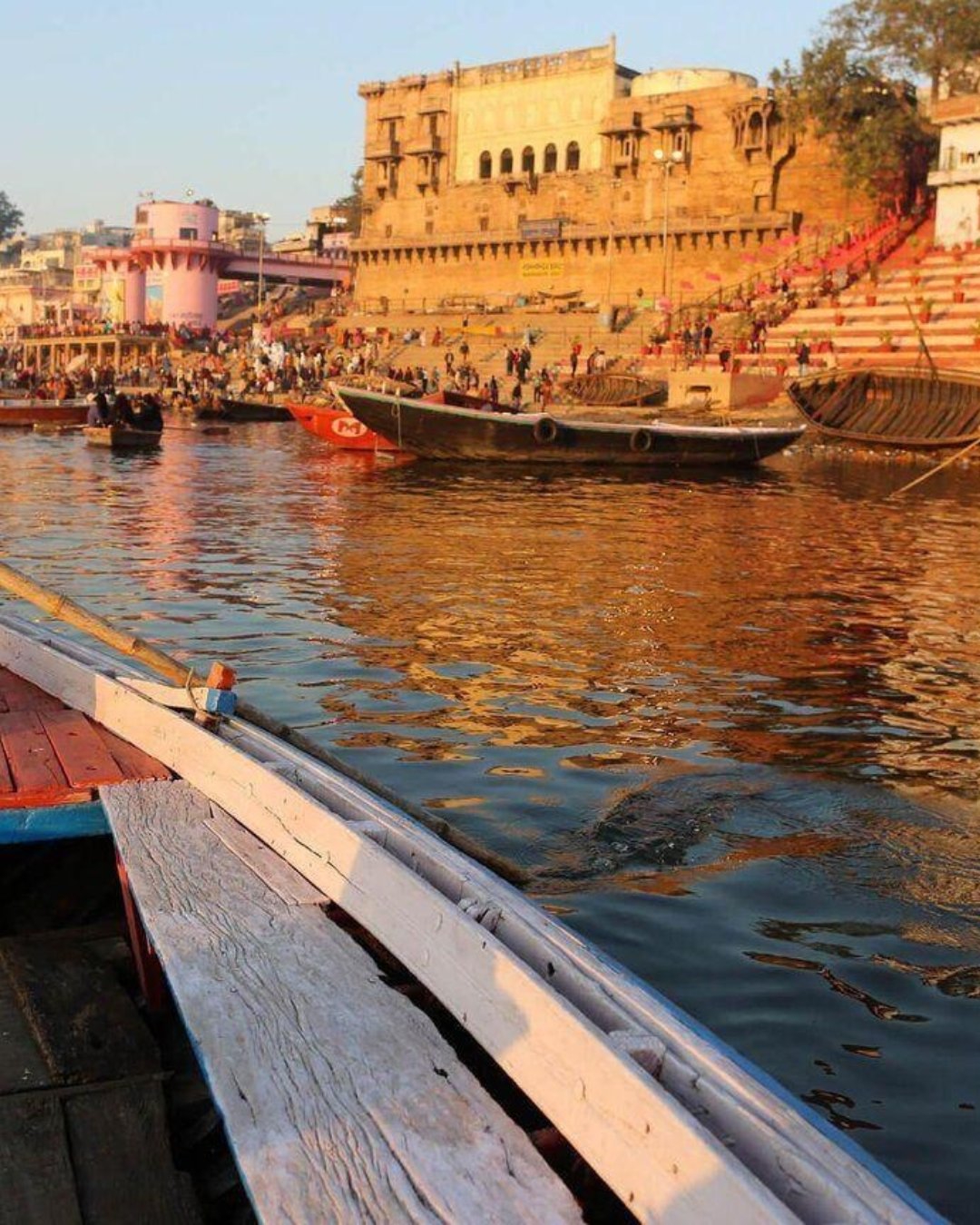
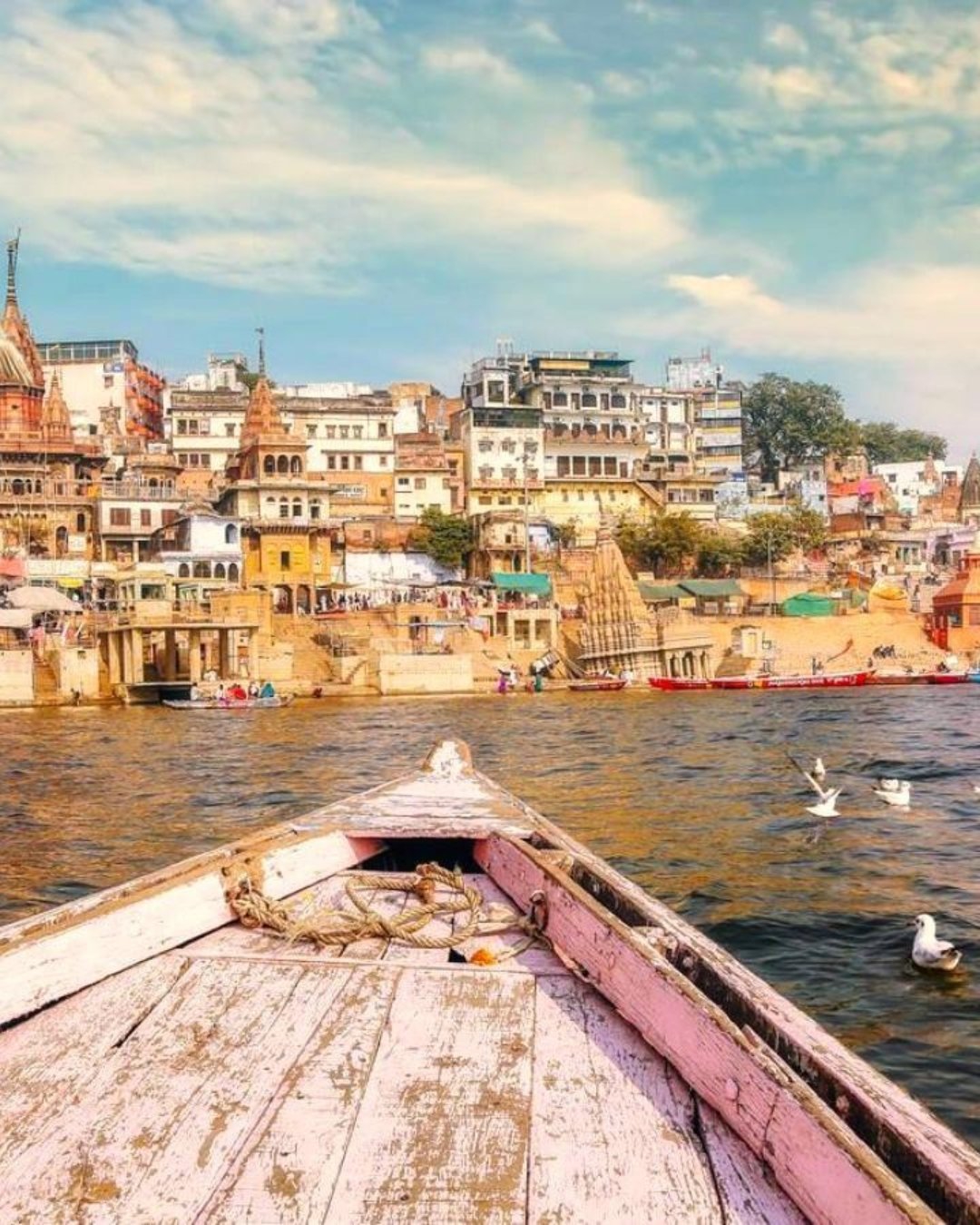
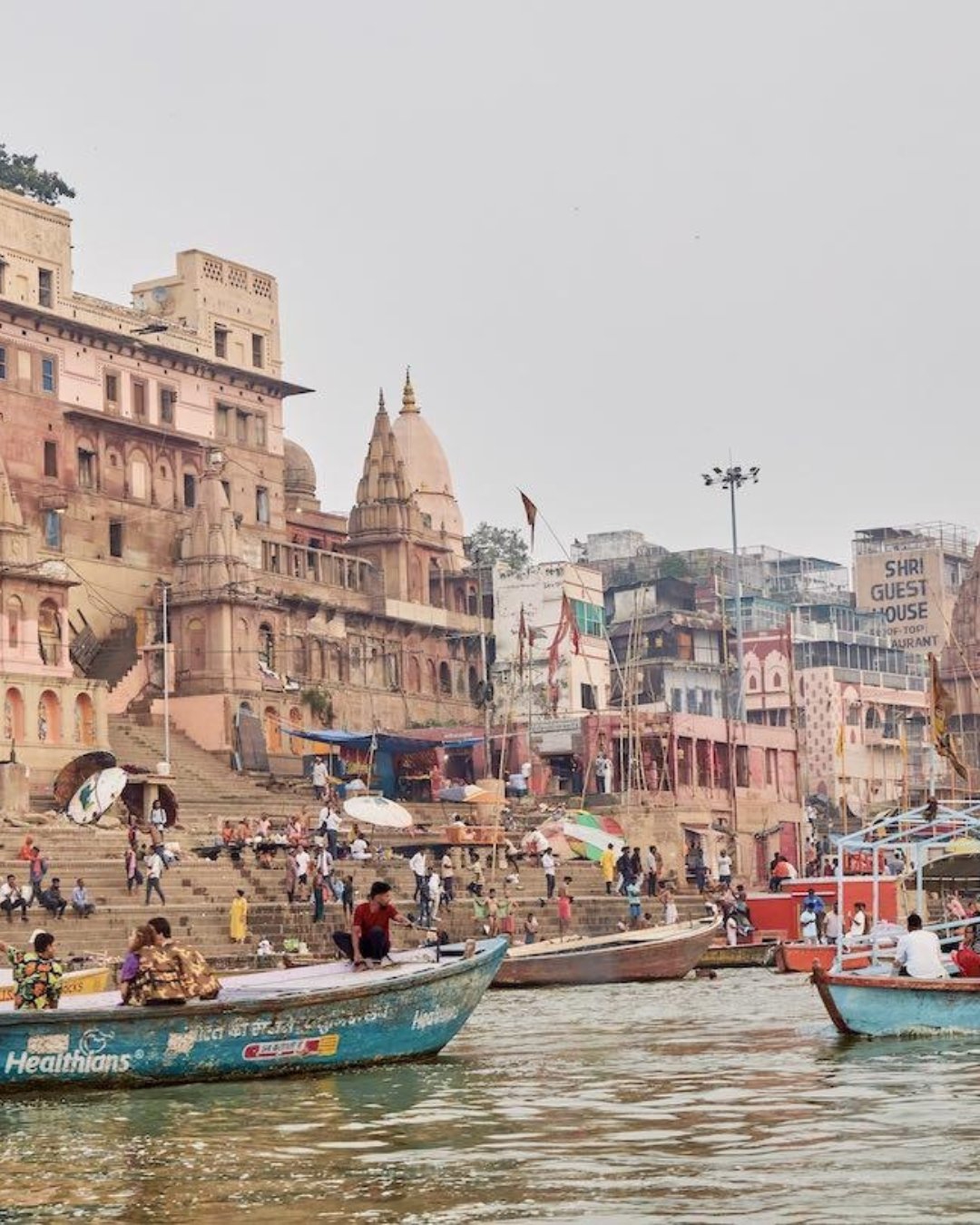
Private, Shared or Motorboat.
Three kinds of boat sit at the same steps, and there's a ₹4,000 gap — and an entire mood — between them. Pick wrong and you've spent the best hour in Varanasi in the wrong one.
You'll sort it out on the day, pick whatever's waiting, get on the water. But here's the thing nobody tells you: the kind of boat you choose decides your whole morning more than the ghat you start from. Pick wrong — a motorboat at dawn, or a shared boat when you wanted quiet, or a private one you overpaid for by triple — and you've spent the best hour in Varanasi either annoyed, rushed, or crammed shoulder to shoulder with strangers while the moment slips past.
Let's fix that. Here's how the boat choice on the Ganga actually works, and how to get it right the first time.
Why the boat matters more than the route
Every sunrise ride covers roughly the same stretch of ghats. What changes the experience isn't where you go — it's what you're sitting in, and who's sitting with you.
A shared rowboat is cheap and social: you split a wooden boat with a dozen others, and it's perfectly lovely if you don't mind company and a fixed route. A private rowboat costs more but buys you silence, control, and the freedom to stop, linger, and turn the boat where the light is best. A motorboat is faster and steadier — but the engine noise is exactly what you came to the river at dawn to escape. Match the boat to what you actually want from the hour, and the rest falls into place.
What you'll actually be choosing between
Shared rowboat — cheapest, sociable, fixed route and timing. Fine for a first ride if budget leads.
Private rowboat — the sweet spot for most: quiet, flexible, no strangers in your photos, oarsman to yourself.
Motorboat — fastest and most stable, good if mobility or time is tight, but loud and less atmospheric at dawn.
The big shared launches — cheapest per head and packed; fine for the aarti, wrong for a quiet sunrise.
Bring small notes and settle the type before anything else — the boatman will assume the priciest option unless you say otherwise.
And here's the part people skip: decide before you're standing on the steps at 5 a.m. with ten touts shouting. Travellers who get this right will tell you the same thing — the choice is easy the night before and impossible half-asleep in the dark with a crowd pressing in. Once you know it's a private rowboat, agreed and waiting, you just step in and watch the sun come up. That ease is the part the photos never quite catch.
Pro tip: For a dawn sunrise ride, take a private rowboat if you can stretch to it — the silence is half the experience, and a motorboat's engine ruins it. Save the shared boats and the motorboats for the busy evening aarti, when the crowd and the noise are already there and speed helps you get a spot. Always agree the price, the duration and the route before you step in, never after, and fix the rate as a total for the boat, not per person, so it can't be renegotiated mid-river.
The mistakes that ruin it
Most first-timers trip over the same few things. They take a motorboat at dawn and spend the quietest hour listening to an engine. They negotiate on the steps at 5 a.m. and overpay in the scramble. Or they end up on a packed shared launch when they'd have paid a little more for a private boat to themselves.
The easy fix is to decide the boat type the night before, agree the full price up front, and let a rowboat carry you at dawn — or have it arranged ahead so there's nothing to bargain.
37
MomentDashashwamedh Ghat, Varanasi
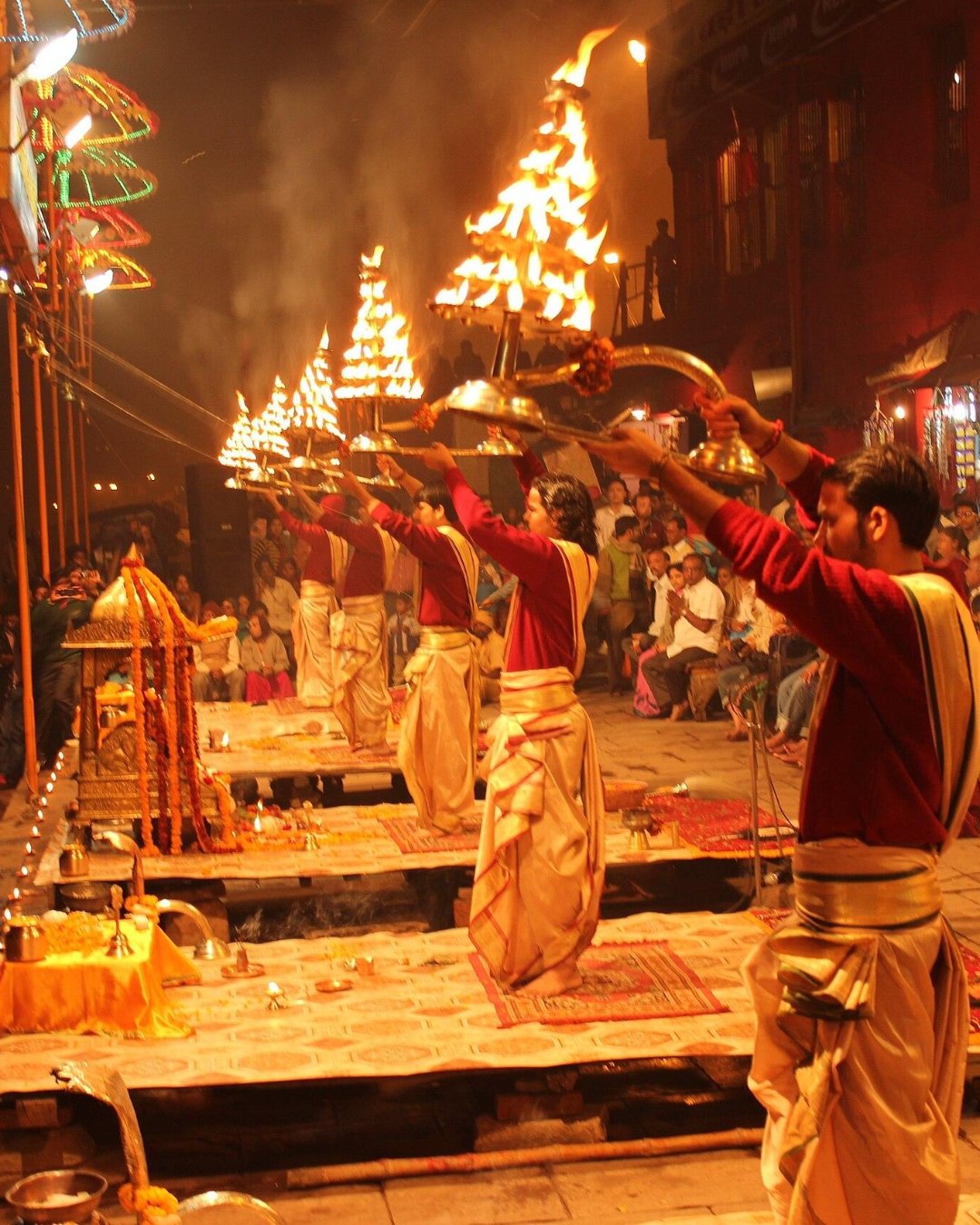
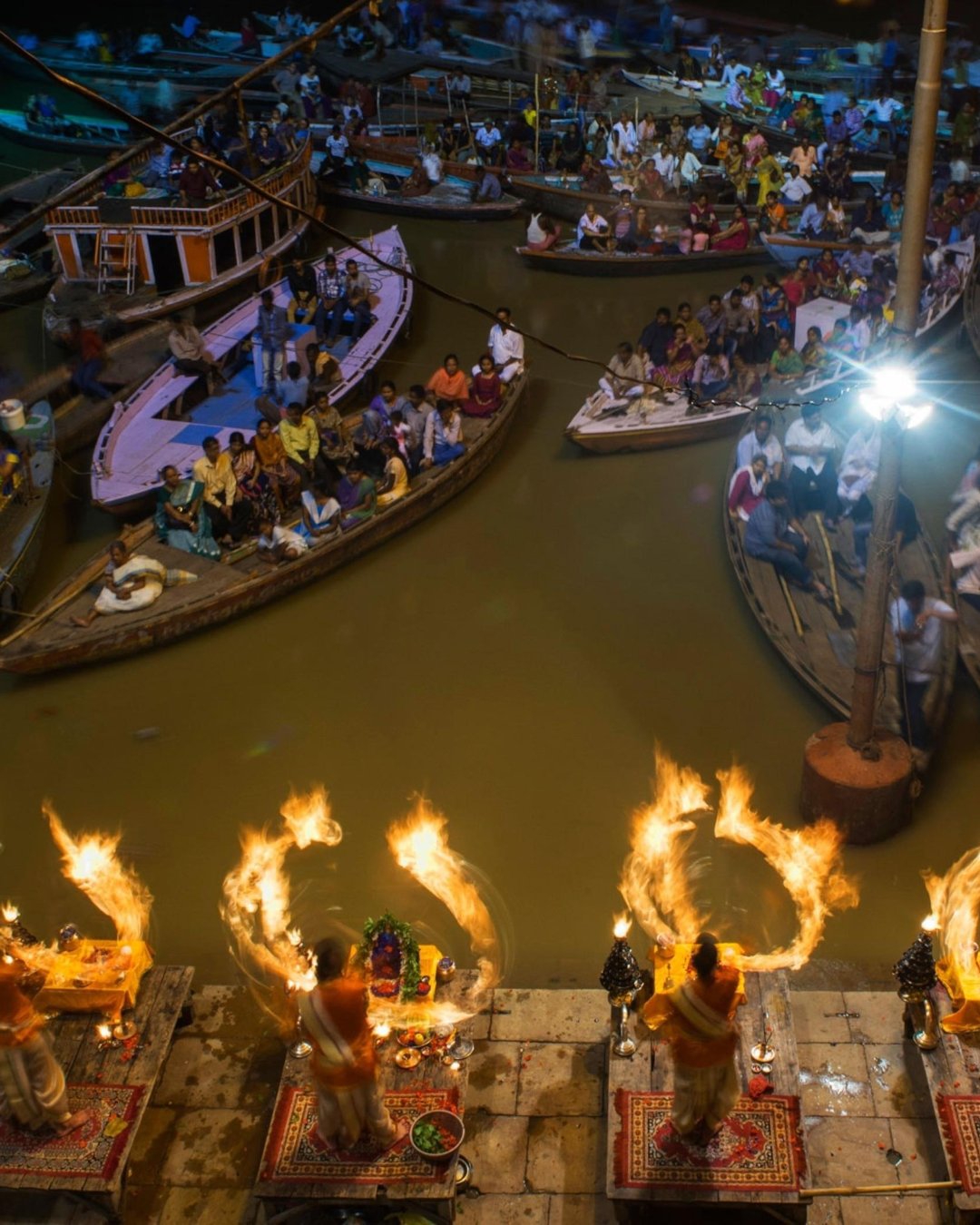
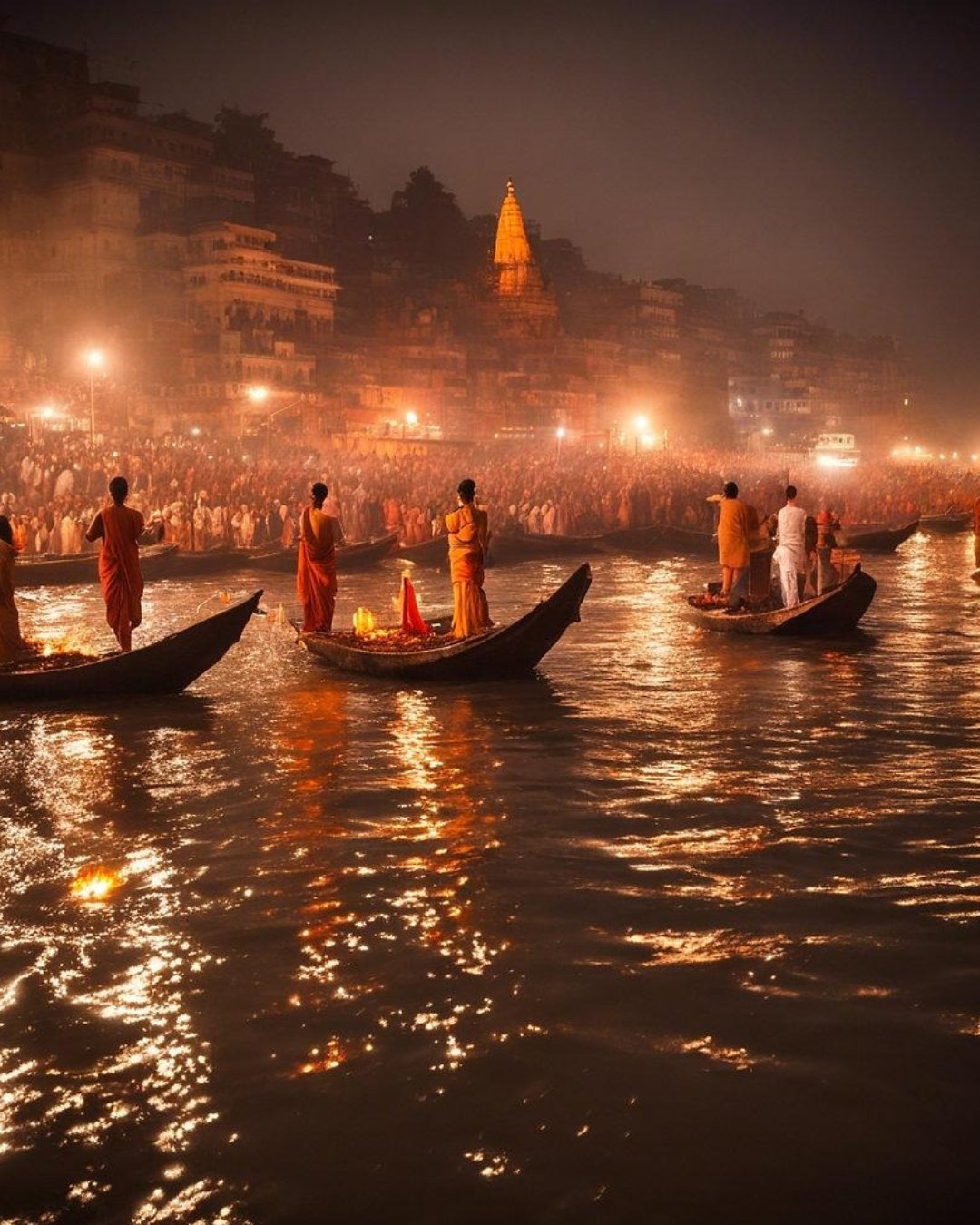
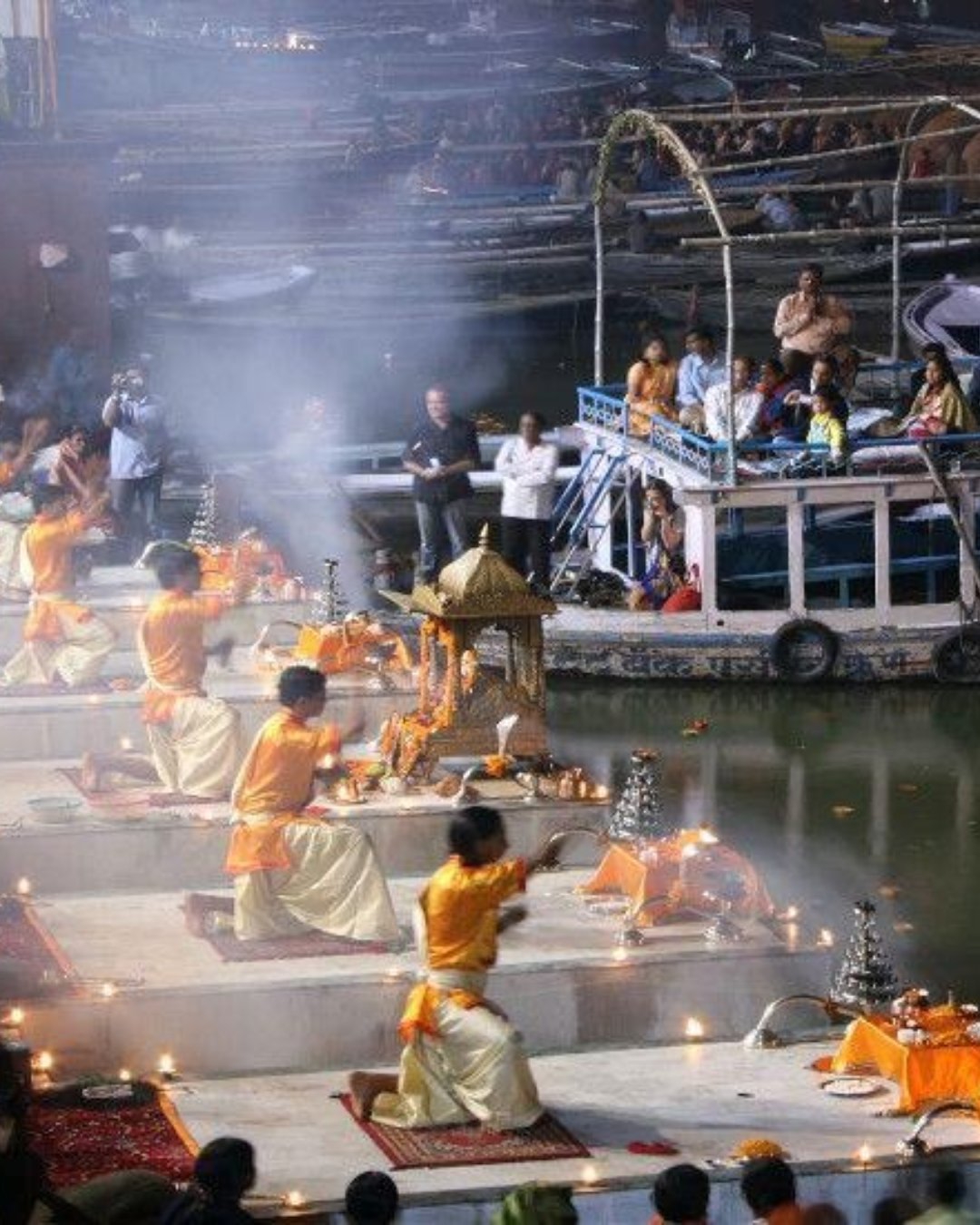
The Ganga Aarti From the Water.
The best seat for the Ganga Aarti isn't on the ghat at all. It's ten metres offshore, floating, with the whole ceremony facing you and not a single head in the way — and almost nobody plans for it.
Down at Dashashwamedh with the crowd, the priests swinging their lamps, fire against the dark. Then you get there at quarter to seven and find yourself twelve rows back, on tiptoe, watching the ceremony through a forest of other people's phones. But here's the thing nobody tells you: the best seat for the Ganga Aarti isn't on the ghat at all. It's on the water, floating a few metres out, with the whole ceremony lined up in front of you and not a single head in the way.
Let's fix that. Here's how watching the Ganga Aarti from a boat actually works, and how to get it right the first time.
Why the boat beats the steps
The aarti faces the river. The priests stand on their platforms with their backs to the city and their lamps raised toward the Ganga — which means the ghat crowd is watching the backs of the ceremony, while the river gets the front. From a boat you're looking straight into it, the way it's meant to be seen.
You also skip the crush entirely. No fighting for a step, no pickpockets working the squeeze, no arriving an hour early to hold a patch of stone. You drift in, your boatman holds position, and the ceremony plays out across the water like it's aimed at you. When it ends, you're already afloat to set a diya adrift. The steps give you the atmosphere; the water gives you the view.
What you'll actually see
The aarti starts after sunset and runs about 45 minutes, every night. From the water:
The full line of priests — usually seven, moving in unison, lamps growing heavier as it builds.
The tiered lamps and incense — the whole platform lit, reflected in the river in front of you.
The other boats — a floating audience gathering as dusk falls; part of the scene, not a distraction.
Floating diyas — buy a few and set them adrift once the ceremony ends; the current carries them downstream.
Bring a light layer — it's cooler and breezier on the water after dark than up on the steps.
And keep the phone down for the first few minutes. Travellers who've watched it from a boat will tell you the same thing: the pull is to film the whole thing, but it lands differently when you just watch it first, undistracted, with the bells rolling across the water toward you. The fire doubled in the river, the chanting, the diyas drifting past — that's the part the photos never quite catch.
Pro tip: Book the boat in advance and get there before the water fills up — the boats cluster tight near the front, and the earlier ones get the closest hold. Agree the price, the duration and private-versus-shared before you step in; a private boat lets you pick your spot and linger after the crowd disperses. Sit low and balanced, keep your bag in your lap, and combine it with a short row past the lamplit ghats before the ceremony begins. Skip the motorboats — the engine noise cuts straight through the aarti.
The mistakes that ruin it
Most first-timers trip over the same few things. They fight for a spot on the steps and see it over shoulders. They turn up as the boats are already packed and get held too far back. Or they spend the whole ceremony filming through a screen instead of watching the fire on the water.
The easy fix is to take it from a boat, booked ahead, positioned early — or let the evening be arranged so you're afloat and settled before the first lamp is lit.
35
MomentAssi Ghat, Varanasi
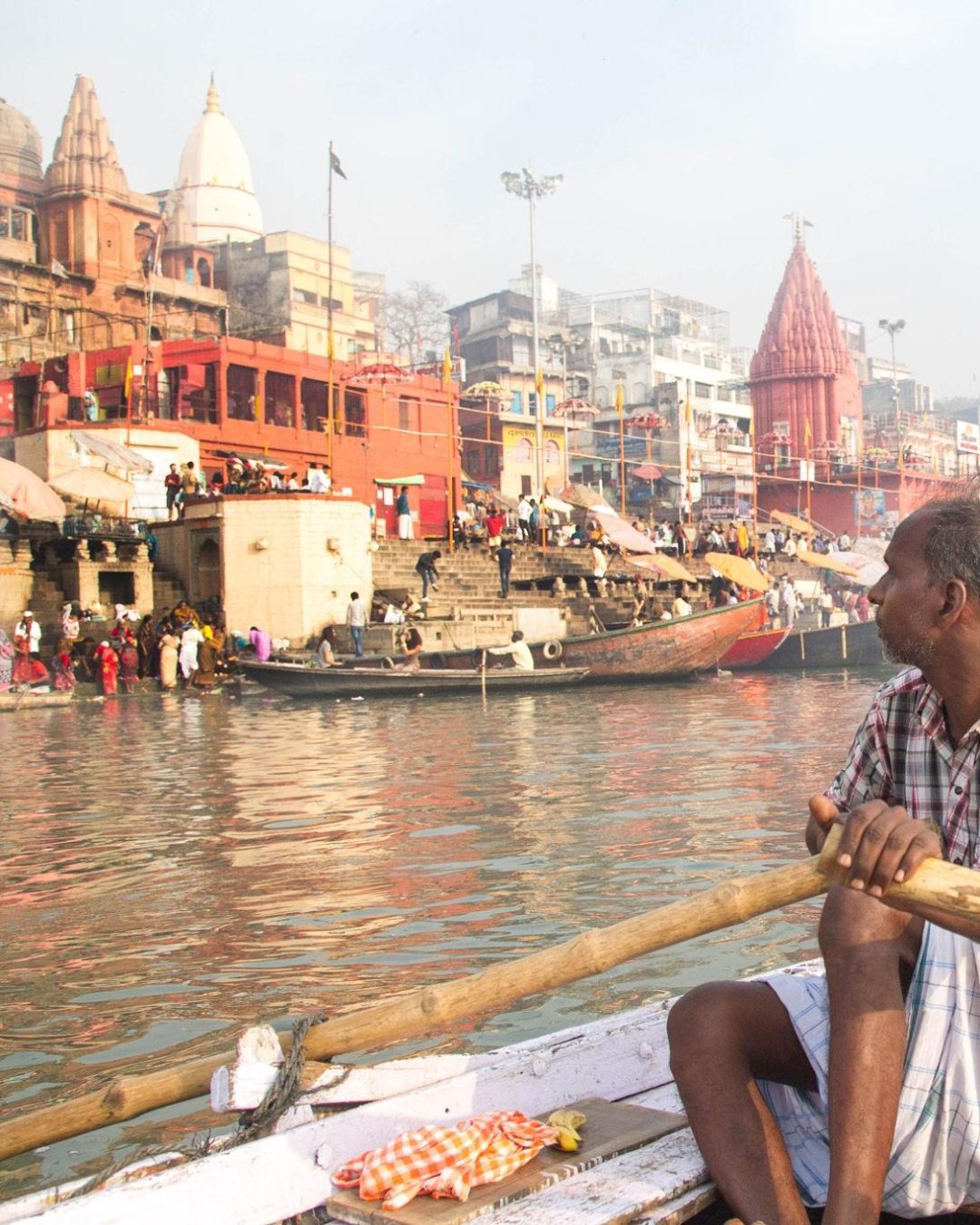
How to Book — and How to Bargain.
Two rules save you every rupee in this city: arrange the boat the night before, and never settle a price at 5 a.m. on the steps. Get those two right and the haggling mostly takes care of itself.
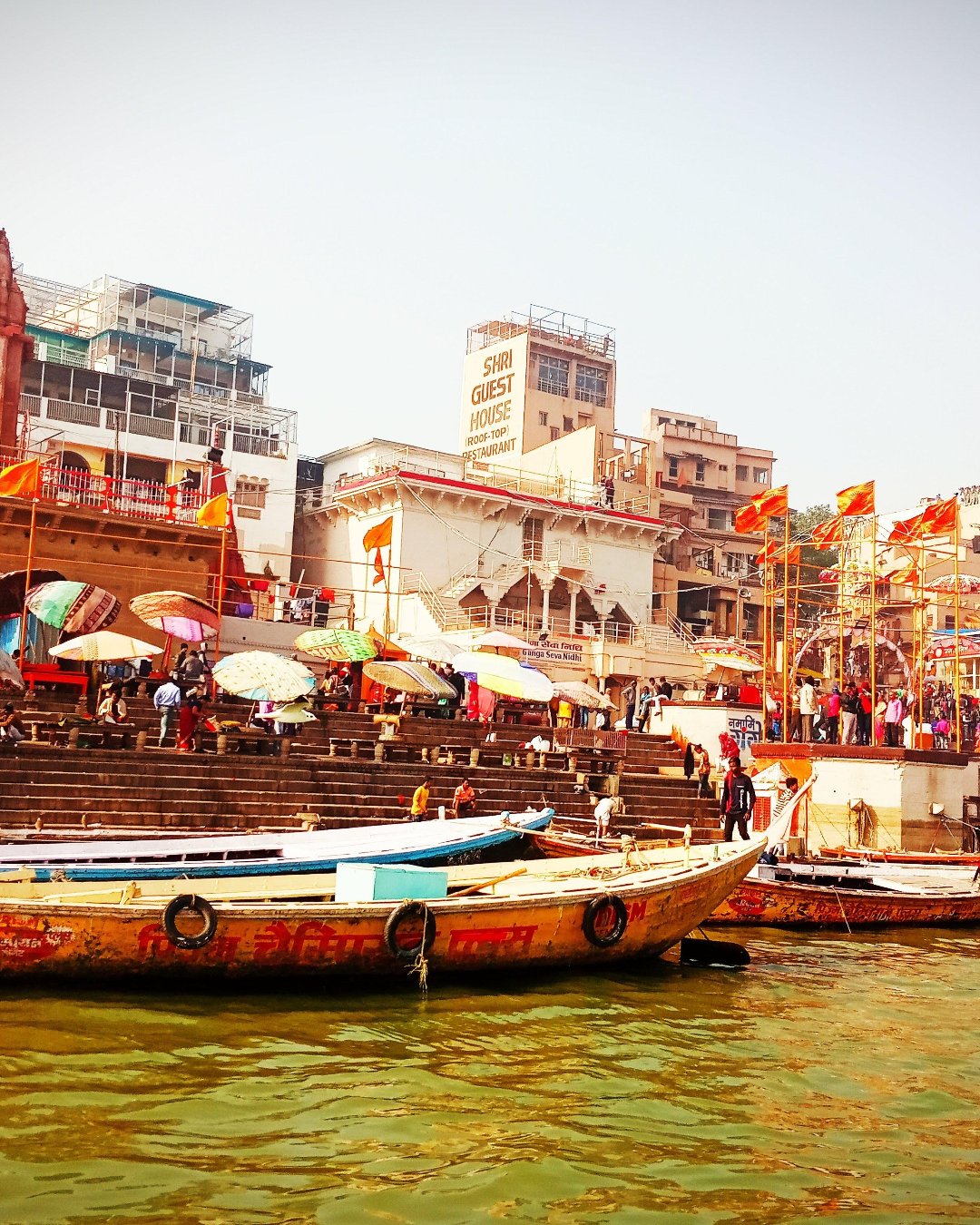
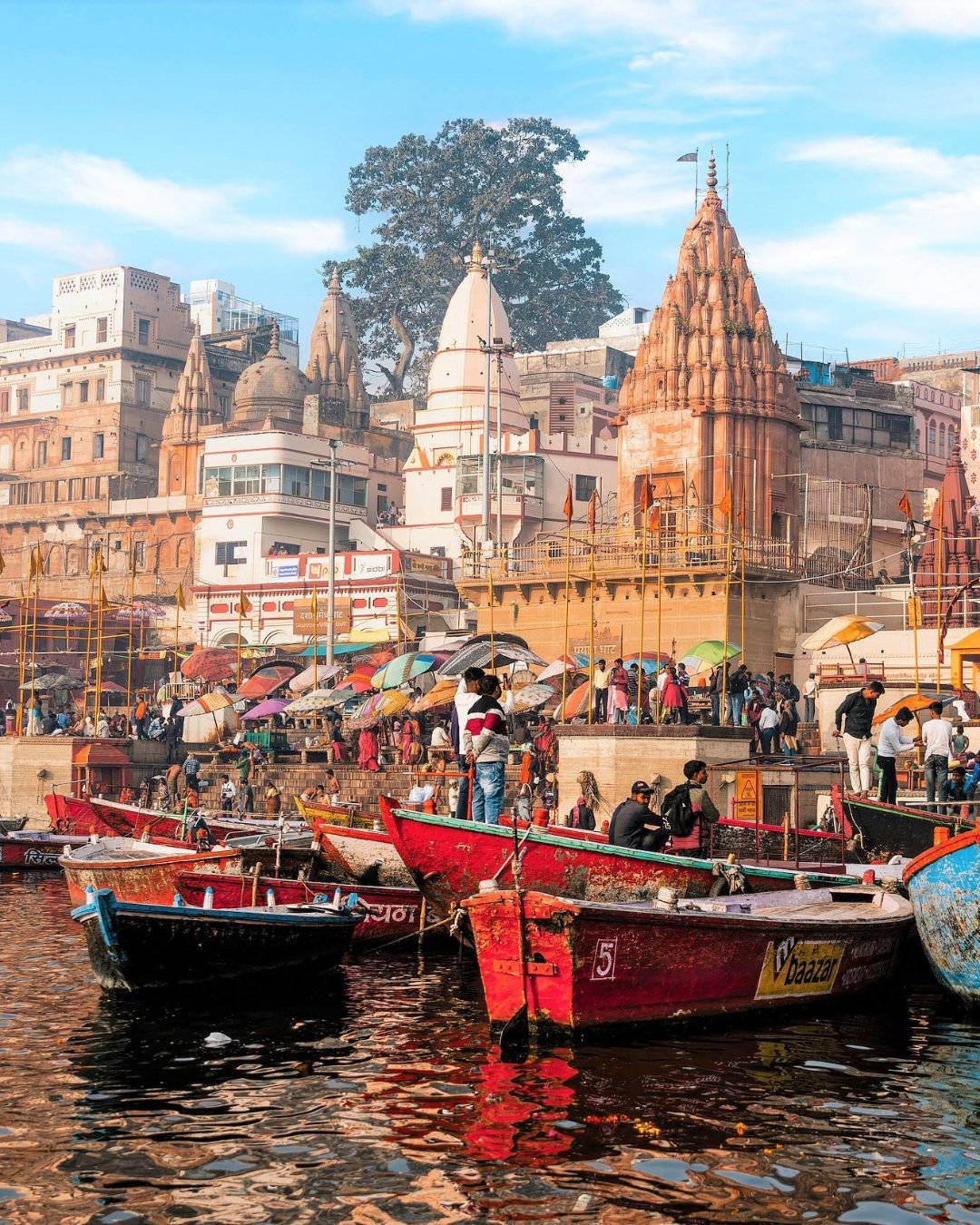
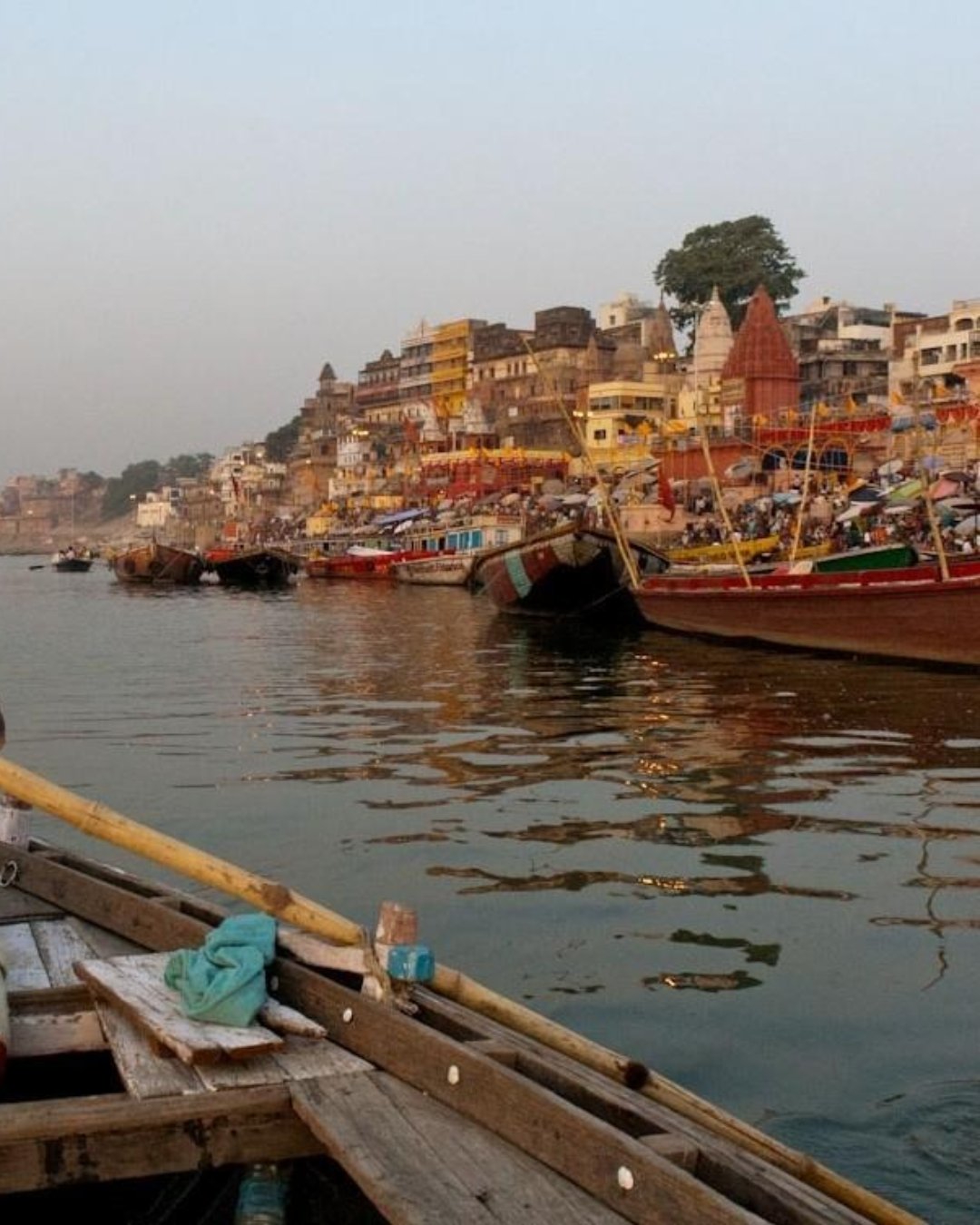
Varanasi has a reputation, and you've read the warnings: the touts, the "special price," the boatman who names a number and then triples it once you're mid-river. But here's the thing nobody tells you: almost every bad price in this city comes from booking in the wrong place at the wrong moment — on the ghat steps, at dawn, half-asleep, with ten men shouting at once. Fix when and where you arrange things, and the bargaining mostly takes care of itself.
Let's fix that. Here's how booking and bargaining in Varanasi actually work, and how to get it right the first time.
Why the night before beats the morning of
The single worst time to negotiate anything is 5 a.m. on the ghat, with the light coming and a boat you need now. You have no leverage, no time, and no way to compare — so you take the first number, and it's the wrong one. The touts know this, which is exactly why they work the dawn steps.
So move every decision earlier. Arrange the boat the evening before, through your hotel or a fixed-rate operator, and the pressure evaporates: you show up, you step in, you go. The same holds for guides, autos and the aarti seat. Anything settled in daylight, unhurried, with an agreed number, is a transaction. Anything settled at dawn on the steps is an ambush.
What you'll actually be quoted
Know the shape of the pricing before anyone quotes you:
Shared rowboat — the cheapest, per-seat, and you leave when it's full.
Private rowboat — a set price for the boat, by the hour; you set the pace and stops.
Motorboat — faster, louder, and wrong for a dawn ride where silence is the point.
Guides and autos — always priced up front, never "as you like" (which means "as I decide later").
Carry small notes, always. "No change" is the oldest way to turn your ₹500 into a ₹500 fare, and it works because you let it.
And here's the counterintuitive part: don't lead with the phone or the calculator. Travellers who handle this well will tell you the same thing — the tone matters more than the tactics. A calm "what's your best price?", a smile, and a genuine willingness to walk away will beat aggressive haggling every time. Fixing the number before you commit, not fighting over it after, is the part that actually saves you money — and the goodwill is worth more than the last fifty rupees.
Pro tip: Agree three things before you commit to any boat, auto or guide — the price, the duration, and exactly what's included (which ghats, how long, private or shared). Get it clear while you're still on dry land, in daylight, not once you're on the water and have no exit. Decline anyone who approaches you first; the ones who grab your arm are the ones to avoid. And if a deal needs deciding at 5 a.m. on the steps, that's the signal it was set up to catch you — walk on.
The mistakes that ruin it
Most first-timers trip over the same few things. They negotiate at dawn on the ghat with no leverage. They agree a price but not a duration, and get cut short. Or they hand over a big note and lose the change to "sorry, no change."
The easy fix is to book the night before, agree price-duration-inclusions up front, and carry small notes — or let it all be arranged ahead so there's nothing to bargain for at five in the morning.
42
MomentAssi Ghat, Varanasi
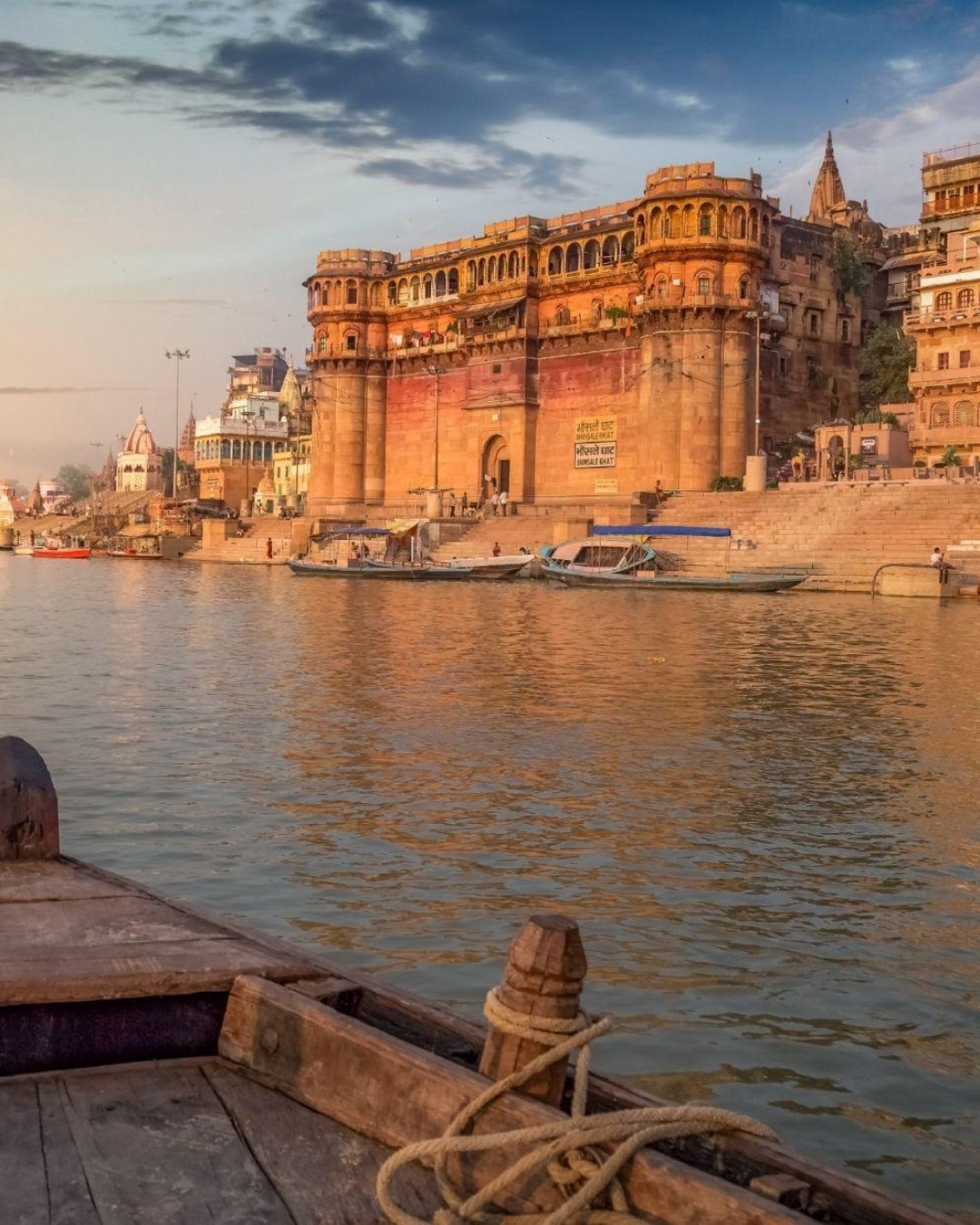
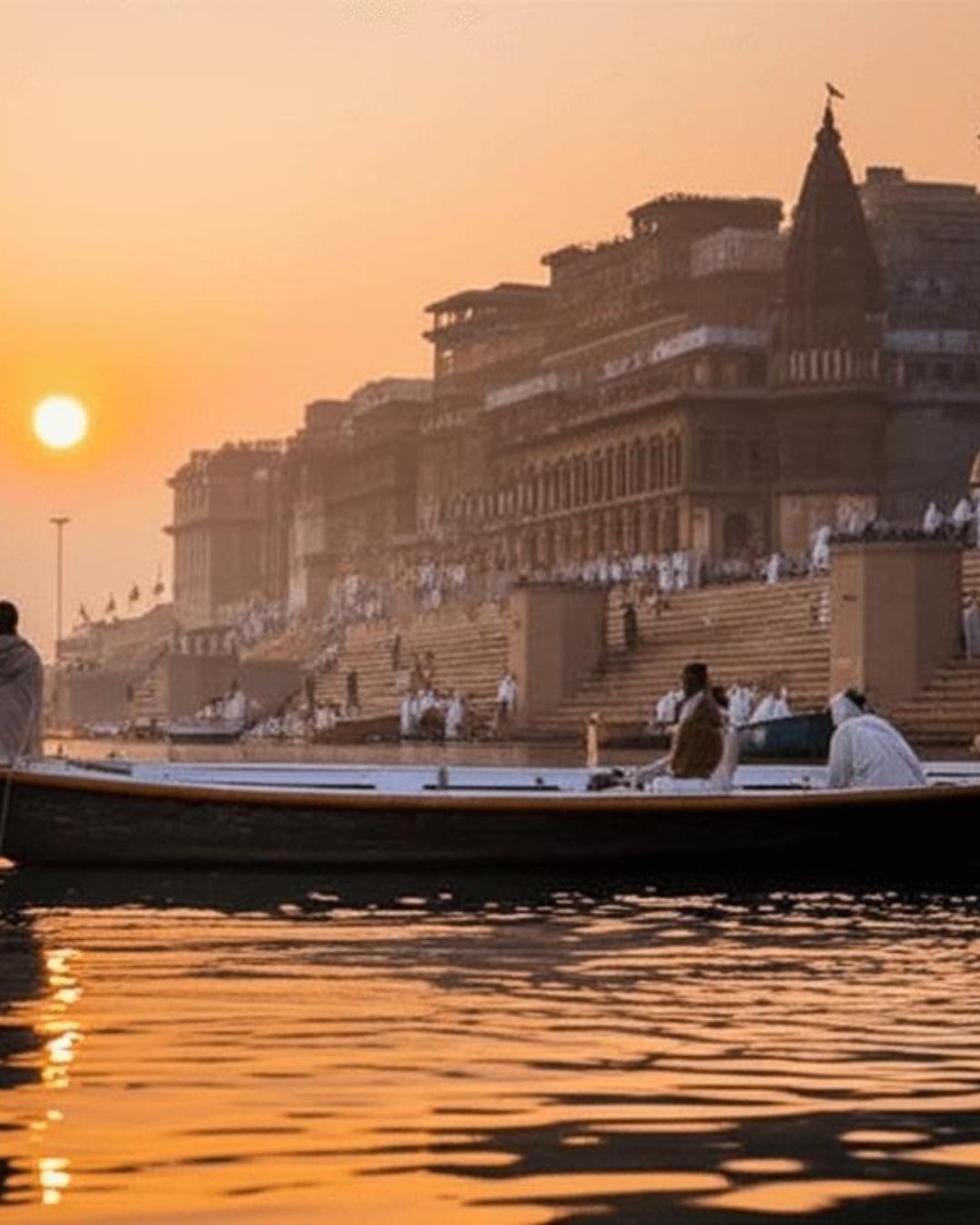
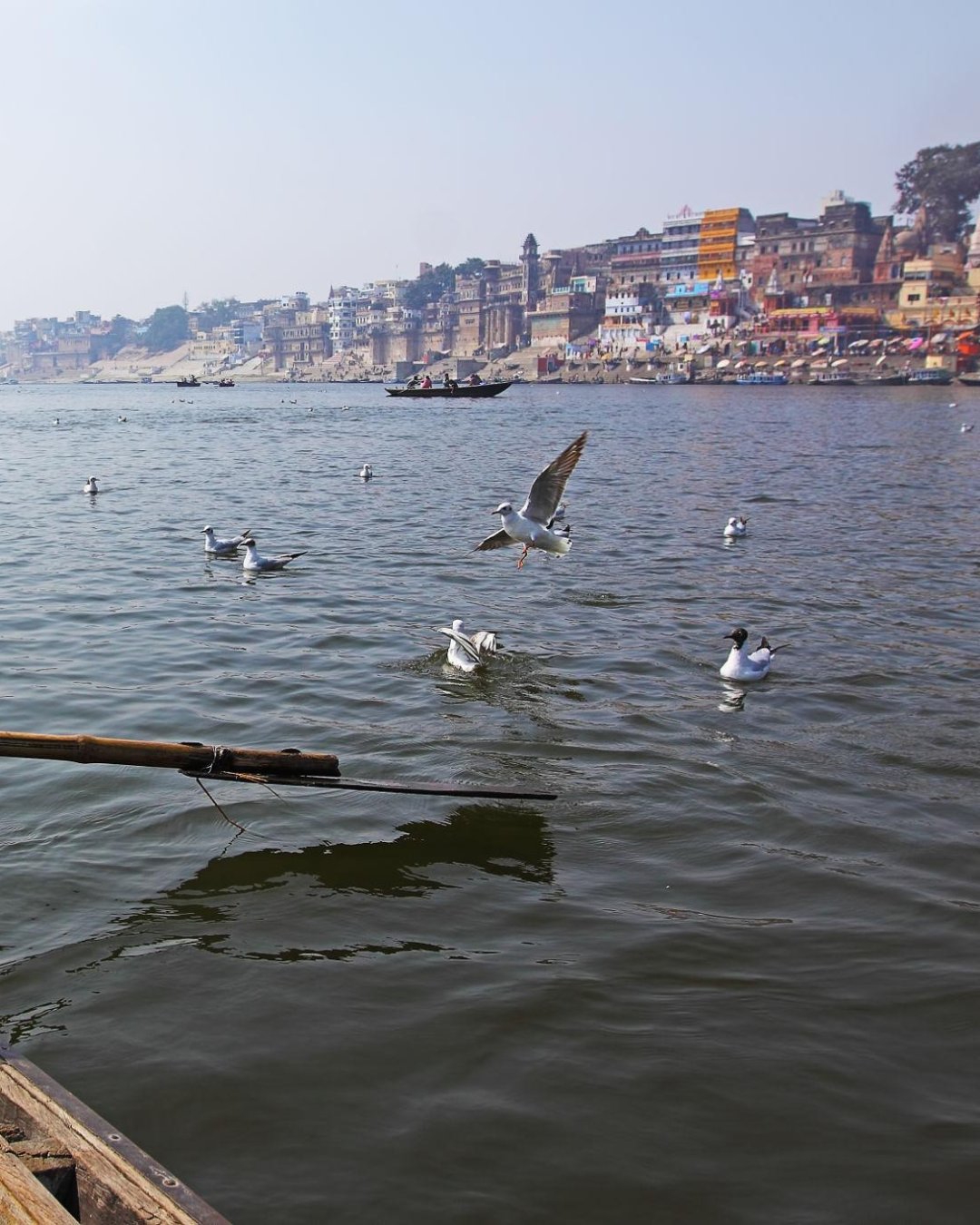
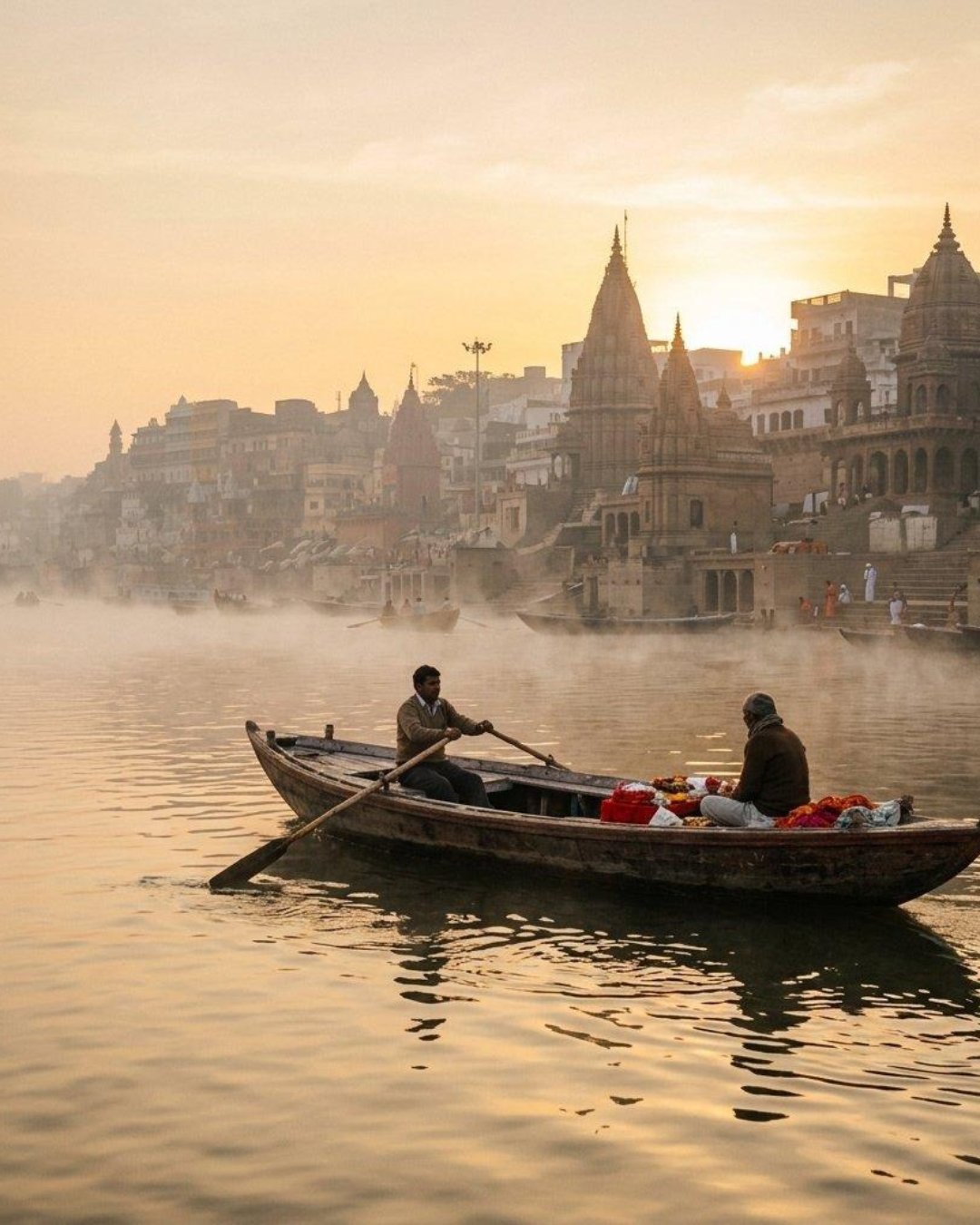
Boat-Ride Photography.
You've probably saved the shot already — golden light, silhouetted boats, a wall of glowing steps — and assumed you'll come home with it. But the people who took those knew exactly where to sit, which light to wait for, and when to put the camera down.
Golden light on the water, silhouetted boats, a wall of ancient steps glowing. Then you get on the boat, fire off two hundred frames from a moving rowboat in the half-dark, and every one comes out blurred, tilted, or a muddy grey nothing. But here's the thing nobody tells you: the photos you love were taken by people who knew exactly where to sit, what light to wait for, and — crucially — when to put the camera down. Do it wrong and you'll spend the best hour in Varanasi staring at a screen and still get nothing.
Let's fix that. Here's how boat-ride photography on the Ganga actually works, and how to get it right the first time.
Why the light, not the gear, decides your shots
The famous Varanasi photograph is a light photograph, not a camera one. The magic window is narrow: the twenty minutes before sunrise, when the sky glows and the ghats catch warm colour, and the twenty after, when the sun clears the far bank and rakes gold across the steps. Miss that and you're shooting flat, hard light on a grey river.
So the whole game is being on the water before the sun — hotel by 5:00 to 5:30 in summer — and being ready when it turns. The far (eastern) bank is open sand, so the sun comes up straight across the river into your lens. That's your backlight, your silhouettes, your reflections. By eight it's gone.
What you'll actually shoot
From a slow rowboat, close to the ghats, you'll get:
The ghats in warm light — the classic wide shot, steps and temples stacked up the bank.
Silhouetted boats and bathers — against the rising sun and its reflection on the water.
Diyas and detail — little floating lamps, folded hands, marigolds, close and low.
Life on the steps — priests, sadhus, dhobis, the everyday, from just offshore.
Bring a jacket — it's cold and breezy on the water at dawn — and something to steady you, because the boat never stops moving.
And keep the camera down for the first ten minutes anyway. Travellers who've done this will tell you the same thing: the urge is to shoot from the second you push off, but if you photograph the whole ride you never actually see it, and your pictures are worse for the panic. Watch first, find the light, then shoot with intent. The bells, the chanting, the slap of the oar — that's the part no photo catches, and chasing it with a lens is how you lose it.
Pro tip: Book a private rowboat, not shared and never a motorboat — you can ask the oarsman to slow, hold position, or turn you into the light, which a shared boat won't. Shoot at a high ISO and a fast shutter (1/500 or faster) to kill the boat's motion; brace your elbows on your knees. Shoot toward the sun for silhouettes and reflections, not away from it. And the hard rule that overrides every shot: at Manikarnika and Harishchandra, the cameras go away. No cremation photographs, ever — it's forbidden, and it's someone's funeral, not your portfolio.
The mistakes that ruin the shots
Most first-timers trip over the same few things. They arrive after the light and shoot flat grey. They spray hundreds of blurred frames from a moving boat instead of waiting for a few good ones. Or they point a lens at the pyres and get, rightly, confronted.
The easy fix is to be on the water before dawn in a private boat, shoot with the light rather than at everything, and know which two ghats are never photographed.
40
MomentDashashwamedh Ghat, Varanasi
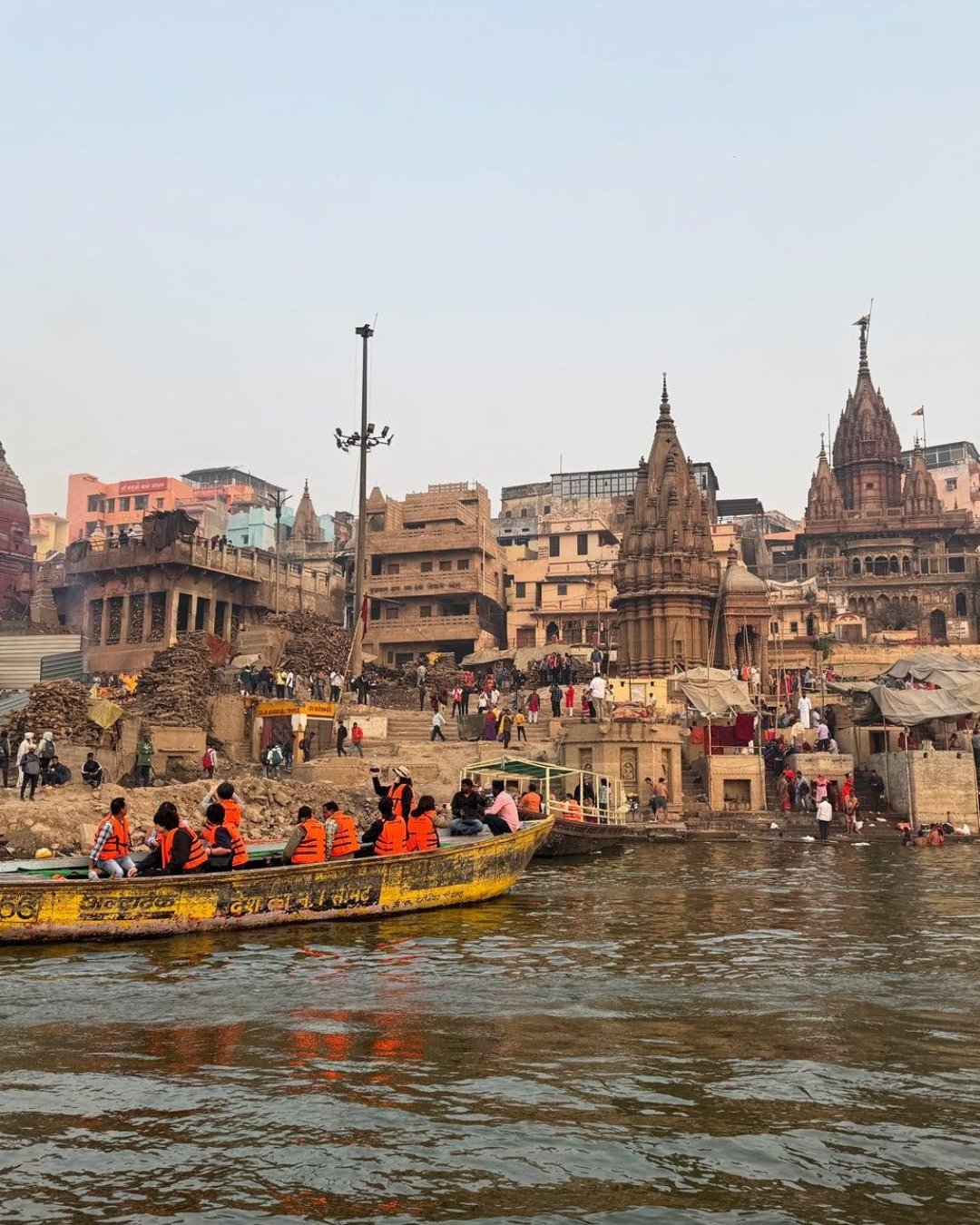
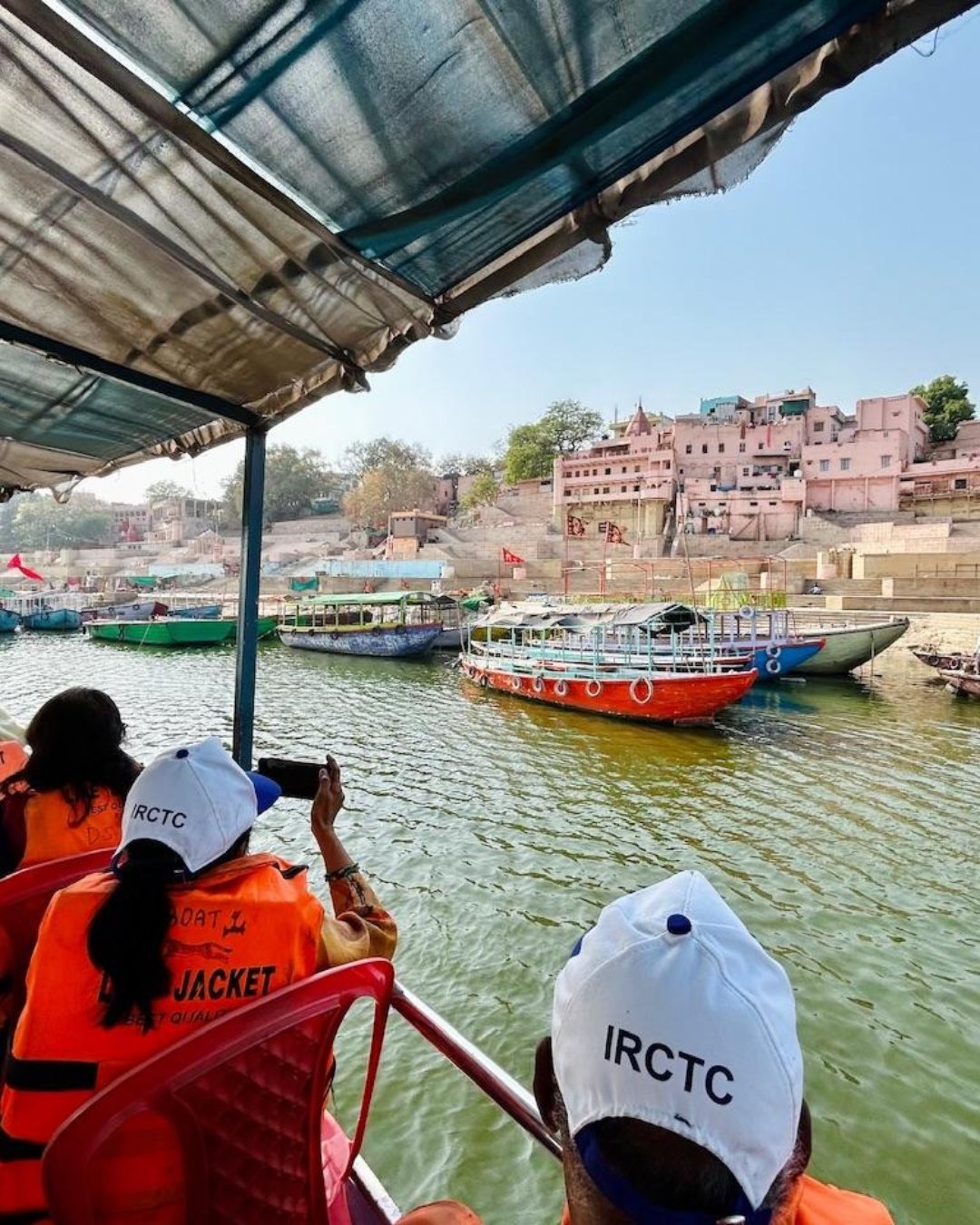
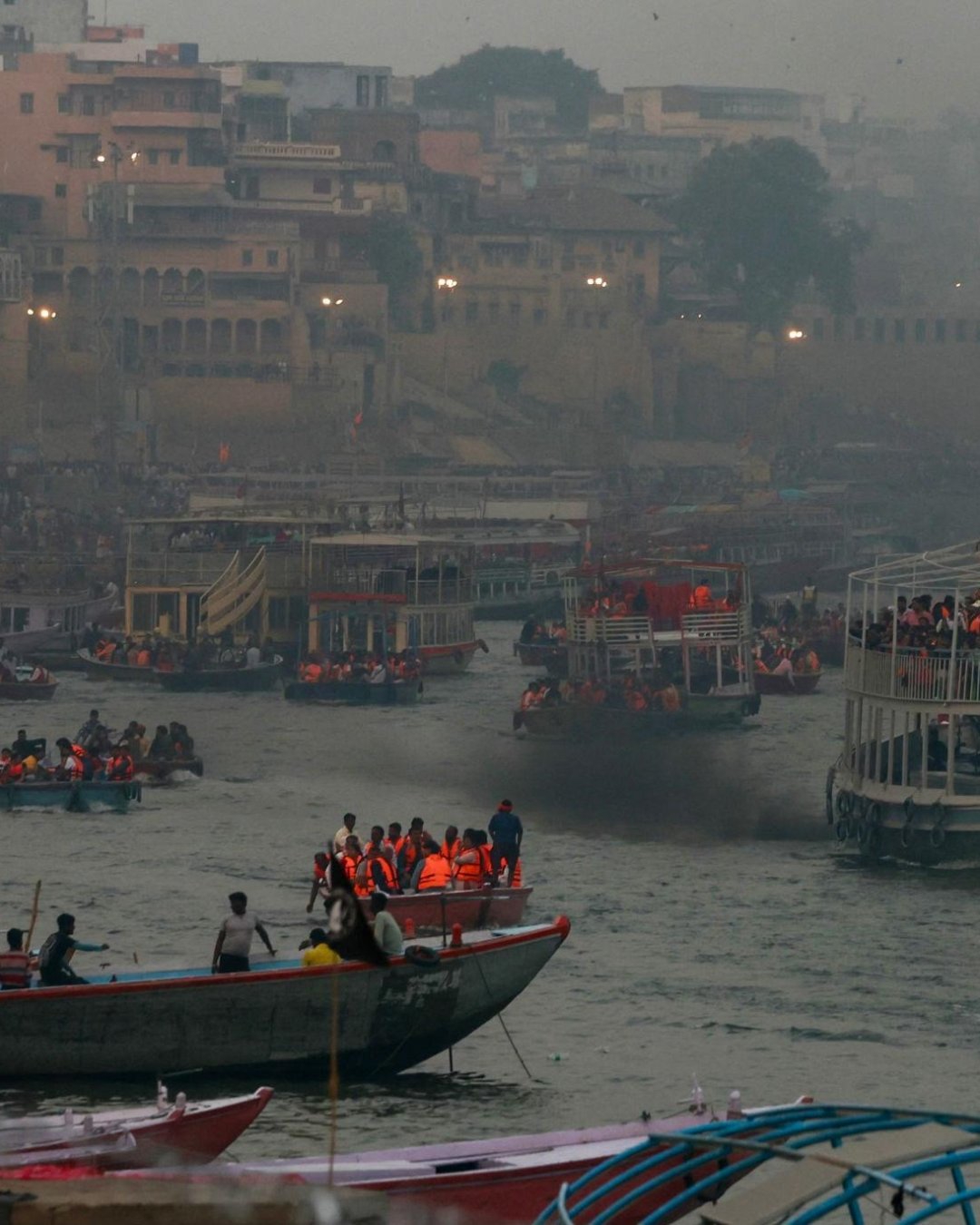
Safety on the Ganga.
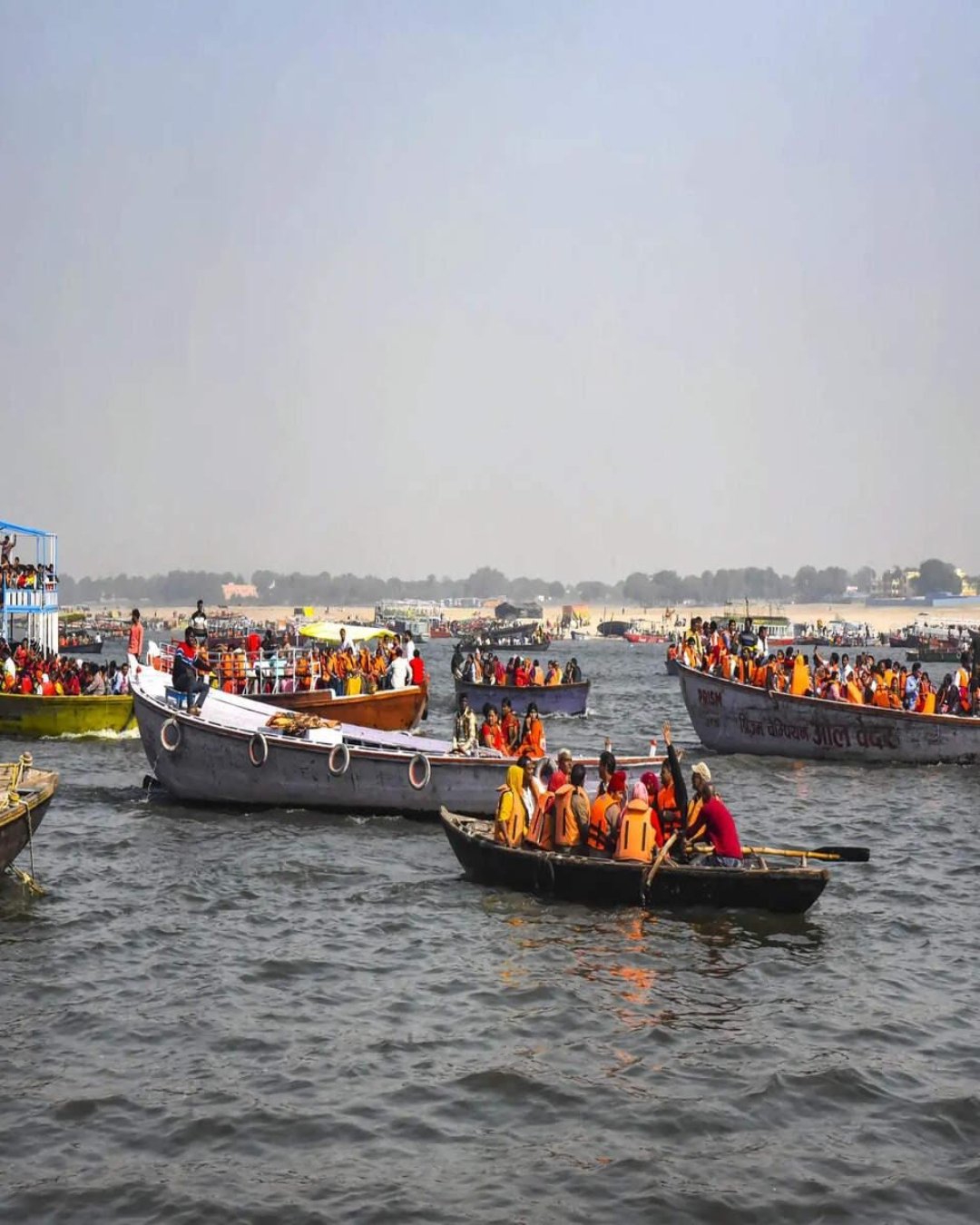
The Ganga at Varanasi is a real river with real currents, and boats here do capsize. The difference between a magical evening and a genuinely dangerous one is a few questions you ask before you step in — not after.
No life jackets, no headcount, an oarsman pushing off into the dark with twenty people aboard — and everyone assuming someone, somewhere, has checked that this is fine. But here's the thing nobody tells you: the Ganga at Varanasi is a real river with real currents, boats do capsize, and the difference between a magical evening and a genuinely dangerous one is a few questions you ask before you step in, not after.
Let's fix that. Here's how to stay safe on the Ganga, and how to get it right the first time.
Why the boat you choose matters more than the price
Most incidents here come down to overloading. A wooden rowboat built for a dozen gets loaded with twenty-five on a busy aarti evening, sits low in the water, and has no margin if the wind picks up or the wake from a bigger boat hits it. Cheaper and fuller is exactly the wrong instinct.
So the single best safety decision is the boat itself: one that isn't overloaded, with life jackets actually aboard, run by an operator who isn't cramming in one more fare. That usually means paying a little more for a private or properly-limited boat rather than squeezing onto the cheapest crowded one. On aarti evenings especially, when the river is at its busiest, this is the call that matters.
What to check before you board
Thirty seconds of looking, before your feet leave the steps:
Life jackets — are they on the boat, one per person, and will yours actually be worn? Insist, particularly for children.
The load — is it sensibly full or dangerously packed? If it's already low in the water, wait for the next one.
The boatman — sober, unhurried, and clear about the route and duration you agreed.
The weather — in monsoon (July–September) the current runs hard and high; boating is sometimes suspended for good reason, so don't push it.
Bring a light layer and keep your phone and valuables zipped away — not just against pickpockets in the crush, but because a phone lost overboard is gone.
And here's the part people get wrong for the right reasons: the river is holy, but do not drink it or swim in it. Pilgrims bathe here as an act of faith, with lifelong immunity you don't have; for a visitor the Ganga at Varanasi carries serious pollution, and a mouthful can mean a ruined trip. Float your diya, dip a hand if you wish, and leave it there. That restraint is the part no one puts in the brochure.
Pro tip: Book through your hotel or a known operator rather than the loudest tout on the steps — a boatman with a reputation to keep is a safer boatman. Agree the price, route and duration on land, confirm life jackets before boarding, and never let anyone rush you onto a boat that's already too full. If you can't swim, say so and wear the jacket the whole time. And keep a firm hand on children the entire ride; the steps and the gunwales are slick.
The mistakes that ruin it
Most first-timers trip over the same few things. They pile onto the cheapest, fullest boat on a packed aarti night. They skip the life jackets because nobody else is wearing one. Or they treat the holy river as clean and take a sip or a swim they regret.
The easy fix is to choose a safe, properly loaded boat, confirm life jackets before boarding, agree the price, route and duration in advance, and avoid overcrowded boats — especially during the evening aarti and festivals.
47
MomentDashashwamedh Ghat, Varanasi
Beyond the Rowboat: The Ganga Cruise.
Forget rowboat-versus-cruise. The real question is dawn-versus-dusk — because the little wooden boat and the double-decker cruiser are built for opposite hours, and picking the wrong one for the wrong time is how the trip sours.
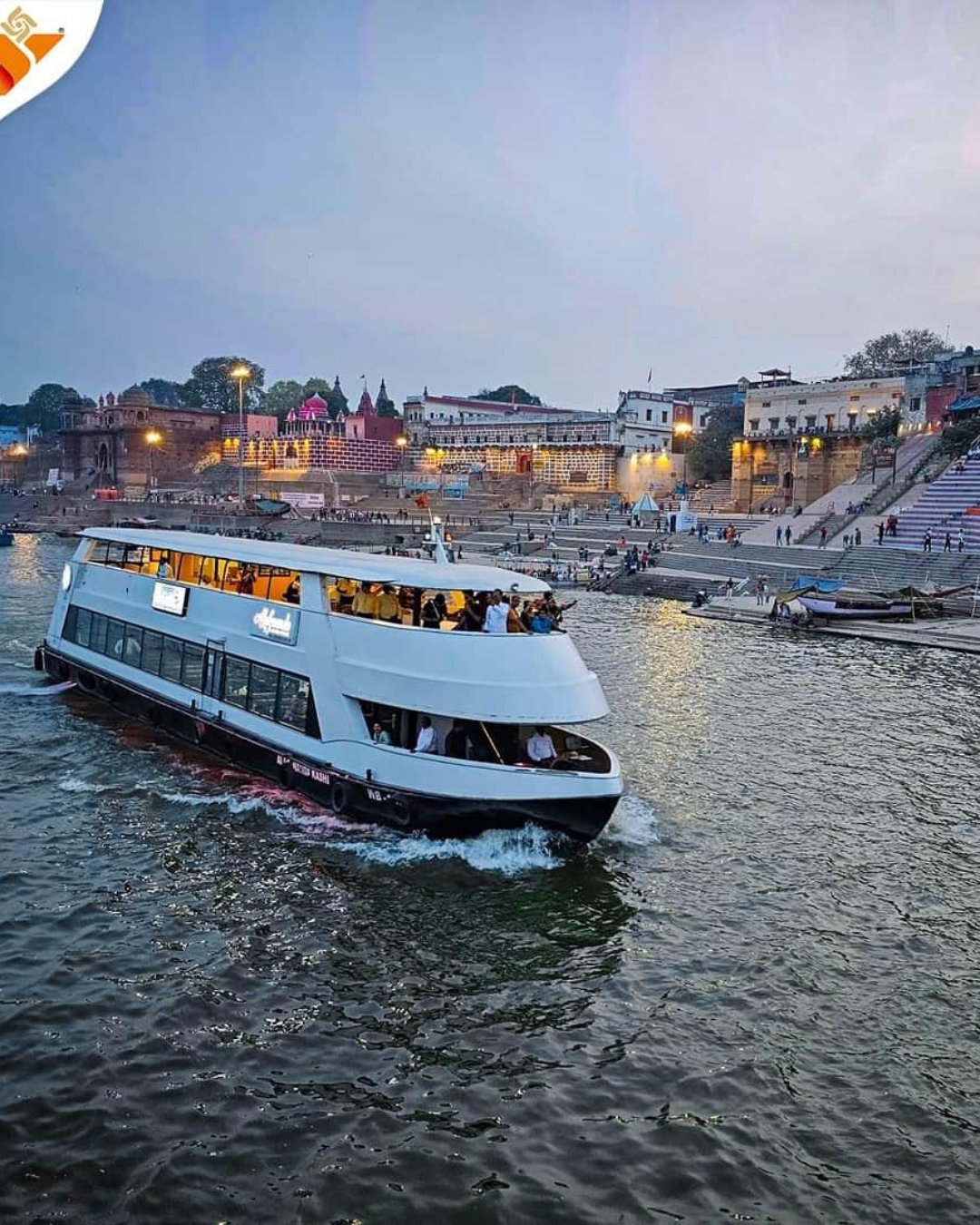
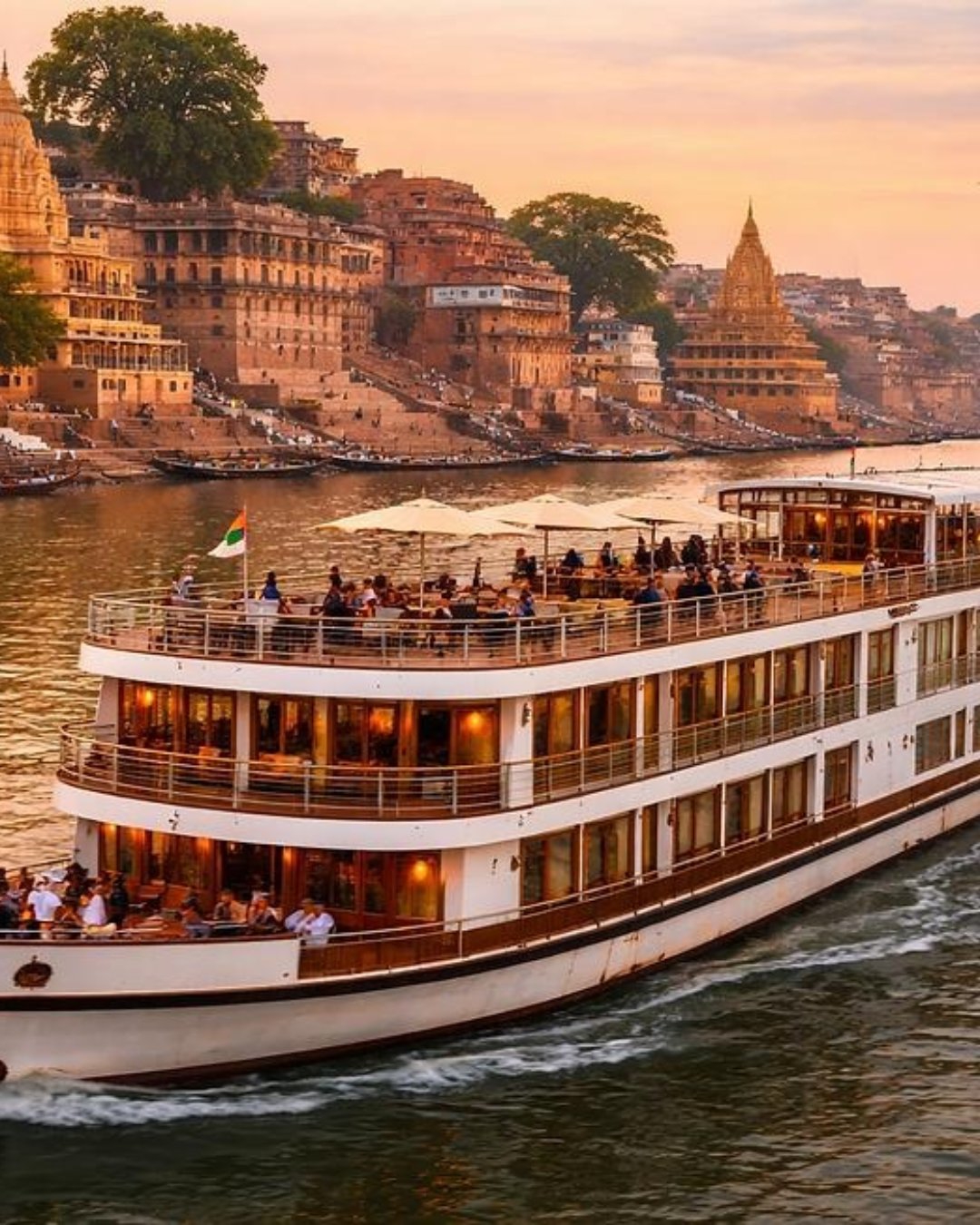
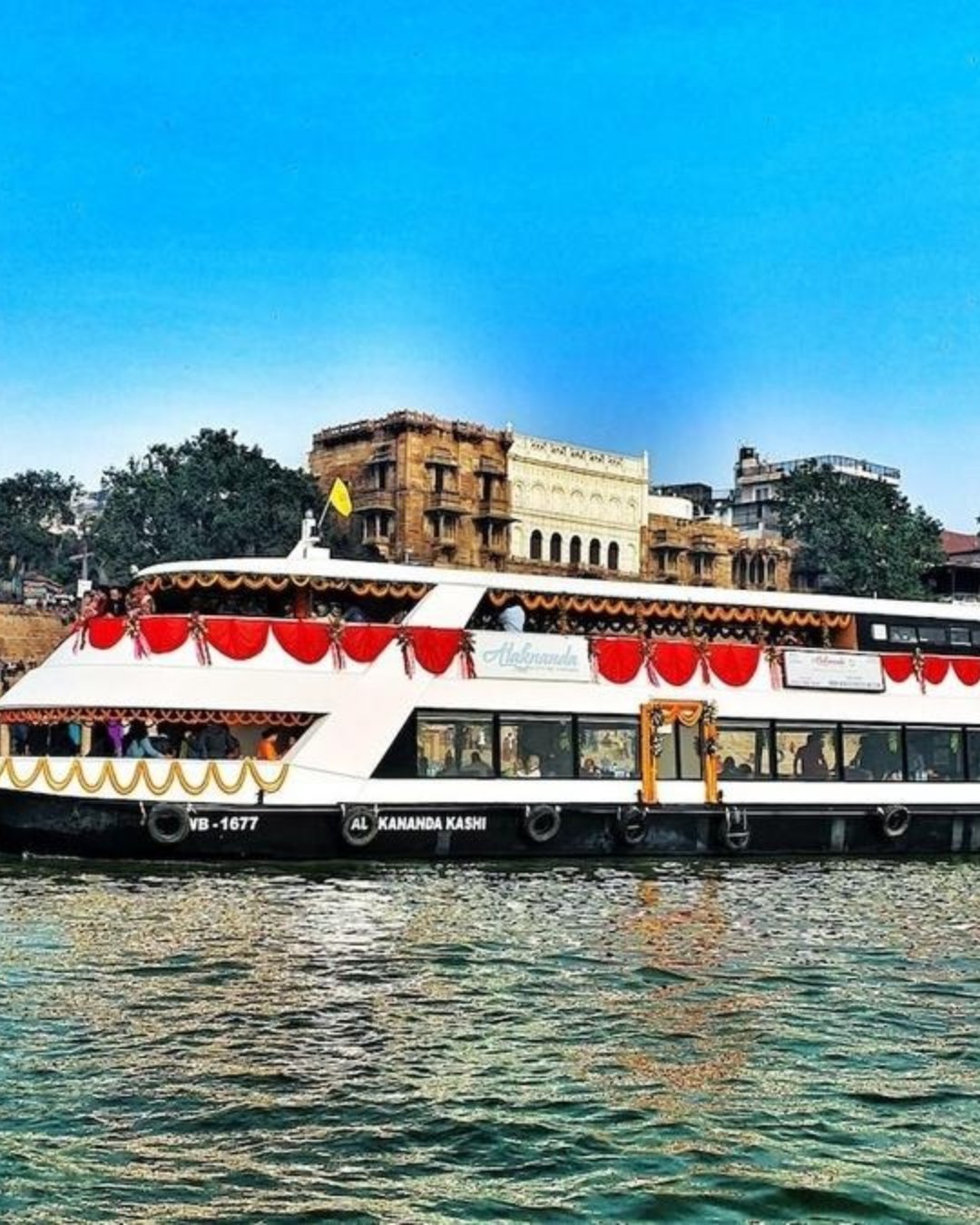
But somewhere in your planning you've seen the bigger vessels too — the double-decker cruisers, the "luxury Ganga cruise," even the CNG catamaran the government runs now — and wondered whether that's the smarter, comfier way to see the ghats. Here's the thing nobody tells you: a cruise and a rowboat are two completely different experiences, and picking the wrong one for the wrong moment is how people end up on a loud diesel deck at dawn wishing they'd taken the quiet little boat instead.
Let's fix that. Here's how the Ganga cruise actually works, and how to get it right the first time.
Why the vessel decides the moment
The rowboat's whole gift is silence — the slap of the oar, the ghats waking, nothing between you and the river. That's a dawn experience. A cruise is the opposite: a stable deck, a roof, a railing, room to move, and often a guide and refreshments. That's an evening experience — for the Ganga Aarti, when you want a steady platform and a clear elevated view across the water while the ceremony plays out on the steps.
So don't think of it as rowboat-versus-cruise. Think of it as dawn-versus-dusk. The rowboat is for the sunrise, when silence is the point. The cruise is for the aarti, when comfort, height and a stable camera platform are.
What you'll actually get on a cruise
The options have grown well beyond the old wooden boats:
The Alaknanda-style catamarans — larger CNG/electric vessels, cleaner and quieter than diesel, with upper decks.
Evening aarti cruises — timed to Dashashwamedh, holding position offshore for the ceremony.
Roof and railing — a proper vantage for photos, and space for those who can't manage a low rocking rowboat.
A guide and refreshments — commentary on the ghats, sometimes tea or snacks aboard.
Bring a light layer — it's breezier out on the open deck than on land — and, on the evening cruise, keep the phone down for the first few minutes of the aarti. Even from a comfortable deck, the ceremony lands harder when you watch it first. The bells and the fire across the water are the part the photos never quite catch.
Pro tip: Match the boat to the hour — rowboat at sunrise, cruise at the evening aarti — and if you only do one motorised trip, make it the aarti cruise, because that's where the stable deck and the offshore angle genuinely beat the rowboat. Book ahead for the evening; the good vessels fill on festival nights and full moons. Choose CNG or electric over diesel where you can — it's quieter and cleaner on a sacred river. And check whether your fare is a shared sailing or a private charter before you pay.
The mistakes that ruin it
Most first-timers trip over the same few things. They take a big diesel cruiser at dawn and drown the silence that was the whole reason to go early. They turn up for an evening cruise without booking on a festival night and find every deck full. Or they assume "cruise" means luxury and end up on a crowded party boat with a sound system.
The easy fix is to book the right vessel for the right hour in advance — rowboat for the sunrise, a quiet cruise for the aarti — rather than deciding at the ghat among a dozen touts.
36
MomentAssi Ghat, Varanasi
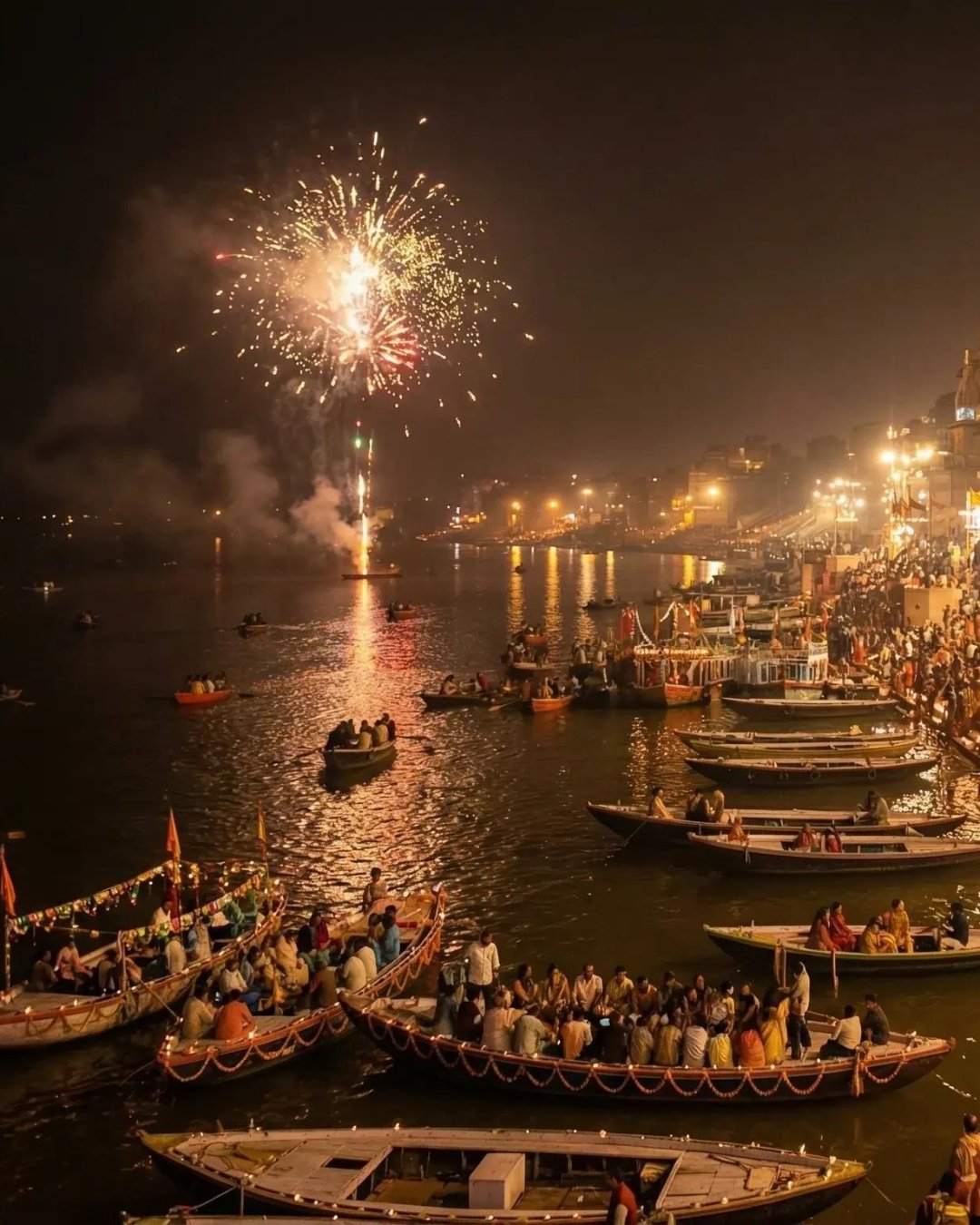
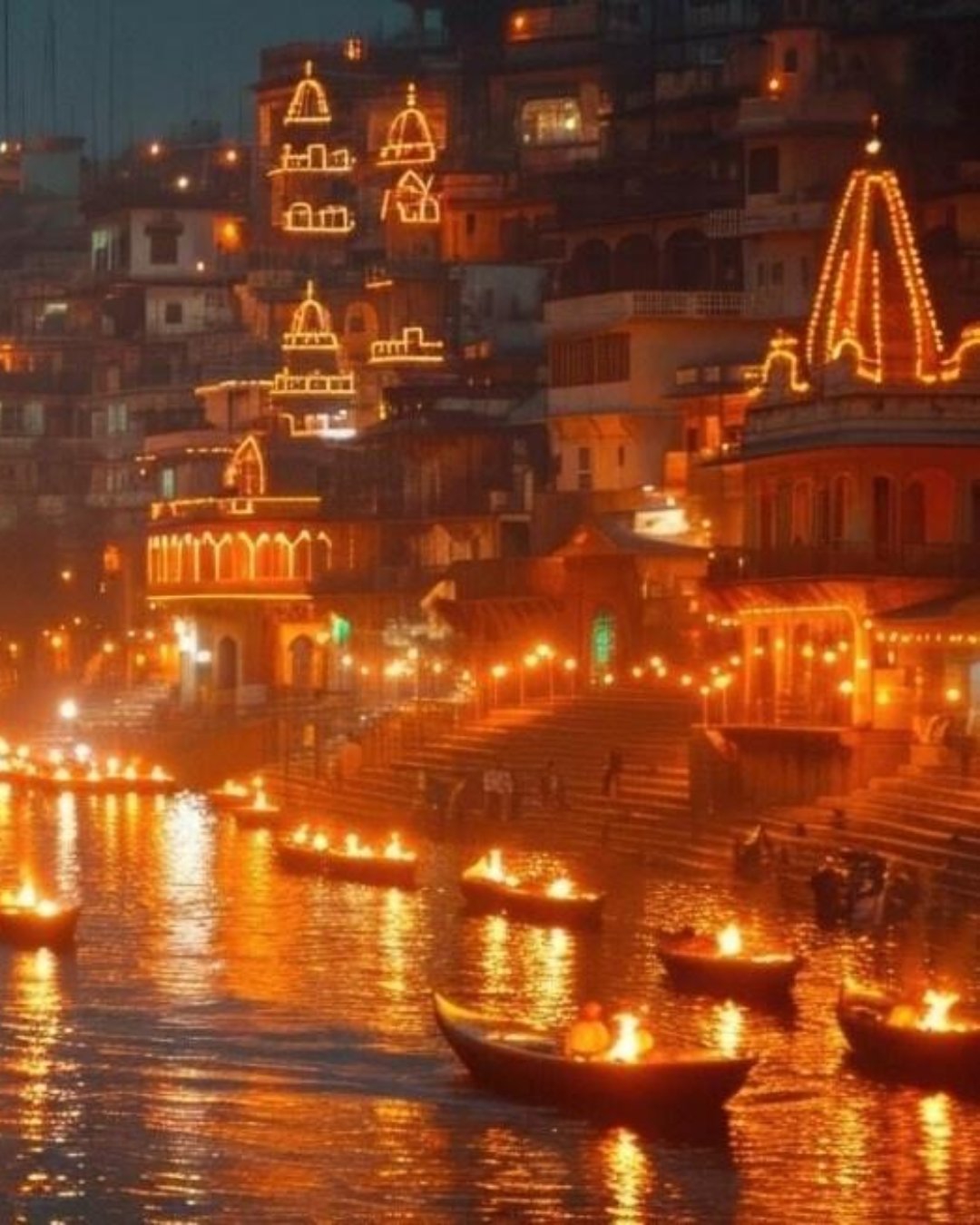
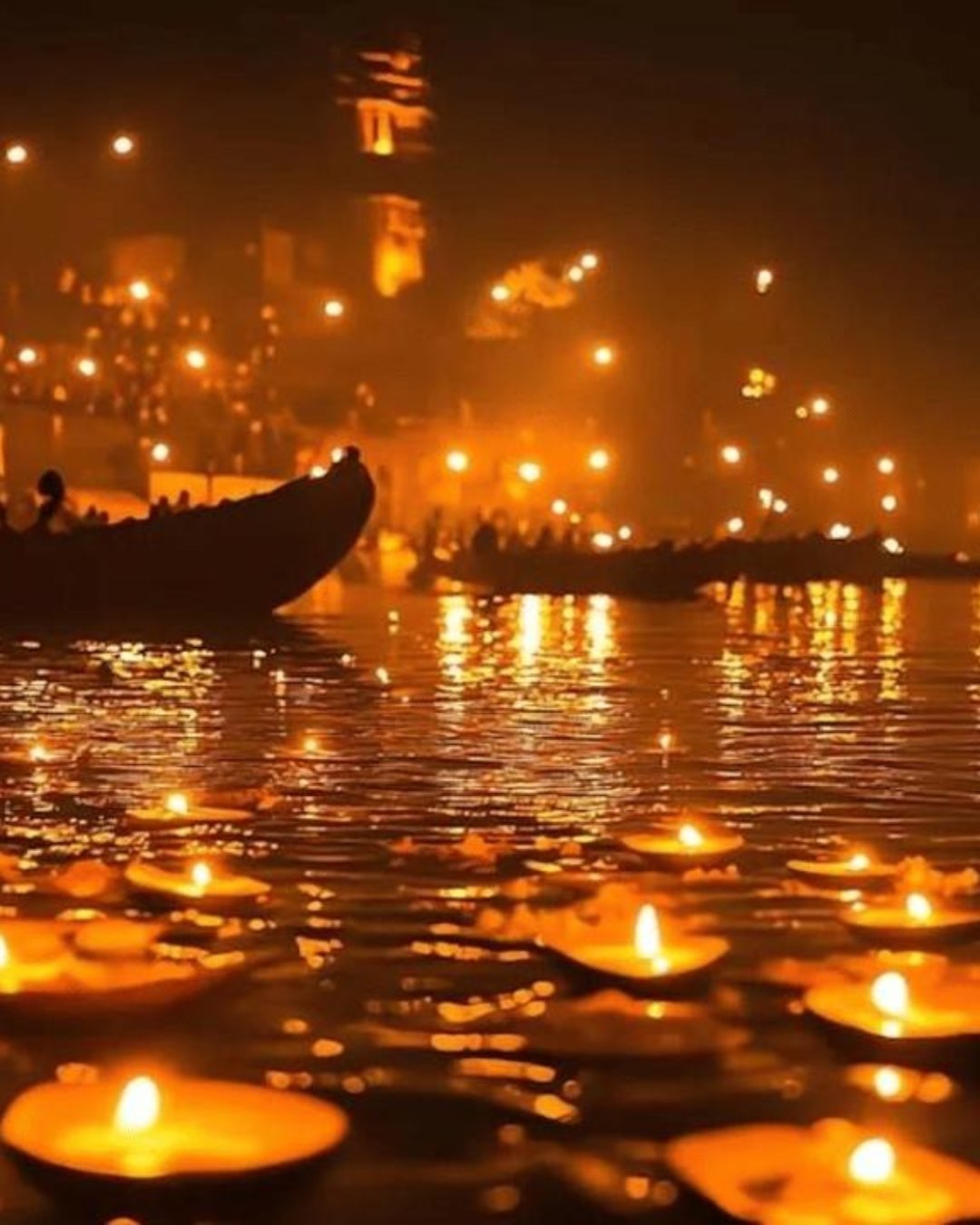
Festival Boat Rides: Dev Deepawali & Beyond.
On Dev Deepawali, 'I'll just book a boat when I get there' is how you end up stuck on the steps watching everyone else out on the water. The boats sell out weeks ahead, at five to ten times the fare.
" The whole riverfront lit with a million lamps, the ghats glowing, boats packed onto the water. But here's the thing nobody tells you: on Dev Deepawali the boats are gone — sold out days or weeks ahead, at five or ten times the normal fare — and the ones still available are dangerously overloaded. Turn up on the day expecting to step into a rowboat and you'll be standing on a jammed ghat watching everyone else on the water.
Let's fix that. Here's how a festival boat ride actually works, and how to get it right the first time.
Why the festival changes every rule
Dev Deepawali — the "Diwali of the gods," on the Kartik Purnima full moon, fifteen days after Diwali — is the biggest night on the Varanasi river calendar. Every ghat is lined with lakhs of earthen lamps, there's a laser-and-fireworks show, and the whole city comes to the water. It's extraordinary, and it is nothing like an ordinary dawn ride.
The ordinary rules invert. Demand is enormous and supply is fixed, so boats must be booked well in advance, not negotiated on the steps. Prices multiply. The river gets dangerously crowded, and overloading causes real accidents. And the magic hour is the evening, not dawn — the lamps are lit at dusk. This is the one time "just show up" fails completely.
What you'll actually see
An evening ride on the right festival night gives you the view the ghats can't:
Dev Deepawali — the whole ghat line lit with lamps, best seen from the water looking back at the city.
Dev Deepawali eve — often quieter on the water, with the lamps already being placed.
Kartik Purnima & the aarti — a grander Ganga Aarti than usual on the same nights.
Ganga Mahotsav — the cultural festival in the run-up, with music on the ghats.
Bring a light layer — it's November and cool on the river after dark — and keep your phone secured on a lanyard in the crush of a moving, crowded boat.
And, as ever, watch before you film. Travellers who've done this will tell you the same thing: the instinct is to shoot a million lamps and end up with a blurry orange smear. Look first. A city-length of flame reflected in the black river, the chanting rolling across the water, the sheer scale of it — that's the part the photos never quite catch.
Pro tip: Book weeks ahead — this is the one ride where advance booking isn't a convenience, it's the only way it happens. Insist on a boat that isn't overloaded and has life jackets; on Dev Deepawali, safety beats the perfect angle, because overcrowded-boat accidents on this night are real. Go for a shared, properly run boat over a cheap overloaded one. And confirm the exact date each year — it's set by the lunar calendar and shifts, usually falling in November.
The mistakes that ruin it
Most first-timers trip over the same few things. They wait until the day and find every boat booked or absurdly priced. They pile onto an overloaded boat for the view and put themselves at risk. Or they get the date wrong, since it moves with the moon each year.
The easy fix is to fix your dates around the festival and book the boat well ahead — or let the whole evening be arranged, safe boat and seat included, so you're on the water while everyone else is stuck on the steps.
Destination
Varanasi, Uttar Pradesh, India
Common questions
01Question
How much does a boat ride cost in Varanasi?
A Varanasi boat ride typically costs ₹100–₹300 per person for a shared boat and around ₹1,500–₹3,000 for a private wooden boat. Motorboats and special Ganga Aarti rides can cost more.
Typical 2026 prices:
Shared rowboat: ₹100–₹300 per person
Private wooden boat: ₹1,500–₹3,000 per boat
Private motorboat: ₹3,500–₹5,000+
Ganga Aarti boat: around ₹3,000+ for a private boat, depending on group size and demand.
02Question
How to book a boat ride in Varanasi?
Start from Assi Ghat for sunrise or Dashashwamedh Ghat for the evening/Aarti.
How to book:
Book directly at the ghat — agree on the boat type, duration and total fare before boarding.
Pre-book online — useful for sunrise rides, private boats and especially festival/Aarti evenings.
Use a local boat operator — current listings include Varanasi Boat Ride and Cruise at Assi Ghat and Benares Boats near Dashashwamedh.
03Question
Boat ride in Varanasi from which ghat?
The two best starting points are:
Assi Ghat — best for a peaceful sunrise boat ride and morning views.
Dashashwamedh Ghat — best for evening rides and viewing Ganga Aarti from the water.
Our travel-agent pick:
Sunrise → Assi Ghat
Sunset/Aarti → Dashashwamedh Ghat
04Question
What is the best time for a boat ride in Varanasi?
Best overall: Sunrise — around 5:00–6:30 AM. The Ganga is calmer, the ghats glow in soft golden light, and you can see Varanasi waking up with morning prayers and rituals.
For a dramatic evening: Choose sunset + Ganga Aarti, usually around 5:00–6:30 PM, depending on the season.
05Question
How to book a boat for Ganga Aarti in Varanasi?
The easiest option is to book a private boat online in advance, especially for weekends and festivals. Most evening Aarti boats depart from Dashashwamedh, Assi or Namo Ghat and position you on the Ganga opposite Dashashwamedh Ghat. Current online options include private Aarti boats from around ₹3,000 per boat, depending on the operator and group size.
Our tip: Reach your boarding point 45–60 minutes before Aarti, confirm the boat price, duration, boarding ghat and capacity before paying.
Best location: Dashashwamedh Ghat, Varanasi
Best experience: Private wooden boat + river view of the Aarti.
06Question
Is a boat ride in Varanasi safe?
Yes — a boat ride on the Ganga can be safe when you use a reputable operator, wear a life jacket, avoid overcrowded boats, and follow the boatman's instructions.
Best-known boarding points: Assi Ghat and Dashashwamedh Ghat, Varanasi.
Our travel tip: Before we put you on the boat, we'll check the life jackets, boat capacity and weather/river conditions. If anything doesn't feel right, we won't take the ride.
07Question
Private vs shared boat — which is better?
Private is better if you want the full Varanasi experience — more space, flexible timing, better photography, and a quieter ride. It's especially worth it for couples, families, and sunrise/Aarti rides.
Shared is better for solo travellers or budget trips — cheaper, social, and still gives you the essential Ganga experience.
More to explore
Go further into one part of this trip.