

The Ganga Aarti From the Water.
Dashashwamedh Ghat, Varanasi, India
The best seat for the Ganga Aarti isn't on the ghat at all. It's ten metres offshore, floating, with the whole ceremony facing you and not a single head in the way — and almost nobody plans for it.
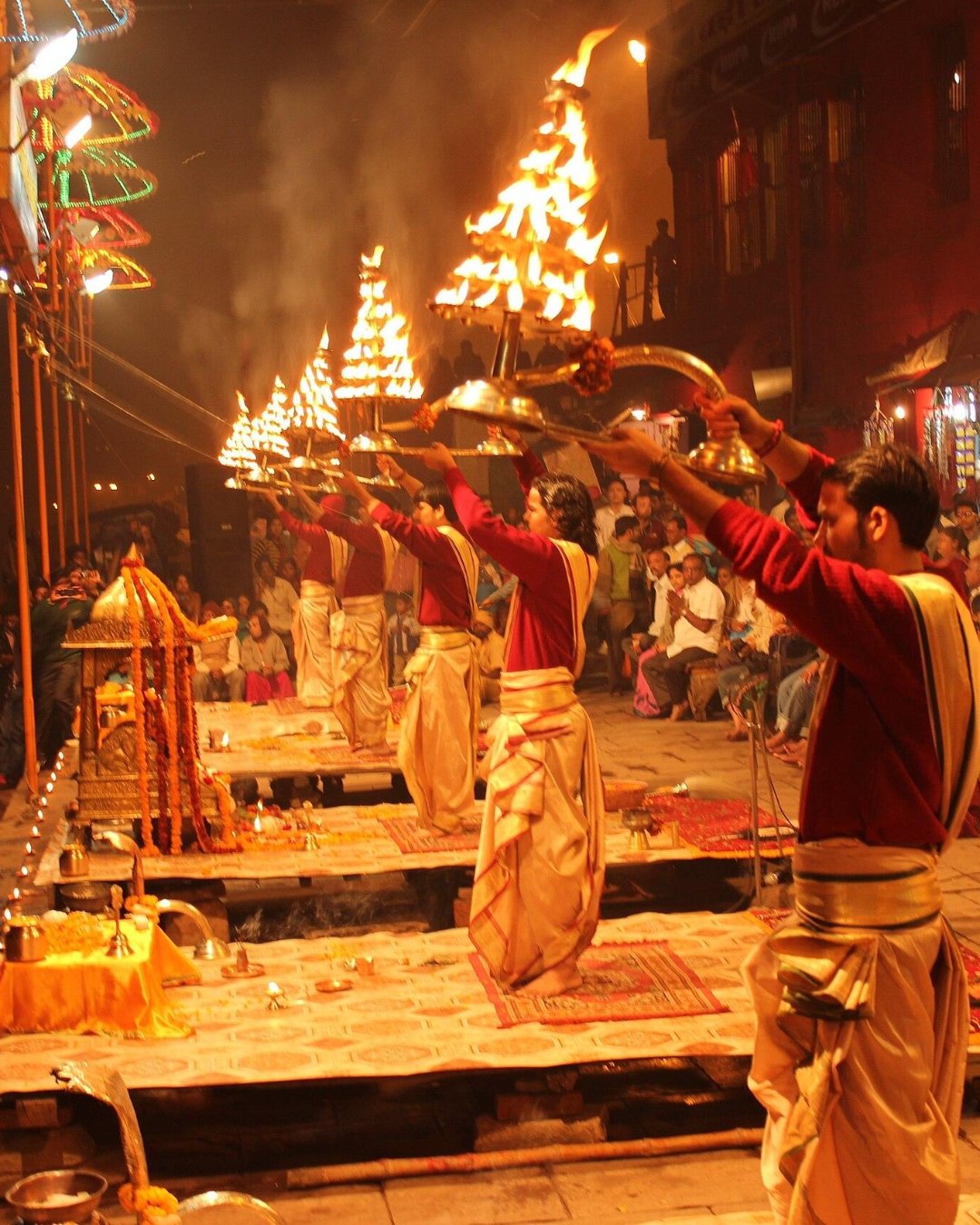
Down at Dashashwamedh with the crowd, the priests swinging their lamps, fire against the dark. Then you get there at quarter to seven and find yourself twelve rows back, on tiptoe, watching the ceremony through a forest of other people's phones. But here's the thing nobody tells you: the best seat for the Ganga Aarti isn't on the ghat at all. It's on the water, floating a few metres out, with the whole ceremony lined up in front of you and not a single head in the way.
Let's fix that. Here's how watching the Ganga Aarti from a boat actually works, and how to get it right the first time.
Why the boat beats the steps
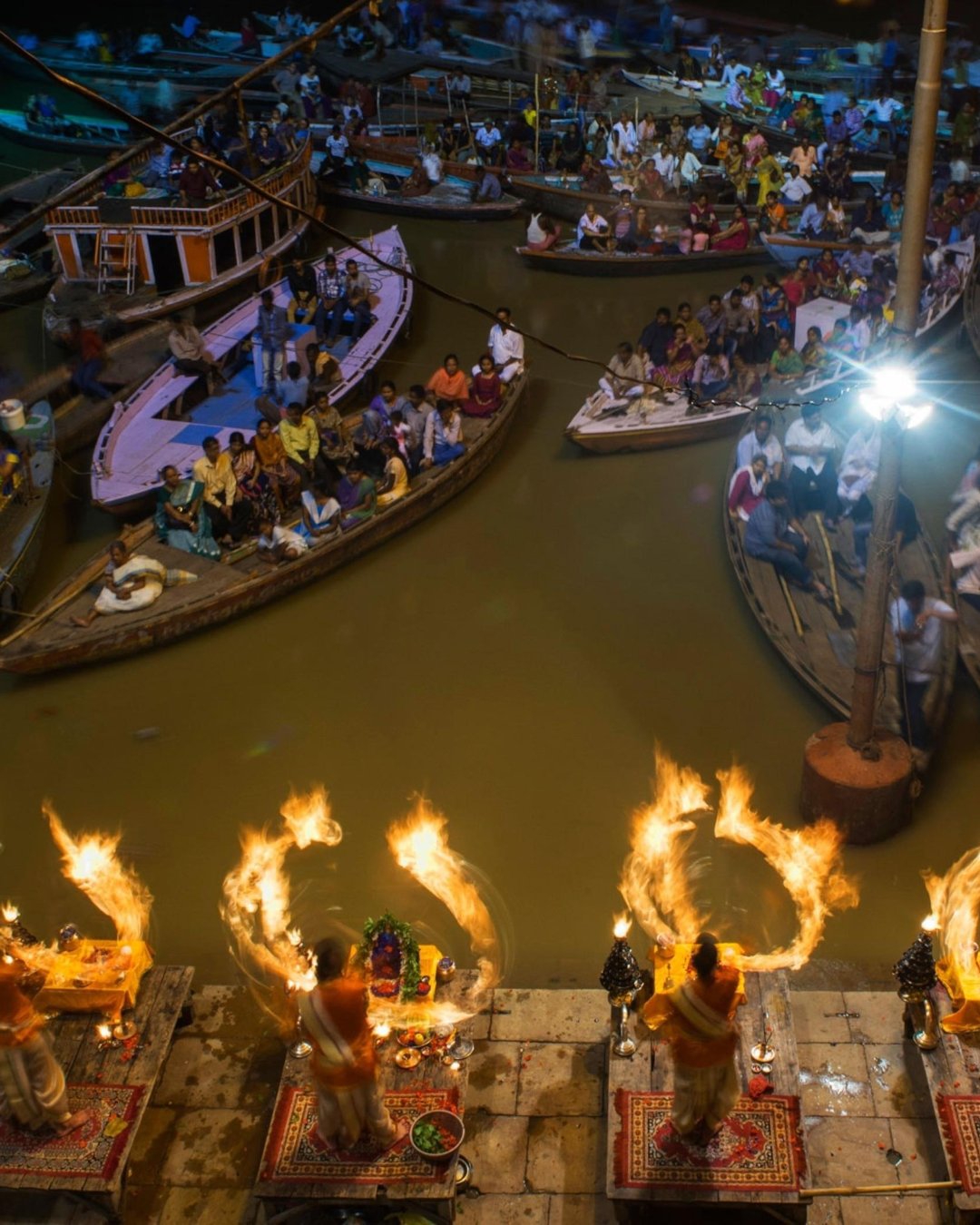
The aarti faces the river. The priests stand on their platforms with their backs to the city and their lamps raised toward the Ganga — which means the ghat crowd is watching the backs of the ceremony, while the river gets the front. From a boat you're looking straight into it, the way it's meant to be seen.
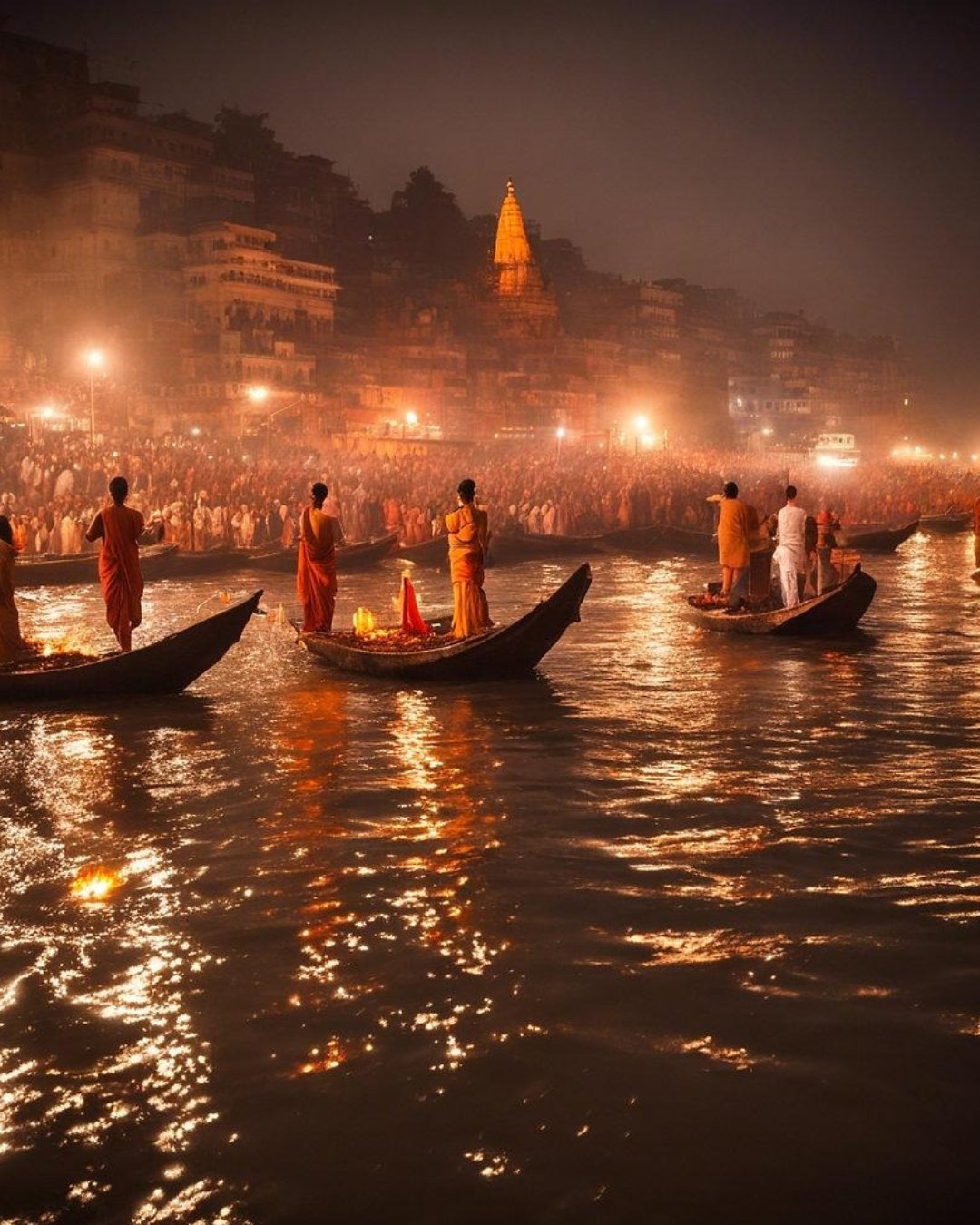
You also skip the crush entirely. No fighting for a step, no pickpockets working the squeeze, no arriving an hour early to hold a patch of stone. You drift in, your boatman holds position, and the ceremony plays out across the water like it's aimed at you. When it ends, you're already afloat to set a diya adrift. The steps give you the atmosphere; the water gives you the view.
What you'll actually see
The aarti starts after sunset and runs about 45 minutes, every night. From the water:
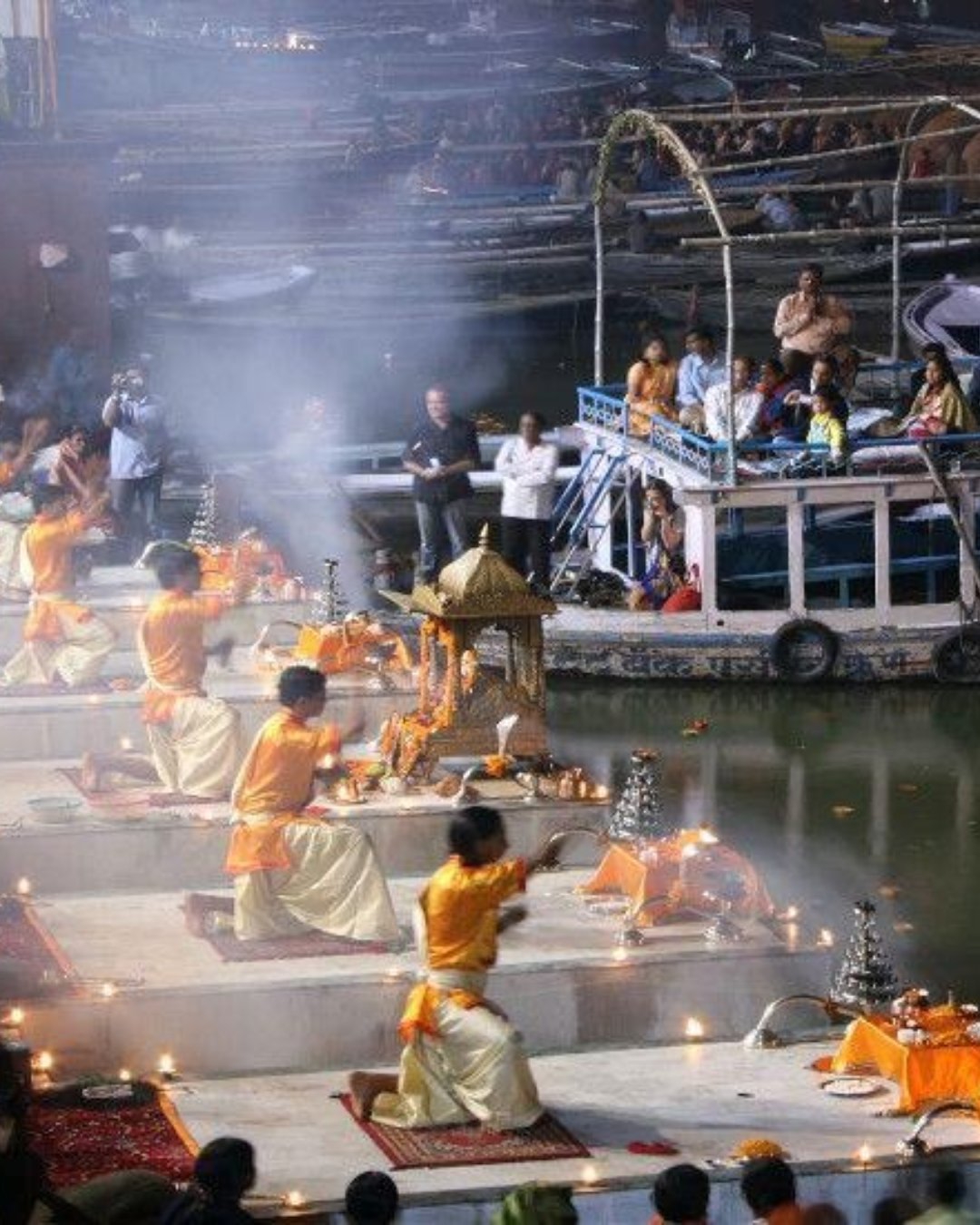
The full line of priests — usually seven, moving in unison, lamps growing heavier as it builds.
The tiered lamps and incense — the whole platform lit, reflected in the river in front of you.
The other boats — a floating audience gathering as dusk falls; part of the scene, not a distraction.
Floating diyas — buy a few and set them adrift once the ceremony ends; the current carries them downstream.
Bring a light layer — it's cooler and breezier on the water after dark than up on the steps.
And keep the phone down for the first few minutes. Travellers who've watched it from a boat will tell you the same thing: the pull is to film the whole thing, but it lands differently when you just watch it first, undistracted, with the bells rolling across the water toward you. The fire doubled in the river, the chanting, the diyas drifting past — that's the part the photos never quite catch.
Pro tip: Book the boat in advance and get there before the water fills up — the boats cluster tight near the front, and the earlier ones get the closest hold. Agree the price, the duration and private-versus-shared before you step in; a private boat lets you pick your spot and linger after the crowd disperses. Sit low and balanced, keep your bag in your lap, and combine it with a short row past the lamplit ghats before the ceremony begins. Skip the motorboats — the engine noise cuts straight through the aarti.
The mistakes that ruin it
Most first-timers trip over the same few things. They fight for a spot on the steps and see it over shoulders. They turn up as the boats are already packed and get held too far back. Or they spend the whole ceremony filming through a screen instead of watching the fire on the water.
The easy fix is to take it from a boat, booked ahead, positioned early — or let the evening be arranged so you're afloat and settled before the first lamp is lit.