

Beyond the Rowboat: The Ganga Cruise.
Dashashwamedh Ghat, Varanasi, India
Forget rowboat-versus-cruise. The real question is dawn-versus-dusk — because the little wooden boat and the double-decker cruiser are built for opposite hours, and picking the wrong one for the wrong time is how the trip sours.
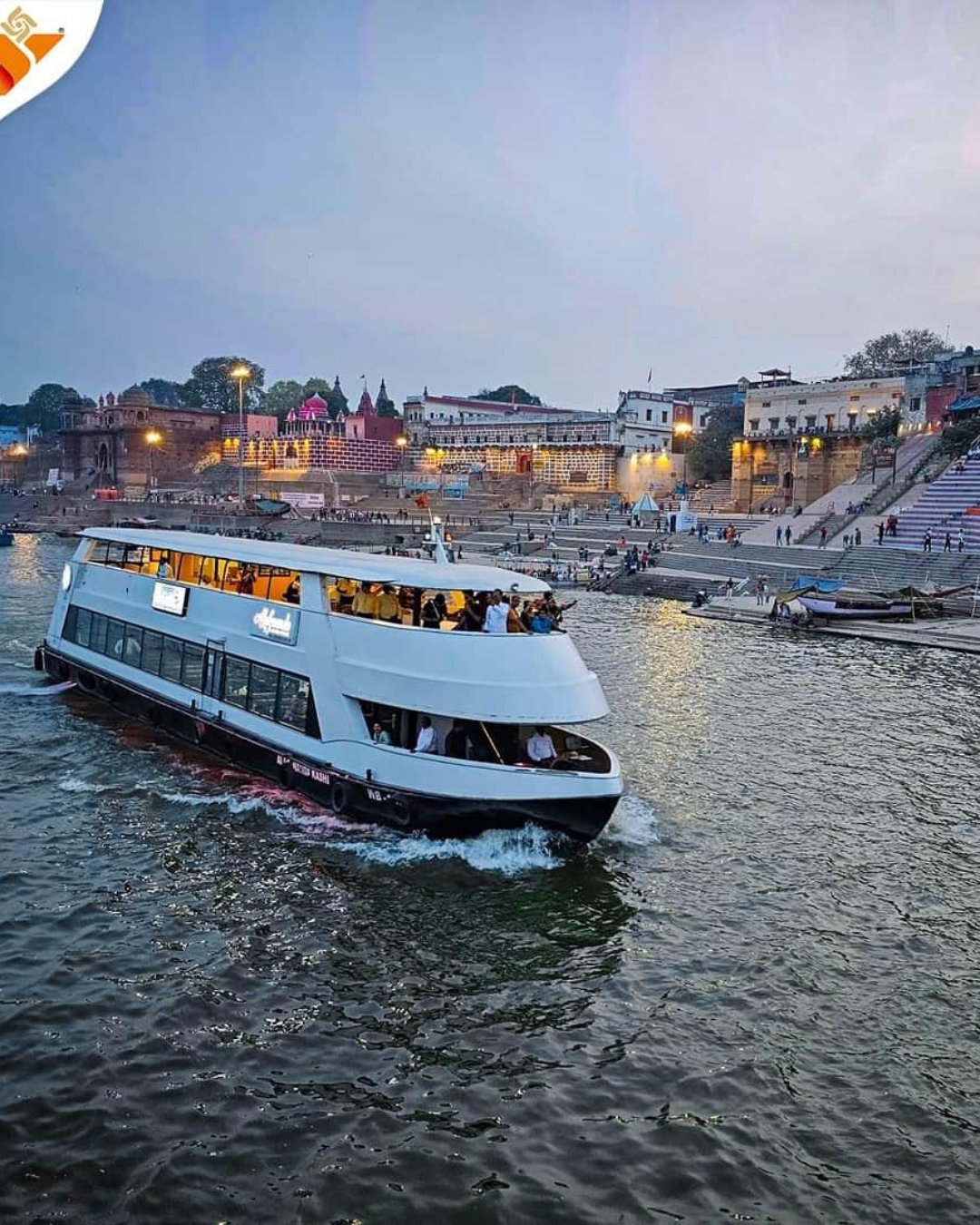
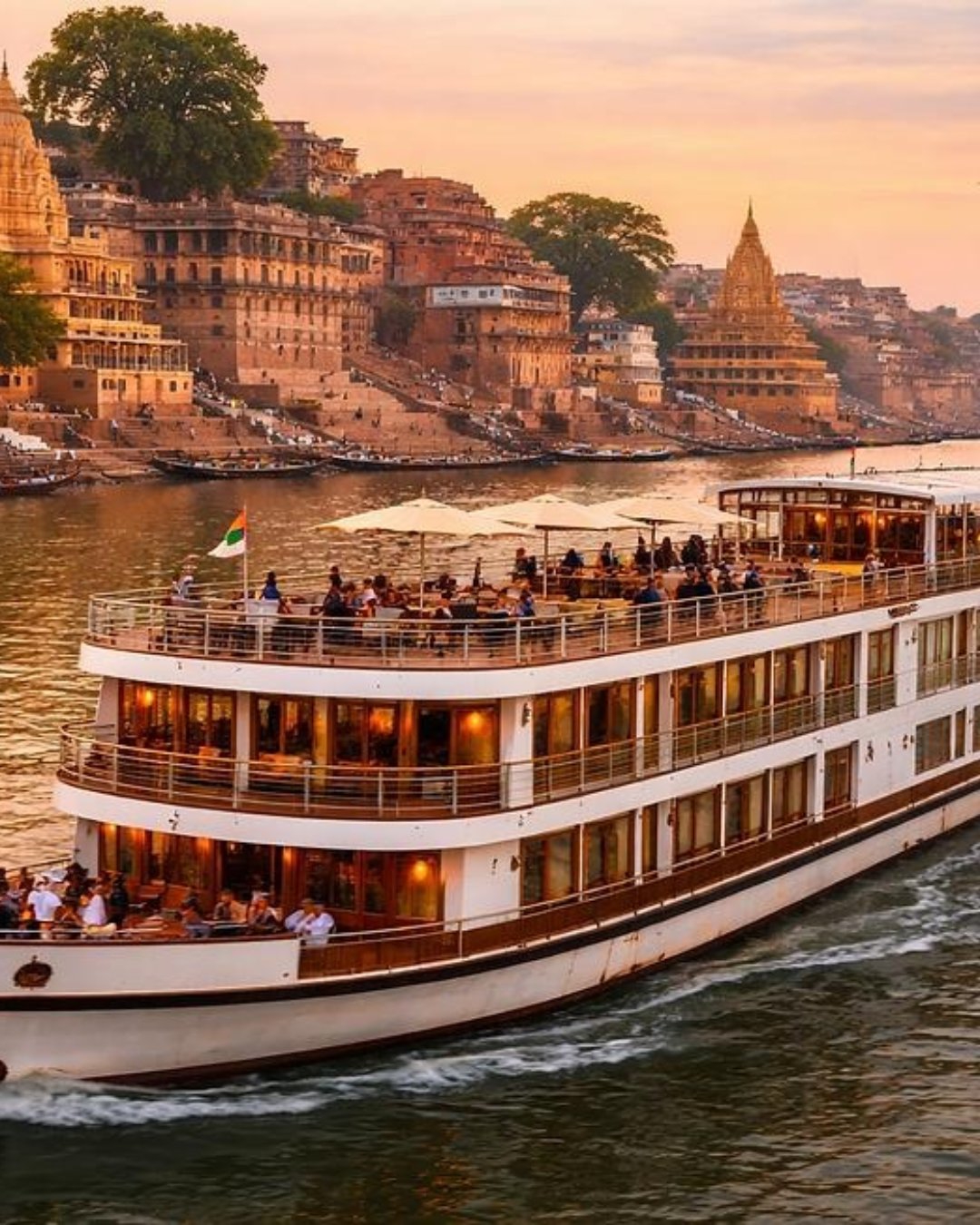
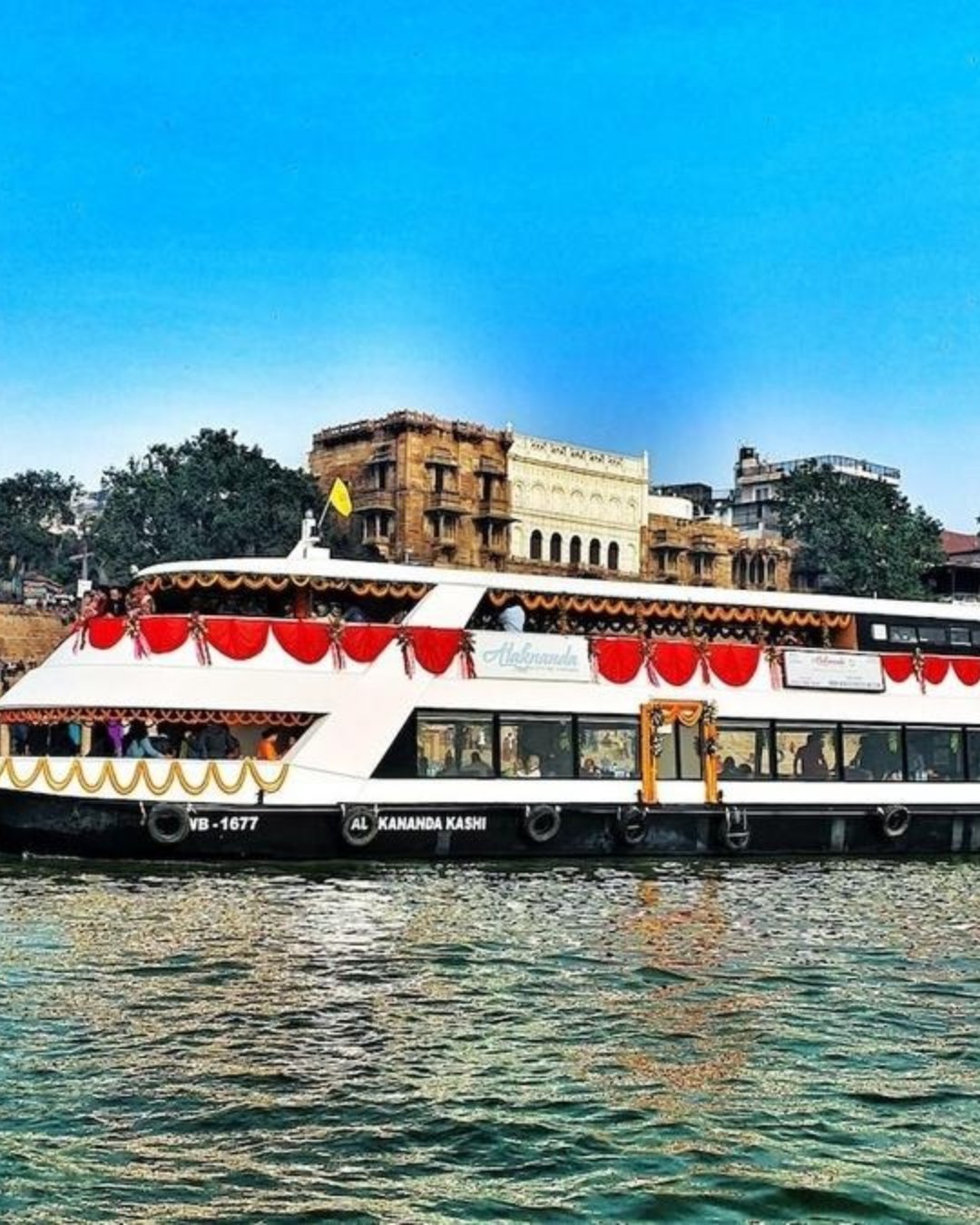
But somewhere in your planning you've seen the bigger vessels too — the double-decker cruisers, the "luxury Ganga cruise," even the CNG catamaran the government runs now — and wondered whether that's the smarter, comfier way to see the ghats. Here's the thing nobody tells you: a cruise and a rowboat are two completely different experiences, and picking the wrong one for the wrong moment is how people end up on a loud diesel deck at dawn wishing they'd taken the quiet little boat instead.
Let's fix that. Here's how the Ganga cruise actually works, and how to get it right the first time.
Why the vessel decides the moment
The rowboat's whole gift is silence — the slap of the oar, the ghats waking, nothing between you and the river. That's a dawn experience. A cruise is the opposite: a stable deck, a roof, a railing, room to move, and often a guide and refreshments. That's an evening experience — for the Ganga Aarti, when you want a steady platform and a clear elevated view across the water while the ceremony plays out on the steps.
So don't think of it as rowboat-versus-cruise. Think of it as dawn-versus-dusk. The rowboat is for the sunrise, when silence is the point. The cruise is for the aarti, when comfort, height and a stable camera platform are.
What you'll actually get on a cruise
The options have grown well beyond the old wooden boats:
The Alaknanda-style catamarans — larger CNG/electric vessels, cleaner and quieter than diesel, with upper decks.
Evening aarti cruises — timed to Dashashwamedh, holding position offshore for the ceremony.
Roof and railing — a proper vantage for photos, and space for those who can't manage a low rocking rowboat.
A guide and refreshments — commentary on the ghats, sometimes tea or snacks aboard.
Bring a light layer — it's breezier out on the open deck than on land — and, on the evening cruise, keep the phone down for the first few minutes of the aarti. Even from a comfortable deck, the ceremony lands harder when you watch it first. The bells and the fire across the water are the part the photos never quite catch.
Pro tip: Match the boat to the hour — rowboat at sunrise, cruise at the evening aarti — and if you only do one motorised trip, make it the aarti cruise, because that's where the stable deck and the offshore angle genuinely beat the rowboat. Book ahead for the evening; the good vessels fill on festival nights and full moons. Choose CNG or electric over diesel where you can — it's quieter and cleaner on a sacred river. And check whether your fare is a shared sailing or a private charter before you pay.
The mistakes that ruin it
Most first-timers trip over the same few things. They take a big diesel cruiser at dawn and drown the silence that was the whole reason to go early. They turn up for an evening cruise without booking on a festival night and find every deck full. Or they assume "cruise" means luxury and end up on a crowded party boat with a sound system.
The easy fix is to book the right vessel for the right hour in advance — rowboat for the sunrise, a quiet cruise for the aarti — rather than deciding at the ghat among a dozen touts.