

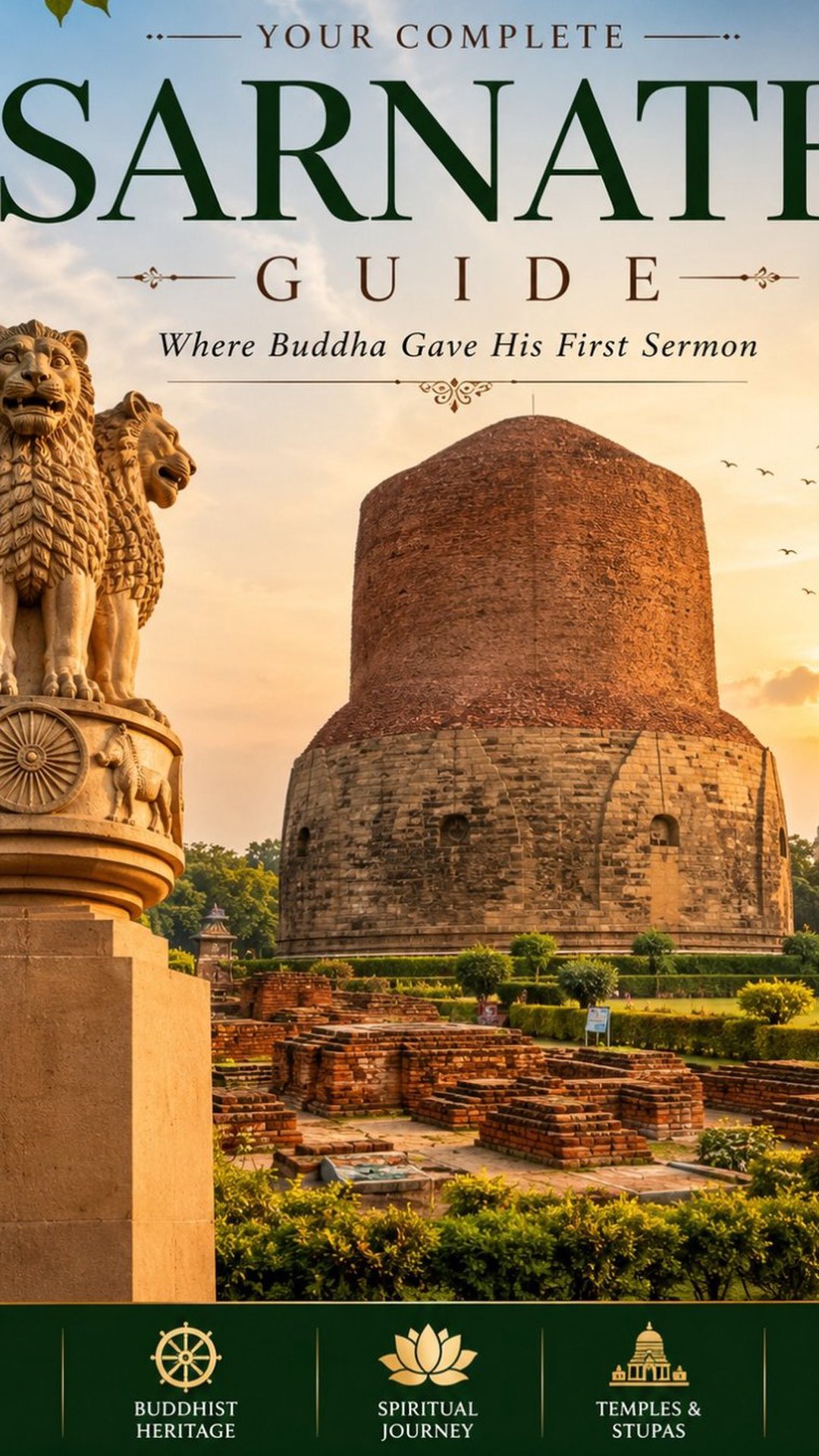
Sarnath Guide: Dhamek Stupa, Museum, Timings & Tickets
Sarnath, where Buddhism began — Dhamek Stupa, the Lion
Capital, timings, tickets and the Friday closure that catches visitors
out. An honest 2026 guide.
Sarnath is where your Varanasi journey changes pace — from the energy of the ghats to a peaceful landscape of Buddhist ruins, ancient stupas, museums and living temples. Located around 9–10 km from central Varanasi, Sarnath is traditionally regarded as the place where Gautama Buddha delivered his first sermon after enlightenment.
1. Chaukhandi Stupa
Begin with this ancient monument, traditionally associated with Buddha's meeting with his first five disciples.
2. Dhamek Stupa
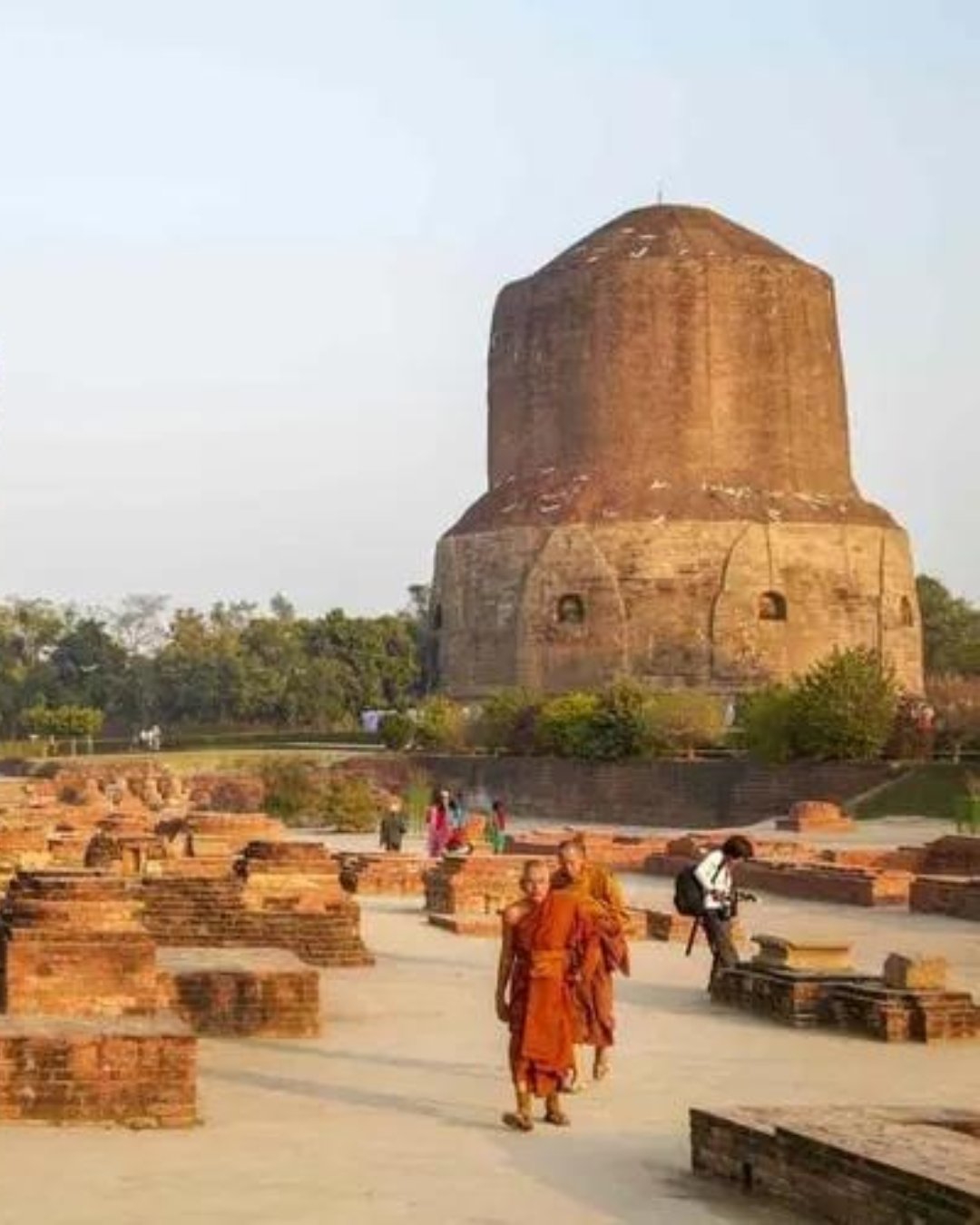
Walk through the archaeological gardens toward Sarnath's great landmark — the massive cylindrical stupa associated with Buddha's first teaching.
3. Ancient Ruins
Explore the remains of monasteries, stupas and other structures that reveal Sarnath's importance as a major Buddhist centre.
4. Sarnath Museum
Step inside to see remarkable sculptures discovered at the site, including the famous Lion Capital of Ashoka, now the basis of India's national emblem.
5. Mulagandha Kuti Vihar
Move from ancient archaeology into living Buddhism, with a functioning temple, murals and a peaceful devotional atmosphere.
6. International Buddhist Temples
Continue through Sarnath's Thai, Tibetan, Chinese and other Buddhist institutions — a fascinating glimpse of how Buddhism travelled across Asia.
Leave the noise of Varanasi behind for a few hours and we'll take you to Sarnath — the peaceful Buddhist heritage site where Gautama Buddha is traditionally believed to have delivered his first sermon. Just outside the city, the atmosphere changes completely: landscaped gardens replace crowded lanes, ancient brick ruins reveal the remains of monasteries, and the towering Dhamek Stupa becomes the centrepiece of the journey.
We'll begin with the Sarnath Archaeological Site, walking through the ancient ruins and making our way to the Dhamek Stupa, the monument most closely associated with Buddha's first teaching. From there, we'll visit the Sarnath Archaeological Museum, where you'll see remarkable sculptures excavated from the site, including the famous Lion Capital of Ashoka, the inspiration for India's national emblem.
The journey doesn't end with the ruins. We'll continue to Mulagandha Kuti Vihar and Sarnath's international Buddhist temples, where Buddhism is still actively practised. This gives you the chance to see how a teaching that began here more than two millennia ago travelled across Asia and developed into different architectural and cultural traditions.
We'll also plan the practical side properly. The archaeological complex is best explored in the morning, while the museum needs to be scheduled around its opening hours and Friday closure. We'll allow roughly half a day so you can explore without rushing, and we'll check the latest ticket and timing information before your visit.
135
Route
Home
MomentSarnath Museum Varanasi, Varanasi
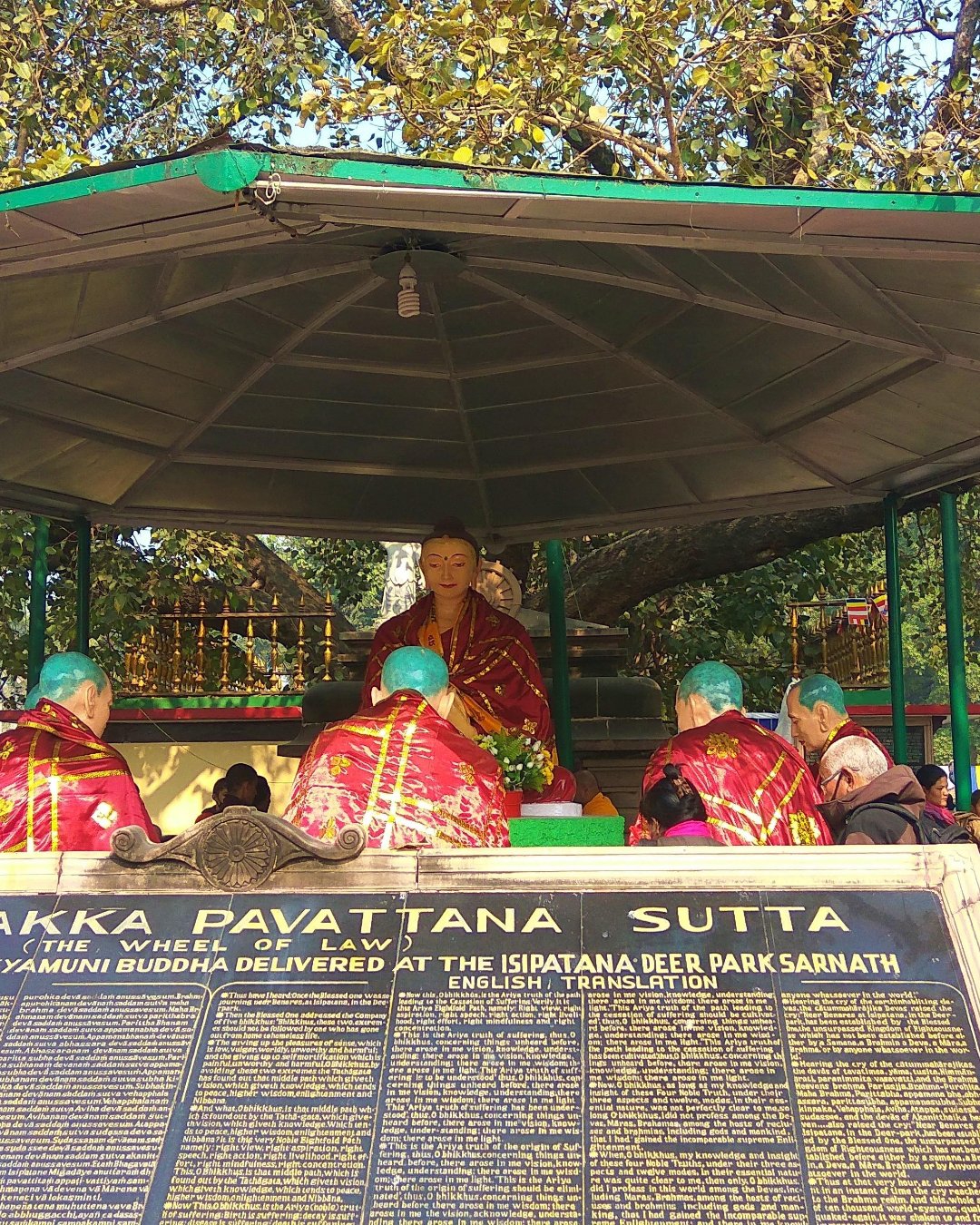
Where Buddhism Actually Began
Ask where Buddhism began and most people say Bodh Gaya — and they're half right. Bodh Gaya, in neighbouring Bihar, is where Siddhartha Gautama sat under the Bodhi tree and became the Buddha, "the awakened one." But enlightenment is a private event; a religion needs a teacher, a teaching, and someone to hear it. All three happened for the first time not in Bodh Gaya, and not in Varanasi's old city, but at Sarnath, about 10 km northeast of the ghats.
After his awakening, the Buddha walked to the deer park at Isipatana — today's Sarnath — and found the five ascetics who had once been his companions. There, more than 2,500 years ago, he delivered his first sermon, the Dhammachakkappavattana Sutta — literally "setting the wheel of Dharma in motion." In it he laid out the Four Noble Truths and the Middle Way, the framework the entire tradition still rests on. Those five listeners became his first disciples, and with them the Sangha — the monastic community — came into being. That is the moment Buddhism stopped being one man's insight and became a faith that could be taught, followed and spread. It began here.
Sarnath went on to become one of Buddhism's four great pilgrimage sites, alongside Lumbini (his birth), Bodh Gaya (his enlightenment) and Kushinagar (his death). The Mauryan emperor Ashoka raised monuments here in the 3rd century BCE, and the site grew into a major monastic centre for over a thousand years before decline and, much later, rediscovery by archaeologists.
What survives is why it's worth the short trip out from Varanasi: the massive Dhamek Stupa, marking the spot associated with that first sermon; the remains of the Ashoka Pillar, whose four-lion capital became the national emblem of India — the wheel on the Indian flag is the Dharma wheel first turned here; the ruins of ancient monasteries; the modern Mulagandha Kuti Vihara with its revived murals; and the Archaeological Museum, home to the original Lion Capital. It remains a living pilgrimage place, drawing monks and travellers from across the Buddhist world — quiet and green in a way the city itself never is.
For a visitor, that's the real reframe: Varanasi is where Hinduism meets the eternal, but a few kilometres away is where Buddhism took its first breath as a religion.
42
MomentDhamek Stupa Sarnath, (Varanasi), Varanasi
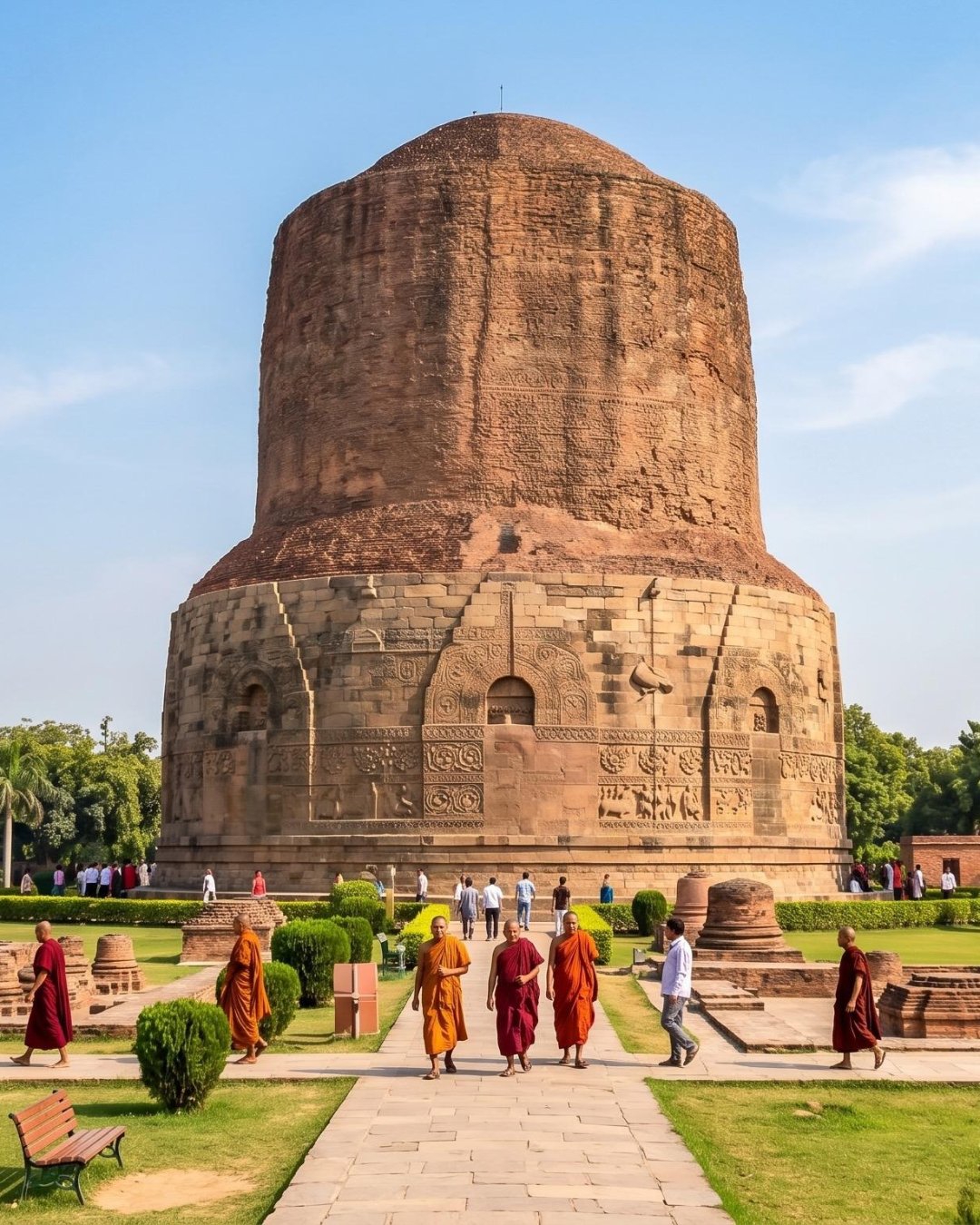
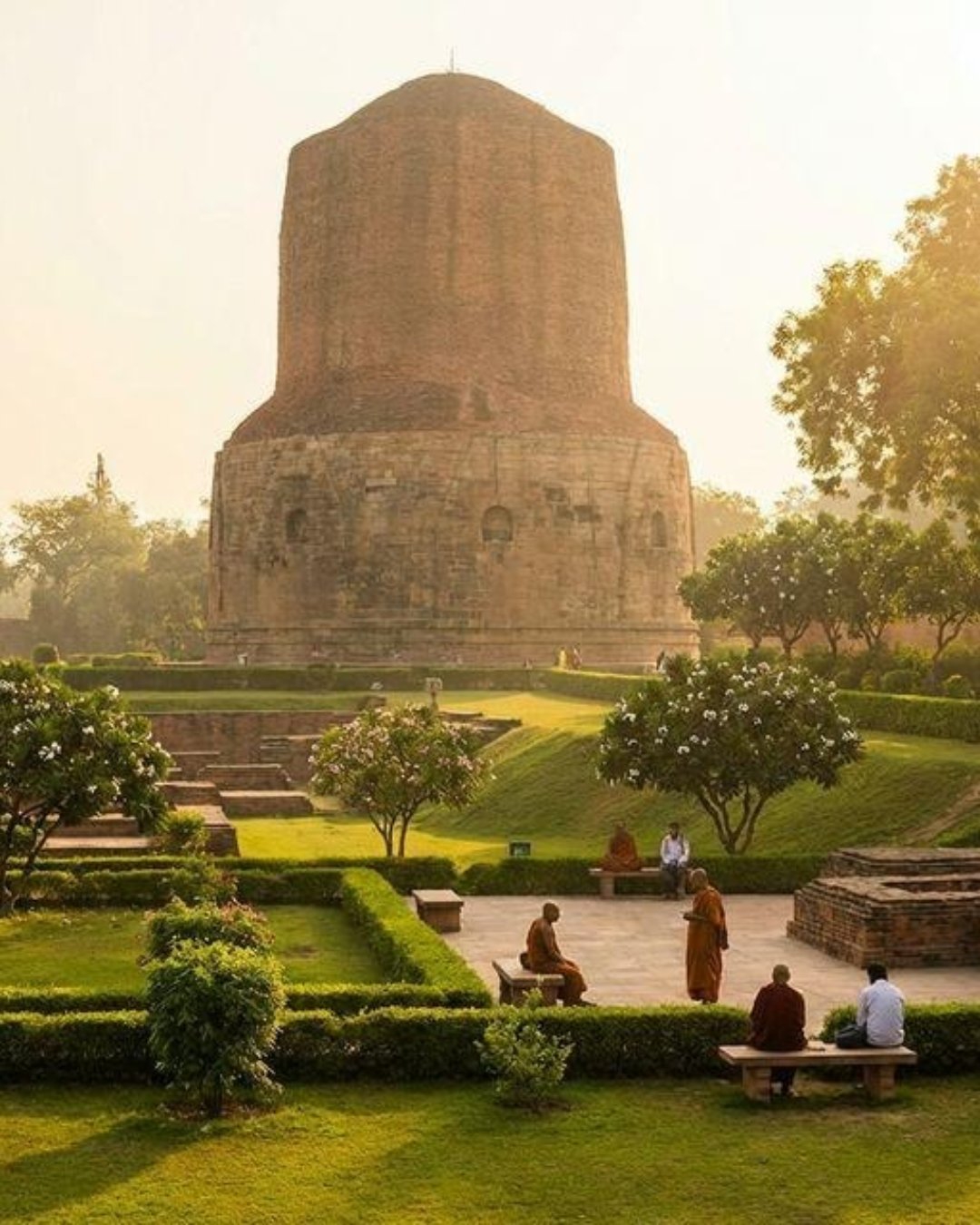
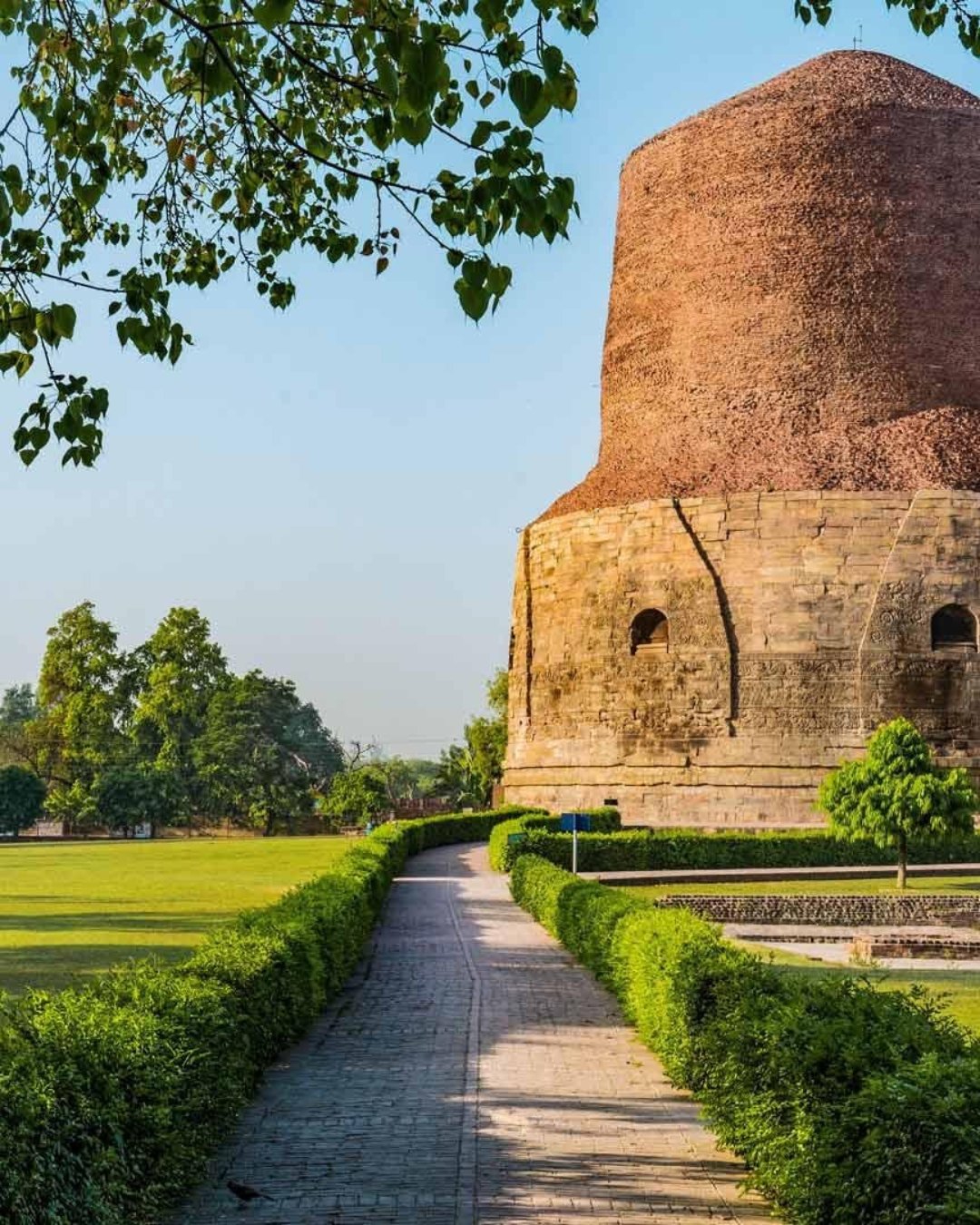
The Dhamek Stupa
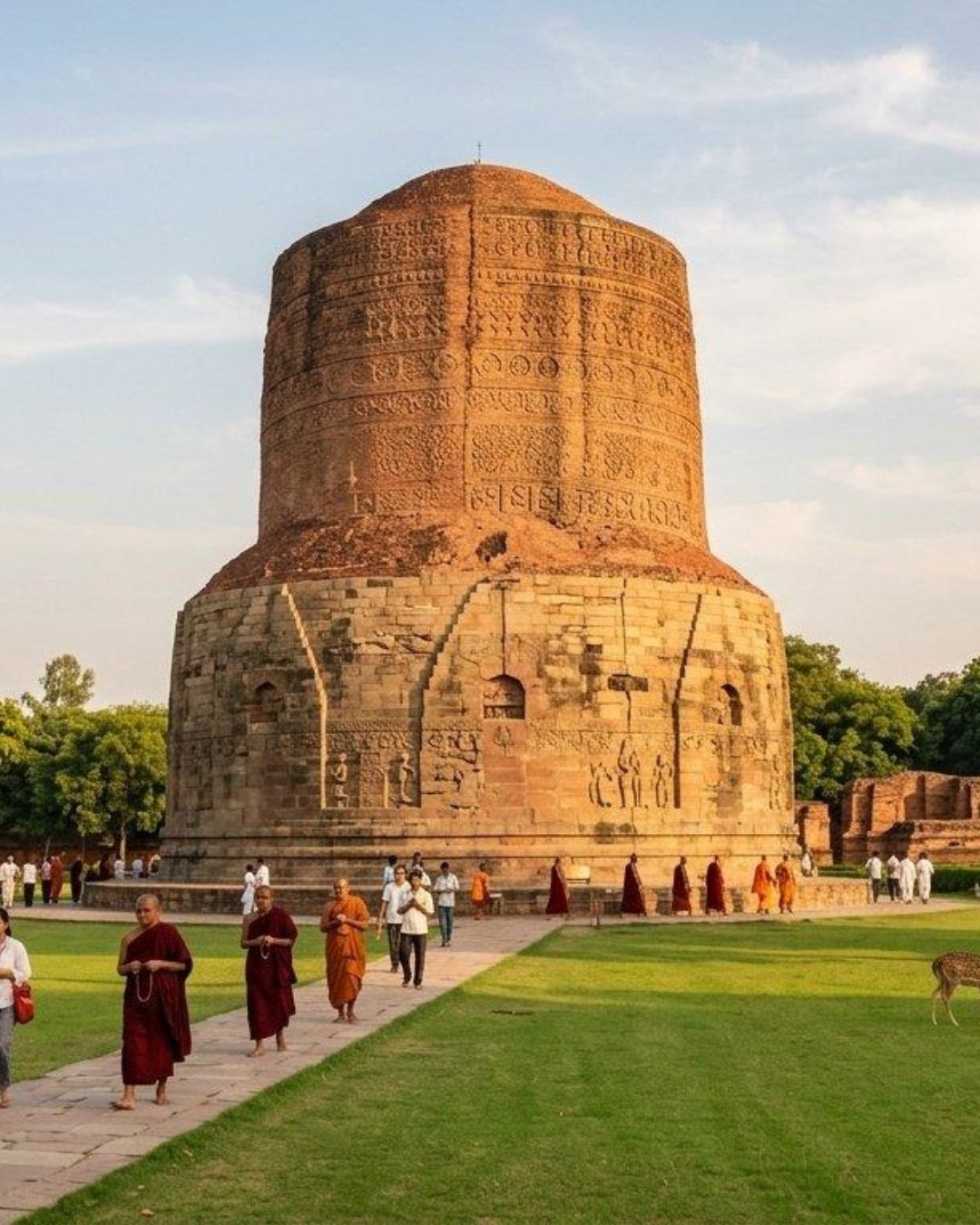
A short drive out of Varanasi — about 10 km northeast, in the quiet town of Sarnath — stands the Dhamek Stupa, one of the most significant Buddhist monuments in India. This is the spot, by tradition, where the Buddha gave his very first sermon after attaining enlightenment at Bodh Gaya. Having found his five former companions here in the deer park at Sarnath, he set out the core of his teaching — the Four Noble Truths and the Middle Way — an event Buddhists call the Dharmachakra Pravartana, the "turning of the wheel of law." It was also here that the first Buddhist monastic community, the Sangha, came into being. For that reason Sarnath ranks among the four holiest pilgrimage sites in Buddhism, and the Dhamek Stupa is its centrepiece.
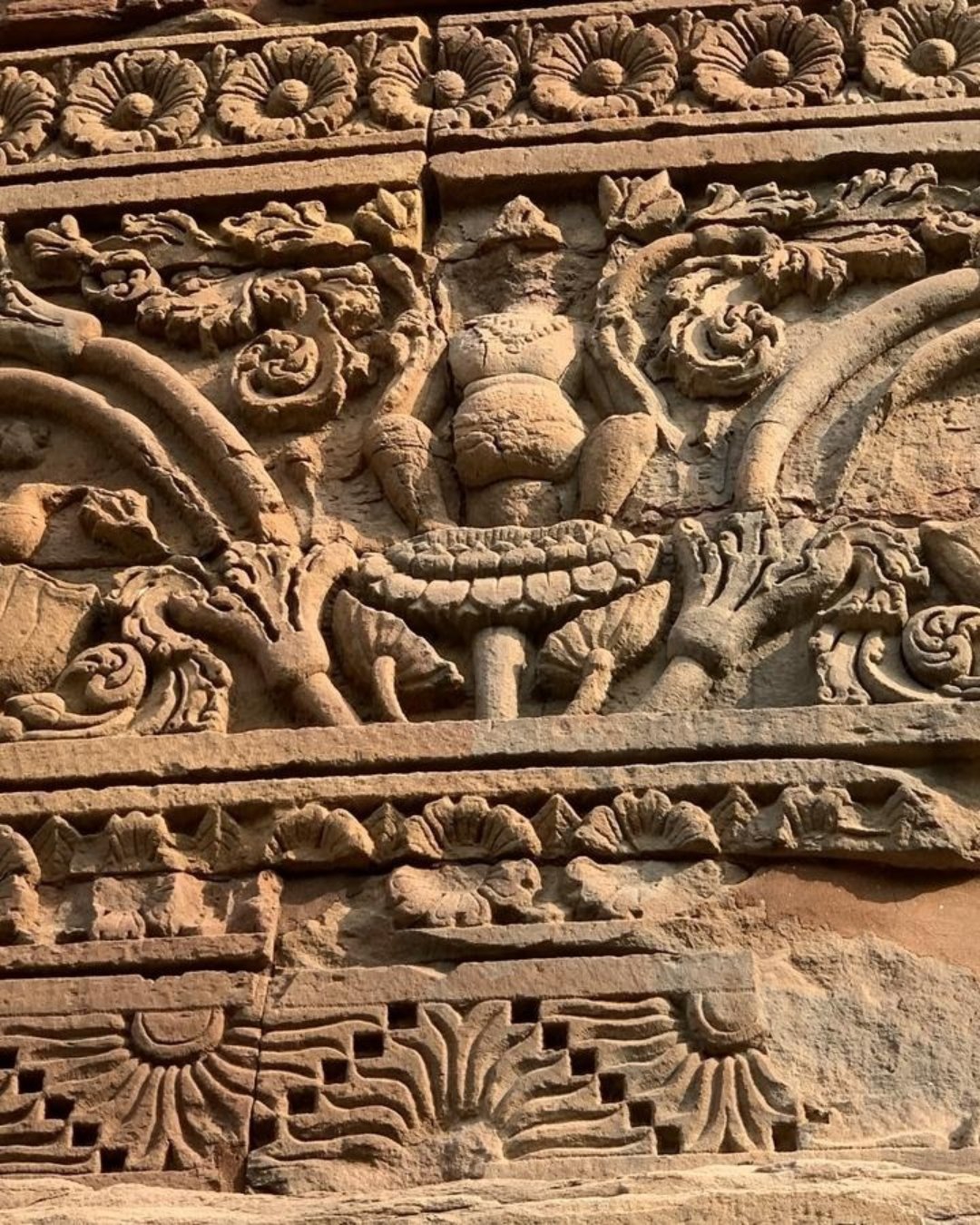
What you see today is not the original. The Mauryan emperor Ashoka first raised a stupa on this spot around 249 BCE, and the massive cylindrical structure now standing was built over it around 500 CE, during the Gupta period. It is a solid, imposing thing — roughly 43.6 metres (about 143 feet) tall and 28 metres (92 feet) in diameter — built of brick and stone, with the lower section faced in carved sandstone. That lower band is the part worth slowing down for: it carries delicate Gupta-era floral and geometric ornament, figures of birds and humans, and stretches of Brahmi-script inscription cut into the stone. Eight projecting niches, which once likely held statues of the Buddha, are set around the base. The upper portion was left plainer and unfinished, so the contrast between the finely worked bottom and the bare brick above is visible at a glance.
Today the stupa sits within a well-kept archaeological park maintained by the Archaeological Survey of India, with lawns, shaded benches and the excavated remains of ancient monasteries around it. The nearby Sarnath Archaeological Museum holds finds from the site — most famously the Ashokan lion capital that became India's national emblem. It's an easy half-day trip from Varanasi and a deliberate change of pace: where the old city is dense and loud, Sarnath is calm and green, and the stupa is best seen in the softer light of morning or late afternoon.
44
MomentSarnath Museum, Varanasi
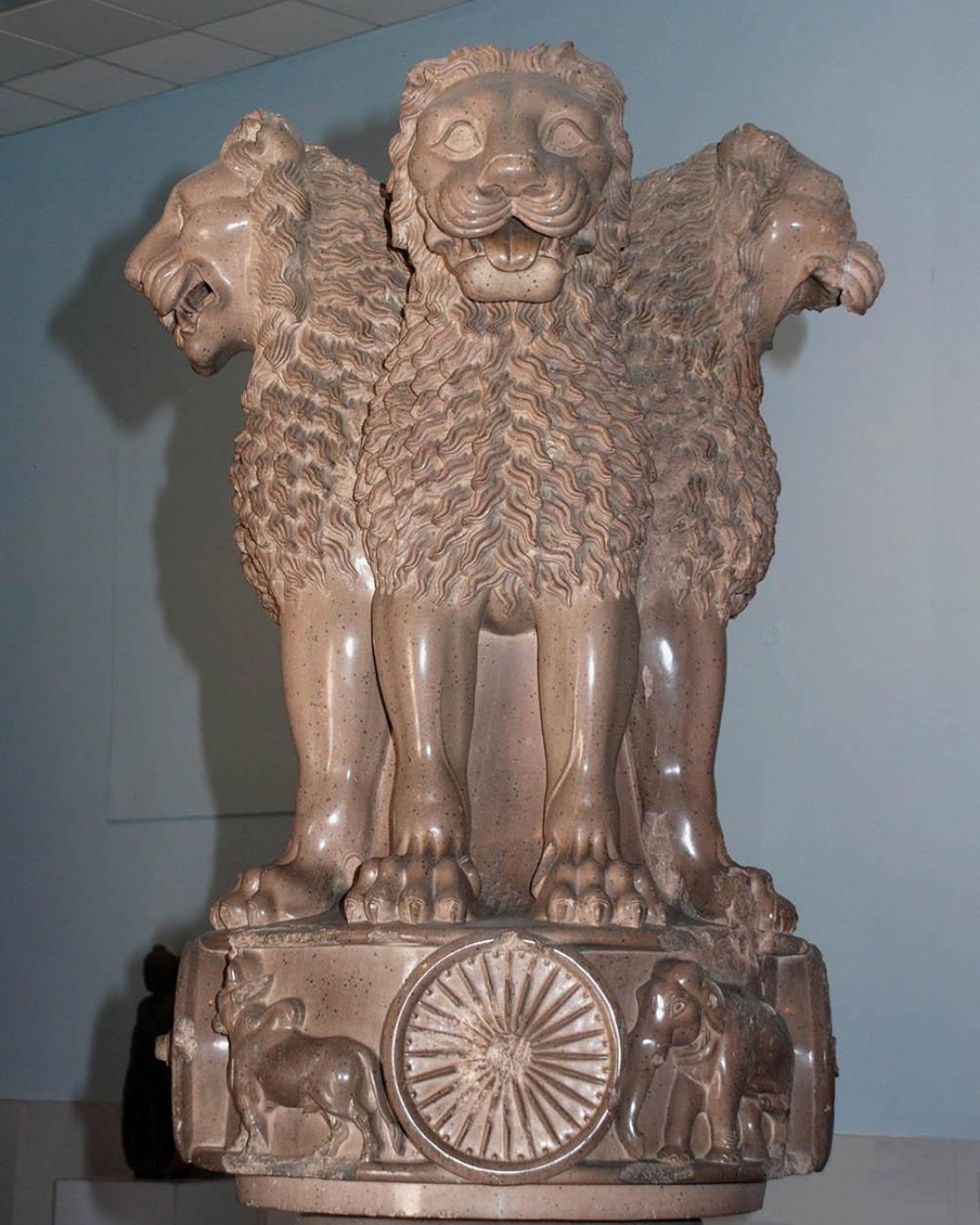
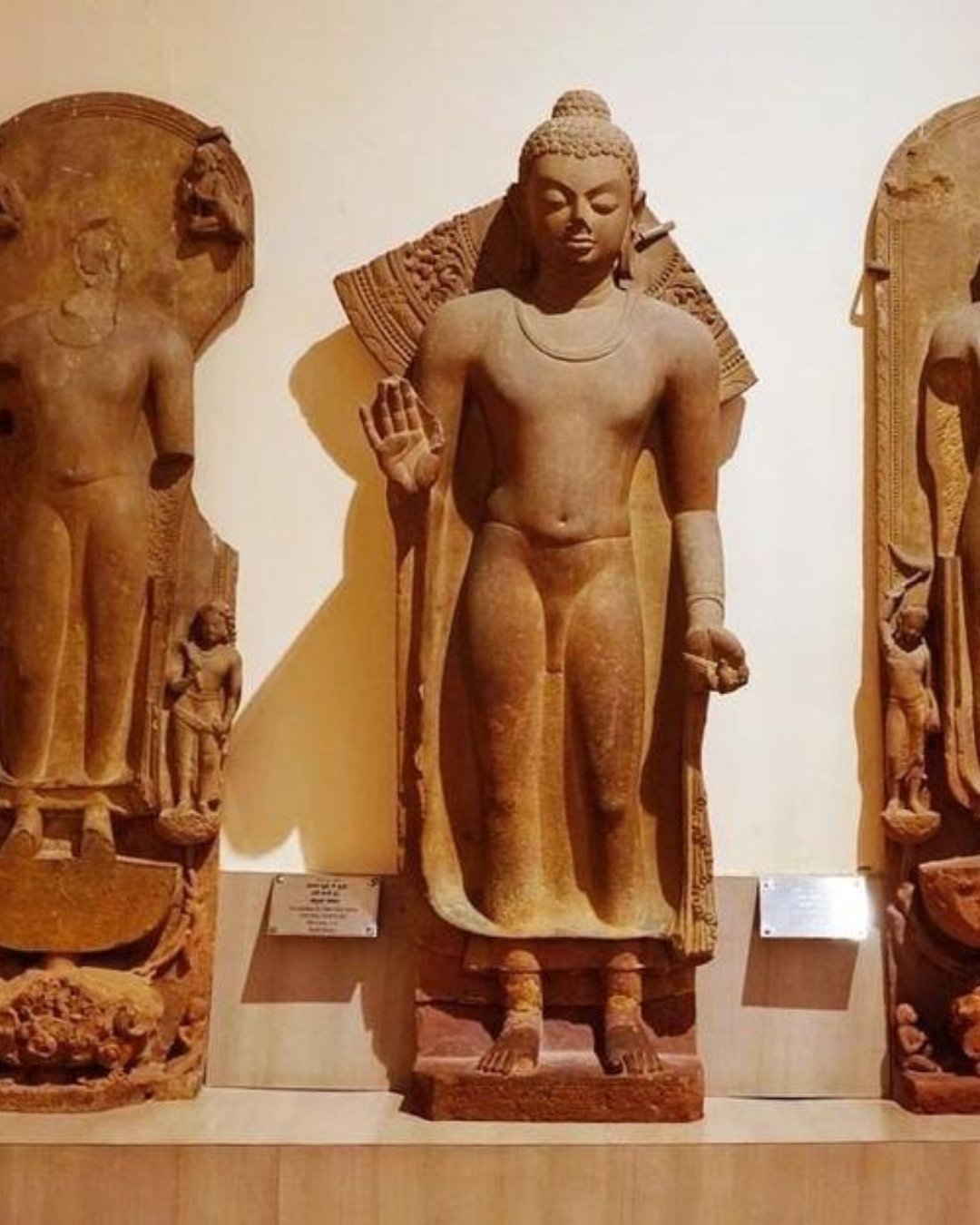
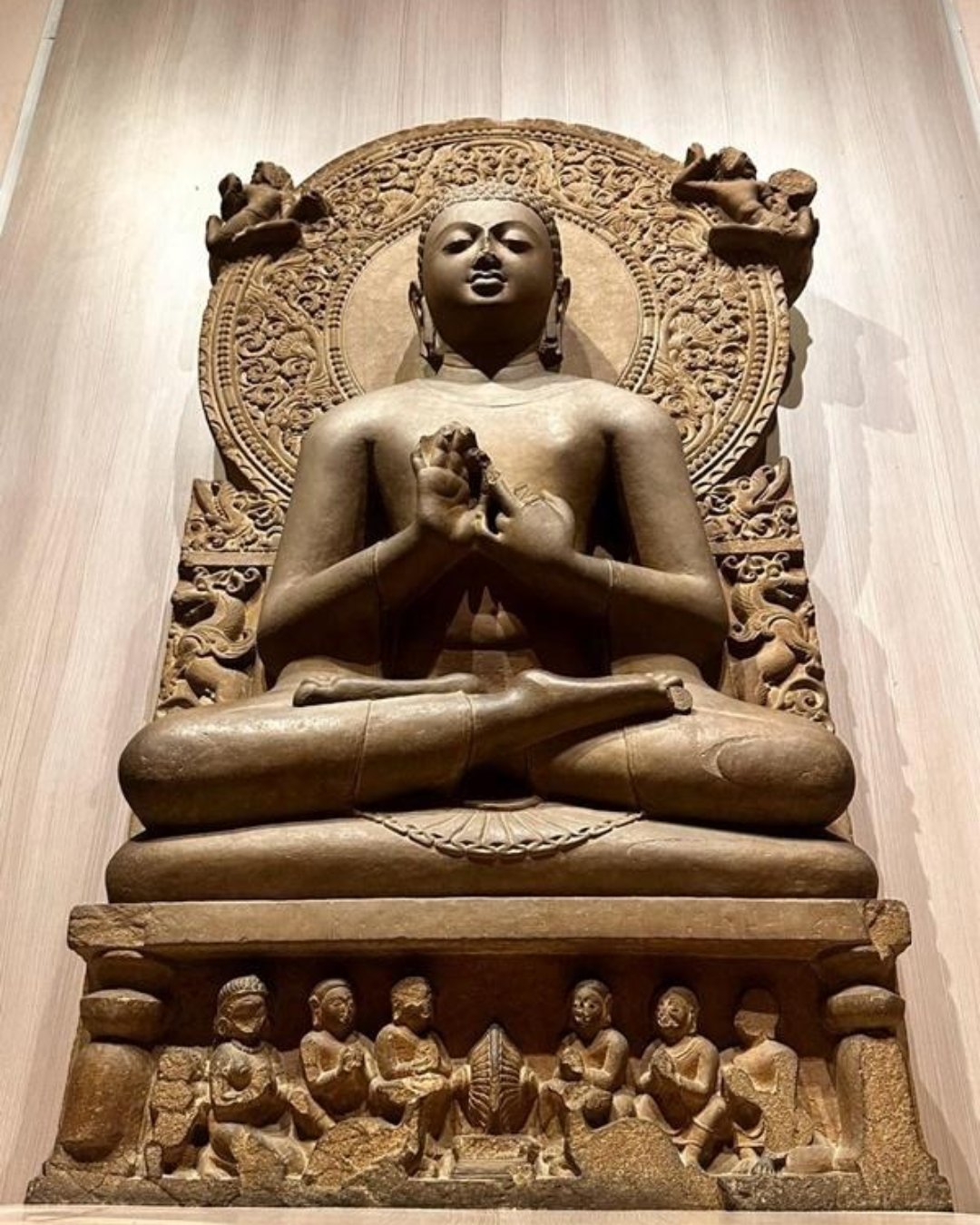
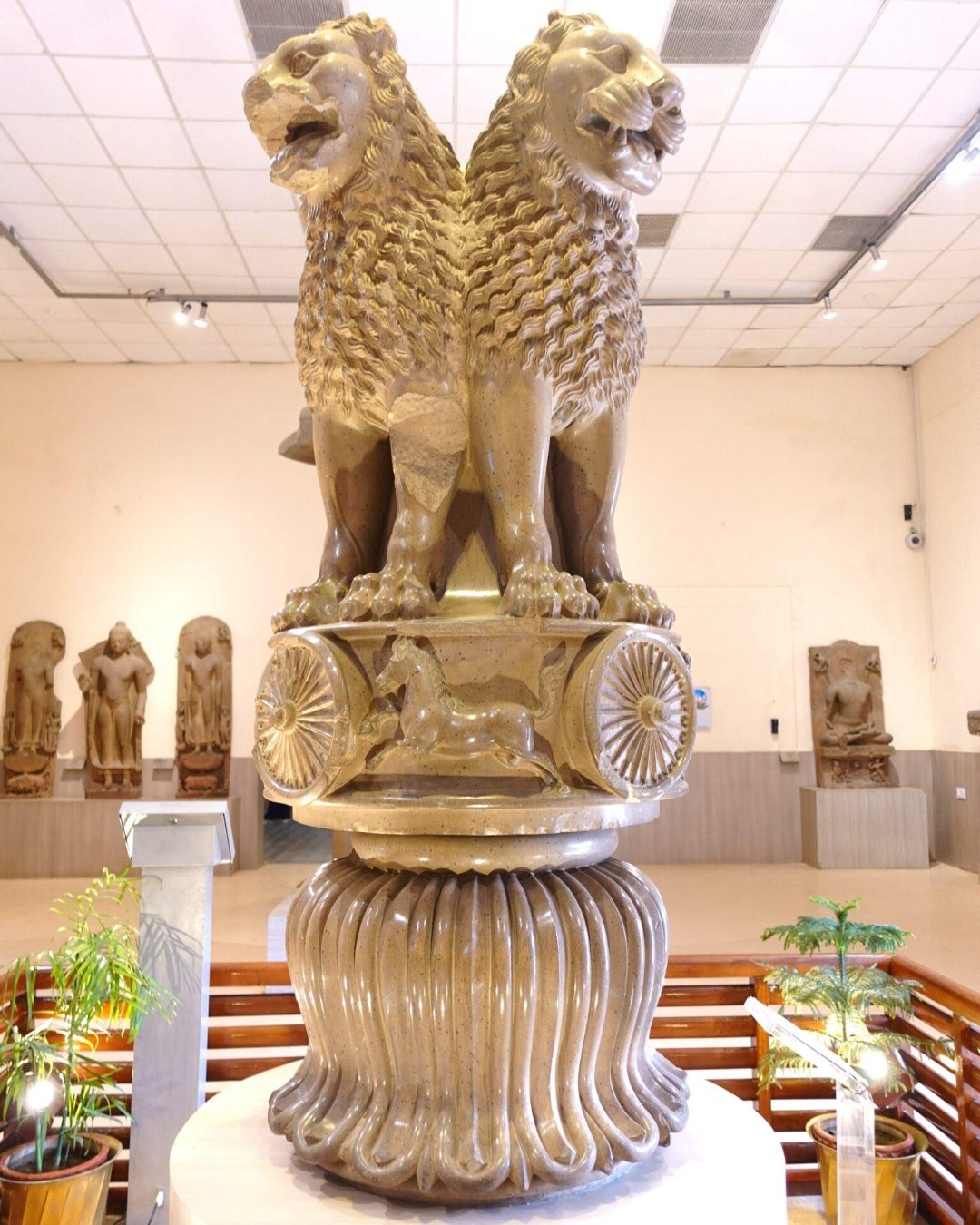
The Lion Capital & the Museum
A short drive north of Varanasi, at Sarnath, sits a small museum that holds one of the most recognisable objects in India — one most Indians carry in their pockets every day without thinking about it. The Lion Capital of Ashoka is the original from which the national emblem is drawn, and it stands, quietly, inside the first purpose-built site museum the country ever raised around a single find.
The capital dates to around 250 BCE, when the Mauryan emperor Ashoka set a polished sandstone pillar at Sarnath to mark the place where the Buddha preached his first sermon — the moment Buddhist tradition calls the turning of the wheel of dharma. Carved from a single block of fine Chunar sandstone and burnished to the mirror-bright sheen that distinguishes Mauryan stonework, it crowns that pillar with four lions seated back to back, facing the four directions. Beneath them runs a drum-shaped abacus carved with four animals — lion, elephant, bull and horse — each divided by a twenty-four-spoked wheel, the whole set on an inverted lotus. A larger wheel, the Dharmachakra, once rose above the lions; only fragments of it survive.
Two of those elements outgrew the monument entirely. The four-lion capital was adopted as the State Emblem of India, and the twenty-four-spoked wheel of its abacus became the Ashoka Chakra at the centre of the national flag. What began as a Buddhist marker at a pilgrimage site is now stamped on the country's passports, currency and seals.
The museum built to hold it is a landmark in its own right. Opened in 1910 as the oldest site museum of the Archaeological Survey of India, and laid out to echo the plan of a Buddhist monastery, it gathers the antiquities dug from Sarnath across its galleries — more than six thousand sculptures and objects spanning the third century BCE to the twelfth century CE. Beside the Lion Capital stands its equal in fame among art historians: the Gupta-era seated Buddha shown giving that same first sermon, hands raised in the teaching gesture, often called one of the finest Buddhist sculptures ever carved. Between the two, a single room holds the whole arc of Sarnath in stone — the sermon that began a religion, and the empire that later made its symbol a nation's.
39
MomentChaukhandi Stupa Sarnath, (Varanasi), Varanasi
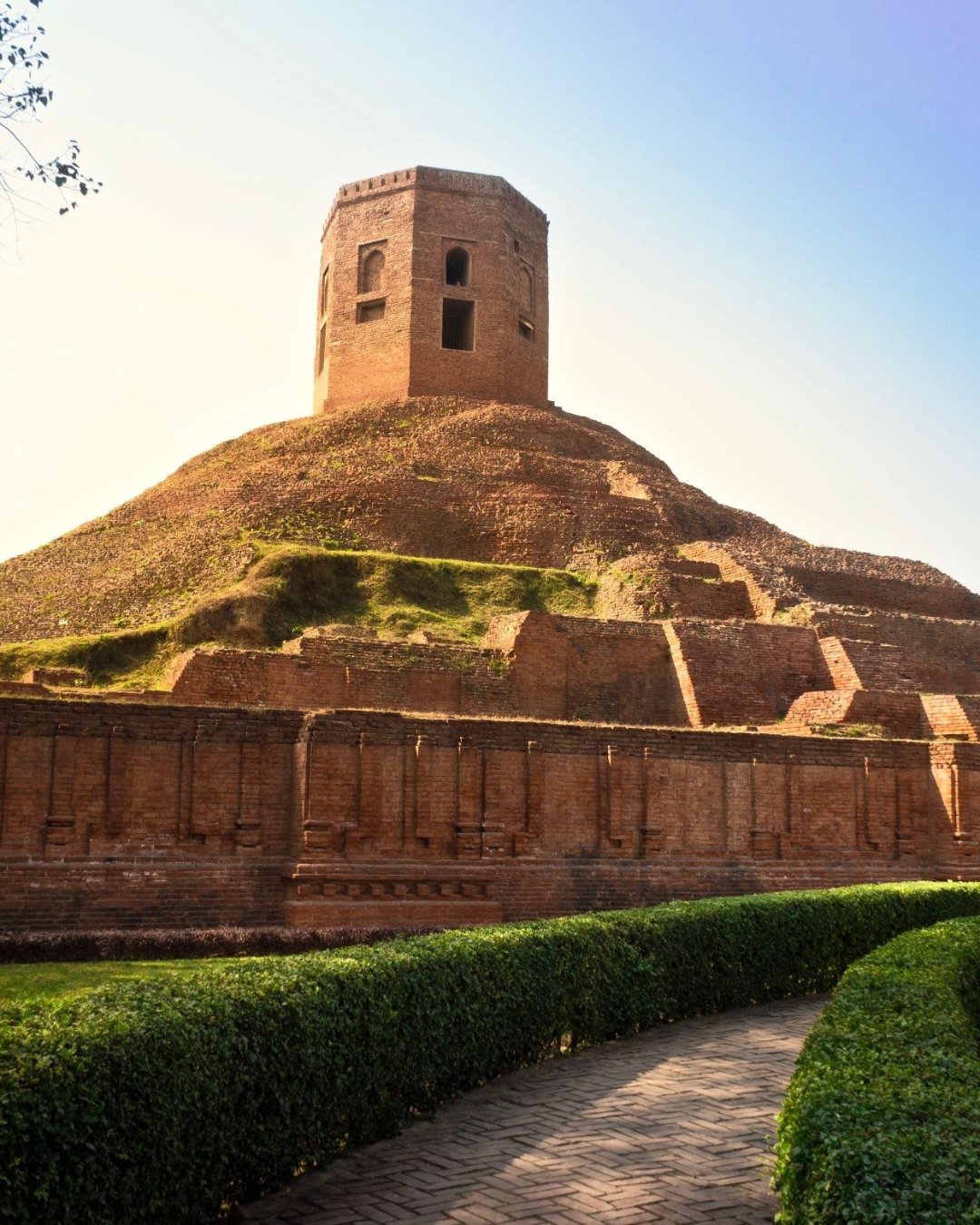
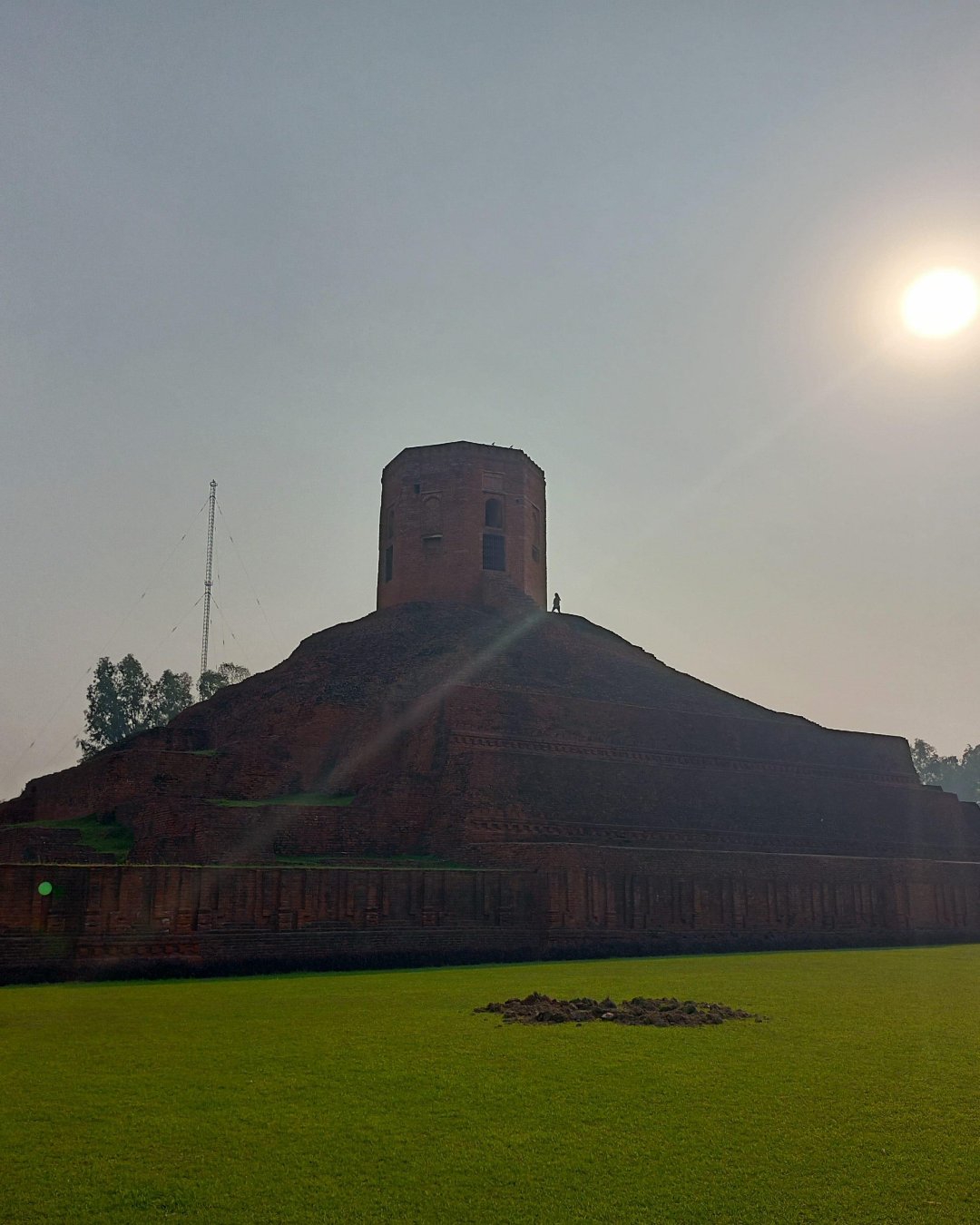
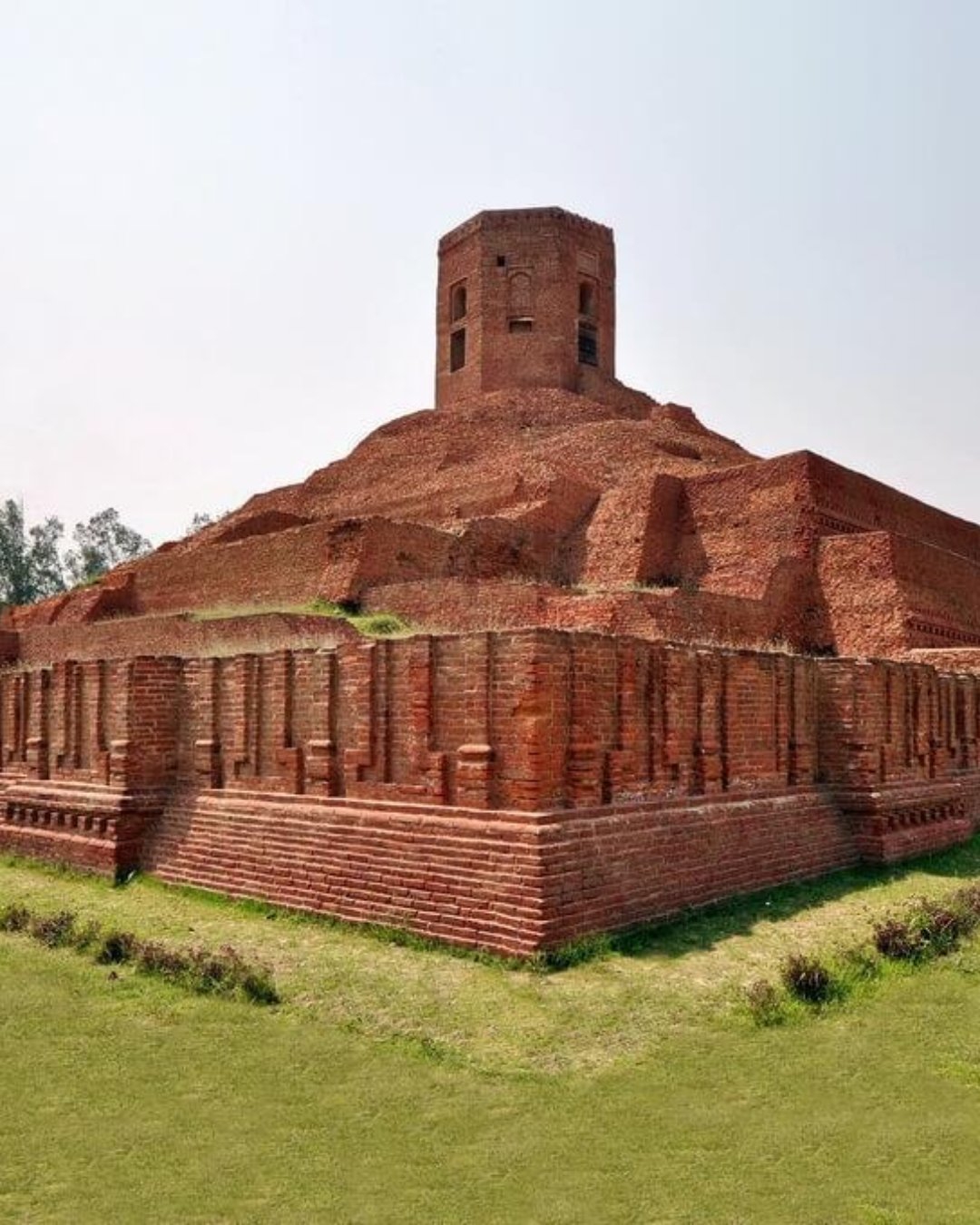
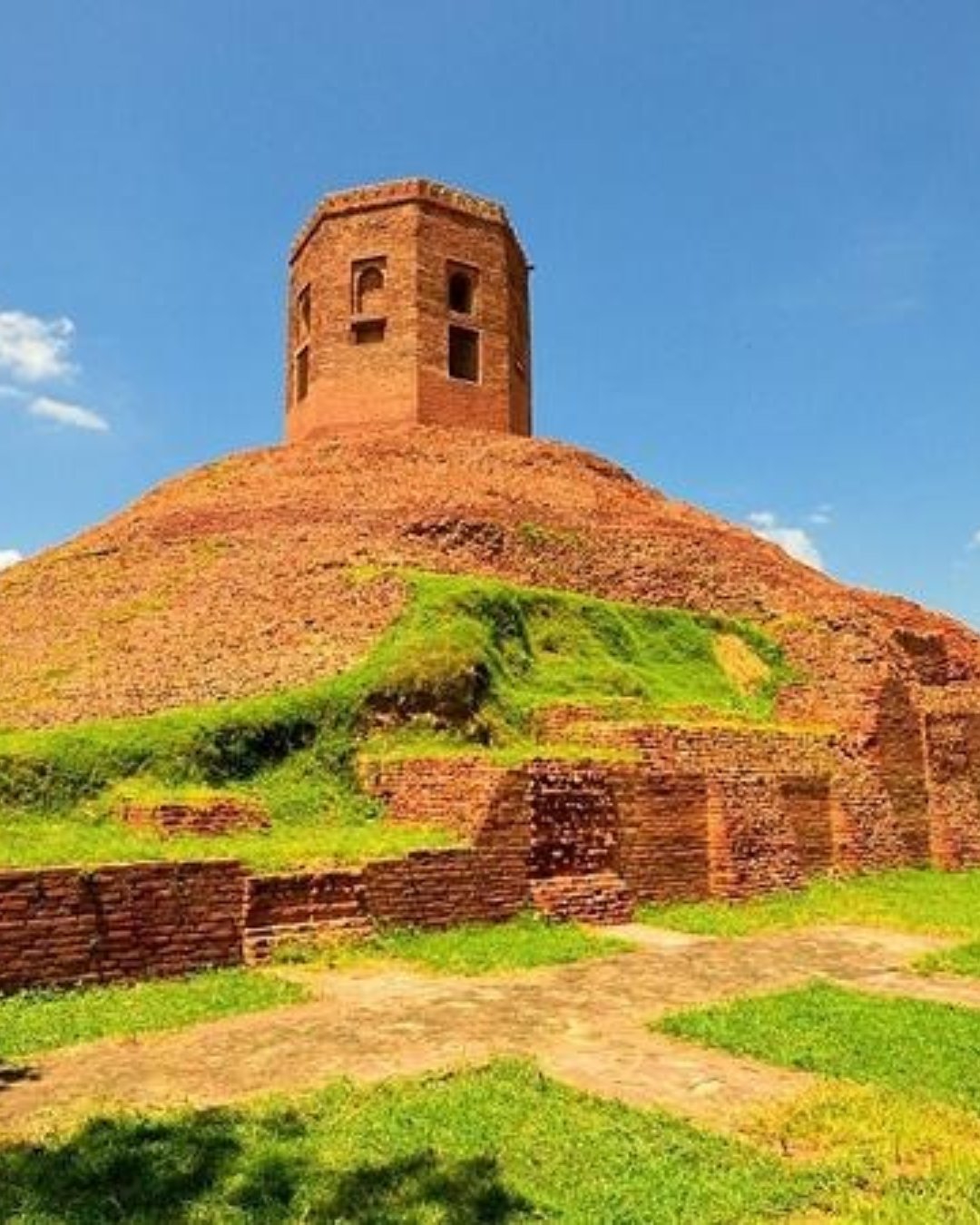
The Ruins & Chaukhandi
Ten kilometres north-east of the noise of Varanasi's ghats, you step into Sarnath — and the pace changes completely. This is where the Buddha, newly enlightened, is said to have delivered his first sermon, and the ground here is scattered with the brick bones of the monasteries, shrines and stupas that grew around that moment over more than a thousand years.
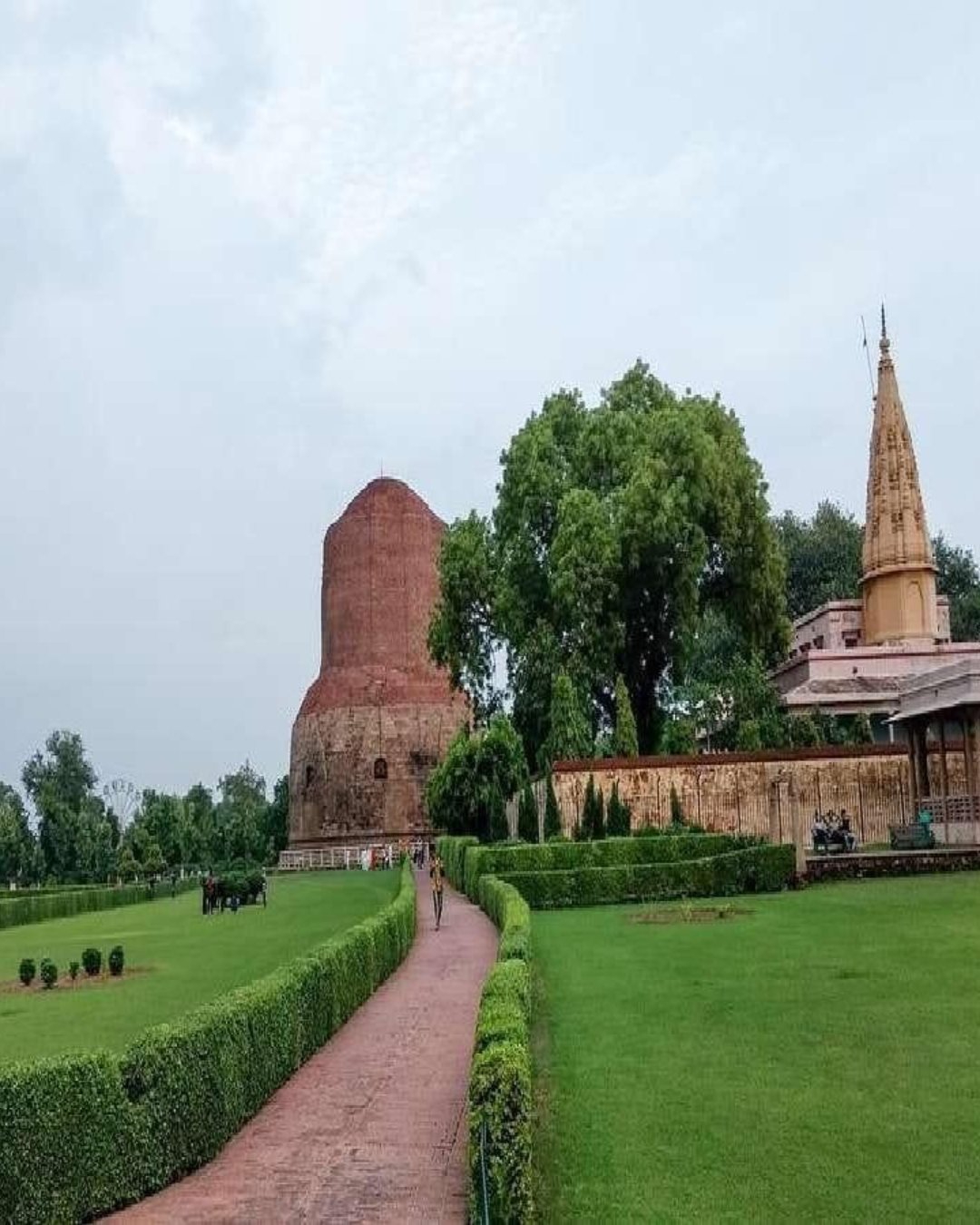
Your first stop is usually the Chaukhandi Stupa, standing a little apart from the main ruins. It's a tall, terraced mound of brick marking the spot where the Buddha is believed to have met the five companions who became his first disciples, as he travelled from Bodh Gaya to Sarnath. What makes it unmistakable is the octagonal tower perched on top — a Mughal addition, built by Govardhan, son of Raja Todar Mal, to commemorate a visit by the emperor Humayun. You're looking at two faiths and two eras stacked in a single structure: a Buddhist memorial crowned with Mughal brickwork. Few monuments in India wear their layered history so plainly, and it's worth circling the base to see how oddly and beautifully the two halves sit together.
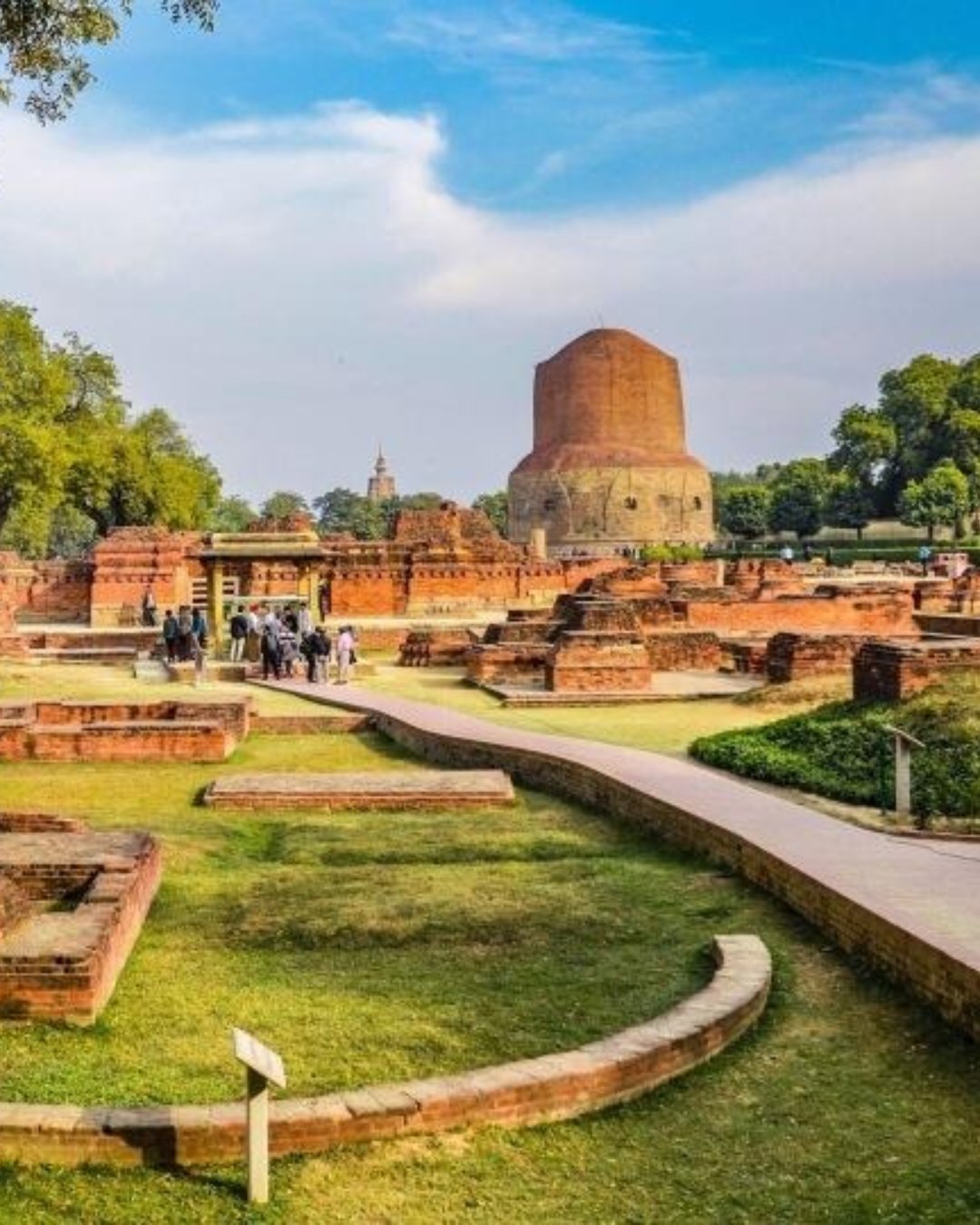
From there you move into the main archaeological complex, the heart of ancient Sarnath. You won't find towering intact temples here — what survives are foundations, and that's exactly the point. You can trace the outlines of monks' cells, votive shrines and monastery walls at your feet and picture the community that once lived and studied on this spot. Rising above it all is the Dhamek Stupa, a massive cylinder of stone and brick raised to mark where the Buddha first taught the Dharma. Nearby lie the stripped remains of the Dharmarajika Stupa and the stump of the Ashokan pillar — the same pillar whose magnificent Lion Capital, now India's national emblem, is kept in the Sarnath museum just across the road. Excavations here have run since the nineteenth century, and much of what was unearthed has been carried off to that museum, leaving the site itself spare and contemplative.
Walking it, you'll notice how much calmer and greener it feels than the city: clipped lawns, old shade trees, and robed monks and pilgrims moving quietly between the mounds. Give yourself a couple of unhurried hours. Go in the morning, when the light is soft and the heat still manageable, wear comfortable shoes for the uneven ground, and leave time for the small but extraordinary museum.
What you carry away isn't the scale of any single monument but the feeling of standing exactly where an idea began — and, in the Chaukhandi's Mughal cap, a reminder of how each passing century kept adding its own signature to the story.
33
MomentMulagandha Kuti Vihar Sarnath Varanasi, Varanasi
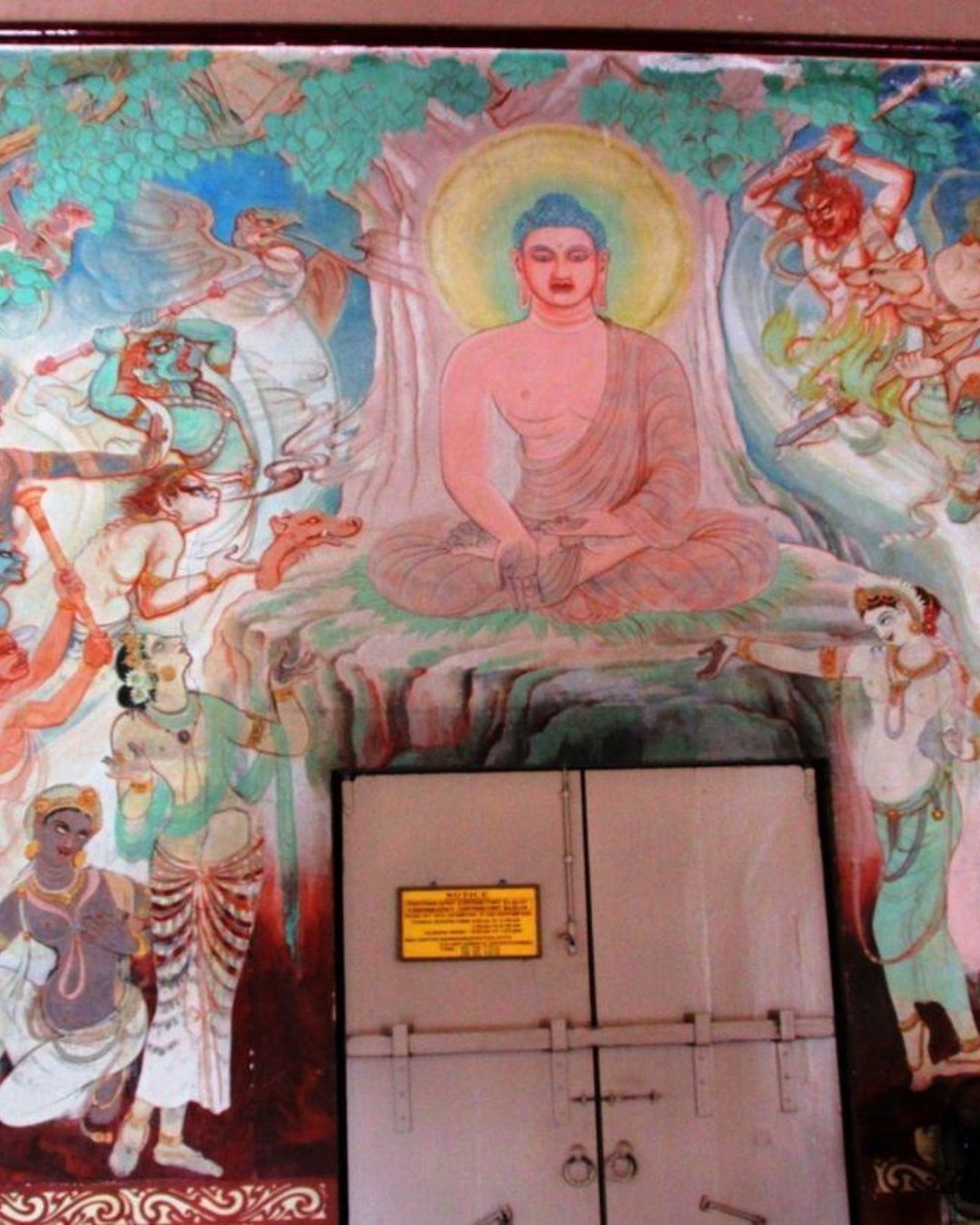
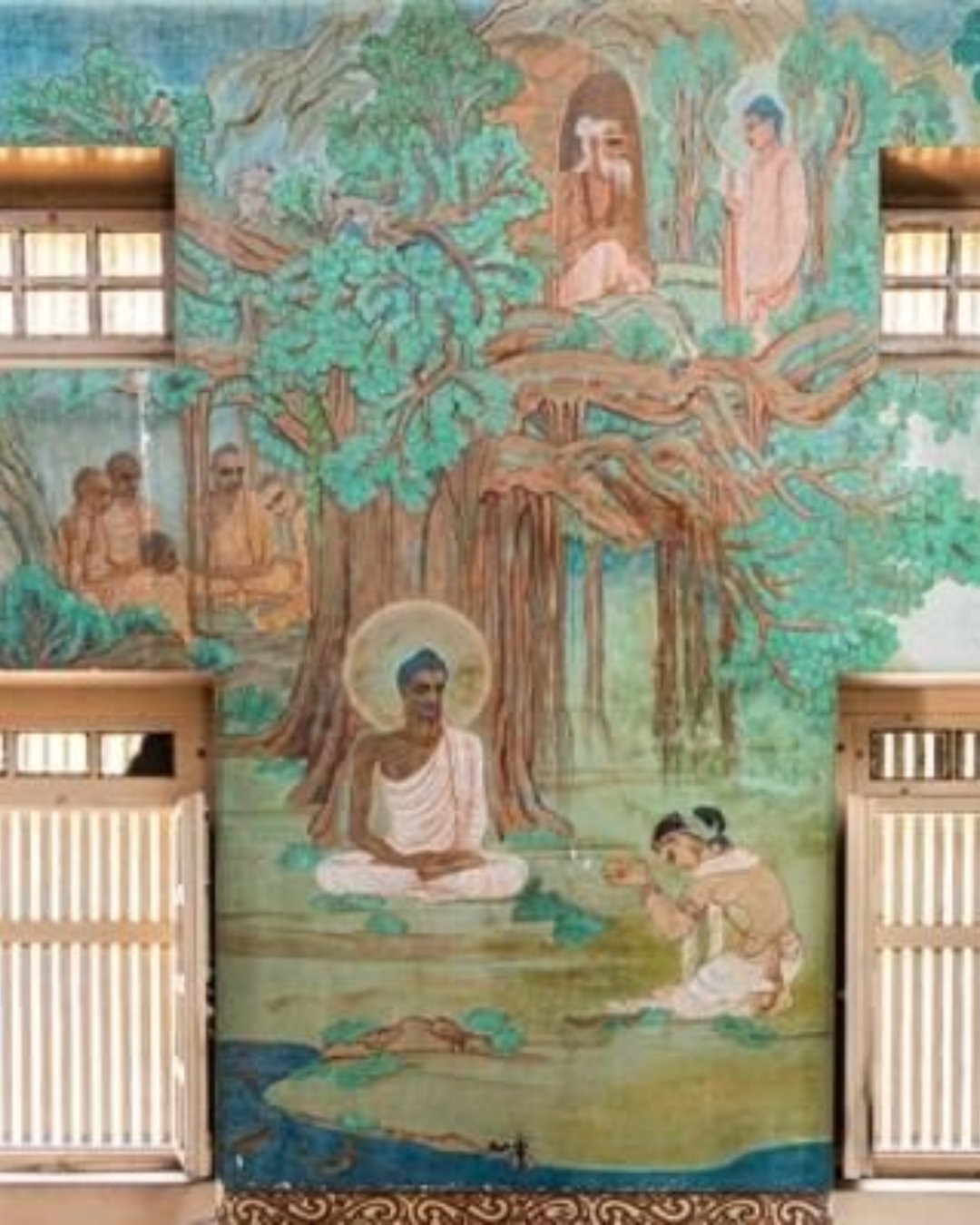
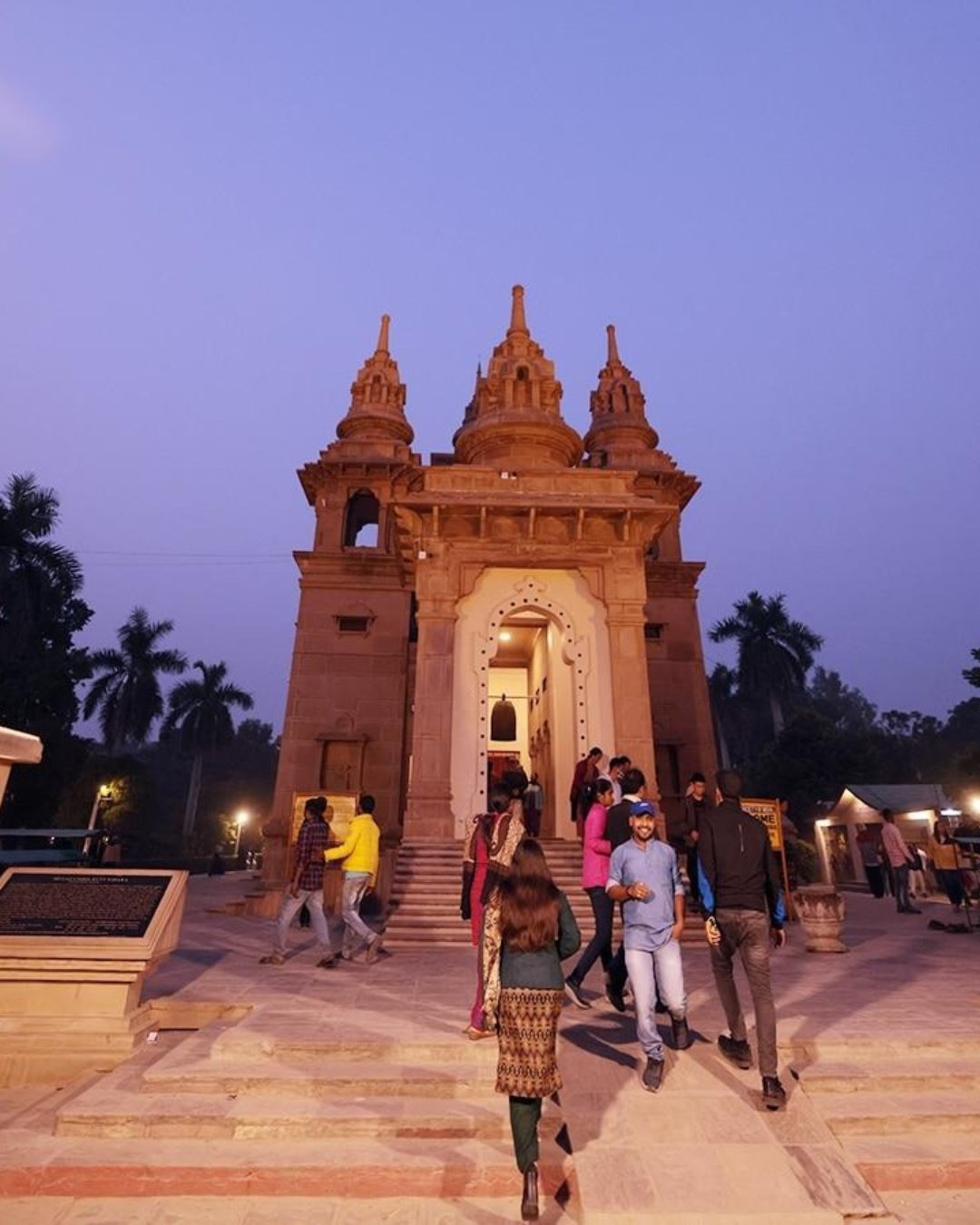
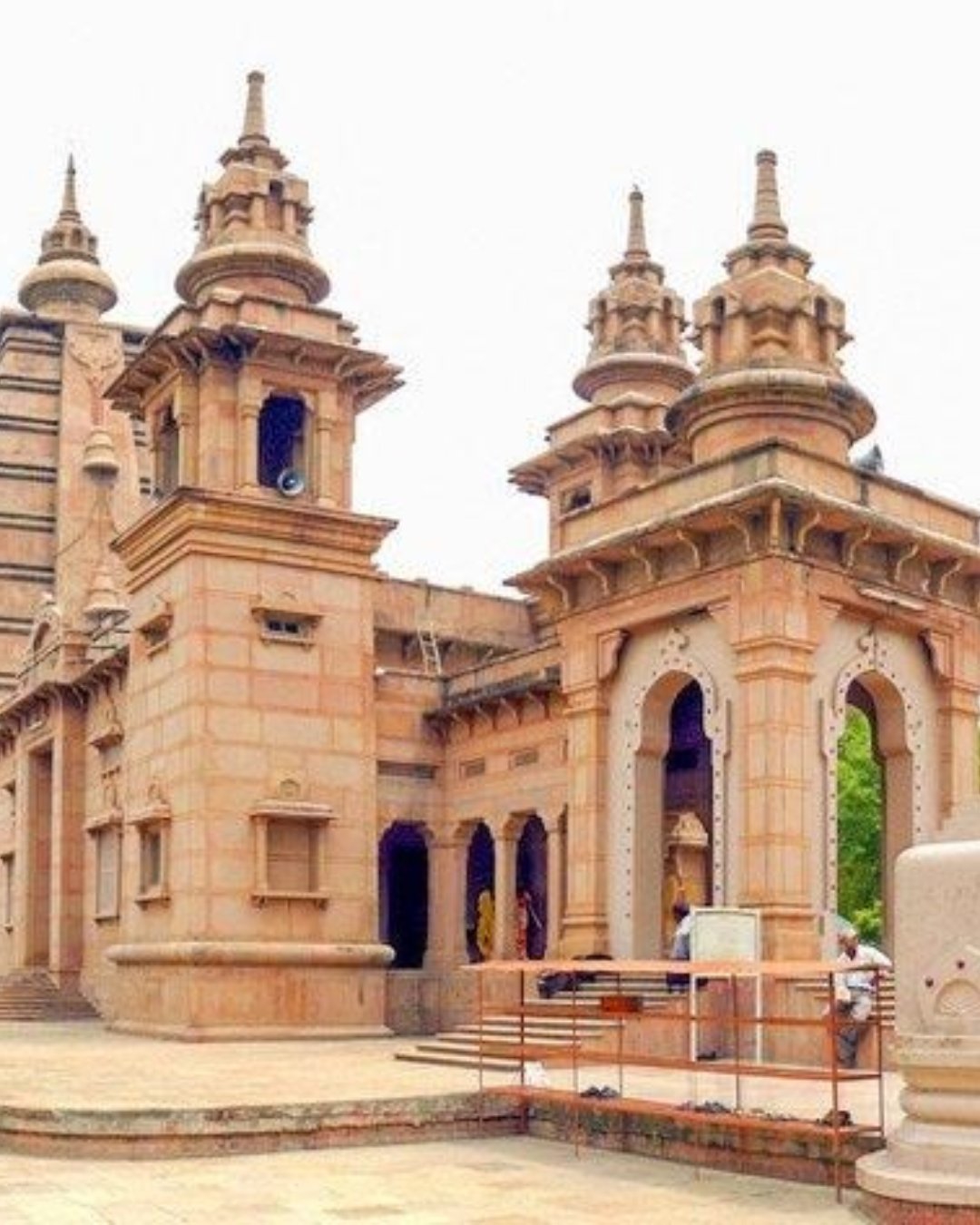
Mulagandha Kuti Vihar & the Living Site
Step off the road at Sarnath, a short drive north of Varanasi, and you arrive at the place where Buddhism first found its voice. It was here, in the Deer Park at Isipatana, that the Buddha gave his first sermon — the teaching known as "setting the Wheel of Dharma in motion" — laying out the Middle Way and the Four Noble Truths before his five former companions. Much of what surrounds you is ancient ruin: the towering Dhamek Stupa that marks the spot, the worn brick foundations of monasteries fifteen centuries old. But Mulagandha Kuti Vihar is different. It is not a ruin you look at from behind a rope; it is a temple you enter, where incense still burns and prayers are still spoken, and it is very much alive.
Built in 1931 by Anagarika Dharmapala, the Sri Lankan monk who founded the Mahabodhi Society, the vihara was raised to bring worship back to a site that had lain silent for centuries. As you step inside, the walls open into one of its treasures: a sweeping cycle of frescoes by the Japanese painter Kosetsu Nosu, who spent years tracing the Buddha's life — birth, enlightenment, first sermon and passing — across the interior in luminous colour. At the far end sits a gilded Buddha in the teaching posture, and enshrined within is a relic of the Buddha, brought out for public veneration each year at Buddha Purnima.
Outside, the living quality of the place is clearer still. A Bodhi tree spreads over the courtyard — a sapling carried from Anuradhapura in Sri Lanka, itself descended from the tree at Bodh Gaya under which the Buddha awakened. Near the entrance hangs a great bronze bell, a gift from a Japanese devotee, and saffron-robed monks move quietly between the shrine and the gardens. On a given morning you may find pilgrims from Sri Lanka, Thailand, Myanmar, Japan and Tibet circling the temple, chanting in several languages at once, while deer still graze in the park that gives the place its name. This is what makes Sarnath a living site rather than a museum: the devotion never stopped.
To visit well, come in the early morning, when the light is soft and the chanting is at its fullest. The temple keeps two sessions — roughly 4:30 to 11:30 in the morning and 1:30 to 5:30 in the afternoon, every day of the week — and entry to the vihara itself is free; only the neighbouring Dhamek Stupa complex and the archaeological museum charge a small ticket. Remove your shoes before entering, keep your voice low, and dress modestly — you are walking into an active place of prayer, not a photo stop. Photography inside the shrine is often restricted, so ask before you raise your camera.
Give yourself time to simply sit. Pair the vihara with the Dhamek Stupa a few steps away and the Sarnath Archaeological Museum, home to the original Lion Capital of Ashoka, and you hold both halves of the story in a single afternoon: the ancient ground where the teaching was first spoken, and the living temple where it is still, every day, being kept alive.
30
MomentSarnath Buddhist Temple, (Varanasi), Varanasi
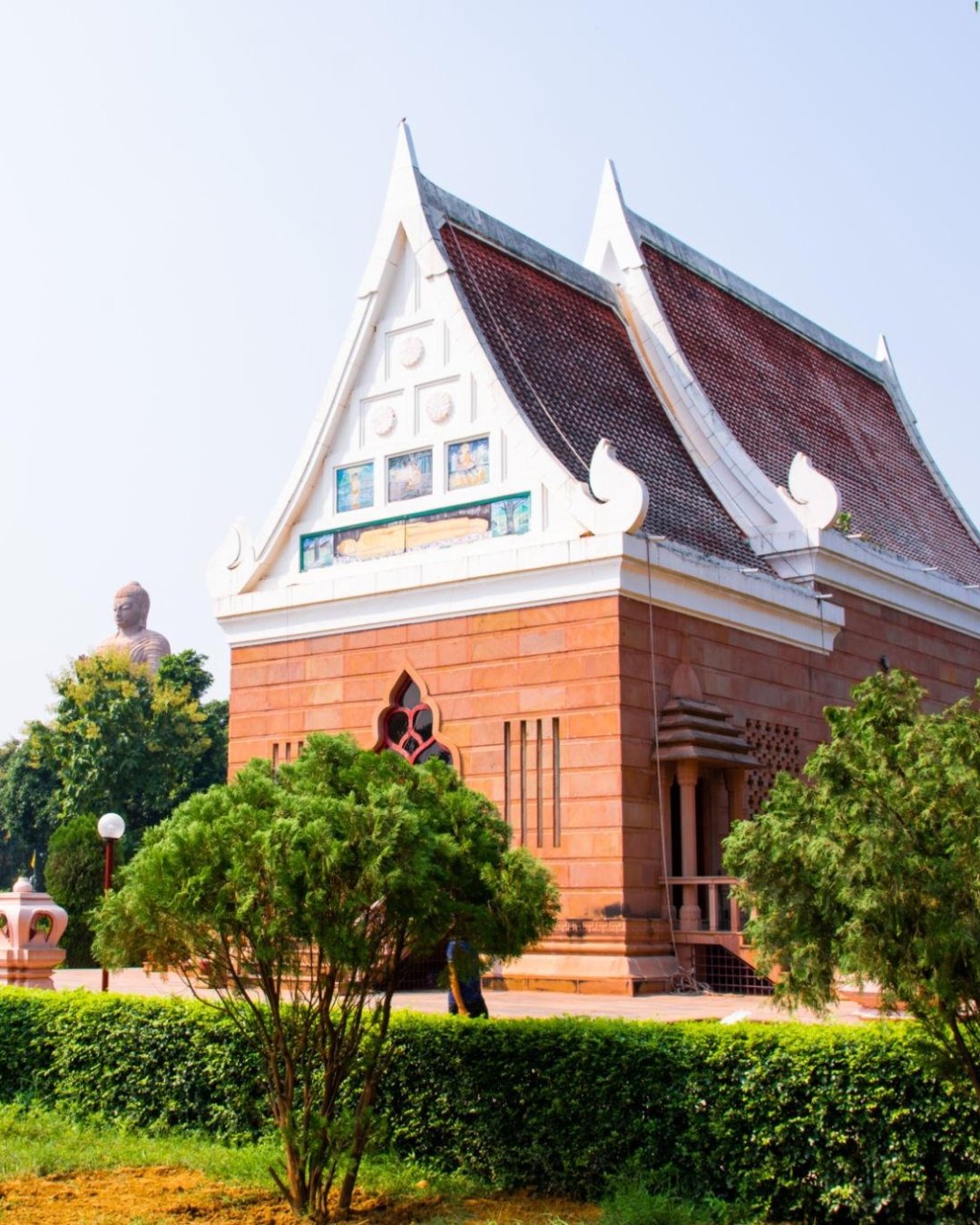
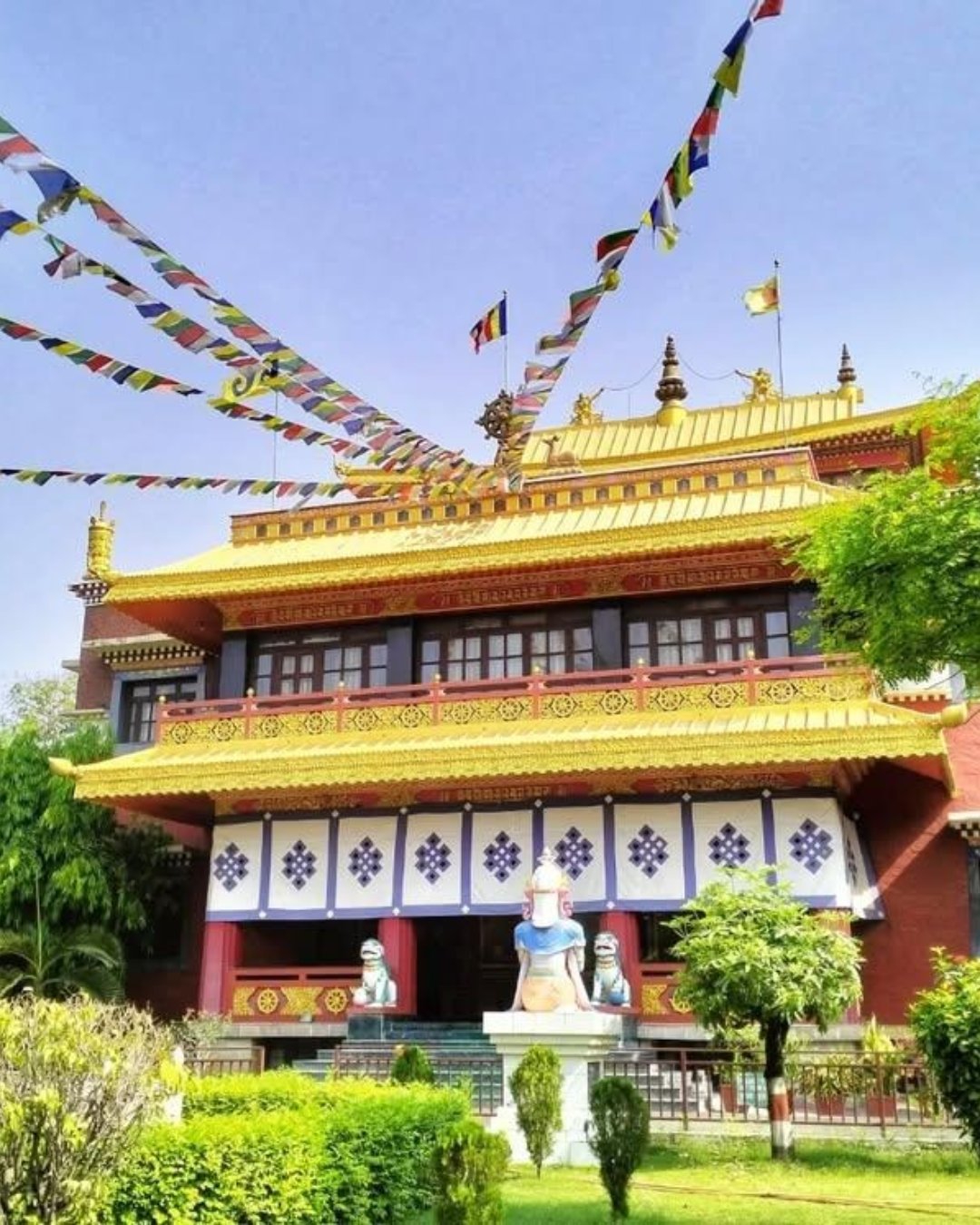
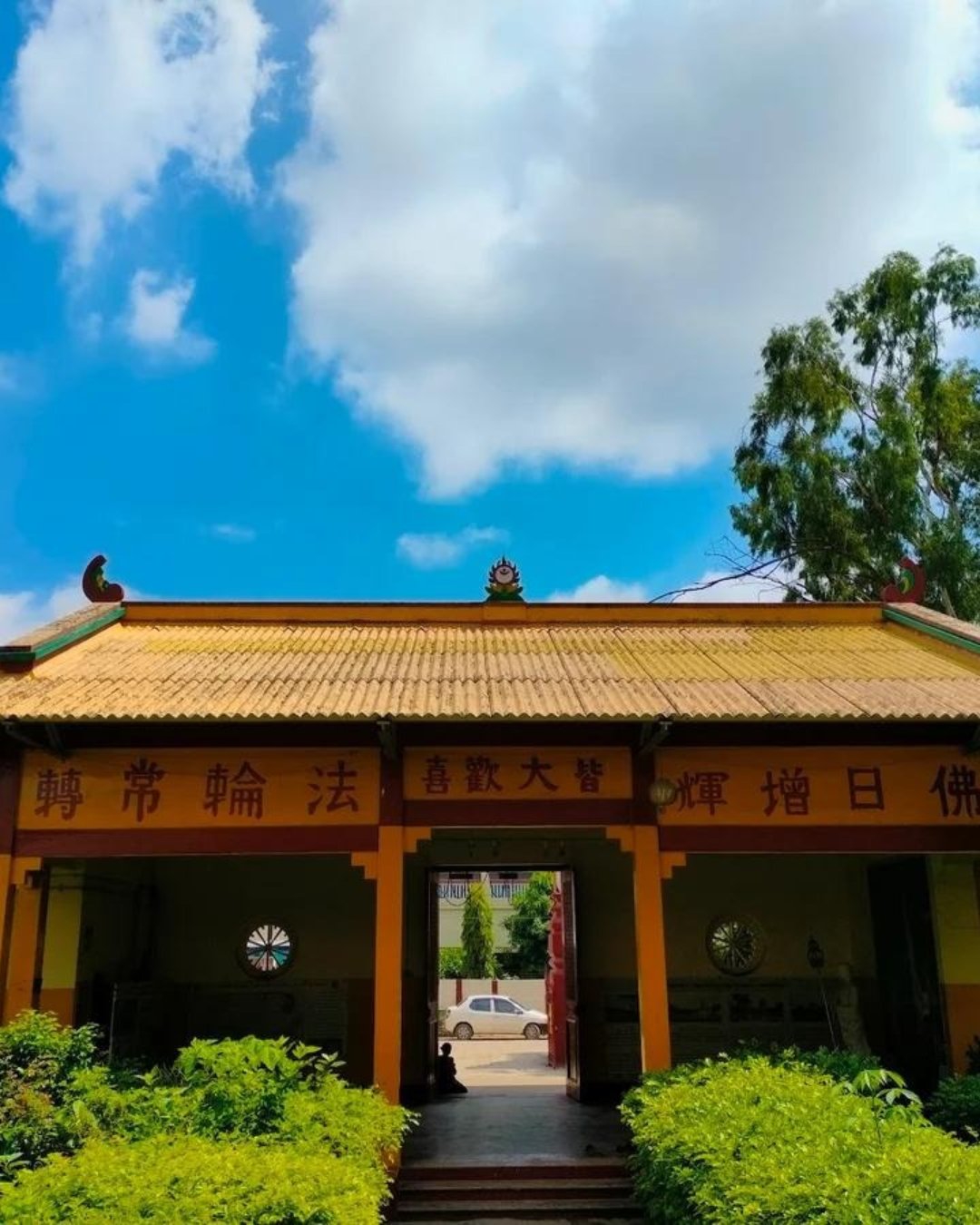
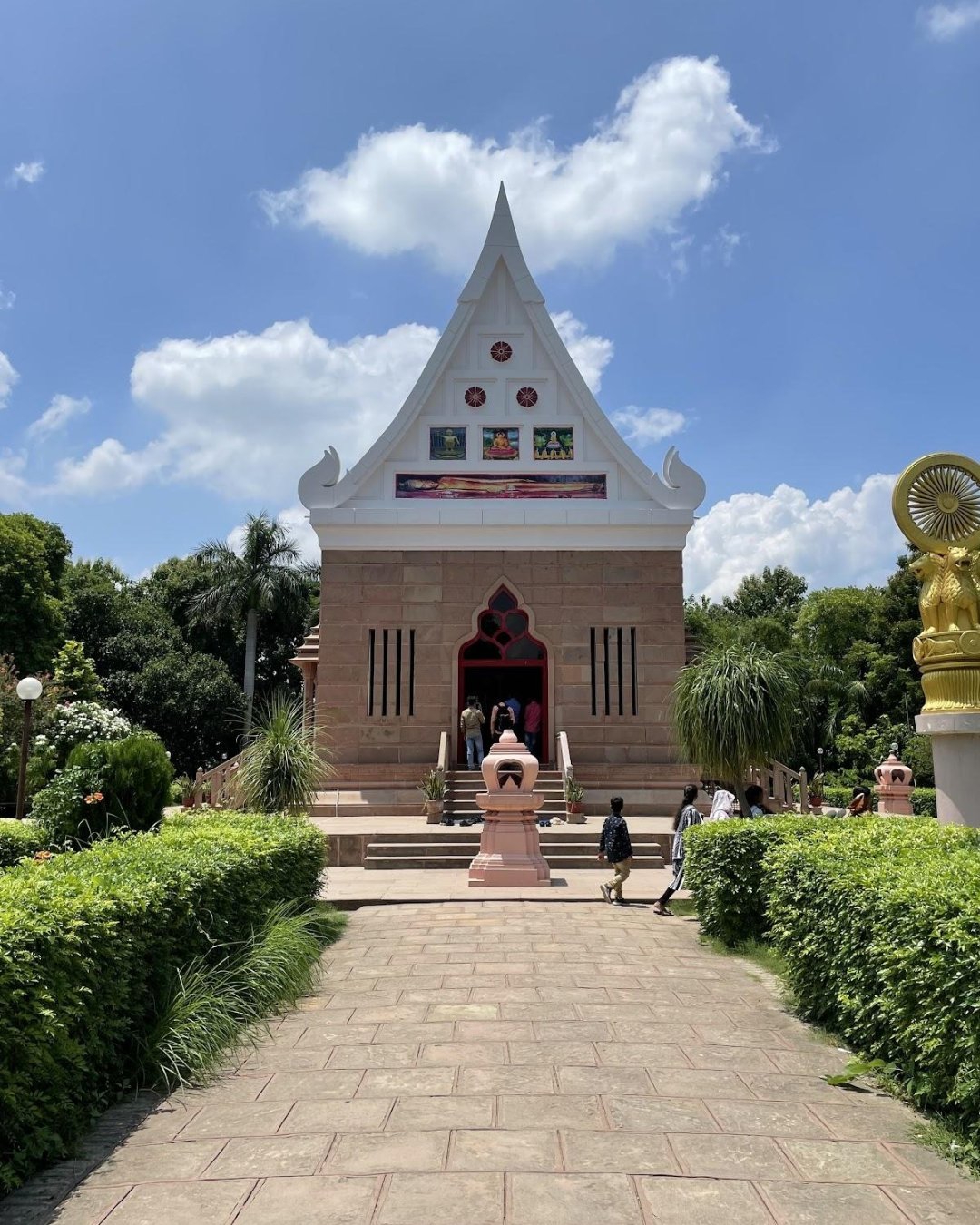
The International Temple Trail
You already know Varanasi as India's oldest living city, but this trail shows you a side of it few visitors expect: two places, a short ride apart, where nations from across Asia have quietly built temples in the architecture of their own homelands. It runs in two halves — a Nepali king's temple on the Varanasi riverfront, and, ten kilometres north at Sarnath, a ring of Buddhist monasteries raised by half a dozen countries. Walk both in a single morning and you cross what feels like several borders on foot.
In Varanasi: the Nepali Temple
You begin in the old city, near Lalita Ghat, at the Nepali Temple — also called the Kanthwala or Kathwala Mandir. A Hindu temple to Shiva, it was commissioned by the royal house of Nepal and built by craftsmen brought from Kathmandu, and it rises in tiered pagoda style from carved terracotta and dark timber, its woodwork echoing the temples of the Kathmandu valley rather than anything else on the riverfront. Often likened to Kathmandu's Pashupatinath, it is prized for the intricacy of its carved wood — a startling thing to come upon between the ghats, a fragment of the Himalayas set down on the Ganga. It sets the tone for everything ahead: a building that carries its homeland's architecture wholesale onto Indian ground.
In Sarnath: the international monasteries
From there you head about ten kilometres out to Sarnath, where the Buddha gave his first sermon after enlightenment. The whole site gathers around the great Dhamek Stupa and the quiet deer park that marks the spot, and because this is one of Buddhism's four holiest places, nations across Asia have each raised a temple here — a gift, and a claim to a share of the ground. Wandering between them feels like crossing borders on foot. You'll find the Thai temple, Wat Thai Sarnath, with its golden, upward-sweeping tiered roofs; the Japanese Nippon temple, spare and Zen, with a quiet rock garden; and the Tibetan temple, turning with prayer wheels, hung with thangkas and lit by butter lamps. Nearby stand the Chinese temple with its curved eaves and jade Buddha, the Myanmar temple's golden Theravada pagoda, and the Korean temple bright with dancheong paintwork and paper lanterns. At the heart of it, the Sri Lankan-founded Mulagandha Kuti Vihara, raised by the Mahabodhi Society, shelters luminous frescoes of the Buddha's life painted by the Japanese artist Kosetsu Nosu.
Walking it well
A few practical things make the trail easier. Sarnath sits roughly a thirty- to forty-minute auto-rickshaw or taxi ride from the ghats, so it pairs naturally with a morning out of the old city. Most of the Sarnath temples ask no entry fee — a small donation is welcome — and a half-day is enough to see the cluster comfortably, ideally in the morning when prayers are underway and the light is still soft. Dress modestly, cover your shoulders and knees, and slip your shoes off before you step inside; photography is usually fine outdoors, but ask before shooting interiors or people at prayer. Move gently and unhurried, and you'll notice the trail's real gift: standing in one small corner of India, you get to feel much of Asia's devotional world lean in.
40
MomentSarnath Museum, Varanasi
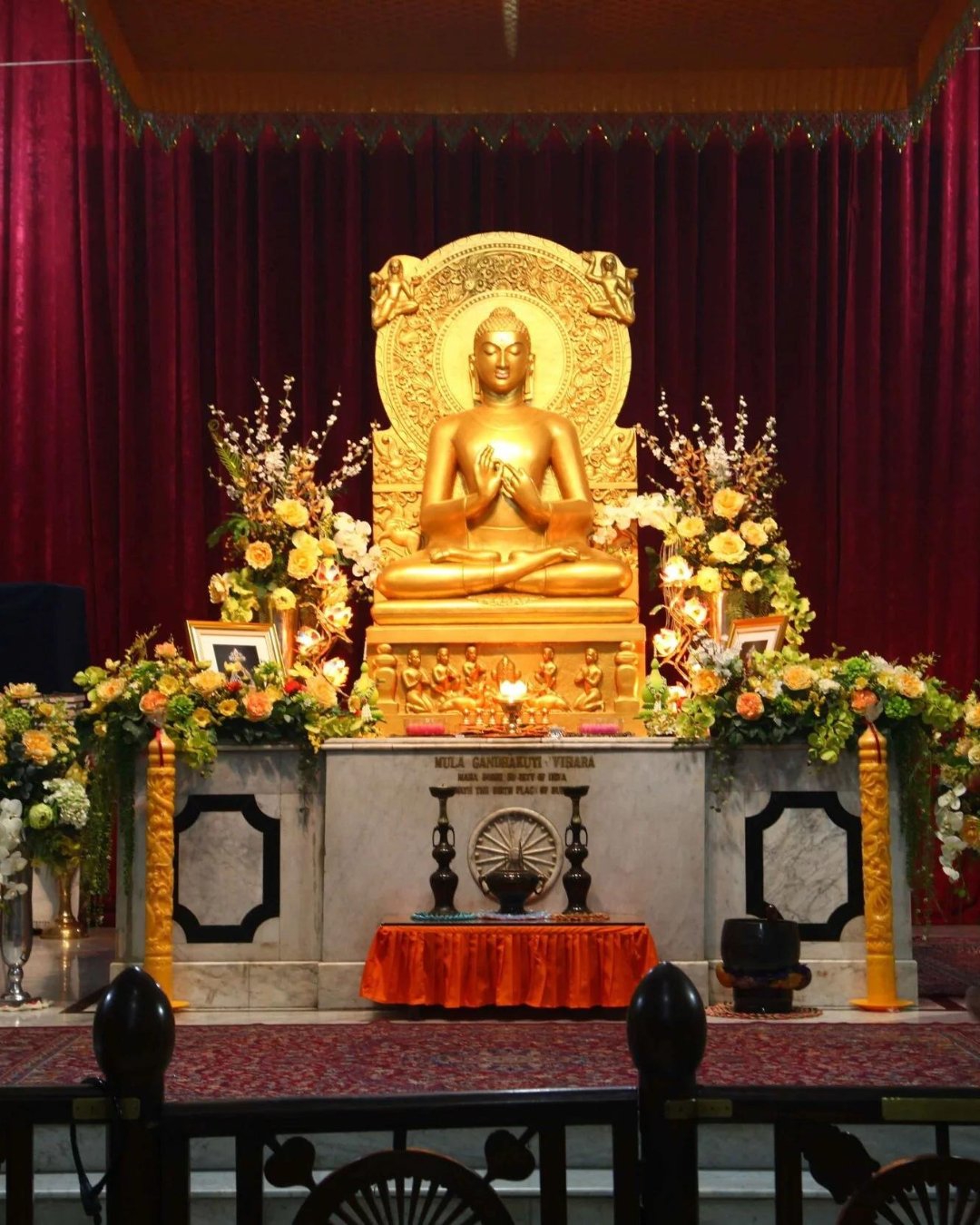
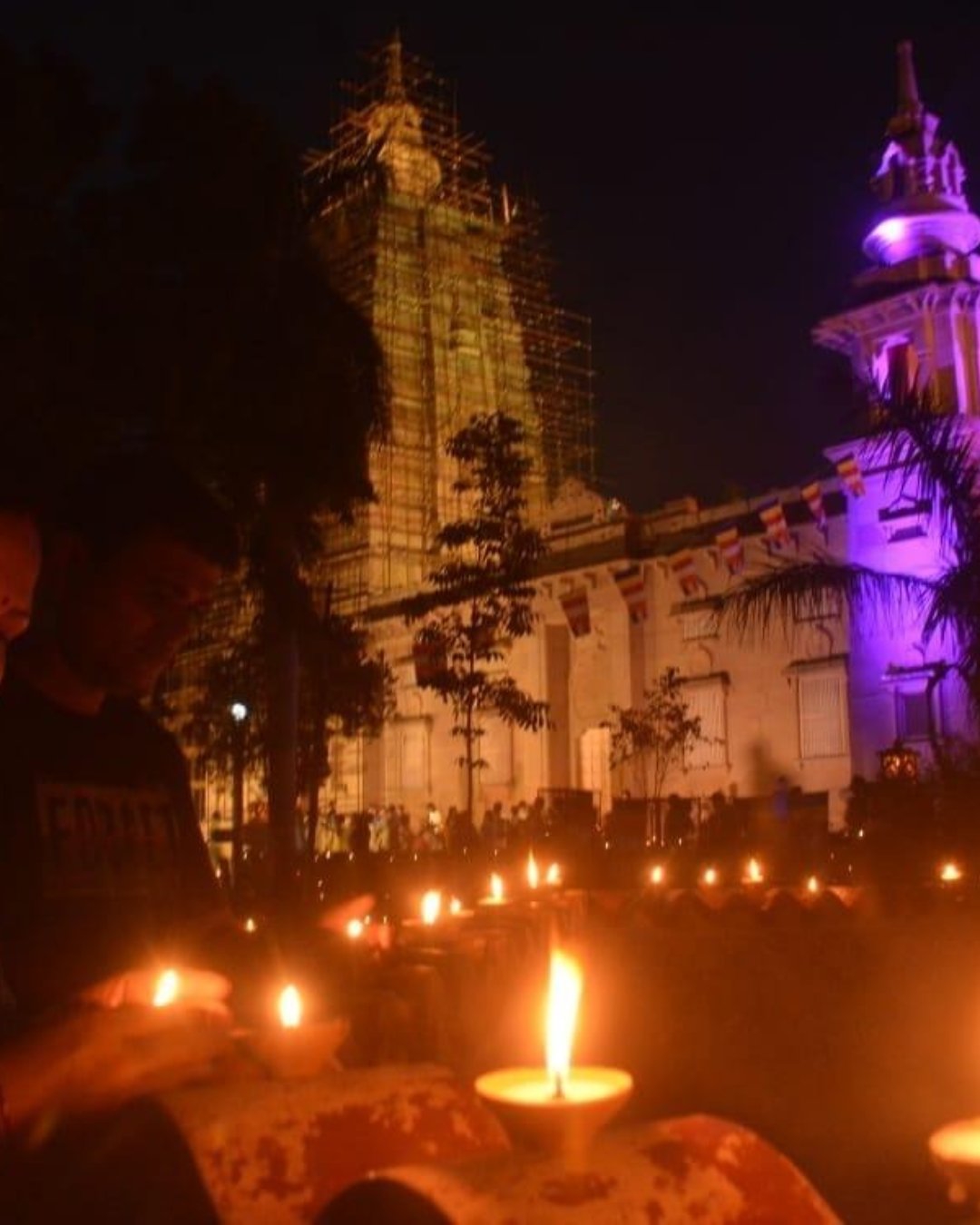
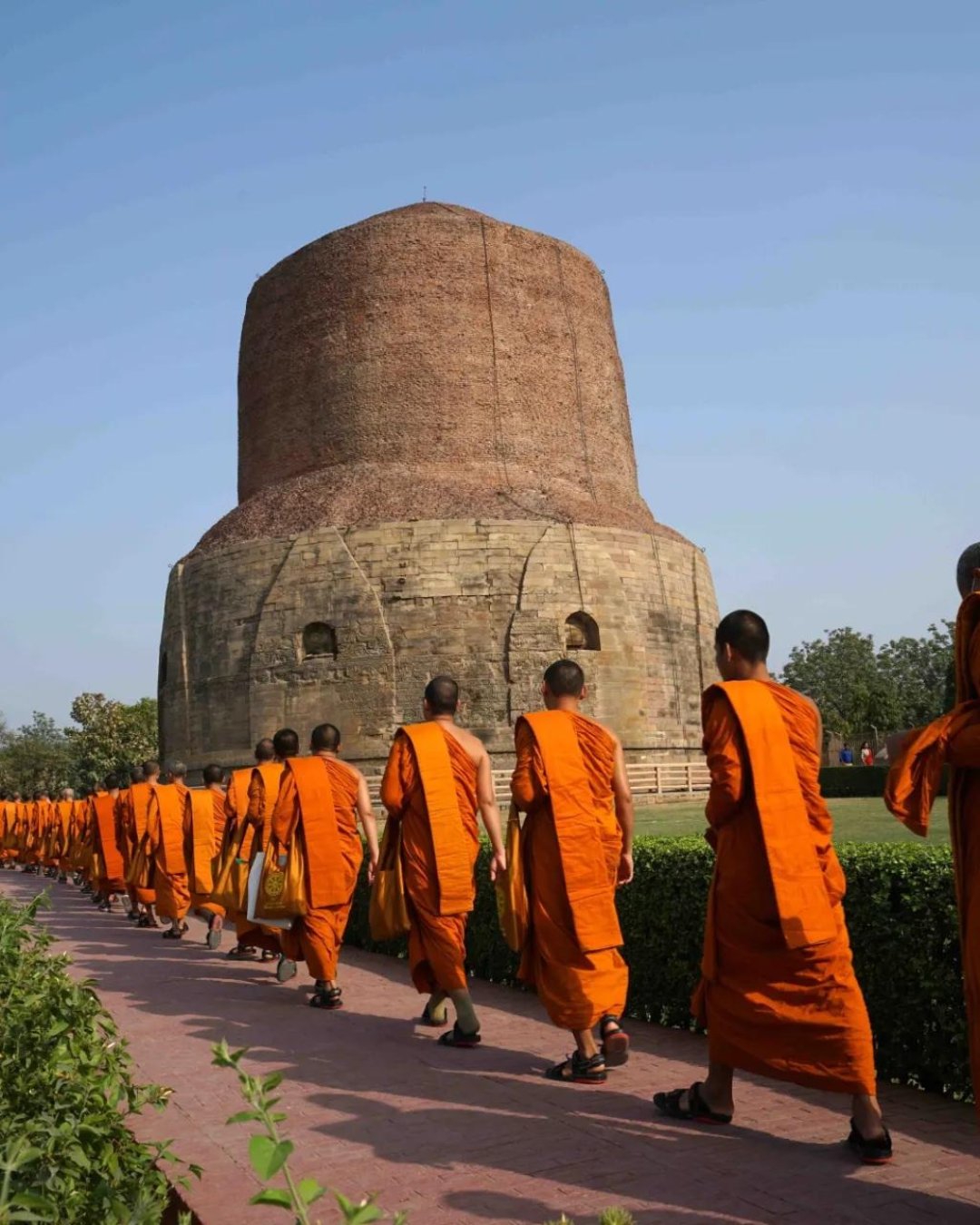
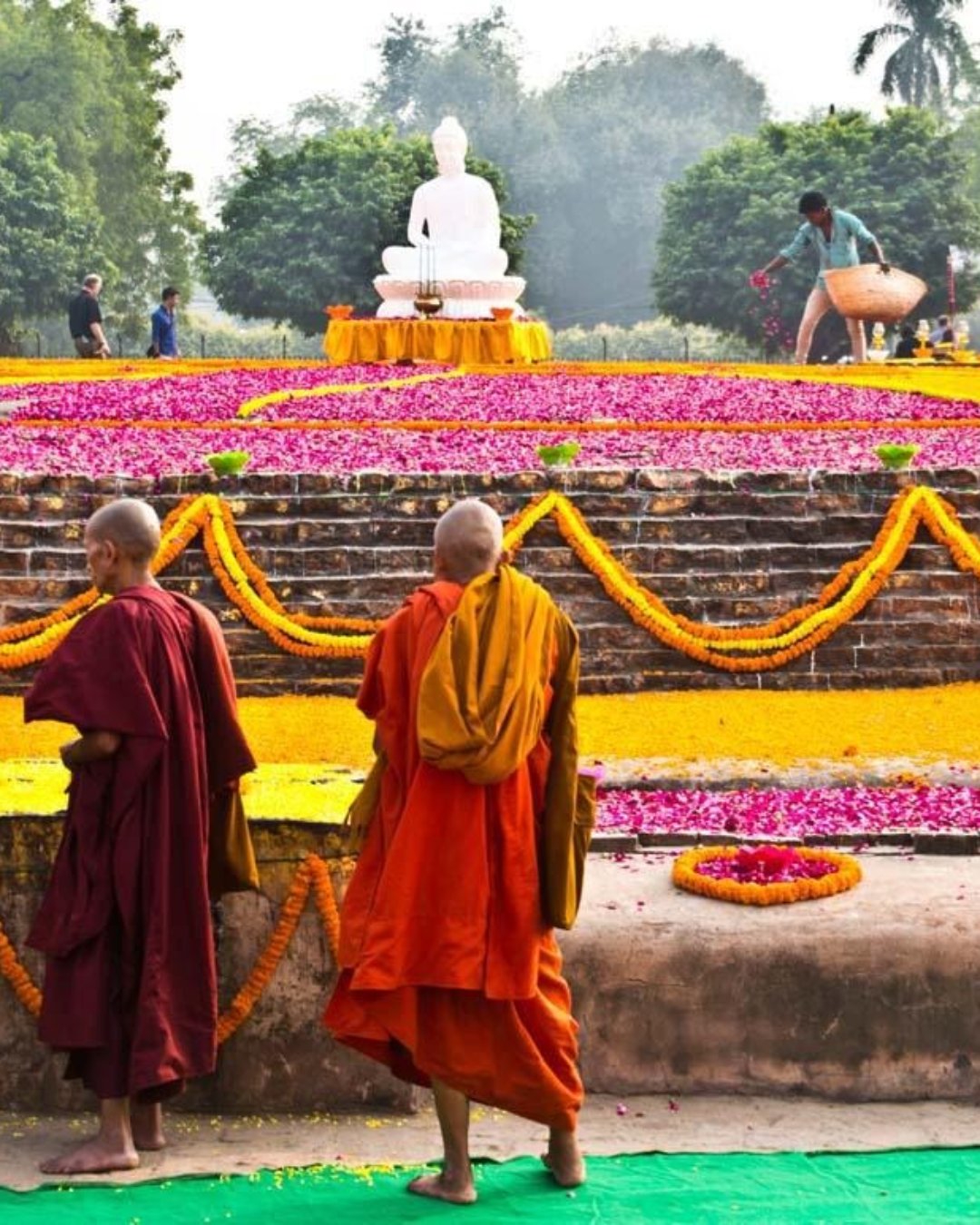
Buddha Purnima at Sarnath
If you find yourself in Varanasi on the full-moon day of Vaishakh — 1 May in 2026 — make your way to Sarnath, the quiet deer park about ten kilometres from the city's ghats. For one day it becomes the most sacred address in the Buddhist world. This is where, more than 2,500 years ago, the Buddha gave his first sermon to five disciples and set the wheel of dharma in motion. On Buddha Purnima — the day that marks his birth, his enlightenment and his passing all at once — you get to watch that history come alive on the very ground where it happened.
You arrive to find Sarnath transformed. The usually serene lawns around the great Dhamek Stupa, which marks the spot of that first sermon, fill with monks in maroon, saffron and ochre robes — pilgrims who have travelled from Sri Lanka, Thailand, Myanmar, Japan, Tibet, Vietnam and beyond. You hear chanting rise in several languages at once, smell incense and marigold, and move through crowds carrying lotus flowers and small oil lamps.
The heart of the day is the Mulagandha Kuti Vihara, the temple built by the Maha Bodhi Society. Inside, sacred relics of the Buddha — kept locked away for the rest of the year — are brought out for public viewing on this one morning. You join the slow, patient queue for a glimpse, then step into the shade of the Bodhi tree beside the temple, grown from a sapling of the tree at Bodh Gaya. A grand procession, the shobha yatra, carries the relics through Sarnath, and you can walk alongside it as drums, banners and prayer flags fill the road.
Around all this, a lively fair unfolds. You wander past stalls of books, prayer beads, Buddhist art and street food, while the nearby Archaeological Museum holds the Ashoka lion capital that became India's national emblem. As dusk falls, the stupa and monasteries glow with lamps and strings of light, and the day ends in the same calm the Buddha is said to have found here.
To make the most of it, arrive early — mornings are cooler and the relic viewing draws long lines by midday. Dress modestly, remove your shoes at temple thresholds, and keep your voice low inside prayer halls. It pairs naturally with the rest of a Varanasi trip: the serene silence of Sarnath by day, the electric ghats of the Ganga by evening. Whether you come as a pilgrim or a curious traveller, Buddha Purnima at Sarnath offers something rare — a living festival unfolding on the exact spot where Buddhism itself began.
40
MomentSarnath Museum, Varanasi
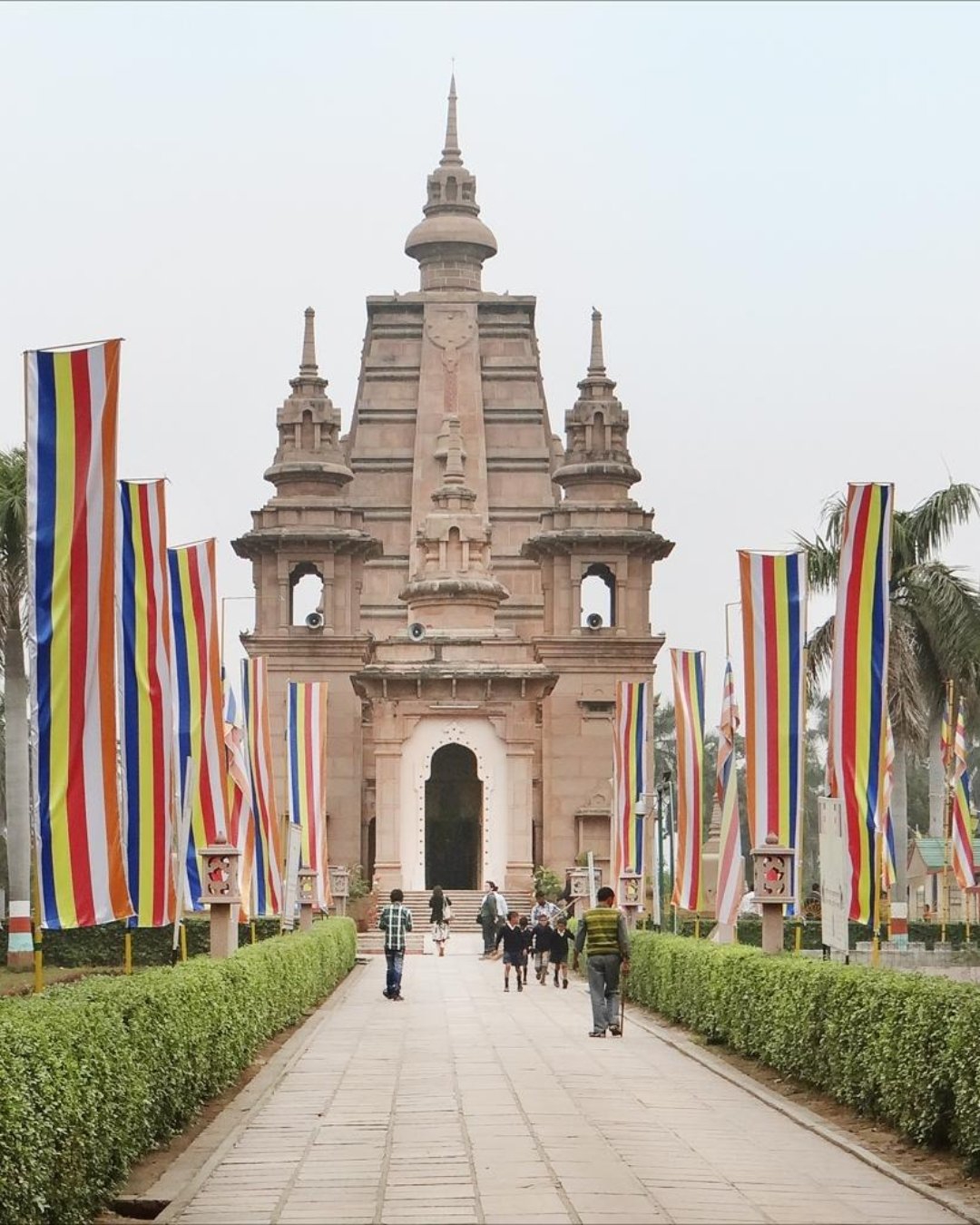
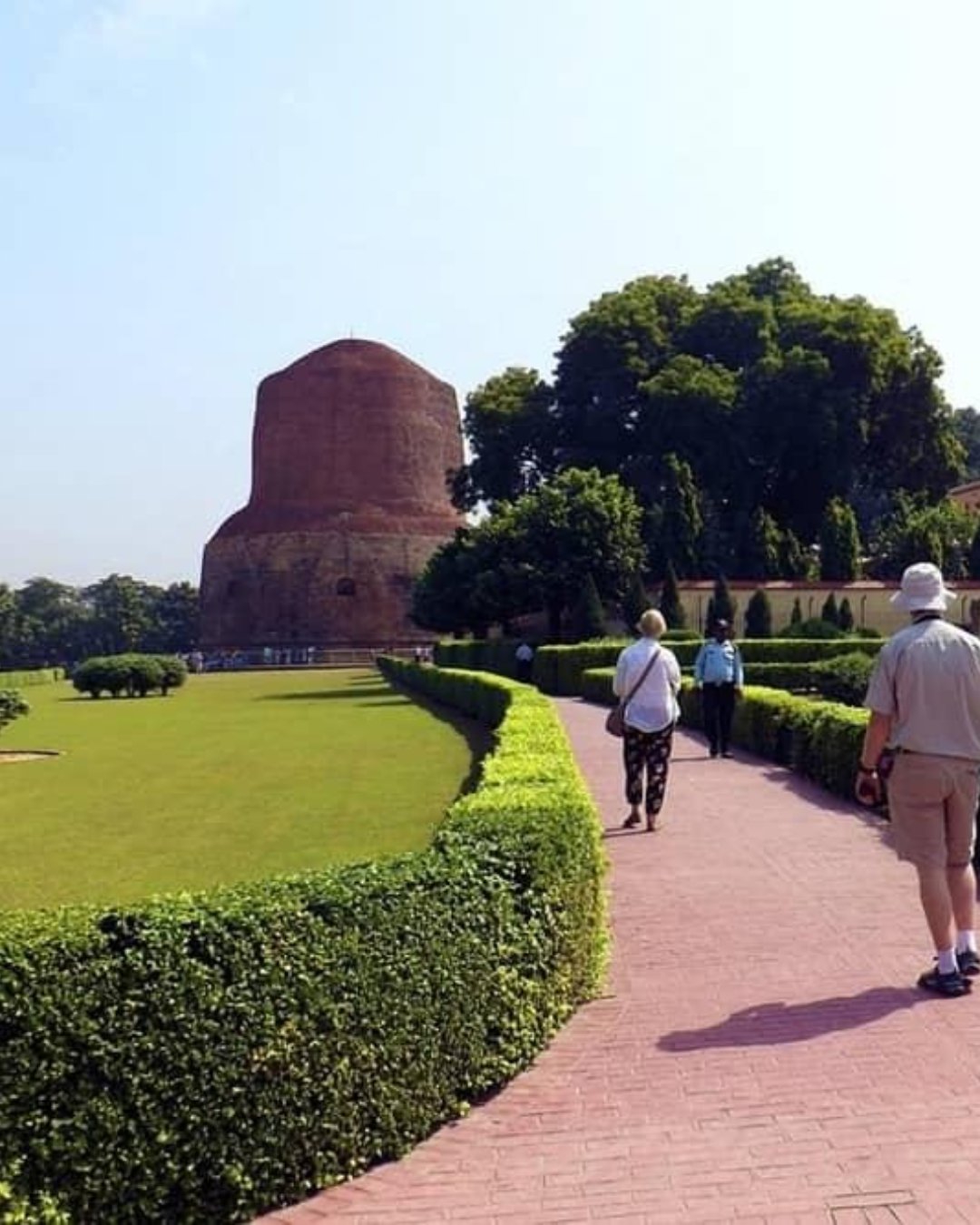
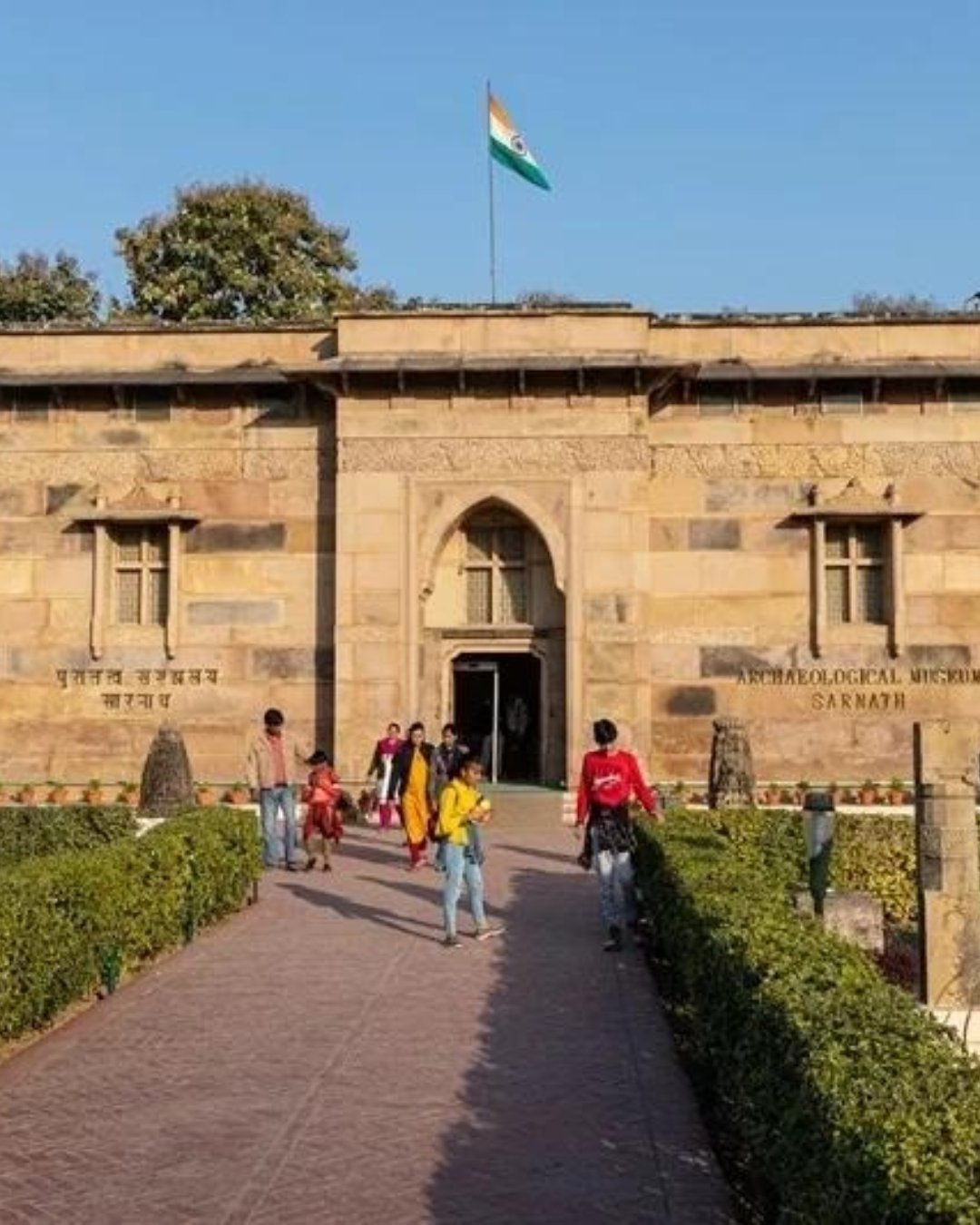
Getting There & Doing It Right
Sarnath sits about ten kilometres northeast of Varanasi's old city — close enough to be a half-day trip, far enough that the noise of the ghats falls away the moment you arrive. Getting there is simple; doing it well is mostly a matter of timing and quiet.
From the ghats or Godowlia, reckon on 30 to 45 minutes depending on traffic. From Varanasi Cantt railway station it's nearer eight kilometres and 20 to 30 minutes, and if you're arriving by air, Sarnath is roughly twenty kilometres from Babatpur airport, easy to fold into the trip in or out of the city. You have a few ways to cover the distance, rising in price with comfort. A shared auto or e-rickshaw is the cheapest, somewhere between ₹30 and ₹200, with e-rickshaws running the Sarnath road regularly. A reserved auto-rickshaw, at around ₹150 to ₹300 one way, is the simplest option for two or three people. A cab booked through an app or your guesthouse runs about ₹300 to ₹700 one way, while a half-day taxi that waits for you and brings you back — the most convenient by far — costs roughly ₹1,500 to ₹2,500. For a relaxed visit that waiting taxi is worth the extra; a reserved auto is fine if you'd rather keep it cheap. Either way, agree the fare, and whether it includes waiting time, before you set off, and go early, when the light is soft, the temples are at prayer, and you beat both the heat and the Cantt-area traffic.
Once you're there, it helps to know that Sarnath's sights keep different hours. The Dhamek Stupa and the surrounding archaeological ruins are open daily from sunrise to sunset, roughly six in the morning to six in the evening. The Archaeological Museum — home to the original Lion Capital of Ashoka — runs from 10 a.m. to 5 p.m. but is closed on Fridays, so if the Lion Capital is on your list, don't come on a Friday. Mulagandha Kuti Vihar keeps two sessions, approximately 4:30 to 11:30 in the morning and 1:30 to 5:30 in the afternoon, every day, and entry to the temple itself is free. The cluster of international temples — Thai, Tibetan, Japanese, Chinese, Myanmar and Korean — generally open through daylight hours and ask no fee, though a donation is always welcome. On tickets, the simplest approach is the ASI combined ticket, which costs ₹25 for Indian visitors and ₹100 for foreign nationals and covers the ruins, the Dhamek Stupa and the museum together, rather than paying for each separately. Hours shift a little by season, so confirm before making a special trip.
Three to four hours is enough to do Sarnath properly — the stupa and deer park, the museum, Mulagandha Kuti Vihar and a wander through two or three of the national temples — without rushing. A half-day, in other words: out after breakfast, back by lunch. And remember that these are active places of worship, not just monuments. Dress modestly, with shoulders and knees covered, and slip your shoes off before entering any shrine. Keep your voice down where monks or pilgrims are chanting. Photography is usually fine outdoors, but ask before shooting temple interiors or people at prayer, and put the camera away where a sign or a monk asks. Move gently and unhurried, and Sarnath gives you what the old city can't: silence, and room to feel the weight of where you're standing.
Destination
Varanasi, Uttar Pradesh, India
People also ask
01Question
Why is Sarnath famous?
Sarnath is famous because it is the place where Gautama Buddha delivered his first sermon after attaining enlightenment at Bodh Gaya. Here, he taught the Four Noble Truths and the Eightfold Path, and the Buddhist Sangha began.
It is also famous for the Dhamek Stupa, ancient Buddhist ruins, Ashoka's Lion Capital, Sarnath Museum and its living Buddhist temples. Located about 10 km northeast of Varanasi, Sarnath is one of Buddhism's most important pilgrimage sites.
02Question
What is the Dhamek Stupa?
The Dhamek Stupa is a massive ancient Buddhist monument in Sarnath, about 10 km northeast of Varanasi. It marks the sacred place where Gautama Buddha is traditionally believed to have delivered his first sermon to his five disciples after attaining enlightenment at Bodh Gaya. This teaching, known as the Dharmachakra Pravartana, introduced the foundations of Buddhist teaching, including the Four Noble Truths and the Eightfold Path.
03Question
How do I get to Sarnath from Varanasi?
We'll take a taxi or auto-rickshaw directly from your Varanasi hotel to Sarnath. The official Varanasi tourism site confirms that taxis, e-rickshaws, cycle rickshaws and three-wheelers are available locally. If taking an auto, agree on the fare before starting.
If you're staying around the ghats/old city, we'll allow extra time because traffic and narrow roads can slow the journey. Once in Sarnath, we'll explore the Dhamek Stupa, archaeological ruins, Sarnath Museum and Buddhist temples together.
04Question
What are Sarnath timings and entry fees?
Sarnath's main sights keep slightly different hours. The Dhamek Stupa and the surrounding archaeological ruins are open daily from 6 AM to 6 PM, with entry at ₹25 for Indian visitors and ₹100 for foreign nationals. The Sarnath Archaeological Museum, home to the original Lion Capital of Ashoka, runs 10 AM to 5 PM and is closed on Fridays, with a small ticket and free entry for under-15s. Mulagandha Kuti Vihar keeps two sessions, roughly 4:30–11:30 AM and 1:30–5:30 PM every day, and is free to enter, as are the international temples (Thai, Tibetan, Japanese and others), which open through daylight hours and simply welcome a small donation.
05Question
Which day is the Sarnath museum closed?
The Sarnath Archaeological Museum is closed every Friday. It's open Saturday to Thursday, 10:00 AM–5:00 PM (per the ASI's official listing), with a flat ₹5 ticket and under-15s free.
If your Sarnath day falls on a Friday, don't write the visit off — you can still see the Dhamek Stupa, the archaeological ruins, the Chaukhandi Stupa and the Buddhist temples, all open as usual. Just move the museum, and its Lion Capital of Ashoka, to another day.
06Question
How much time do you need at Sarnath?
Plan for about 4–5 hours — a relaxed half-day. That's enough for the Dhamek Stupa and deer park, the Archaeological Museum (10 AM–5 PM, closed Fridays), Mulagandha Kuti Vihar, and a wander through two or three of the international temples without rushing.
07Question
What is the Lion Capital of Ashoka?
The Lion Capital of Ashoka is a 3rd-century BCE Mauryan sculpture that originally stood on top of an Ashokan pillar at Sarnath, where Buddha is traditionally believed to have delivered his first sermon. It features four lions standing back-to-back, above an abacus decorated with the Dharma Chakra and four animals — elephant, horse, bull and lion.
Experience layers
Go further into one part of this trip.