

The Lion Capital & the Museum
Sarnath Museum, Varanasi, India
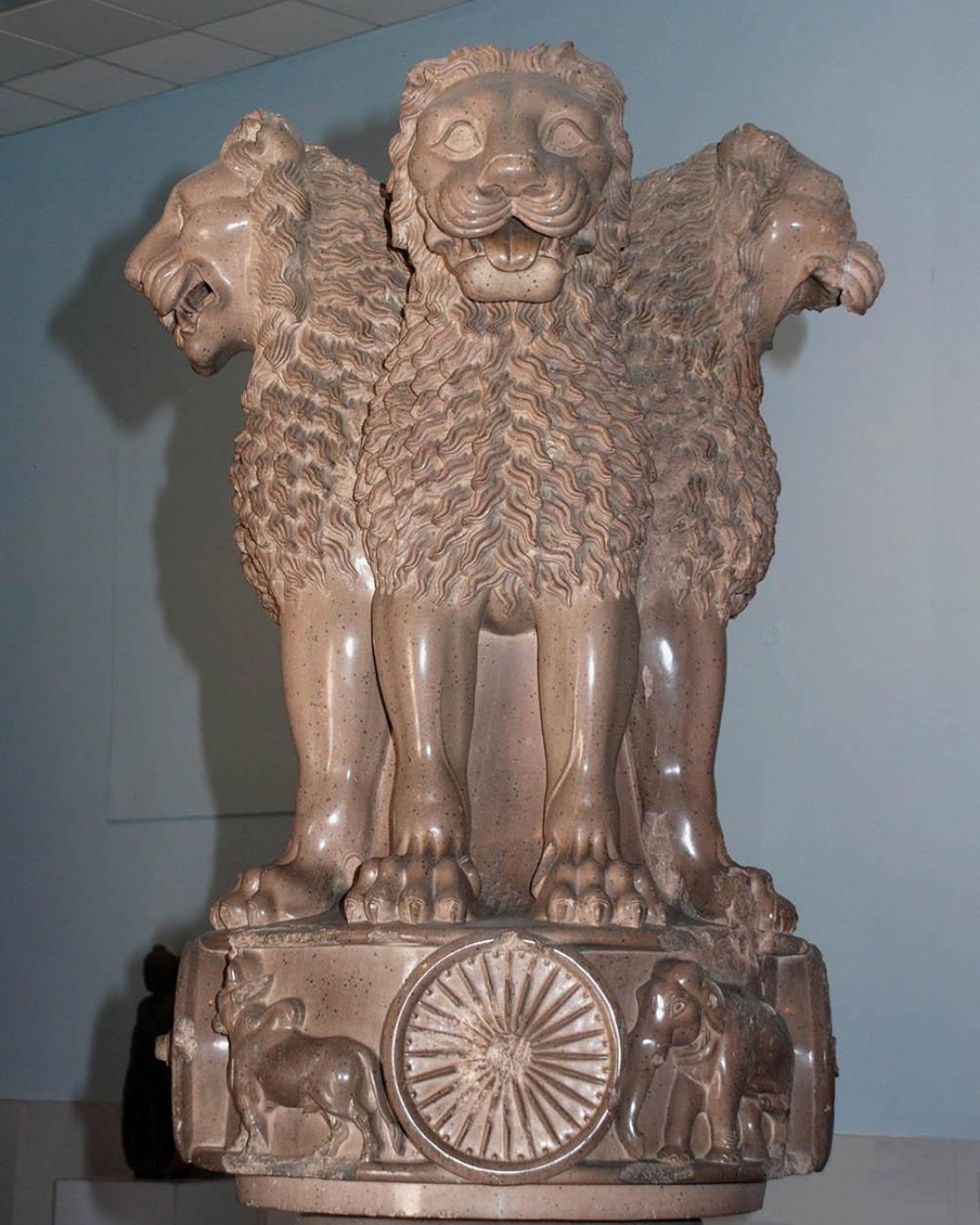
A short drive north of Varanasi, at Sarnath, sits a small museum that holds one of the most recognisable objects in India — one most Indians carry in their pockets every day without thinking about it. The Lion Capital of Ashoka is the original from which the national emblem is drawn, and it stands, quietly, inside the first purpose-built site museum the country ever raised around a single find.
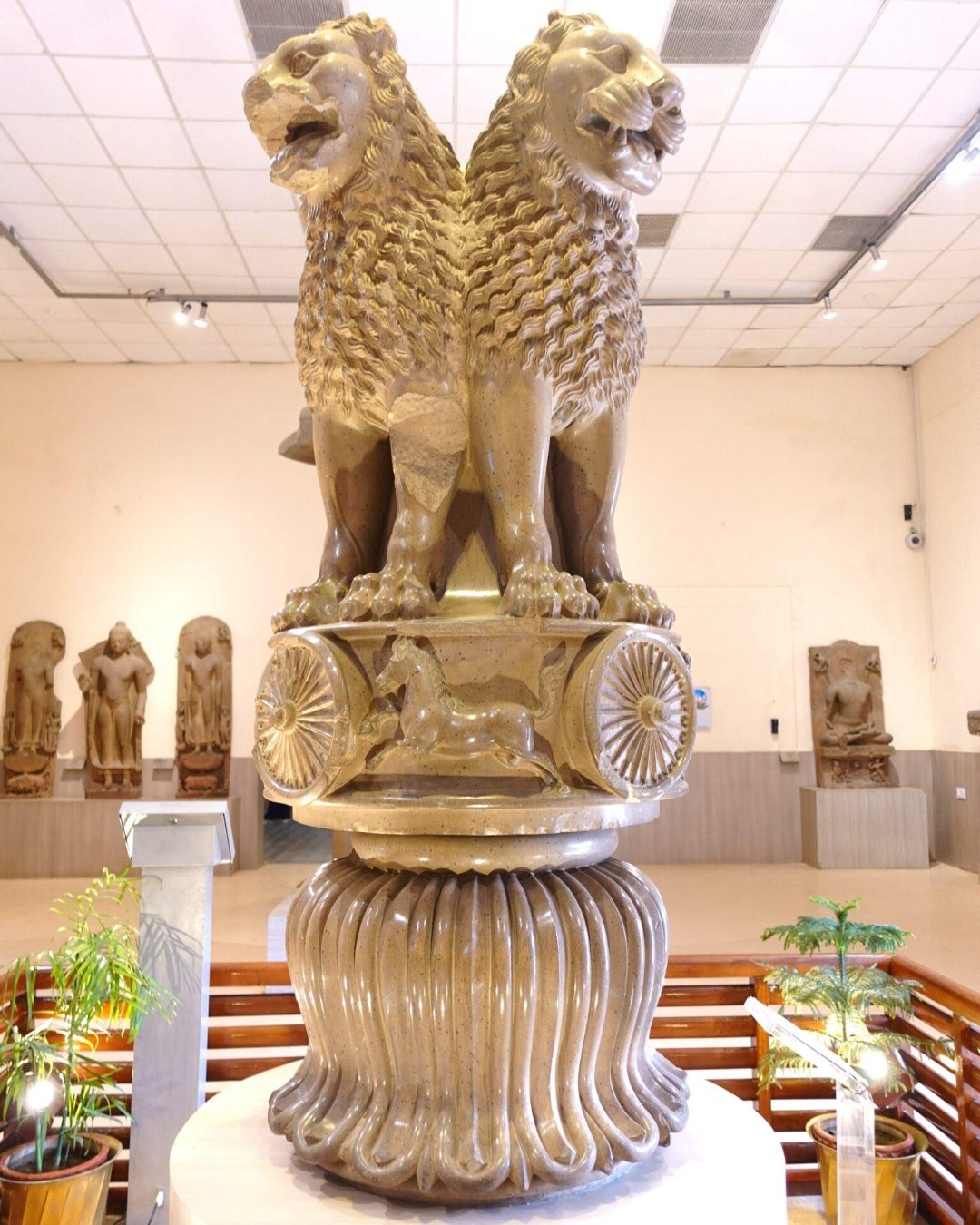
The capital dates to around 250 BCE, when the Mauryan emperor Ashoka set a polished sandstone pillar at Sarnath to mark the place where the Buddha preached his first sermon — the moment Buddhist tradition calls the turning of the wheel of dharma. Carved from a single block of fine Chunar sandstone and burnished to the mirror-bright sheen that distinguishes Mauryan stonework, it crowns that pillar with four lions seated back to back, facing the four directions. Beneath them runs a drum-shaped abacus carved with four animals — lion, elephant, bull and horse — each divided by a twenty-four-spoked wheel, the whole set on an inverted lotus. A larger wheel, the Dharmachakra, once rose above the lions; only fragments of it survive.
Two of those elements outgrew the monument entirely. The four-lion capital was adopted as the State Emblem of India, and the twenty-four-spoked wheel of its abacus became the Ashoka Chakra at the centre of the national flag. What began as a Buddhist marker at a pilgrimage site is now stamped on the country's passports, currency and seals.
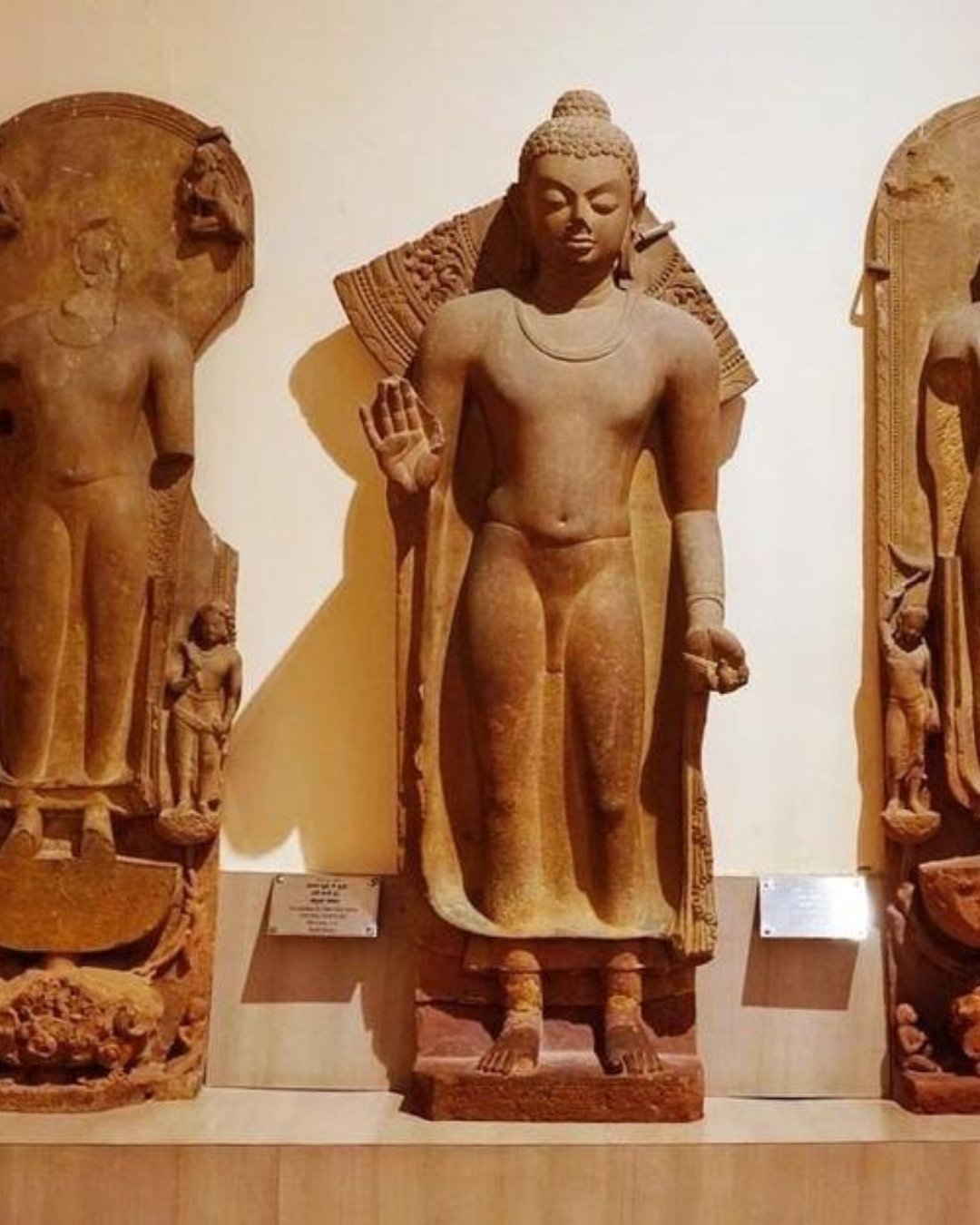
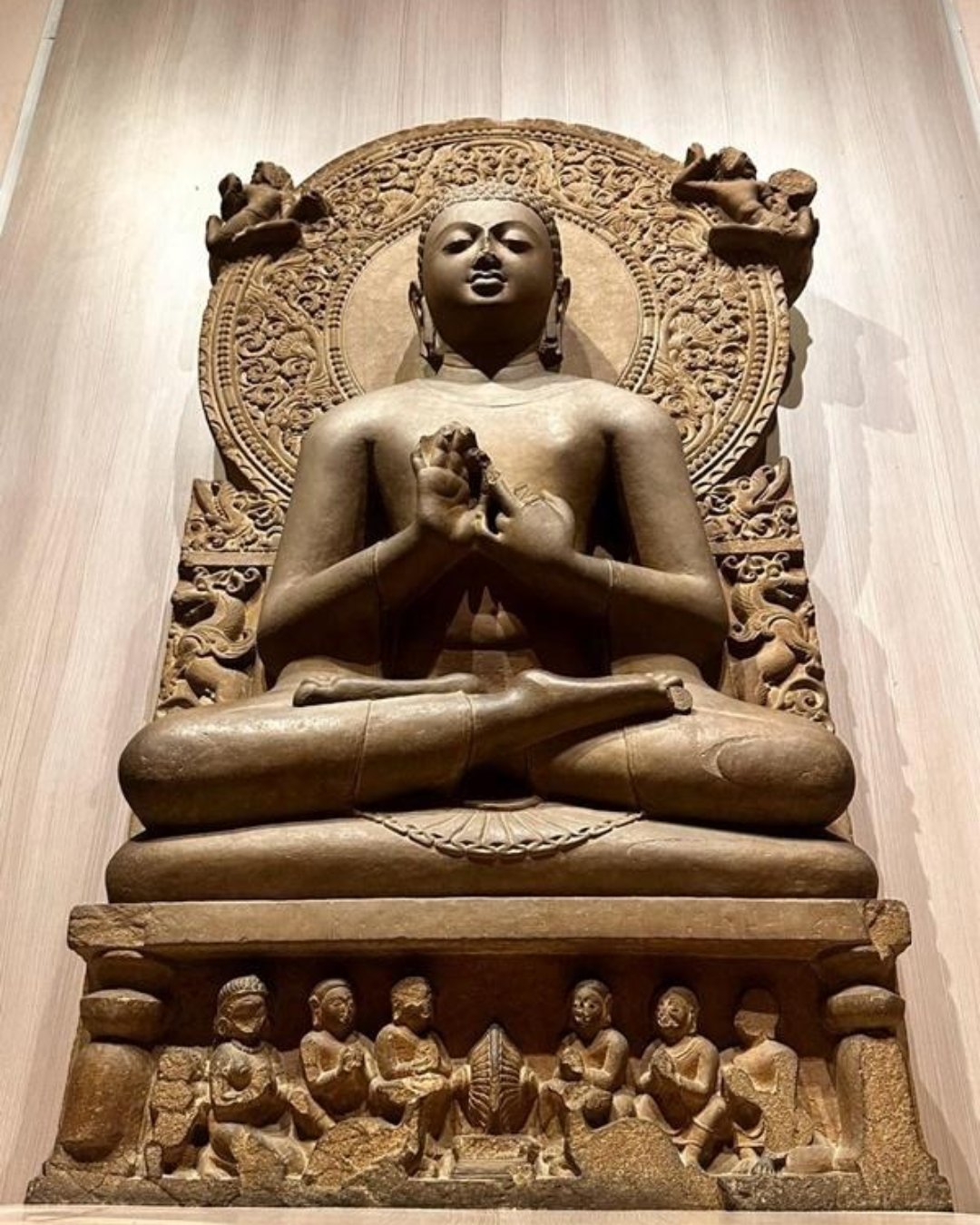
The museum built to hold it is a landmark in its own right. Opened in 1910 as the oldest site museum of the Archaeological Survey of India, and laid out to echo the plan of a Buddhist monastery, it gathers the antiquities dug from Sarnath across its galleries — more than six thousand sculptures and objects spanning the third century BCE to the twelfth century CE. Beside the Lion Capital stands its equal in fame among art historians: the Gupta-era seated Buddha shown giving that same first sermon, hands raised in the teaching gesture, often called one of the finest Buddhist sculptures ever carved. Between the two, a single room holds the whole arc of Sarnath in stone — the sermon that began a religion, and the empire that later made its symbol a nation's.