

Mulagandha Kuti Vihar & the Living Site
Mulagandha Kuti Vihar Sarnath Varanasi, Varanasi, India
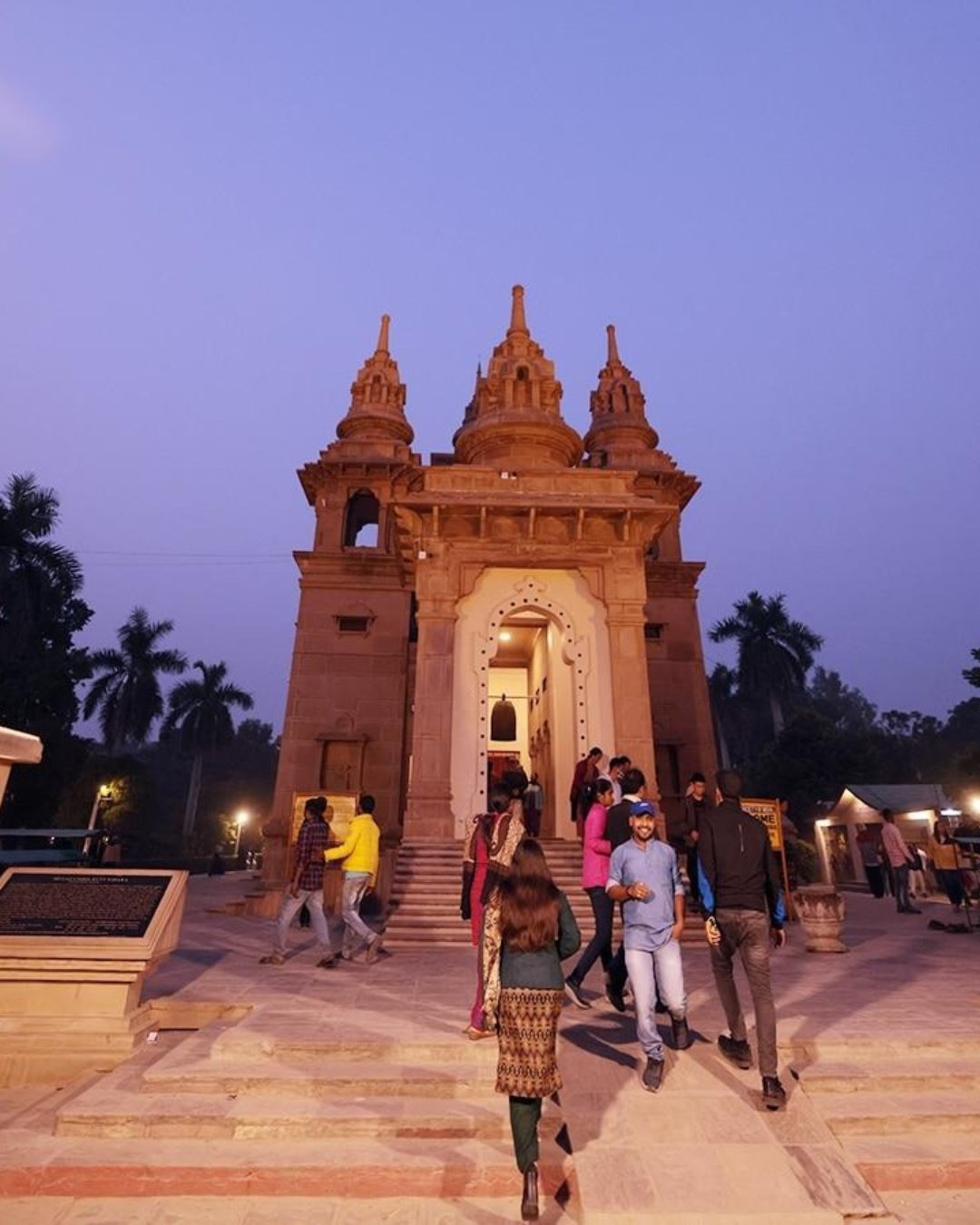
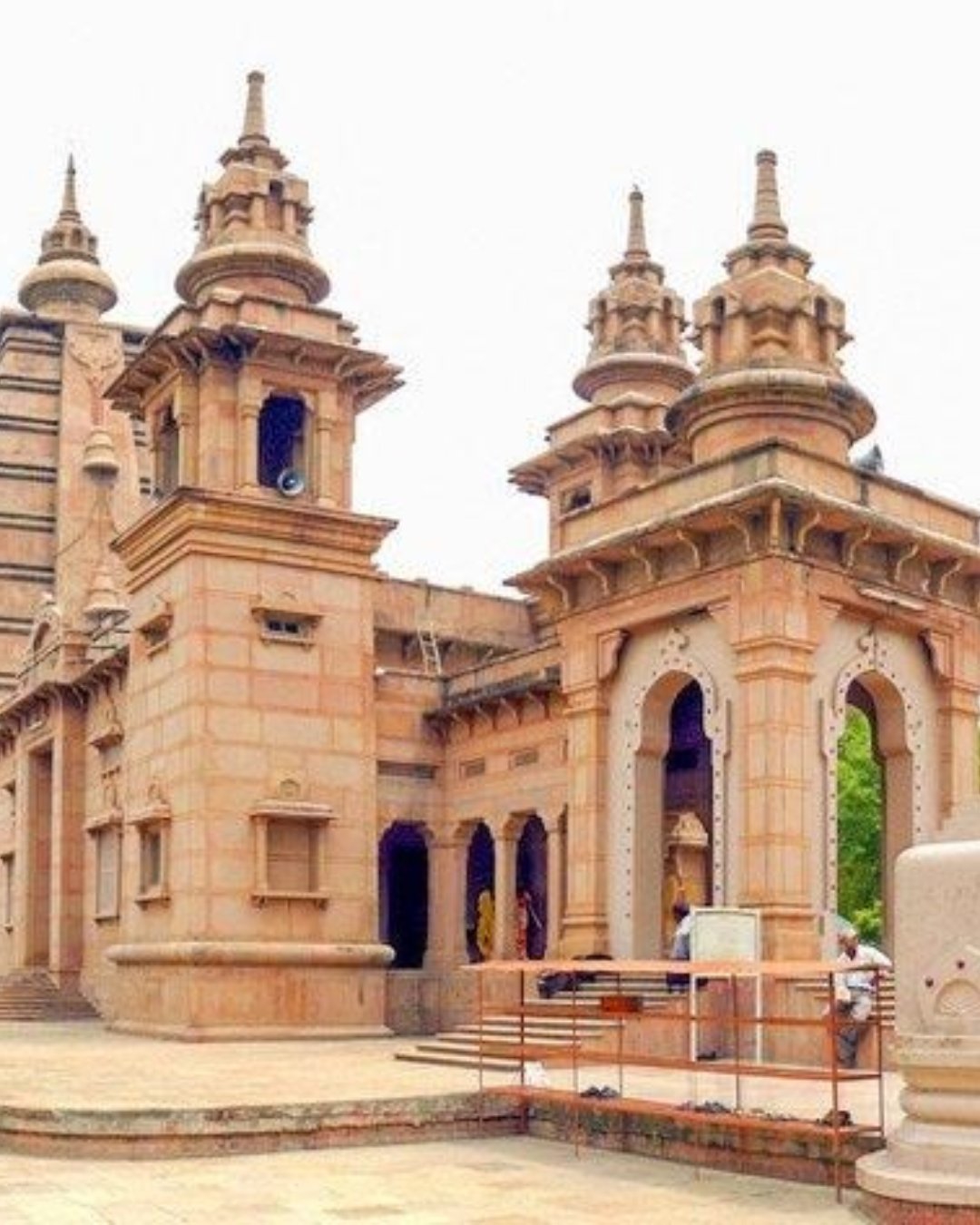
Step off the road at Sarnath, a short drive north of Varanasi, and you arrive at the place where Buddhism first found its voice. It was here, in the Deer Park at Isipatana, that the Buddha gave his first sermon — the teaching known as "setting the Wheel of Dharma in motion" — laying out the Middle Way and the Four Noble Truths before his five former companions. Much of what surrounds you is ancient ruin: the towering Dhamek Stupa that marks the spot, the worn brick foundations of monasteries fifteen centuries old. But Mulagandha Kuti Vihar is different. It is not a ruin you look at from behind a rope; it is a temple you enter, where incense still burns and prayers are still spoken, and it is very much alive.
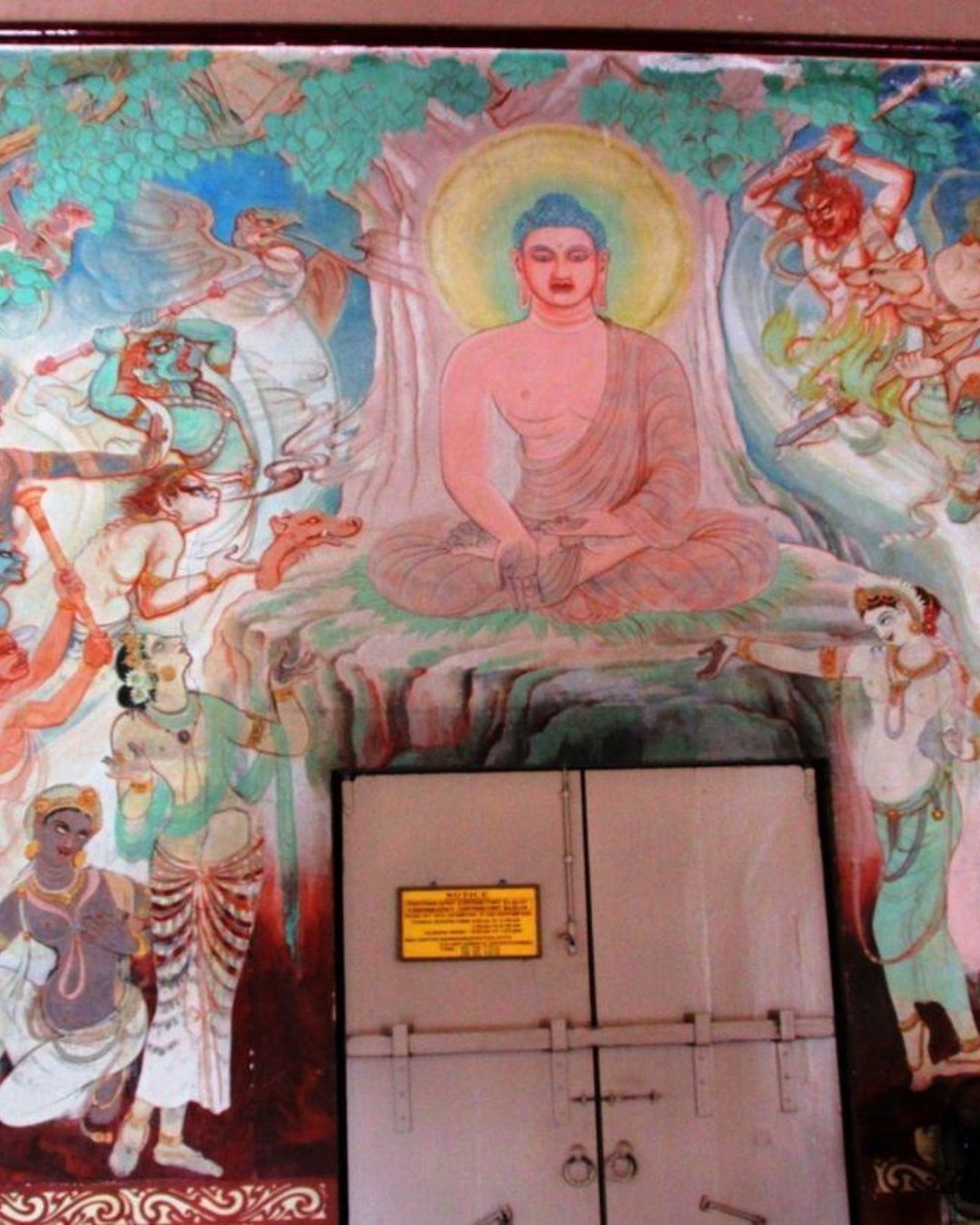
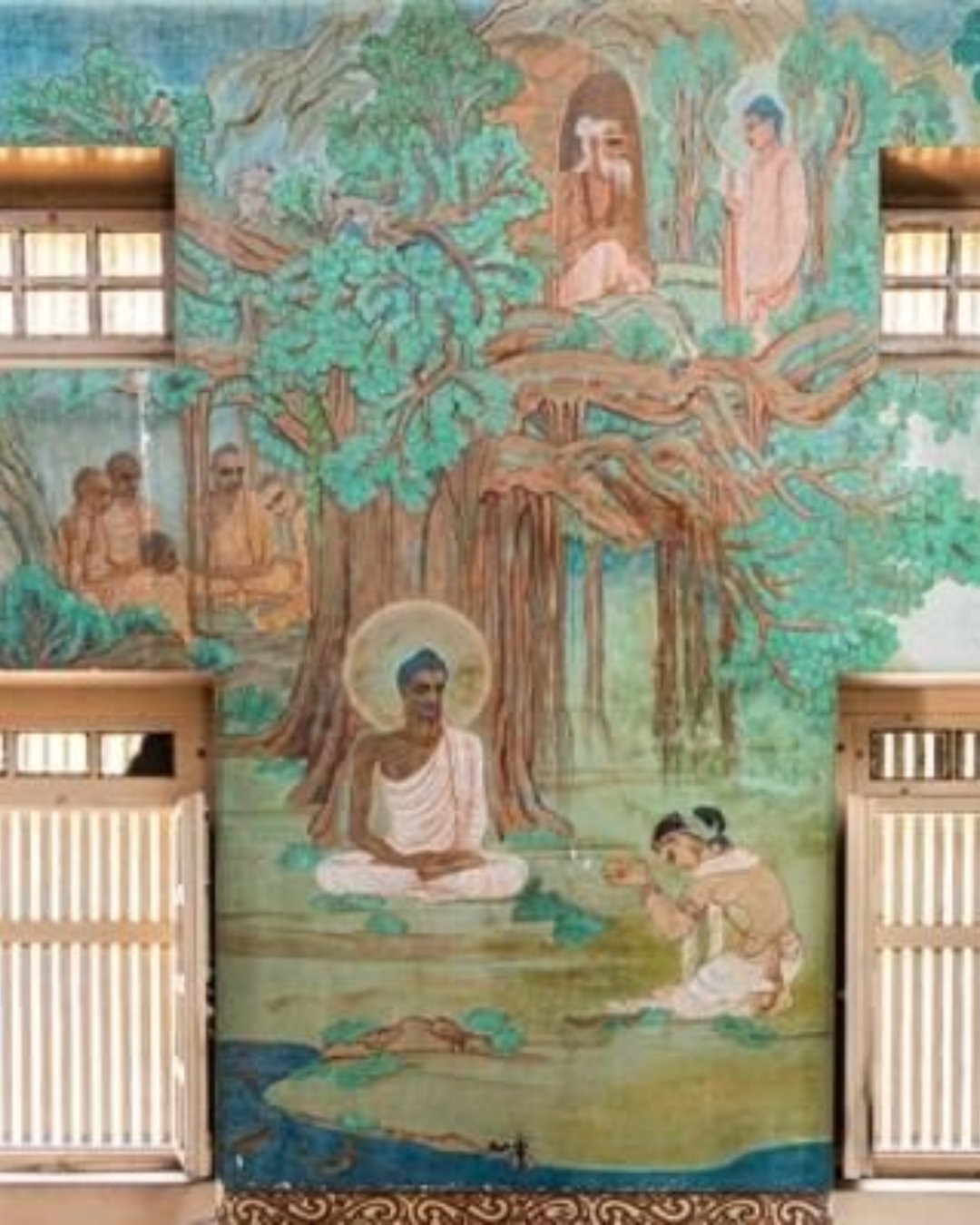
Built in 1931 by Anagarika Dharmapala, the Sri Lankan monk who founded the Mahabodhi Society, the vihara was raised to bring worship back to a site that had lain silent for centuries. As you step inside, the walls open into one of its treasures: a sweeping cycle of frescoes by the Japanese painter Kosetsu Nosu, who spent years tracing the Buddha's life — birth, enlightenment, first sermon and passing — across the interior in luminous colour. At the far end sits a gilded Buddha in the teaching posture, and enshrined within is a relic of the Buddha, brought out for public veneration each year at Buddha Purnima.
Outside, the living quality of the place is clearer still. A Bodhi tree spreads over the courtyard — a sapling carried from Anuradhapura in Sri Lanka, itself descended from the tree at Bodh Gaya under which the Buddha awakened. Near the entrance hangs a great bronze bell, a gift from a Japanese devotee, and saffron-robed monks move quietly between the shrine and the gardens. On a given morning you may find pilgrims from Sri Lanka, Thailand, Myanmar, Japan and Tibet circling the temple, chanting in several languages at once, while deer still graze in the park that gives the place its name. This is what makes Sarnath a living site rather than a museum: the devotion never stopped.
To visit well, come in the early morning, when the light is soft and the chanting is at its fullest. The temple keeps two sessions — roughly 4:30 to 11:30 in the morning and 1:30 to 5:30 in the afternoon, every day of the week — and entry to the vihara itself is free; only the neighbouring Dhamek Stupa complex and the archaeological museum charge a small ticket. Remove your shoes before entering, keep your voice low, and dress modestly — you are walking into an active place of prayer, not a photo stop. Photography inside the shrine is often restricted, so ask before you raise your camera.
Give yourself time to simply sit. Pair the vihara with the Dhamek Stupa a few steps away and the Sarnath Archaeological Museum, home to the original Lion Capital of Ashoka, and you hold both halves of the story in a single afternoon: the ancient ground where the teaching was first spoken, and the living temple where it is still, every day, being kept alive.