

The International Temple Trail
Sarnath Buddhist Temple, (Varanasi), Varanasi, India
You already know Varanasi as India's oldest living city, but this trail shows you a side of it few visitors expect: two places, a short ride apart, where nations from across Asia have quietly built temples in the architecture of their own homelands. It runs in two halves — a Nepali king's temple on the Varanasi riverfront, and, ten kilometres north at Sarnath, a ring of Buddhist monasteries raised by half a dozen countries. Walk both in a single morning and you cross what feels like several borders on foot.
In Varanasi: the Nepali Temple
You begin in the old city, near Lalita Ghat, at the Nepali Temple — also called the Kanthwala or Kathwala Mandir. A Hindu temple to Shiva, it was commissioned by the royal house of Nepal and built by craftsmen brought from Kathmandu, and it rises in tiered pagoda style from carved terracotta and dark timber, its woodwork echoing the temples of the Kathmandu valley rather than anything else on the riverfront. Often likened to Kathmandu's Pashupatinath, it is prized for the intricacy of its carved wood — a startling thing to come upon between the ghats, a fragment of the Himalayas set down on the Ganga. It sets the tone for everything ahead: a building that carries its homeland's architecture wholesale onto Indian ground.
In Sarnath: the international monasteries
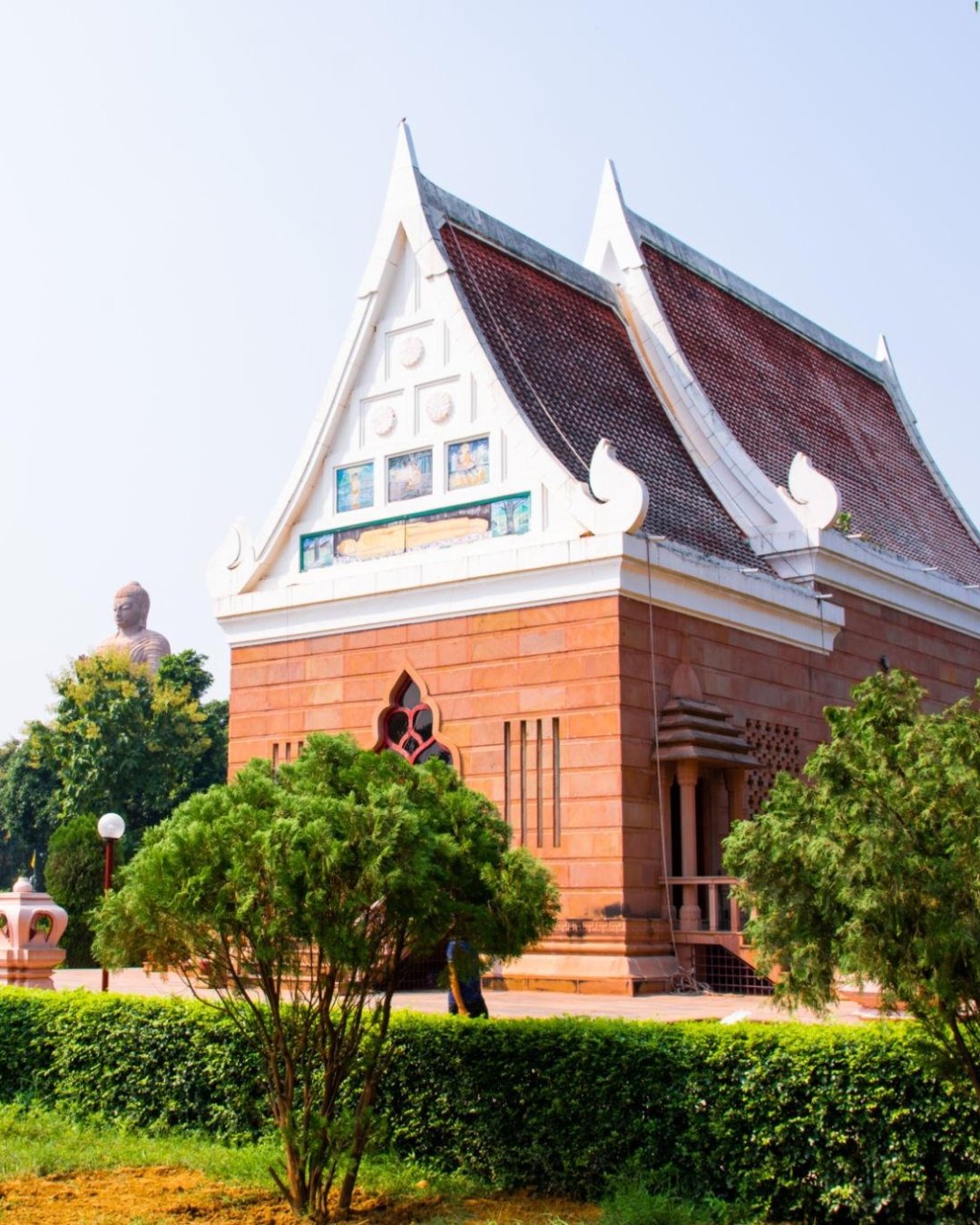
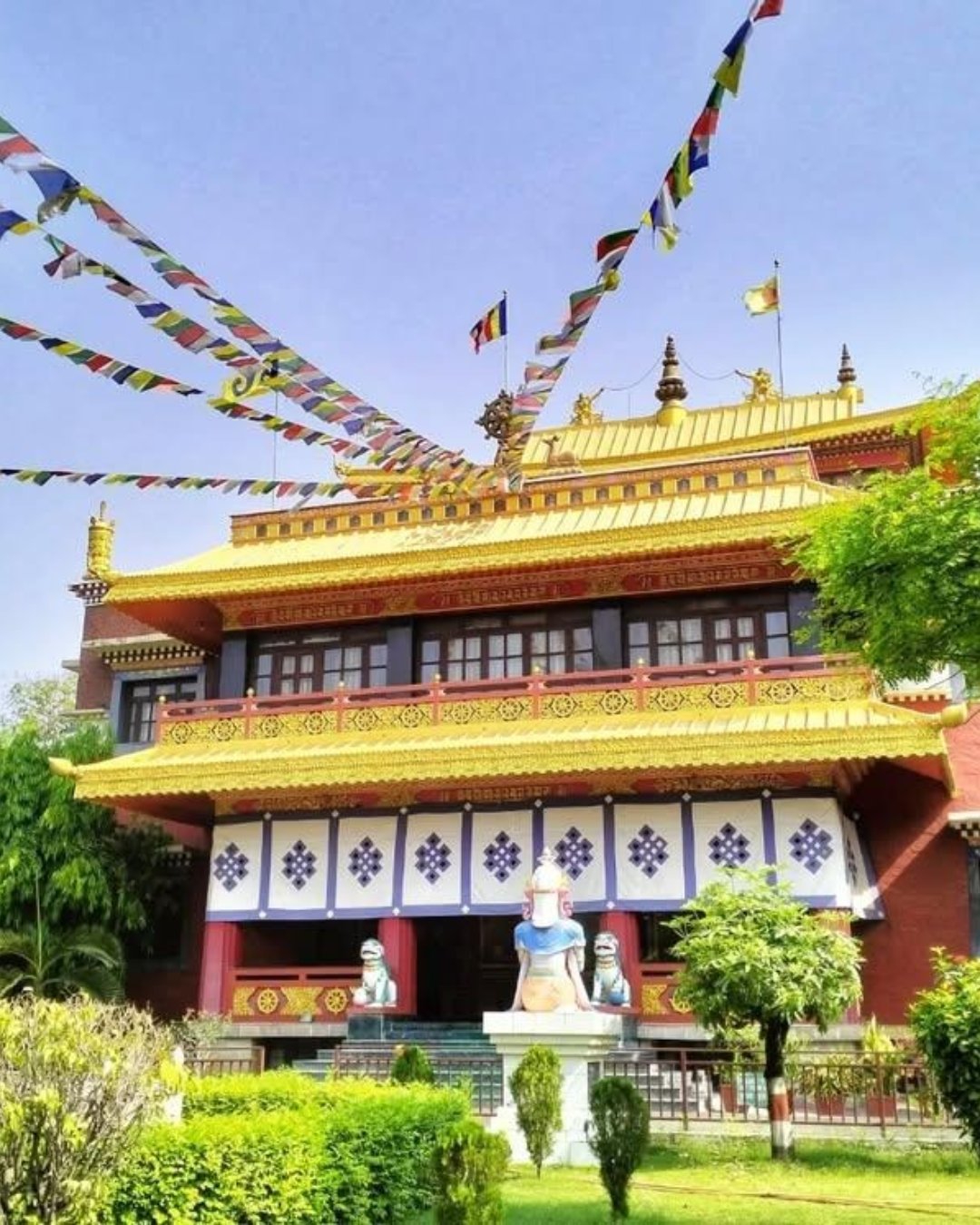
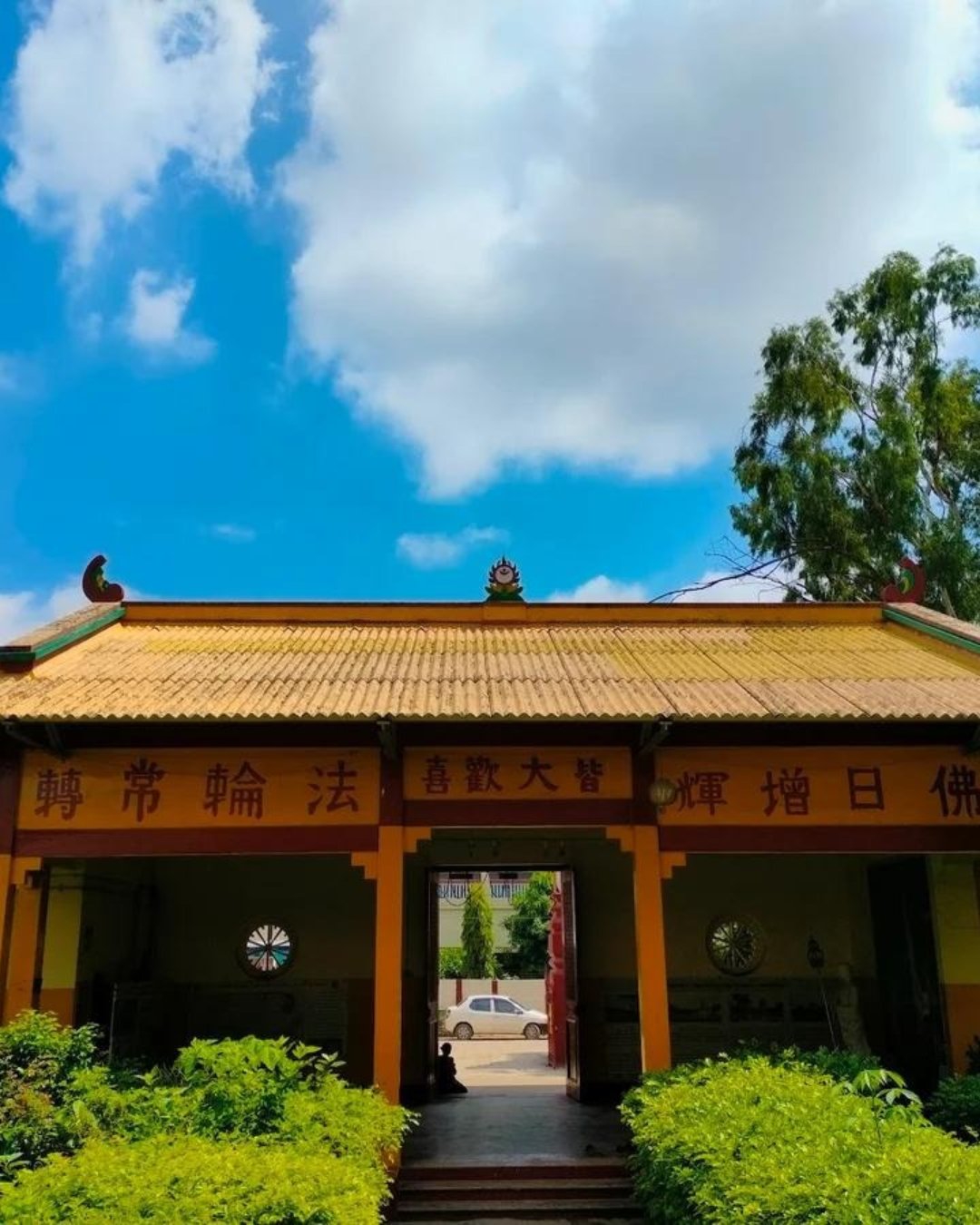
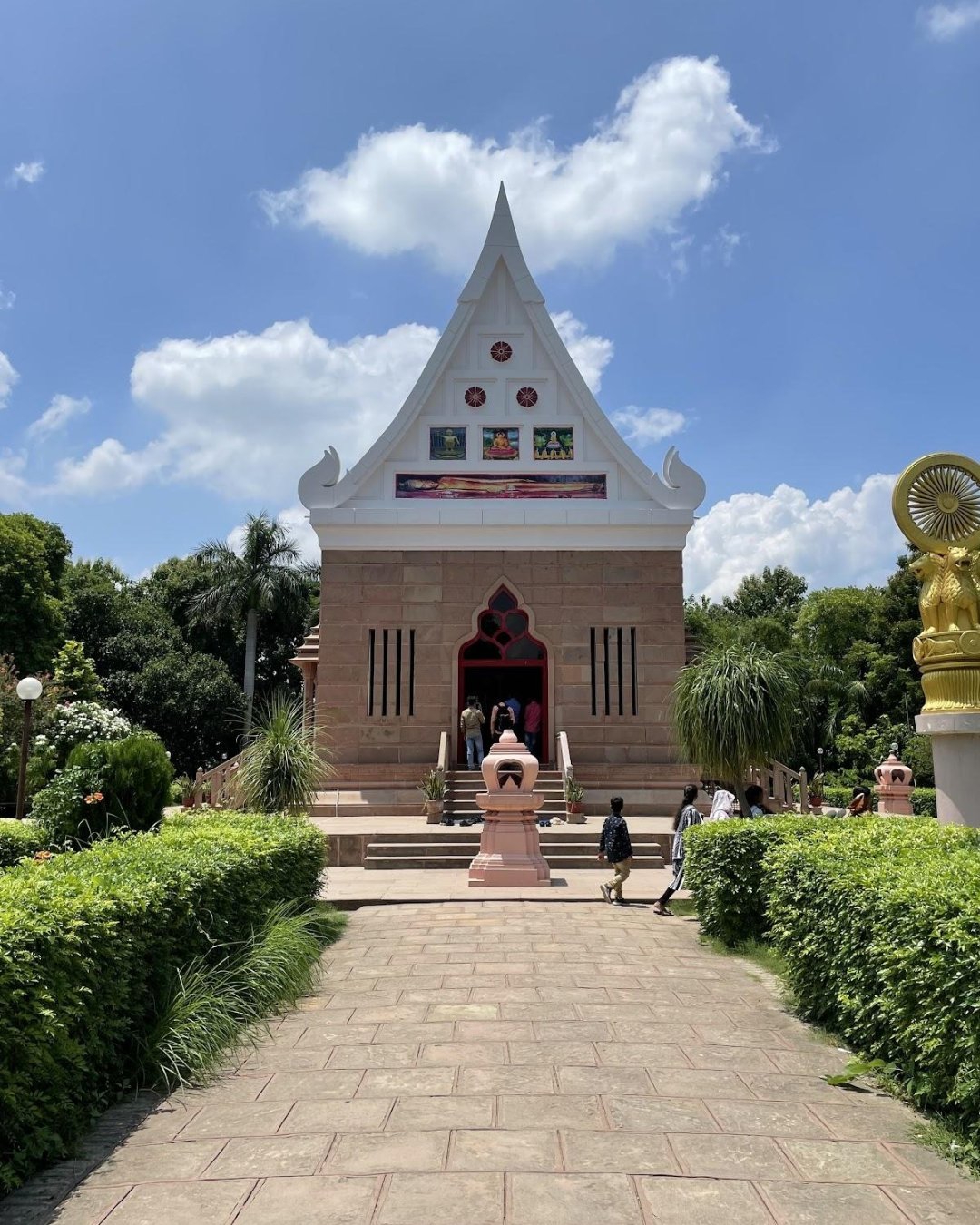
From there you head about ten kilometres out to Sarnath, where the Buddha gave his first sermon after enlightenment. The whole site gathers around the great Dhamek Stupa and the quiet deer park that marks the spot, and because this is one of Buddhism's four holiest places, nations across Asia have each raised a temple here — a gift, and a claim to a share of the ground. Wandering between them feels like crossing borders on foot. You'll find the Thai temple, Wat Thai Sarnath, with its golden, upward-sweeping tiered roofs; the Japanese Nippon temple, spare and Zen, with a quiet rock garden; and the Tibetan temple, turning with prayer wheels, hung with thangkas and lit by butter lamps. Nearby stand the Chinese temple with its curved eaves and jade Buddha, the Myanmar temple's golden Theravada pagoda, and the Korean temple bright with dancheong paintwork and paper lanterns. At the heart of it, the Sri Lankan-founded Mulagandha Kuti Vihara, raised by the Mahabodhi Society, shelters luminous frescoes of the Buddha's life painted by the Japanese artist Kosetsu Nosu.
Walking it well
A few practical things make the trail easier. Sarnath sits roughly a thirty- to forty-minute auto-rickshaw or taxi ride from the ghats, so it pairs naturally with a morning out of the old city. Most of the Sarnath temples ask no entry fee — a small donation is welcome — and a half-day is enough to see the cluster comfortably, ideally in the morning when prayers are underway and the light is still soft. Dress modestly, cover your shoulders and knees, and slip your shoes off before you step inside; photography is usually fine outdoors, but ask before shooting interiors or people at prayer. Move gently and unhurried, and you'll notice the trail's real gift: standing in one small corner of India, you get to feel much of Asia's devotional world lean in.