
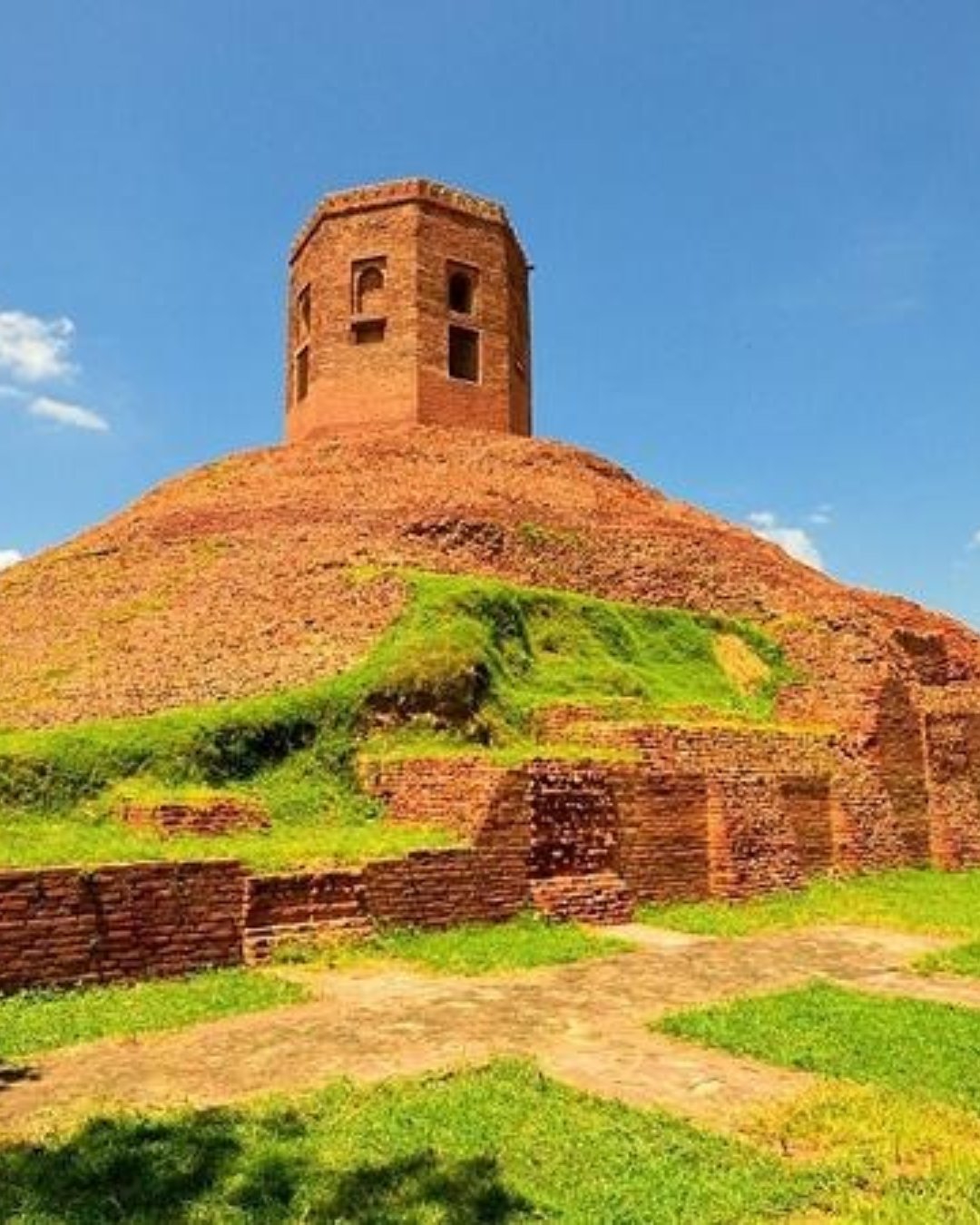
The Ruins & Chaukhandi
Chaukhandi Stupa Sarnath, (Varanasi), Varanasi, India
Ten kilometres north-east of the noise of Varanasi's ghats, you step into Sarnath — and the pace changes completely. This is where the Buddha, newly enlightened, is said to have delivered his first sermon, and the ground here is scattered with the brick bones of the monasteries, shrines and stupas that grew around that moment over more than a thousand years.
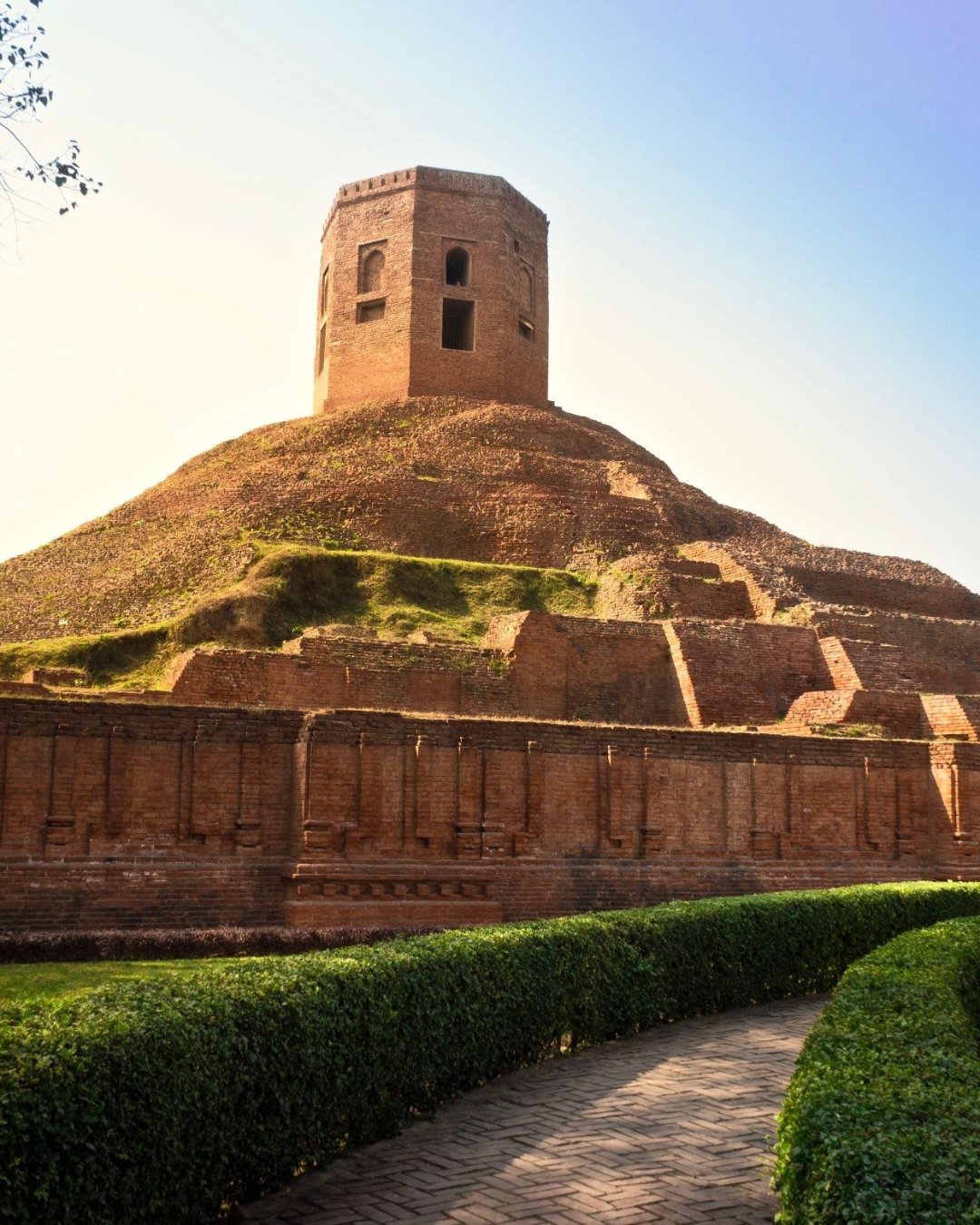
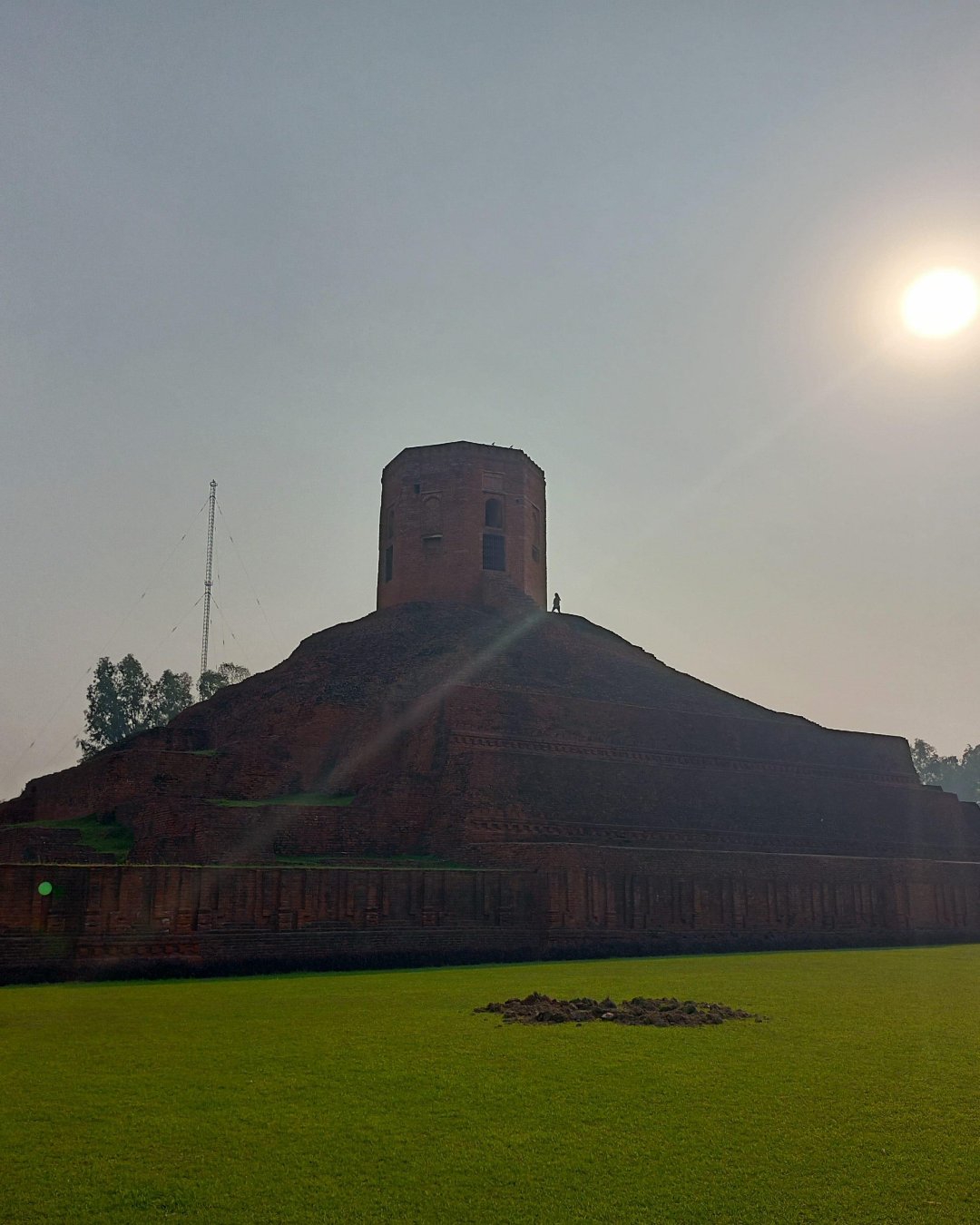
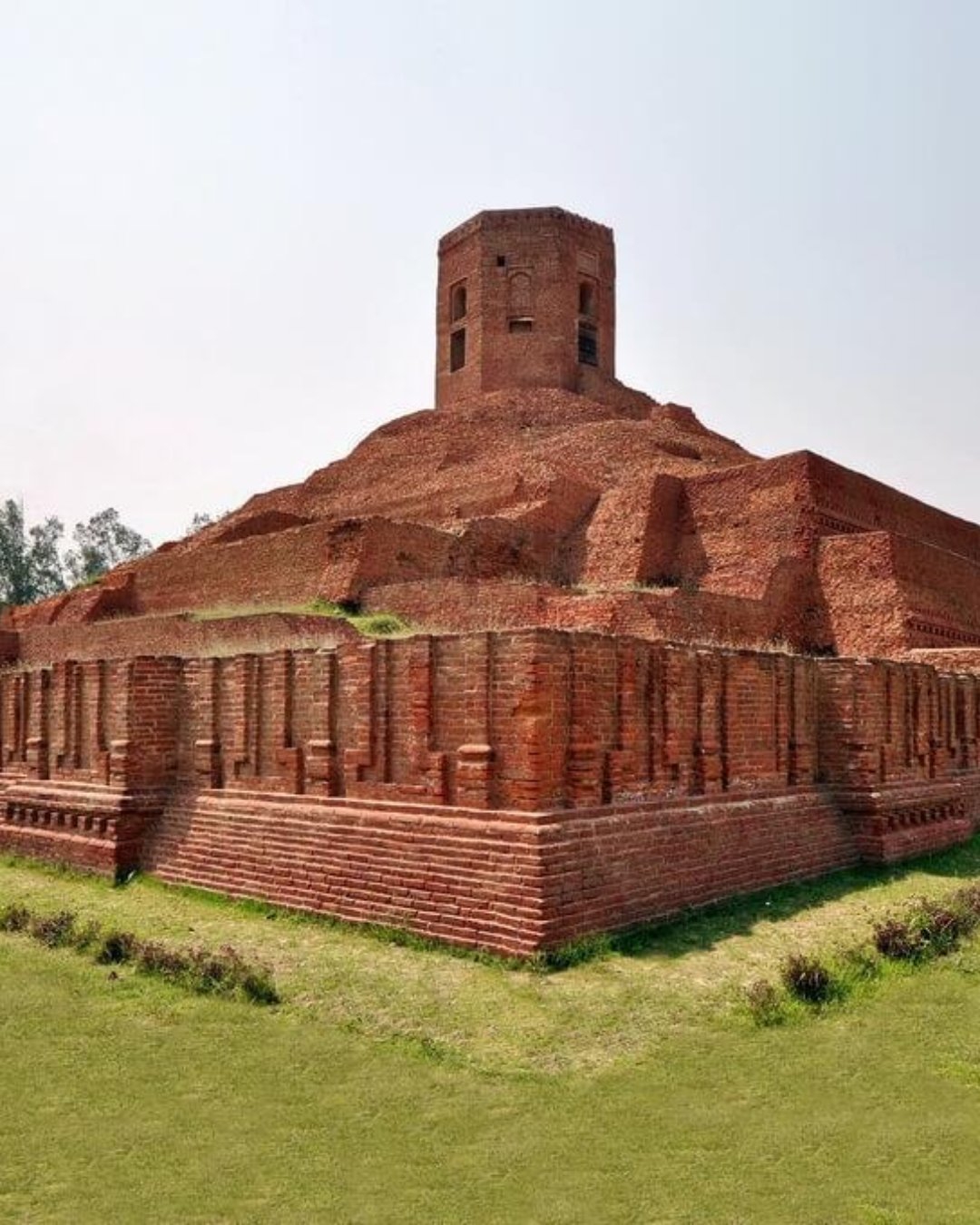
Your first stop is usually the Chaukhandi Stupa, standing a little apart from the main ruins. It's a tall, terraced mound of brick marking the spot where the Buddha is believed to have met the five companions who became his first disciples, as he travelled from Bodh Gaya to Sarnath. What makes it unmistakable is the octagonal tower perched on top — a Mughal addition, built by Govardhan, son of Raja Todar Mal, to commemorate a visit by the emperor Humayun. You're looking at two faiths and two eras stacked in a single structure: a Buddhist memorial crowned with Mughal brickwork. Few monuments in India wear their layered history so plainly, and it's worth circling the base to see how oddly and beautifully the two halves sit together.
From there you move into the main archaeological complex, the heart of ancient Sarnath. You won't find towering intact temples here — what survives are foundations, and that's exactly the point. You can trace the outlines of monks' cells, votive shrines and monastery walls at your feet and picture the community that once lived and studied on this spot. Rising above it all is the Dhamek Stupa, a massive cylinder of stone and brick raised to mark where the Buddha first taught the Dharma. Nearby lie the stripped remains of the Dharmarajika Stupa and the stump of the Ashokan pillar — the same pillar whose magnificent Lion Capital, now India's national emblem, is kept in the Sarnath museum just across the road. Excavations here have run since the nineteenth century, and much of what was unearthed has been carried off to that museum, leaving the site itself spare and contemplative.
Walking it, you'll notice how much calmer and greener it feels than the city: clipped lawns, old shade trees, and robed monks and pilgrims moving quietly between the mounds. Give yourself a couple of unhurried hours. Go in the morning, when the light is soft and the heat still manageable, wear comfortable shoes for the uneven ground, and leave time for the small but extraordinary museum.
What you carry away isn't the scale of any single monument but the feeling of standing exactly where an idea began — and, in the Chaukhandi's Mughal cap, a reminder of how each passing century kept adding its own signature to the story.