

Where Buddhism Actually Began
Sarnath Museum Varanasi, Varanasi, India
Ask where Buddhism began and most people say Bodh Gaya — and they're half right. Bodh Gaya, in neighbouring Bihar, is where Siddhartha Gautama sat under the Bodhi tree and became the Buddha, "the awakened one." But enlightenment is a private event; a religion needs a teacher, a teaching, and someone to hear it. All three happened for the first time not in Bodh Gaya, and not in Varanasi's old city, but at Sarnath, about 10 km northeast of the ghats.
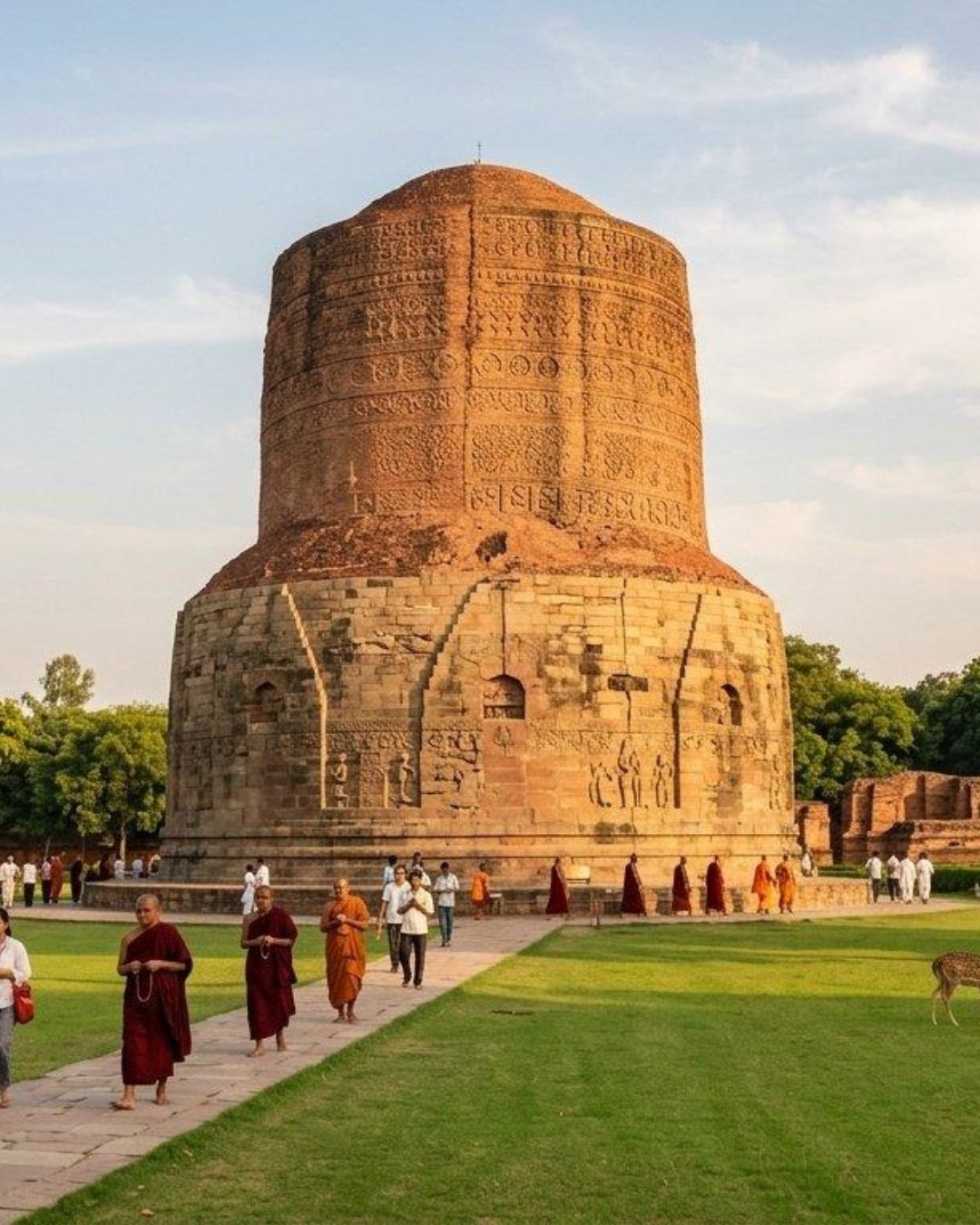
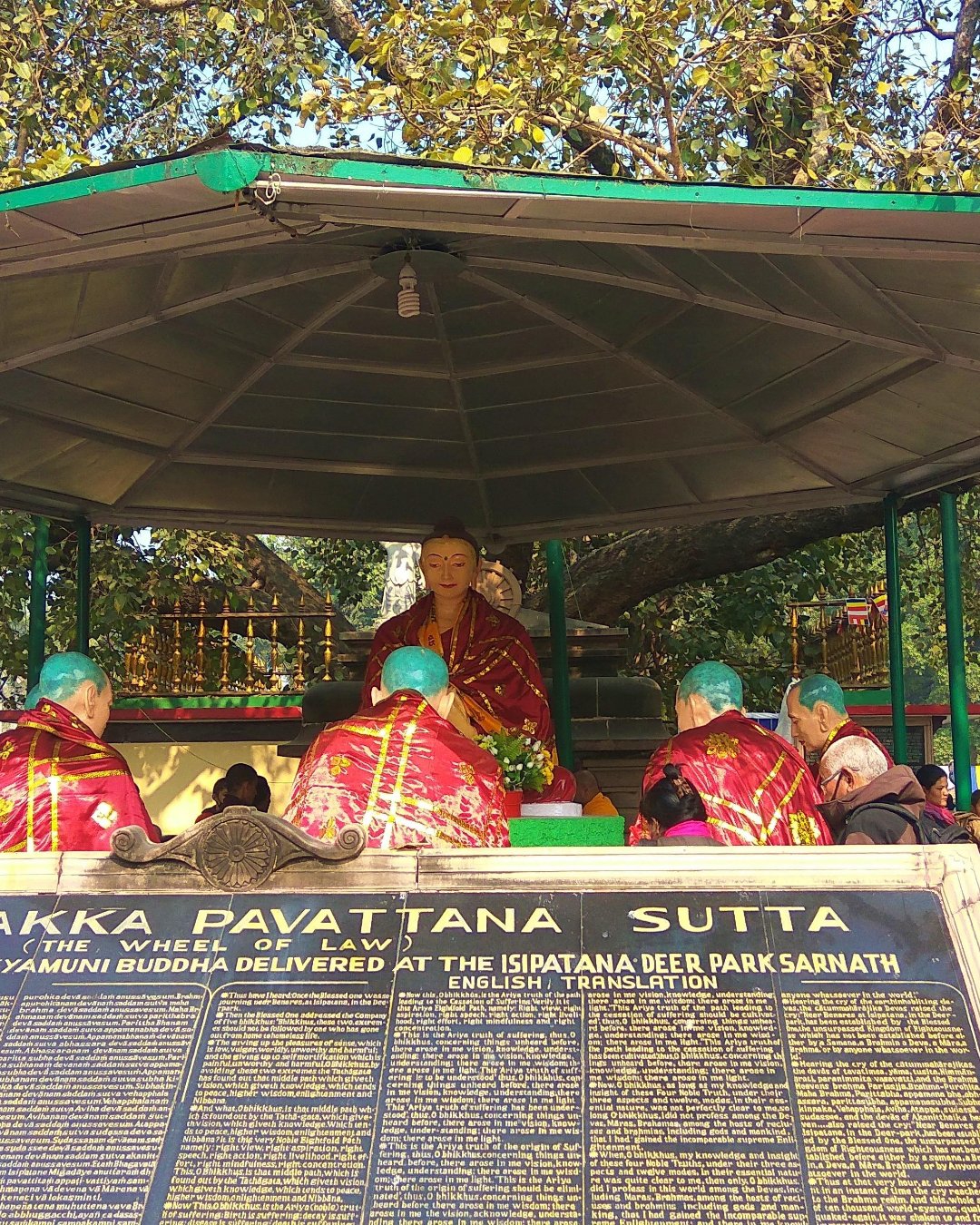
After his awakening, the Buddha walked to the deer park at Isipatana — today's Sarnath — and found the five ascetics who had once been his companions. There, more than 2,500 years ago, he delivered his first sermon, the Dhammachakkappavattana Sutta — literally "setting the wheel of Dharma in motion." In it he laid out the Four Noble Truths and the Middle Way, the framework the entire tradition still rests on. Those five listeners became his first disciples, and with them the Sangha — the monastic community — came into being. That is the moment Buddhism stopped being one man's insight and became a faith that could be taught, followed and spread. It began here.
Sarnath went on to become one of Buddhism's four great pilgrimage sites, alongside Lumbini (his birth), Bodh Gaya (his enlightenment) and Kushinagar (his death). The Mauryan emperor Ashoka raised monuments here in the 3rd century BCE, and the site grew into a major monastic centre for over a thousand years before decline and, much later, rediscovery by archaeologists.
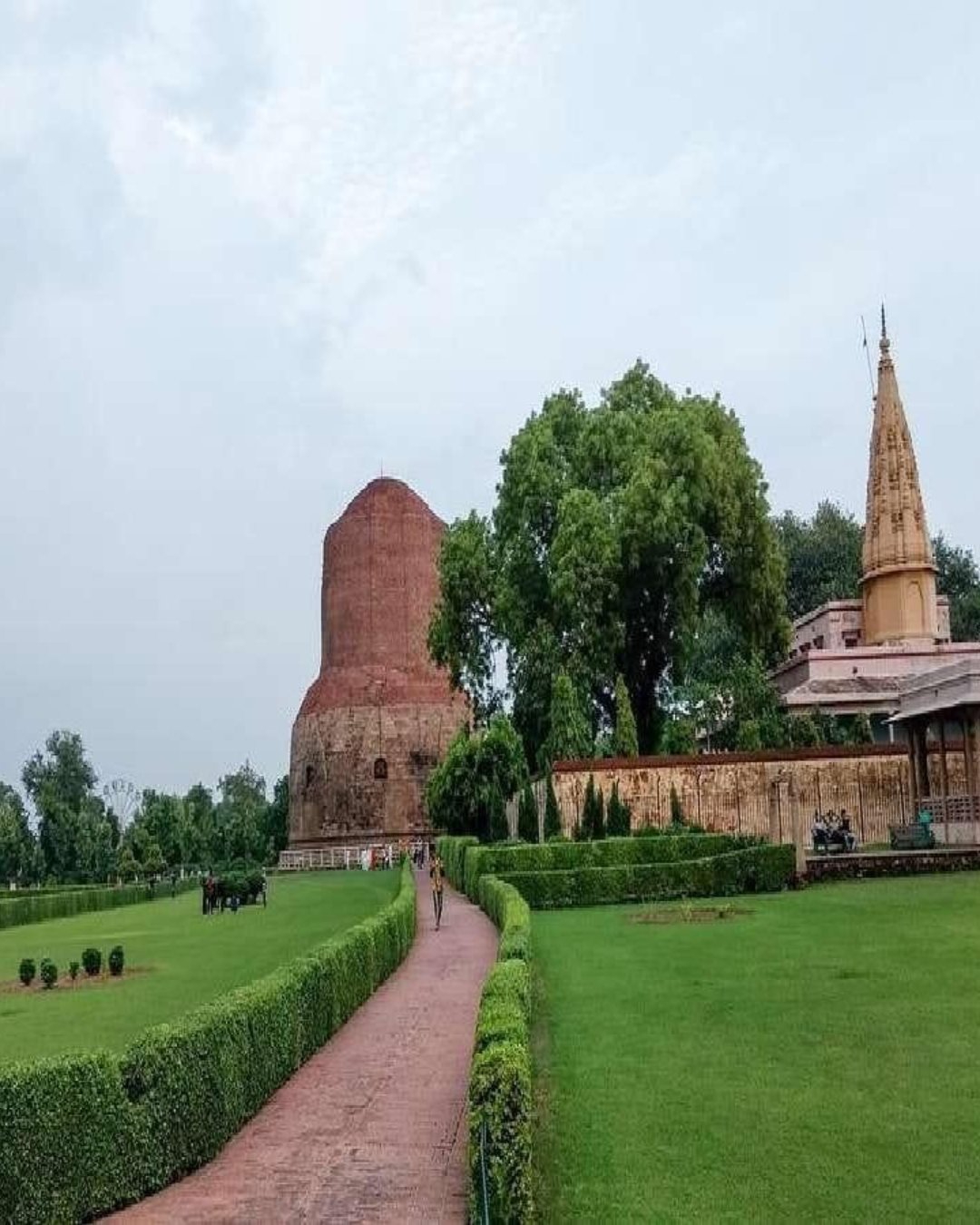
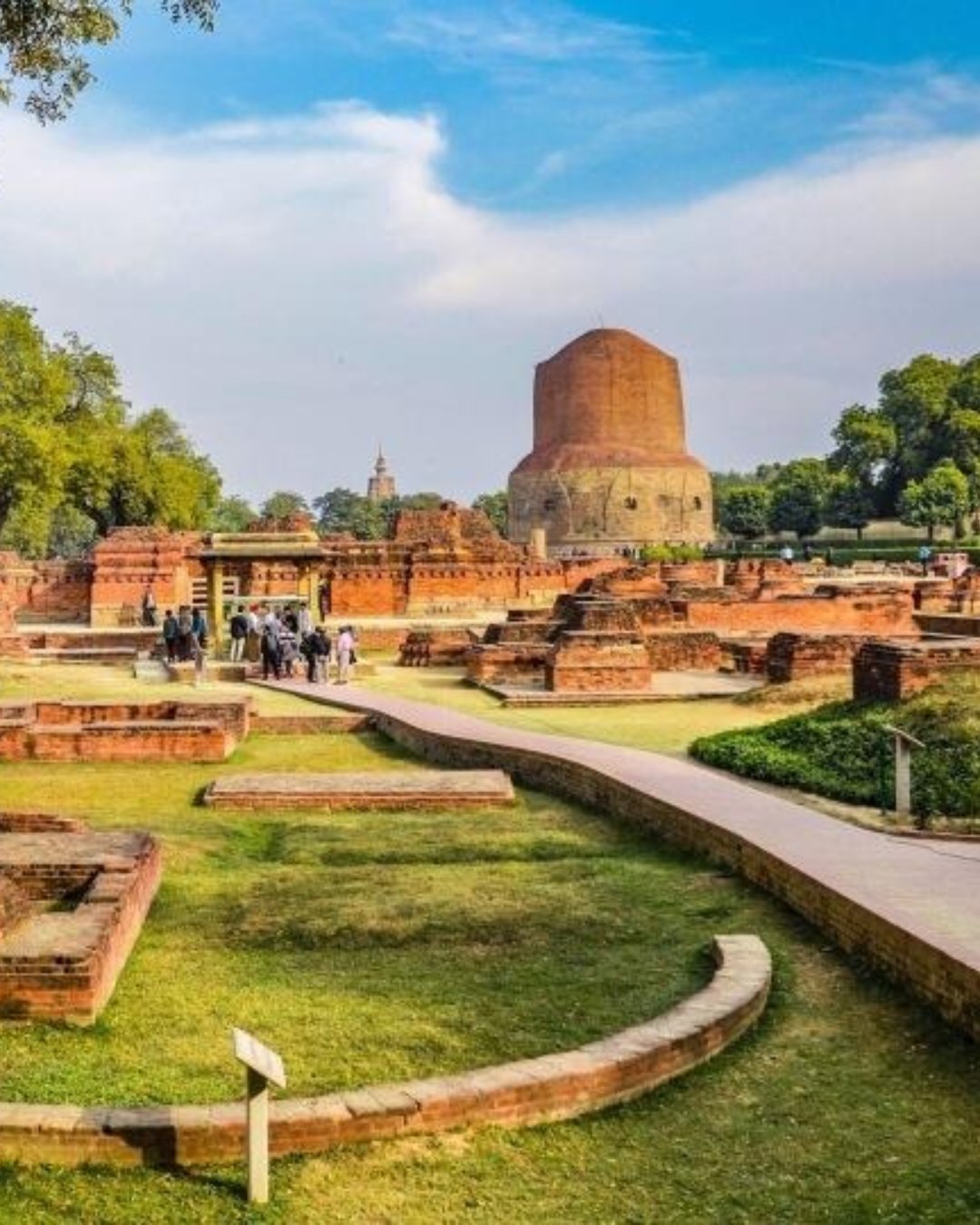
What survives is why it's worth the short trip out from Varanasi: the massive Dhamek Stupa, marking the spot associated with that first sermon; the remains of the Ashoka Pillar, whose four-lion capital became the national emblem of India — the wheel on the Indian flag is the Dharma wheel first turned here; the ruins of ancient monasteries; the modern Mulagandha Kuti Vihara with its revived murals; and the Archaeological Museum, home to the original Lion Capital. It remains a living pilgrimage place, drawing monks and travellers from across the Buddhist world — quiet and green in a way the city itself never is.
For a visitor, that's the real reframe: Varanasi is where Hinduism meets the eternal, but a few kilometres away is where Buddhism took its first breath as a religion.