


Banarasi Saree Shops in Varanasi: Where to Buy Authentic
Weavers' homes, government emporia, old-city shops or ghat-side showrooms: where to buy real Banarasi silk in Varanasi, and how to avoid paying commission.
The safest places to buy real Banarasi silk in Varanasi are the weavers’ own quarters and the fixed-price government emporia. The riskiest are the shops someone else walks you into, because a commission of 30, 50, sometimes 100 percent is built into the price. Here are the five places you’ll be offered silk, compared.
Where to buy · How you know it’s real · Pricing · Commission risk · Best for
Direct from the weavers · You see it on the loom · Cash, closest to the maker · None if you go yourself · Handloom at the source
Fixed-price emporia · Government and cooperative outlets; ask for the Silk Mark · Fixed, no bargaining · Low · A safe baseline
Old-city shops: Godowlia & Chowk · Varies, so check every piece · Bargaining · High if someone brought you · Comparing many shops in one walk
Vishwanath Gali · Not a silk lane · Bargaining · - · Rudraksha, brass, puja items
Ghat-side & hotel showrooms · Varies · Tourist prices · Built in · Convenience only
Stops
Home
MomentMadanpura, Varanasi
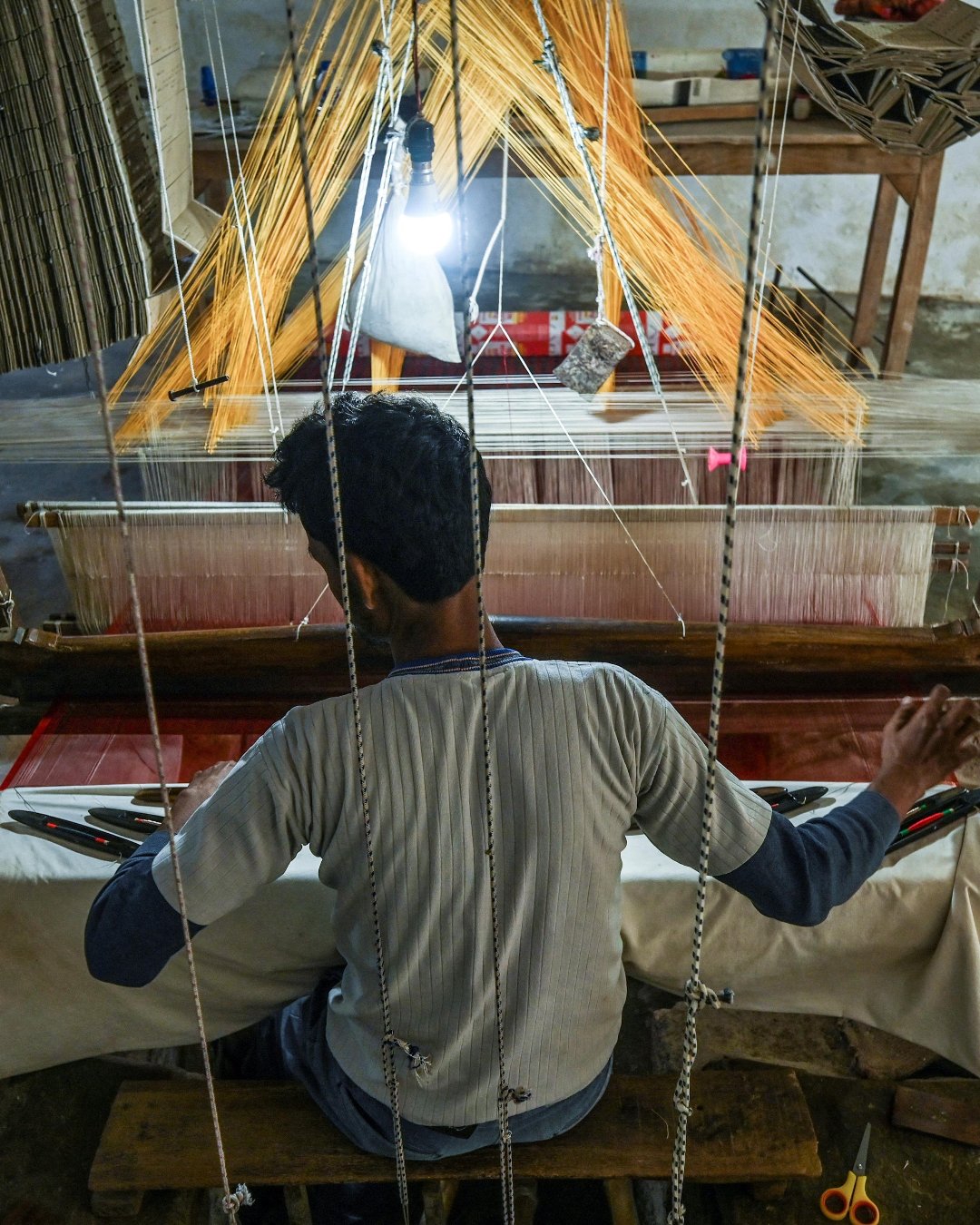
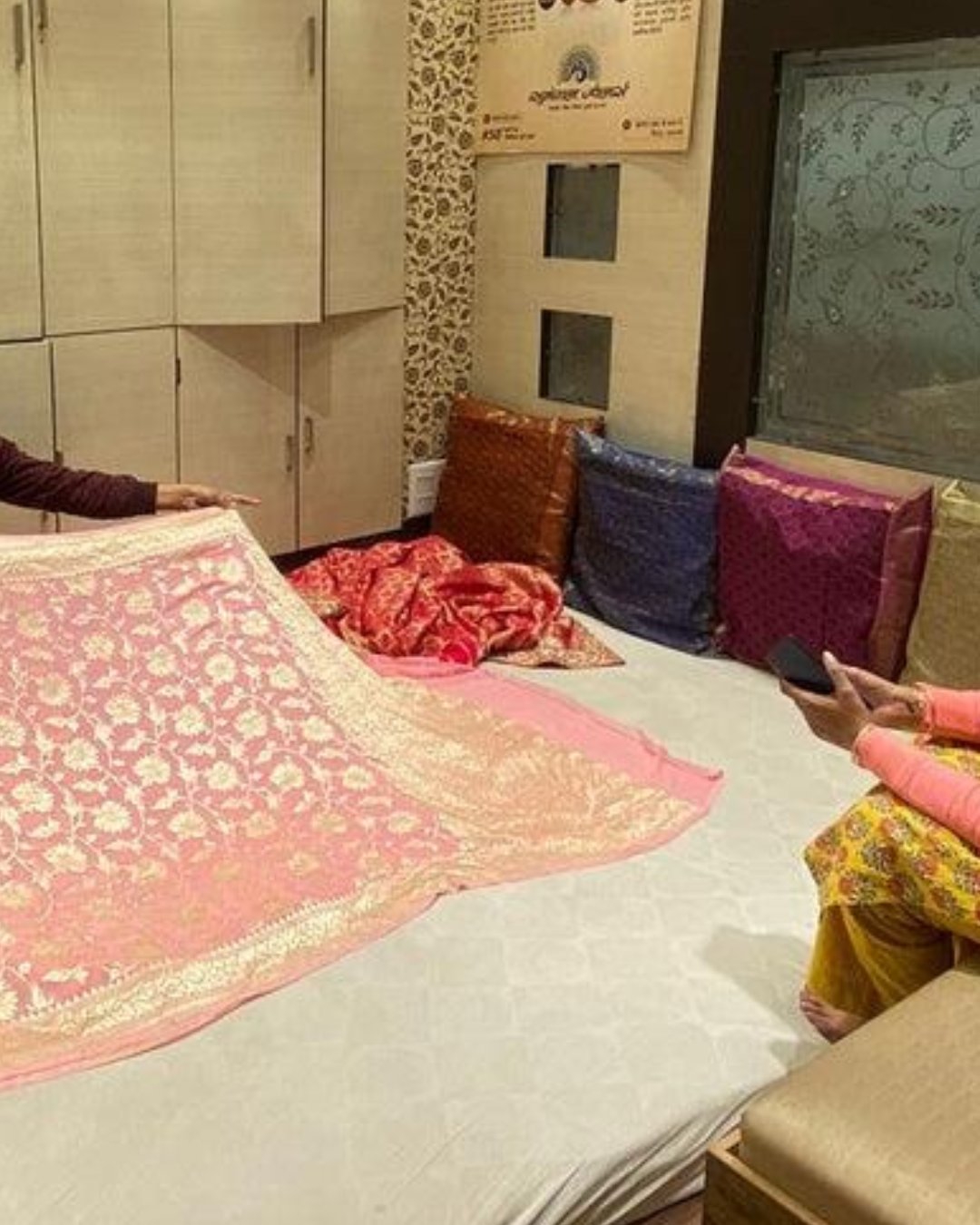
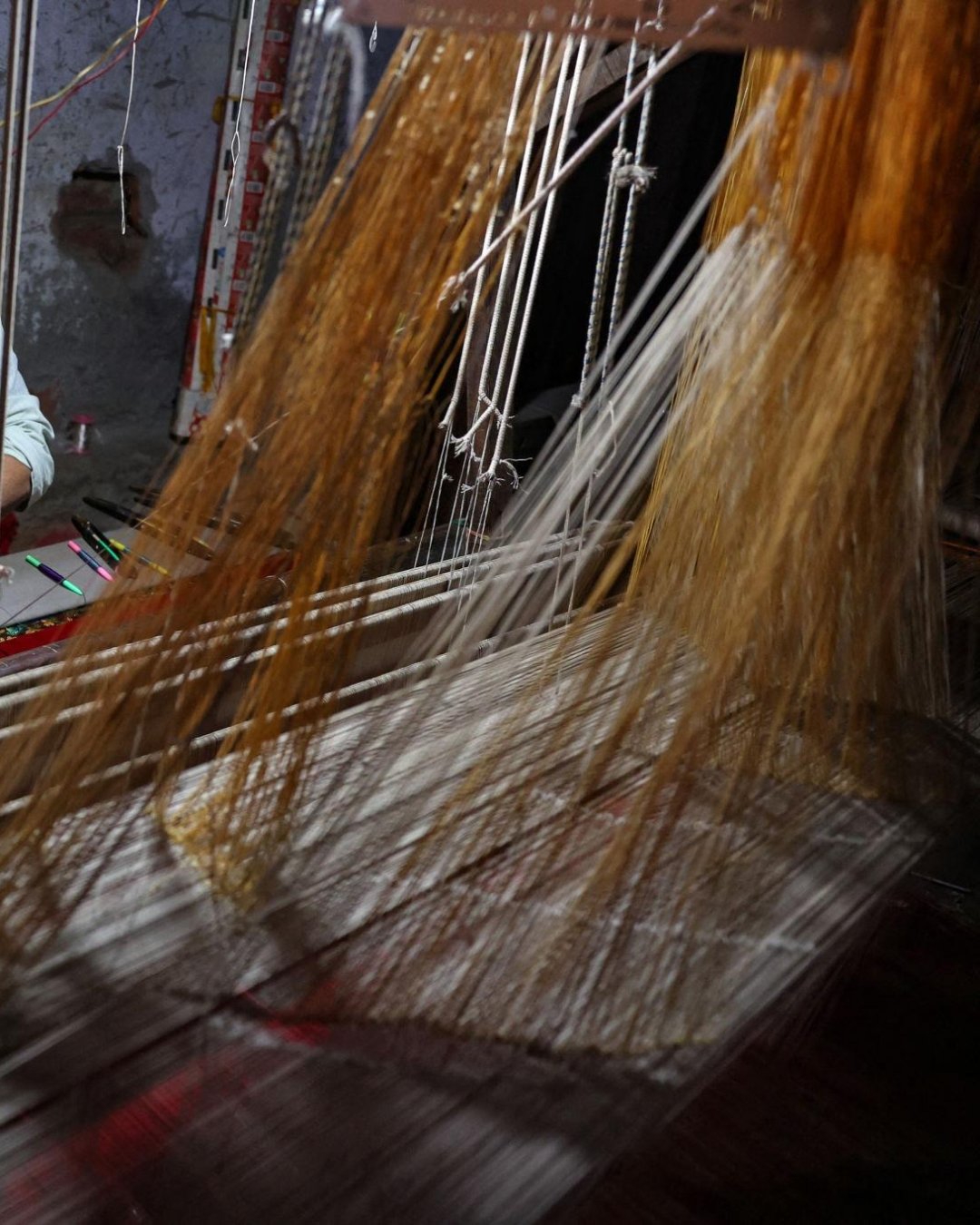
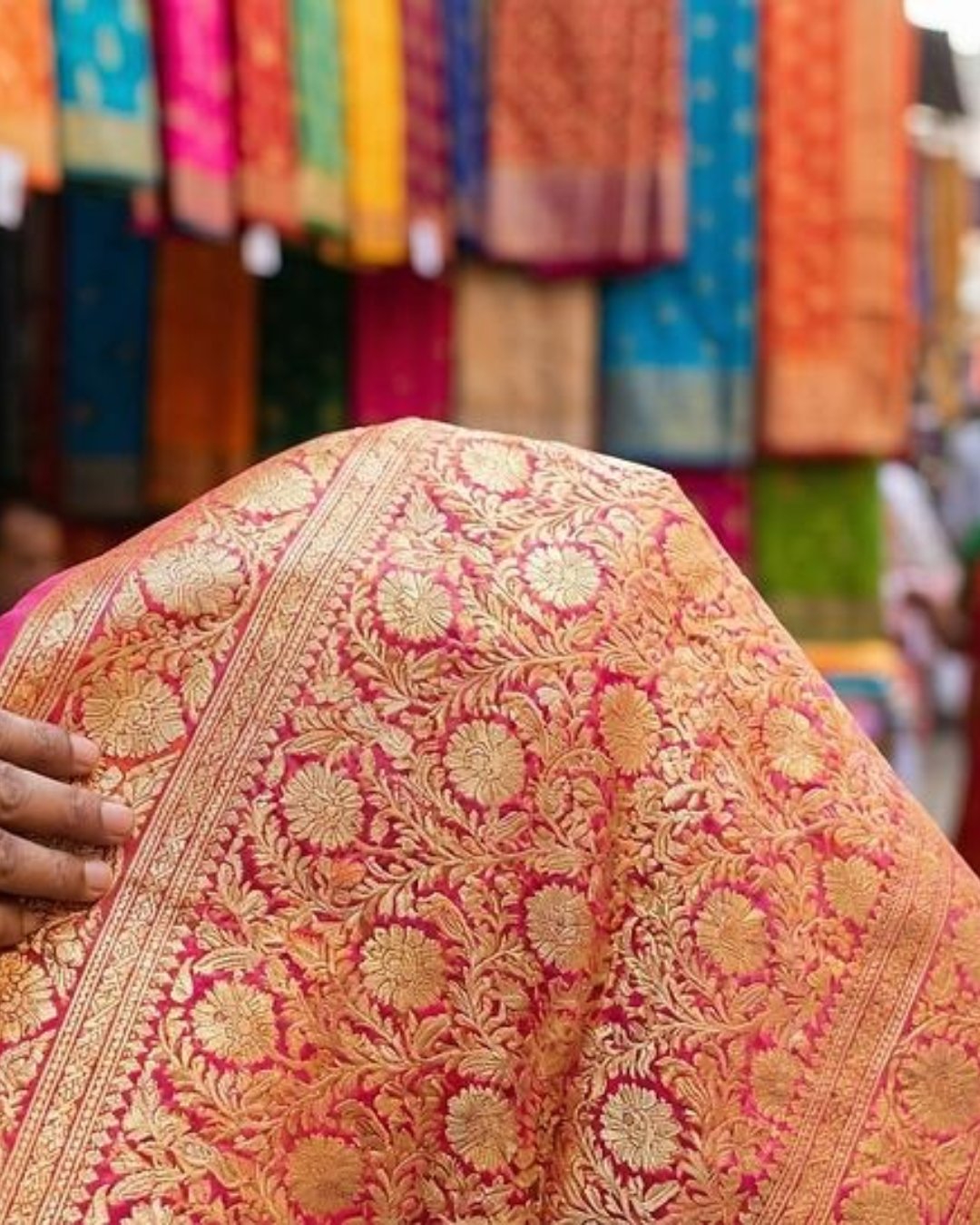
Direct from the weavers: Madanpura, Lallapura & Peeli Kothi
How you know it’s real On the loom in front of you · Pricing Cash · Commission None if you go yourself · Best for Handloom at the source
Most handloom Banarasi silk is woven by Ansari families in these mohallas, on pit looms inside their homes. In the mornings you can hear the shuttles through open doorways. Weavers are usually paid by the piece, a small share of the retail price, and the gap grows with every middleman. Buying close to the loom means more of your money reaches the maker, and you can see exactly what you’re paying for.
These are homes, not shops. There are no shopfronts, so arrange the visit in advance. Ask before you enter or photograph anyone, take your shoes off, dress modestly, and carry cash.
Go if you want handloom and the story behind it. Skip if you have an hour and want to browse racks.
82
MomentGodowlia, Varanasi
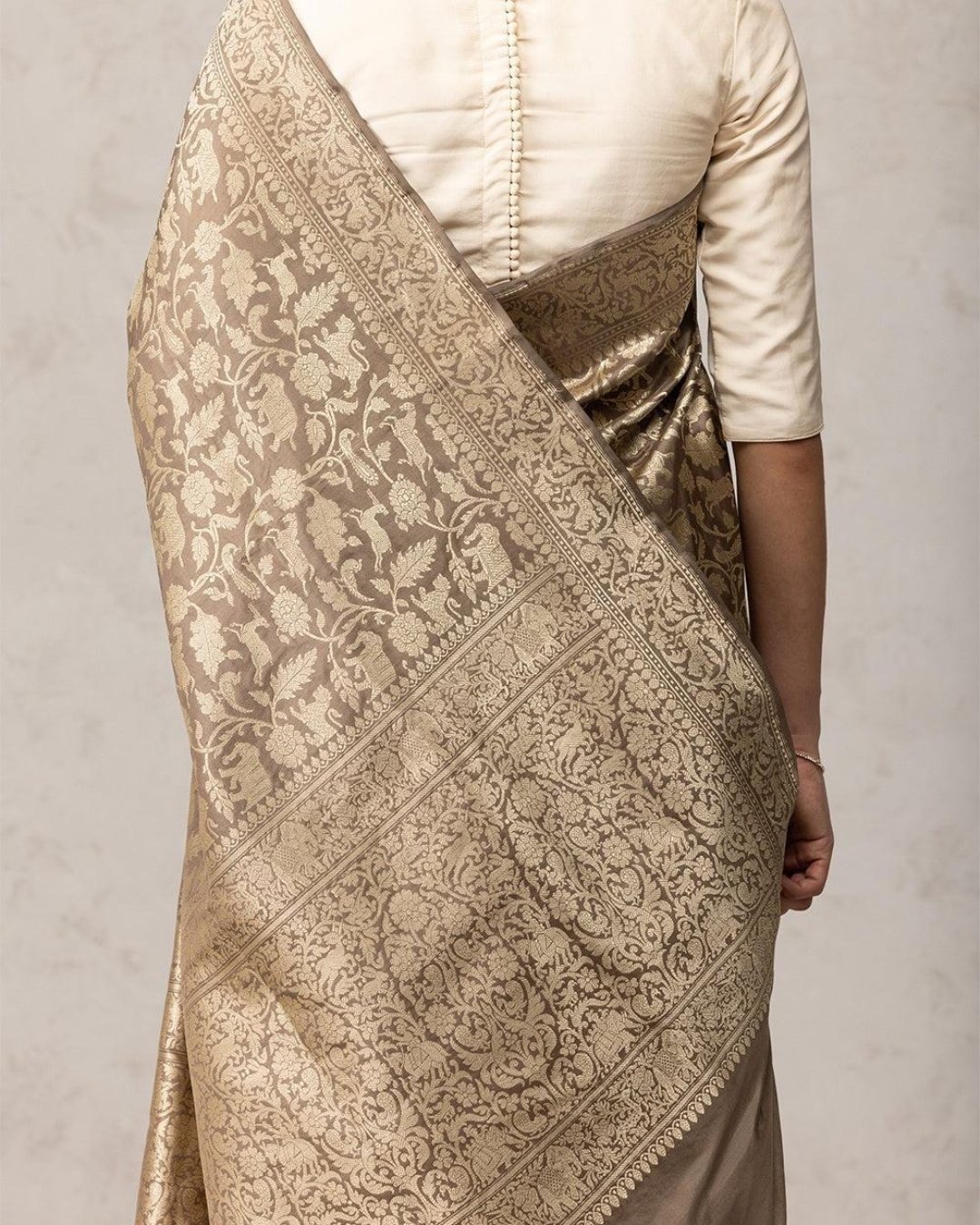
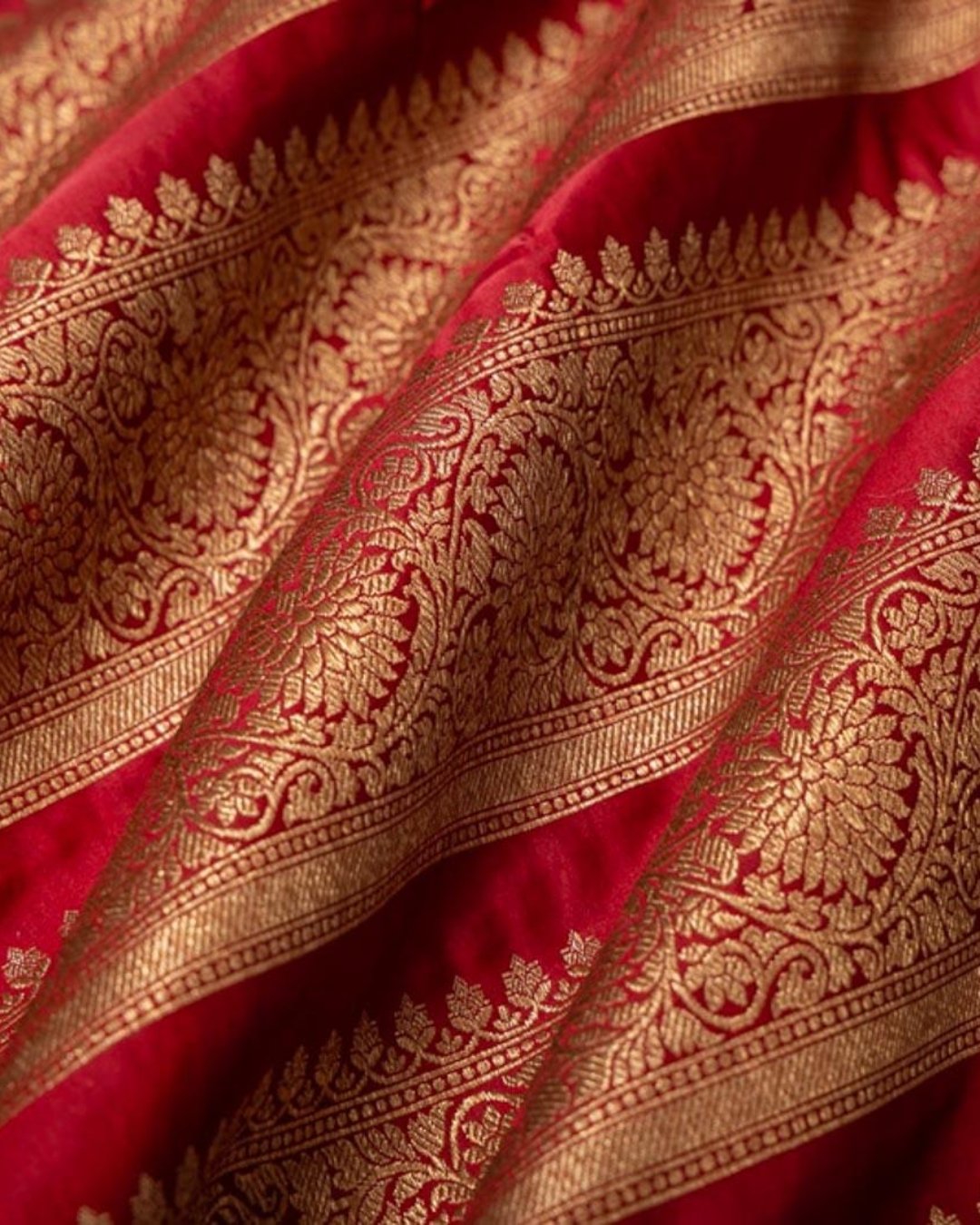
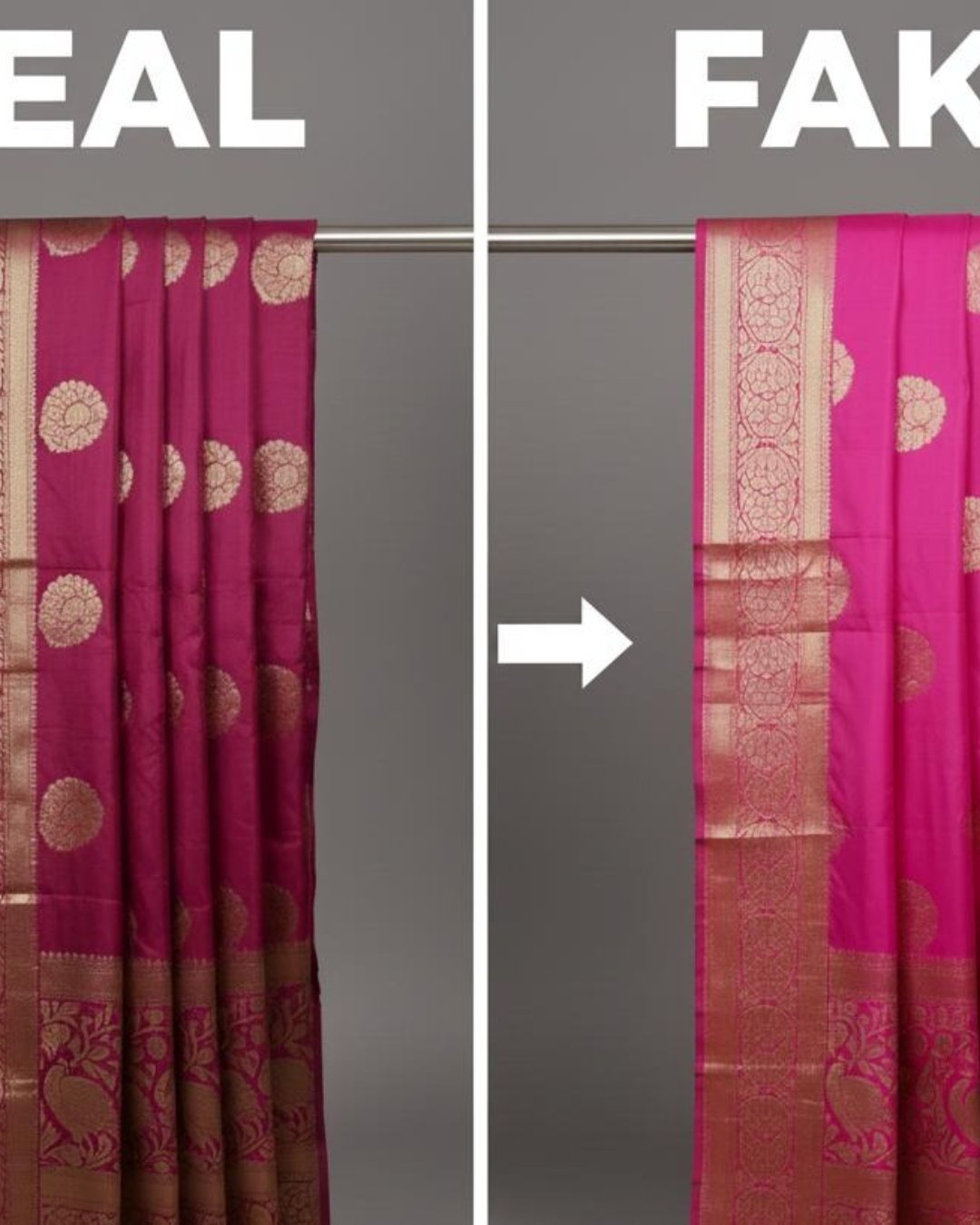
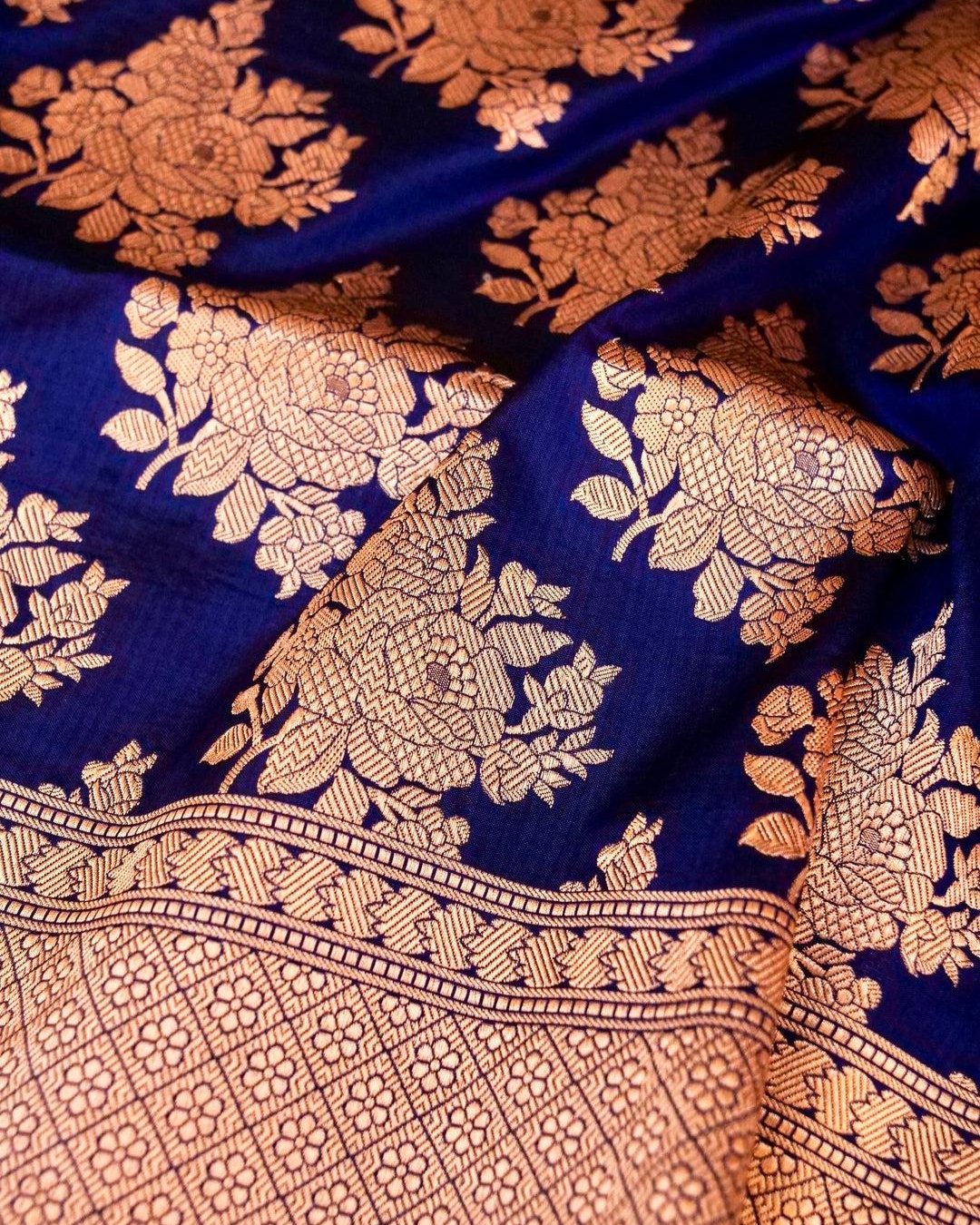
Old-city shops: Godowlia & Chowk
How you know it’s real Check every piece · Pricing Bargaining · Commission High if someone brought you · Best for Comparing many shops in one walk
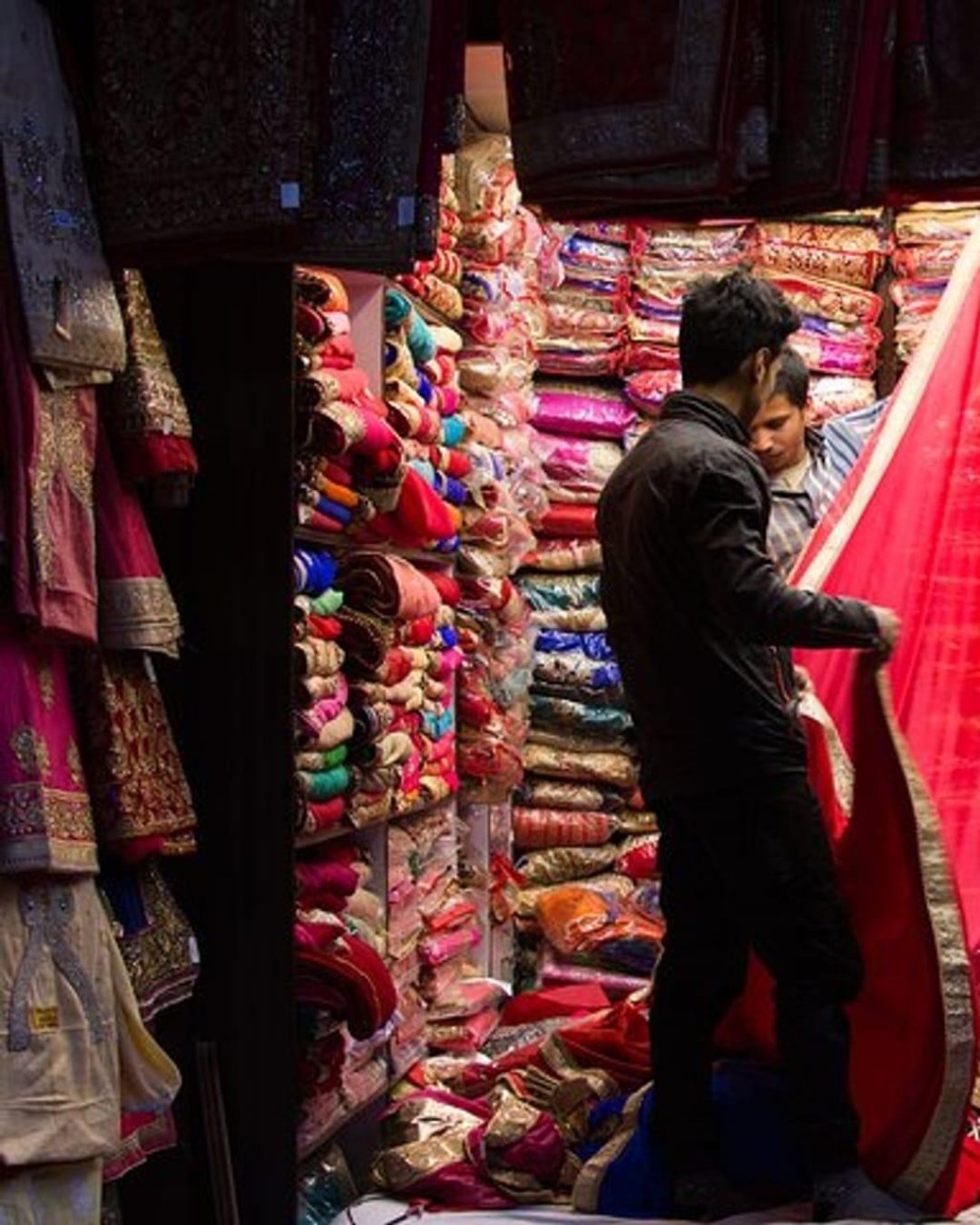
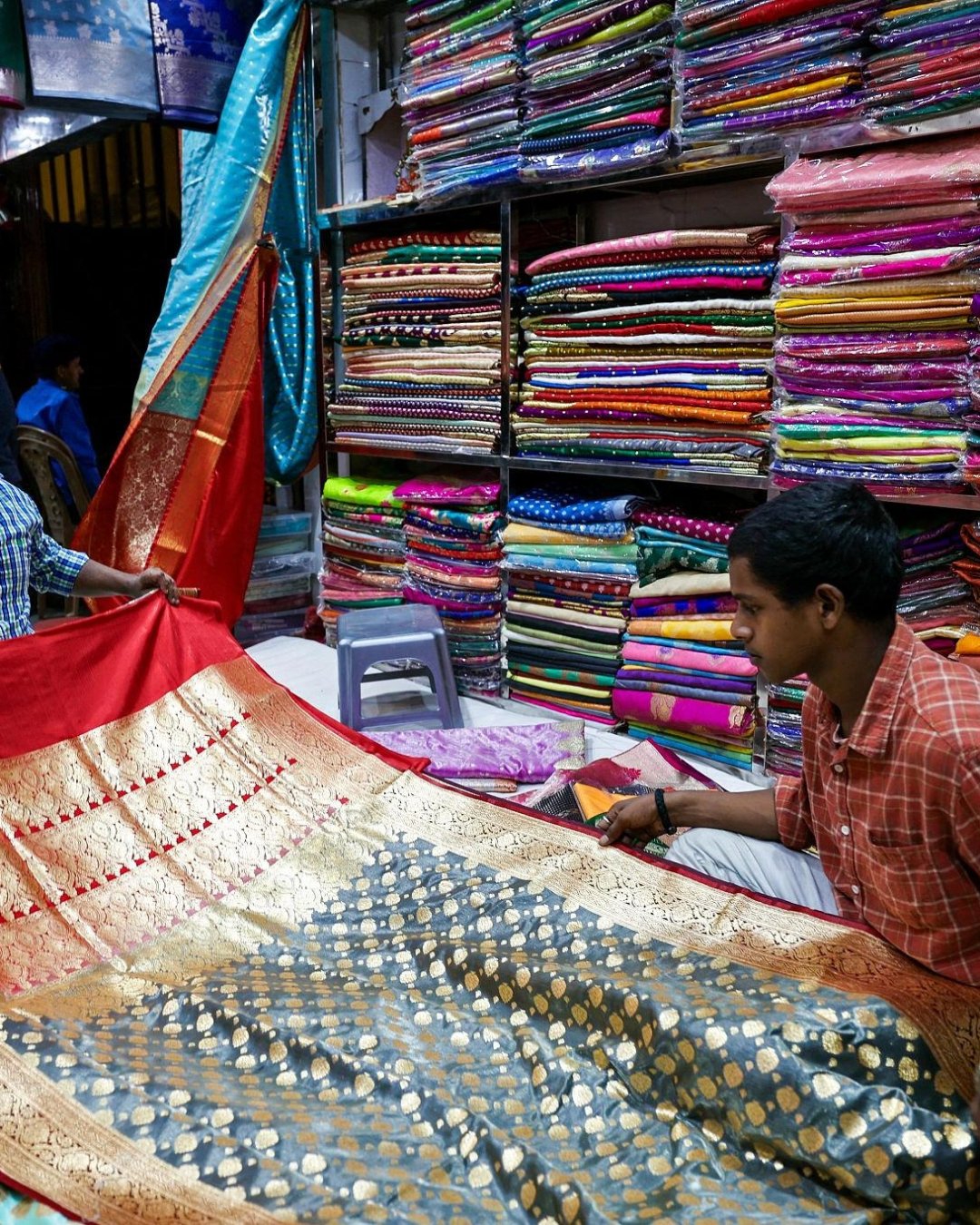
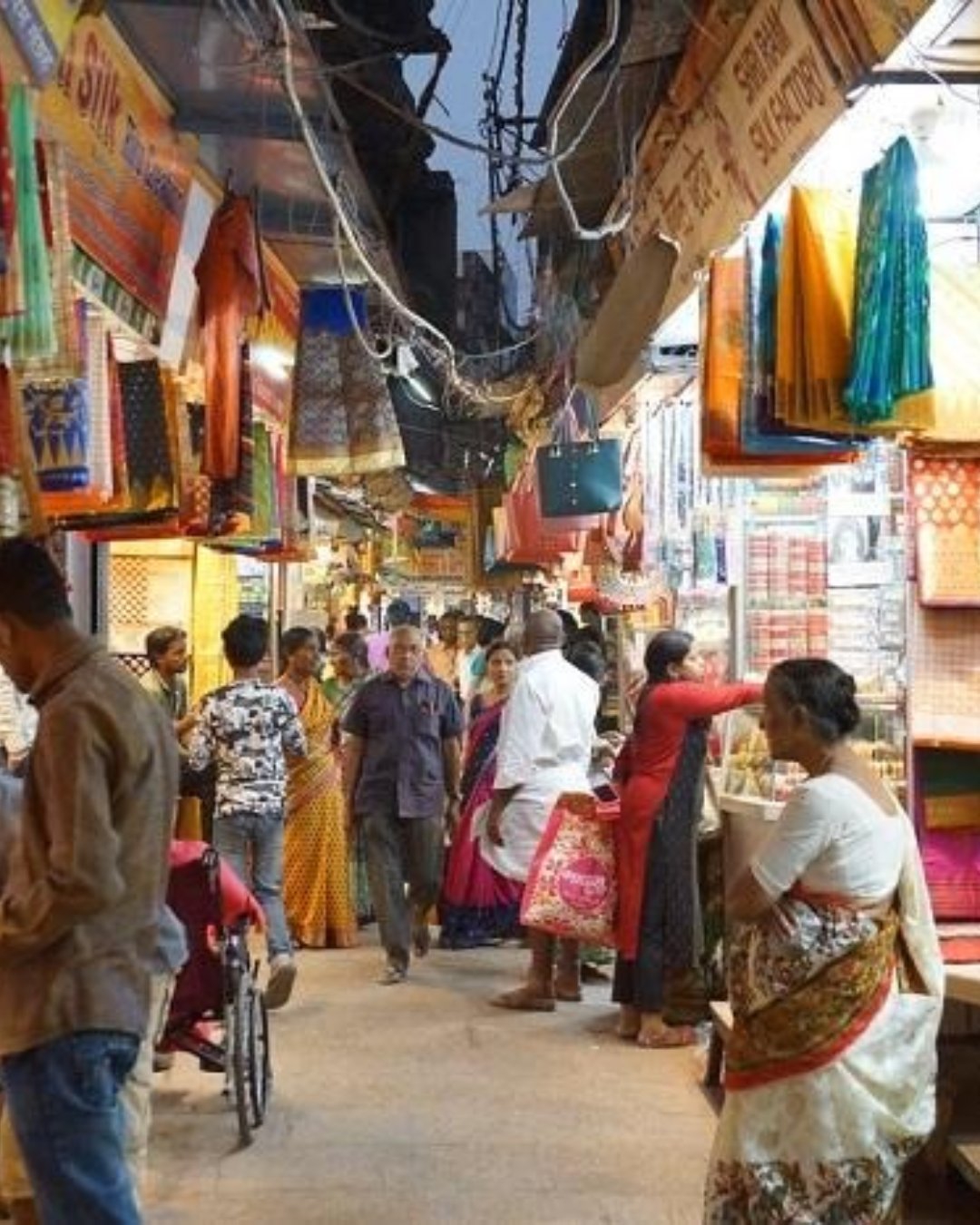
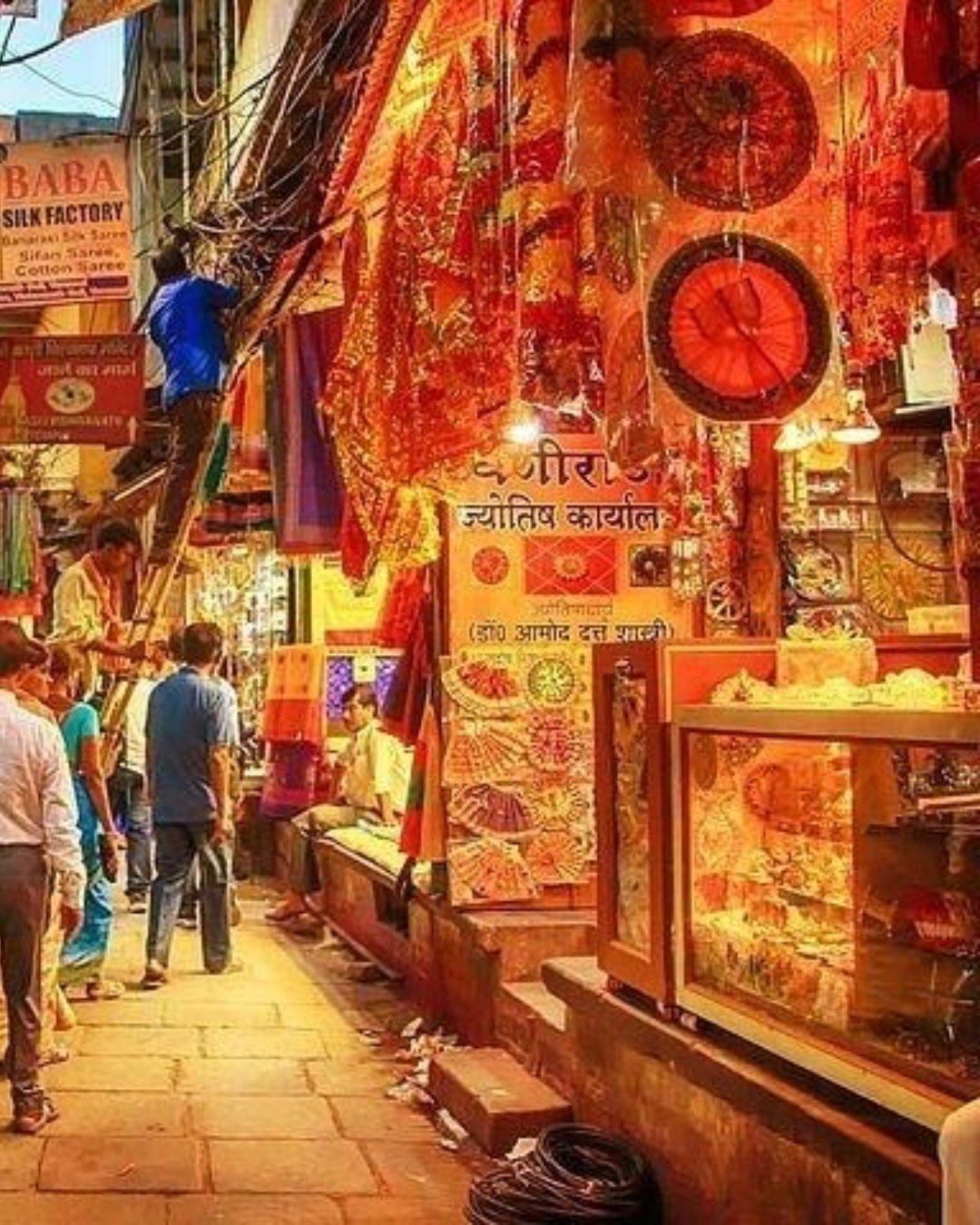
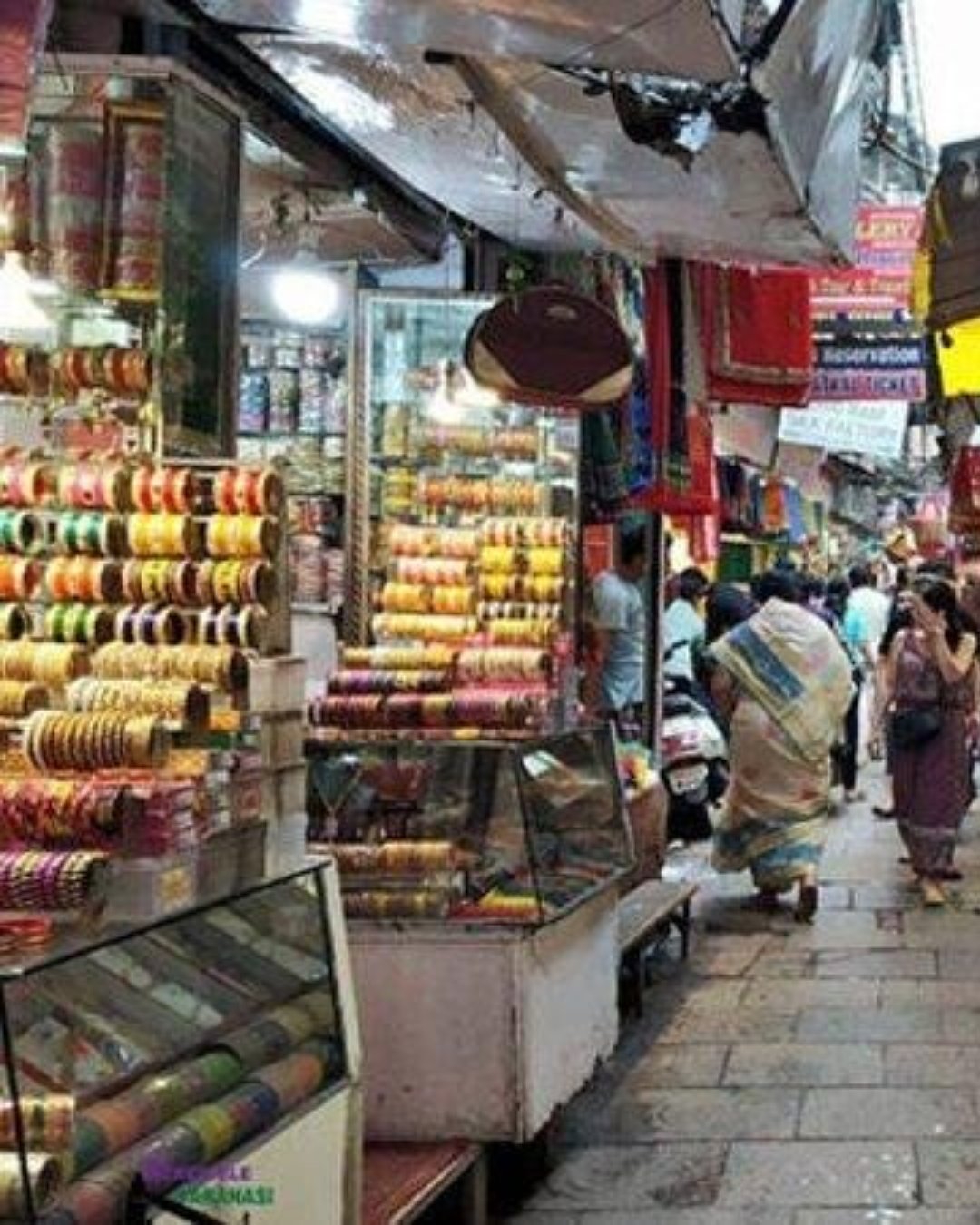
The busiest shopping in the old city: sweets, bangles, everyday goods, and plenty of silk. Quality varies from counter to counter, and this is where commission shops cluster, often introduced as “factory direct” or “government approved” by whoever walked you here. Choose the shop yourself, check the piece at the counter, and compare two or three before you buy.
Go if you’ll walk in on your own and check what you buy. Skip if a driver or a helpful stranger is leading the way.
62
MomentVishwanath Gali, Varanasi
Vishwanath Gali
How you know it’s real — · Pricing Bargaining · Best for Rudraksha, brass, sindoor and puja items
The temple approach lane. It’s right for pilgrimage items and wrong for silk. It’s crowded, there’s no space to look at cloth properly, and many traditional shops here have historically closed or cut hours on Tuesdays.
Go if you’re buying for a puja. Skip if you’re buying a saree.
64
MomentVishwanath Gali, Varanasi
The Shopping Zones
Varanasi isn't one market. It's five, each with its own trade — and buying silk in the wrong one is the single most expensive mistake a visitor makes.
Vishwanath Gali
The lane leading to the temple, packed with rudraksha, brassware, sindoor and souvenirs.
Good for: pilgrimage items and cheap keepsakes to grab on the way to darshan.
Bad for: silk of any kind — tourist-grade goods at temple-lane prices — and any calm browsing; it's a slow-moving crush of pilgrims.
Thatheri Bazaar
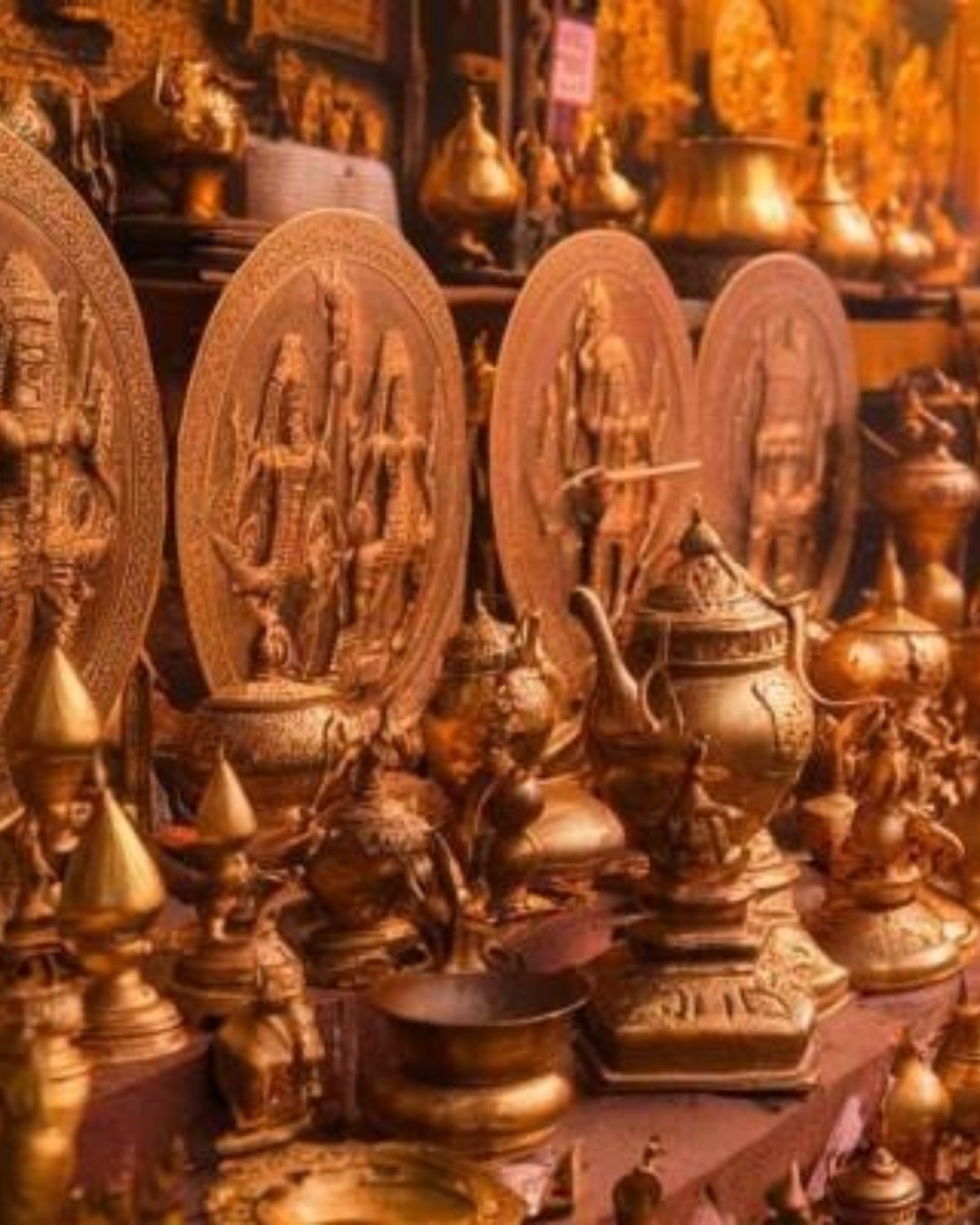
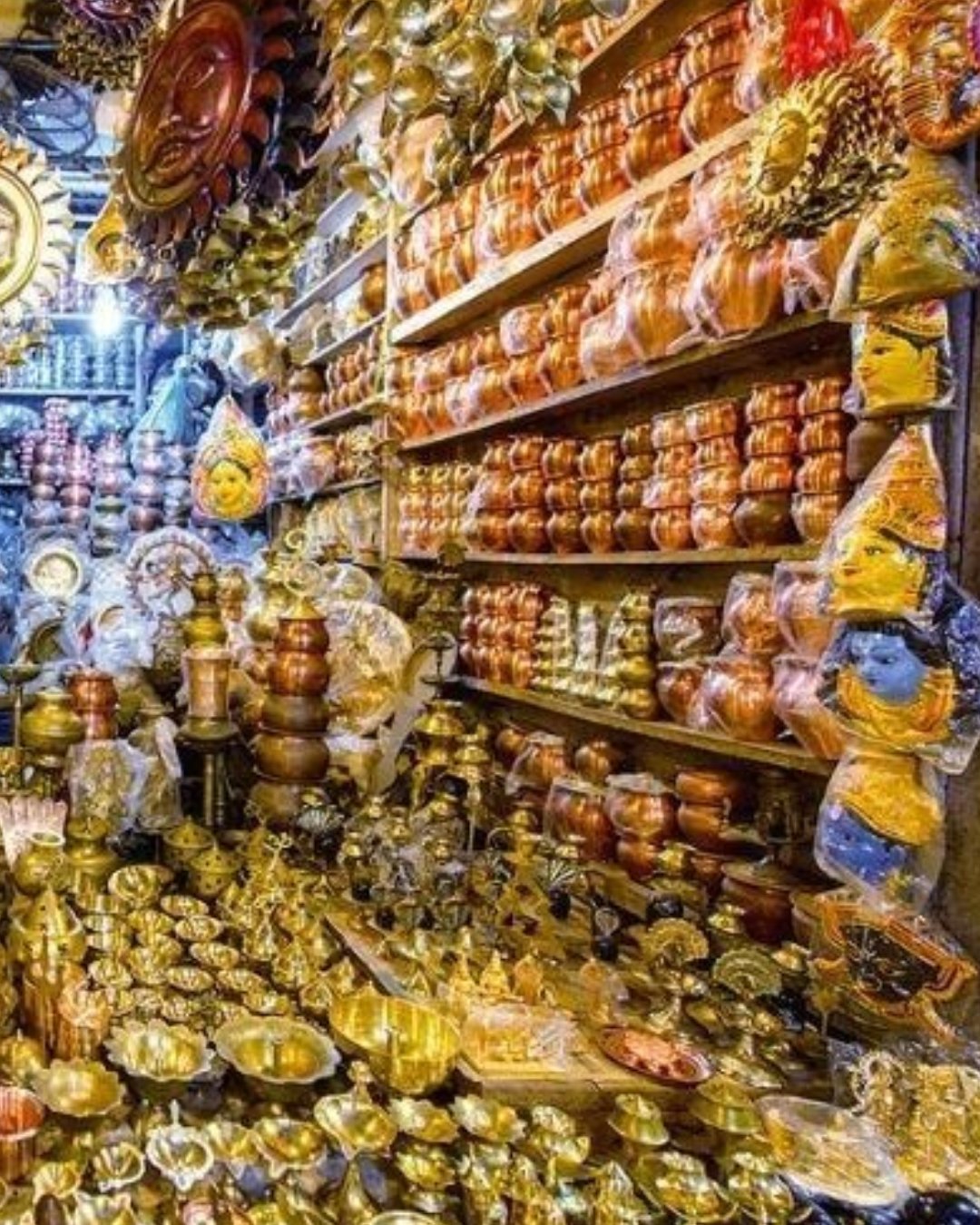
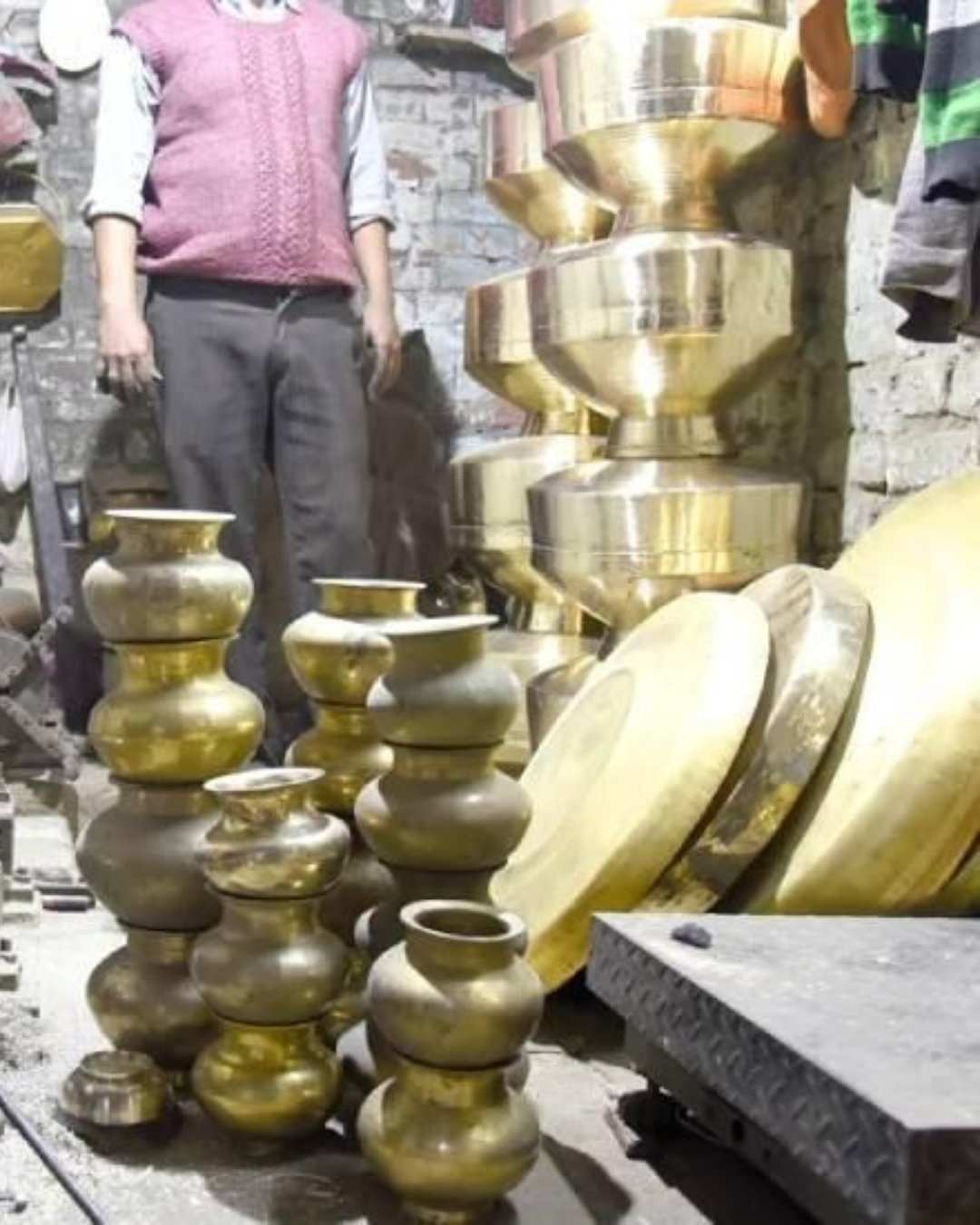
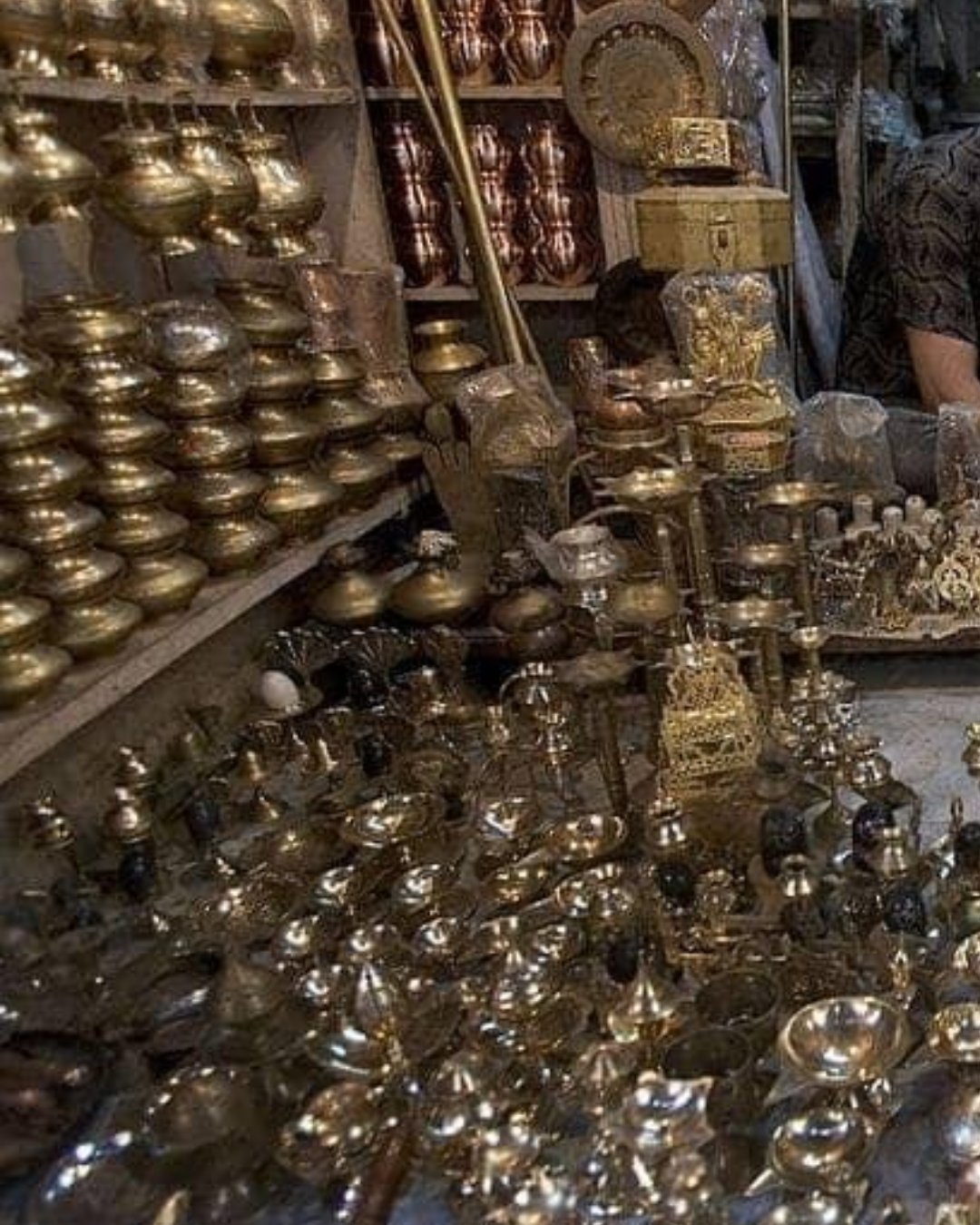
The old brass and copper market, where the metalware is genuinely made and sold by weight.
Good for: real brass and copper — lotas, thalis, diyas — priced by the kilo.
Bad for: textiles or silk (wrong market entirely) and quick errands; it's tucked deep in the lanes and easy to lose an hour finding. Know the going per-kilo rate before you commit, or "by weight" quietly works against you.
Godowlia & Chowk
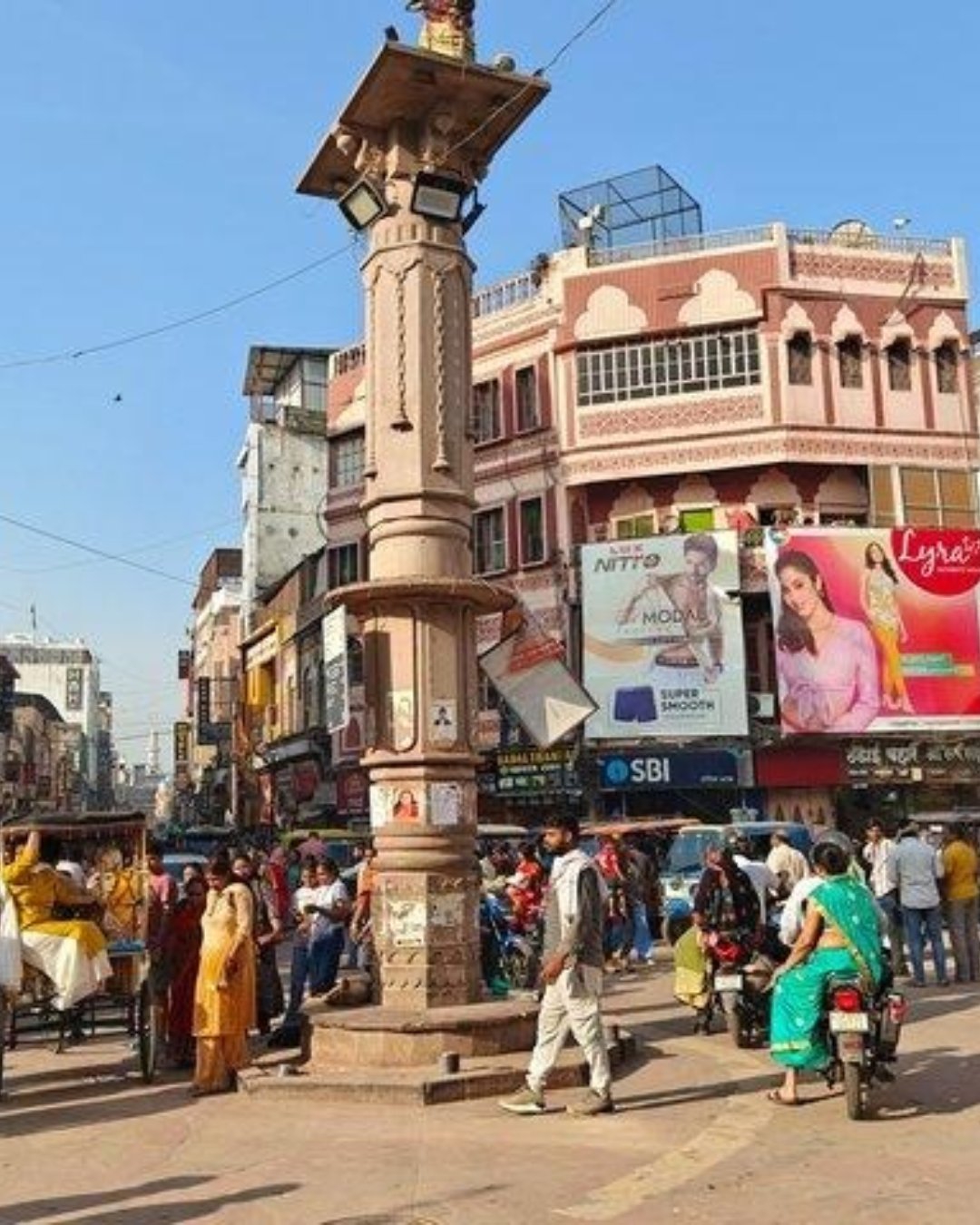
The general shopping heart of the old city — sweets, bangles, everyday goods.
Good for: everyday shopping, street food, bangles, and soaking up the chaos.
Bad for: serious silk — quality is all over the map and commission shops cluster here — and anyone wanting room to move; it's dense, loud and clogged with traffic.
Madanpura & Lallapura
The weaving quarters, where Banarasi silk is actually woven on the looms.
Good for: handloom silk close to the source, and seeing the craft as it really is.
Bad for: casual walk-in shopping. These are residential weaving lanes, not a retail strip — no shopfronts or signage to browse. You go because you've arranged to or know where you're headed, not to window-shop.
Fixed-price emporia (UPICA, Cottage Emporium)
Government and cooperative outlets where the price is set and haggling isn't part of the game.
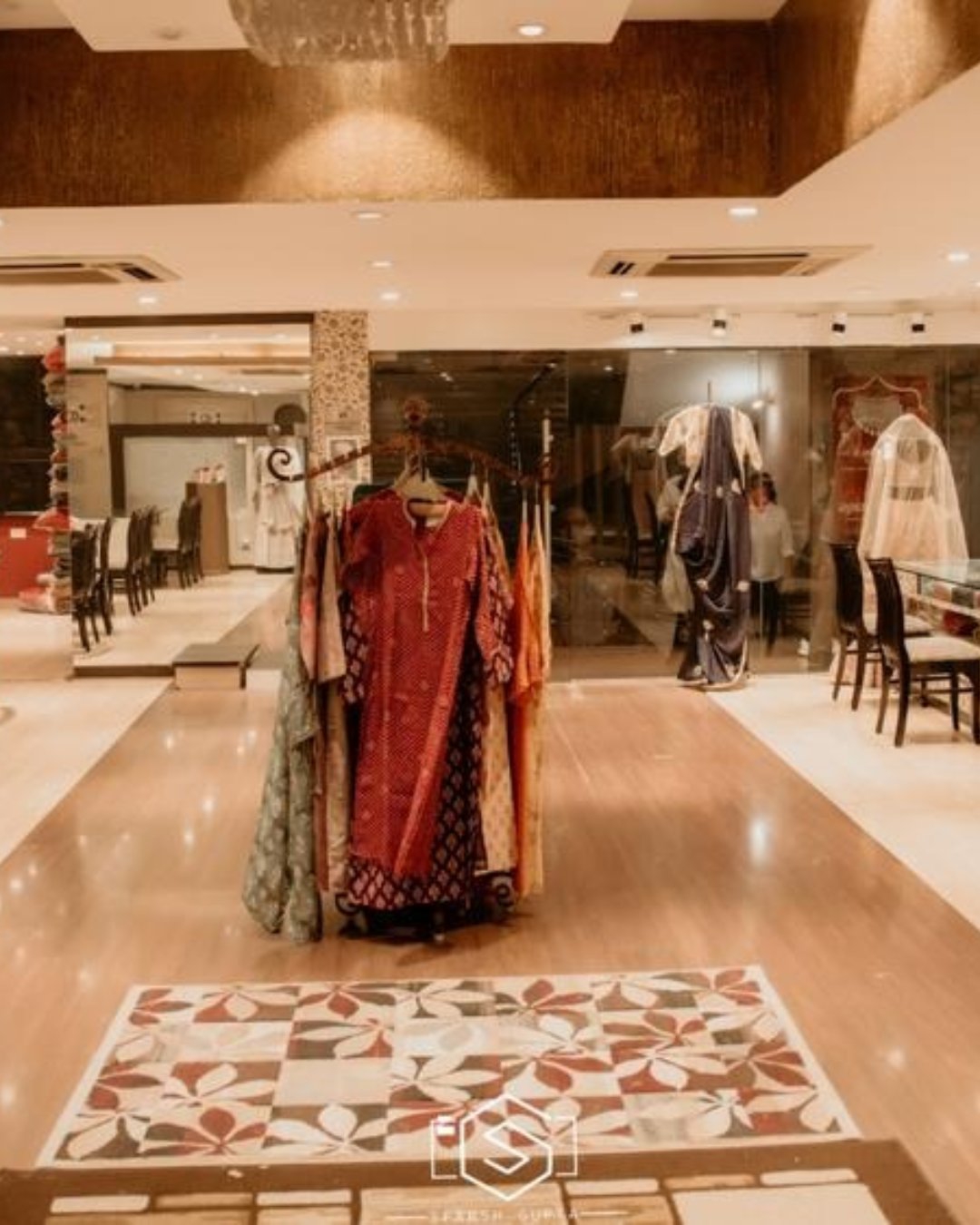
Good for: a safe silk baseline when you can't tell real from fake — reliable quality, no bargaining stress.
Bad for: the lowest price (you pay list, and weaver-direct usually beats it) and any feel of the old city; it's a formal shop, not the lanes.
One practical note for all of them: carry cash in small notes in a front pocket. The lanes are tight, crowded and worked by pickpockets, and most of the places worth buying from don't take cards.
54
MomentThatheri Bazar, Varanasi
Beyond Silk: Meenakari, Brass & Toys
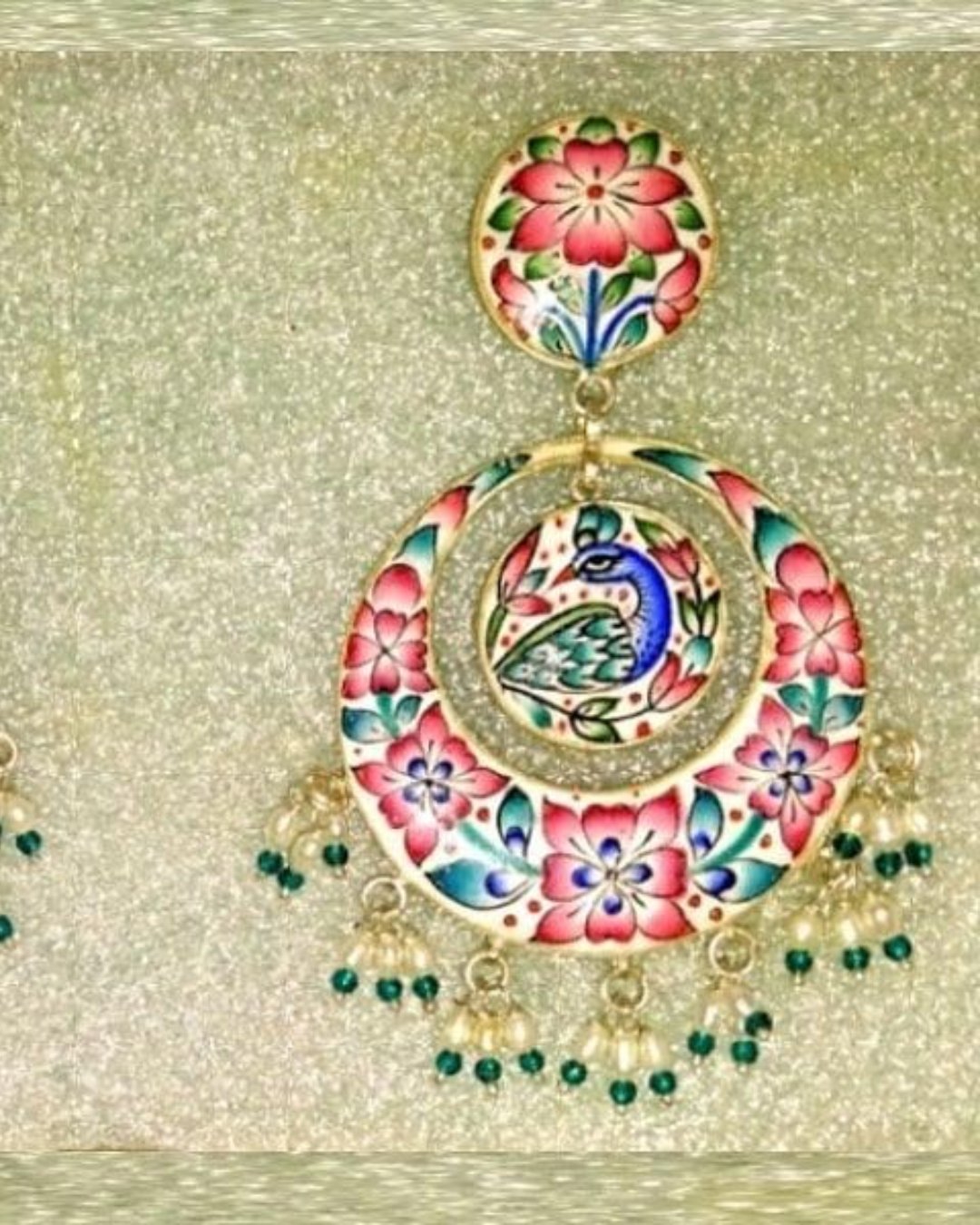
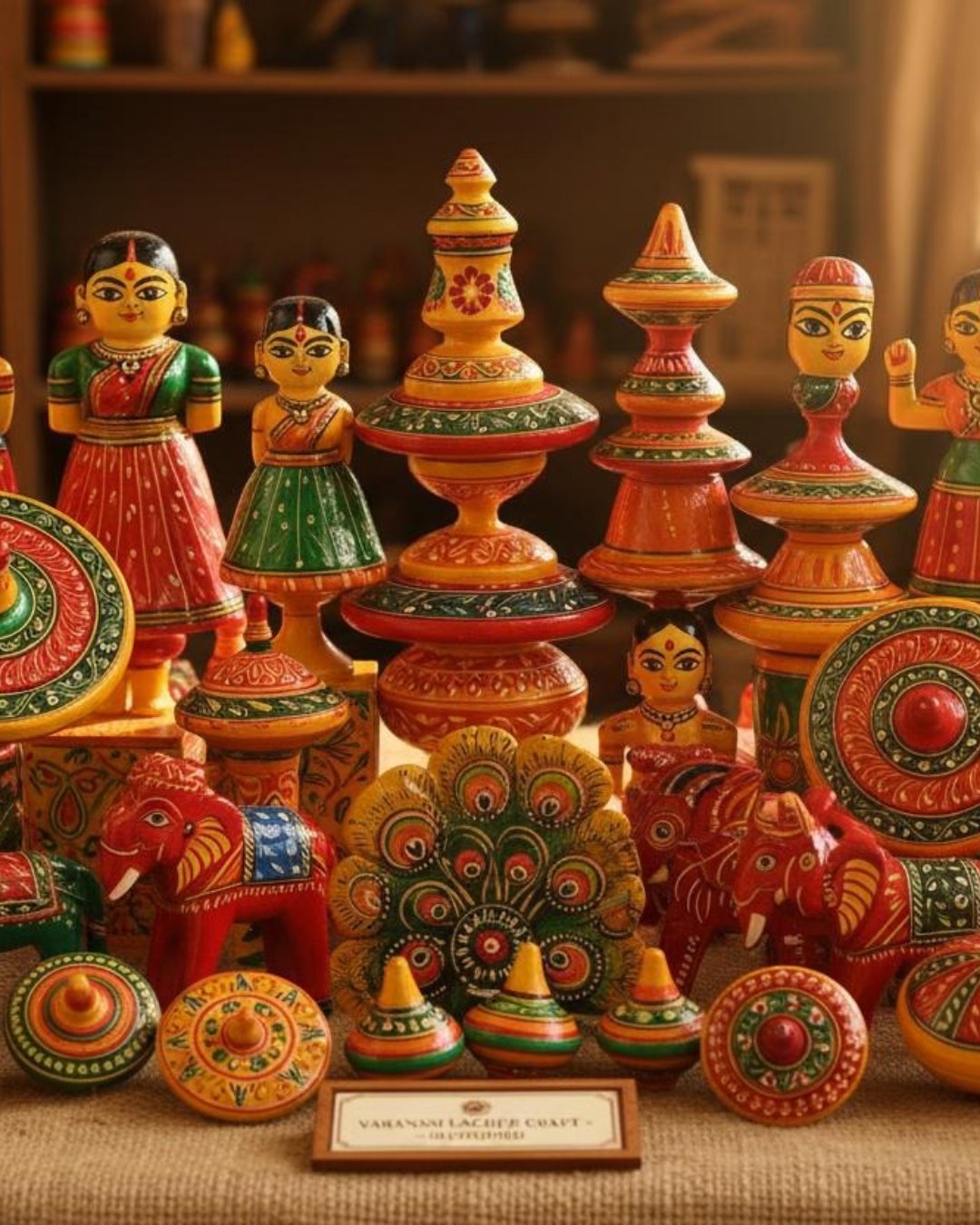
Most visitors arrive in Varanasi with a silk saree at the top of the shopping list and little else in mind. Banarasi sarees may be the headline, but Varanasi's craft traditions stretch far beyond the loom — into the soft pink shimmer of meenakari, the weight and warmth of temple brass, and the colourful world of lacquered wooden toys. These aren't just souvenirs; they are crafts shaped by generations of artisans and deeply woven into the city's identity. The mistake is spending your entire shopping trip chasing the famous Banarasi label and missing the crafts that reveal another side of Varanasi. Once you know what to look for, where to look, and how to tell genuine workmanship from a tourist-market imitation, shopping here becomes less about buying something expensive and more about taking home something truly made in Varanasi.
Before you spend your shopping time searching only for silk, take a look at the crafts that make Varanasi interesting in their own right. Here's how shopping the other crafts of Varanasi actually works, and how to get it right the first time.
Why the workshop beats the showroom
The first thing to understand is why the old workshops can be more rewarding than the polished showrooms. The showrooms clustered near the ghats and the big hotels exist to sell to tourists, at tourist prices, with a cut for whoever brought you. The crafts themselves come from workshops in the old city — Kashmiri Gali, Thatheri Bazaar, the lanes around Vishwanath — where the artisan and the price are both real.
The better strategy is to get closer to where the craft is made. It costs you a walk into the galis instead of a taxi to an emporium, and the difference is both the price and the authenticity. Go in the morning, when the workshops are active and you can actually watch things being made, rather than the afternoon, when it's just counters.
What you'll actually find
Once you know what to look for, Varanasi's non-silk crafts make a surprisingly good shopping list:
Gulabi meenakari — the city's signature "pink enamel" work on silver, a delicate GI-tagged craft made by only a handful of families now.
Brass and bronze — Thatheri Bazaar is the metal lane: puja lamps, bells, idols, and utensils, sold by weight.
Lacquered wooden toys — the bright, turned-and-painted toys and figures Varanasi has made for centuries.
Glass beads and bangles — from nearby, spilling through the bazaars in every colour.
Wall hangings and gulabi-thread work — the softer textile crafts that aren't full silk.
When you head into the bazaars, carry small notes and a cloth bag, and expect to bargain gently — it's normal, and starting around half the first ask is a fair opening in the bazaars.
Your phone can be surprisingly useful when you're shopping these crafts. Travellers who shop well here will tell you the same thing: photograph the piece and do a quick search on the craft — meenakari, the brass weight-price, the GI tag — before you commit, not after. A dealer who's selling the real thing won't mind a buyer who knows what it is; the one who bristles is telling you something. That small check, made in the lane rather than back at the hotel, is what separates a real bit of Banaras from a marked-up souvenir.
Pro tip: Buy meenakari from a known workshop or a GI-tagged maker, not a ghat-side stall — the genuine pink-enamel work is scarce and widely faked. For brass, Thatheri Bazaar prices by weight, so know the rough rate before you go. And be wary of any "guide" or driver who insists on taking you to a particular emporium — the commission is inside your price, every time. Ask to go to the craft lanes instead.
The mistakes that ruin it
The easiest way to overspend is to treat every Varanasi craft as something you should buy from the same tourist showroom. Most first-timers trip over the same few things. They buy everything in one tourist emporium at a marked-up, commission-loaded price. They pay silk-saree money for machine-made imitations. Or they let a driver choose the shop and never see the workshops at all.
The simplest solution is to shop the old-city craft lanes in the morning, know roughly what things should cost, and go with someone who isn't earning a percentage of your bill.
52
MomentDashashwamegh ghat
Ghat-side & hotel showrooms
How you know it’s real Varies · Pricing Tourist prices · Commission Built in · Best for Convenience
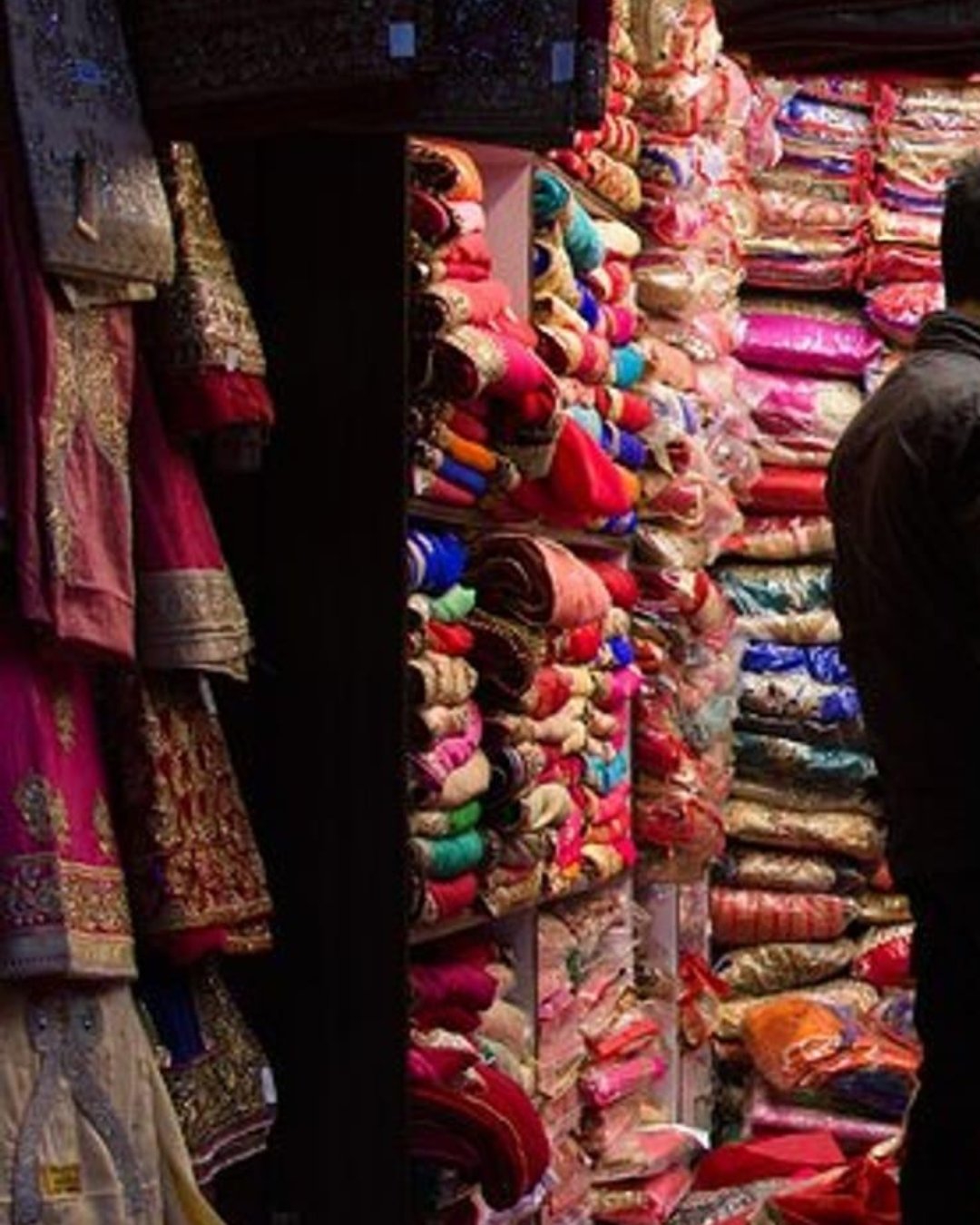
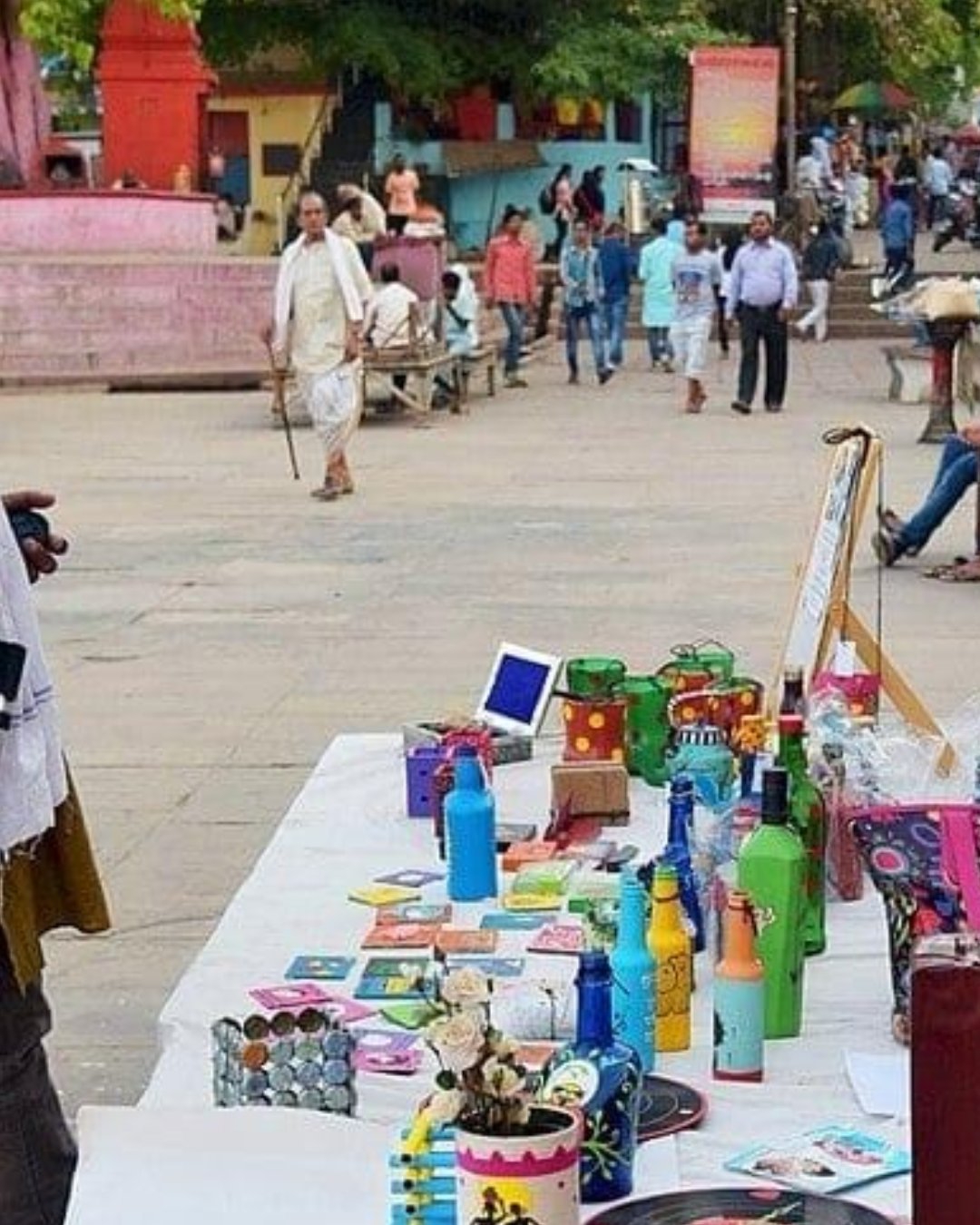
Showrooms near the ghats and big hotels price for visitors, with commission already included. They’re convenient, but you’ll pay for it, and the old-city workshops sell the same crafts closer to source.
Go if you’re out of time. Skip if you have a morning free.
Destination
Varanasi, Uttar Pradesh, India
Common questions
01Question
How do I check a saree is handloom before I pay?
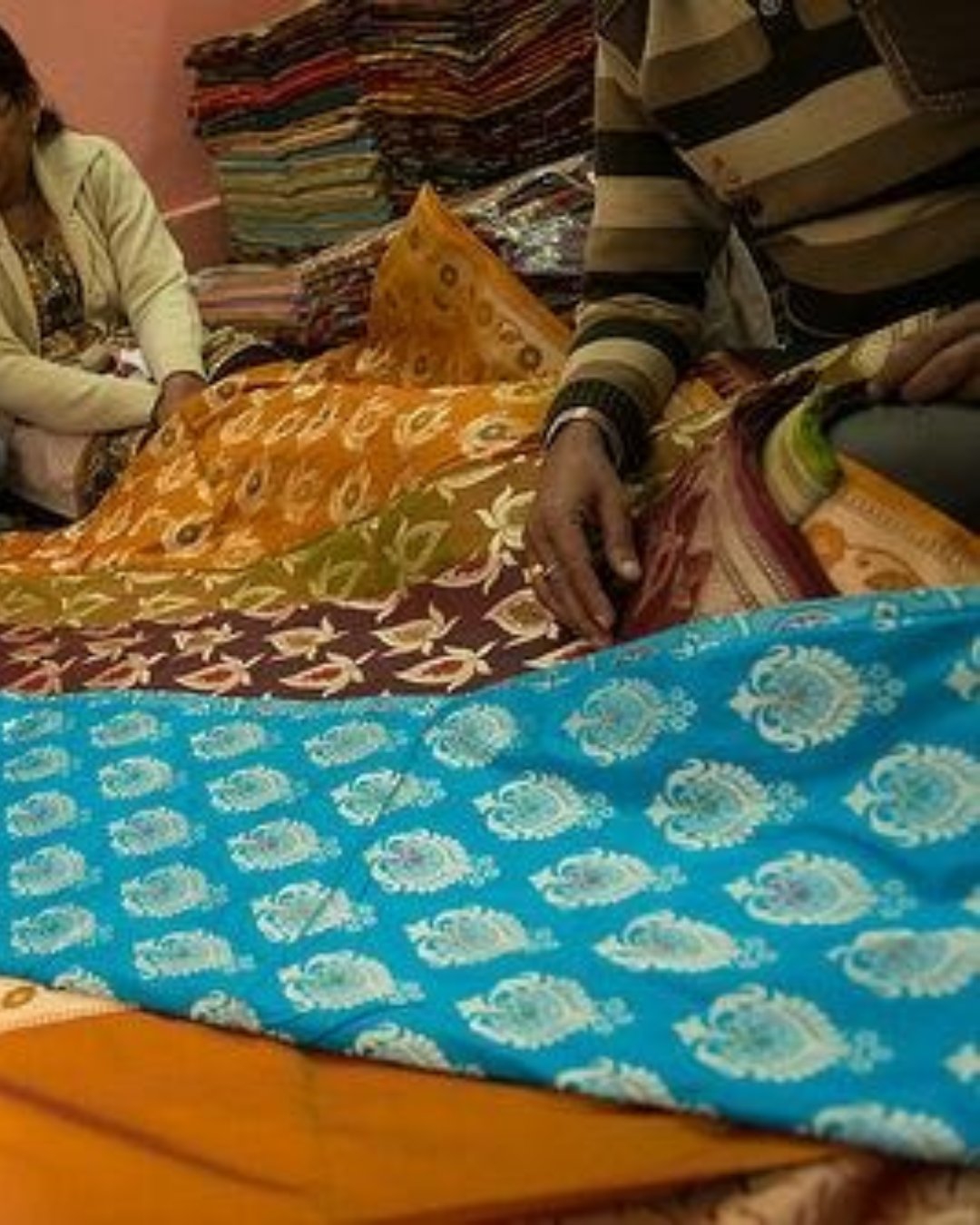
Turn it over: handloom shows floats, knots and small irregularities on the back, while machine-made pieces look too clean. Feel the weight; real silk is firm, not slippery. Look at the zari, ask what it’s made of, and check for a Silk Mark or Handloom Mark you can verify by QR code. Make sure the design is woven in, not printed. And question any price that’s too good.
02Question
How much does a Banarasi silk saree cost?
As of November 2026, a genuine saree typically costs about ₹5,000 to ₹50,000 or more, depending on the silk, zari, technique and design. Intricate handwoven bridal pieces can go above ₹1 lakh. Kadhua work, where each motif is woven individually, costs more than cutwork, where threads are trimmed on the back. No genuine handwoven piece costs ₹800, whatever the seller calls it.
03Question
How do I avoid paying a commission?
Separate advice from money. Never buy from the shop that the person who brought you recommends. Tell autos “no shops, direct to the destination” before you get in. Choose the shop yourself, and book any guide in advance rather than accepting a “free” one.
04Question
Should I bargain?
In old-city shops, yes, warmly. Counter at about 50–60% of the first quote and settle in the middle, and a polite walk-away often brings a better offer. Fixed-price emporia don’t negotiate. Never bargain over temple offerings or anything to do with the cremation ghats.
05Question
When is the best time to shop?
Mornings: cooler lanes, smaller crowds, and artisans at work. Main markets are generally open on Tuesday, but some traditional shops close or cut their hours, so don’t make it your only shopping day.
06Question
Can I get a saree home safely?
A saree folds small enough for hand luggage, which is the safest way. Wrap it in muslin or cotton rather than plastic. For bulky items, most established shops courier: get the receipt and tracking number before you leave. Keep the GST invoice with the GI and Silk Mark details.
More to explore
Go further into one part of this trip.