

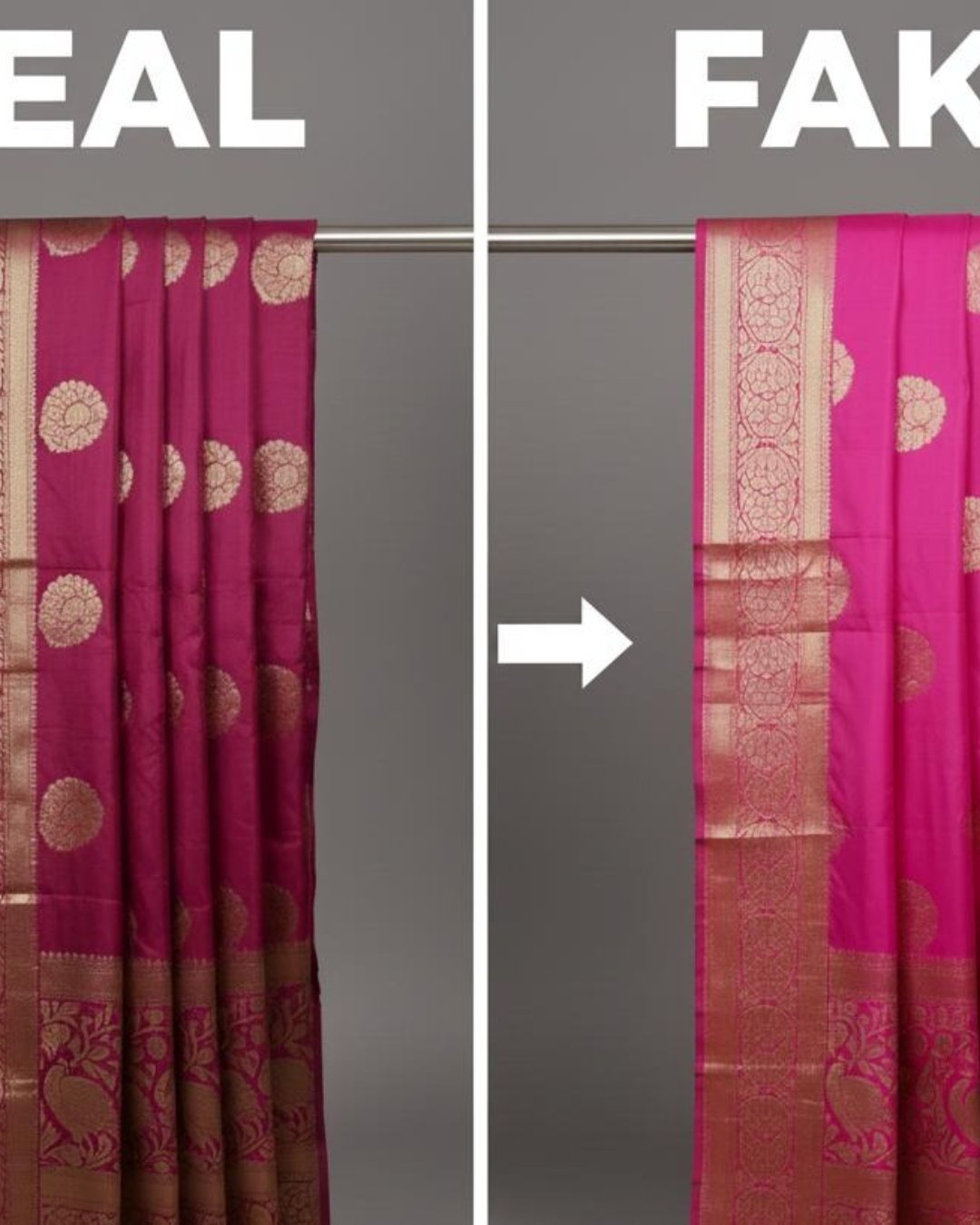
Real vs Fake: The Two-Minute Silk Check
Godowlia, Varanasi, India
You don't need to be a textile expert to spot a fake Banarasi. You need about two minutes and four checks.
A Banarasi saree can look luxurious, feel expensive, and still not be what the seller claims. That is why buying silk in Varanasi is less about trusting the shine and more about knowing what to check. You do not need to be a textile expert or spend an hour examining every thread. With a few quick checks, you can spot many of the warning signs that separate a genuinely handwoven Banarasi from a powerloom imitation or a printed saree being sold under a convincing name.
Start with the reverse side of the saree. A handloom piece will often reveal small irregularities — floating threads, knots, or variations in the weave — because it has been worked by hand. A machine-made saree tends to look unusually clean, flat, and perfectly uniform. Next, pay attention to the weight and drape. Genuine silk generally has a firm, substantial feel and falls differently from a thin synthetic imitation. It should not simply feel slippery and weightless.
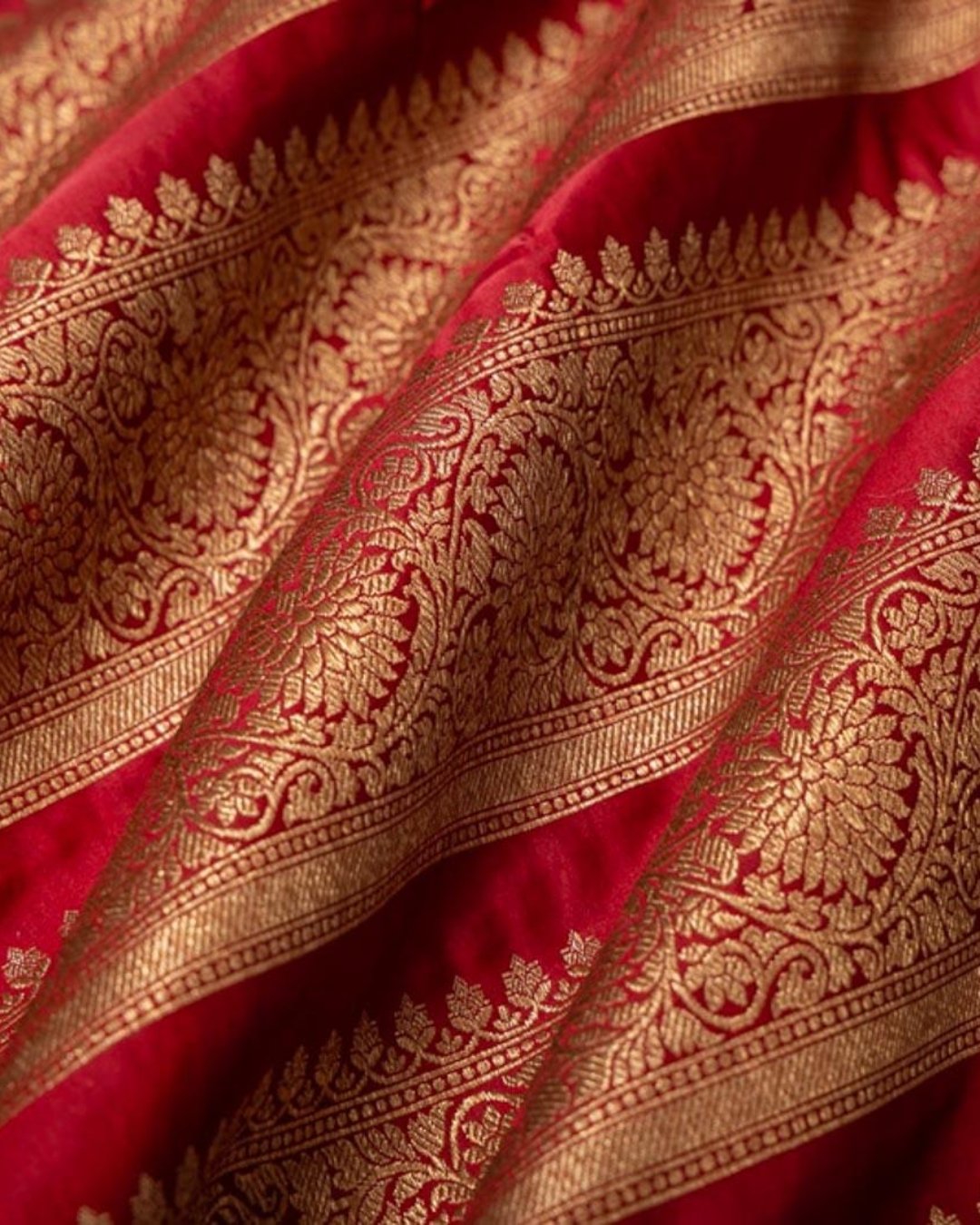
Then look closely at the zari. Traditional Banarasi weaving can use precious-metal zari, including silver gilded with gold, giving it a softer, warmer glow. Extremely bright metallic thread, particularly if it looks artificial or begins showing reddish or blackish wear, deserves closer inspection. Do not rely on colour alone; ask the seller exactly what the zari is made from.
Certification is another important checkpoint. Look for recognised identification such as a GI indication and Silk Mark, and verify any QR-based certification rather than assuming that a tag automatically proves authenticity. A label that cannot be verified should not be treated as proof.
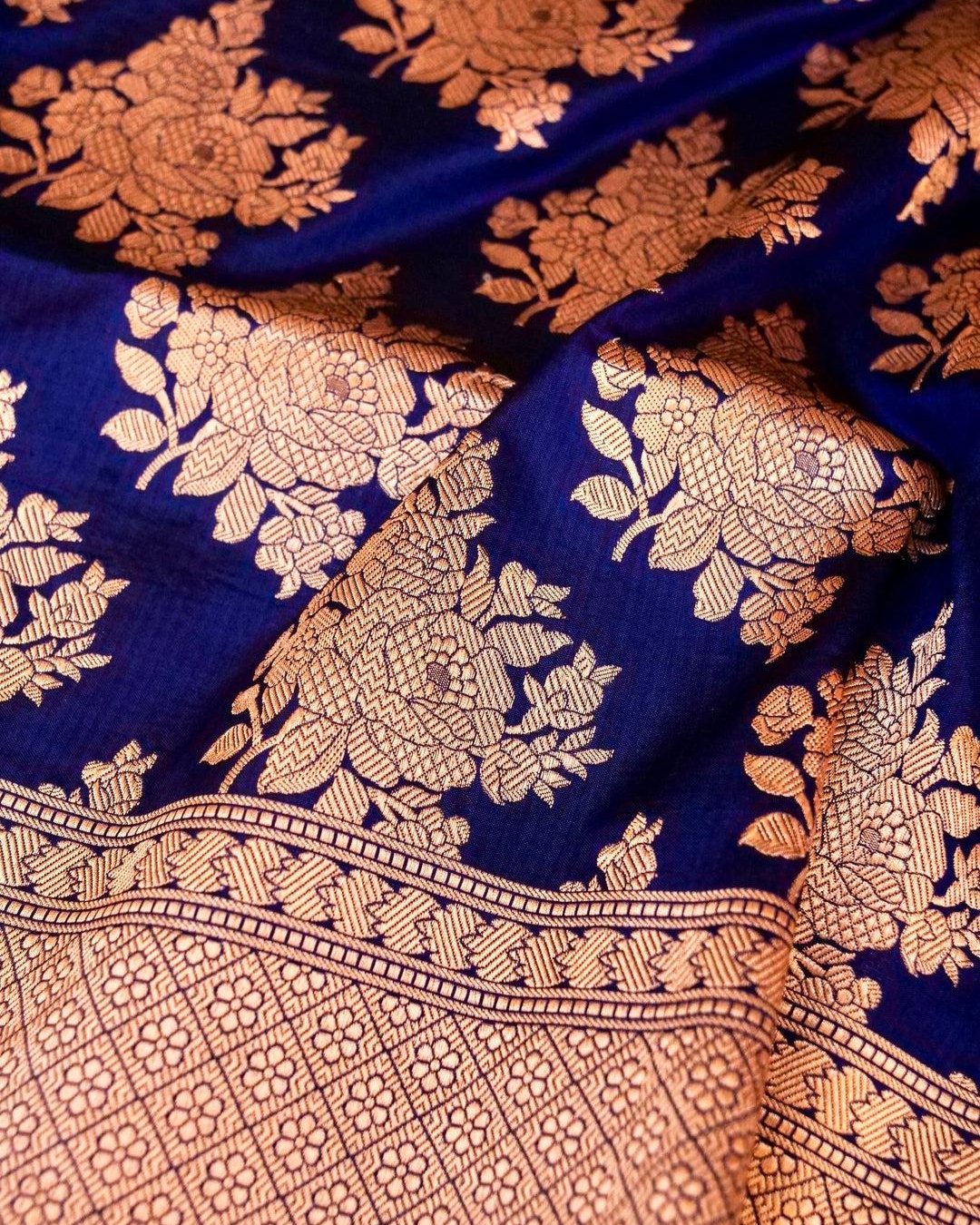
The weave itself is crucial. Traditional Banarasi designs are woven into the fabric rather than simply printed onto it. Slight irregularities around the edges or within the weave can actually be reassuring. A design that looks suspiciously perfect, flat, or printed onto the surface may indicate a machine-made or printed product.
A burn test is sometimes mentioned as a traditional silk check, because natural silk smells like burnt hair and eventually turns to ash, while synthetic fibres tend to melt into a hard bead. However, do not perform a burn test on a finished saree yourself. If authentication requires testing, it is safer to have a loose fibre or sample professionally tested.
Finally, consider the price. Genuine Banarasi sarees vary enormously depending on silk quality, zari, design, weaving technique, and craftsmanship, but a genuine handwoven piece is not realistically going to cost ₹800 simply because a seller calls it “pure Banarasi.” Treat an unusually low price as a reason to ask more questions, not automatically as a bargain.
The two-minute rule is simple: turn it over, feel it, inspect the zari, check the certification, look at the weave, and question the price. You don't need to become a textile expert before shopping in Varanasi — you just need to know which details deserve your attention.