
Varanasi Travel Guide: Ghats, Food & Stay
A complete varanasi travel guide — ghats, food, stays, transport & itineraries. Honest, practical tips for first-time visitors.
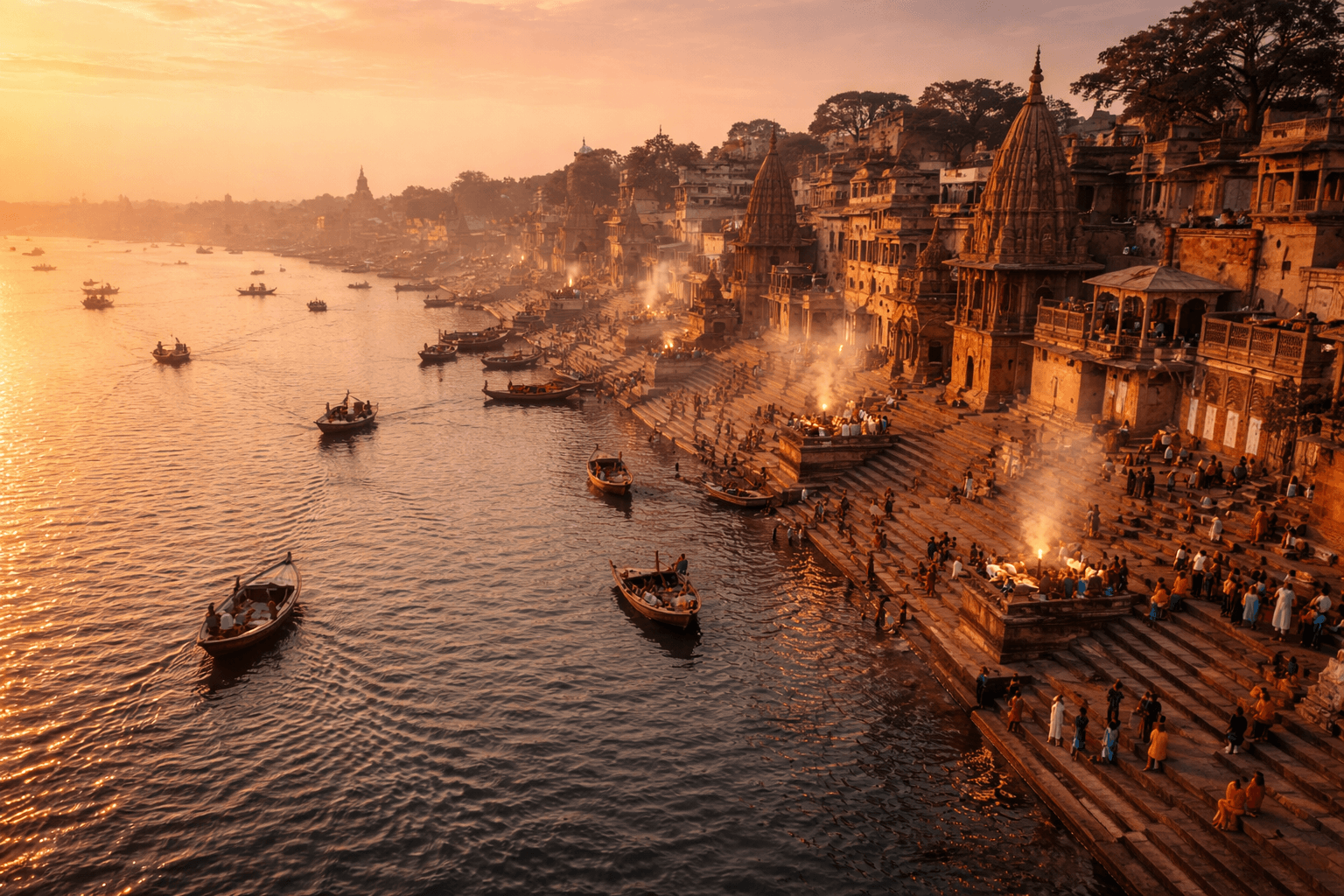
You're planning a trip to Varanasi.
You've seen the photos. The Ganga River glowing at dawn. Rows of oil lamps floating on the water. Priests swinging fire during aarti. Narrow lanes crowded with cows, scooters, and pilgrims.
But then the questions start hitting you fast.
"What do I actually do there?" "How many days do I need?" "Where should I stay?" "Is it safe?" "Will it be too chaotic?"
Varanasi can feel overwhelming before you even arrive. That's because it's not a standard tourist city. It doesn't have a skyline of malls. There's no curated Instagram trail. Everything here is real. Messy. Loud. Spiritual. Ancient.
This varanasi travel guide is what I wish someone had handed me before my first trip. I've been to Varanasi multiple times, stayed in different areas, gotten lost in the galis, made mistakes, and slowly figured out how this city actually works.
No fluff. No recycled advice. Just an honest, practical, experience-based guide that'll help you plan your trip, understand the city, and leave with memories that actually mean something.
Let's get into it.
What Makes Varanasi So Special?
Here's the thing about Varanasi. It's not a place you check off a list. It's a place that stays with you.
Varanasi is one of the oldest continuously inhabited cities in the world. People have been living here, praying here, dying here for over 3,000 years. Some historians argue longer. The city is older than most civilizations you studied in school.
That weight is real. You feel it when you walk through the Varanasi Old City. You feel it when you sit on the ghats at dawn and watch the Ganga River wake up. You feel it when you pass a cremation pyre and realize you're standing in a city where life and death happen side by side, out in the open, no apologies.
Most cities hide death. Varanasi doesn't. Here, it's part of daily life. You'll see a funeral procession walk past a chai stall. A wedding band play near a burning ghat. A priest bless a baby while, fifty feet away, another is performing last rites. This coexistence is what makes Varanasi unlike any other place in the world.
Spiritually, Varanasi is the holiest city in Hinduism. It's said that dying here grants moksha — liberation from the cycle of rebirth. That's why elderly pilgrims travel from across India to spend their final days here. It's not morbid. It's purposeful.
The daily rituals are what bring the city to life. The morning aarti at Assi Ghat before sunrise. The evening Ganga Aarti at Dashashwamedh Ghat with its synchronized priests, fire, and chanting. The continuous stream of pilgrims bathing in the Ganga. The temples — thousands of them — tucked into every corner of the old city.
Varanasi isn't easy. But it's real. And that's why people come back.
How to Plan Your Varanasi Trip
Planning a varanasi trip starts with one question: what do you actually want from it?
Different travelers want different things. Pilgrims want temple darshan and ritual bathing. Photographers want the ghats and the faces. Spiritual seekers want silence and ceremony. Backpackers want cafes and boat rides. Culture travelers want history, food, and music.
Be honest about which one you are. Your answer changes everything.
How many days to spend:
- 1 day: Bare minimum. Main ghats, sunrise boat ride, evening Ganga Aarti. Rushed, but doable.
- 2 days: Good balance. Adds Kashi Vishwanath Temple, old city walk, and proper food exploration.
- 3 days: Ideal for most travelers. Includes a Sarnath day trip and time to slow down.
- 4-5 days: For deep immersion. Music classes, yoga, silk workshops, and repeat visits to favorite spots.
Most visitors underestimate how physically tiring Varanasi can be. The heat, the walking, the sensory overload, the early mornings. Build in rest time. One slow afternoon can matter more than cramming in another temple.
Key experiences to prioritize:
- Sunrise boat ride on the Ganga River
- Evening Ganga Aarti at Dashashwamedh Ghat
- Walking tour of the old city lanes
- Kashi Vishwanath Temple darshan
- Day trip to Sarnath
- Food walk through kachori galis and lassi shops
These six experiences form the backbone of any solid varanasi travel plan. Everything else is bonus.
Best Time to Visit Varanasi
The best time to visit Varanasi is between October and March. Period.
During these months, the weather is cool to pleasantly warm. Mornings on the ghats are crisp but not freezing. Days are sunny and walkable. Evenings are cool enough for a light jacket. It's ideal for everything — boat rides, temple visits, long walks, food tours.
Let me break down each season honestly:
Winter (November to February): The peak tourist season. Temperatures range from 8°C to 25°C. It can get foggy in December and January, especially in the early mornings. Some boat rides get delayed due to visibility. But the city looks magical in the mist. Festivals like Dev Deepawali fall in November — the entire riverfront is lit with millions of oil lamps, and it's one of the most spectacular nights in India.
Spring and Early Summer (March to April): Still pleasant, but warming up. Fewer crowds than peak winter. Good balance of weather and availability.
Summer (May and June): Brutal. Temperatures can hit 45°C. The heat is dry and relentless. Walking the ghats in the afternoon is nearly impossible. Hotel AC becomes essential. If you must visit, stick to early mornings and late evenings, and spend midday indoors. Prices drop significantly though, so budget travelers might find deals.
Monsoon (July to September): Heavy rain. The Ganga River rises significantly and submerges many lower ghats. Cremations move to higher platforms. Boat rides are often cancelled or dangerous. Temples get crowded as devotees flock for monsoon rituals, but the ghat experience is compromised.
Festival seasons to plan around:
- Dev Deepawali (November): Millions of diyas light up every ghat. Unforgettable, but crowds are massive. Book stays 2-3 months in advance.
- Mahashivratri (February/March): Kashi Vishwanath Temple becomes the epicenter of celebrations. Expect intense queues and crowds.
- Holi (March): Varanasi celebrates Holi for 5-7 days. Cultural but chaotic. Book around the main day carefully.
- Ganga Dussehra (May/June): Hot but spiritually significant. Ghat rituals intensify.
How to Reach Varanasi
Varanasi is well-connected to the rest of India. You have three solid options for reaching the city.
By Air: Lal Bahadur Shastri International Airport (VNS) is about 25 km from the city center. Direct flights connect Varanasi to Delhi, Mumbai, Bengaluru, Kolkata, Hyderabad, and Chennai. There are also limited international connections to Kathmandu and Sharjah. The airport is modern, well-maintained, and the drive to the city takes 45-60 minutes.
Pre-paid taxis from the airport cost around ₹700-₹1,000 to the ghats area. Uber and Ola also operate. Most hotels offer airport pickup for a small fee.
By Train: Varanasi has two main railway stations — Varanasi Junction (also called Varanasi Cantt) and Banaras Junction (formerly Manduadih). Trains connect Varanasi to almost every major Indian city. Overnight trains from Delhi (12-14 hours), Mumbai (24 hours), and Kolkata (14 hours) are popular. The Vande Bharat Express runs between Delhi and Varanasi and is the fastest option.
Varanasi Junction is 4-5 km from the ghats. Auto-rickshaws from the station to your hotel cost ₹150-₹300.
By Road: Varanasi connects to the national highway network via NH-2 and NH-7. Driving distances: Delhi (800 km, 12-14 hours), Lucknow (320 km, 6 hours), Allahabad (125 km, 3 hours), Kolkata (680 km, 12 hours). Overnight buses run from most major cities. State-run and private Volvo buses are comfortable options.
For most travelers, flying into Varanasi is the most convenient. But the train journey, especially from Delhi, is a classic Indian travel experience worth doing at least once.
Getting Around Varanasi
Varanasi transport works very differently from any other Indian city. Here's what actually works.
Walking in the Old City: The Varanasi Old City — the area around the ghats and Kashi Vishwanath Temple — is best explored on foot. The lanes are too narrow for anything bigger than a bicycle or scooter. Some alleys are so tight you'll turn sideways to pass another person. Don't even try to use Google Maps aggressively here. It gets confused. Locals are your best guide. Just ask.
Plan on walking 5-10 km per day in Varanasi. Comfortable shoes matter more here than in most cities.
Auto-Rickshaws: Your go-to for any distance outside the old city. Short rides (2-3 km) cost ₹60-₹100. Longer rides to Sarnath or the airport cost ₹400-₹800. Negotiate the fare before you get in. Most drivers don't use meters. If you're uncomfortable bargaining, use Ola or Uber — they operate in Varanasi but mostly in the newer city areas.
E-Rickshaws: Quiet, cheap, and increasingly common. Perfect for short rides around Godowlia, Cantonment, and other mid-distance routes. Fares are ₹30-₹80 per ride. They can't go deep into the old city either, but they can get you closer than a regular auto.
Cycle Rickshaws: Still around, especially in the old city edges. Good for slow, scenic rides. Fares are negotiable, usually ₹50-₹150. Be kind with tipping — these are hardworking men making a modest living.
Boats on the Ganga River: Essential. Not optional. Boats are how you see the ghats from the water — the angle that defines Varanasi photography. A shared boat ride at sunrise costs ₹100-₹200 per person. A private boat costs ₹500-₹1,500 depending on duration and boat size. Negotiate. Always.
Scooter Rentals: Not recommended unless you're experienced with Indian traffic. The old city is impassable. The newer city is drivable but chaotic. If you're comfortable, rentals cost ₹400-₹600 per day.
Top Things to Do in Varanasi
These are the non-negotiables. The experiences that every traveler should have when they visit varanasi.
Sunrise Boat Ride on the Ganga
Wake up at 4:30 AM. Walk to the ghats in the dark. Hire a boat. Float down the Ganga River as the sky turns pink, then orange, then gold.
This is the single most iconic Varanasi experience. And it's not overhyped. The light is surreal. The silence is broken only by paddles and the distant clang of temple bells. You see the city waking up from the water — priests starting their rituals, pilgrims stepping into the river, cremations continuing through the night at Manikarnika Ghat.
Timing: Start by 5:15-5:30 AM in winter, earlier in summer. The ride lasts 60-90 minutes.
Cost: ₹500-₹1,000 for a private small boat. ₹100-₹200 for shared seats.
Tip: Dress warm in winter. The river is cold before sunrise.
Walk Along the Ghats
Varanasi has 88 ghats stretching along 6 km of the Ganga's western bank. You can walk from Assi Ghat in the south all the way to Manikarnika and beyond. The walk takes 2-3 hours if you pace yourself.
Each ghat has its own character. Some are for bathing, some for puja, some for wrestlers practicing, some for meditation. You'll see yoga classes at dawn, kids playing cricket at midday, priests conducting rituals at all hours. It's a continuous, open-air display of Indian life.
Start at Assi Ghat. Walk north. Let yourself get pulled into side lanes. Stop for chai. Take photos. Ask questions. This is how you fall in love with Varanasi.
Witness Ganga Aarti
The evening Ganga Aarti at Dashashwamedh Ghat happens every single night. It's been happening for centuries. Seven priests stand in a line, facing the river, holding massive brass lamps. They perform a synchronized 45-minute ceremony involving fire, flowers, incense, conch shells, and chanting.
The crowd gathers on the ghat steps and in boats on the water. By 6 PM, the entire ghat is packed. The best view is from a boat — you can float right up to the aarti platforms and watch from the water while the priests swing fire in synchronized arcs.
Timing: Starts at 6:45 PM in winter, 7:00 PM in summer. Arrive by 5:30 PM for a seat.
Cost: Free from the ghat steps. ₹100-₹300 per person for boat viewing.
Tip: Smaller morning aarti happens at Assi Ghat at 5:30 AM — less crowded, equally beautiful.
Visit Kashi Vishwanath Temple
Kashi Vishwanath Temple is the most important Jyotirlinga shrine in India, dedicated to Lord Shiva. After the 2021 Corridor renovation, the temple complex is much more accessible — a broad walkway now connects it directly to the Ganga.
Expect long queues. Regular darshan can take 1-2 hours. VIP darshan (₹300) skips most of the wait. Mobile phones, cameras, and leather items are not allowed inside — you'll need to deposit them at lockers at the entrance.
Timings: 3 AM to 11 PM with specific aarti slots.
Best time: Early morning (4-6 AM) for shorter queues and a peaceful darshan.
Tip: Non-Hindus are now welcome inside the main shrine. Dress modestly — covered shoulders and knees.
Explore Old City Lanes
The Varanasi Old City is a maze. Thousands of narrow lanes. Hundreds of temples. Shops selling everything from Banarasi silk sarees to puja items to street food. Cows blocking alleys. Scooters weaving through impossible gaps.
Set aside half a day just to get lost here. Walk from Godowlia Chowk toward the ghats. Take random turns. Stop at food stalls. Visit the small, unmarked temples. Watch silk weavers working on looms in tiny workshops.
You'll see the real Varanasi — the one that doesn't show up in travel brochures. Don't rush. Don't stress about getting lost. That's the point.
Visit Sarnath
Sarnath is 10 km from Varanasi. It's where the Buddha gave his first sermon after attaining enlightenment — one of the four most sacred Buddhist pilgrimage sites in the world.
The site has the Dhamek Stupa (a 5th-century monument marking where Buddha first taught), ancient monastery ruins, the Sarnath Archaeological Museum (home to the original Lion Capital of Ashoka — India's national emblem), and the modern Mulagandha Kuti Vihara temple with beautiful Japanese-influenced murals.
A half-day trip is enough. Hire an auto for ₹500-₹800 round trip or a taxi for ₹1,000-₹1,500. The contrast with Varanasi's intensity is refreshing — Sarnath is green, peaceful, and meditative.
Must-Visit Ghats in Varanasi
Out of 88 ghats, three stand out as essential stops. These are the varanasi ghats every traveler should experience.
Assi Ghat: The southernmost major ghat. Where the Assi river meets the Ganga. It has a calmer, more traveler-friendly vibe than the central ghats. The morning Subah-e-Banaras aarti at 5:30 AM includes classical music, yoga, and ritual bathing. It's a gentler introduction to Varanasi's spiritual life. Cafes, bookshops, and boutique guesthouses surround the area.
Dashashwamedh Ghat: The most famous ghat. Home to the evening Ganga Aarti. The name means "ghat of ten horse sacrifices" — referring to an ancient yagna. It's the busiest and most iconic ghat, always crowded, always buzzing. You'll find boat rides, flower vendors, priests performing pujas, pilgrims taking dips, and photographers everywhere. It's the center of Varanasi's ghat experience.
Manikarnika Ghat: The primary cremation ghat. Fires have been burning here continuously for over 2,000 years. Seeing cremations happen in the open is confronting for first-time visitors. But witnessing Manikarnika is part of understanding what Varanasi really is. Go with respect. Don't take photos of the pyres. Don't stare. Observe quietly and reflect on what it means.
Other notable ghats worth stopping at include Kedar Ghat (colorful South Indian temples), Tulsi Ghat (associated with poet Tulsidas), Panchganga Ghat (where five rivers are said to meet), and Darbhanga Ghat (for its stunning heritage palace architecture).
Where to Stay in Varanasi
Your accommodation choice shapes your entire trip. Varanasi has three distinct areas, each with its own pros and cons.
Near the Ghats (Assi Ghat, Dashashwamedh area): Best for travelers who want the full Varanasi experience. You'll wake up to temple bells, walk to morning aarti in your slippers, and watch boats drift by from your rooftop. Rooms tend to be smaller, lanes are narrow (no car access), and amenities are simpler. Budget to mid-range options dominate — ₹500 to ₹5,000 per night. A few heritage properties like BrijRama Palace offer ghat-side luxury.
Godowlia and Central City: Best for budget travelers and those valuing connectivity. Transport links are easier, shops and ATMs are everywhere, and you're a 10-minute walk from Dashashwamedh. But it's noisy, crowded, and doesn't have the same atmosphere as the ghat-side stays. Rooms cost ₹400-₹2,000.
Cantonment Area: Best for luxury travelers, families, and comfort-seekers. Proper hotels with AC, pools, parking, and room service. Taj Ganges, Radisson, and Ramada operate here. The trade-off is distance — you're 4-6 km from the ghats, and every ghat visit requires an auto ride. Rooms cost ₹3,000-₹20,000+.
My recommendation for first-timers: stay near Assi Ghat in a mid-range boutique property. Best of both worlds. Check this for more details.
What to Eat in Varanasi
Varanasi's food scene is a trip of its own. The city is famous for its vegetarian street food, iconic sweets, and unique dishes you won't find anywhere else.
Street Food Essentials:
- Kachori Sabzi: The iconic Varanasi breakfast. Fried lentil-stuffed bread with spicy potato curry. Best eaten at 7 AM at any busy stall in Kachori Gali.
- Tamatar Chaat: A Varanasi original. Tangy, spicy tomato-based chaat topped with crispy sev. Unlike any chaat elsewhere in India.
- Chena Dahi Vada: Soft lentil dumplings in sweetened yogurt with fresh chena (paneer).
- Baati Chokha: Rustic wheat balls with smoky mashed vegetables. Drenched in ghee. Satisfying and filling.
Sweets and Drinks:
- Banarasi Lassi: Thick, creamy yogurt drink served in clay cups. Blue Lassi near Manikarnika is famous.
- Malaiyyo: A seasonal winter-only milk foam sweet. Available only November-February. Don't miss it if you're there in winter.
- Rabri Jalebi: Hot, crispy jalebi with cold, thick rabri. Peak indulgence.
- Thandai: A spiced cold milk drink with almonds, rose petals, and saffron.
- Banarasi Paan: The perfect way to end any meal. Meetha (sweet) paan is best for first-timers.
Cafes Worth Visiting: Brown Bread Bakery (rooftop with Ganga views), Pizzeria Vaatika Cafe (wood-fired pizzas at Assi Ghat), Aum Cafe (bohemian vibe near Meer Ghat), and Open Hand Cafe (modern, clean, social enterprise).
Most iconic Varanasi food is vegetarian. The old city is almost entirely vegetarian because of temple proximity. For non-veg options, head to Sigra or Cantonment areas. Check this for more details.
Pro Tips for Visiting Varanasi
Pro tips
- Wake up early. Varanasi is a morning city. Sunrise on the ghats is unmatched. You'll regret every morning you sleep in.
- Respect local customs. Don't photograph cremations at Manikarnika or Harishchandra Ghat. Don't touch religious items without permission. Remove shoes before entering temples.
- Dress modestly. Cover shoulders and knees, especially at temples and ghats. Loose, light clothing works best in summer.
- Carry cash. Many street stalls, small guesthouses, and boatmen don't accept UPI or cards. Keep small denominations handy.
- Be patient with the chaos. Varanasi moves at its own pace. Traffic jams, cow blockages, sudden processions — they're all part of the experience.
- Drink bottled water only. Avoid tap water, ice from street vendors, and freshly cut fruits.
- Negotiate with boatmen. Always agree on a price before boarding. Expected rates: ₹100-₹200 per person for shared sunrise rides, ₹500-₹1,500 for private boats.
- Hire a registered guide for the old city. A good guide costs ₹500-₹1,500 and makes your first day infinitely better. They'll explain rituals, history, and take you to spots you'd never find alone.
- Avoid visiting during peak festivals unless you love crowds. Dev Deepawali and Mahashivratri are stunning but overwhelming for first-timers.
- Carry a scarf or shawl. Useful for temple entry, covering head at aarti, and staying warm on early morning boats.
Common Mistakes Travelers Make
I've made most of these. Learn from them.
- Trying to rush through everything in one day. Varanasi doesn't reward speed. You can technically see the main sights in a day, but you won't experience anything. Give it at least two days. Three is better.
- Skipping sunrise. Varanasi at 5 AM and Varanasi at noon are different cities. The dawn light, the stillness, the emerging rituals — this is what people come here for. Sleeping through it is a waste.
- Staying too far from the ghats. If you book a Cantonment hotel because of online reviews and convenience, you'll spend hours commuting and lose the spontaneous magic of the ghats. Stay walking distance if possible.
- Not exploring beyond the ghats. The ghats are iconic but Varanasi has more. Sarnath for Buddhism. BHU (Banaras Hindu University) for its architecture and temple. The silk weaving workshops. The music and dance scene. The local markets. Step away from the waterfront for at least one afternoon.
- Falling for tout scams. You'll be approached by fake "guides" offering temple tours, blessing rituals, or discounted silk. Politely decline. Use official guides or ask your hotel for recommendations.
- Being rude to boatmen and rickshaw drivers. Bargain firmly but respectfully. These are working-class men making a living. Fair prices matter. Tip when you can.
- Wearing inappropriate clothing. Shorts and tank tops at temples or during aarti are culturally disrespectful. Dress appropriately. You'll be treated better.
- Photographing cremations. Don't. It's deeply disrespectful to grieving families. Observe quietly.
Suggested Itinerary for Varanasi
Here's a practical varanasi itinerary you can follow or adapt. This is a 3-day plan.
Day 1 — Spiritual & Iconic Ghats
- 5:15 AM: Sunrise boat ride on the Ganga
- 7:00 AM: Breakfast of kachori sabzi at a ghat-side stall
- 8:30 AM: Kashi Vishwanath Temple darshan
- 11:00 AM: Walk through the old city lanes
- 1:00 PM: Lunch at a local thali restaurant
- 3:00 PM: Rest at your guesthouse (it's hot)
- 5:00 PM: Walk to Dashashwamedh Ghat
- 6:45 PM: Evening Ganga Aarti (from ghat or boat)
- 8:30 PM: Late dinner and banarasi paan
Day 2 — Culture & Exploration
- 6:00 AM: Subah-e-Banaras at Assi Ghat (yoga + music + aarti)
- 8:00 AM: Breakfast at a ghat-side cafe
- 10:00 AM: Silk weaving workshop visit
- 12:30 PM: Lunch in the old city
- 2:30 PM: BHU campus and New Vishwanath Temple
- 5:00 PM: Walk the ghats from Assi to Dashashwamedh
- 7:00 PM: Chaat tour — tamatar chaat, chena dahi vada, banarasi lassi
- 9:00 PM: Dinner and rest
Day 3 — Sarnath & Reflection
- 7:00 AM: Breakfast and hire auto for Sarnath
- 8:30 AM: Dhamek Stupa and monastery ruins
- 10:00 AM: Sarnath Archaeological Museum
- 11:30 AM: Mulagandha Kuti Vihara Temple
- 1:00 PM: Return to Varanasi, lunch
- 3:00 PM: Shopping for Banarasi Silk at reputable stores
- 5:30 PM: One final boat ride at sunset
- 7:30 PM: Farewell dinner at a rooftop cafe
Is Varanasi Safe for Tourists?
Yes. Varanasi is generally safe for tourists, including solo travelers and women. The ghat areas are busy and well-patrolled. Most locals are helpful. Violent crime against tourists is rare.
That said, there are specific things to watch out for.
Common scams:
- Fake "guides" at Kashi Vishwanath Temple offering special access
- Aggressive boatmen quoting inflated prices then demanding tips
- "Spiritual healers" or "priests" asking for large donations
- Overpriced silk shops claiming "export quality"
- Auto-rickshaw drivers taking longer routes or refusing meter
Practical precautions:
- Keep copies of your ID and hotel address on you
- Store valuables in hotel lockers
- Avoid walking alone in narrow lanes after 10 PM
- Use registered guides (your hotel can arrange them)
- Be polite but firm when declining services
- Women travelers should dress modestly to avoid unwanted attention
- Emergency number: 112 (India's unified emergency helpline)
The biggest "safety" issue most travelers face is getting lost in the old city. It's not dangerous — just confusing. Ask shopkeepers for directions. They're usually helpful.
Frequently Asked Questions
What is Varanasi famous for?
Varanasi is famous for being one of the oldest continuously inhabited cities in the world, its sacred Ganga River ghats, the Kashi Vishwanath Temple, the evening Ganga Aarti, Banarasi silk sarees, ancient Hindu rituals, and its association with Buddhism through nearby Sarnath.
How many days are enough for Varanasi?
Two to three days is ideal. One day is a rushed minimum for the essentials. Two days covers temples and old city. Three days adds Sarnath and proper cultural immersion.
What should I not miss in Varanasi?
The sunrise boat ride on the Ganga, evening Ganga Aarti at Dashashwamedh Ghat, Kashi Vishwanath Temple darshan, old city walk, Manikarnika Ghat, local food (kachori sabzi, banarasi lassi), and a Sarnath day trip.
Is Varanasi safe for tourists?
Yes. Varanasi is generally safe including for solo and women travelers. Watch out for touts, aggressive boatmen, and scam "guides." Stick to well-known areas, use registered services, and dress modestly.
When is the best time to visit Varanasi?
October to March. Weather is cool and pleasant, festivals are active, and ghat experiences are at their best. Dev Deepawali in November is particularly spectacular. Avoid May-June (extreme heat) and July-September (heavy rain).
What are the main ghats in Varanasi?
The three main ghats are Assi Ghat (relaxed, southern vibe), Dashashwamedh Ghat (the most iconic, home to Ganga Aarti), and Manikarnika Ghat (primary cremation ghat). There are 88 ghats in total stretching 6 km along the Ganga.
How do I reach Varanasi?
Varanasi is well-connected by air (Lal Bahadur Shastri International Airport, 25 km from city), rail (Varanasi Junction with trains from all major cities), and road (NH-2 and NH-7 connect to Delhi, Kolkata, Lucknow).
What is the best way to get around Varanasi?
The old city is best explored on foot. Use auto-rickshaws and e-rickshaws for longer distances. Boats are essential for ghat views. Uber and Ola work in newer city areas.
Can I visit Kashi Vishwanath Temple?
Yes. Non-Hindus are now welcome inside the main shrine after the Corridor renovation. Timings are 3 AM to 11 PM. Mobile phones and cameras aren't allowed. Early mornings have shorter queues.
Final Thoughts
Here's what every good varanasi travel guide eventually has to say. Varanasi is not a place you just visit. It's something you experience deeply.
You'll be uncomfortable at times. You'll smell smoke and incense at the same time. You'll see joy and grief in the same frame. You'll walk lanes older than most countries and eat food that hasn't changed recipes in centuries.
And somewhere around the second or third morning, you'll notice it. The city starts to settle into you. The chaos becomes rhythm. The crowds become community. The rituals start making sense.
That's the real magic of varanasi tourism. It's not the monuments. It's not the sunrise boat rides or the aarti ceremonies, as stunning as they are. It's the slow realization that you're standing in a city that has held human meaning for longer than anyone can remember.
Go prepared. But don't over-plan. Leave room for the moments you didn't know you needed. Talk to strangers. Get lost. Light a diya on the river and watch it drift away.
Varanasi will give you something. What it gives depends on what you bring.
For more day-by-day planning, see our Varanasi 3 day itinerary. When you're back, share your trip on Pinaak - Travelogue Platform so the ghats don't fade into a camera roll you never open.
Planning Varanasi is half the journey — the other half is showing up on the ghats before dawn and letting the river set the pace.
Turn your Varanasi trip into a travelogue
Pinaak helps you capture real trips — photos, notes, and moments — as stories you can share. No writing degree required.

Keep Reading
Is 2 Days Enough in Varanasi? A 2-Day Itinerary
Is 2 days enough in Varanasi? Yes — here's a tested 2-day itinerary covering sunrise boat rides, Kashi Vishwanath, Sarnath, Ganga Aarti & hidden gems.
Varanasi in 1 Day: Complete Itinerary with Timings
Plan your Varanasi in 1 day trip with this complete itinerary — sunrise boat ride, Kashi Vishwanath, street food, Sarnath, and Ganga Aarti with exact timings.