
Varanasi 3 Day Itinerary: A Day-by-Day Guide
Day 1: Spiritual. Day 2: Historical. Day 3: Cultural. Here's how to actually do it.
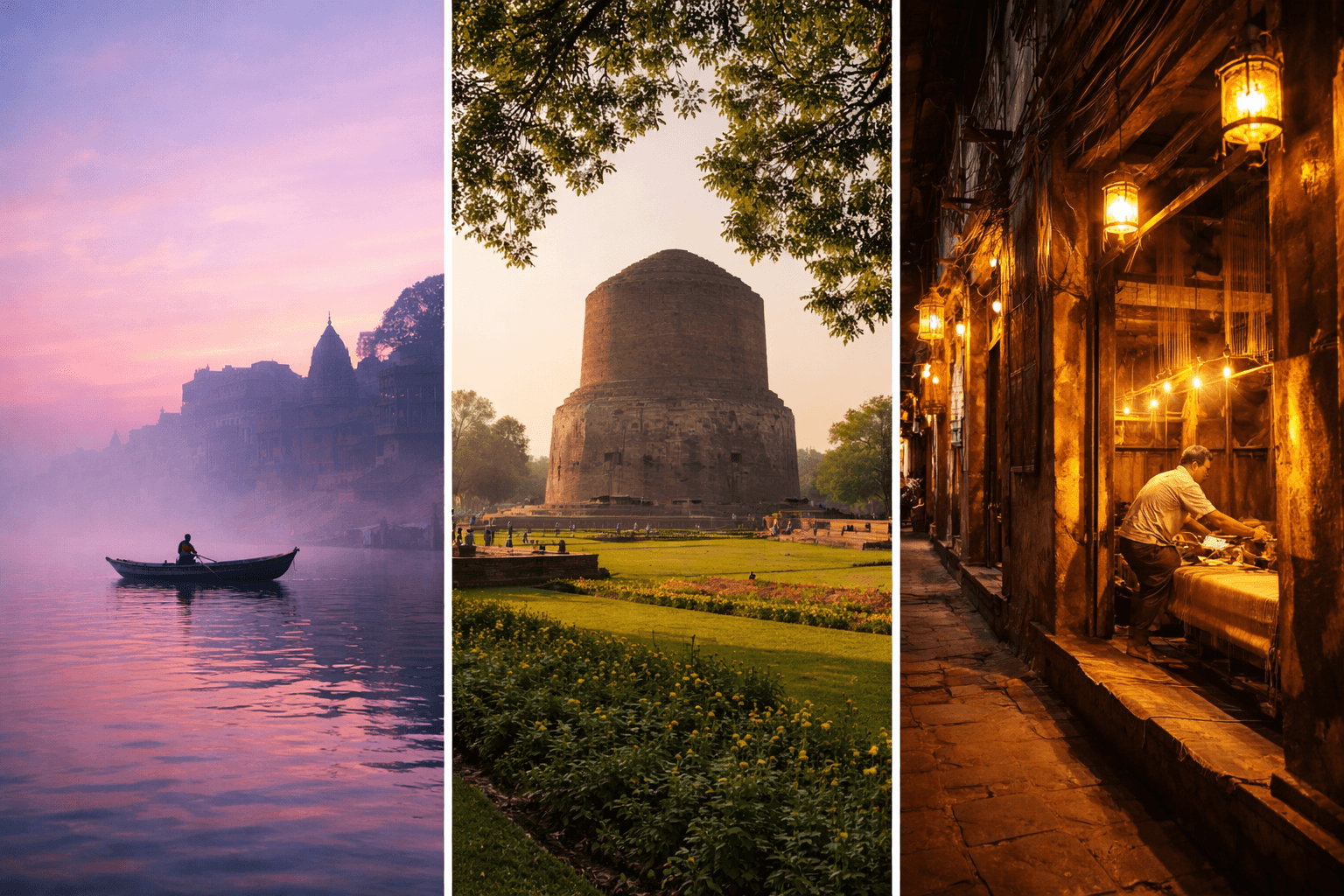
You're planning a trip to Varanasi. You've seen the photos — sunrise over the Ganges, fire rising during the aarti, those impossibly narrow lanes lined with silk shops and chai stalls. You know you want to go. But every time you sit down to actually plan it, the same question comes up: how do you fit it all into three days?
Most varanasi 3 day itinerary guides online either pack every hour so tight you'll need a vacation from your vacation, or they're so vague you'll end up wandering aimlessly. I've done both. The first time, I tried to see everything and saw nothing properly. The second time, I slowed down, figured out the rhythm of the city, and came home feeling like I'd actually been somewhere.
This itinerary is built on that second trip. It's realistic. It gives you space to breathe. And it covers the things that make Varanasi feel like no other city on earth — without burning you out by Day 2.
Is 3 Days Enough for Varanasi?
Three days is the sweet spot. I'll explain why.
One day in Varanasi gives you the highlights — the boat ride, the aarti, a quick walk through the lanes. It works, but it feels like watching a trailer instead of the movie. A week would let you go deep into the music, the weaving traditions, the philosophy. But most people don't have a week.
Three days gives you something neither one nor seven can: layers. Day 1 shows you the spiritual Varanasi everyone talks about. Day 2 takes you outside the old city to Sarnath and into the markets. Day 3 is the one most travelers miss — the quiet ghats, the artisan workshops, the street food trail, the moments where the city stops performing for tourists and just exists.
In three days you can comfortably cover: two boat rides (sunrise and sunset), Kashi Vishwanath Temple, the Ganga Aarti, Sarnath, the major and minor ghats, markets, street food, a silk workshop, and still have time to sit with a chai and just watch the river. That's not a checklist. That's an experience.
Quick Planning Tips for Your Varanasi Trip Plan
Before we get into the day-by-day varanasi trip plan 3 days breakdown, here are the practical things you need to sort first:
- Best months to visit: October to March. November to February is ideal — cool mornings, warm afternoons, and the seasonal malaiyo sweet. Avoid May–June (extreme heat) and peak monsoon.
- Where to stay: Between Assi Ghat and Dashashwamedh Ghat. This puts you within walking distance of everything. Godowlia is a good compromise between ghat access and road connectivity. Avoid hotels near the railway station — they're far from the ghats.
- Getting around: Walk within the old city (autos can't enter the narrow lanes). Auto-rickshaws for Sarnath and longer distances. Ola/Uber exist but can be unreliable near ghats. Negotiate auto fares upfront.
- Temple timings: Kashi Vishwanath opens at 4 AM. Best to visit between 8–10 AM to avoid the worst crowds. Afternoon queues (12–3 PM) are longest. No phones, bags, or electronics allowed inside — use lockers at the entrance (₹10–20).
- Ganga Aarti: Every evening at Dashashwamedh Ghat starting around 6:45 PM. Arrive 45 minutes early for a good spot. It's non-negotiable — don't skip this.
- Carry cash: Many ghat-side vendors and auto drivers don't accept UPI reliably. ₹100 and ₹500 notes are your best friends.
Varanasi 3 Day Itinerary — Overview
Here's how the three days are structured. Each day has a different focus so you're not repeating experiences or exhausting yourself doing the same kind of thing for 72 hours.
| Day | Focus | Highlights |
|---|---|---|
| Day 1 | Spiritual Varanasi | Sunrise boat ride, ghats walk, Kashi Vishwanath, old city lanes, Ganga Aarti |
| Day 2 | History & Culture | Assi Ghat morning, Sarnath, rooftop lunch, silk markets, ghat sunset |
| Day 3 | Hidden Corners | Temple visits, lesser-known ghats, silk workshop, street food walk, sunset boat ride |
Day 1 — Sunrise Ghats & Spiritual Varanasi
This is the day that hooks you. The one where Varanasi stops being a destination on your list and becomes a feeling in your chest.
Sunrise Boat Ride on the Ganges (5:30 AM – 7:00 AM)
Your varanasi 3 day itinerary starts in the dark. Walk down to Assi Ghat or Dashashwamedh Ghat by 5:30 AM. The air is cool. The ghats are quiet except for a few sadhus and early bathers. Board a boat and push off.
For the next 90 minutes, you'll drift northward along the riverfront. The sky goes from grey to pink to gold. Morning rituals begin on the steps. Smoke rises from the cremation ghats at Manikarnika. Temple bells echo off the water. There's nothing else in India that sounds quite like this.
Shared boats: ₹100–150 per person. Private: ₹300–500. Book the evening before if you can.
Walk Along the Ghats (7:00 AM – 9:00 AM)
Back on land, walk the ghats southward. This morning stretch is when the riverfront is at its most alive and least crowded. You'll pass three of the most important ghats:
- Dashashwamedh Ghat — the main ghat and the nerve centre of Varanasi's river life. It'll be buzzing with morning bathers, flower sellers, and priests.
- Manikarnika Ghat — the primary cremation ghat. Watch from a respectful distance. Photography is strictly not allowed here. It's intense but deeply moving.
- Assi Ghat — quieter, more local. Students from BHU, morning yoga sessions, a big Shiva lingam under a peepal tree.
Stop for breakfast along the way — kachori-sabzi and cutting chai from any ghat-side stall. ₹30–40 for a breakfast that'll beat any hotel buffet.
Visit Kashi Vishwanath Temple Area (9:30 AM – 11:00 AM)
Head to Kashi Vishwanath Temple by 9:30 AM. The new Kashi Vishwanath Corridor has transformed access — it's cleaner, wider, and connects directly to the ghats. Leave electronics at your hotel or use lockers at the entrance.
The queue varies: 20 minutes on quiet days, 45+ on festivals. The temple itself is small but the energy is overwhelming. Thousands of people pour their faith into a space the size of a living room. Even if you're not religious, you'll feel something here.
Spend time walking through the corridor after darshan. The restoration work is impressive, and you'll get views of the temple from angles that weren't possible before.
Explore the Old City Lanes (11:00 AM – 1:00 PM)
Now for the part of Varanasi you can't plan — the old city lanes. These galis are tight, chaotic, and wonderful. Google Maps will break. A cow will block your path. You'll smell incense, then sweets, then something unidentifiable, all within 50 metres.
Walk from the temple area toward Dashashwamedh. Duck into Vishwanath Gali for silk shops. Turn a corner and find a 400-year-old shrine. Stop at a chai stall where the owner has been making the same cup for 30 years. This isn't sightseeing. This is just being in Varanasi.
After lunch (Varanasi Cafe or any busy local dhaba near the ghats), rest at your hotel. You'll need energy for the evening.
Evening Ganga Aarti at Dashashwamedh Ghat (5:45 PM – 7:30 PM)
The climax of Day 1. Reach Dashashwamedh Ghat by 5:45 PM. The aarti starts around 6:45 PM but you want a good spot on the steps facing the priests.
Seven priests perform in perfect synchronization — swinging multi-tiered brass lamps, conch shells echoing, incense smoke rising into the darkening sky. The crowd is dense, emotional, and completely absorbed. It lasts about 45 minutes.
Stay for the floating diyas afterward. Small leaf boats with candles are released onto the river. The Ganges becomes a field of tiny lights drifting into the dark. It's the kind of image that stays with you for years.
Day 2 — History & Culture
Day 2 takes you outside the ghat bubble. You've felt Varanasi's spiritual pulse. Now you'll see its history, its markets, and its quieter side.
Morning Yoga or Walk at Assi Ghat (6:00 AM – 7:30 AM)
Start slower today. Skip the boat and walk to Assi Ghat instead. The vibe here is different from Dashashwamedh — more local, less performative. You'll find yoga sessions happening on the steps, students reading, and the Subah-e-Banaras cultural program on select mornings.
Sit with a chai. Watch the river. Give yourself an hour of no agenda. After yesterday's sensory overload, this is the reset you need.
Visit Sarnath (9:00 AM – 12:00 PM)
After breakfast, take an auto to Sarnath (30 minutes, ₹150–200 one way). This is where Buddha gave his first sermon after attaining enlightenment — and it's shockingly different from the chaos of old Varanasi.
The Dhamek Stupa is the centerpiece. A massive cylindrical stone structure rising from a quiet green lawn. It's 1,500 years old and it radiates calm. You instinctively lower your voice here. Walk around it slowly. There's a Tibetan monastery nearby that's also worth a visit.
The Archaeological Museum (₹25 entry) houses the original Ashoka Pillar capital — the four-lion emblem that became India's national symbol. Seeing it in person feels different than seeing it on a coin or a passport.
Allow 2–2.5 hours including travel. The museum closes at 5 PM but mornings are quieter.
Lunch at a Local Rooftop Cafe (12:30 PM – 2:00 PM)
Back in the city, find a rooftop cafe overlooking the river. There are several near Meer Ghat and Munshi Ghat. Order a thali or whatever looks good. The food is secondary — the view is the main course. The Ganges stretching out in front of you, boats moving lazily below, the distant sound of temple bells.
Rest here for a while. Read. Write in a journal. Varanasi rewards slowness.
Banarasi Silk & Local Markets (3:00 PM – 5:30 PM)
The afternoon is for shopping. Head to Vishwanath Gali for silk sarees, dupattas, and scarves. Godowlia Market for general souvenirs and street shopping. Thatheri Bazaar for brass items.
A few quick tips: bargain (start at 40–50% of quoted price), ask if silk is pure or blended, and don't buy from shops right at the tourist hotspots — walk one lane inland for the same items at 30% less. Carry cash.
If you're doing serious saree shopping, budget 2–3 hours. For casual browsing and souvenirs, 90 minutes is enough.
Sunset at the Ghats (5:30 PM – 7:00 PM)
End Day 2 at the ghats. But don't go to Dashashwamedh again — you've done that. Instead, find a quieter ghat. Munshi Ghat, Meer Ghat, or Narad Ghat. Sit on the steps. Watch the sun go down. No aarti, no performance, no crowd. Just the river turning gold and then dark. This is the other Varanasi — the one that exists when no one's watching.
Day 3 — Hidden Corners & Slow Varanasi
This is the day most travelers skip because they leave too early. Don't. Day 3 is where Varanasi shows you its real self.
Morning Temple Visits (6:30 AM – 8:30 AM)
Start with temples you haven't seen yet. The Vishwanath Temple inside BHU campus is stunning and far less crowded than the main Kashi Vishwanath. Sankat Mochan Temple (the Hanuman temple) is another favourite — it's set in a quiet lane and the morning aarti here is intimate and beautiful.
Tulsi Manas Temple, with its walls inscribed with verses from the Ramcharitmanas, is worth a visit if Hindu literature interests you.
Explore Lesser-Known Ghats (8:30 AM – 10:30 AM)
Now walk the ghats everyone ignores. These are the ones that feel like Varanasi before the guidebooks found it:
- Kedar Ghat — colourful, South Indian influenced, with a Shiva temple right on the steps. It's one of the most photogenic ghats and almost never crowded.
- Tulsi Ghat — named after the poet Tulsidas. Quiet, literary, with old havelis overlooking the river. The kind of place where you sit down for five minutes and stay for an hour.
- Chet Singh Ghat — has an old fort and a sense of history that the main ghats have traded for tourist infrastructure.
These ghats are where you'll get your best photos, your quietest moments, and your best conversations with locals who aren't trying to sell you a boat ride.
Visit a Banarasi Silk Weaving Workshop (11:00 AM – 12:30 PM)
This is something most tourists don't even know is possible. Several weaving families in the old city open their workshops to visitors. You'll see a traditional handloom in action — the weaver sitting cross-legged, working with gold zari thread, creating patterns that take weeks to complete. A single saree can involve 5,000–7,000 threads.
Ask your hotel to connect you with a workshop. There are a few near the Alaipura area and behind Madanpura. Some are informal — a room in someone's house with a loom in the corner. Those are usually the most interesting.
No entry fee typically, but buying something (even a small scarf) is a respectful gesture.
Street Food Walk (1:00 PM – 3:00 PM)
Day 3 lunch is not a sit-down affair. It's a walking meal through the best street food in the city.
- Kachori-sabzi — start with the classic. The kachori stalls near Dashashwamedh serve thick, crispy shells stuffed with spiced dal or potato. Paired with a bowl of aloo sabzi, it's a meal for ₹30.
- Blue Lassi Shop — legendary. Saffron or mango lassi in a clay cup. The shop is tiny, the line is short, the taste is unforgettable.
- Tamatar chaat — Varanasi's signature chaat. Tangy, spicy tomato base with crispy bits. You won't find this anywhere else in India.
- Malaiyo — if you're visiting between November and February, this saffron milk foam in a clay bowl is worth planning your trip around.
- Banarasi paan — end with the sweet meetha paan. Even non-paan people love this version.
Budget ₹200–300 for the full trail. Your stomach will be full and your heart fuller.
Final Evening Boat Ride (5:00 PM – 6:30 PM)
Your trip started on the river. It should end on the river. Take a sunset boat ride this time — the light is different, warmer, more nostalgic. The ghats glow orange. The sound of evening prayers starts drifting across the water.
You've walked these ghats for three days now. You've seen the sunrise and the aarti, the temples and the lanes, the hidden corners and the famous ones. From the boat, it all looks different. Smaller. More unified. Like one long, ancient painting that you were standing inside this whole time.
This is the moment where your trip becomes a memory. Sit quietly. Let the boatman row. Let Varanasi say goodbye in its own way.
Pro Tips for Visiting Varanasi
Pro tips
- Wake up before sunrise on at least two mornings. The pre-dawn ghats are Varanasi at its most honest. If you sleep in every day, you'll miss the best part.
- Wear simple, modest clothing for temples. No shorts, no sleeveless tops. Slip-on shoes work best since you'll be removing them constantly.
- Respect the cremation ghats. No photography at Manikarnika or Harishchandra. Watch from a respectful distance, preferably from a boat.
- Carry small cash. ₹10, ₹20, ₹100 notes. Many ghat-side vendors, auto drivers, and small temples don't accept digital payments.
- Take time to wander with no plan. Schedule gaps in your itinerary. The best Varanasi moments are unplanned — a conversation at a chai stall, a sudden view from a rooftop, music from an open window.
- Stay hydrated. Even in winter, the sun near the river can be strong. Carry water.
Common Mistakes Travelers Make
- Trying to see too much in one day. Varanasi isn't a checklist city. If you're exhausted by noon, you won't enjoy the aarti in the evening. Pace yourself.
- Skipping sunrise. I've said it before but it bears repeating. The sunrise boat ride isn't optional. It's the entire point.
- Ignoring Sarnath. It's only 30 minutes away and gives you a completely different dimension of the region's history. Don't skip it because it's "not Varanasi proper."
- Not exploring the smaller ghats. Kedar, Tulsi, Chet Singh — these are where the real Varanasi lives. Don't spend all three days at Dashashwamedh.
- Leaving before Day 3. Day 3 is when Varanasi stops being a tourist destination and starts being a place you've actually experienced. The hidden ghats, the workshop visit, the street food walk — these are what separate a good trip from an unforgettable one.
Suggested Map Route for a 3-Day Trip
Here's how the geography works so you're not zigzagging across the city:
Day 1 stays entirely within the old city and ghat area. Your boat ride goes Assi to Manikarnika (south to north). Walking back down covers the ghats. Kashi Vishwanath is right behind Dashashwamedh — a 10-minute lane walk. The old city exploration and evening aarti are all in the same zone.
Day 2 starts at Assi Ghat (south end), then moves to Sarnath (10 km northeast — 30 min by auto). You return to the old city for lunch, markets, and sunset. This is the only day with significant auto travel.
Day 3 goes south for temples (BHU area and Sankat Mochan), then back to the ghat stretch for the lesser-known ghats between Assi and Dashashwamedh, then into the old city for the workshop and food walk. The final boat ride ends wherever the boatman takes you.
The key insight: except for Sarnath, almost everything in this what to see in varanasi in 3 days guide is within a 3 km stretch along the river. That's walkable. That's human-paced. That's what makes this itinerary feel relaxed instead of frantic.
Frequently Asked Questions
Is 3 days enough for Varanasi?
Yes — it's the sweet spot. You get the spiritual core on Day 1, history and markets on Day 2, and hidden corners on Day 3. Enough time to go beyond the highlights without rushing.
What should I not miss in Varanasi?
The sunrise boat ride, evening Ganga Aarti, and the old city lane walk. If you have 3 days, add Sarnath, the street food trail, and a morning at the quieter ghats like Kedar and Tulsi.
What to see in Varanasi in 3 days?
Sunrise/sunset boat rides, Kashi Vishwanath Temple, Ganga Aarti, Sarnath, old city lanes, Vishwanath Gali markets, lesser-known ghats (Kedar, Tulsi), a silk weaving workshop, the street food trail, and rooftop sunsets.
When is the best time to visit Varanasi?
October to March. November to February is ideal — cool mornings, pleasant afternoons, and malaiyo season. Avoid May–June when temperatures cross 45°C.
How do you travel between ghats?
Walking. The main stretch (Assi to Manikarnika) is about 3 km along the steps. Auto-rickshaws for Sarnath or longer distances. Boats are also an option for ghat-to-ghat travel.
Is Varanasi safe for tourists?
Generally yes, including for solo travelers. The ghat areas are busy and well-populated. Standard precautions — secure valuables, negotiate auto fares upfront, avoid isolated spots at night.
Where should I stay for a 3-day trip?
Between Assi Ghat and Dashashwamedh Ghat. Walking distance to everything. Godowlia is a good backup with better road access.
Three Days Is How Varanasi Becomes Yours
One day in Varanasi gives you a glimpse. Two days gives you the highlights. But three days? Three days gives you the version of the city that most people never see. The quiet ghats. The weaver's loom. The street food stall that doesn't have a Google rating. The sunset from a rooftop where no one else is sitting.
This varanasi 3 day itinerary isn't about seeing everything. It's about seeing enough to feel something real. To walk slowly enough that the city trusts you with its quieter moments. To leave with stories that didn't come from a guidebook.
Varanasi doesn't care how many days you give it. But if you give it three, it'll give you something back that you weren't expecting. And that's the best kind of travel there is.
If this itinerary helped you plan your trip, there's more on Pinaak - Travelogue Platform — day-by-day guides and travel stories from people who've actually walked these lanes.
When you're back, share your own Varanasi story so the ghats and lanes don't fade into a camera roll you never open.
Three days in Kashi — spiritual mornings, Sarnath afternoons, and the lanes that only reveal themselves when you stop rushing.
Turn your Varanasi trip into a travelogue
Pinaak helps you capture real trips — photos, notes, and moments — as stories you can share. No writing degree required.

Keep Reading
Is 2 Days Enough in Varanasi? A 2-Day Itinerary
Is 2 days enough in Varanasi? Yes — here's a tested 2-day itinerary covering sunrise boat rides, Kashi Vishwanath, Sarnath, Ganga Aarti & hidden gems.
Varanasi in 1 Day: Complete Itinerary with Timings
Plan your Varanasi in 1 day trip with this complete itinerary — sunrise boat ride, Kashi Vishwanath, street food, Sarnath, and Ganga Aarti with exact timings.