

No Iron, No Steel, and Built to Outlive Us
Shree Ramjanmbhumi Temple Ayodhya, Ayodhya, India
There is no structural steel anywhere in this building, and that was a deliberate thousand-year decision.
•The Temple superstructure itself — be precise about that distinction. The stone blocks are interlocked, and copper is used where binding is needed.
•The reasoning is straightforward: iron rusts and expands, and expanding metal cracks stone over centuries. Copper does not behave that way.
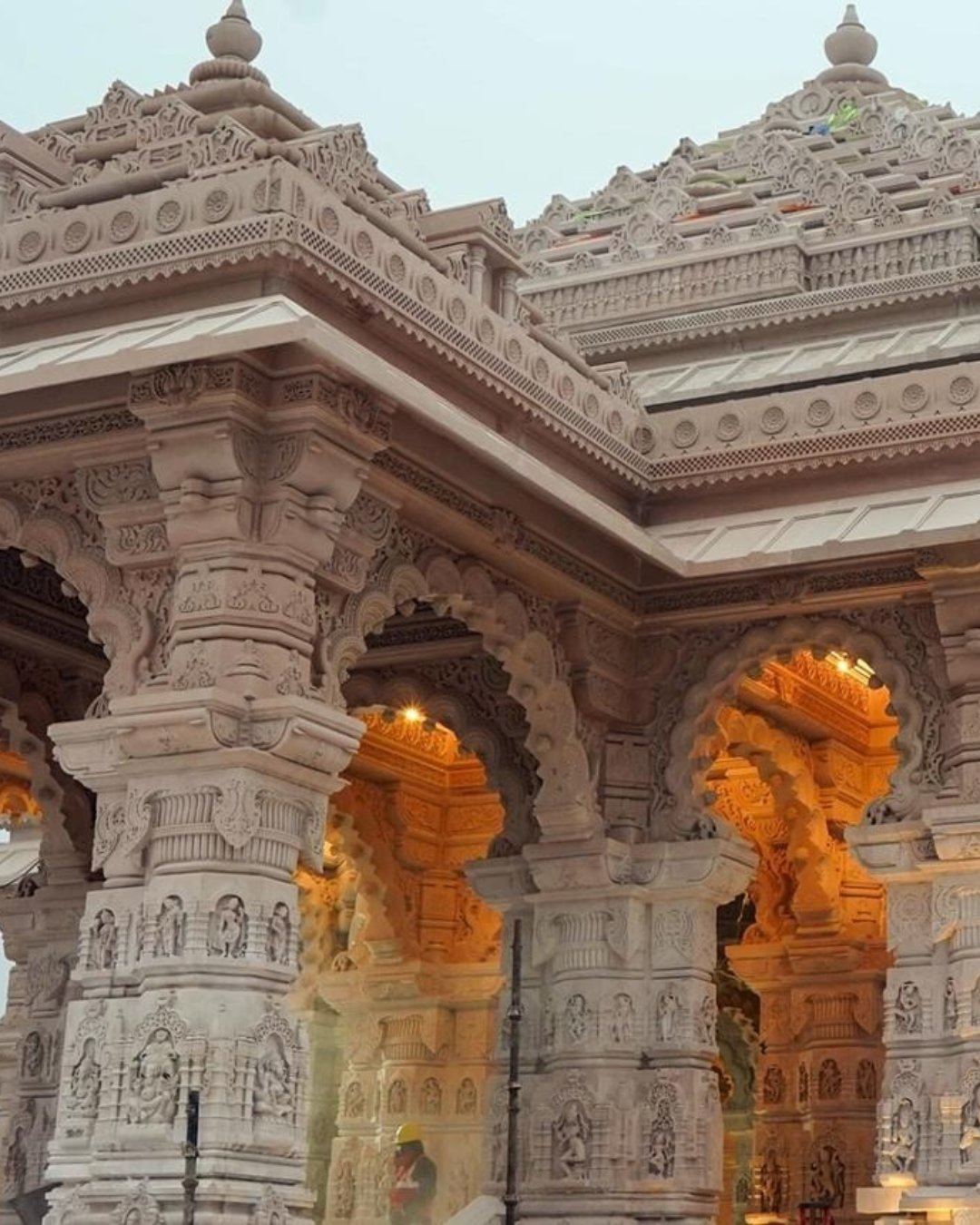
•The stone is Bansi Paharpur pink sandstone from Rajasthan, with Makrana marble in the sanctum.
•The construction method is the one used for temples intended to stand for a millennium rather than a lifetime.
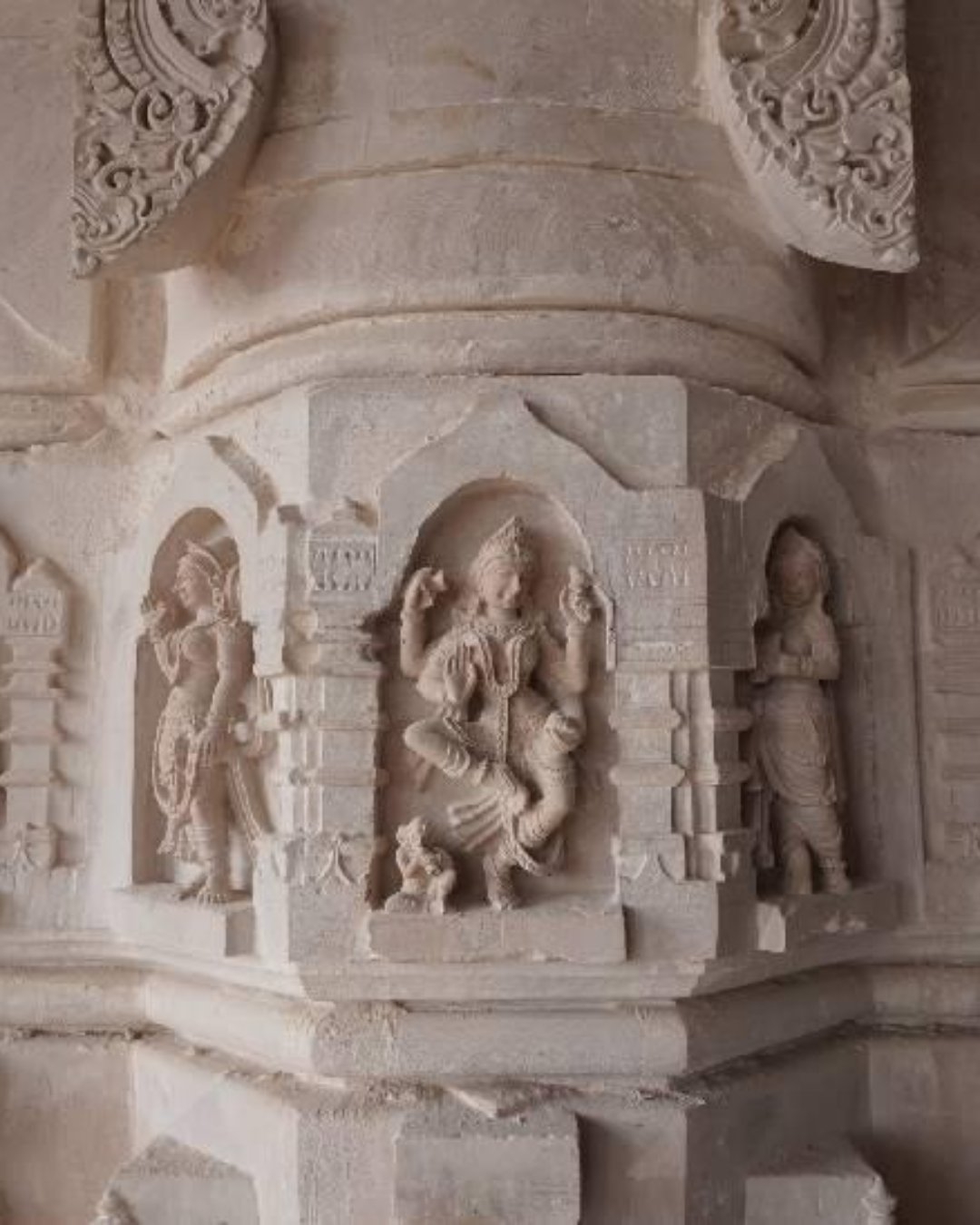
•The pillars and walls carry sculpted figures throughout, which is why the interior rewards slowing down even in a moving queue.
• Cement and steel appear in the wider complex works, but not in the
temple superstructure itself.
Pro tip: Look at the joints rather than the carvings. Once you know there is no steel holding any of it together, the way the stone meets is the most impressive thing in the building.
The mistakes that ruin it:
•Repeating the claim loosely as “no cement anywhere” — it applies to the temple superstructure, not every structure on site.
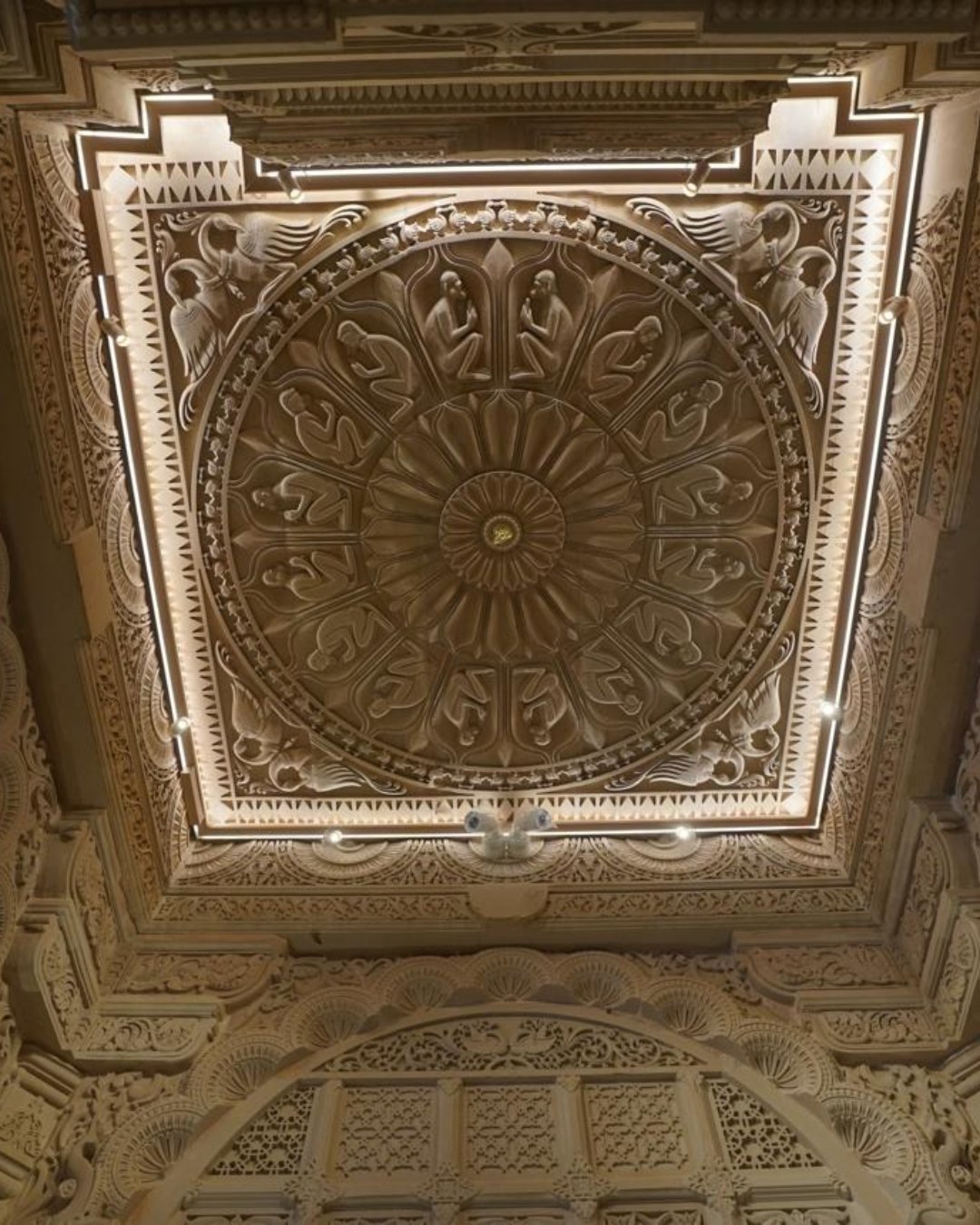
•Walking the queue without looking up at the mandapa ceilings.