
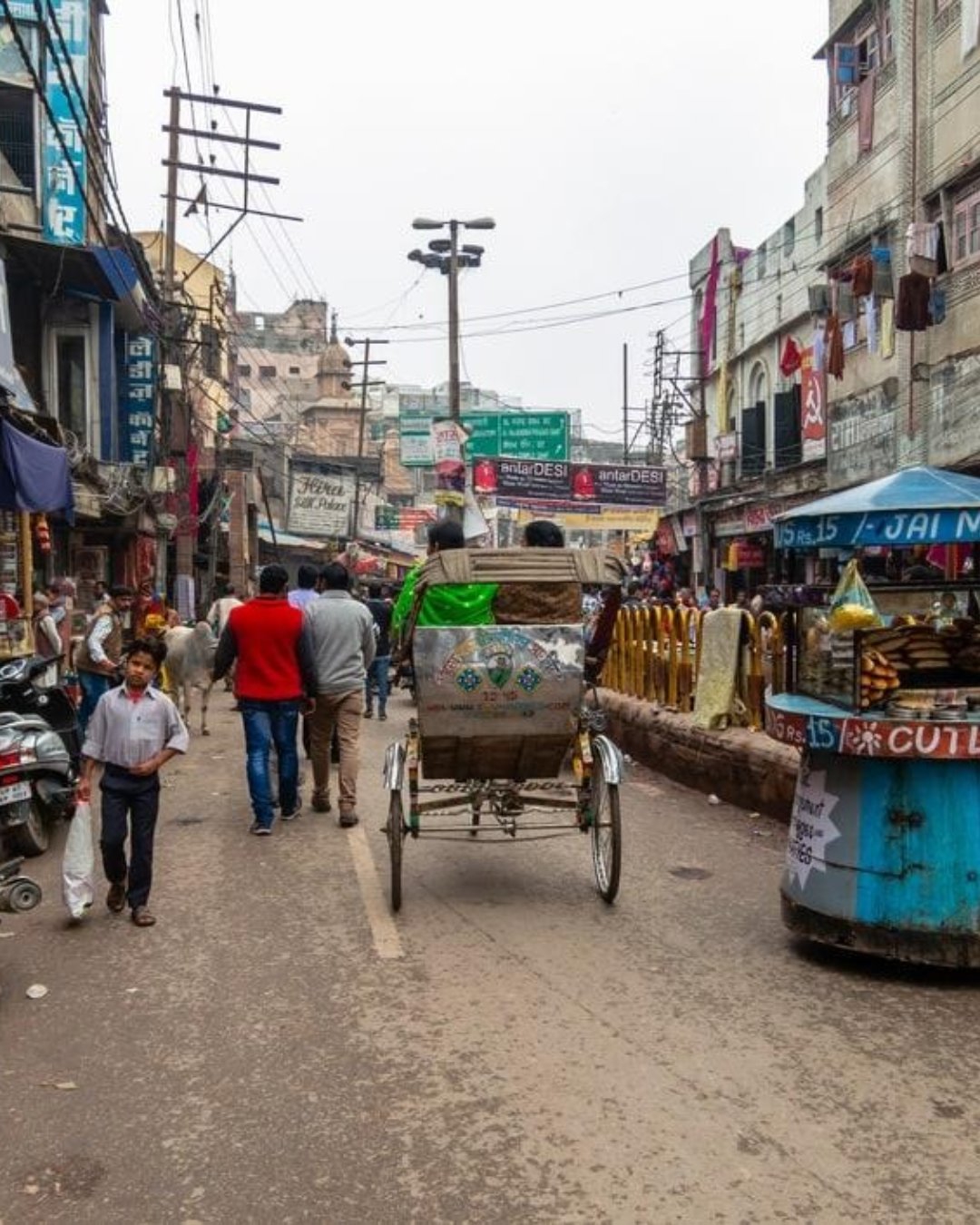
Where the Road Actually Ends
Vishwanath Gali, Varanasi, India
There is a line in this city that wheels do not cross, and nobody tells you where it is until you are standing at it.
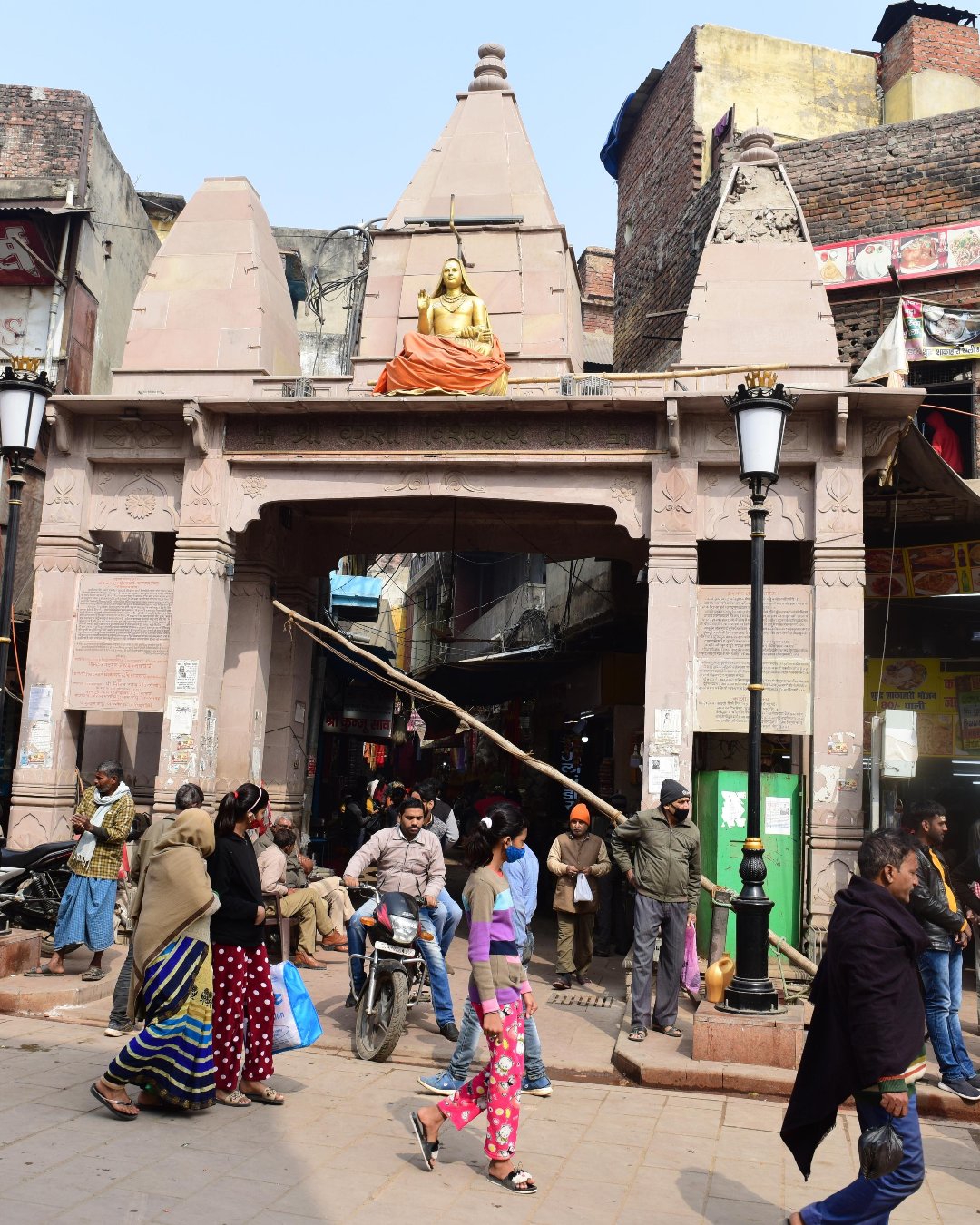
●The stretch running from Maidagin down to Godowlia is a no-vehicle zone for four-wheelers through the daytime and evening hours, and Godowlia itself is where motorised transport effectively stops for anyone heading to the ghats.
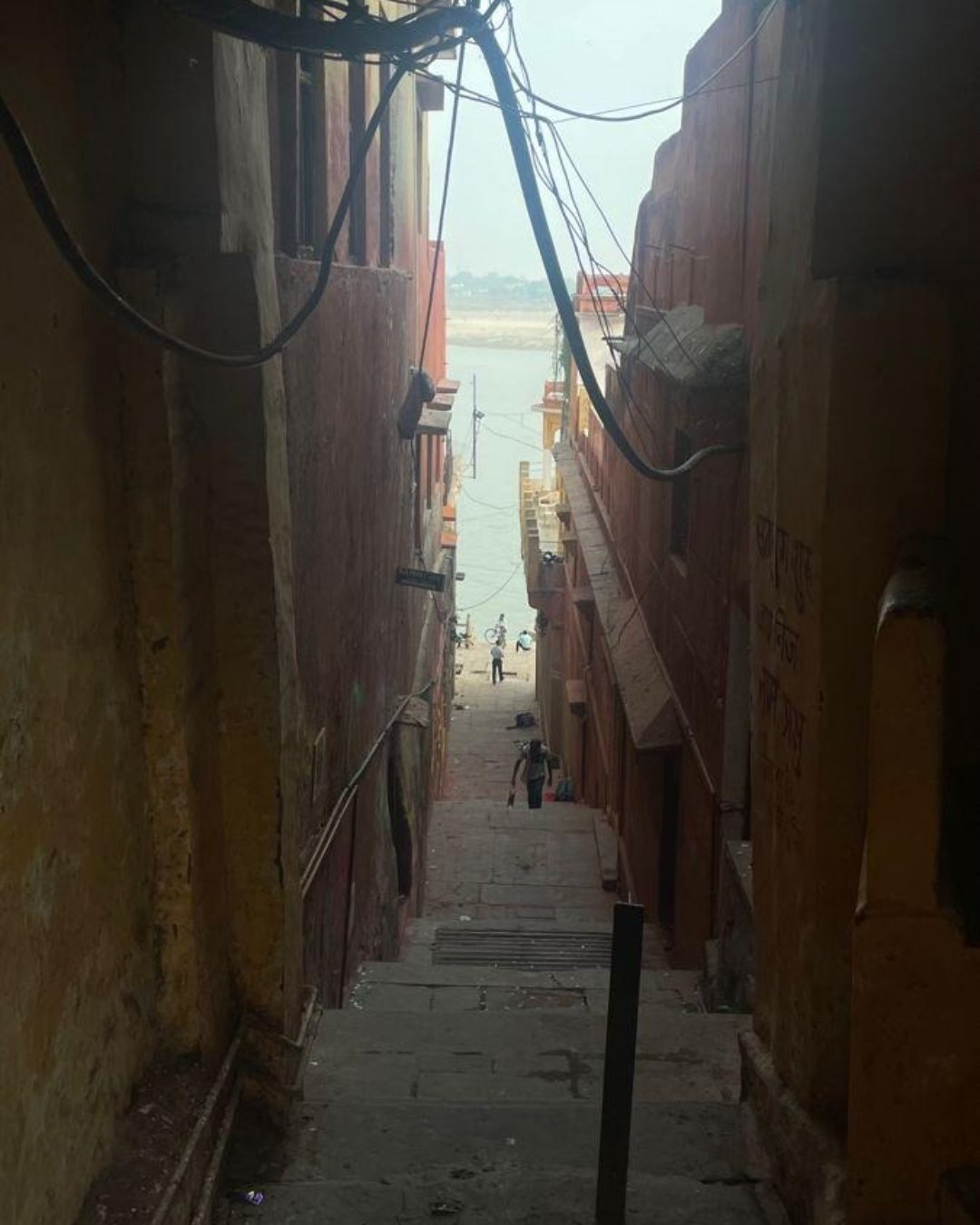
●Beyond that point the old city is lanes — the galis — and they are too narrow for cars, often too narrow for an e-rickshaw, and sometimes barely wide enough for two people and a cow to pass.
●So every arrival at an old-city hotel ends the same way: a vehicle drops you at a junction, and you walk the last stretch. That walk can be two minutes or fifteen, over uneven stone, sometimes down steps.
●This is the single biggest gap between what visitors expect and what happens, and it is where most first-day frustration in Varanasi comes from.
●It also means luggage matters more here than in most Indian cities. A hard four-wheel suitcase on wet gali stone is a genuinely bad time.
●The upside is real: the reason the lanes are quiet, walkable and intact is precisely because the cars cannot get in.
Pro tip: Travel with a bag you can carry, not one you can only wheel. If you are coming with heavy luggage, arrange a porter through the hotel in advance rather than negotiating one at the junction with your bags on the ground.
The mistakes that ruin it:
●Booking a car to an old-city address and expecting door service.
●Arriving in the evening with heavy bags and no idea where the drop point is.
●Arguing with the driver at the barrier. He is not refusing; he is not permitted.