

What Actually Survives a Week on the Ghats
Assi Ghat, Varanasi, India
Varanasi is hard on equipment in three specific ways, and none of them is theft.
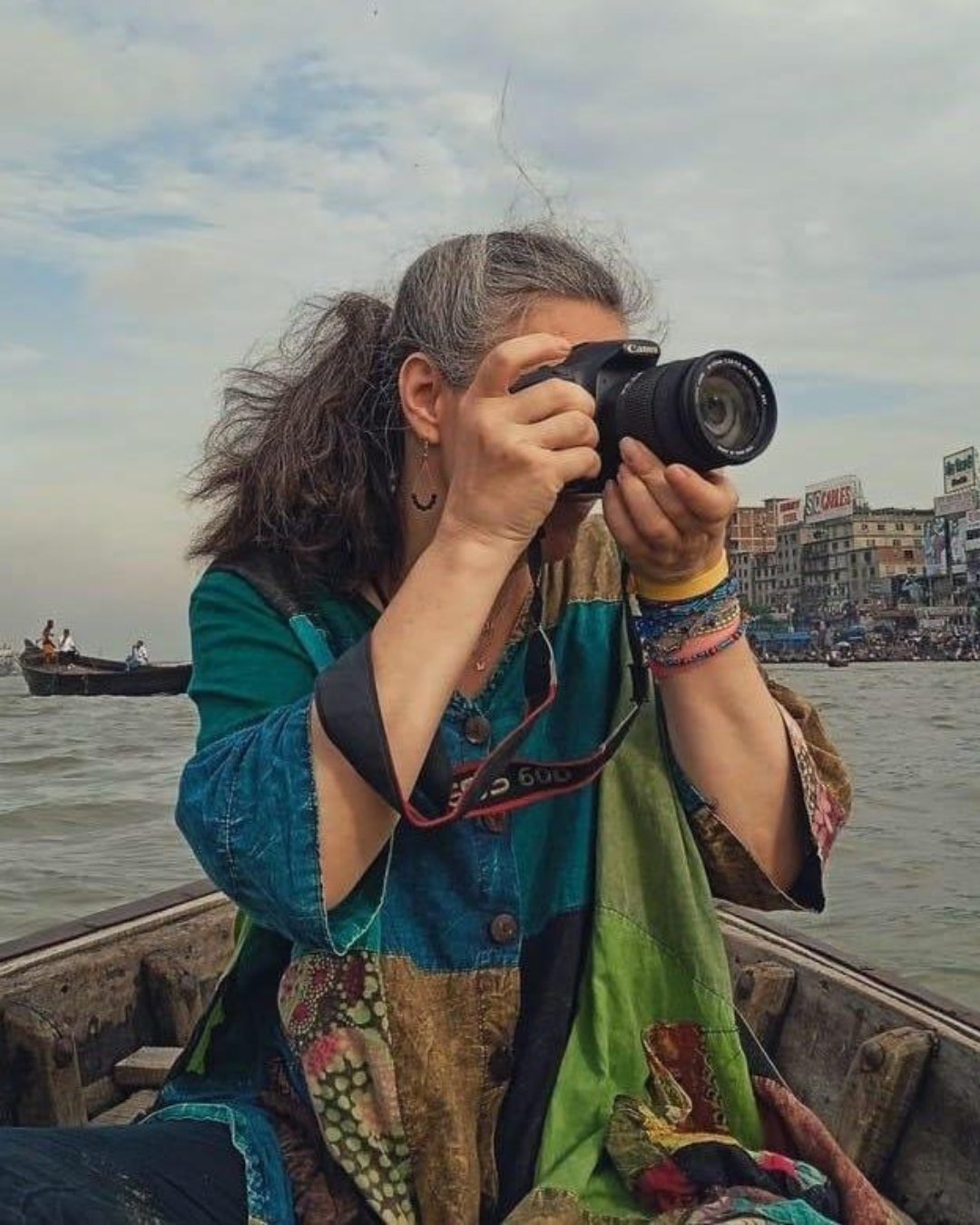
●Dust and ash. Fine grey particulate is in the air all day, especially near the cremation ghats and in the dry season. Change lenses as little as possible; ideally, do not change them outdoors at all. One versatile zoom on a body beats two primes and a sensor full of spots.
●Low light in the galis. The old-city lanes are narrow and roofed with wires and cloth; even at noon they are two or three stops darker than the ghats. A fast prime earns its place here, not on the river.
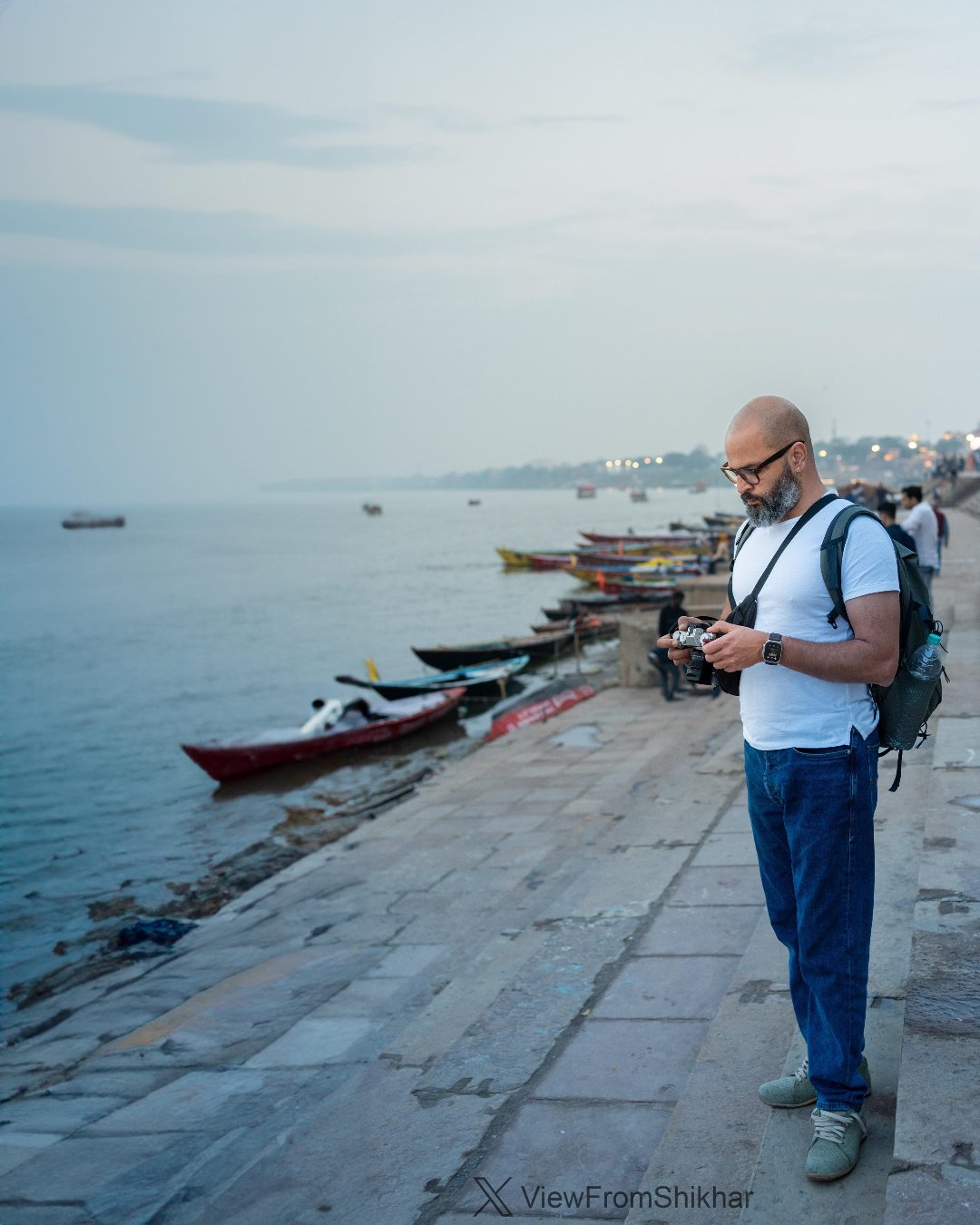
●Weight and access. You will walk five to eight kilometres a day on uneven stone, through crowds, past cows, often in the dark. Anything you have to unzip a bag to reach will not get used. One body, one lens,
strap across the chest.
●Batteries drain faster than you expect in December mornings and you cannot buy your model locally. Two spares, carried warm, in an inside pocket.
●A polariser is worth more than a filter kit — it cuts the haze off the river and puts colour back into the sky. A tripod is worth almost nothing: banned or unwelcome in most temple areas, impossible on crowded
steps, and useless on a rocking boat.
Pro tip: Back up every night. Two copies, two devices. Humidity, dust and a week of stone steps kill more cards in Varanasi than anywhere else on a normal India itinerary.
The mistakes that ruin it:
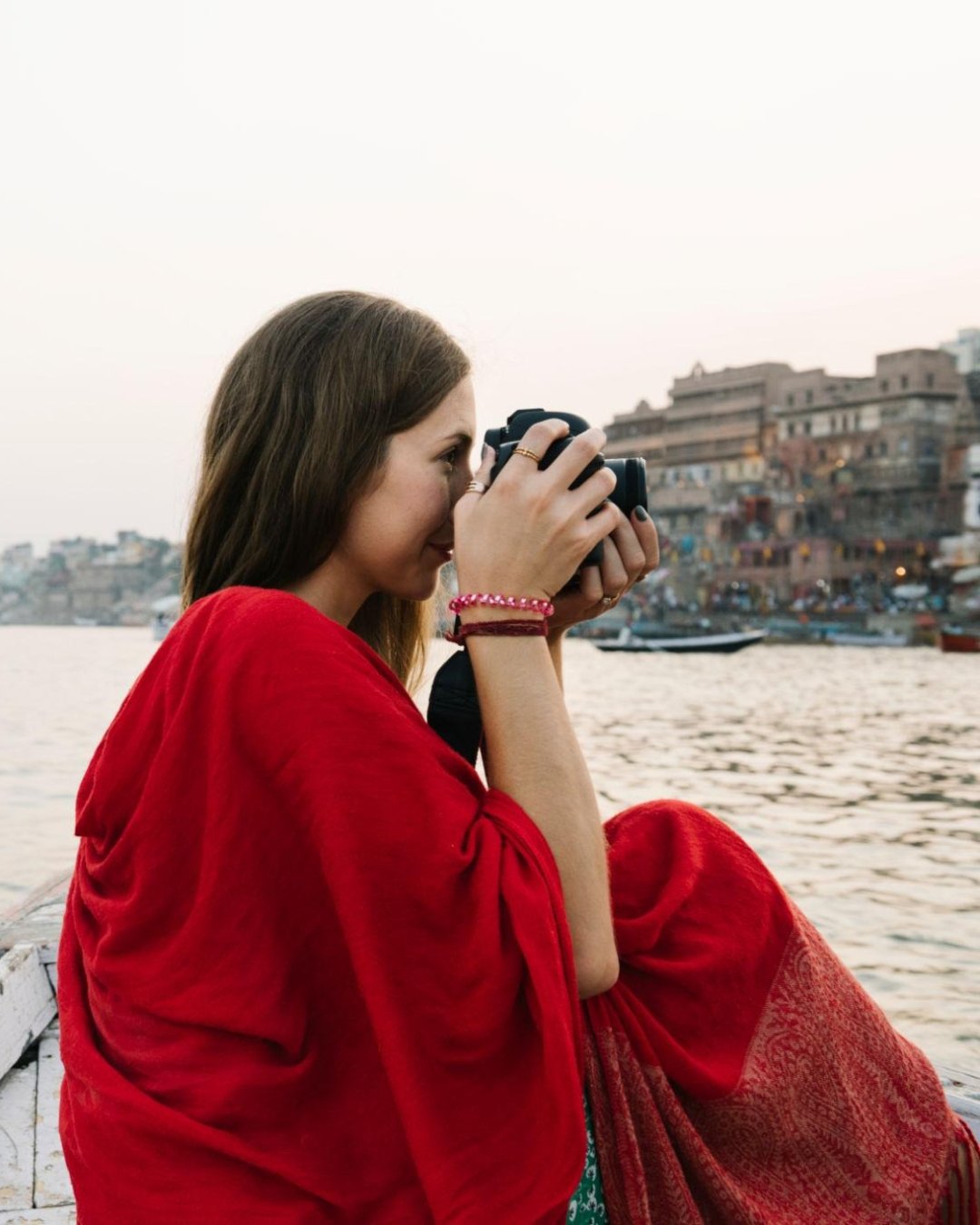
●Bringing the whole kit on the sunrise boat. There is nowhere dry to put it and the boat rocks.
●Wearing an expensive camera strap with a brand name across your chest in the crowded galis. Plain strap, camera in front of you.
●Assuming you can clean a sensor in Varanasi. Bring what you need or shoot around it.