

The Aarti Is Shot From the Same Spot by Four Hundred People
Dashashwamedh Ghat, Varanasi, India
Search the evening aarti and you will find one photograph, taken four hundred thousand times.
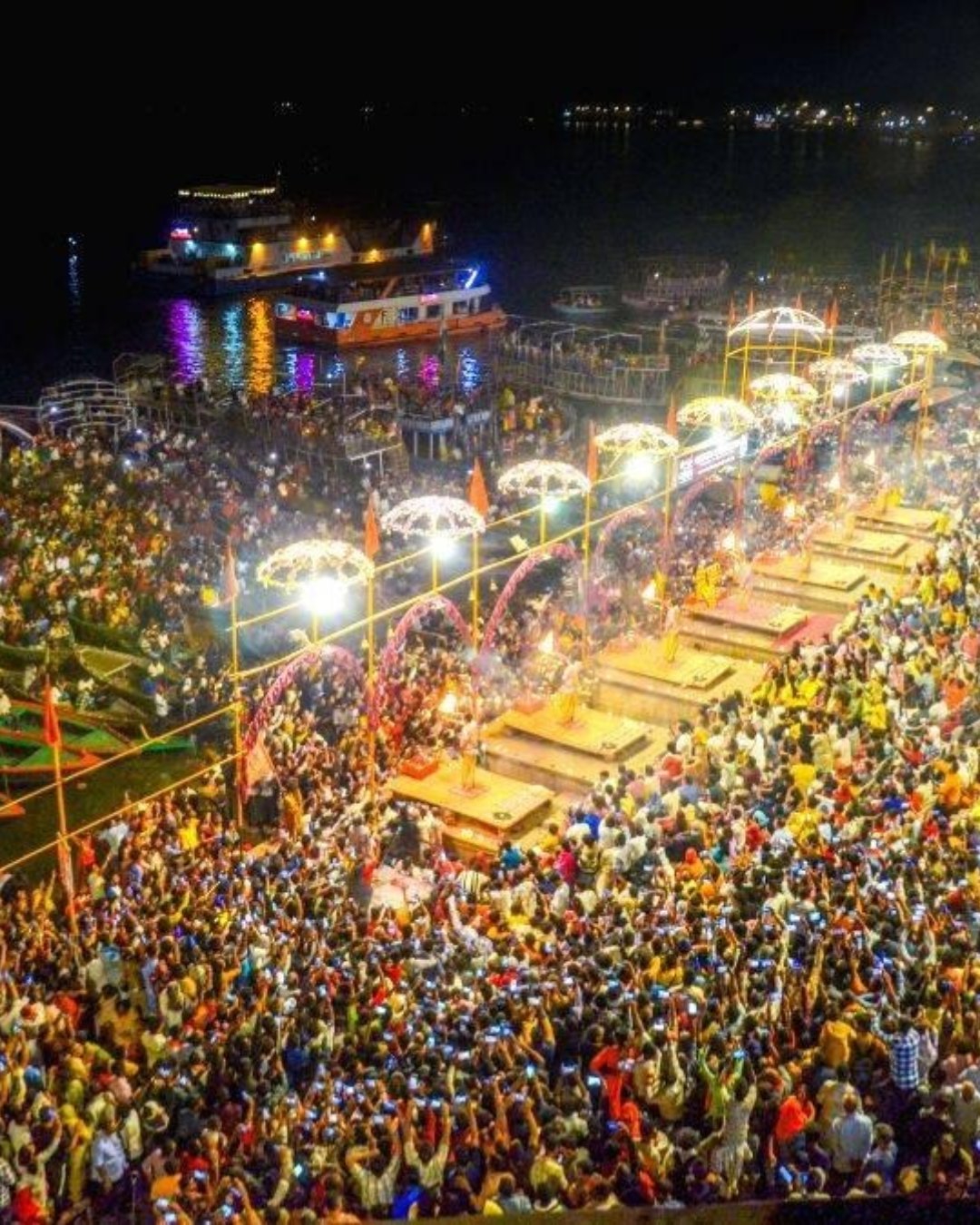
●Front-and-centre on the steps is the worst photographic position and the most contested one. You arrive 90 minutes early, you sit, you cannot move, and you get a frame identical to everyone else's — the priests dead-on, backs of heads in the foreground.
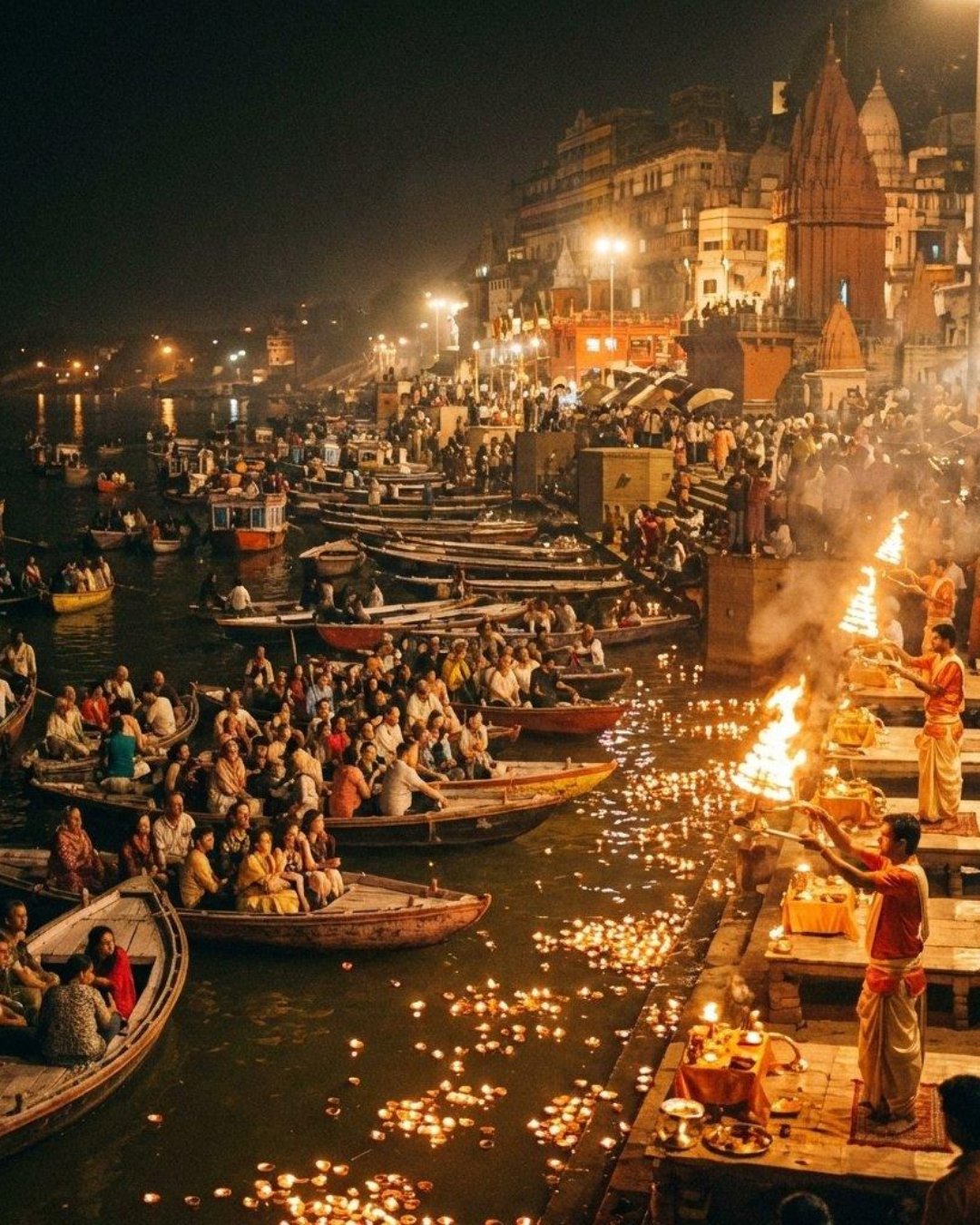
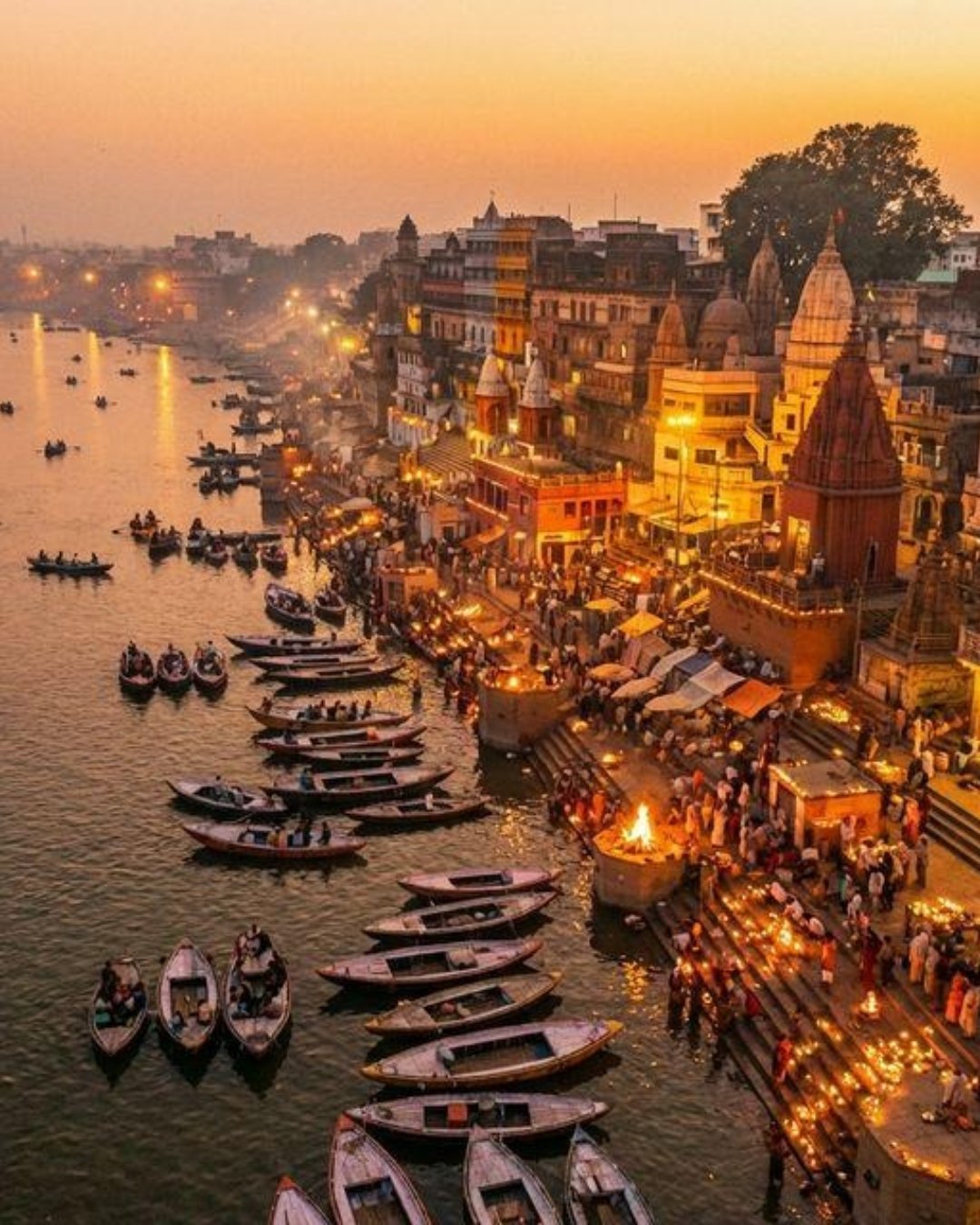
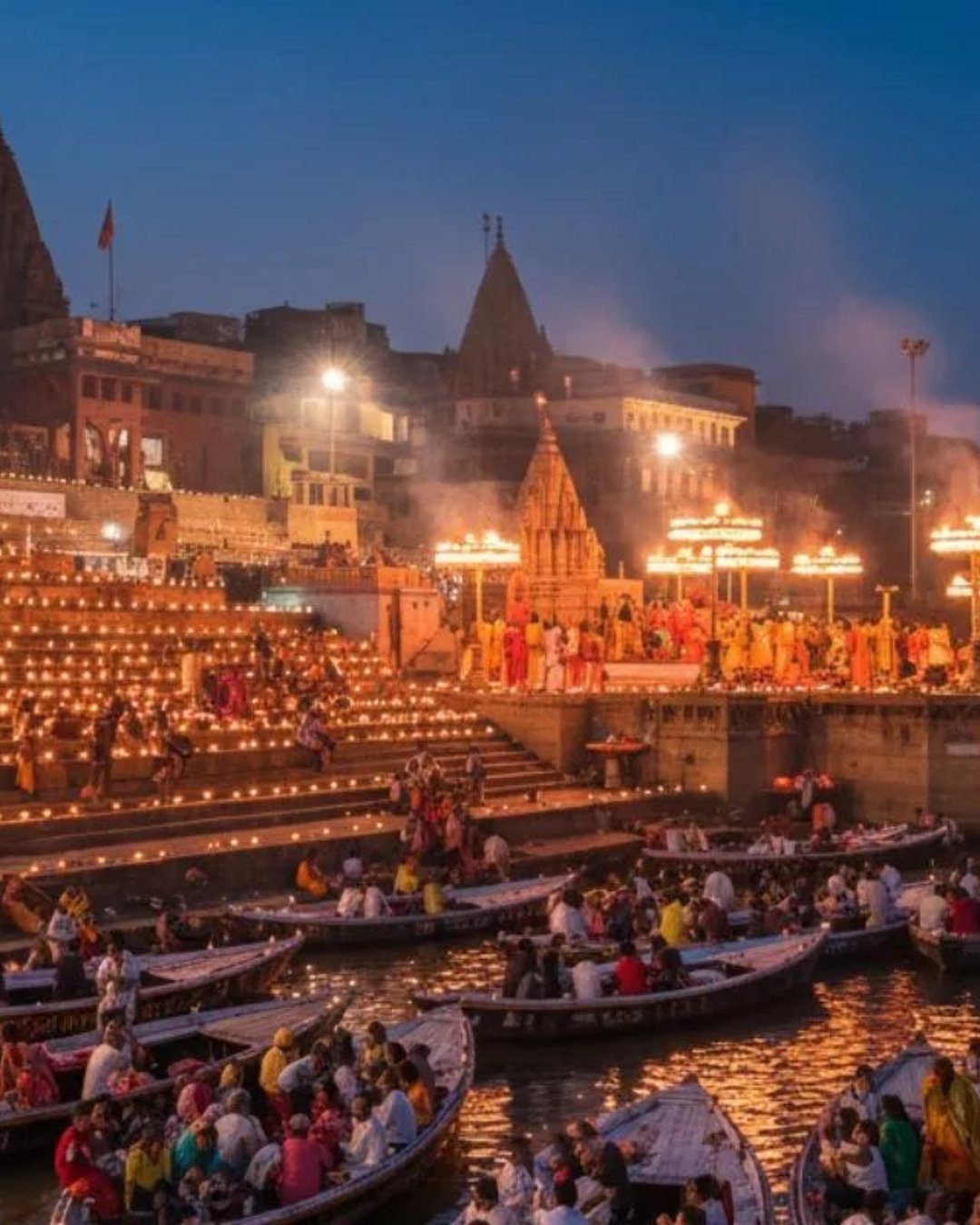
●Three positions produce different pictures. From a boat moored off the ghat you get the whole tiered set with the crowd as a wall of faces and lamps. From the upper terraces or a rooftop behind, you get elevation, the layered geometry of the platforms and the crowd receding. From the side, tight on one priest, you get the fire trails and the actual gesture.
●Exposure is the real problem, not position. Enormous flame against black night. Spot meter on the lit face or the brass lamp and let everything else fall away. Around 1/125s, wide aperture, ISO wherever it needs to go.
●Long exposures of the swinging lamp — 1/8s to 1/4s braced against a railing — turn the aarti into fire calligraphy. This is the frame almost nobody brings back, and it needs no tripod, only a wall.
●The smaller Assi Ghat morning aarti, part of the Subah-e-Banaras programme, has a fraction of the crowd and warm dawn light instead of tungsten and flame. For many photographers it is the better shoot.
Pro tip: Turn the flash off and leave it off. It reaches four metres, kills every bit of the firelight you came for, and marks you instantly as the person ruining the row behind you.
The mistakes that ruin it:
●Shooting the whole 45 minutes. The choreography repeats; work the first ten minutes, then watch.
●Auto ISO with a slow shutter floor. It will pick 1/30s and every lamp becomes a smear.
●Standing up in the seated crowd. You will be asked to sit, correctly.