

Practising on the Ghats
Assi Ghat, Varanasi, India
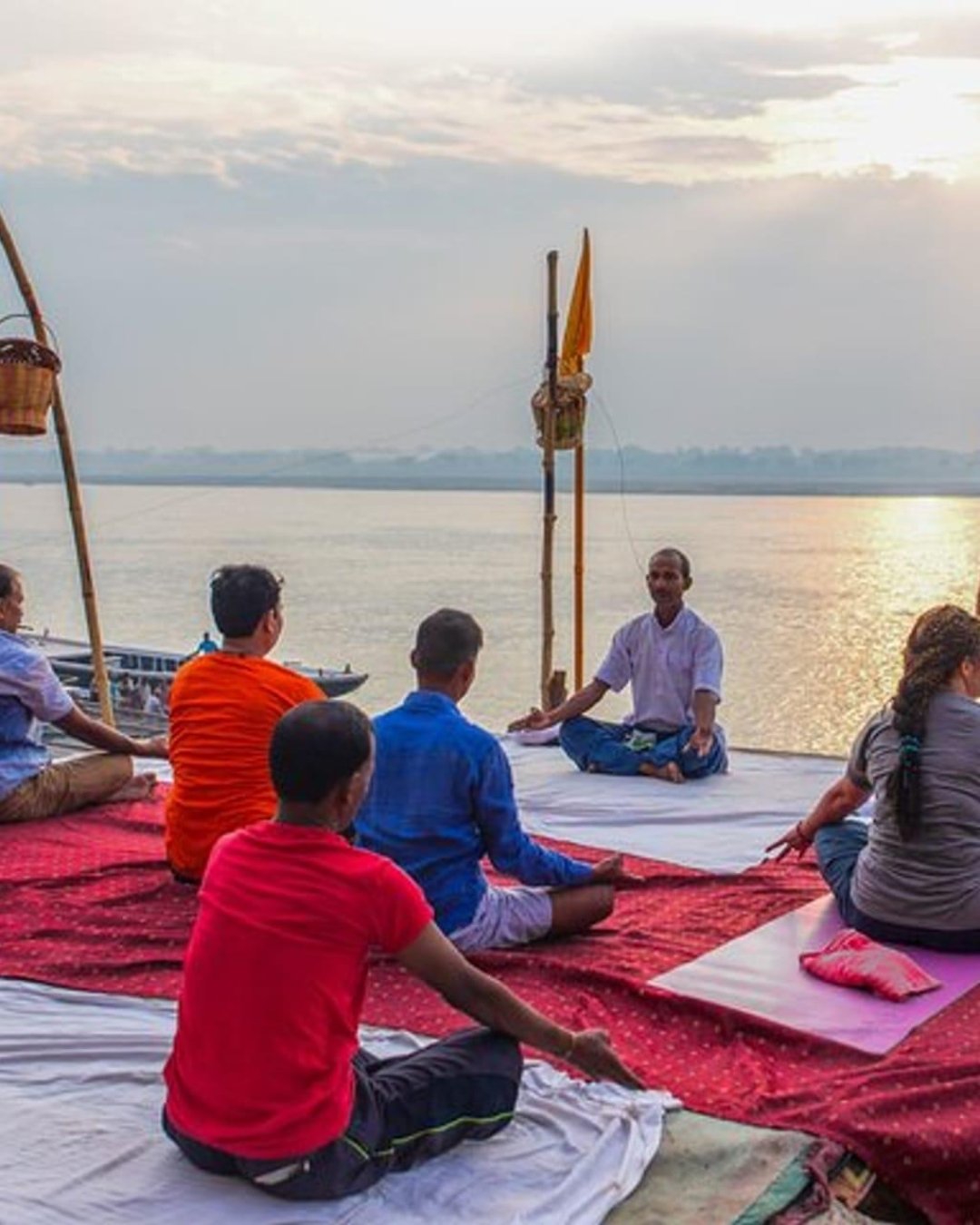
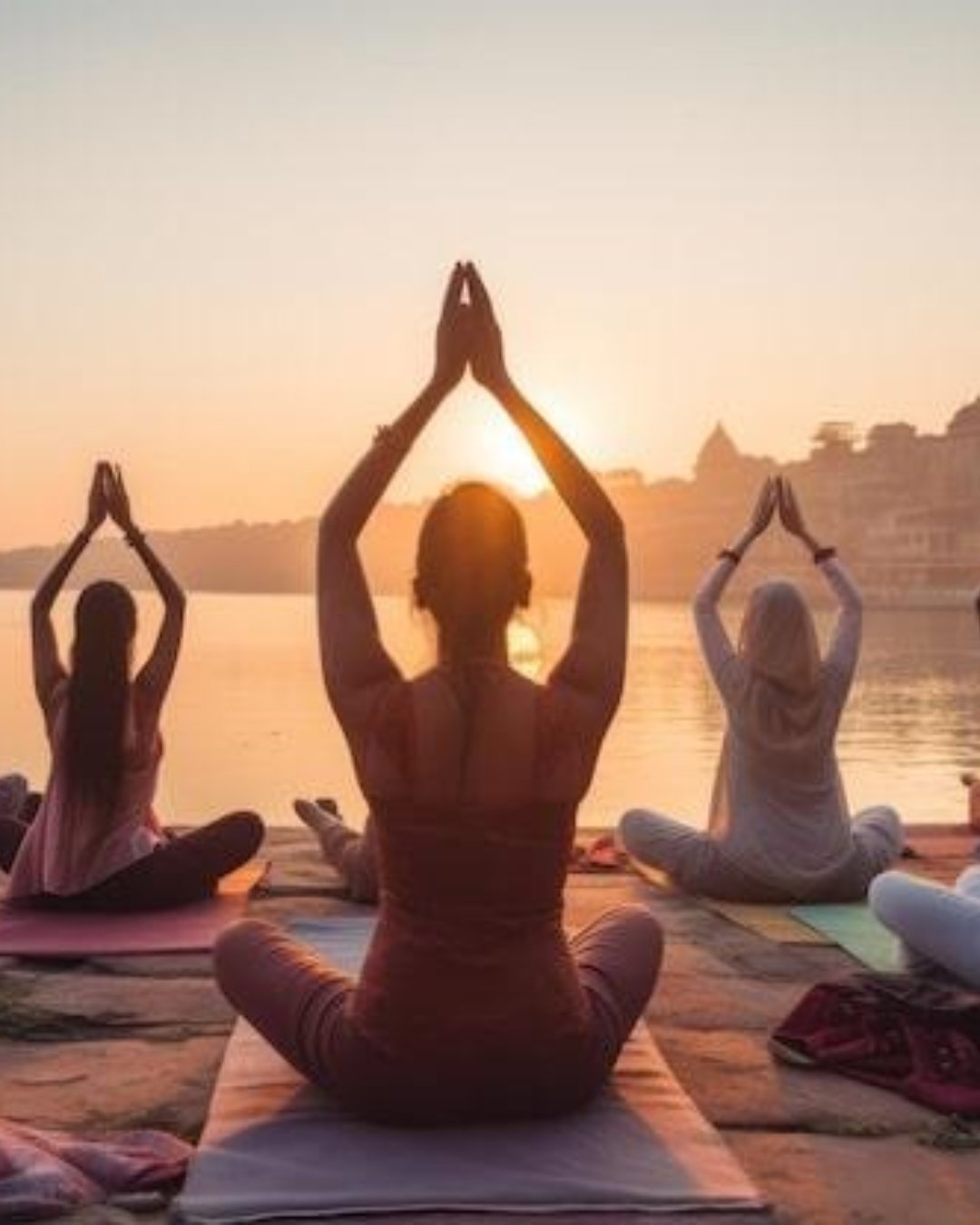
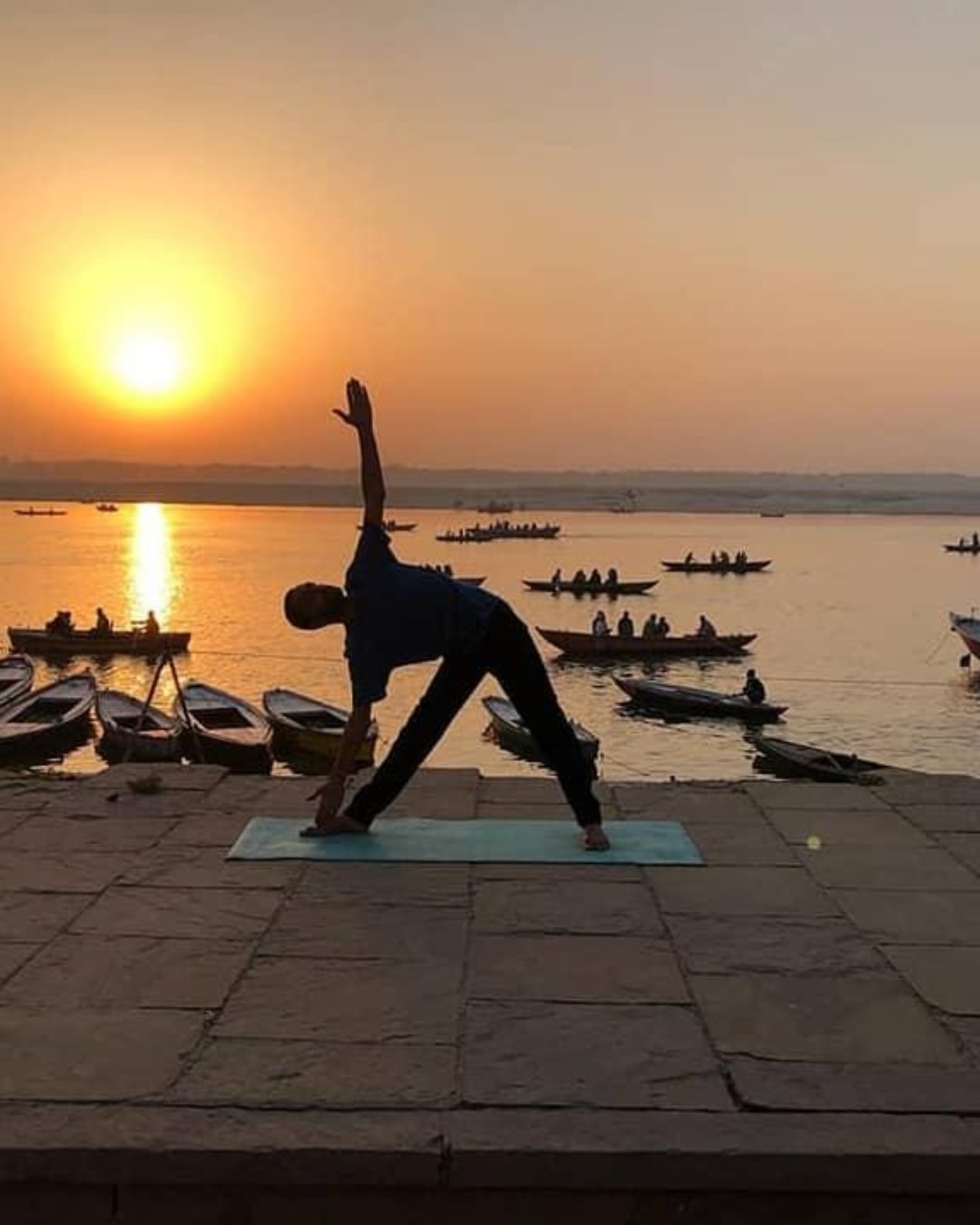
There is no better place to begin a practice than the ghats of Varanasi at first light. Long before the city fully wakes, the stone steps along the Ganga fill with quiet purpose — someone flowing through sun salutations, someone sitting cross-legged with eyes closed, a student running scales on a sitar while the river turns from grey to gold. If you want to bring your own practice to the water, whether it's yoga, meditation, breathwork or music, you'll find the ghats meet you halfway: they have been a place of discipline and devotion for thousands of years, and the atmosphere does half the work for you.
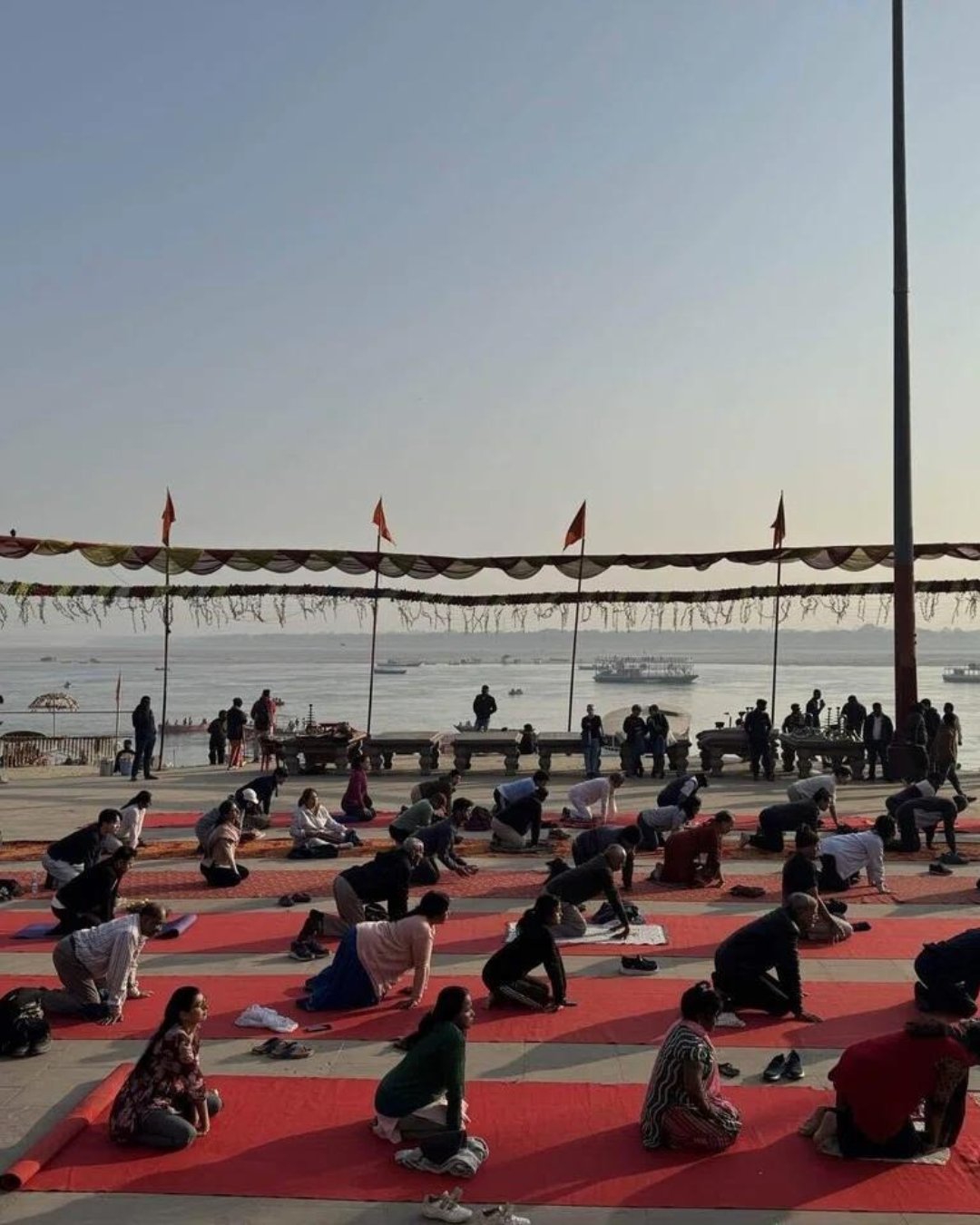
The natural home for morning practice is Assi Ghat, at the southern end of the riverfront, where the daily Subah-e-Banaras gathering begins before dawn with Vedic chanting, live classical music and a free open-air yoga session that anyone can join. You simply turn up, find a space on the mat-lined terrace, and move with the group as the sun clears the far bank. Even if you'd rather practise alone, Assi is a gentle place to start, and from there the quieter ghats — Chet Singh, Tulsi or the stretches between the busier landings — open up for solo meditation, where you can sit facing the water and simply follow your breath as the boats slide past.
To do it well, come early — the hour before and after sunrise is the sweetest, coolest and least crowded, and by mid-morning the steps belong to bathers, boatmen and the heat. Carry a thin mat or a cotton cloth; the stone is often cold, damp or dusty, and you'll want a layer between you and it. Wear something modest and easy to move in, keep your shoes and valuables beside you rather than out of sight, and stay lightly aware of the monkeys, who are bold and curious around bags. A bottle of water and a hat help once the sun is up, and the steps can be slick, so tread carefully near the waterline. Choose your spot with care: the ghats are a living, sacred and working space, so settle a little apart from where people are bathing, praying or performing rituals, and never set up in the middle of a ceremony or a cremation ghat.
Above all, treat your practice here as something you fold into the life of the river rather than impose on it. Let the sounds in — the temple bells, the slap of wet cloth on stone, a boatman's oar, a distant raga — instead of shutting them out; in Varanasi they are part of the meditation, not a distraction from it. If music is your practice, the city is one of the great homes of Hindustani classical tradition, and a little asking around near the ghats can lead you to teachers, morning riyaz sessions and evening recitals of sitar, tabla and voice. Move gently, stay unhurried, and you'll find the ghats give you something no studio can: a practice held inside the oldest living rhythm of one of the world's oldest cities, with the whole of the Ganga flowing past, unbothered and endless, as your only witness.