

Pind Daan & the Rites for Ancestors
Ganga Mahal Ghat, (Varanasi), Varanasi, India
You may know Varanasi for its cremation ghats, but the city is also where families come to perform rites for those who have already died. What's less understood is that it's also where the living come for the dead — to perform Pind Daan, the rite that offers rest and release to departed ancestors. If you've come to Kashi to do this for a parent or forebear, or simply to understand it, the worst thing is to arrive unprepared, be steered by a middleman on the ghat steps, and rush through something that was meant to be done with care.
Before you arrive, it's worth knowing how the ritual works and what you should prepare. Here's what Pind Daan in Varanasi actually involves, and how to come ready.
Why it's done here, and why it isn't hurried
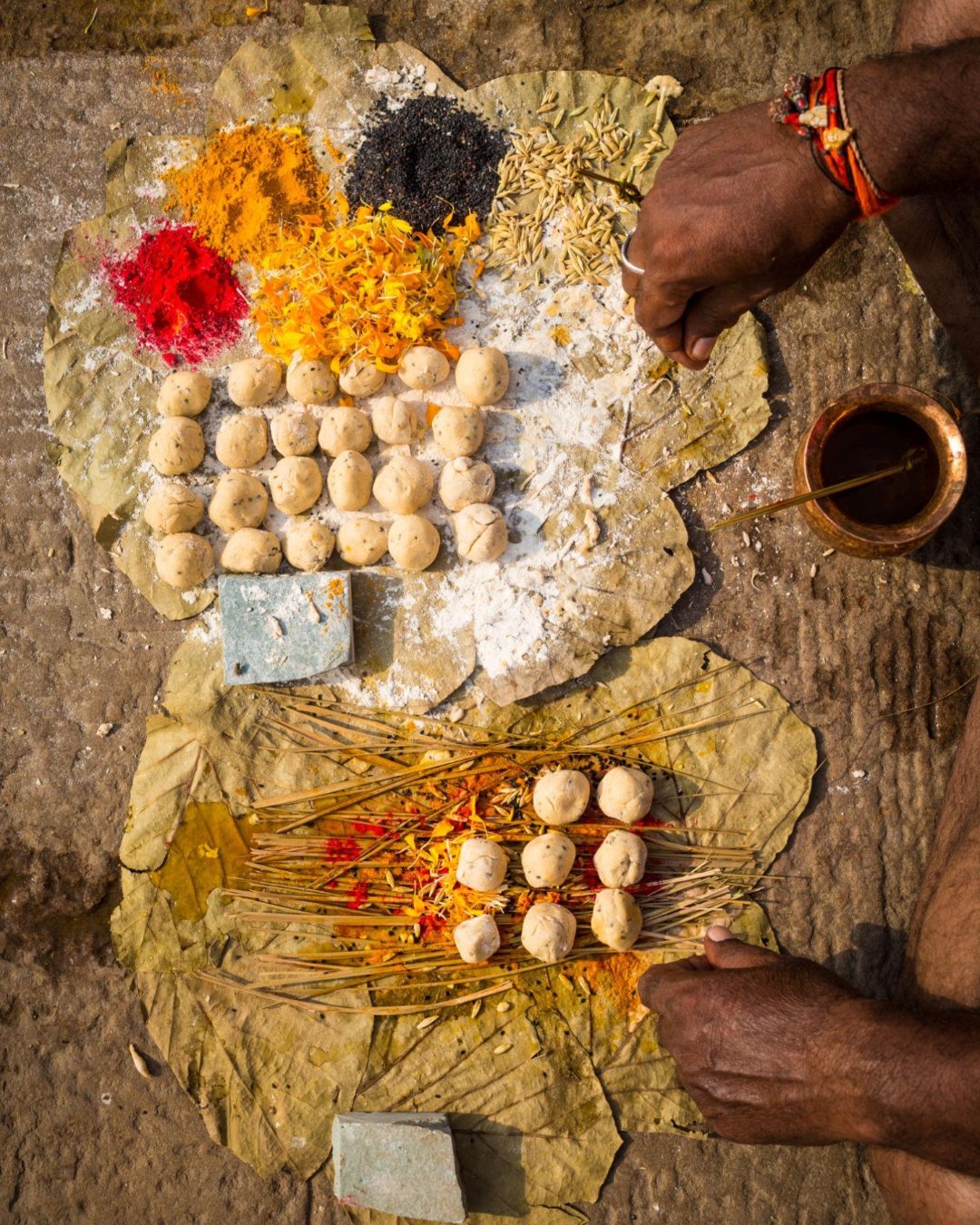
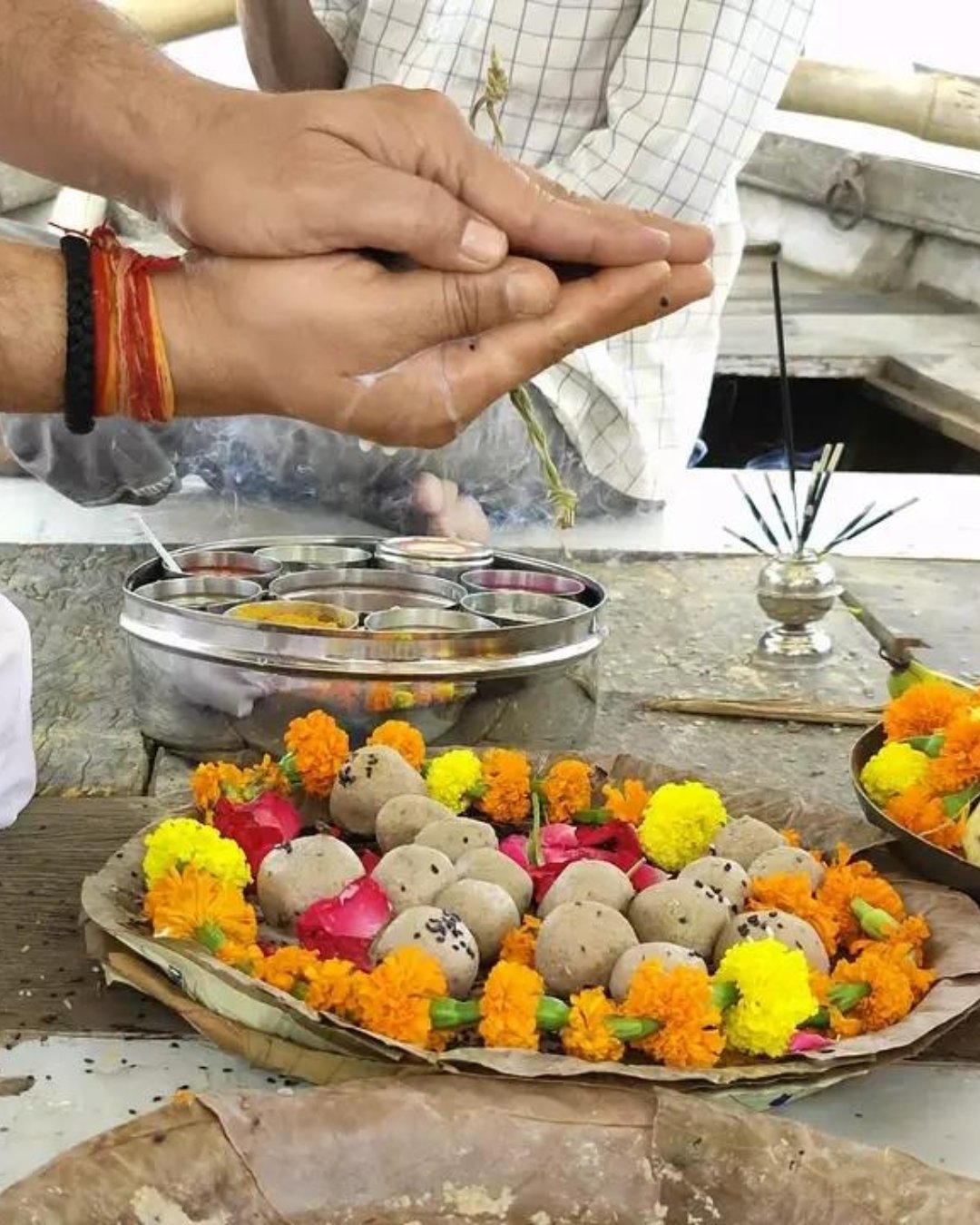
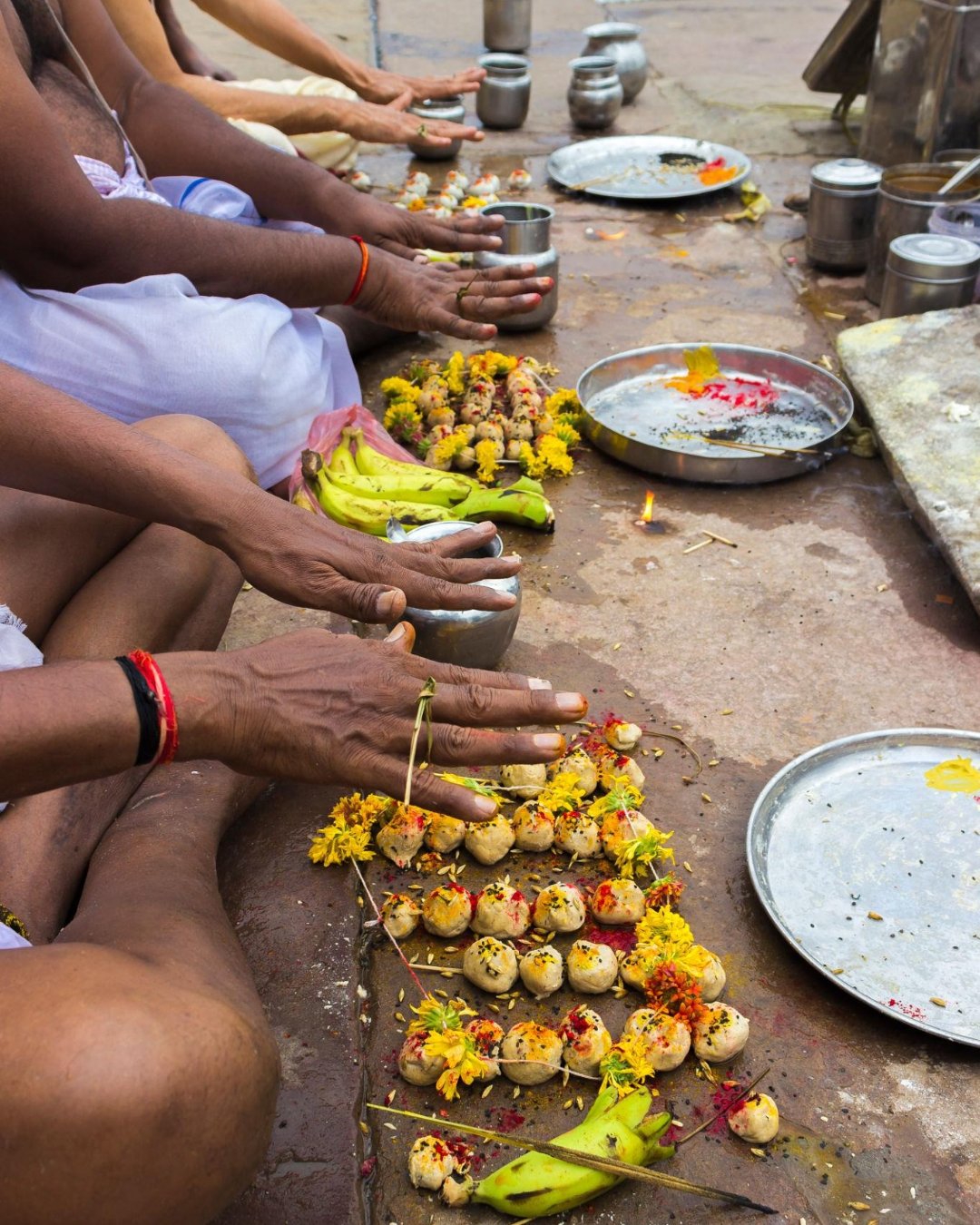
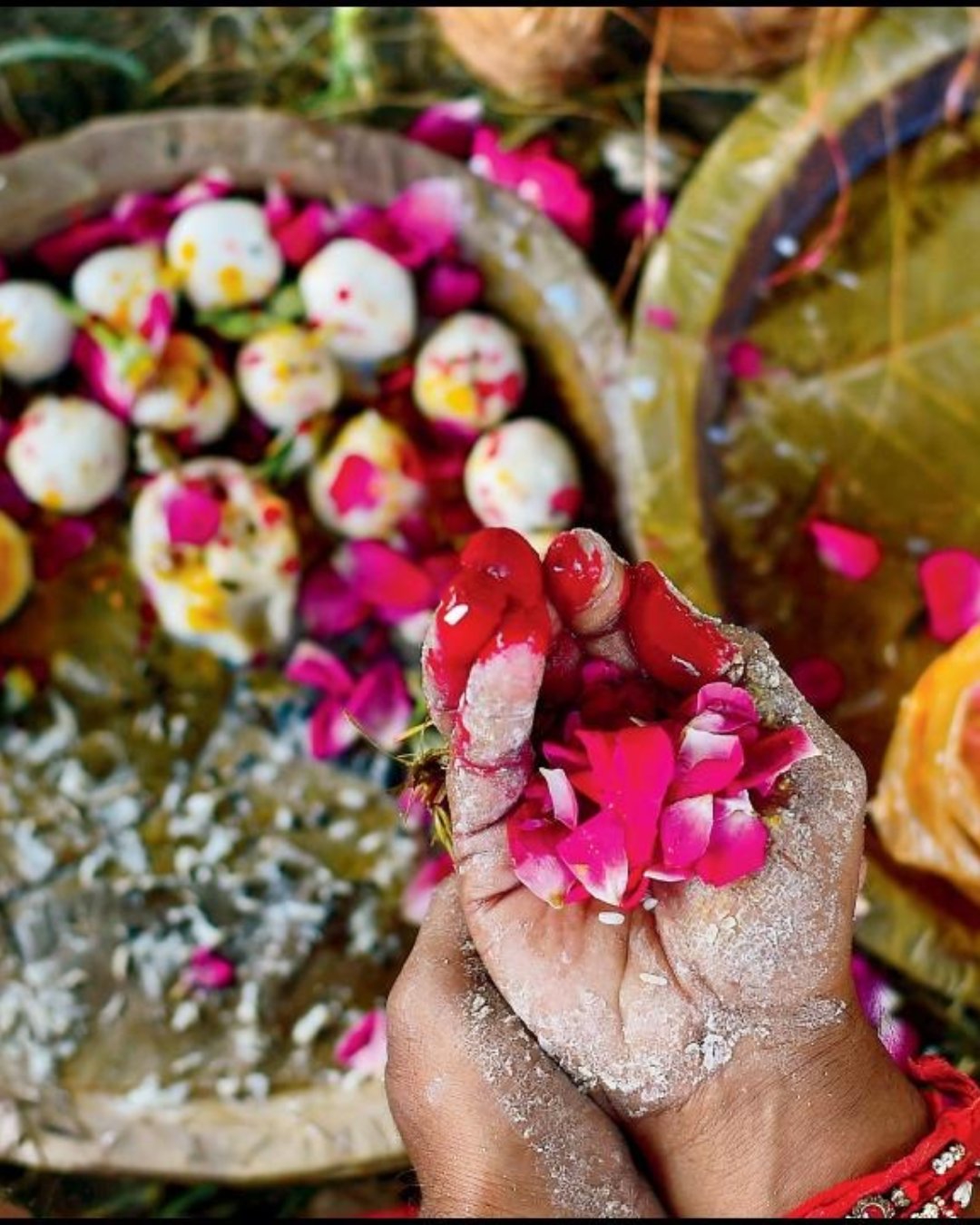
At its heart, Pind Daan is a shraddha rite: rice-flour and barley balls (pind) offered to nourish and liberate the pitru, the ancestors, helping a soul move on rather than linger. Hindus believe performing it at a sacred tirtha carries special power, and Kashi — along with Gaya and Prayagraj — is among the foremost places to do it. Varanasi's Pishach Mochan kund is particularly associated with releasing souls held in unrest.
Unlike a sightseeing activity, this is a ritual guided by a tirtha purohit, a priest whose family has guided these rites for generations. It unfolds at its own pace — the offerings, the water rites (tarpan), the prayers by name and lineage. You come for the rite, not for a view, and you give it the morning it needs.
What the rite involves
The exact observance depends on family tradition and the particular rite being performed, but the basic sequence often includes:
Sankalp — the intention, spoken with your name and your ancestors' names and lineage.
The pind — balls of rice flour, barley and sesame, prepared and offered.
Tarpan — water offerings to the ancestors, often at the river or the kund.
The purohit's guidance — the priest leads the Sanskrit rites; you follow.
For the ritual itself, dress simply and modestly; some traditions call for particular observances beforehand, so ask your priest in advance. Come with the details you'll need — ancestral names and gotra if known.
Photography has no real place in this ritual. Where the sunrise boat ride asks you to put the phone away for ten minutes, this asks you to leave it away entirely. What matters here isn't recorded; it's done. The quiet of naming your own dead, at the river, with a priest who has done this for a thousand grieving families before you — that is not something a photograph was ever meant to hold.
A word of caution, in place of a pro tip
Because this is where genuine grief can meet exploitation, a little preparation matters. Agree what a rite involves and what it costs before it begins, never on the steps mid-ceremony. Engage a genuine tirtha purohit through a trusted arrangement rather than whoever approaches you first. Be wary of anyone inflating fees against your emotion, or insisting a soul is "trapped" and only a costlier rite will free it. A sincere priest will explain, not pressure.
What people get wrong
The same avoidable problems tend to catch people who arrive without preparation. They arrive with no priest arranged and are picked up by a tout. They don't bring the ancestral names the rite needs. Or they let someone rush and upsell them through what should have been unhurried and dignified.
The simplest solution is to arrange a reputable priest and the right site in advance, and to come knowing what the rite is for — so the morning belongs to your ancestors, not to a negotiation.