

Harishchandra: The Quieter Cremation Ground
Harishchandra Ghat, Varanasi, India
You may know Manikarnika, but Harishchandra Ghat often remains almost invisible to visitors. It's the city's other cremation ground, a little to the south, and while it receives fewer visitors, that doesn't make it a gentler place to sightsee. It's still a working cremation ground where families are grieving in the open, and with no crowd to disappear into, how a visitor behaves here matters even more.
Before coming here, it's worth understanding why this quieter ghat demands a little more care.
Why the quieter ghat asks more of you
Harishchandra is one of Varanasi's two cremation ghats, named for a king of legend who gave up his throne, his family and his freedom for the sake of truth — and, the story goes, worked here at the cremation ground itself. Cremations run day and night, some now in an electric crematorium alongside the open pyres.
The difference from Manikarnika is mainly one of scale and atmosphere. At Manikarnika there's constant movement; a respectful visitor can watch from the water and be one of many. Harishchandra is smaller and stiller, and that stillness is the point. There's no spectacle to absorb your presence, so you're closer to the plain fact of what's happening: a family, a fire, a goodbye. The right posture is distance and quiet, and if you can't offer that, the right choice is not to come.
What you'll actually see, and how to hold it
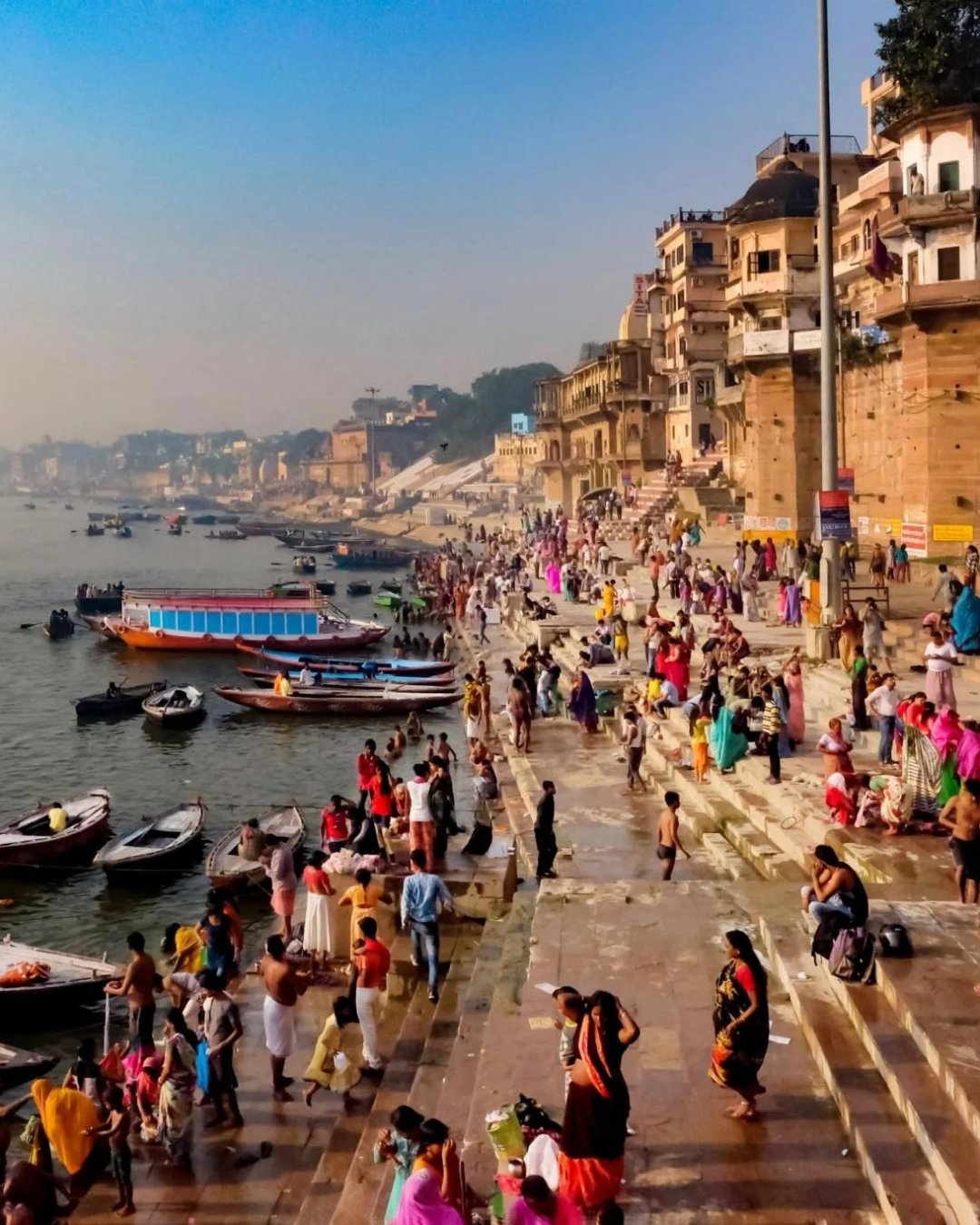
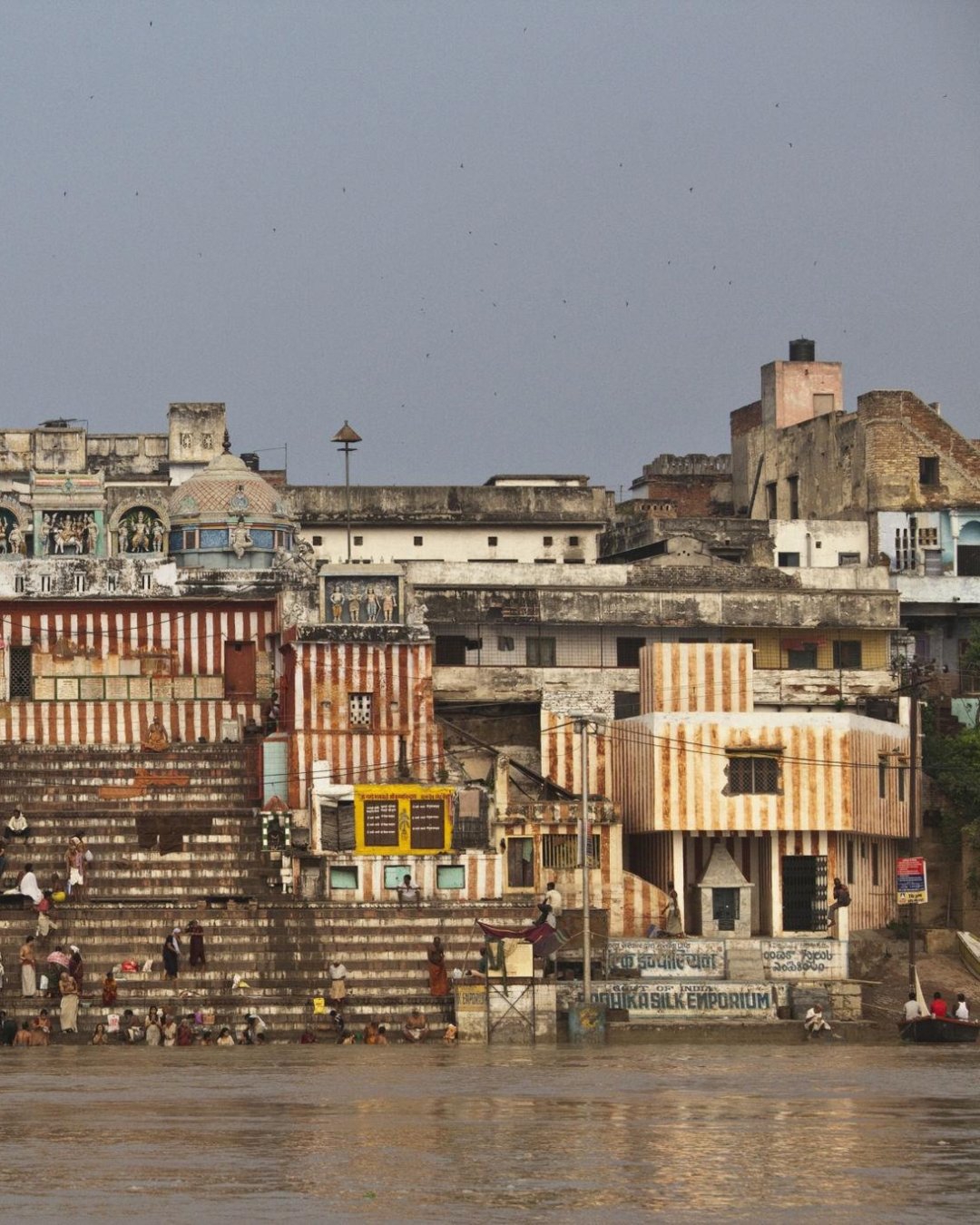
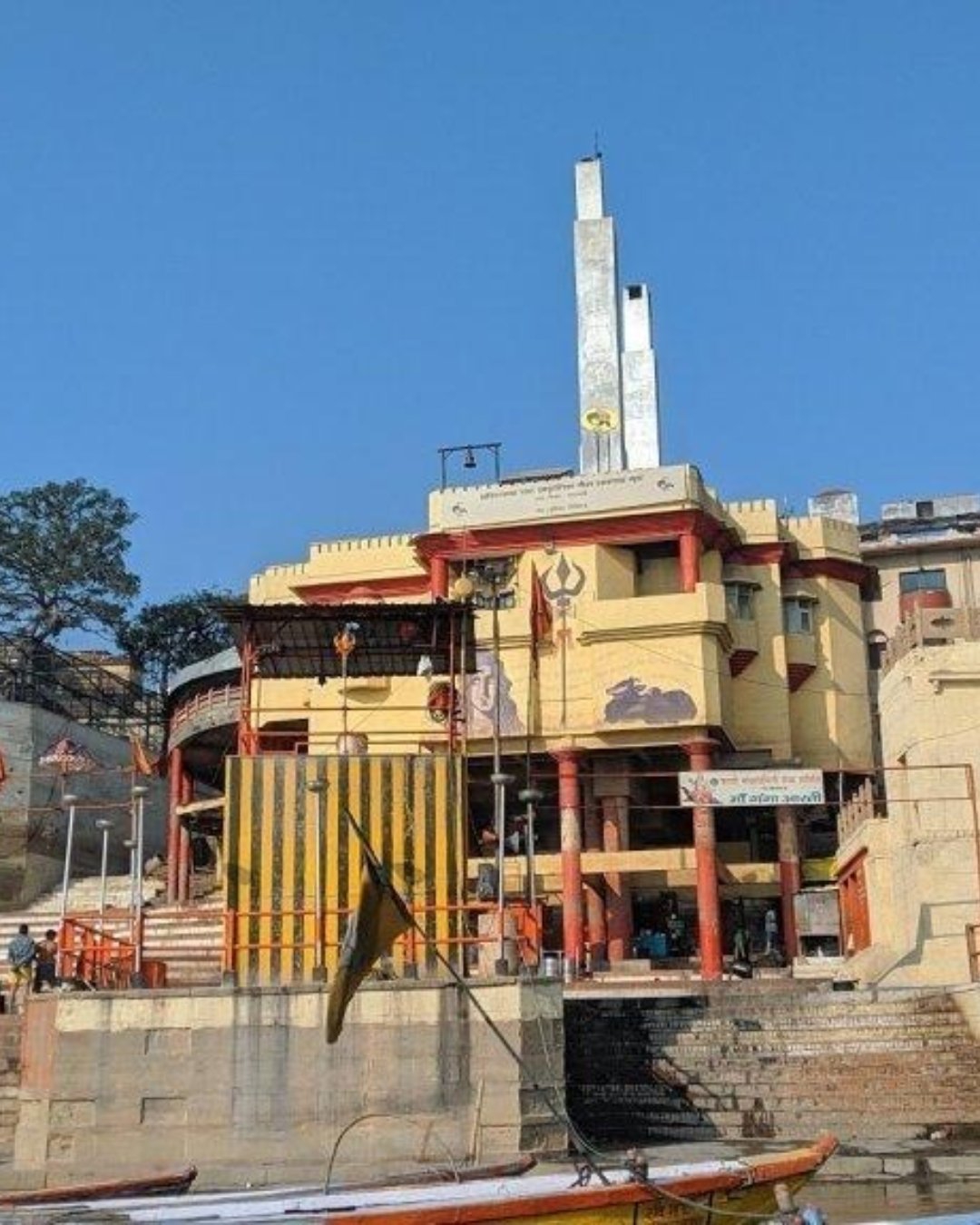
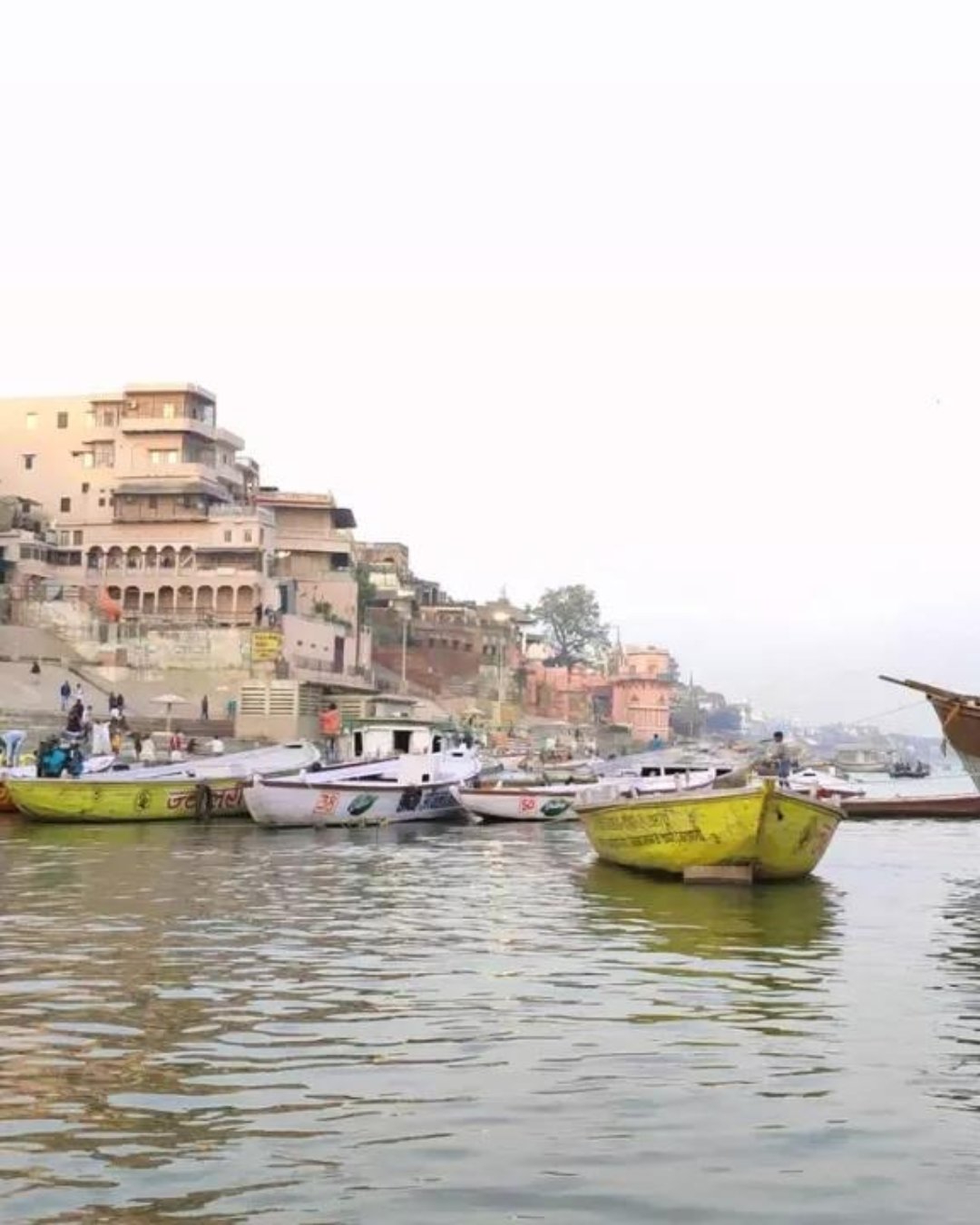
If you pass Harishchandra by boat, keep your distance and let the scene speak for itself:
The pyres — burning on the steps. You do not photograph them. Ever.
The electric crematorium — the modern facility alongside, quietly changing how the poor are cremated here.
The families and the Dom community — the mourners, and those who tend the fires, as at Manikarnika.
Kedar Ghat — just north, if you want a gentler place to continue to afterward.
For a place like this, dress plainly and keep yourself covered. This is not a place for bright clothes or a camera held ready.
More importantly, keep your phone away completely — not for ten minutes, but for the whole time. Photographing cremations is forbidden and deeply hurtful, and no image here was ever yours to take. People who come to Harishchandra the right way describe the same thing afterward: you stand back, you take in what the city is quietly showing you about death being ordinary and unhidden rather than shut behind a door, and you leave. What stays isn't a photograph — it couldn't be — it's having stood, briefly and with respect, at the edge of something most of the world keeps out of sight.
A note in place of a pro tip: if you want to understand Harishchandra, the most respectful option is to witness it from the water, at a distance, as part of the boat ride you're likely already taking. You get the meaning of the place without intruding on the ground itself. Decline anyone who offers to walk you in close or asks for a donation of wood for a poor or dying family — as at Manikarnika, that's a scam that trades on exactly this setting. If you wish to give, give to a registered charity later.
The mistakes to avoid
The most common mistakes come from assuming that a quieter ghat means a more accessible one. They assume "quieter" means it's more acceptable to approach closely. They raise a camera. Or they let a tout walk them into the middle of a working ground for money.
The respectful way to experience Harishchandra is to see it briefly, from a distance, ideally from the boat, with someone who can explain what you're witnessing without turning grief into a show.