

Manikarnika: The Great Cremation Ground
Manikarnika Ghat, Varanasi, India
You may have seen Manikarnika Ghat described as Varanasi's most famous cremation ground. The great burning ghat, fires day and night, the most famous cremation ground on earth — it's on every Varanasi list. But here's the thing nobody tells you: the way most visitors are steered to see it, walked in close by a "guide" who then asks you to buy wood for a grieving family, is both a scam and an intrusion on a real funeral. There's a right way to witness Manikarnika, and it's the one the touts don't offer.
Let's be clear about how to be here. Here's how Manikarnika actually works, and how to approach it with the respect it demands.
Why this isn't a sight, and why that changes everything
Manikarnika is a working cremation ground where roughly a hundred bodies a day are brought, in the belief that to be cremated here grants moksha — release from the cycle of rebirth. That belief is why it never stops. Some sources say the flame that lights the pyres has burned for centuries, tended by the Dom community, who alone supply the sacred fire.
None of that makes it a spectacle. It's a funeral — many funerals — happening in the open, and the right posture is a bystander's: quiet, still, and at a distance. There's nothing staged for anyone here, nothing to queue for, nothing to "do." The reason to come is understanding, not a photograph, and if you can't be here quietly, the right choice is not to come at all.
What you'll actually see, and how to hold it
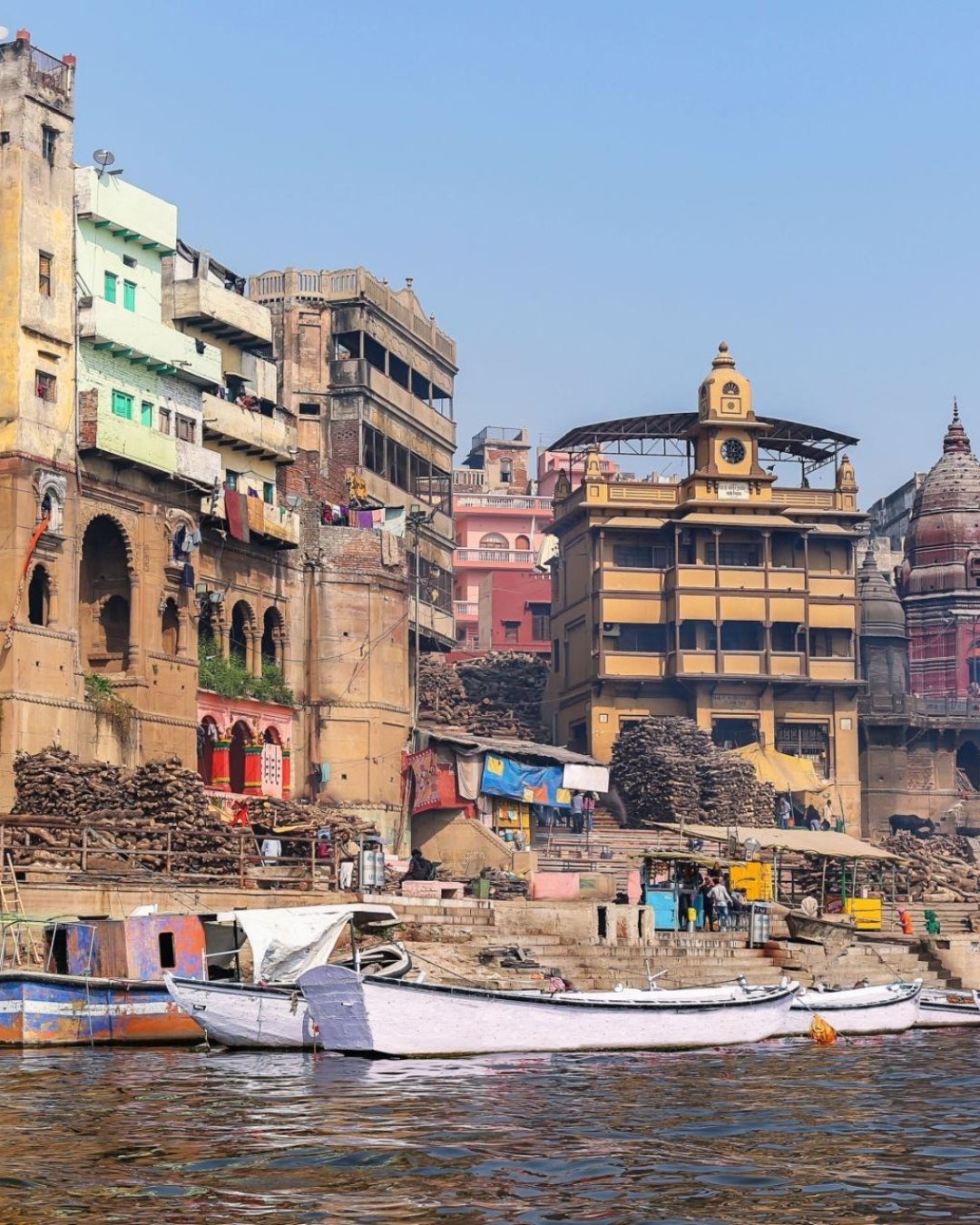
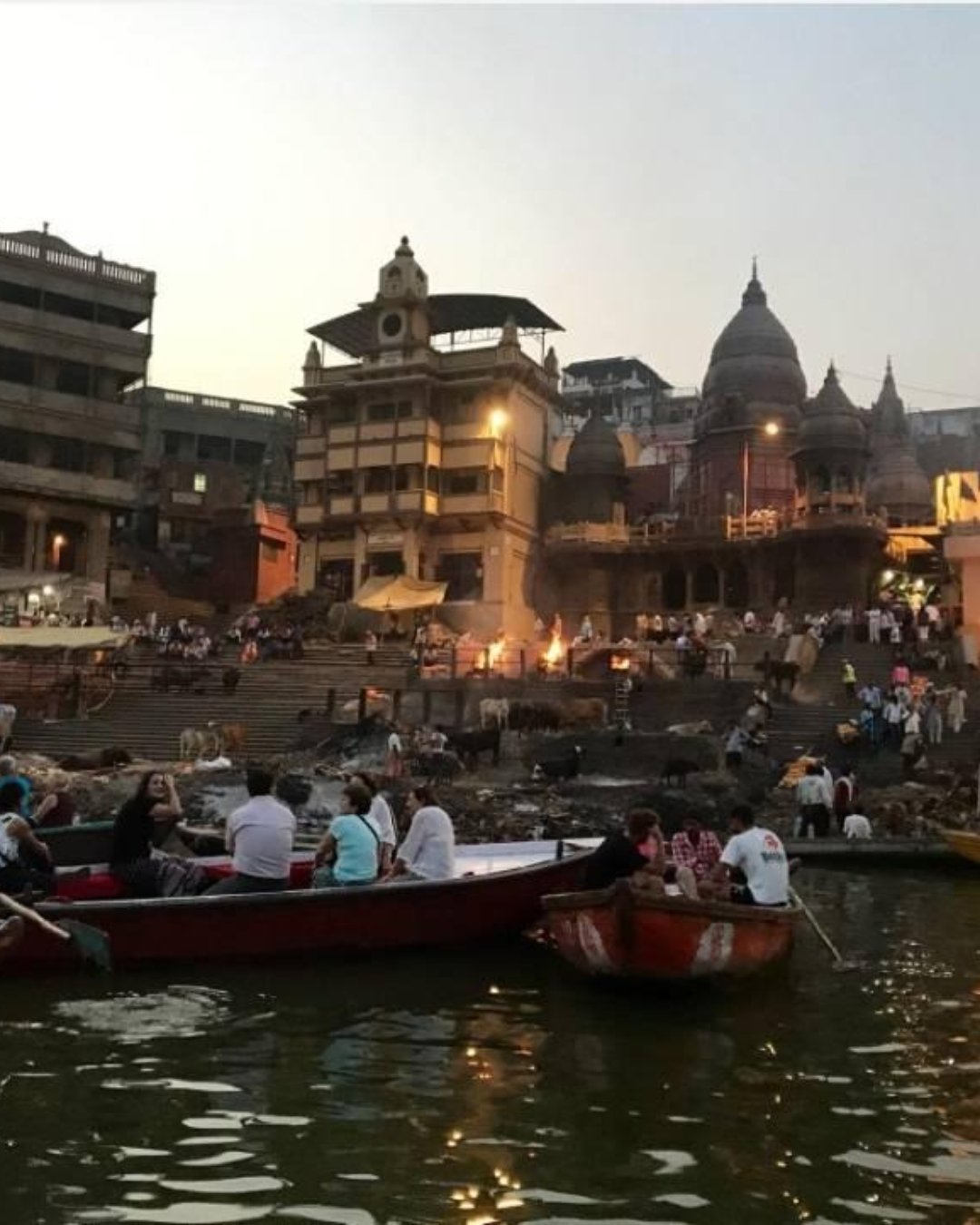
From a boat, at a respectful remove, is how most visitors should take this in:
The pyres — burning on the steps, day and night. You do not photograph them. Ever.
The stacked wood — sold by weight, walls of it above the ghat, a whole economy of death.
The eternal flame — tended by the Dom community, source of every pyre's fire.
Manikarnika Kund — the ancient sacred tank beside the ghat, older than the cremation ground itself.
Dress plainly and covered. This is not a place for bright clothes or a camera held ready.
And the phone stays away completely — not for ten minutes, the whole time. Photographing cremations is forbidden and deeply offensive, and no image here was ever yours to take. Travellers who approach this properly will tell you the same thing: you watch from the water, you take in what the city is showing you about death being ordinary and unhidden rather than shut away, and you leave. What stays with you isn't a picture — it couldn't be — it's having stood quietly at the edge of something most of the world keeps behind closed doors.
A note in place of a pro tip: decline anyone who offers a close "tour," a "rooftop view," or asks you to buy wood for a poor or dying family — it's the oldest scam in Varanasi and the price climbs fast. Nobody official will ever solicit you. You do not need a guide standing over a funeral. If you want to give, give to a registered charity later, not to a man on the steps at night. And take it in from the boat you're already on rather than landing.
The mistakes to avoid
Most visitors who get this wrong do the same things. They let a tout walk them into a working ground for money. They raise a camera. Or they treat it as a dark-tourism box to tick and leave having understood nothing.
The right approach is to witness it briefly, from the water, at a distance, with someone who can quietly explain what you're seeing without turning it into a show.