

Why Kashi Is the City of Moksha
Shri Kashi Vishwanath Temple, Varanasi, India
You'll have heard Varanasi called the holiest city in India — and the place people come to die. But here's the thing nobody tells you: if you arrive without understanding why, the whole city reads as chaos — cremations in the open, widows in white, dying pilgrims in hospices, ash and marigolds and grief, all of it at once. Miss the idea underneath it and you'll spend three days overwhelmed and a little repelled, photographing things you don't understand. Grasp it, and the same streets become the most coherent place you've ever stood.
Let's fix that. Here's what "the city of moksha" actually means, and how to let it change what you see.
WHY DEATH IS THE POINT, NOT THE SHADOW
Most cities hide death. Kashi builds itself around it, on purpose. The belief, held for millennia, is that to die here — within the sacred boundary of the city — is to be granted moksha, release from the endless cycle of birth, death and rebirth that every soul is otherwise bound to. Shiva himself, the story goes, whispers the taraka mantra, the ferry across, into the ear of the dying. Die in Kashi and you don't come back. You're free.
That single idea explains everything you'll see. The cremation fires that never go out. The hospices near Manikarnika where people come to spend their last days. The astonishing calm of the mourners. This isn't a city being morbid — it's a city that decided death is a doorway, and arranged itself around the door.
WHAT YOU'LL ACTUALLY SEE, ONCE YOU UNDERSTAND IT
With the idea in place, the pieces resolve:
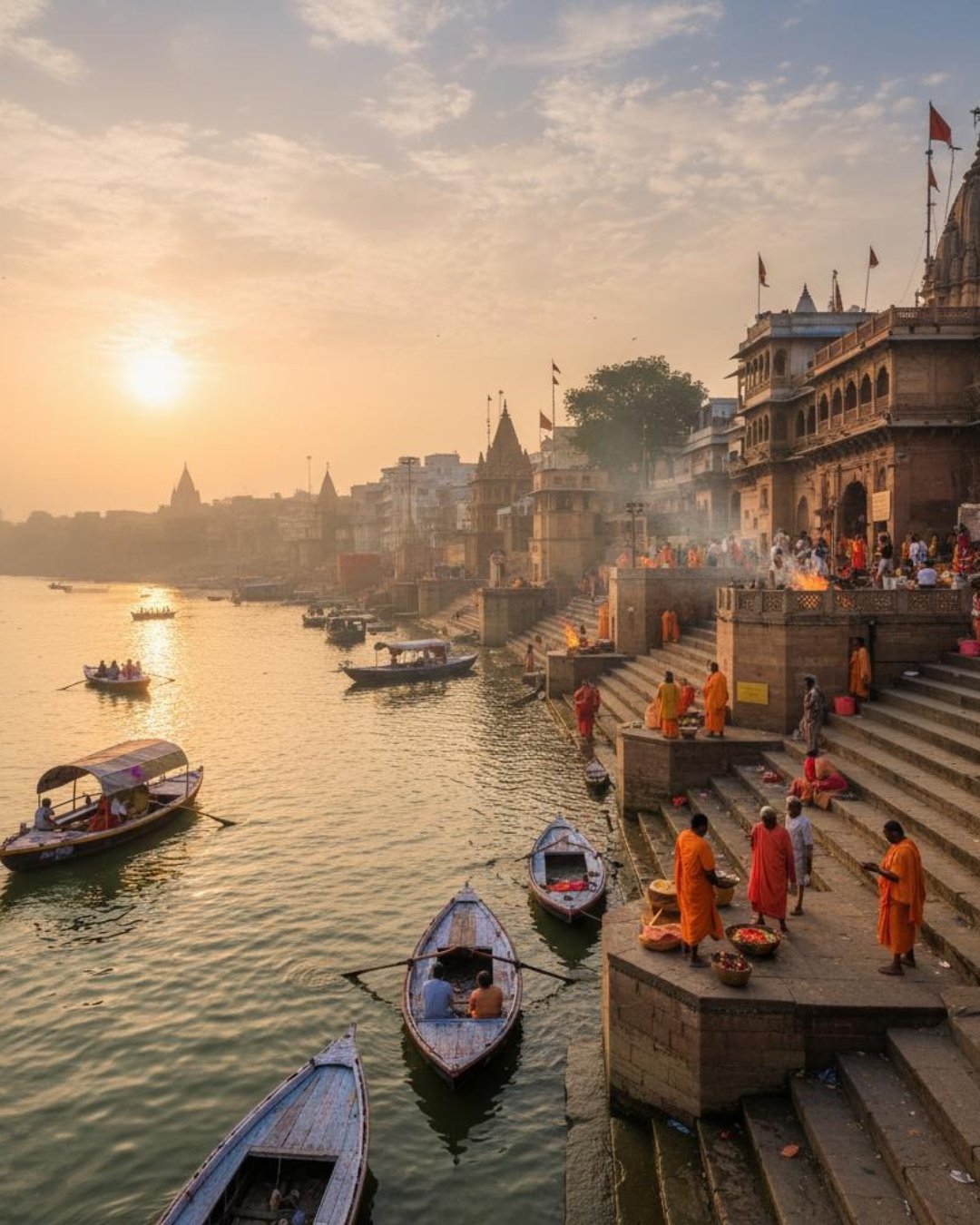
The cremation ghats — Manikarnika and Harishchandra, where moksha is delivered in fire, in the open, without shame.
The dying-houses — modest hospices where pilgrims wait, by choice, in peace rather than fear.
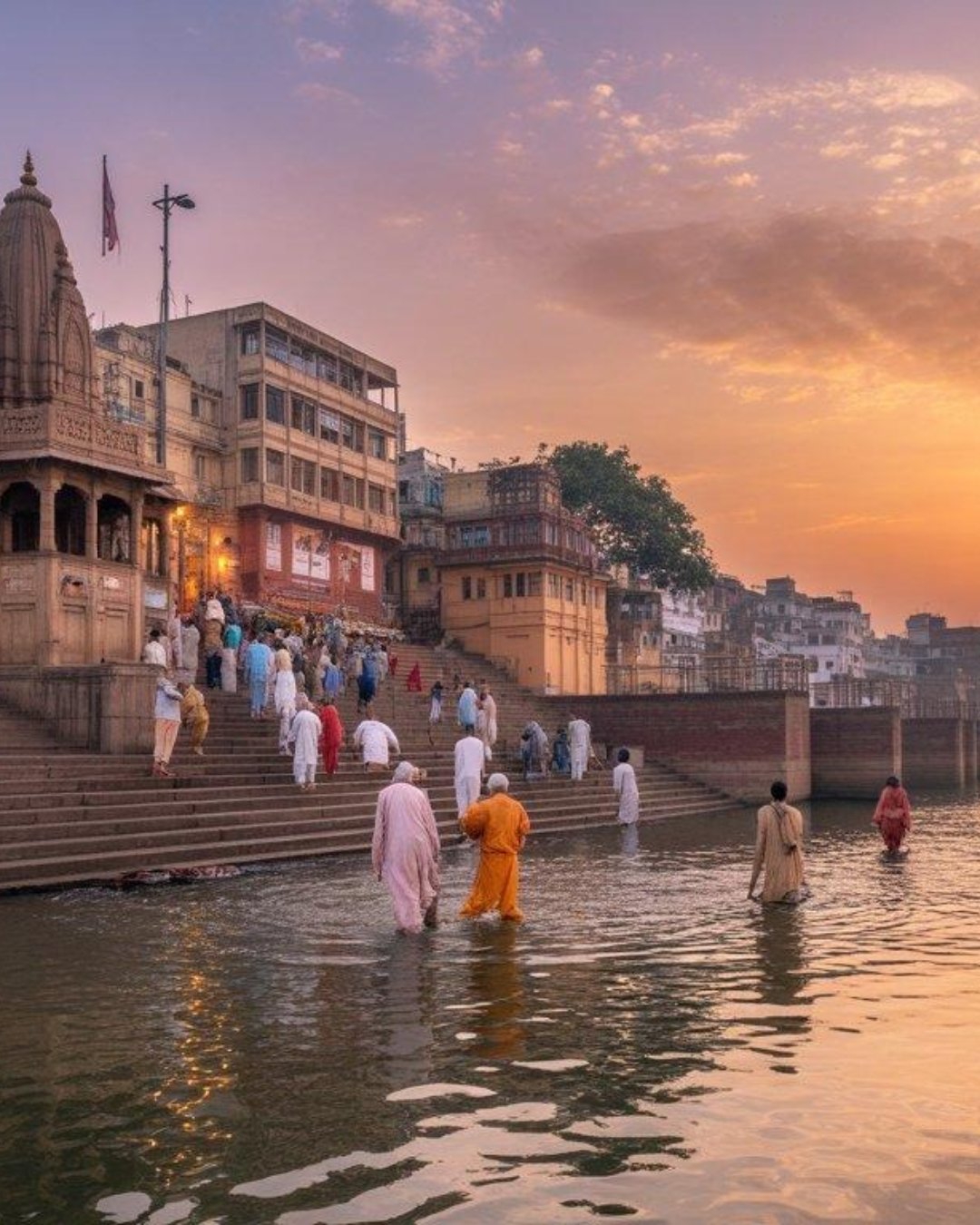
The pilgrims bathing at dawn — washing away sin in the Ganga, the goddess who carries it away.
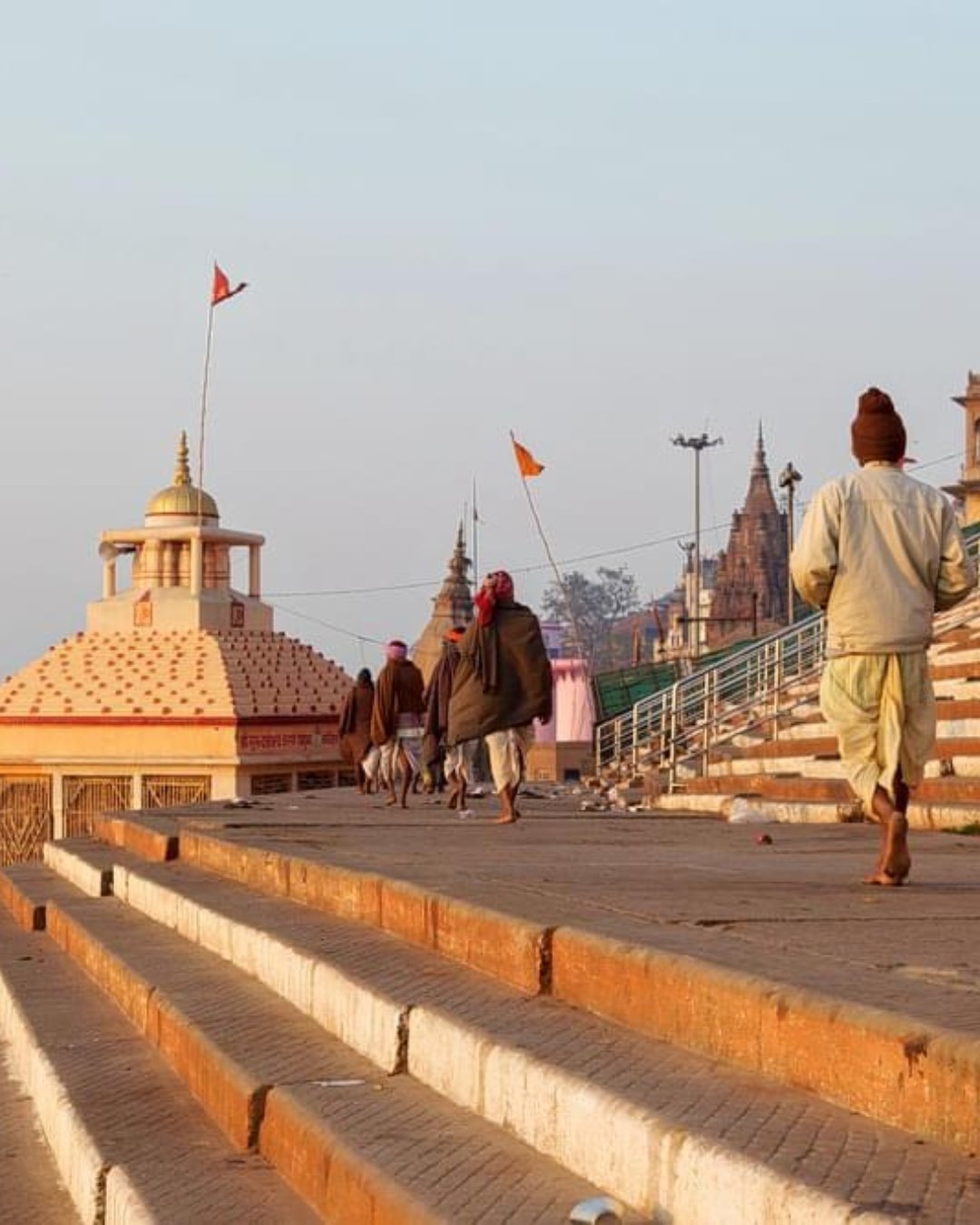
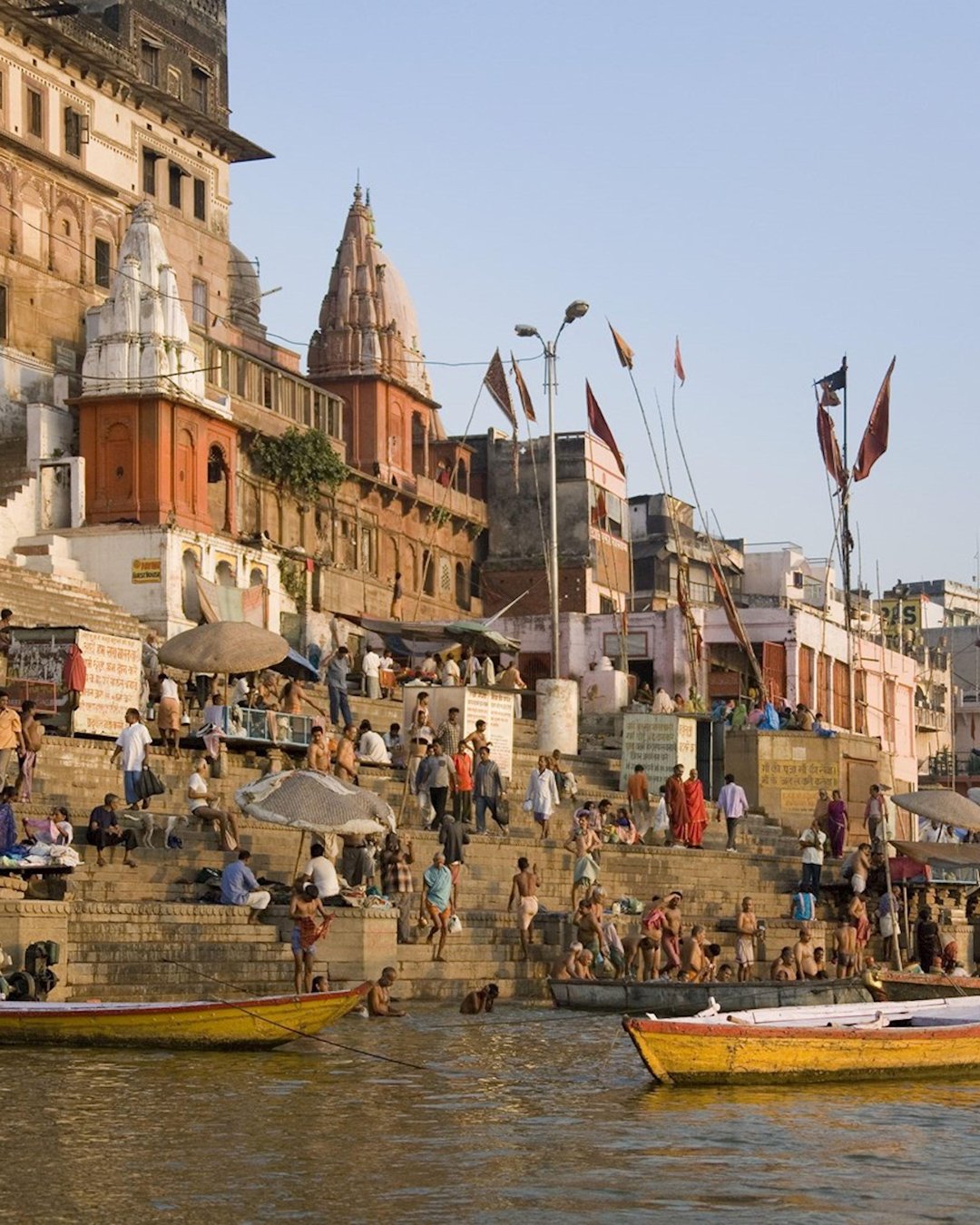
The sheer ordinariness of it — tea stalls and cricket and weddings, feet from the pyres, because here death isn't separate from life.
Come with a little humility, and dress and behave as you would at any funeral, because that's often exactly what you're near.
And this is an understanding to arrive with, not a photo to take. Travellers who grasp it first will tell you the same thing: the city stops being a spectacle and becomes legible. The grief you're witnessing isn't despair — for many families it's something closer to relief, even joy, that a loved one reached the one place that ends the cycle. That quiet, counterintuitive peace, running under everything, is the part the photos never quite catch, because it isn't a thing you can see. It's a thing you have to know.
PRO TIP
Read one paragraph about moksha before you land, or ask your guide to explain it on the first morning — five minutes of context reframes the entire trip.
Witness the cremation ghats from the water, at a distance, never with a camera; you're at a funeral, not a viewpoint.
And resist the urge to tidy it into something comfortable — Kashi doesn't need you to find it beautiful, only to understand what it's for.
The mistakes to avoid
Most first-timers trip over the same few things. They arrive with no framework and find the city disturbing rather than profound. They treat the cremation grounds as dark tourism. Or they look for the pretty Varanasi of the postcards and are unsettled when the real one, the one about death and release, keeps intruding.
The easy fix is to come understanding the one idea the whole city is built on — because everything here makes sense the moment you do.