

Buddha Purnima at Sarnath: Where Enlightenment Happened
Sarnath Museum, Varanasi, India
You've probably filed Sarnath as a half-day of ruins. A stupa, some old brick foundations, a museum, an hour out of Varanasi and back. But here's the thing nobody tells you: this quiet field is where the Buddha gave his first sermon after enlightenment — where Buddhism, as a thing you could teach and follow, actually began. Turn up on an ordinary weekday afternoon and you'll see lawns and a big brick mound. Turn up on Buddha Purnima, the full-moon day that marks his birth, enlightenment and death, and you'll see the place come fully, movingly alive.
Let's fix that. Here's how Sarnath, and especially Buddha Purnima, actually works, and how to get it right the first time.
Why the day matters more than the hour
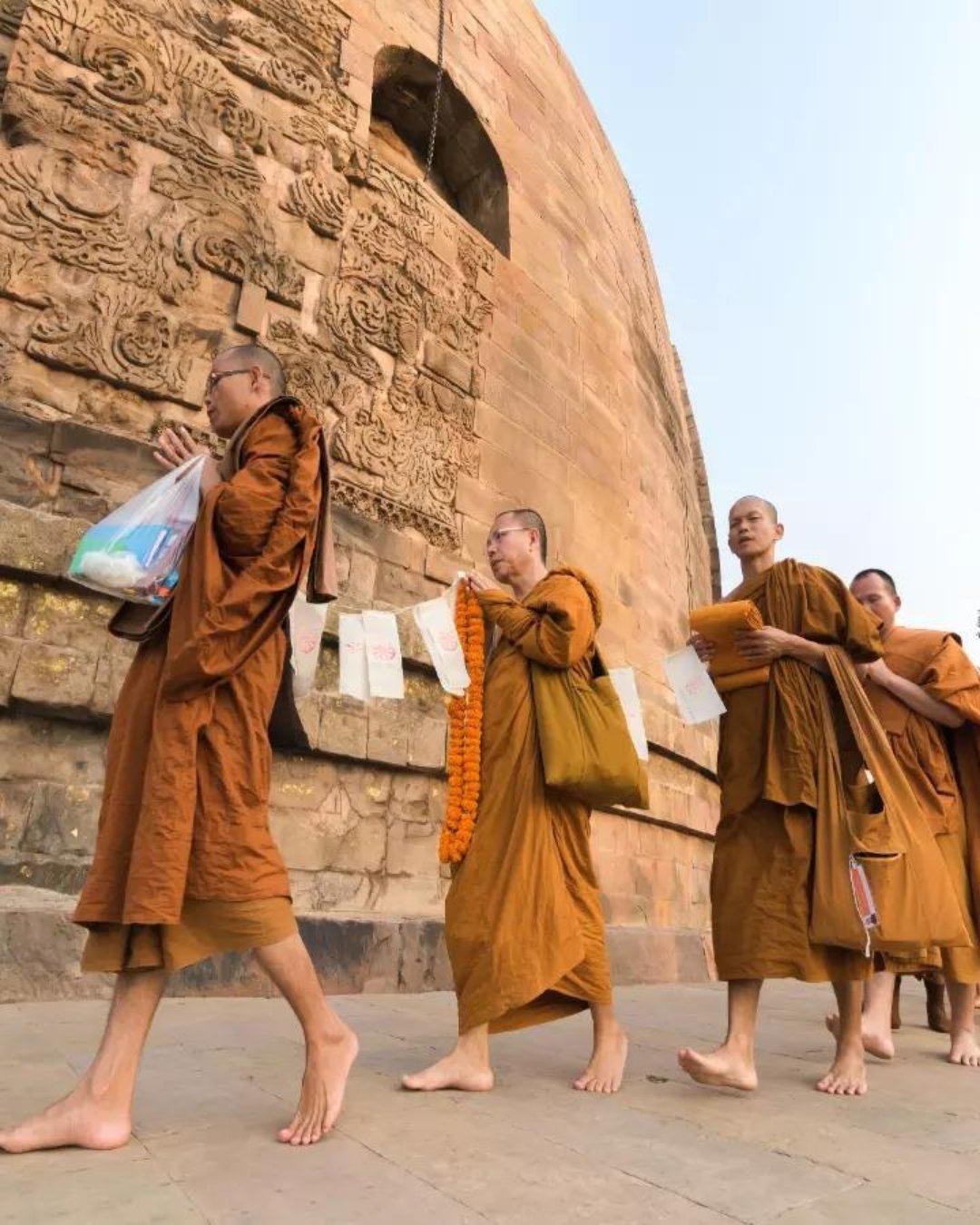
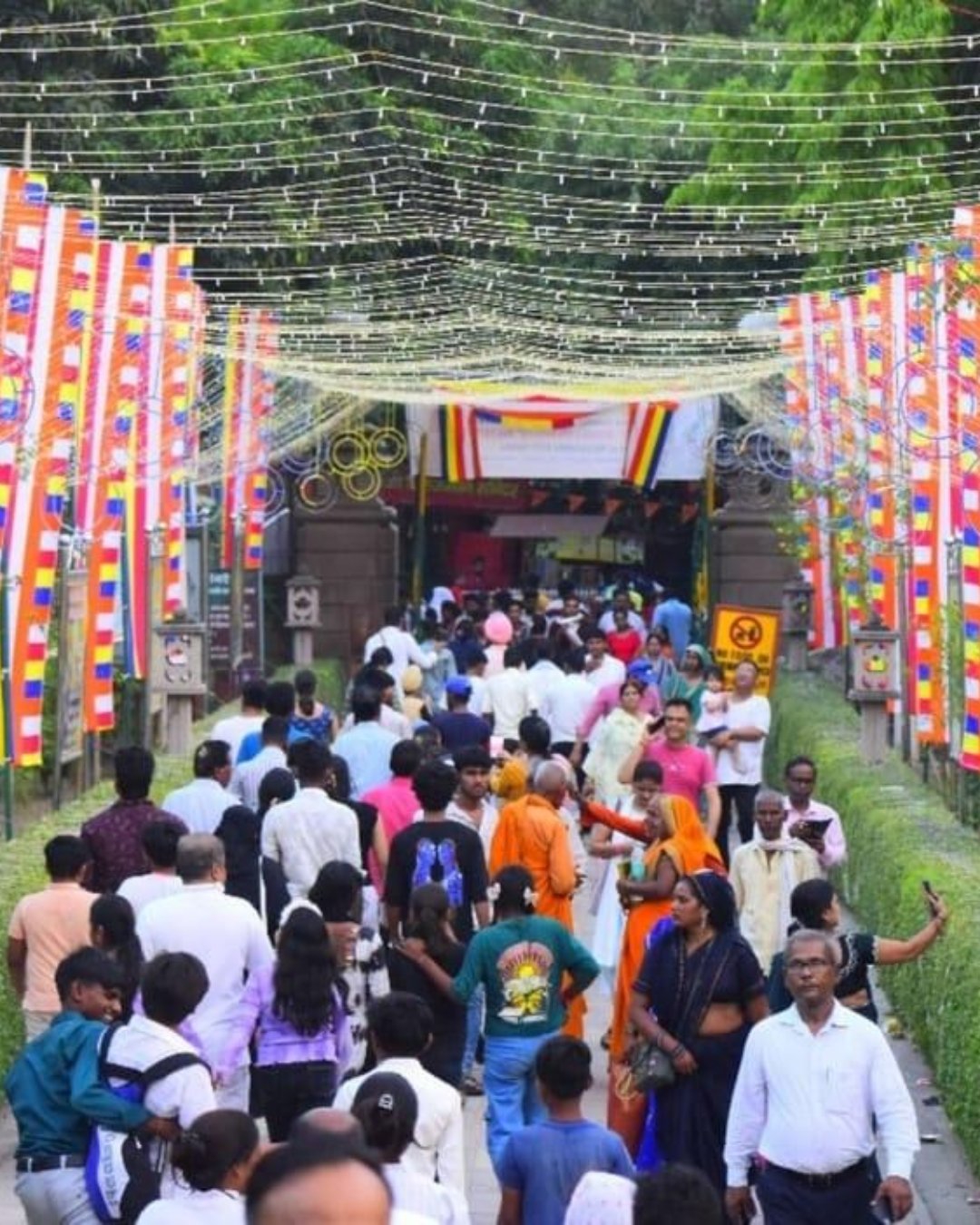
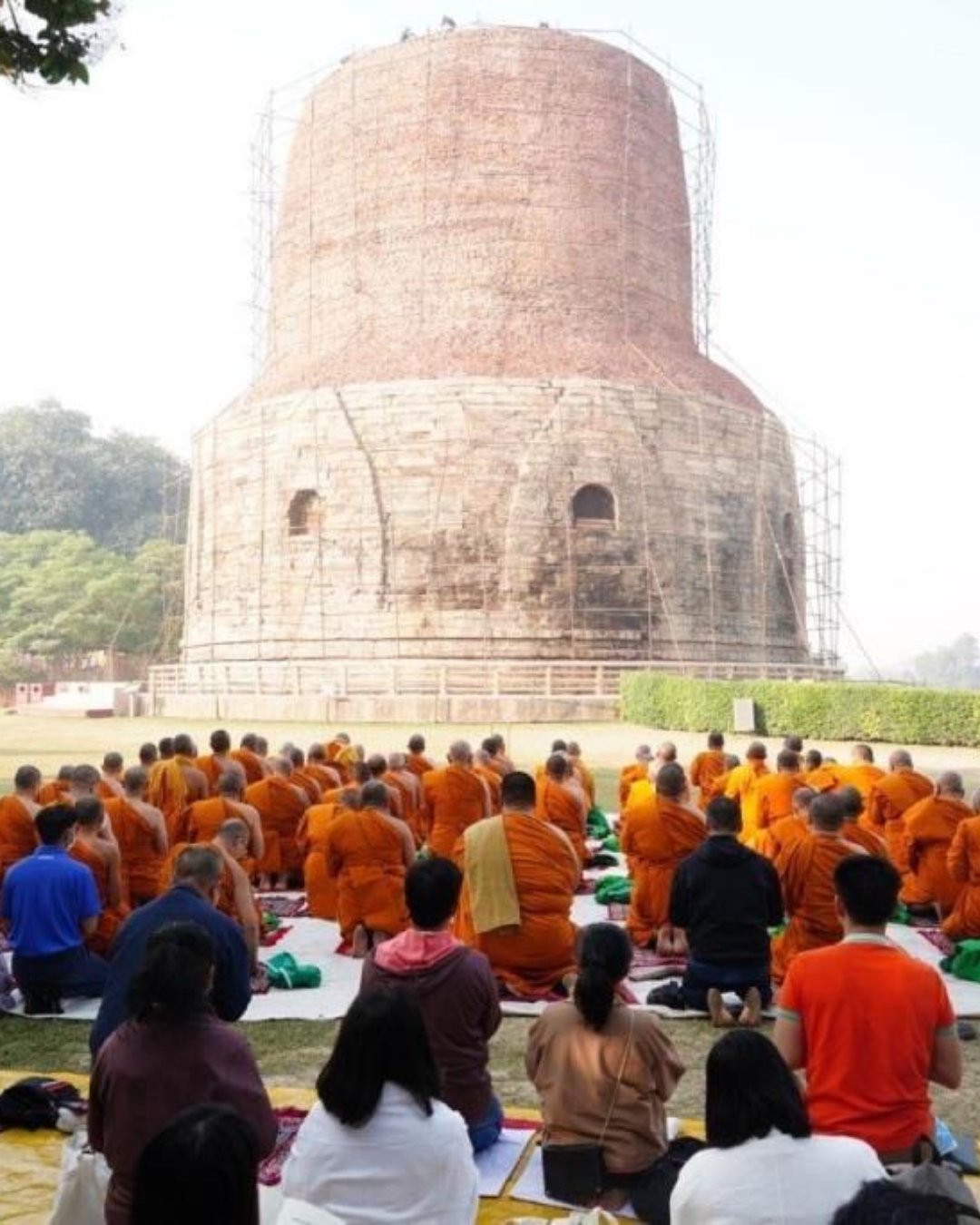
Sarnath is worth visiting any time — but it's a place of quiet significance rather than spectacle, and on a normal day you supply the meaning yourself. Buddha Purnima is the exception. On that full-moon day (usually in May), monks and pilgrims from across the Buddhist world converge here: robes of every tradition, chanting, processions, the relics carried out, and the Mahabodhi temple and Dhamek Stupa ringed with people who've travelled a long way to be exactly here.
So if you can align your trip with it, do. It falls on the Vaishakh full moon, so the date shifts each year — check it and build around it. Outside that day, come early morning, when the grounds are calm, the light is soft on the old brick, and the meditating monks have the lawns largely to themselves.
What you'll actually see
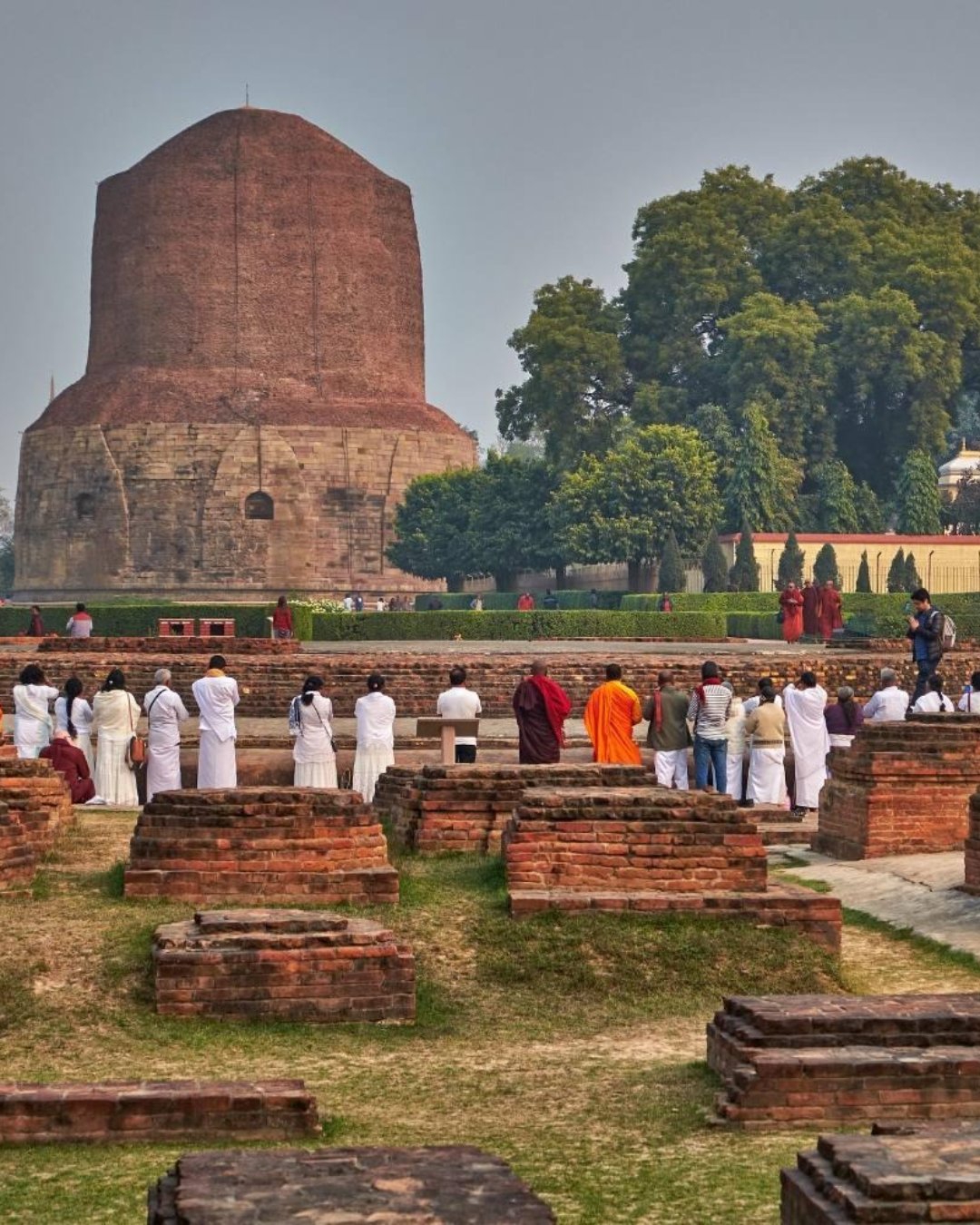
The Dhamek Stupa — the great cylindrical monument marking the spot of the first sermon, standing since the Gupta era on Mauryan foundations.
The Mahabodhi Society temple — with its frescoes and a Bodhi tree grown from a cutting of the original.
The ruins and the Ashokan pillar stump — the monastery foundations, and the pillar whose lion capital became India's national emblem.
The Sarnath Museum — home to that original Lion Capital of Ashoka. Closed Fridays.
On Buddha Purnima — processions, chanting, the relic display, and pilgrims from Sri Lanka, Thailand, Tibet, Japan and beyond.
Dress modestly, cover your shoulders, and be ready to go barefoot around the stupa and in the temples.
And keep your phone down at first, especially near anyone meditating or in procession. Travellers who come here will tell you the same thing: the pull of Sarnath isn't visual, it's atmospheric — the quiet, the sense of a beginning, the monks sitting where the teaching started. On Buddha Purnima that deepens into something genuinely stirring. Photographing a procession is fine from a respectful distance; photographing a person in prayer is not. That stillness, in a place this significant, is the part the photos never quite catch.
Pro tip: If Buddha Purnima is your aim, book accommodation well ahead — Sarnath and Varanasi fill for it, and it's a major day. Come early even on the festival to beat the peak crowds to the stupa. Visit the museum for the Lion Capital, but remember it's shut on Fridays. And treat Sarnath as its own calm half-day, not a rushed add-on squeezed after a morning of ghats — the contrast in pace is the point.
The mistakes that ruin it
Most first-timers trip over the same few things. They come on a random afternoon and see only ruins, missing the significance entirely. They arrive without knowing what happened here, so it reads as archaeology. Or they schedule it for a Friday and find the museum, with its national treasure, closed.
The easy fix is to come with context, ideally on or near Buddha Purnima, early in the day — because knowing this is where Buddhism began transforms a field of brick into one of the most important sites in Asia.