

Nag Nathaiya: Krishna vs. the Serpent — On the Ganga
Tulsi ghat B2, Varanasi, India
You've probably never heard of it, and that's exactly the point. Once a year, on one afternoon at Tulsi Ghat, the whole city packs the steps and the river to watch a boy playing Krishna leap onto the hood of the serpent Kaliya and dance him into submission — a 450-year-old ritual play staged on the Ganga itself. But here's the thing nobody tells you: it lasts minutes, it happens at a precise moment most visitors miss entirely, and if you're standing in the wrong place you'll see a wall of backs and a distant splash. Turn up unprepared and you've come for one of Varanasi's rarest sights and seen none of it.
Let's fix that. Here's how Nag Nathaiya actually works, and how to get it right the first time.
Why the one afternoon, and the one moment
Nag Nathaiya falls on Nag Nandan Chaturdashi, in Kartik (October–November) — a single day, once a year, tied to the lunar calendar rather than a fixed date. The Tulsi Ghat tradition traces to Tulsidas's own time, some four and a half centuries back, which is what makes it more than a performance.
And the climax is brief. The lila builds through the afternoon, but the moment everyone comes for — Krishna emerging onto Kaliya's hood from the river, dancing on the serpent — is over in minutes, in the late afternoon as the light drops. So this isn't a show you drift into; it's a single instant you position for hours ahead. Confirm the exact date for the year you're travelling, and be in place early.
What you'll actually see
An afternoon that culminates on the water:
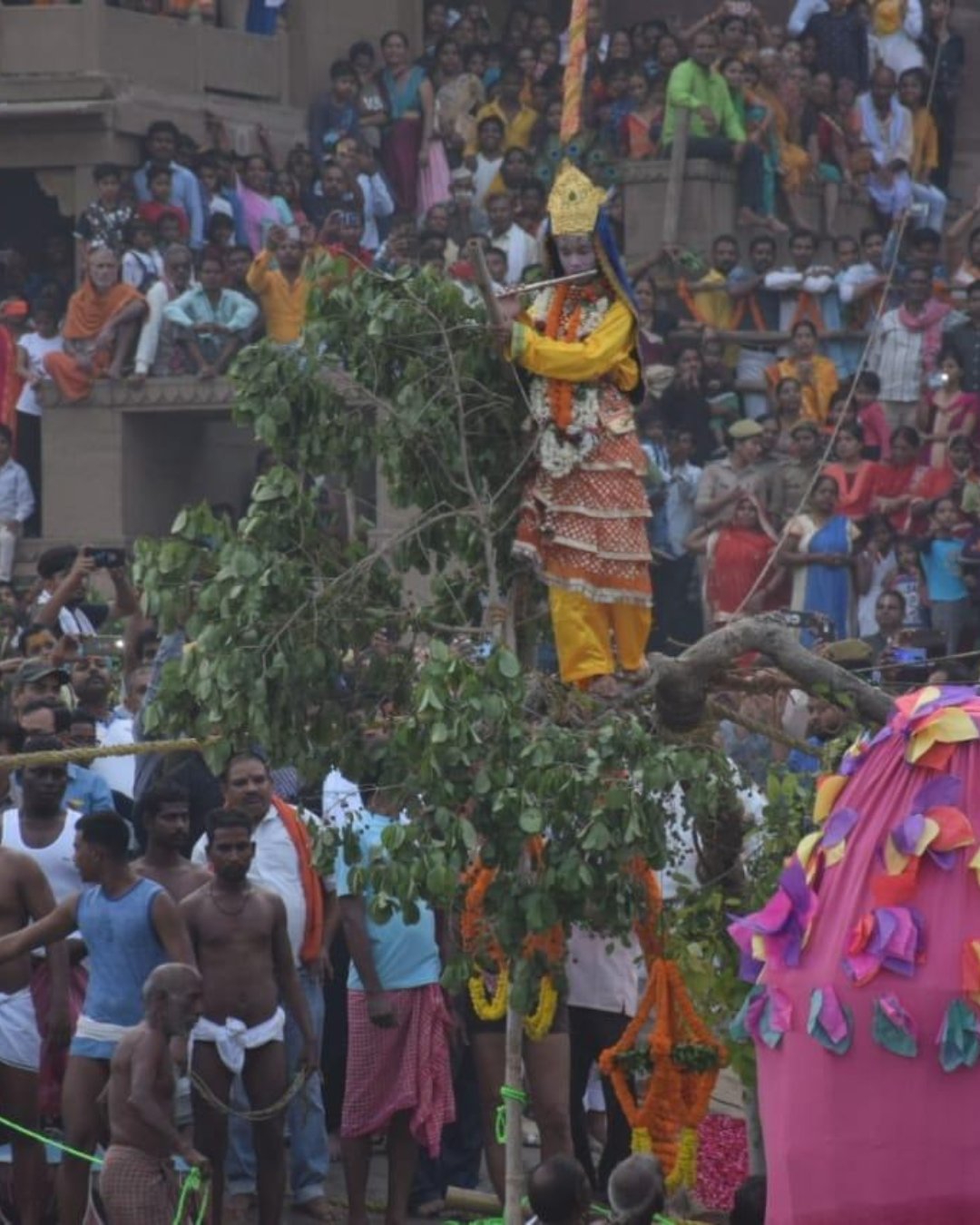
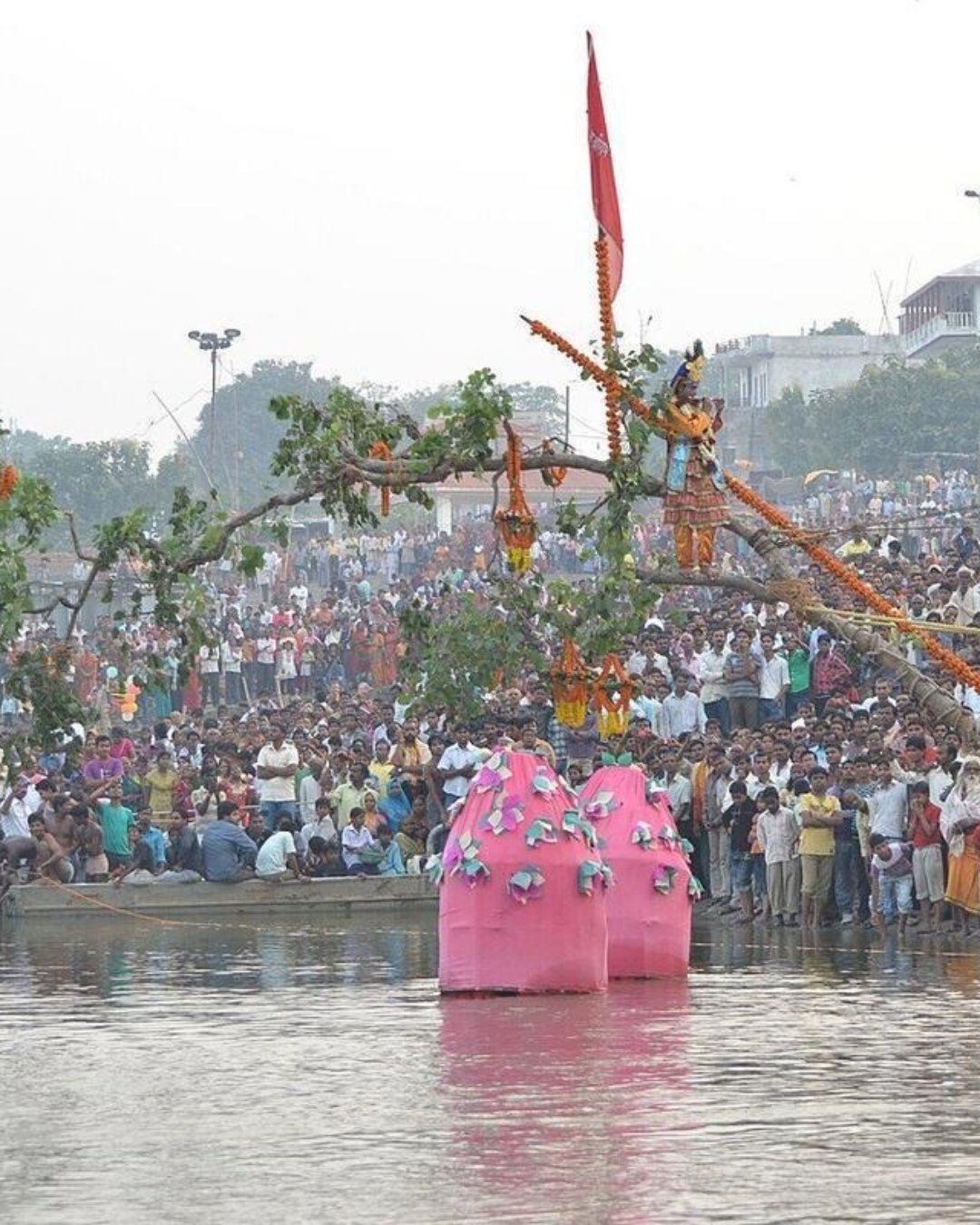
The kadamba tree — by tradition a branch over the river from which the boy-Krishna leaps, as in the Braj legend.
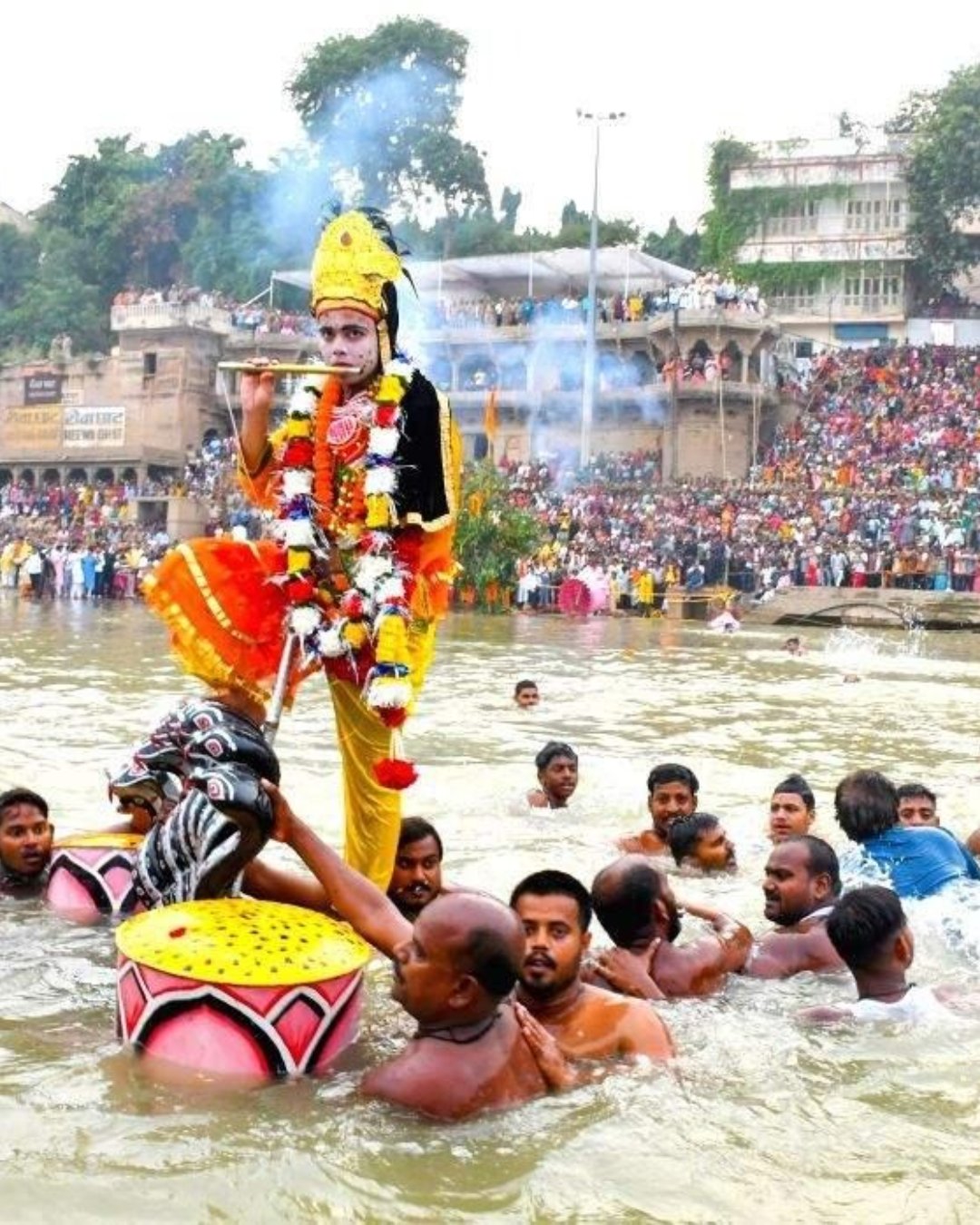
The dance on Kaliya — the central image: Krishna subduing the serpent, staged on the Ganga at Tulsi Ghat.
The river crowd — hundreds of boats packed gunwale to gunwale, and the ghat steps solid with people.
The royal barge — the Kashi Naresh, the former king of Benares, traditionally attends, arriving by boat.
Bring a light layer for the water and small notes for the boat. It's breezier and cooler on the river than on the steps.
And here's the twist on the usual advice: this is one time you do want the phone ready — the moment is so brief you'll want to catch it — but get your shot in the first few seconds, then watch. Travellers who've seen it will tell you the same thing: the crowd, the boats, the roar when Krishna appears, the last light on the water — that swell of a whole city holding one moment together is the part the photos never quite catch.
Pro tip: Watch from a boat, not the steps. The lila plays out on and above the river, the ghat is dangerously packed, and a boat gives you the angle everyone on the steps is straining for. Book it well ahead — every rowboat in the city is spoken for that afternoon — and agree the price and position before you board. Arrive on the water early and hold your spot; you cannot turn up at the last minute and find room.
The mistakes that ruin it
Most first-timers trip over the same few things. They get the date wrong, because it moves with the lunar calendar. They watch from the crushed ghat and see nothing. Or they arrive late to a river already wall-to-wall with boats.
The easy fix is to confirm the exact date, book a boat well in advance, and be in position early — or let the afternoon be arranged so you're on the water in the right spot when Krishna leaps.