

Diwali: The Night Varanasi Out-Lights Every Other City
Dashashwamedh Ghat, Varanasi, India
You've probably seen the photos. Every step of every ghat lined with tiny flames, the whole riverfront glowing, lamps reflected in the black Ganga for six kilometres. So you book Varanasi for Diwali, fly in for the big night — and find a city celebrating beautifully at home, with fireworks and lit doorways, but not the river of a million lamps you came for. You got the festival. You missed the spectacle. Because the two aren't the same night.
Let's fix that. Here's how Diwali in Varanasi actually works, and how to make sure you're here for the night that matters.
Why the date is everything
Varanasi has two festivals of light, and they fall two weeks apart. Diwali proper is the new-moon night — Lakshmi puja, homes and markets ablaze, sweets, fireworks over the old city. It's warm and joyful and worth seeing, but it happens in the lanes and the houses, not on the water.
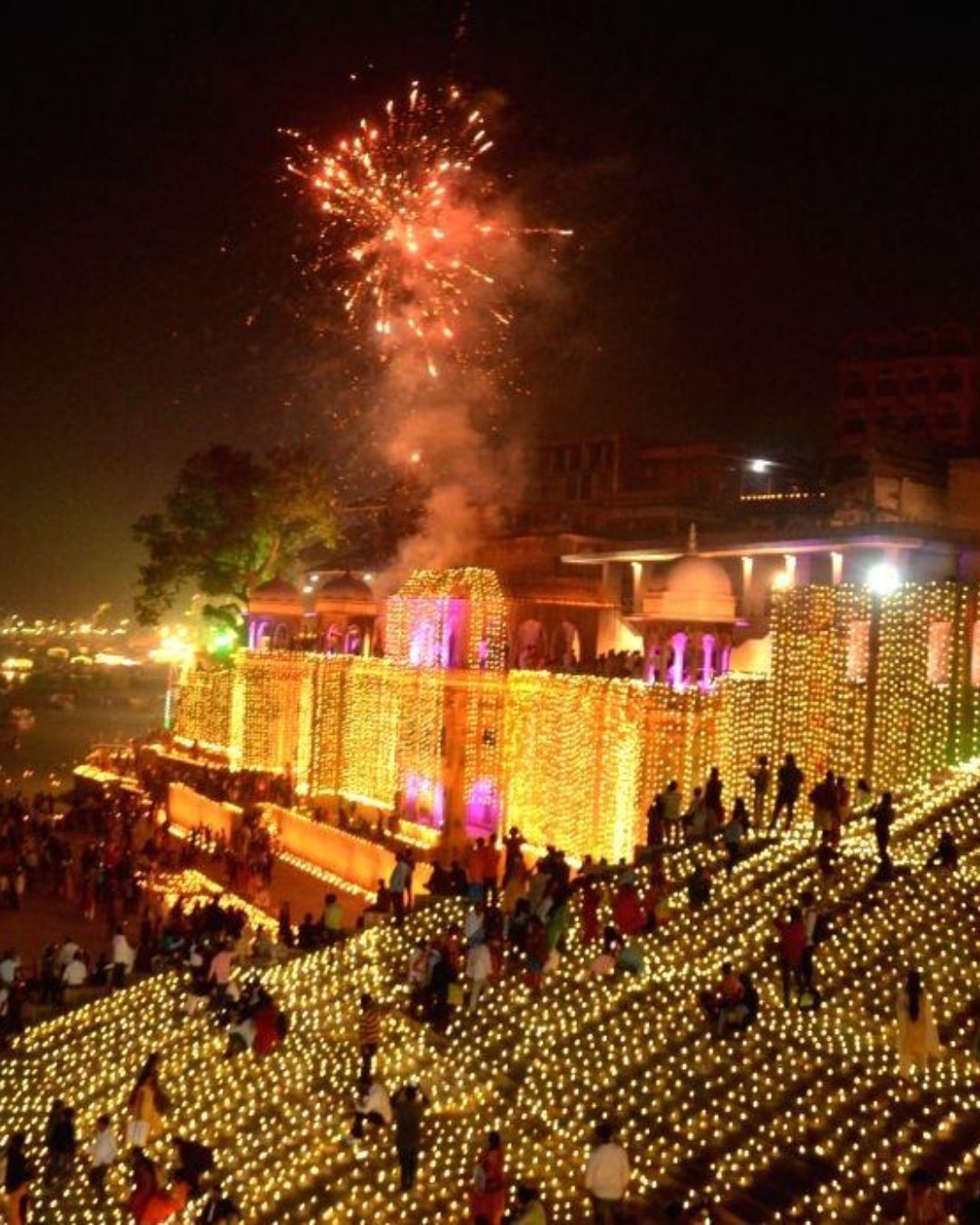
The night the ghats out-light every city on earth is Dev Deepavali — the "Diwali of the Gods" — on Kartik Purnima, the full moon fifteen days after Diwali. That's when lakhs of earthen diyas are lit down every ghat, when priests perform a mass Ganga aarti, and when the entire riverfront becomes the thing in the photographs. Get this date right and nothing else you do in India will match it. Get it wrong by two weeks and you'll wonder what the fuss was about.
What you'll actually see (on Dev Deepavali)
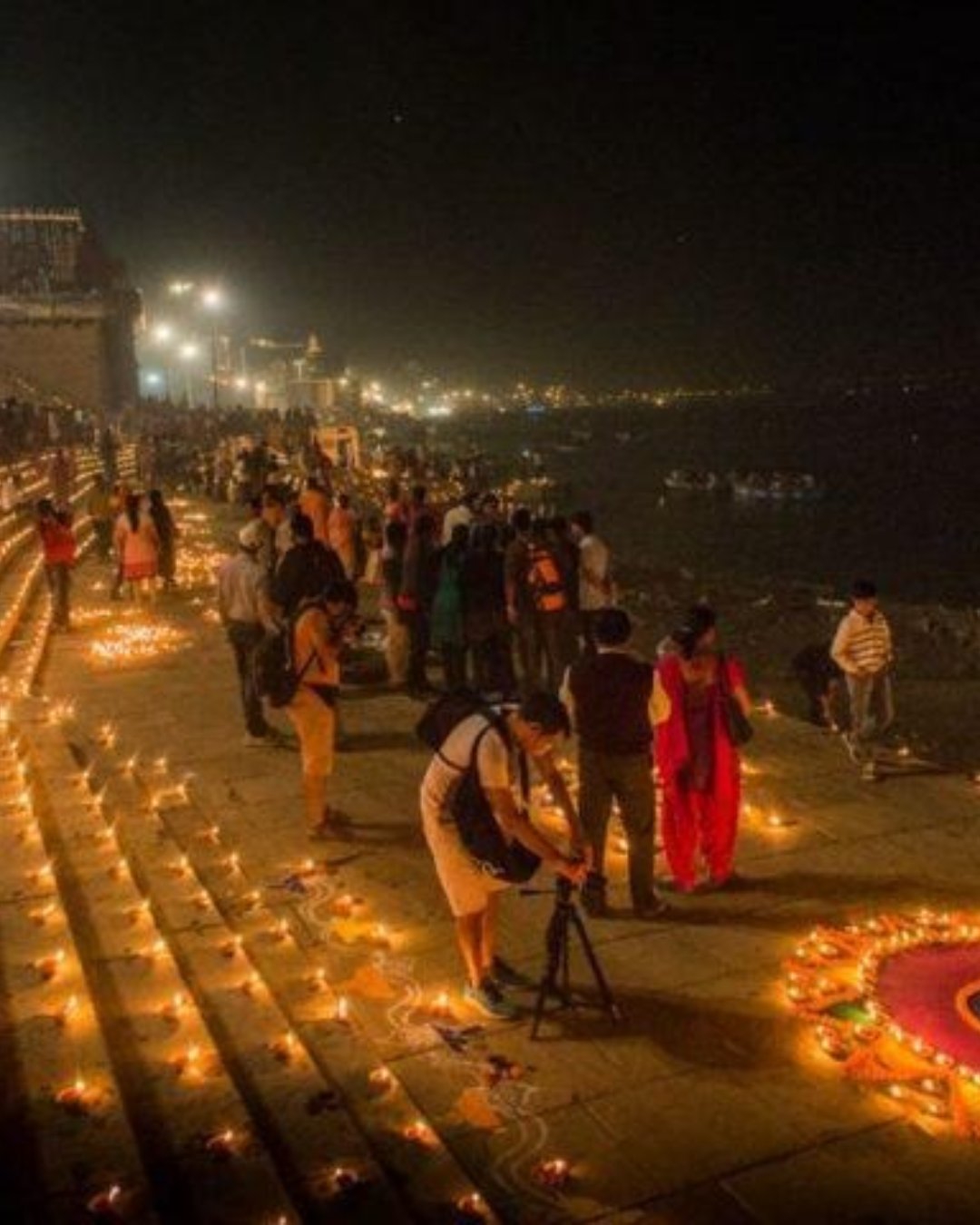
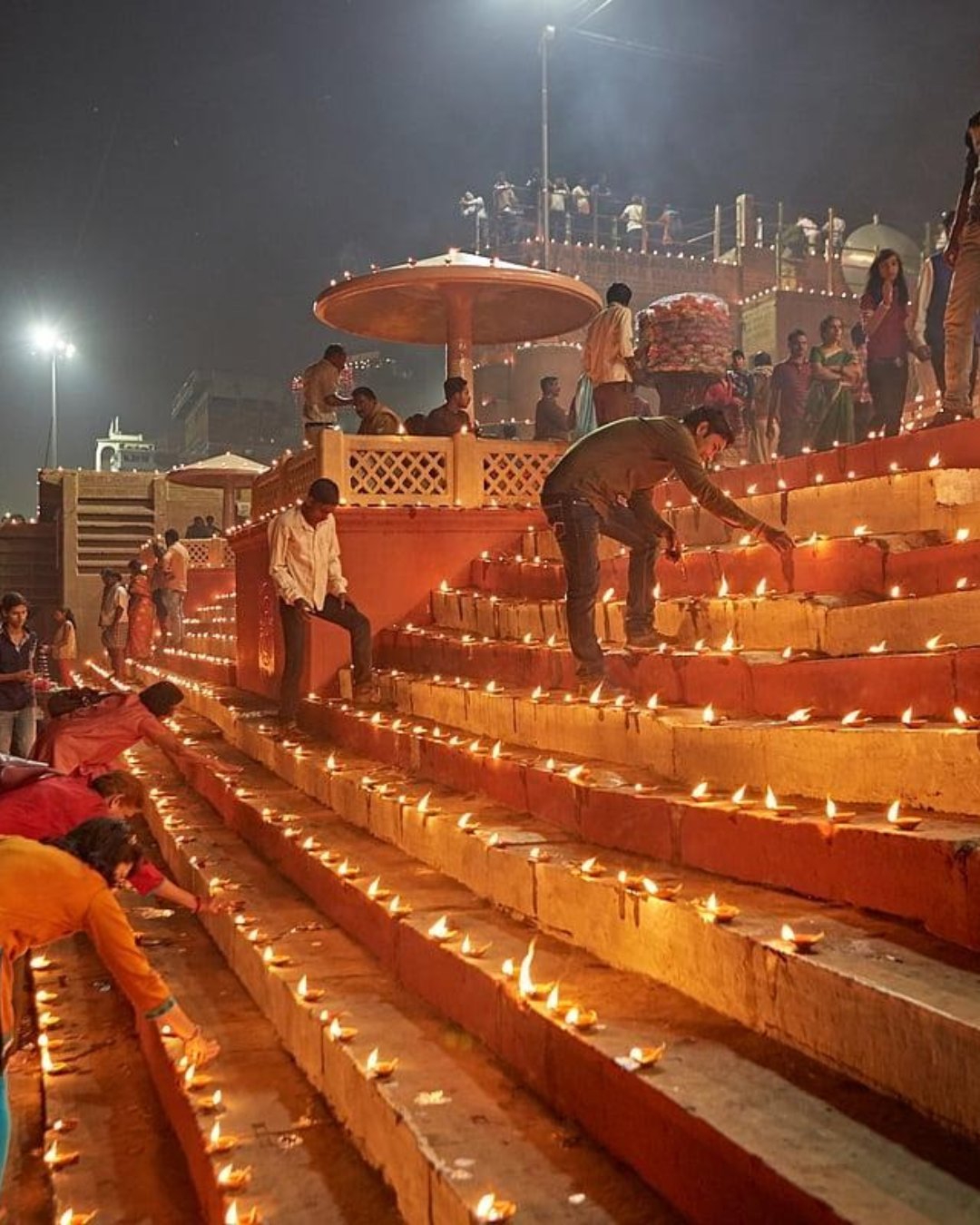
The lamp-lined ghats — every step of all eighty-odd ghats set with tiny oil lamps, lit at dusk in sequence.
The mass Ganga aarti — rows of priests at Dashashwamedh performing the ceremony in unison, larger than any ordinary evening.
The lit river — the reflections doubling the flames, best seen from the water.
Panchganga Ghat — famous for its tiered wooden lamp frames, one of the signature sights of the night.
The crowds — hundreds of thousands of people. This is the trade-off, and it's a real one.
Dress for a cool November night and wear shoes you can move in — the ghats are packed and the stone is uneven in the dark.
And here, unlike the cremation ghats, the phone absolutely comes out — but look first. Travellers who come for this will tell you the same thing: the instinct is to film the whole time, and the footage never holds it — a phone can't capture a million flames across six kilometres of river. Watch it come alive first, from a boat if you can, then shoot. The scale of it, the sound of the aarti rolling off the water, the sheer number of small flames — that's the part the photos never quite catch.
Pro tip: See it from a boat. The ghats are so crowded on Dev Deepavali that the only comfortable, complete view is from the water — and it's also the safest, away from the crush on the steps. Book that boat months ahead; the good ones sell out and prices spike. And book your hotel even earlier — the city fills completely for this one night.
The mistakes that ruin it
Most first-timers trip over the same few things. They book Diwali expecting the ghat spectacle and get the wrong night. They plan Dev Deepavali but leave the boat and hotel too late and find both gone. Or they fight the crowds on the steps instead of taking the calm, complete view from the river.
The easy fix is to pin the correct date — Kartik Purnima, not Diwali — and lock in the boat and room months out.