

Chhath Puja: The City Stands in the River at Sunrise
Assi Ghat, Varanasi, India
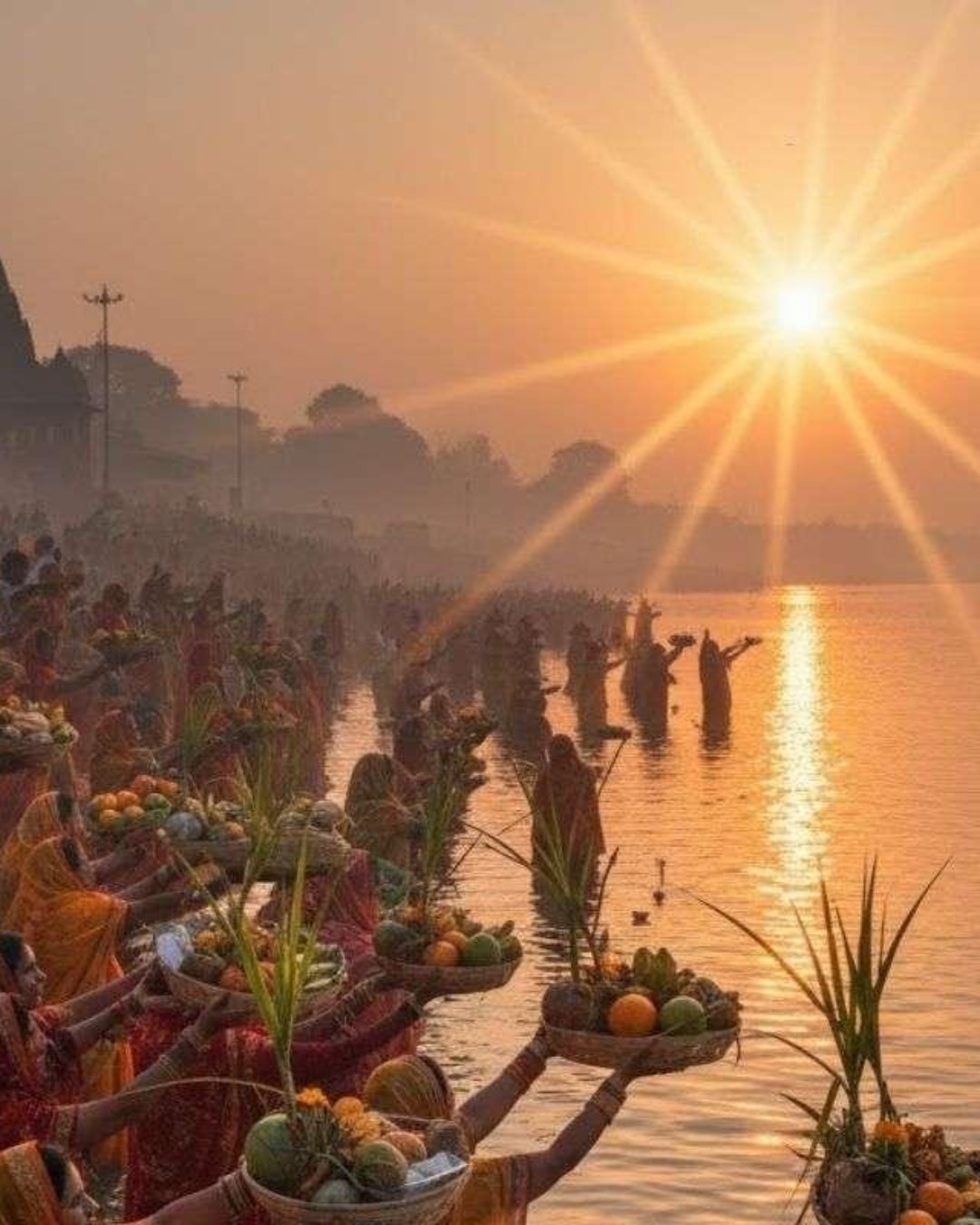
You've probably seen the images without knowing what they were. Thousands of people waist-deep in the Ganga at dawn, arms raised to the sun, the whole waterfront packed shoulder to shoulder. But here's the thing nobody tells you: this isn't a show, and it isn't for you. Chhath is one of the most demanding acts of devotion in India — a four-day fast ending with the faithful standing in the river to offer water to the sun — and if you turn up treating it as a photo opportunity, you've misread the single most sacred morning Varanasi's ghats will show you all year.
Let's get it right, then. Here's how Chhath Puja on the ghats actually works, and how to be there properly.
Why this hour, and why it matters so much
Chhath honours Surya, the sun god, and Chhathi Maiya, and it's one of the very few festivals anywhere that worships the setting sun as well as the rising one. It falls in Kartik, six days after Diwali (October–November), and it runs four days: the ritual meal of Nahay Khay, the day-long fast of Kharna, then the two great moments — Sandhya Arghya, the offering to the setting sun, and Usha Arghya, the offering to the rising sun the next morning.
The vratis — those who keep the fast, often women — go without food and even water for stretches that would frighten most people, then stand in the cold river to make their offering. The dawn of Usha Arghya is the climax. That's why the whole city is in the water at sunrise: not for a spectacle, but to complete a vow.
What you'll actually see
From a respectful distance, ideally from a boat or the upper steps:
The vratis in the water — offering arghya to the sun with raised hands, standing in the Ganga.
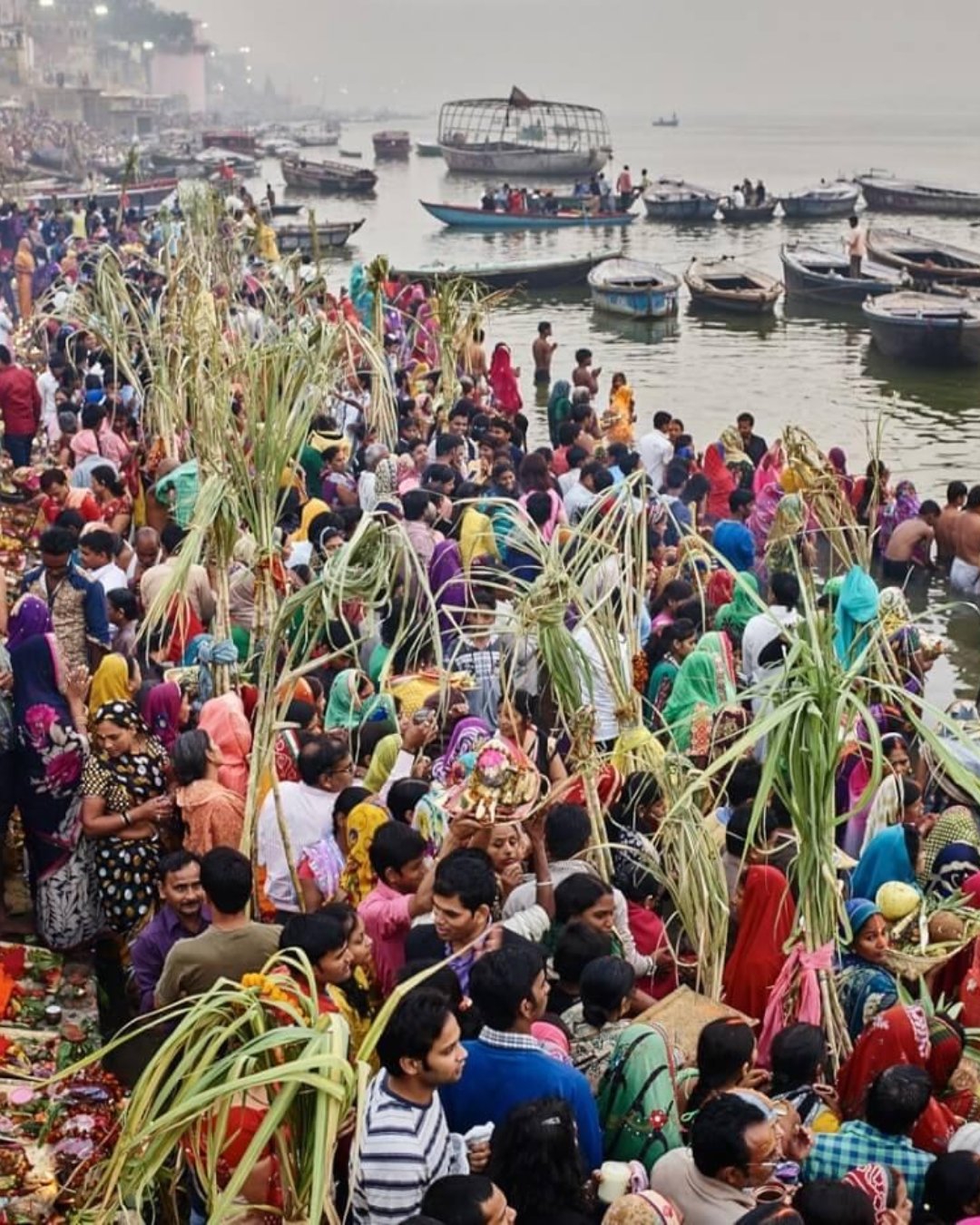
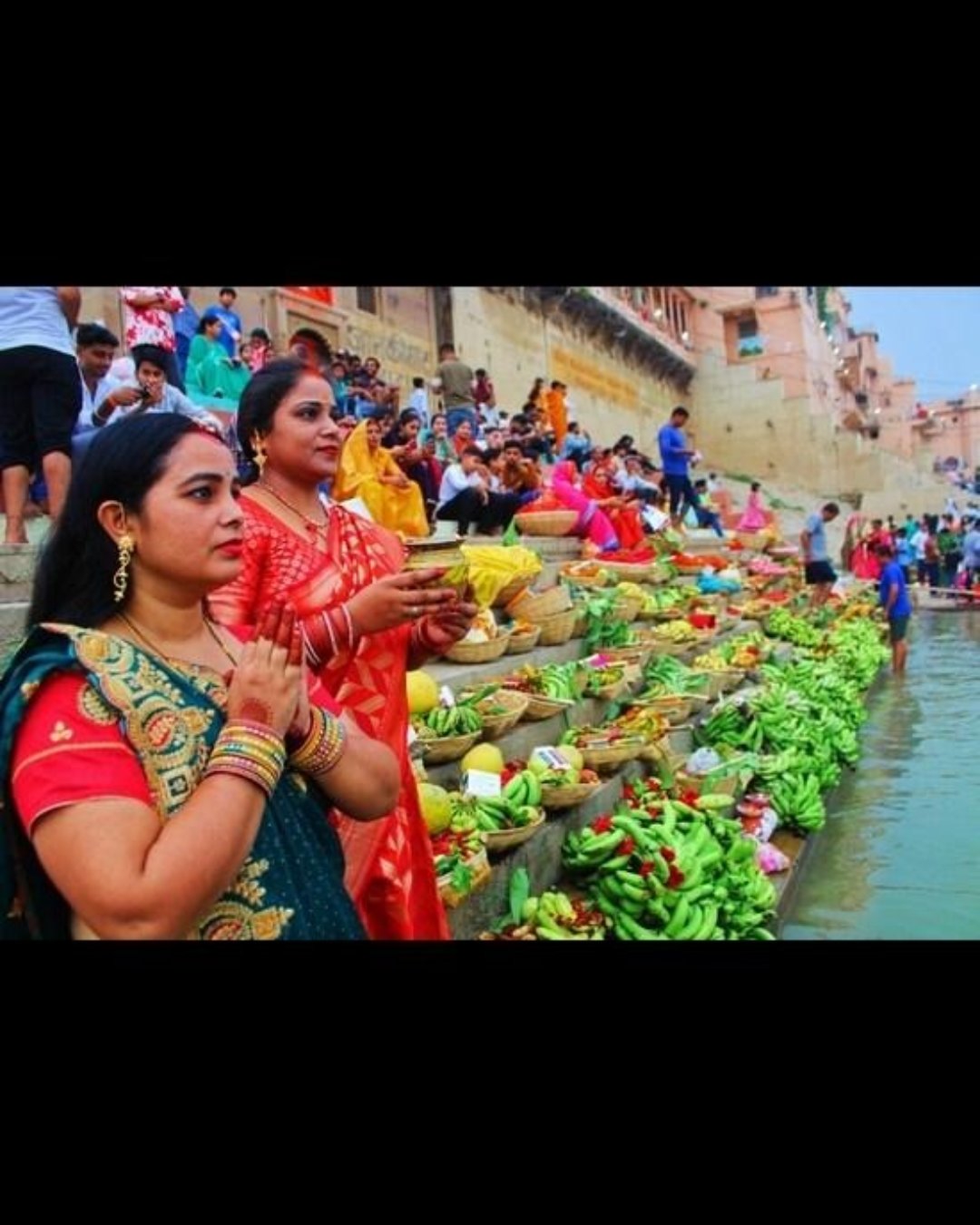
The soop and daura — bamboo trays and baskets of thekua, sugarcane, coconut and seasonal fruit, offered to the sun.
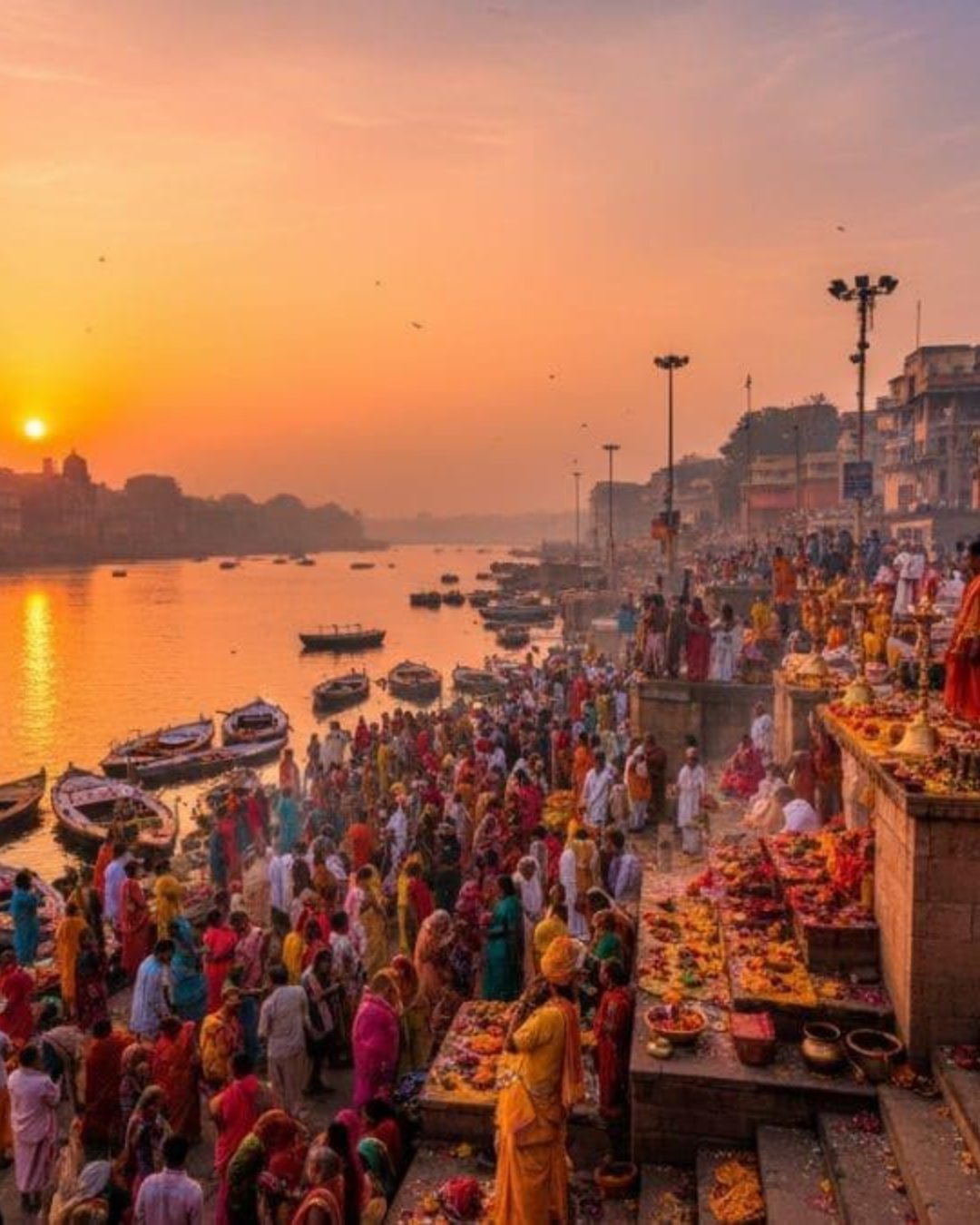
The ghats transformed — cleaned, decorated, lit through the night, more crowded than any other day of the year.
Families together — Chhath is deeply familial; you're watching households, not performers.
Dress modestly and warmly — dawn in Kartik is cold, and you may be still for a long time.
And this is a morning to keep the phone away, not for ten minutes but as a default. Photograph the wide scene from a distance if you must, but never push a lens into someone's face mid-prayer, never step into the water, never cross in front of an offering. Travellers who witness Chhath properly will tell you the same thing: the power of it is in standing quietly at the edge of a devotion this total — the silence of the fast, the raised arms, the sun coming up over a river full of people who mean it completely. That's the part no photo was ever going to hold.
How to be here, in place of a pro tip: come as a guest, not a spectator. Watch from a boat or the higher steps, well back from the vratis. Don't eat, drink or smoke at the water's edge during the offering. Don't touch the offerings or the river space the families have prepared. If someone offers you prasad, receive it with both hands — it's a kindness, not a transaction. And give the day the quiet it asks for.
The mistakes to avoid
Most visitors who get this wrong do the same things. They wade in for a photo. They crowd the vratis mid-prayer. Or they treat a profound family fast as street theatre laid on for their camera.
The right approach is to witness from a distance, quietly, knowing what you're seeing — a vow being kept, not a performance being staged.