

Dev Deepawali: When the Gods Come Down to Light Diyas
Assi Ghat, Shivala, Varanasi, India
You've probably seen the photos and assumed you can just turn up. Every ghat in Varanasi lined with a million earthen lamps, the whole riverfront burning gold, the aarti bigger than any other night of the year. But here's the thing nobody tells you: this happens on exactly one night, the city fills past bursting, hotels are booked out months ahead at triple the price, and travellers who decide on a whim end up watching from a rooftop three streets back, if they get in at all.
Let's fix that. Here's how Dev Deepavali actually works, and how to get it right — which, for this one, starts long before you arrive.
Why the date is the whole thing
Dev Deepavali — the "Diwali of the Gods" — falls on Kartik Purnima, the full moon of the Kartik month, fifteen days after Diwali, usually in November. By tradition it marks Shiva's victory over the demon Tripurasura, and the belief that the gods themselves descend to bathe in the Ganga that night. So the entire city lights up to welcome them.
Unlike every other Varanasi experience, there's no "best hour" to get right — there's a single date, and everything hinges on being there for it and having planned for it. Miss the date by a day and you've missed it by a year. This is the one trip you cannot improvise.
What you'll actually see
Around dusk on Kartik Purnima, the ghats transform:
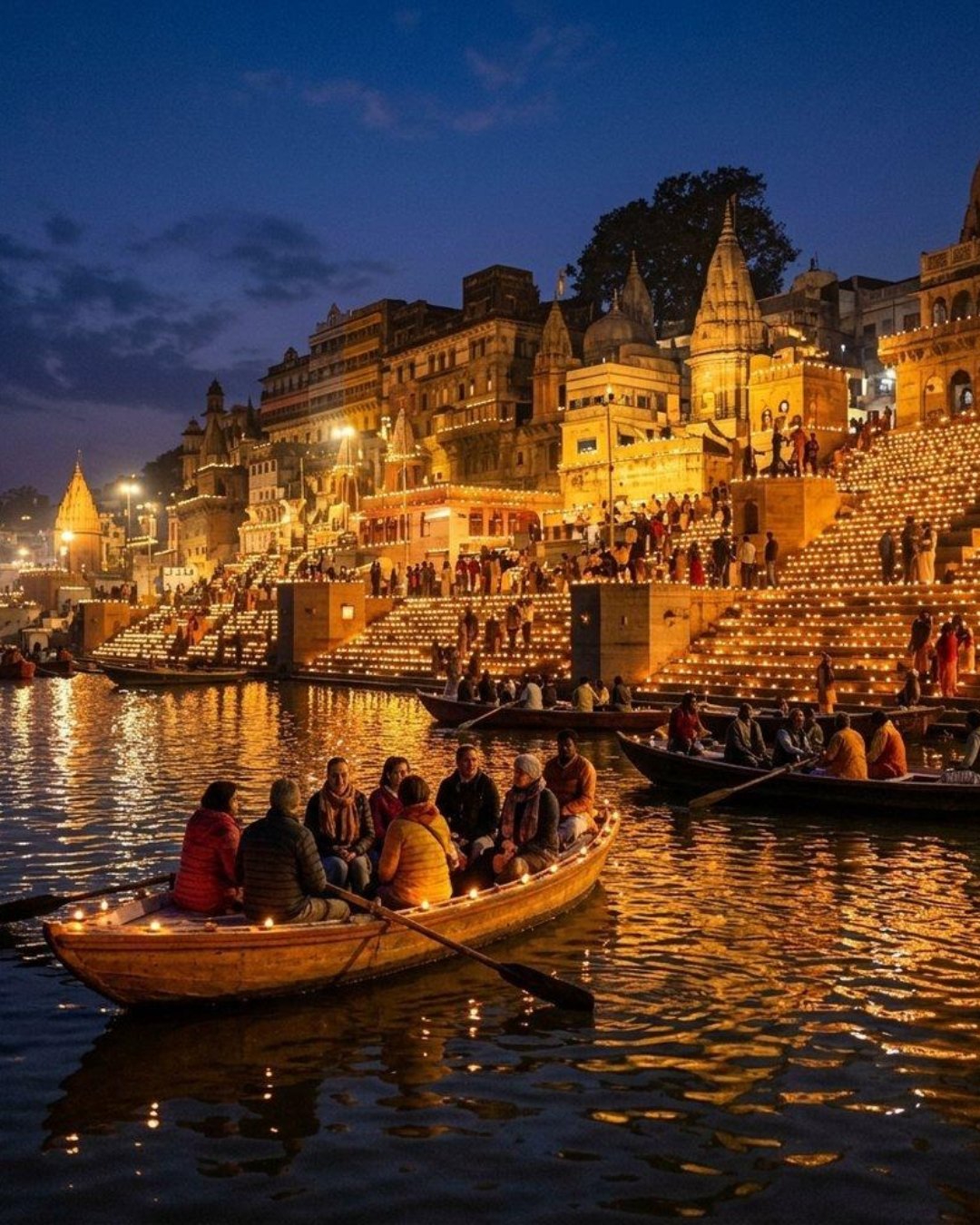
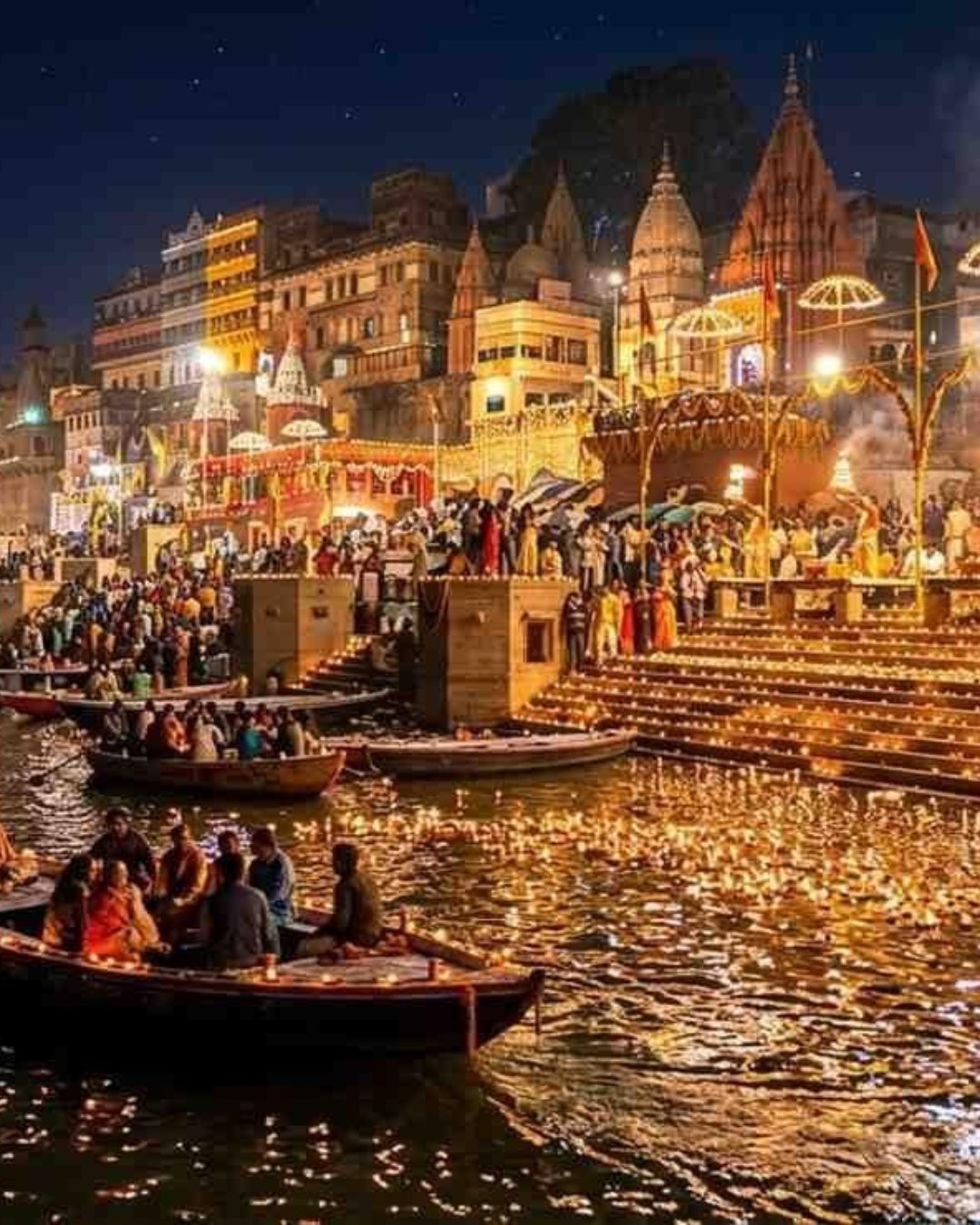
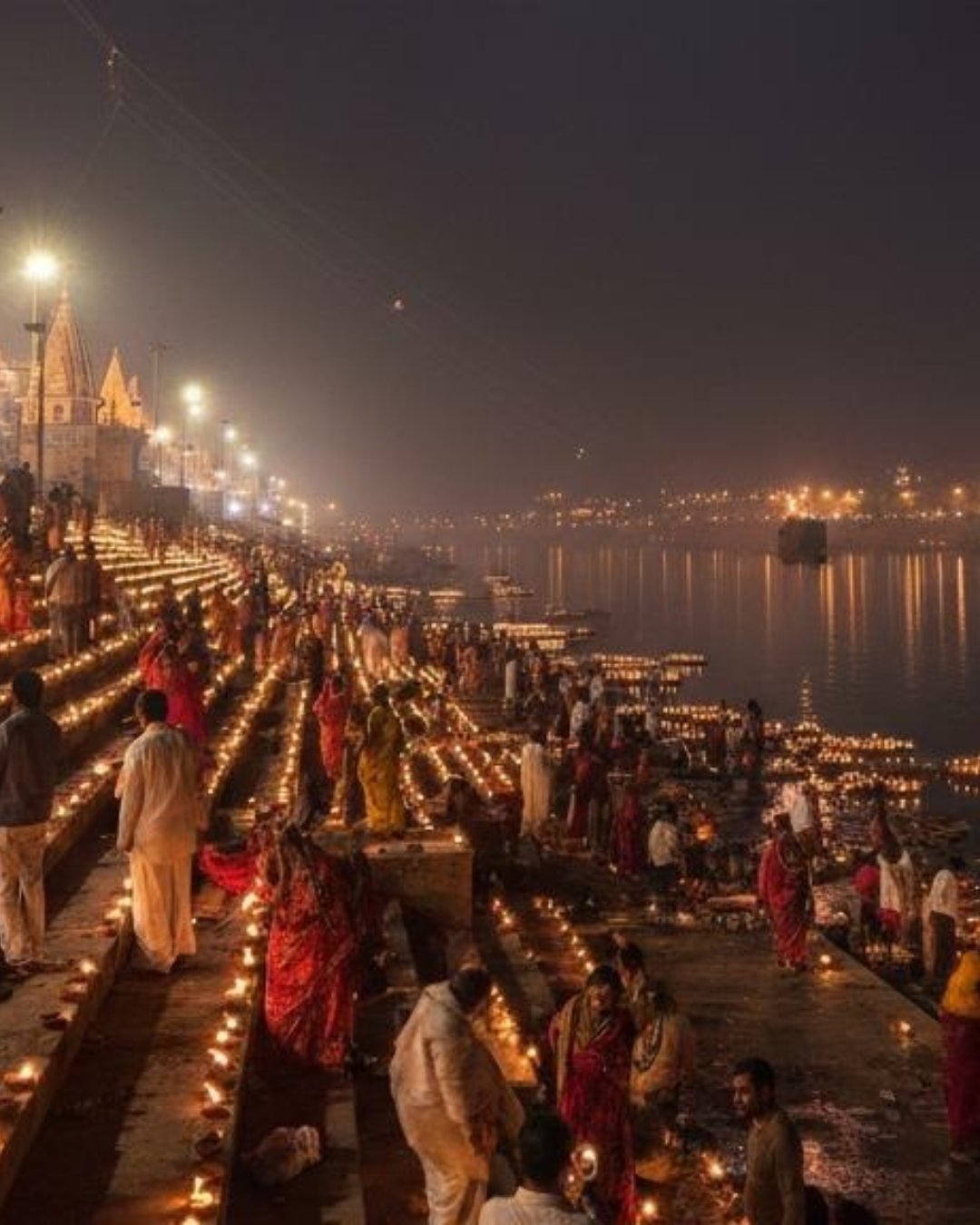
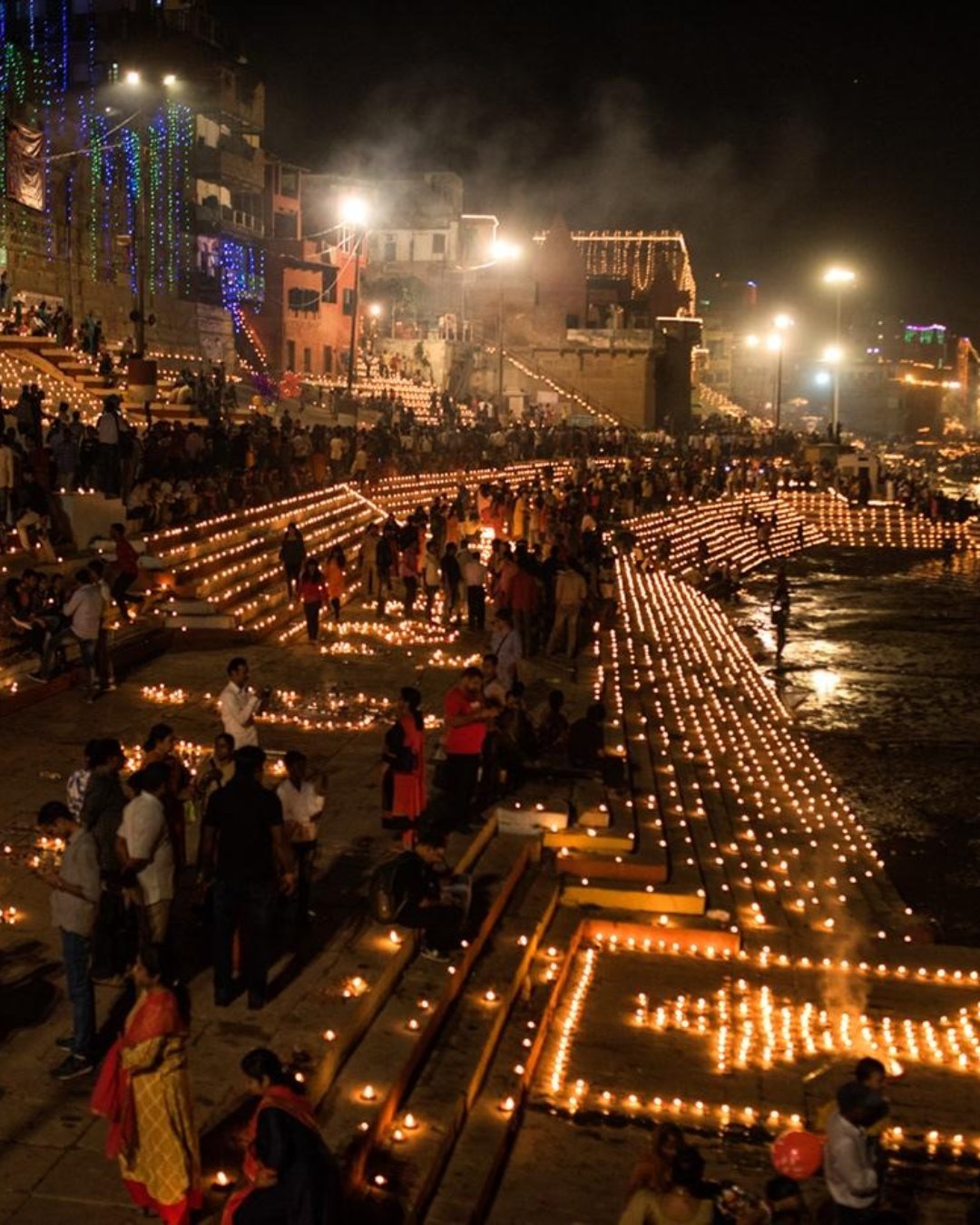
The lamps — lakhs of diyas laid in patterns down every step of all 80-odd ghats, lit together as darkness falls.
The grand Ganga Aarti — larger and more elaborate than the nightly ceremony, performed across multiple ghats at once.
The Chet Singh light-and-laser show — a modern addition on the fort's frontage, telling the city's story on the walls.
The river of lamps — floating diyas set adrift by the thousand, and the reflection of the whole lit shoreline on the black water.
Bring a warm layer — November nights on the river are cold — and wear closed shoes for the crush on the steps.
And here, unlike the cremation ghats or the temples, the phone absolutely comes out — this is a spectacle built to be seen. But watch it happen first. Travellers who've been will tell you the same thing: the instinct is to film the whole shoreline lighting up, and you'll get a shaky, dim clip that captures none of it. Put the phone down for the moment the lamps are lit, take it in, then shoot. The scale of it — a whole city's riverfront on fire with small flames at once — is the part no photo holds anyway.
Pro tip: Book everything months ahead — hotel, boat and guide — because all three sell out and surge in price for this single night. See it from a boat: the crowds on the ghats are immense, and the entire point of Dev Deepavali is the shoreline seen from the water, all of it at once, which you simply can't get from the steps. Agree the boat price in advance (it will be far above normal, that's expected) and confirm your spot days before, not on the night.
The mistakes that ruin it
Most first-timers trip over the same few things. They decide too late and find every room in the city gone. They try to watch from the packed ghats and see one stretch instead of the whole river. Or they spend the night filming and miss actually seeing it.
The easy fix is to plan months out, get on a boat, and treat the date as fixed and everything else as booked-in-advance.