


New Vishwanath Temple (Birla Temple)
Shri Kashi Vishwanath Ji Temple, BHU Campus (Varanasi), Varanasi, India
You've probably confused it with the famous one. Kashi Vishwanath is the ancient temple in the old-city lanes; this is a different place entirely — a 20th-century marble temple inside Banaras Hindu University, built by the Birla family, and a lot of visitors turn up at one expecting the other. But here's the thing nobody tells you: this isn't a second-best substitute. It's a calm, open, beautifully kept temple on a green campus, with no crowds, no touts, no security scramble — the exact opposite of the old-city experience, and worth going for on its own terms.
Let's fix that. Here's how the New Vishwanath Temple actually works, and how to get it right the first time.
Why you come here for calm, not for the crowd
The old Kashi Vishwanath is intense — lanes, queues, phones surrendered, the press of thousands. The New Vishwanath Temple is the antidote. It sits inside the BHU campus, set among trees and lawns, and it's spacious, quiet and unhurried in a way almost nothing else in Varanasi is.
That makes it a good mid-morning or afternoon stop, when the ghats have gone flat and hot and you want somewhere peaceful. It's open through the day with a midday break, and because it's on a university campus rather than in the tangle of the old city, you simply walk in — no lanes to navigate, no one working you for a "guide."
What you'll actually see
A modern temple built to last, and the campus around it:
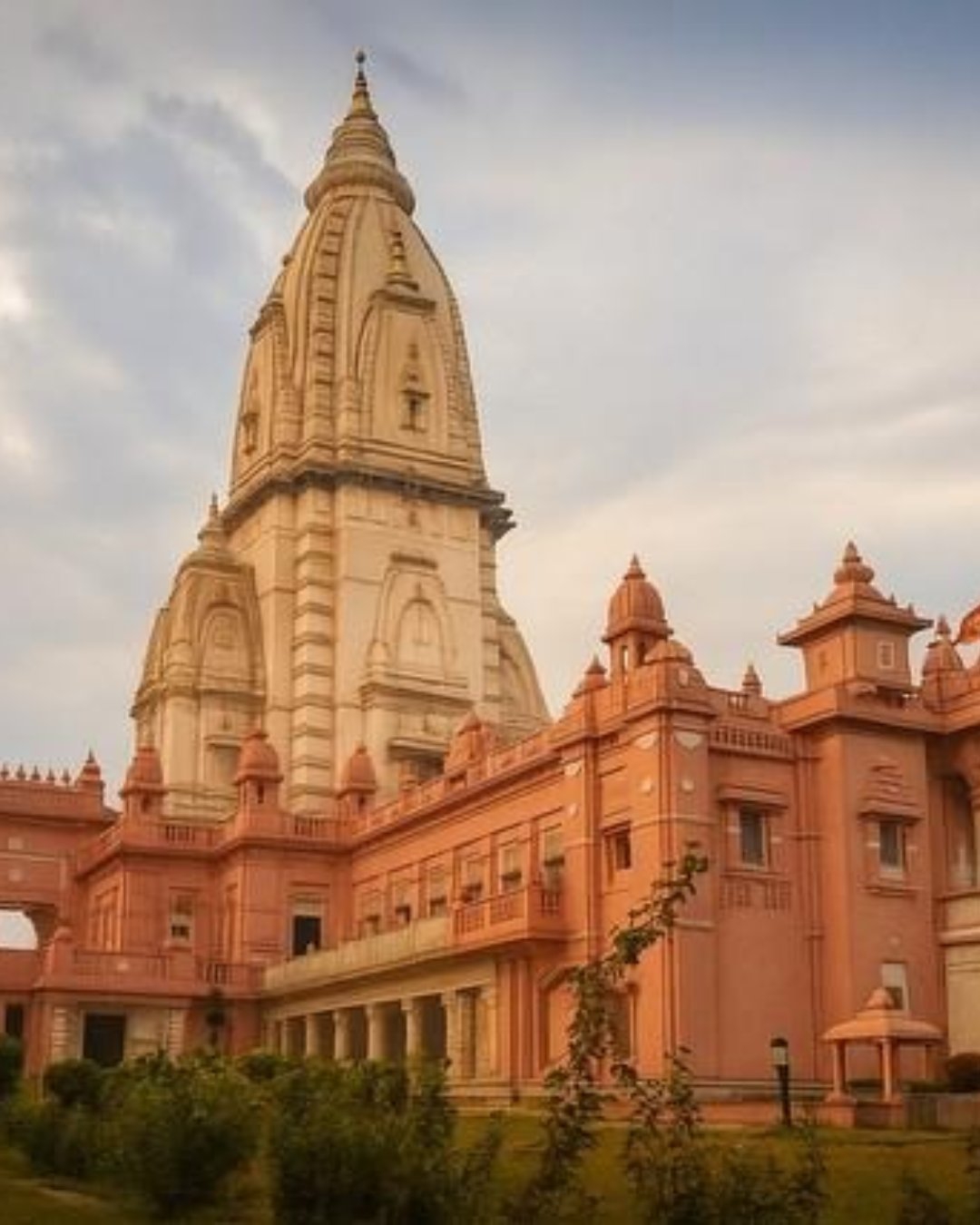
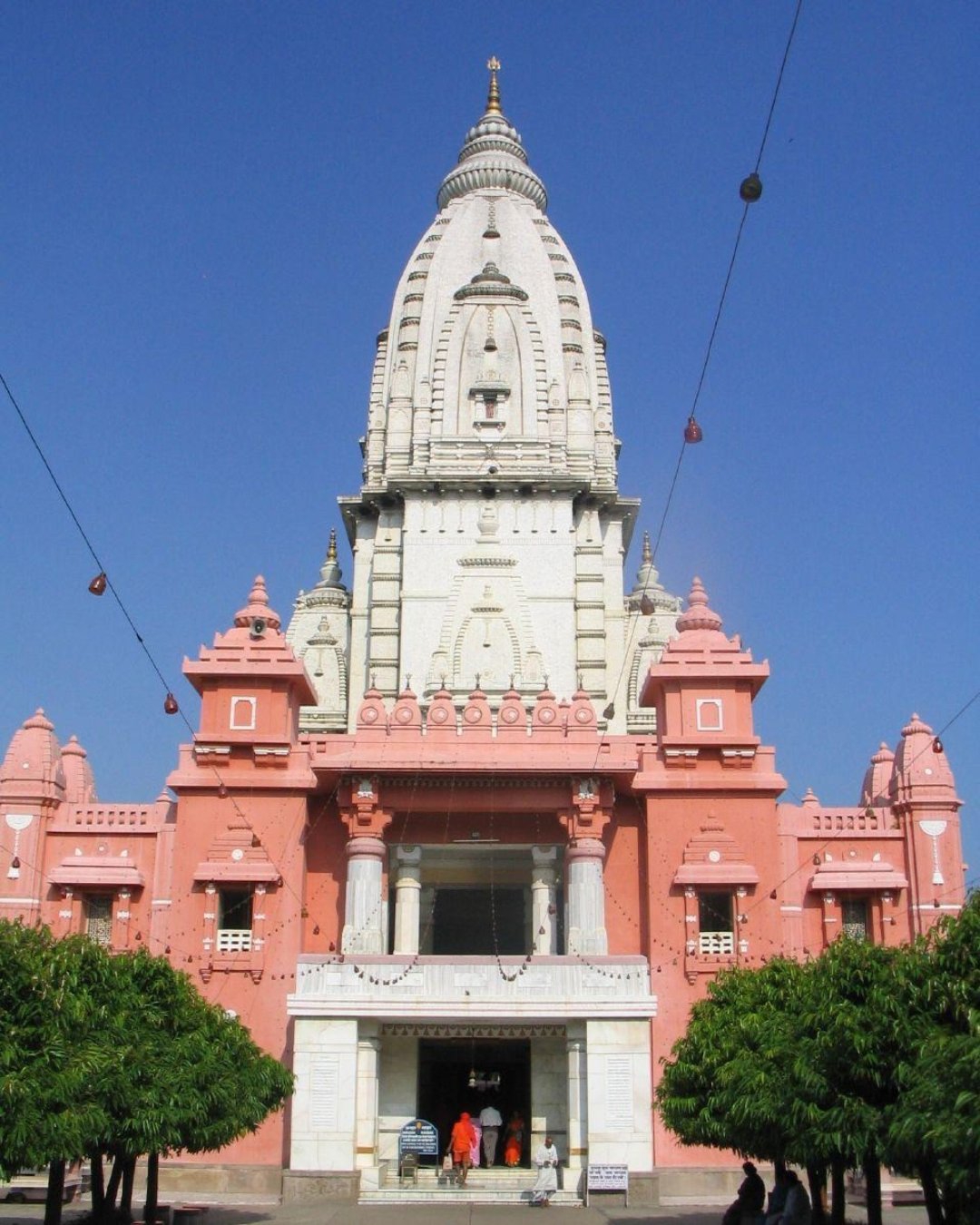
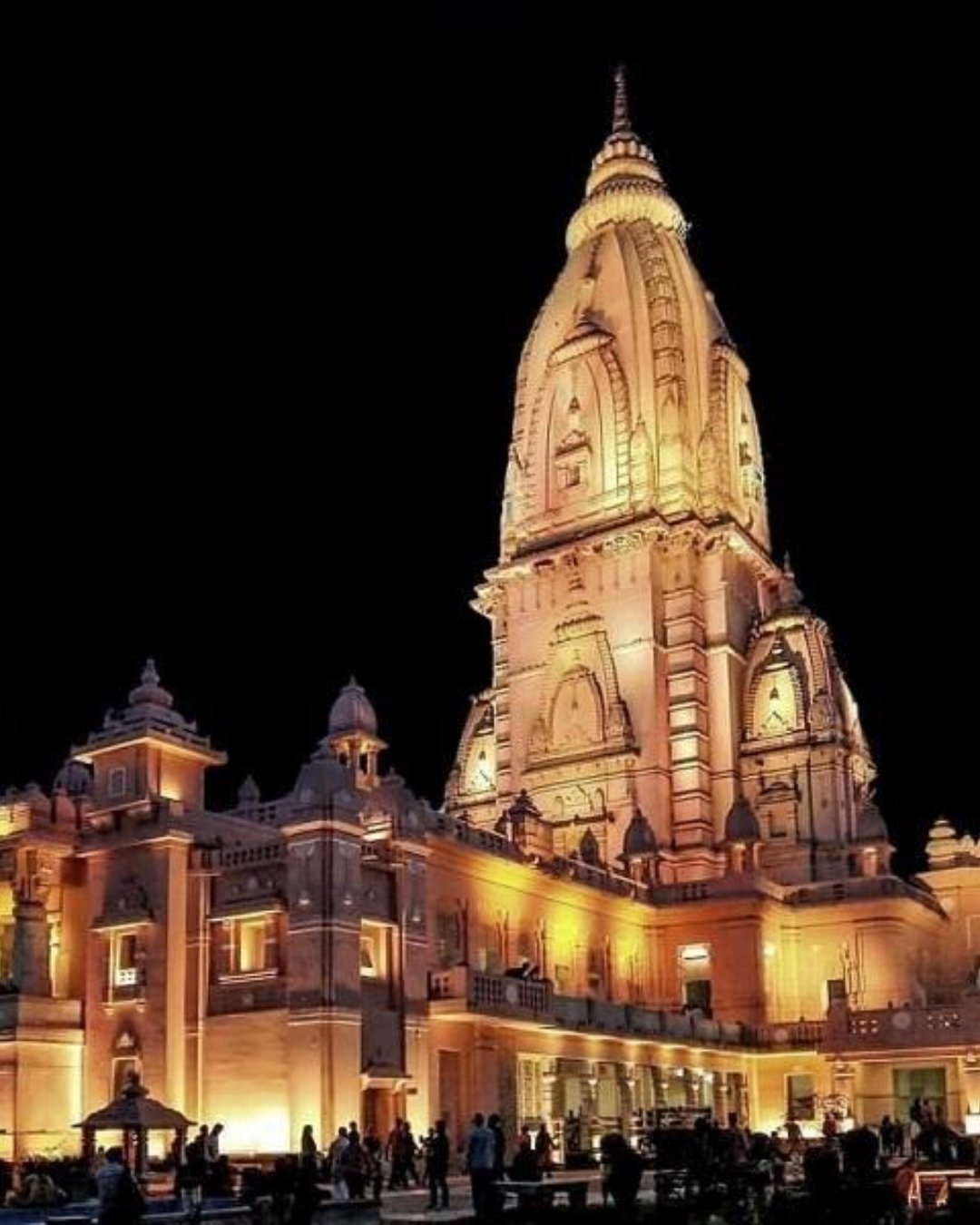
The marble shikhara — one of the tallest temple towers in the city, white marble, visible across the campus.
The verses on the walls — passages from Hindu scriptures inscribed inside, which is part of the temple's purpose as a place of study.
The Shiva lingam — the central shrine, open and accessible without a queue.
The BHU campus — one of Asia's great universities, green and calm, worth a slow wander around the temple.
Dress modestly and be ready to go barefoot from the shoe stand. Photography rules vary by area — outside is usually fine, the inner sanctum often not, so ask.
And here you can keep the phone out for the campus and the exterior, unlike the old temple where everything's surrendered at the gate. Travellers who come will tell you the same thing: the pleasure here isn't a single dramatic moment, it's the calm — sitting on cool marble in a quiet mandapa, reading the inscriptions, watching students cut across the lawns. After the intensity of the ghats and the old city, that stillness is the part you don't expect and end up grateful for.
Pro tip: Combine it with the BHU campus and the Bharat Kala Bhavan museum in the same trip — you're already there, and the museum's collection of miniatures and sculpture is one of the city's underrated pleasures. Come mid-morning or afternoon, when the ghats are at their least rewarding, so your day's rhythm makes sense. And carry ID — campus entry can involve a check at the gate.
The mistakes that ruin it
Most first-timers trip over the same few things. They confuse it with the old Kashi Vishwanath and arrive expecting the ancient temple. They skip it as "just a modern temple" and miss the calm that makes it worth going. Or they come at dawn or dusk, wasting the golden hours the ghats want, when this is exactly the stop for the flat middle of the day.
The easy fix is to know what it is — a peaceful modern temple on a university campus — and slot it into the middle of the day, paired with the museum.
Want BHU, the Birla Temple and the museum in one calm afternoon away from the ghats? Hit Do this trip.