


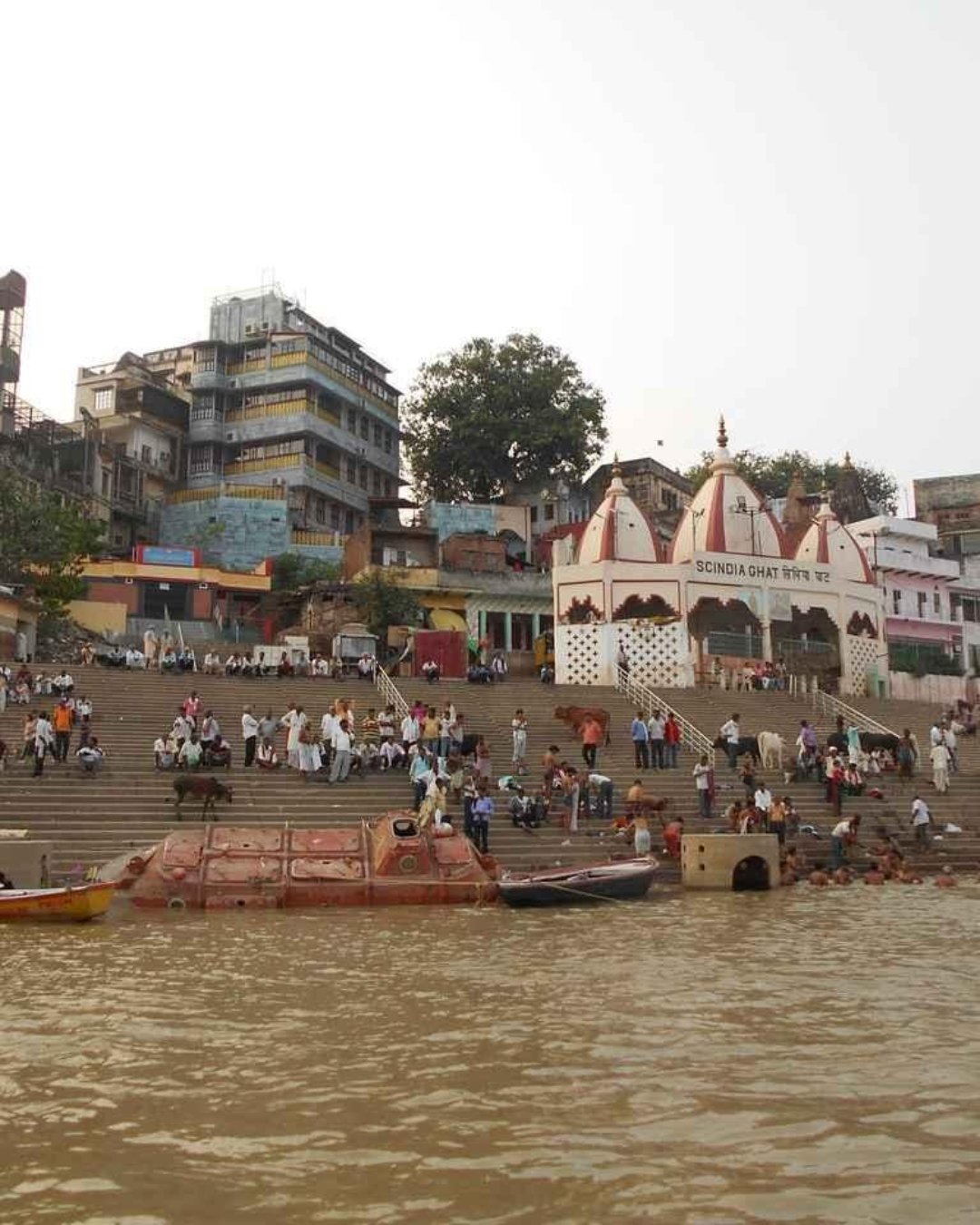
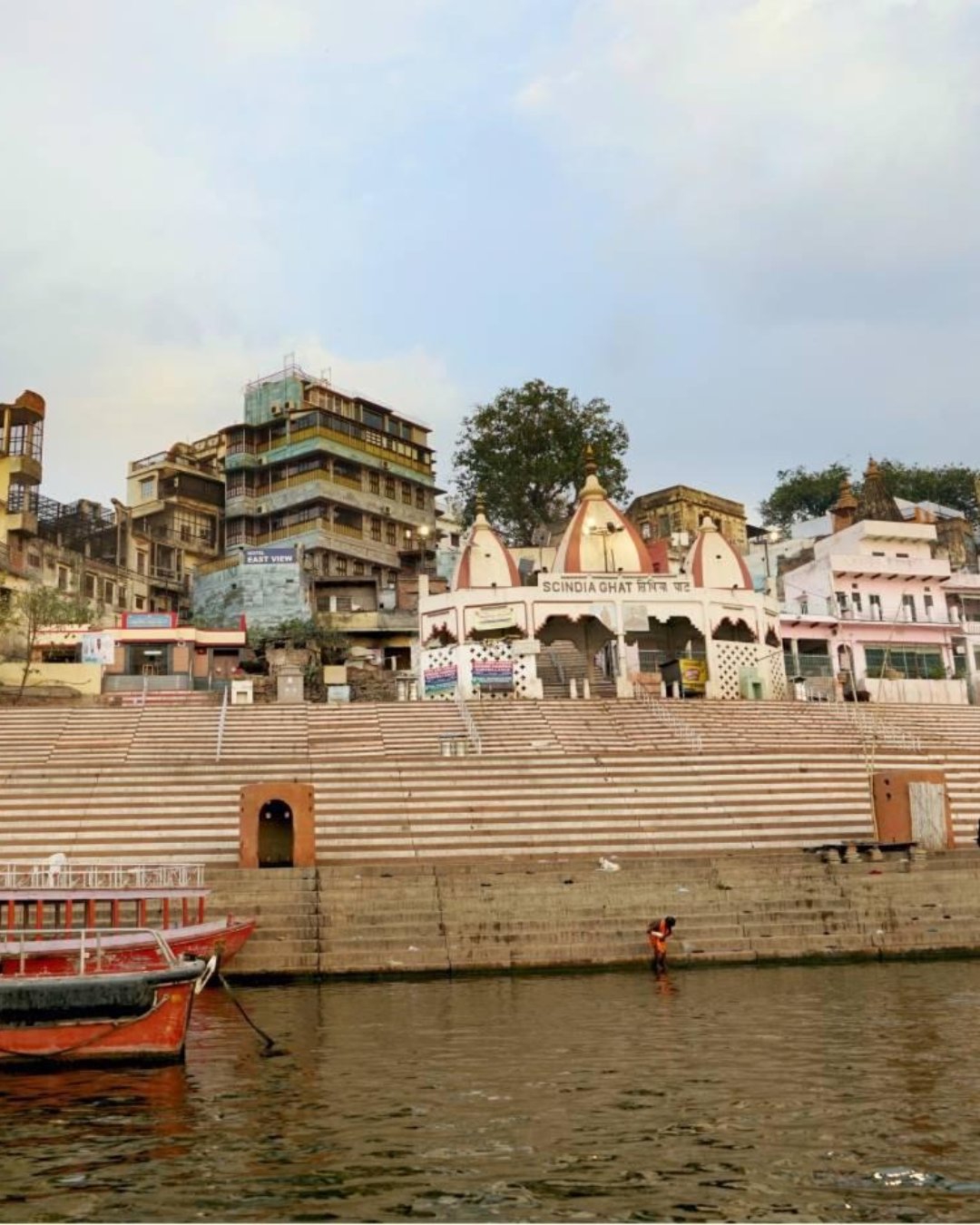
Scindia Ghat & Leaning Shiva Temple
Scindia Ghat, Varanasi, India
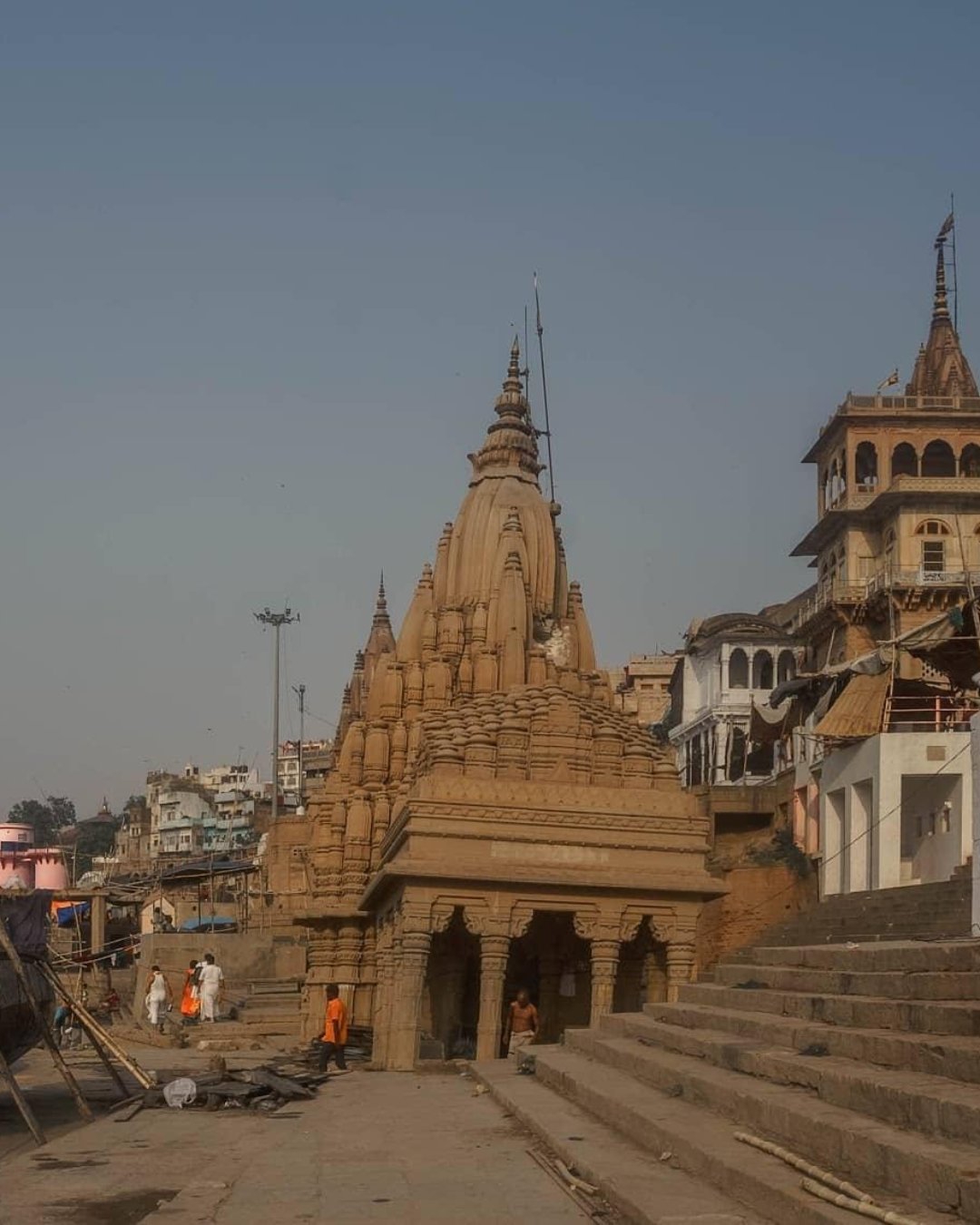
You've probably swept past it just after Manikarnika, when your attention's still on the burning ghat behind you. But here's the thing nobody tells you: half-submerged at the water's edge here is a Shiva temple that's sinking into the river — tilted, partly underwater, a spire leaning out of the Ganga at an angle no builder intended. It slid under its own weight when the ghat was built, and it's been leaning there ever since. It's one of the most photographed oddities on the riverfront, and half the boats glide past before anyone spots it.
Let's fix that. Here's how Scindia Ghat and its leaning temple actually work, and how to get it right the first time.
Why the water level, not the hour, decides your visit
This is the rare ghat where the season changes what you see. The leaning temple sits right at the waterline — so how much of it shows depends on where the river is. After the monsoon, when the Ganga is high, much of it is underwater and only the tilted spire breaks the surface. In the dry winter and spring months the water drops and more of the structure stands clear.
So if the sunken temple is what you've come for, the cooler, drier months (roughly November to May) show it best. Either way, the ghat reads well from the water in the morning light — Scindia rises steep and tall from the river, one of the more dramatic frontages north of the burning ghat, and dawn from a boat is when it looks its best.
What you'll actually see
The leaning Shiva temple — partly submerged at the water's edge, tilted from settling when the ghat was built in the 1830s.
The ghat frontage — steep, high steps built by the Scindia (Shinde) rulers of Gwalior, giving the ghat its name.
The lanes behind — a warren said locally to be the birthplace of Agni, the fire god, with old shrines tucked into the gullies.
Manikarnika — immediately south, so this comes right after the burning ghat on the boat.
If you land and explore the lanes, wear shoes you can slip off for the small temples, and go modestly dressed.
And here, as at Man Mandir, the phone earns its place — this is a secular curiosity, not a solemn site, so photographing the leaning temple is exactly the point. But look first. Travellers who spot it will tell you the same thing: from a moving boat it's easy to miss and easy to shoot badly, so ask your oarsman to slow or hold near it, take a moment to actually see the tilt against the water, then frame it. A rushed grab as you drift past never captures how strange it really is — that's the part the photos miss when you don't stop.
Pro tip: Ask your boatman to pause at Scindia — it comes just after Manikarnika, and a moving boat is why most people miss the temple entirely. Come in the drier months if you want to see more of the structure above water. And pair the ghat with a short walk into the lanes behind if you've time; the Agni legend and the old shrines are a quieter, stranger side of the city, well away from the crowds.
The mistakes that ruin it
Most first-timers trip over the same few things. They drift past without spotting the leaning temple at all. They come in high-water season expecting to see the whole structure and find most of it submerged. Or they shoot it in a blur from a moving boat and never really look.
The easy fix is to know it's coming, ask the boat to slow, and time your trip to the season that shows it — or let the ride be planned so this stretch isn't a blur.
Want the boatman to slow at the right spot? Hit Do this trip— we'll plan the pause into the ride.