


Kedar Ghat & Kedareshwar Temple
Kedar Ghat, Varanasi, India
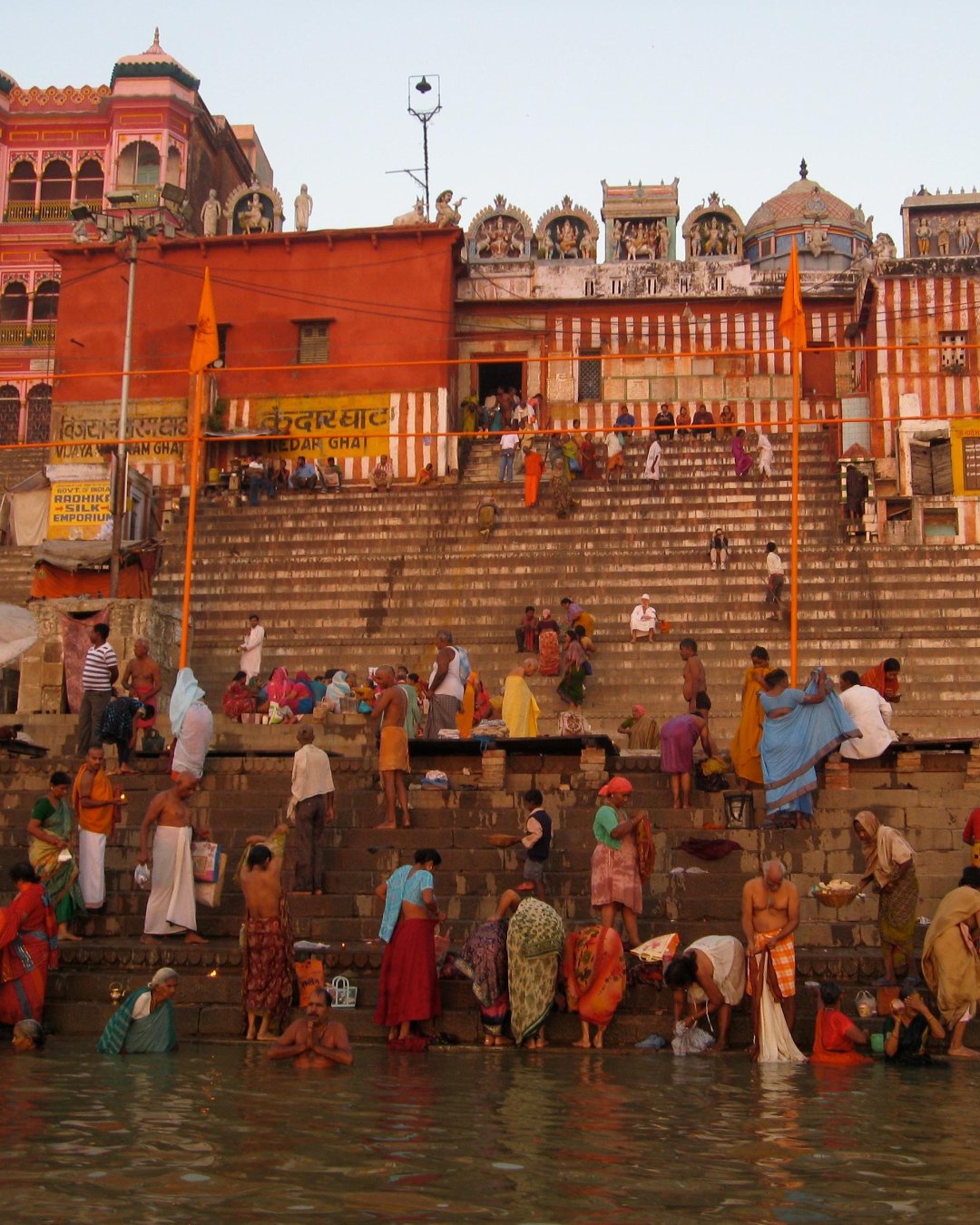
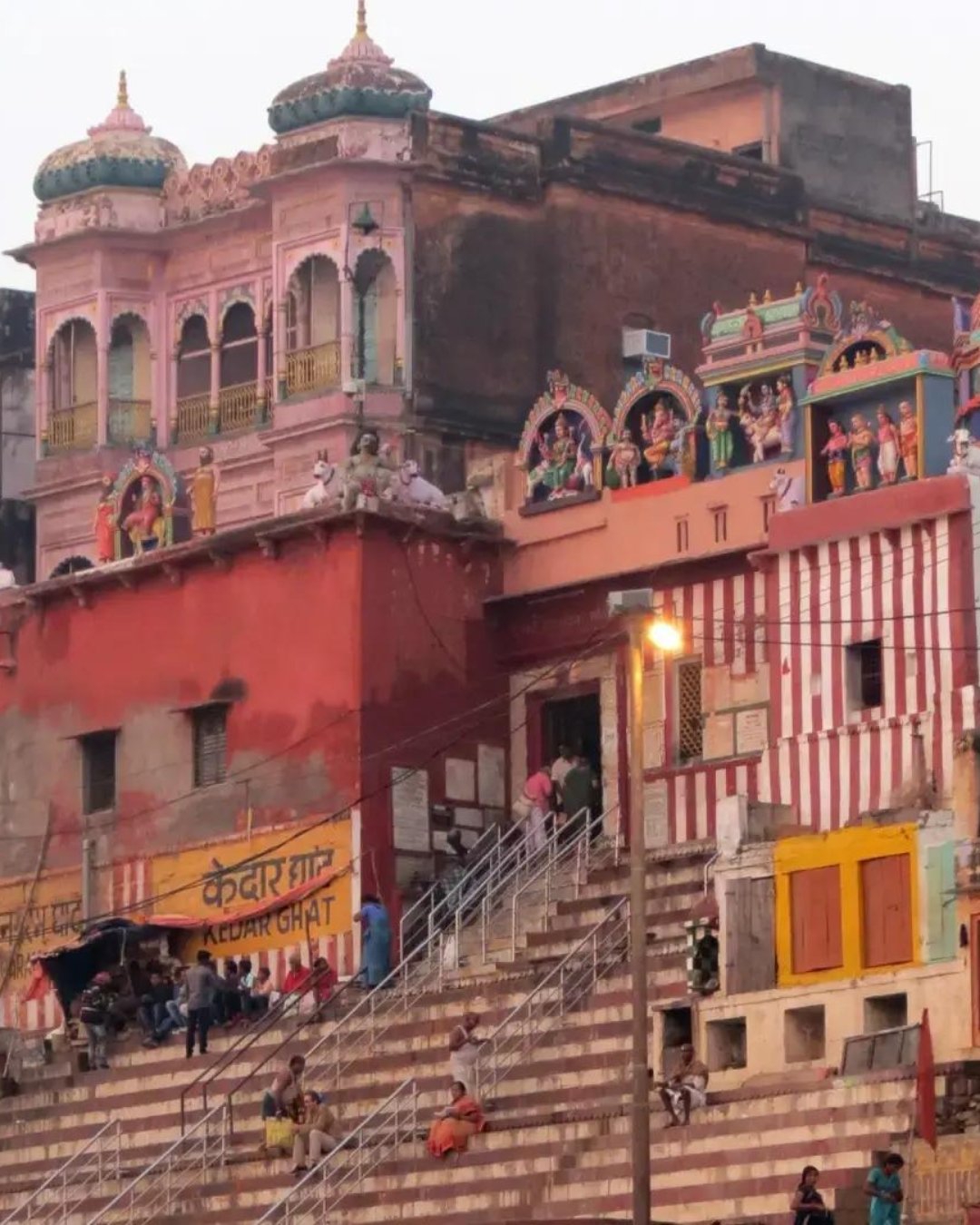
You've probably seen it and not known why it stood out. On the boat, one stretch of steps is striped in red and white ochre, unlike anything either side of it — and then you're past it. But here's the thing nobody tells you: those stripes belong to the temple above, and the belief here is that a darshan at Kedareshwar carries the merit of the Kedarnath pilgrimage in the high Himalaya. People who can't make the mountain journey come here instead. It's one of the most quietly significant temples on the river, and the boats don't stop.
Let's fix that. Here's how Kedar Ghat actually works, and how to get it right the first time.
Why the morning, and why on foot
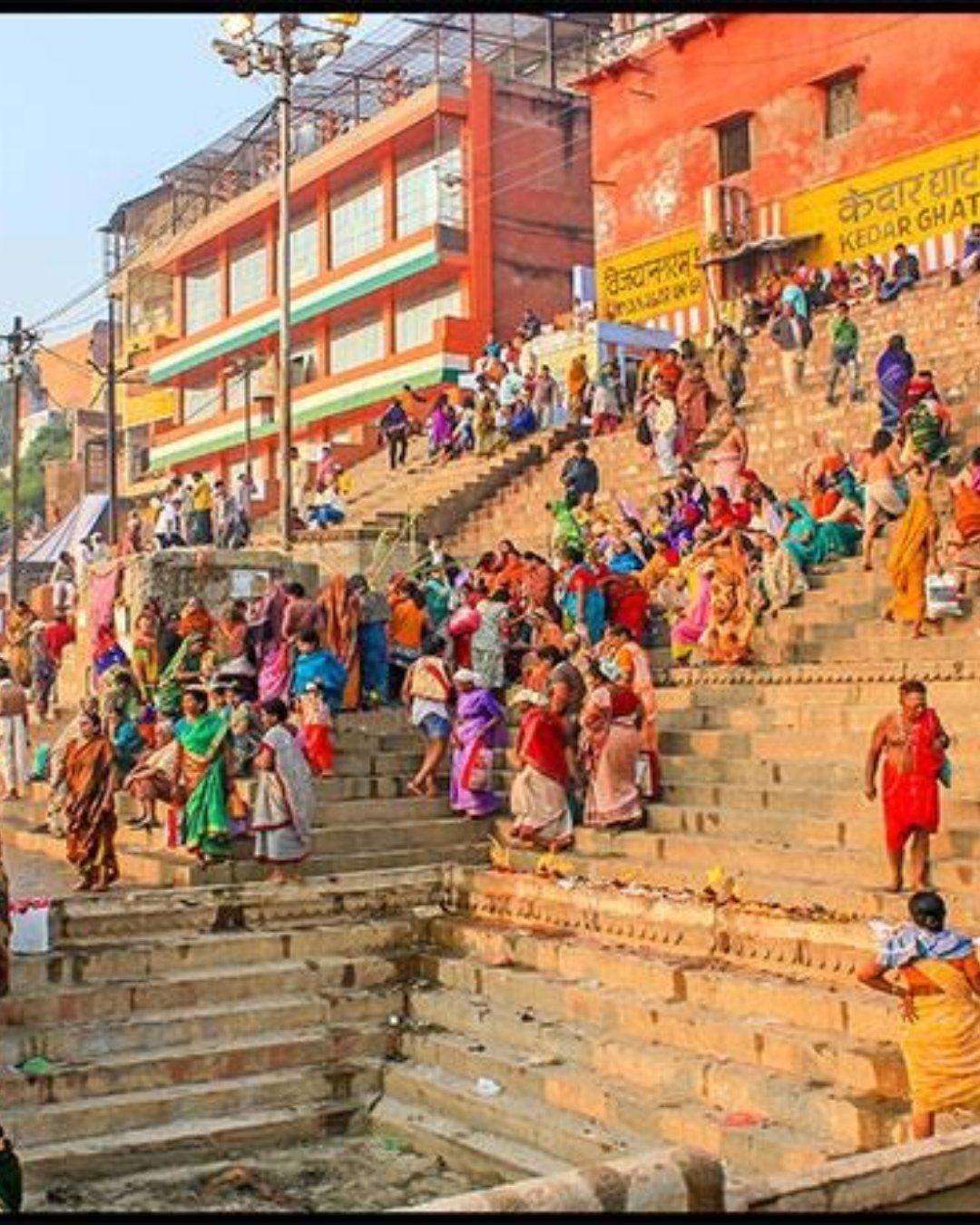
Kedar has no evening spectacle. There's no aarti to sit through and no crowd to beat — what it has is a working morning temple with a genuinely devotional atmosphere, mostly South Indian and Bengali worshippers, and almost no tourists.
Come early, between the boat ride and breakfast. The temple is active from dawn, the queue is short or non-existent outside festival days, and the low light on those red-and-white steps is the one time they photograph properly. By mid-morning the devotion has thinned and you're looking at an empty courtyard.
What you'll actually see
Thirty to forty minutes, no ticket, no queue:
The striped ghat — the ochre bands running down the steps, the most distinctive frontage on the riverfront.
Kedareshwar Temple — above the steps, its lingam a rough natural stone rather than a carved one, which is the point.
Gauri Kund — the small sacred tank beside the temple, fed by a spring.
The stretch north and south — Harishchandra Ghat is close by to the south; do them in one walk.
Dress modestly and be ready to go barefoot from the shoe stand. Carry small notes for the shoe stand and an offering.
And keep your phone down inside. Travellers who come here will tell you the same thing: Kedar isn't performing for anyone — there's no ceremony staged for visitors, just people doing what they came to do, at seven in the morning, the way they have for centuries. Photography inside the sanctum is generally not welcome; ask before you point at anything. That ordinariness, in a city where so much is watched, is the part the photos never quite catch.
Pro tip: Go on a Monday if your dates allow — it's Shiva's day and the temple fills with real devotion rather than tourism, which is exactly what makes this stop worth it. In Sawan (roughly July–August) the queues get serious, so come very early or pick another day. And pair it with Harishchandra Ghat just south — the smaller of the city's two cremation ghats, and far quieter than Manikarnika, if you want to see that with less crowd.
The mistakes that ruin it
Most first-timers trip over the same few things. They photograph the stripes from a boat and never learn what they mark. They arrive at eleven, when the morning worship is over and it's an empty courtyard. Or they wander in filming and get, quite rightly, asked to stop.
The easy fix is to come early, on foot, knowing what the temple is — because without the Kedarnath connection, it's a nice set of steps and a small shrine.
Want Kedar in the early hours with the temple open?
Hit Do this trip — we'll time the morning around it.