


Sunrise at Assi Ghat
Assi Ghat, Varanasi, India
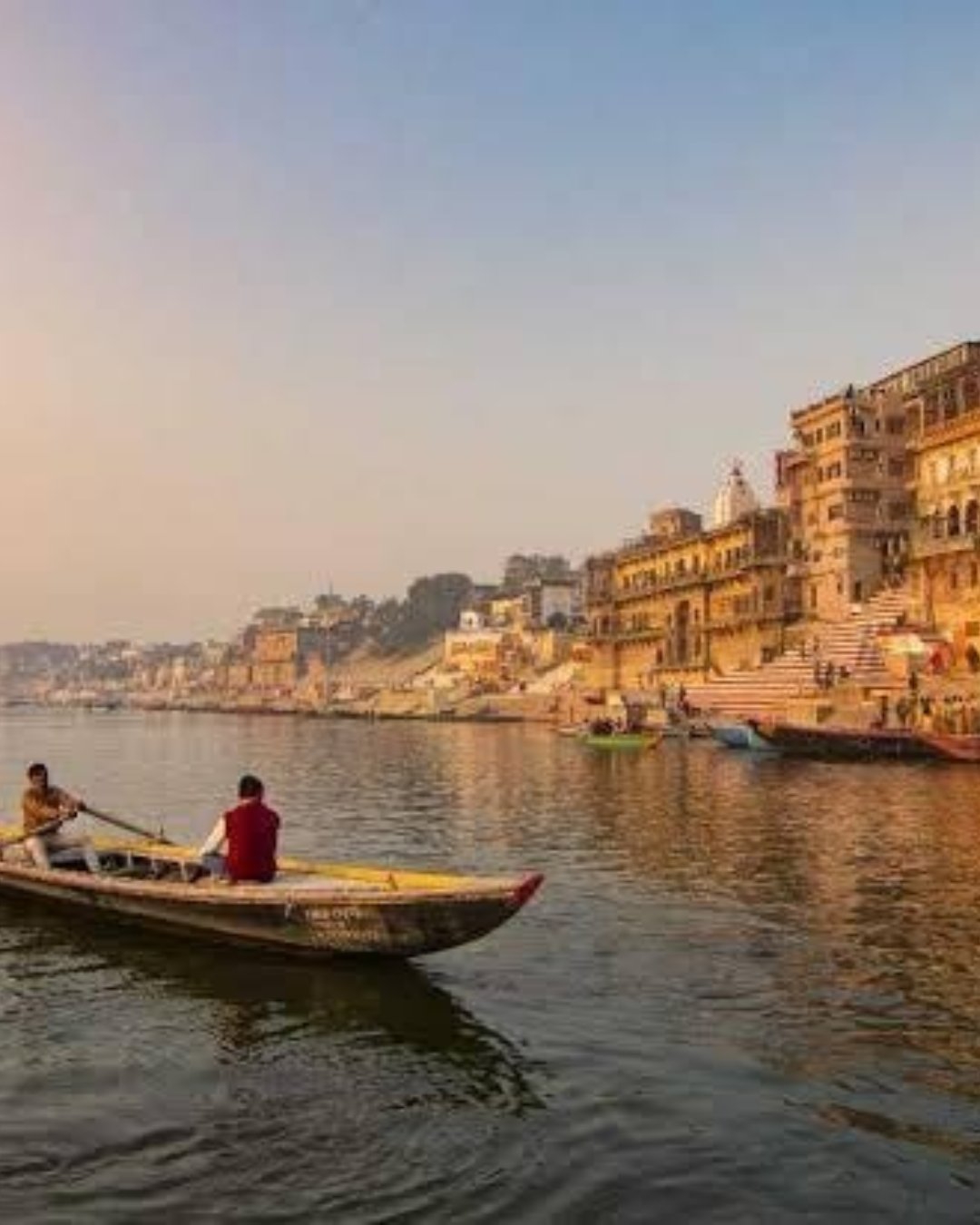
You've probably got Assi down as a boat launch. It's where your driver drops you at 5 a.m., where the oarsman is waiting, and where you step off an hour later on your way to breakfast. But here's the thing nobody tells you: Assi at dawn is the one ghat in Varanasi you can simply sit on—no touts working you, no crush, no ceremony to get a seat for—and almost everybody who comes here is looking at their watch, waiting to be somewhere else. You can spend two hours on these steps and never take a photo, and it'll be the part of the trip you describe when you get home.
Let's fix that. Here's how sunrise at Assi Ghat actually works, and how to get it right the first time.
Why Assi, and not any other ghat
Dashashwamedh at dawn is a scrum. Manikarnika is not somewhere to linger. Assi sits at the southern end of the ghat stretch, where the Assi stream meets the Ganga, next to the university quarter—and that changes its whole character. It's calmer, greener, wider, and it belongs to the neighbourhood rather than to the tourists.
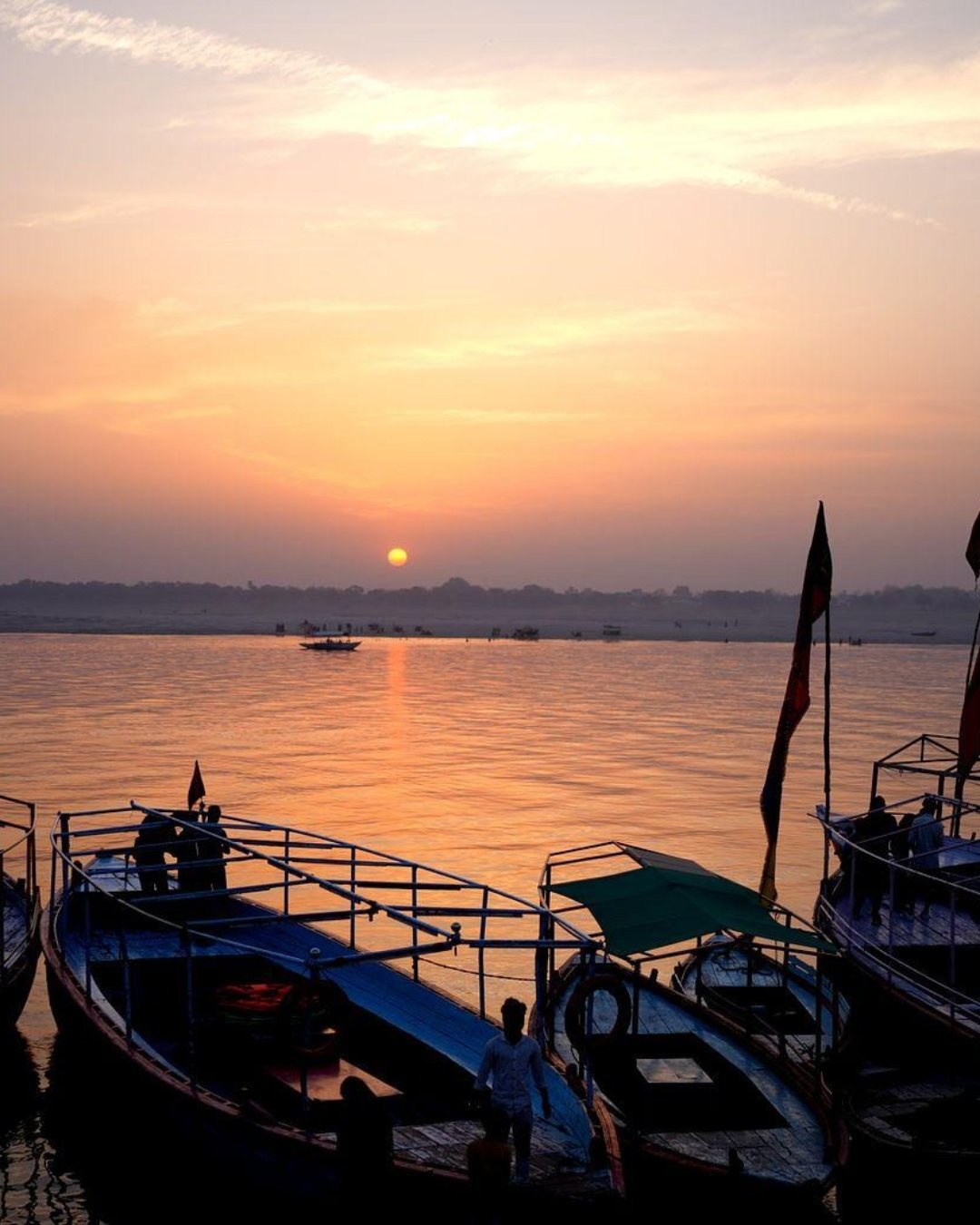
Which means it's the one place where dawn happens around you instead of at you. Get there by about 5:15 a.m. in summer, closer to 6:00 a.m. in winter, and you'll have the steps before the day starts. The sun comes up over the far bank directly in front of you—Assi faces east across open sand, so you get the whole thing uninterrupted.
What you'll actually see
Sit halfway down the steps and let it come to you:
* The bathers — locals and pilgrims taking their morning dip, unhurried, entirely unbothered by you.
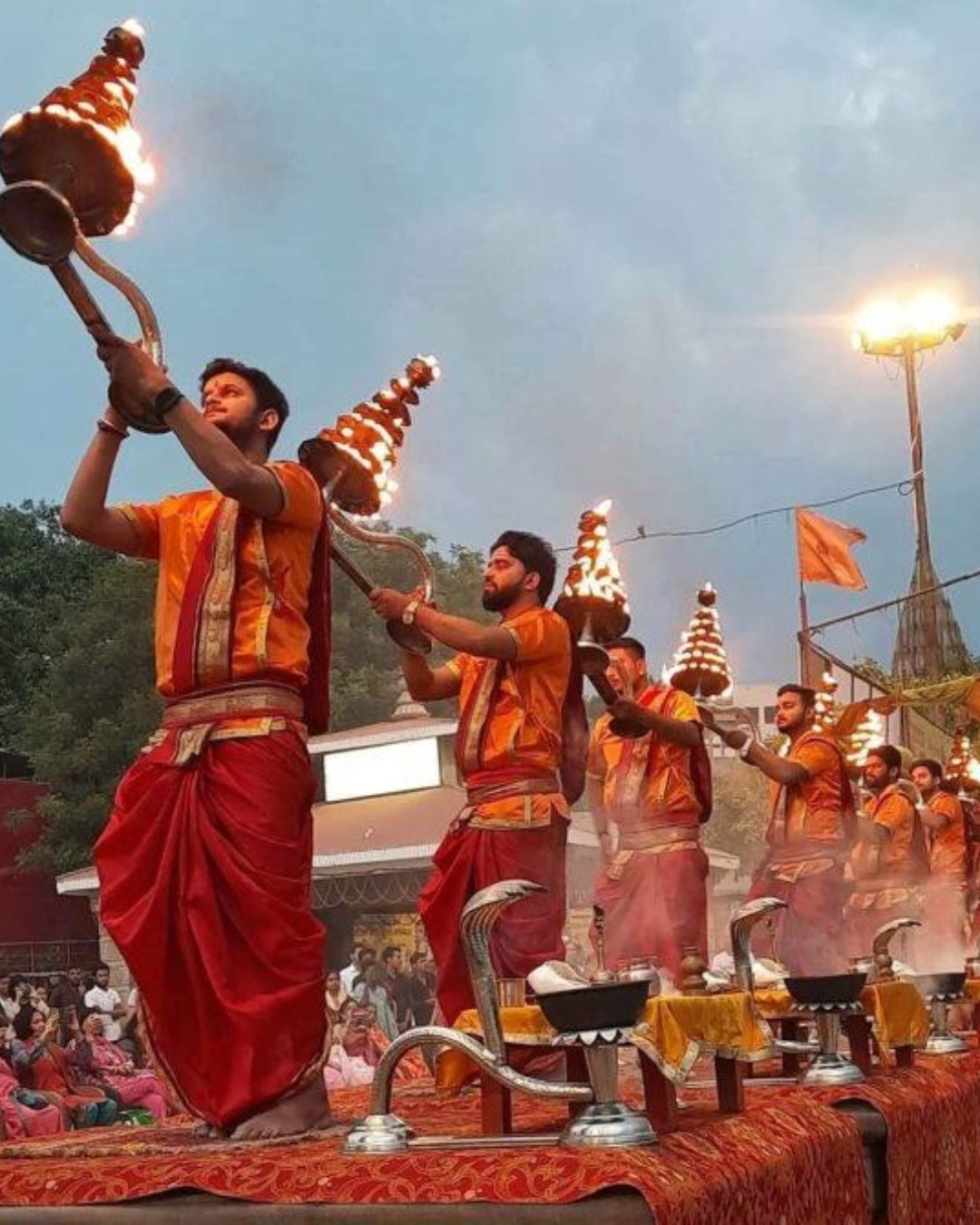
* Subah-e-Banaras — the dawn programme of aarti, yoga, and live classical music on the platform. Free, and most people don't know it runs.
* The pipal tree and the lingam — the old shrine at the top of the ghat, where Assi's own history sits.
* The everyday — chai in clay cups, students from the university, dhobis, kite strings, dogs asleep on warm stone.
Bring a light layer even in warm months—the wind comes off the water and it's cool until the sun clears the far bank.
And leave the phone in your pocket for the first twenty minutes, not the first ten. Travellers who've sat here will tell you the same thing: Assi doesn't give you one dramatic frame the way the aarti does—it gives you an hour of small things happening at once, and none of them photograph. Just watch. The light changing on the water, the chanting starting up behind you, a city of a million people waking without any noise at all—that's the part the photos never quite catch.
Pro tip: Come here after your boat ride, not instead of it. The ride ends around 6:30 a.m.; most people go straight back to the hotel and sleep. Don't—get out at Assi, buy a clay cup of chai at the top of the steps, and sit for an hour while Subah-e-Banaras plays out. It costs nothing, needs no booking, and it's the calmest hour you'll get in Varanasi. Sit on the steps rather than the platform if you want to watch the river rather than the ceremony.
The mistakes that ruin it
Most first-timers trip over the same few things. They use Assi purely as a boat jetty and never set foot on the steps. They arrive at seven, after the light and the programme have both gone. Or they stay ten minutes, decide "it's just a ghat," and miss what it actually offers.
The easy fix is to build an unhurried hour into the morning here rather than rushing back for breakfast—or let the dawn be planned as one continuous stretch, boat and ghat together.
Want the sunrise, the boat, and the ghat in one morning?
Hit Do this trip — we'll build the dawn around Assi.