


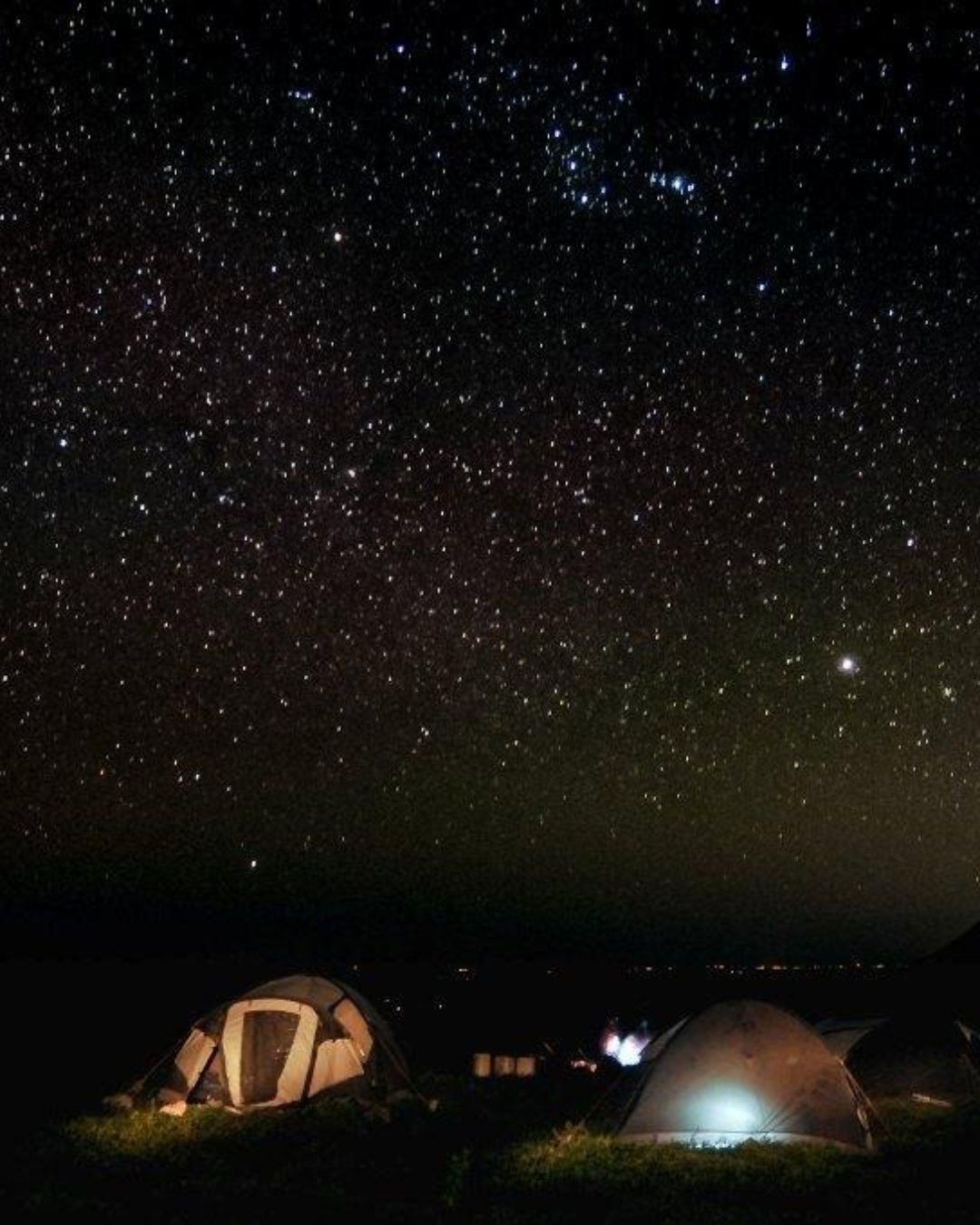
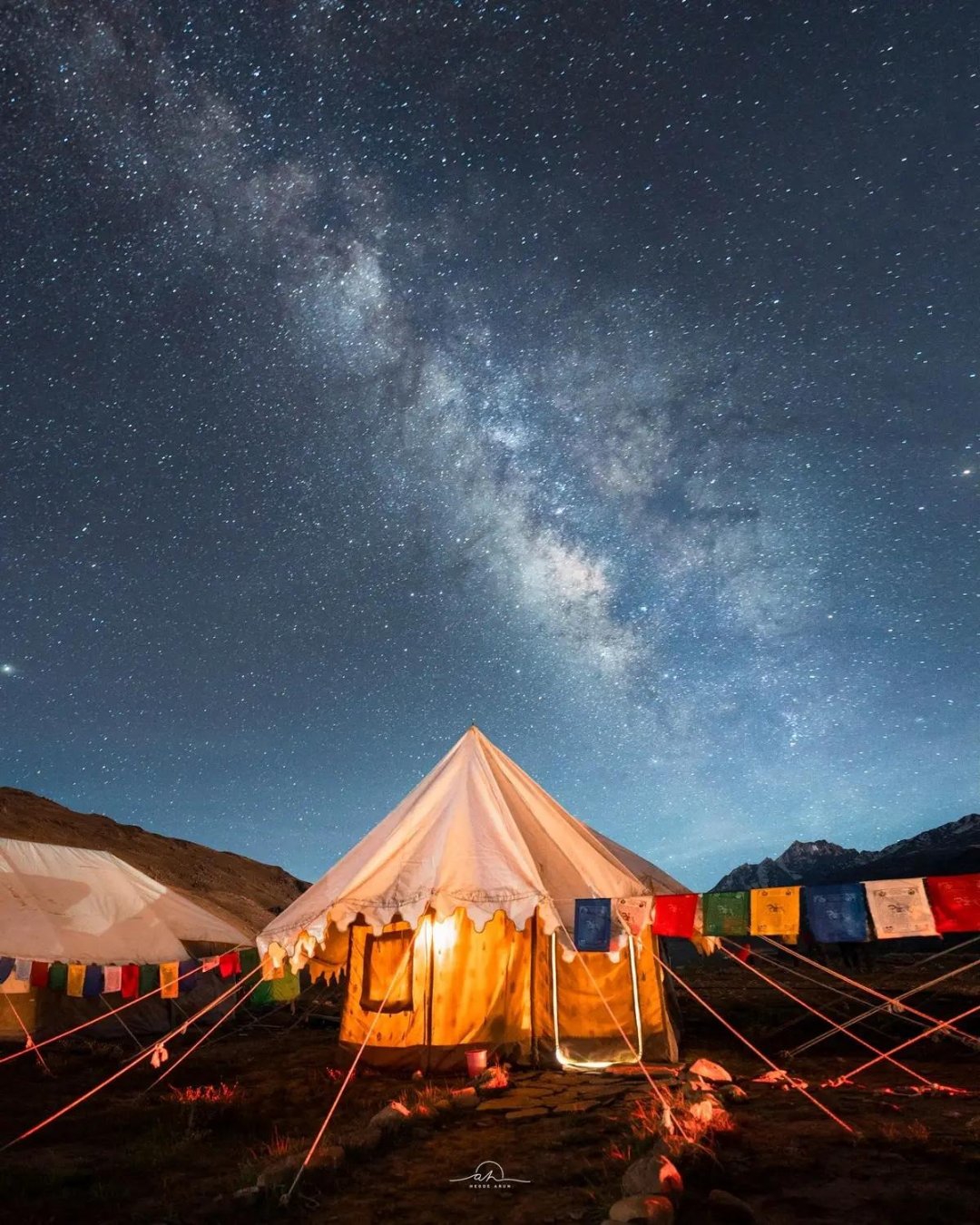
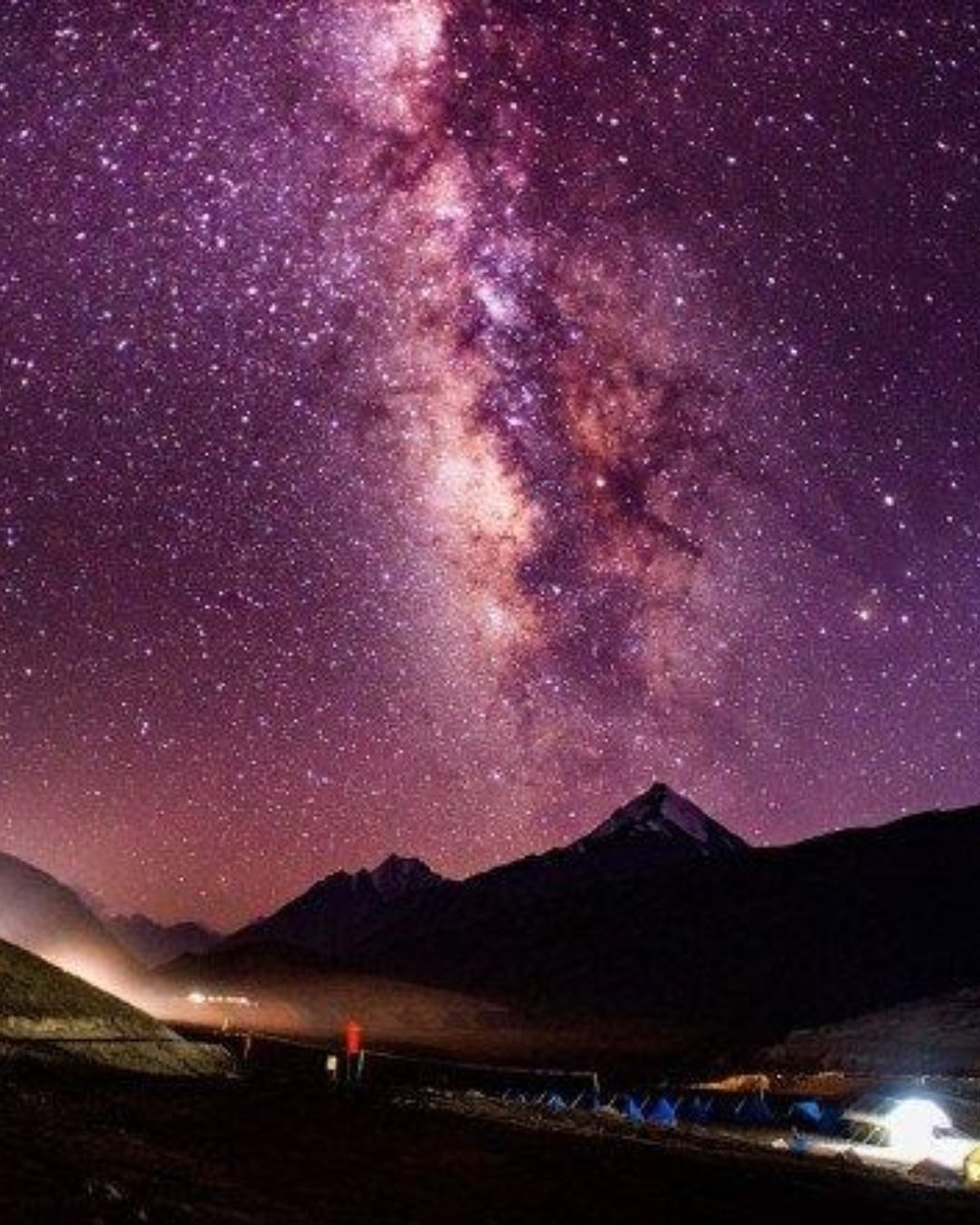
Stargazing at Chandratal
Cold Desert Camps, Dhar Pallamo, India
You've probably saved someone's Milky Way shot over the lake. A river of stars arching over the black bowl of mountains, the water catching a little of the light. So you figure you'll step out after dinner, look up, and there it'll be. But here's the thing nobody tells you: the sky you came for only shows on a moonless, cloudless night. Turn up during a full moon and its brightness washes the Milky Way away, and the people who wander outside at 9 p.m., glance up, and head back to their tents often miss the magical hours after midnight when the sky is at its finest.
Let's fix that. Here's how stargazing at Chandratal actually works, and how to get it right the first time.
Why the moon phase decides everything
At 4,300 metres, with no towns or artificial lights for miles, Chandratal offers some of the darkest skies you'll ever experience—but only if the moon cooperates. A bright moon acts like a giant floodlight, drowning out the faint band of the Milky Way. So the single biggest factor isn't your campsite or your camera—it's the lunar calendar. Around the new moon is ideal. During a full moon, even perfectly clear skies won't reveal nearly as many stars.
Timing matters too. The sky becomes darker and richer as the night progresses, with the Milky Way often looking its best well after midnight rather than immediately after dinner. If you're chasing unforgettable stars, plan to stay up late—or set an alarm—and be prepared for serious mountain cold.
What you'll actually see
On a clear, moonless night, Chandratal rewards you with one of the finest night skies in the Himalayas:
* The Milky Way core — a brilliant river of stars stretching overhead, especially spectacular during the summer months.
* Shooting stars — frequent under these dark skies, with the Perseid meteor shower in August being particularly impressive.
* Planets and satellites — bright planets like Jupiter and Saturn are easy to spot, while satellites silently glide overhead.
* Reflections on the lake — when the wind drops, Chandratal mirrors the stars, creating a breathtaking double image.
Wear every warm layer you have, then add another. Standing still outside after midnight at 4,300 metres is dramatically colder than walking around during the day. It's the cold—not the altitude—that sends most people back to their tents before the best part of the night arrives.
And here's the honest truth about photography: once you've taken a few pictures, put the phone away. Travellers who've experienced Chandratal often say the same thing. Hours disappear while trying to capture a disappointing photo, while the real spectacle unfolds overhead. Unless you're carrying a proper camera, tripod, and know how to shoot the night sky, simply lie back and watch. The depth of the stars, the silence of the mountains, and the icy air around the lake are experiences no phone camera can truly capture.
Pro tip: If stargazing is one of the main reasons for visiting Chandratal, plan your trip around the new moon rather than leaving it to chance. Give your eyes at least twenty minutes to adjust to the darkness, avoid using bright white lights, and switch your headlamp to red mode if possible to preserve your night vision. Bring a sleeping mat or blanket, a flask of something warm, and if you're planning astrophotography, scout your composition before sunset. Most importantly, don't sacrifice all your sleep—you'll still have a challenging mountain drive ahead the next morning.
The mistakes that ruin it
Most first-time travellers make the same mistakes. They visit during a full moon and wonder where the Milky Way went. They step outside too early, feel cold within minutes, and return to the tent before the sky reaches its peak. Or they spend the entire evening struggling with a phone camera instead of simply enjoying one of the darkest skies in India.
The easy fix is simple: choose a dark-sky night, dress for freezing temperatures after midnight, and decide before you arrive whether you're there to photograph the stars or simply experience them—or let your itinerary be planned around the moon rather than leaving it to luck.
Ready to see it for yourself?
The night sky above Chandratal is the memory many travellers carry home long after the journey ends. Get the moon phase, the timing, and the warm layers right, and it becomes an unforgettable experience.
Want it handled end to end—a campsite reserved under dark skies, perfectly timed dates, and everything planned for a comfortable night beneath the stars? Browse our Spiti Valley Tour Packages, where a Chandratal overnight stay comes built in alongside Kaza, the high villages, Kunzum Pass, and the unforgettable drive to Manali. Pick your dates and we'll take care of the sky.