



Chicham Bridge Adventure
Chicham Bridge, Chicham Khas, India
You've probably seen it on a reel. A thin steel span strung across a huge gorge, someone standing mid-bridge with a thousand feet of nothing under them, the caption calling it the highest bridge in Asia. So you drive across it, film out the window, and you're over in ninety seconds. But here's the thing nobody tells you: crossing it in a car is the one way to feel almost nothing. The gorge, the height, the whole point of the place only lands when you're on foot in the middle of it — and most people never get out.
Let's fix that. Here's how Chicham Bridge actually works, and how to get it right the first time.
Why you stop and walk it, not drive it
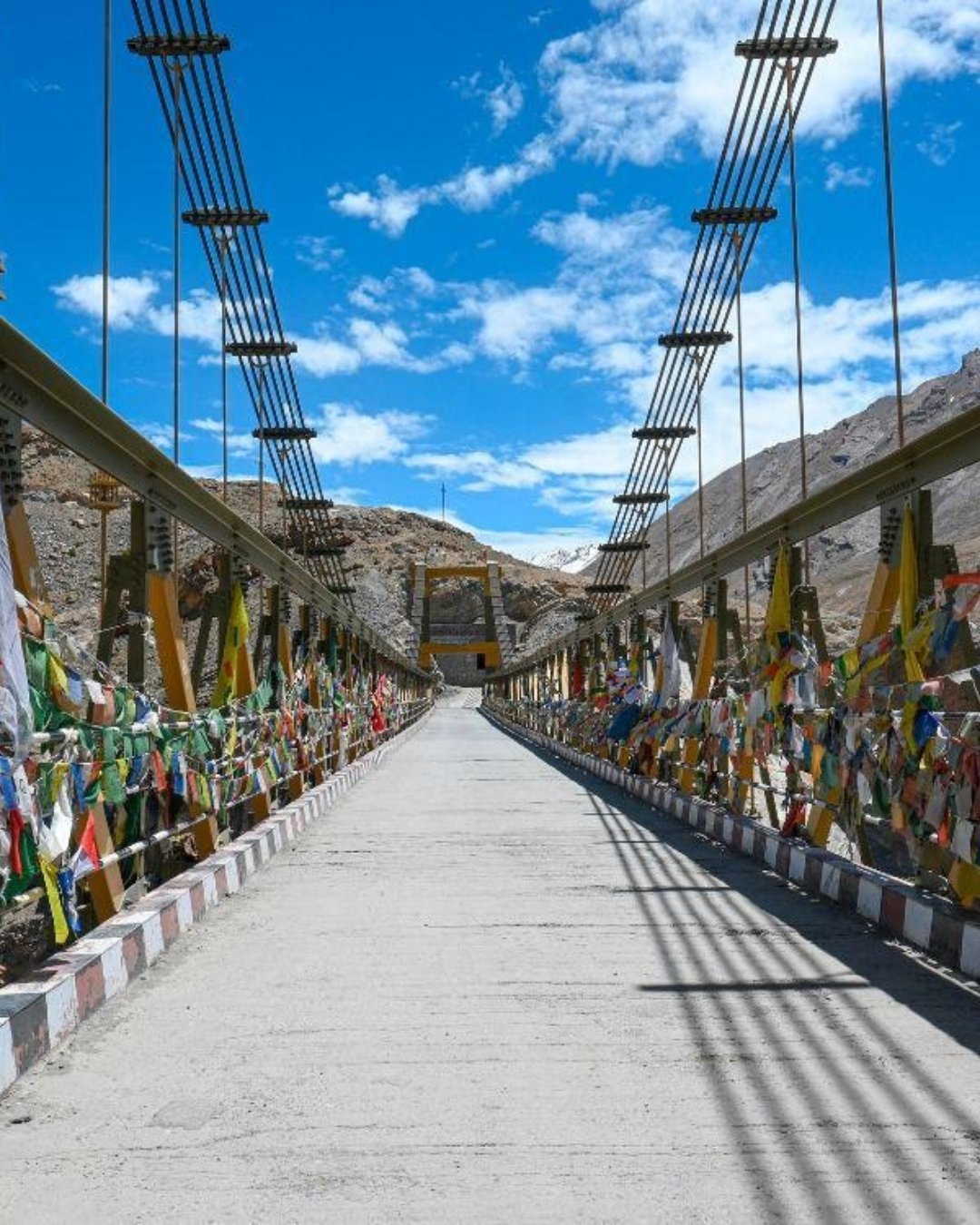
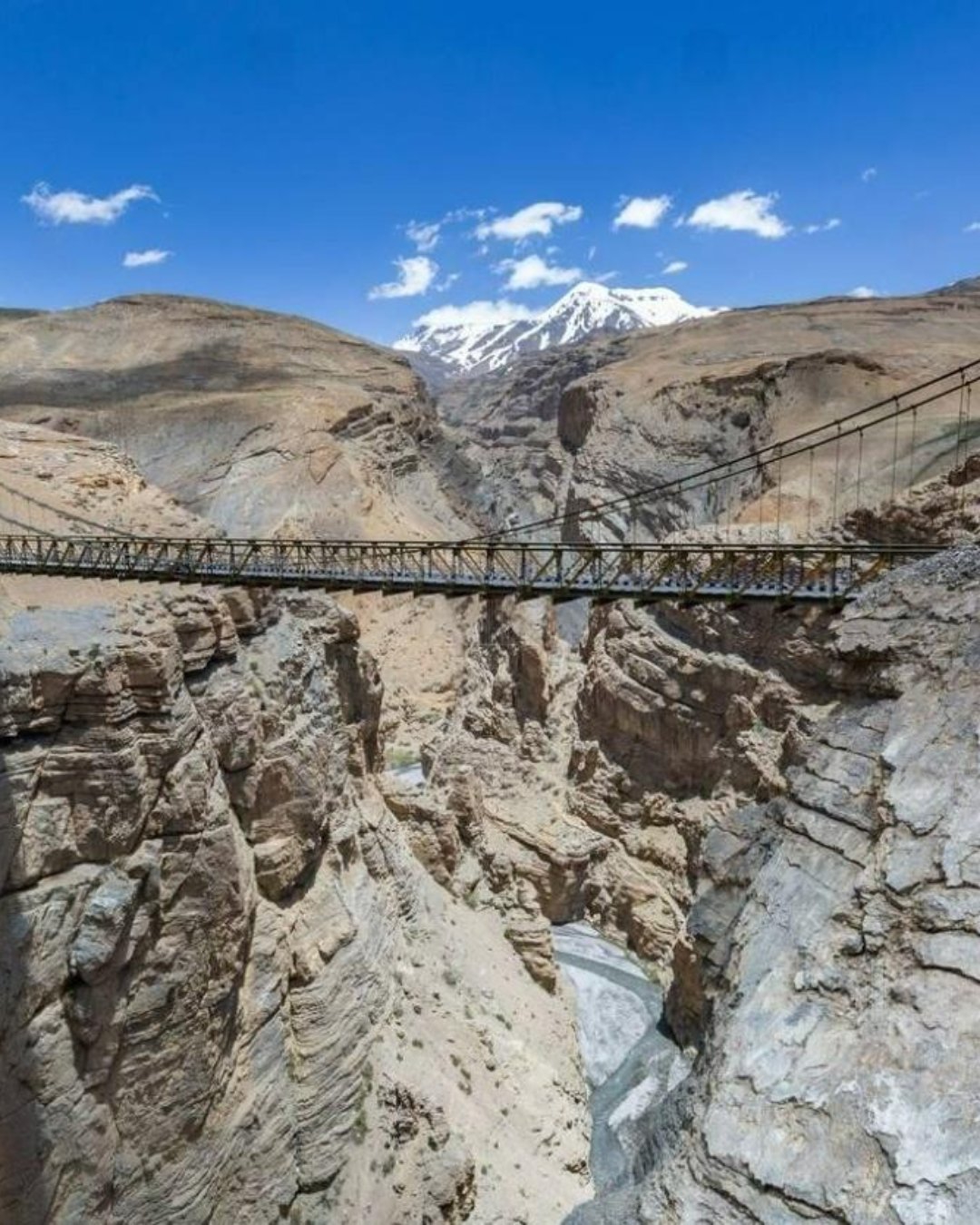
Chicham links the villages of Kibber and Chicham across a deep gorge at around 4,145 m, and at roughly 120 m above the riverbed it's counted among the highest bridges in Asia. From inside a moving car it's just a road. On foot, it's a different thing entirely — the deck moves a little, the wind funnels through the canyon, and the drop opens up on both sides.
There's no light to time here and no crowd to beat at altitude; the whole experience is simply getting out and standing on it. Park at one end, walk to the middle, look down, and let it register. That's the adventure the reels are selling, and it takes five minutes most people skip.
What you'll actually see
The gorge — the Samba Lamba (Parilungbi) ravine dropping away beneath the deck, sheer on both sides.
The span itself — a single steel suspension bridge, opened in 2017 after roughly two decades of construction.
Kibber and Chicham — the two high villages it joins, each worth a stop in its own right.
The old crossing — before the bridge, locals crossed the gorge in a hand-hauled iron trolley on a wire, a terrifying business that the bridge finally ended.
Take a windproof layer. The canyon channels the wind, and standing still on an exposed steel deck at 4,145 m gets cold fast even on a bright day.
And here's the one place the phone earns its keep rather than getting in the way — but keep a firm grip on it. Travellers who've stood on it will tell you the same thing: yes, this is the shot, film away. Just don't be the person who drops a phone into a 120-metre gorge reaching for the perfect angle, and don't lean on the cables for it. Get the footage, then put it away and actually look down. The scale of the drop, the wind, the sheer improbability of a bridge here at all — that's the part the reel never quite carries.
Pro tip: Walk across and back rather than driving — it's the only way to feel it, and it costs you ten minutes. Pair it with Kibber, which sits right beside it, so the bridge is part of a proper village stop rather than a solo photo mission. Watch for traffic on the deck: it's a single lane and vehicles do cross, so keep to the side. And go easy on the exertion — it's tempting to jog across for a video, but you're at 4,145 m and even a short sprint will leave you gasping.
The mistakes that ruin it
Most first-timers trip over the same few things. They drive across without stopping and feel nothing. They sprint about for photos and get winded at altitude. Or they treat it as a standalone detour and skip Kibber right next to it.
The easy fix is to stop, walk it, and fold it into the Kibber visit — or let the loop be paced so the bridge is a proper stop, not a blur through the windscreen.
Ready to see it for yourself?
Chicham is the moment most travellers film and then wish they'd actually stood on. Get the stop and the pace right, and it's effortless.
Want it handled end to end — the bridge on foot, Kibber alongside it, the day paced for altitude? Browse our Spiti Valley Tour Packages, where Chicham comes built in, along with Key Monastery, Langza, Hikkim, Komic and Chandratal. Pick your dates and we'll take care of the crossing.