


Langza – The Fossil Village
Langza, India
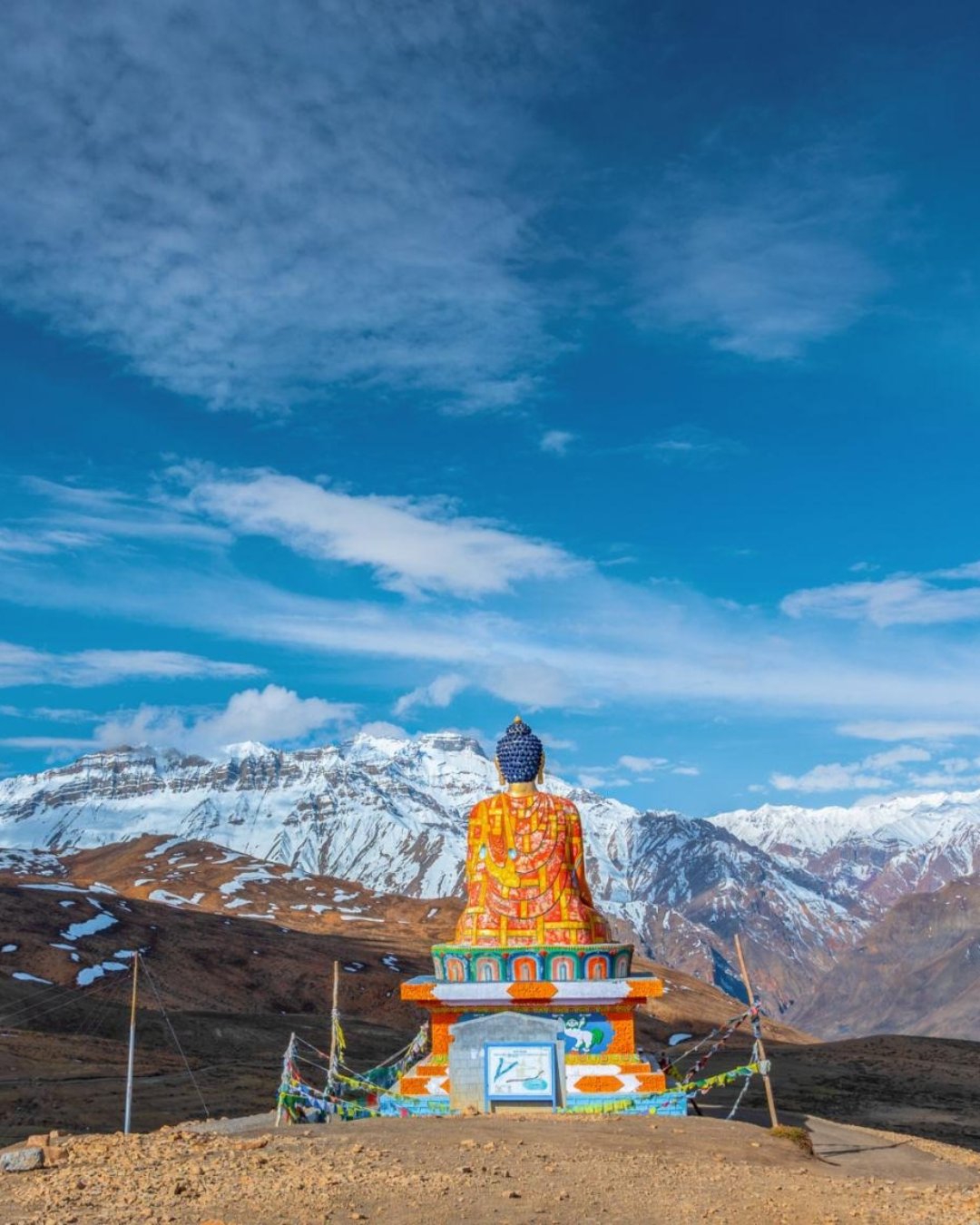
You've probably seen the giant Buddha. Sitting cross-legged above a scatter of stone houses, facing down an impossibly wide valley, the whole thing ringed by peaks. So you drive up, take the photo, buy a fossil from a kid at the roadside, and leave twenty minutes later. But here's the thing nobody tells you: that fossil may have been trucked in, the hills you didn't walk are full of real ones, and at 4,400 m that "quick stop" is exactly how people give themselves a pounding altitude headache for the rest of the day.
Let's fix that. Here's how Langza actually works, and how to get it right the first time.
Why you go slow, and go early
Langza sits at around 4,400 m — higher than almost anywhere you've slept. The mistake isn't visiting; it's treating it like a photo stop and moving fast. Walk uphill too quickly here and you'll feel it in your temples within the hour. Move slowly, breathe, and give it time.
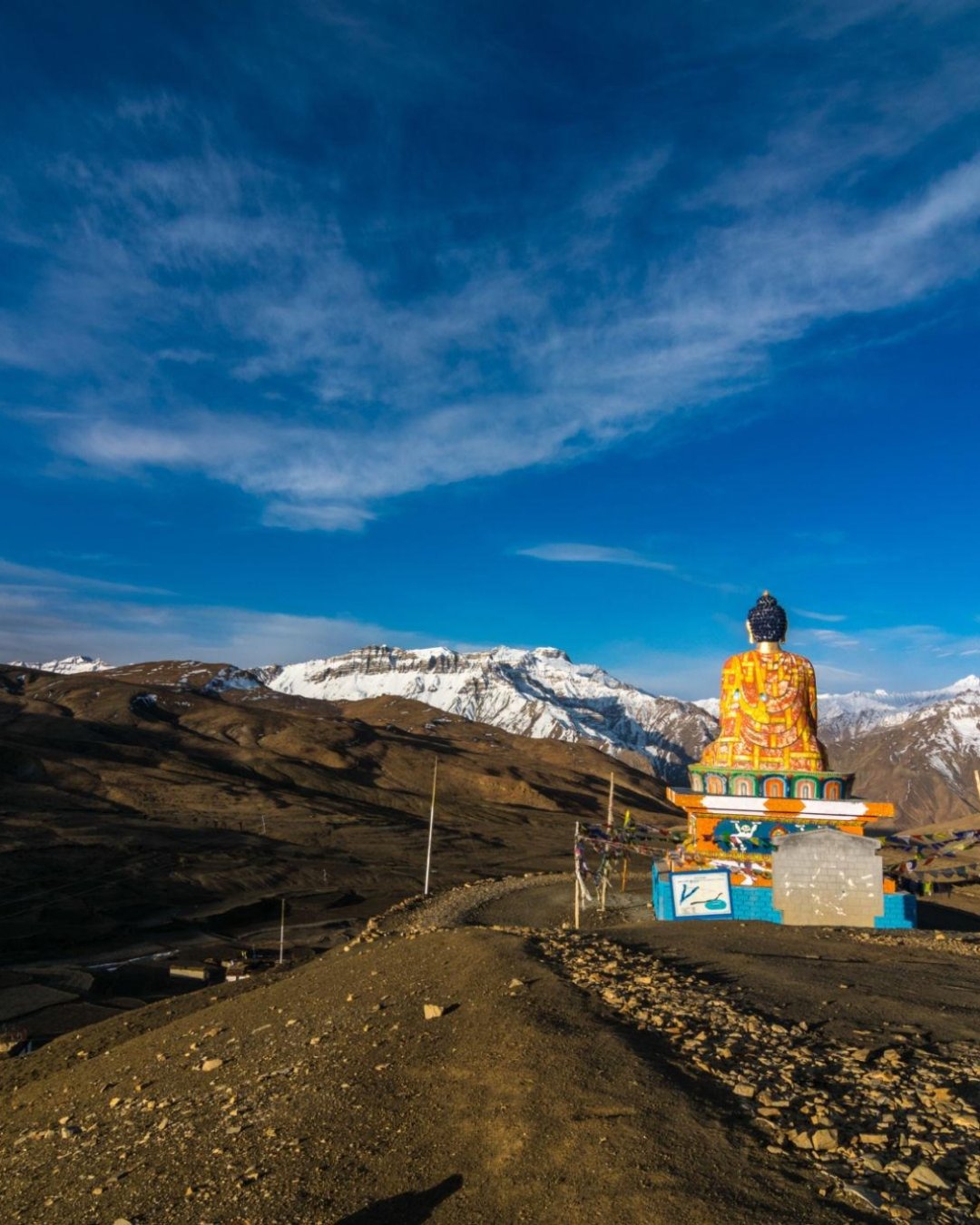
Time also changes the place. Come in the flat middle of the day and it's a village with a statue. Come in early light or late afternoon and the low sun sets the Buddha and the whole valley glowing, with Chau Chau Kang Nilda — the big peak — catching the last of it. So take Langza first on the high-village loop, before the day heats and hazes over.
What you'll actually see
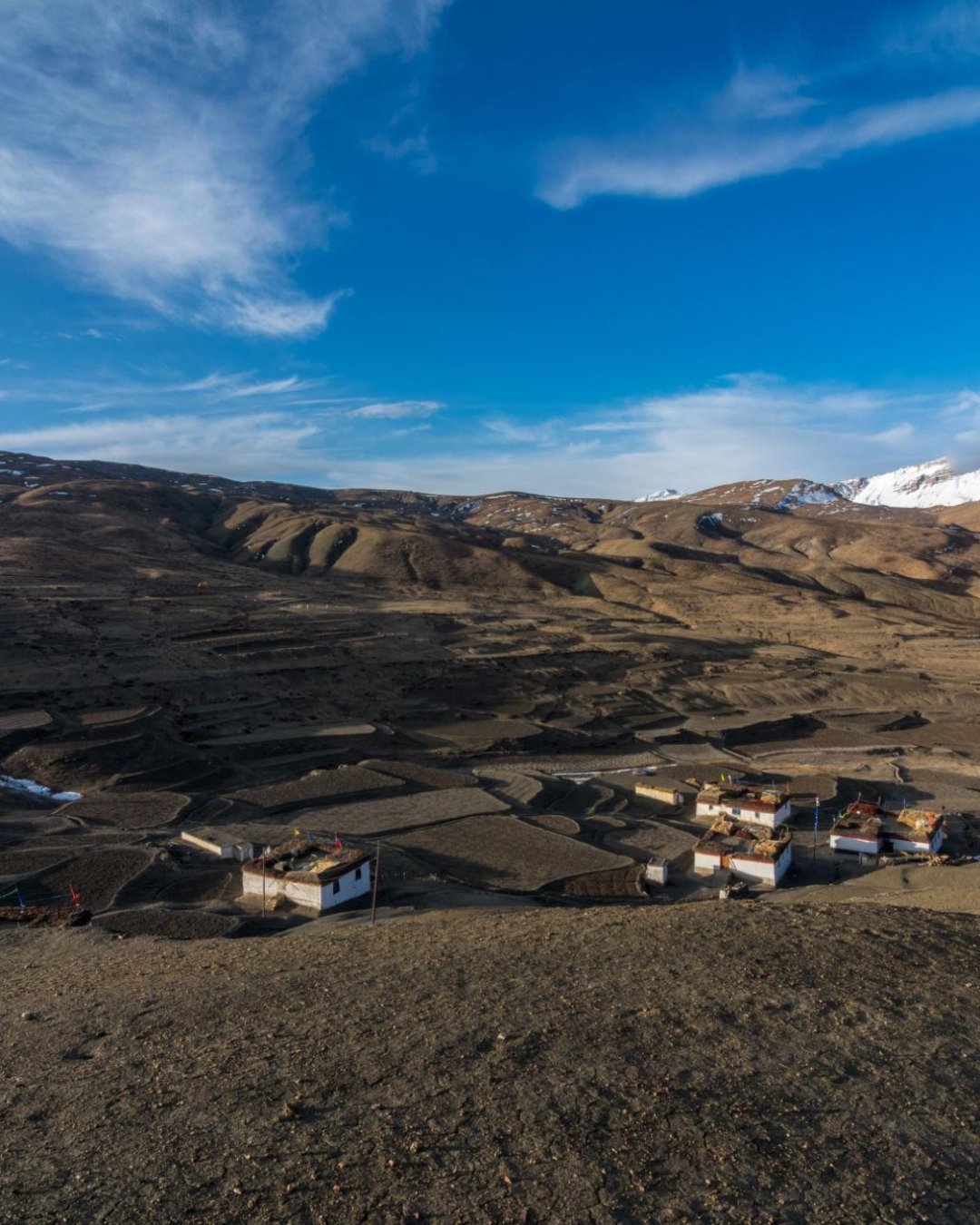
Langza is two things at once — a living farming village and a fossil bed from an ancient ocean:
The Buddha statue — a large seated Buddha above the village, facing the valley. The icon, and best at either end of the day.
The fossils — this whole area was under the Tethys Sea; ammonites and marine shells are embedded in the rock all around.
The old village and gompa — the stone houses and a small, very old temple above them.
The dairy — Langza is known for its milk, curd and chhurpi cheese; a fresh cup of curd here is the real souvenir.
Take a proper layer even at midday. The wind comes across this open plateau hard, and it's cold in shadow the moment the sun dips.
And put the phone down for the first few minutes when you arrive. Travellers who've stood up here will tell you the same thing: the instinct is to shoot the Buddha immediately, but the scale of the place doesn't fit a frame anyway. Stand still first. The silence, the sheer width of the valley, the thin bright air at 4,400 m — that's the part the photos never quite catch.
Pro tip: If you want to find a fossil, walk the hillsides above the village slowly and look — don't buy one at the road. And think hard before buying at all: these beds are being stripped, locals increasingly discourage it, and taking fossils out of India can technically breach heritage law. The better souvenir is a photograph and a cup of Langza curd. Hire a village kid as a fossil-spotting guide instead — it puts money where it belongs and they know exactly where to look.
The mistakes that ruin it
Most first-timers trip over the same few things. They race up, shoot the Buddha, and rush off with a headache. They buy a roadside "fossil" of unknown origin instead of finding a real one. Or they come at midday and get the flat, hazy, forgettable version of a genuinely spectacular place.
The easy fix is to come early, move slowly, and let Langza be a proper hour rather than a drive-by — or have the high-village day paced so nobody's rushing at altitude.
Ready to see it for yourself?
Langza is the moment most travellers remember from the high villages. Get the timing and the pace right, and it's effortless.
Want it handled end to end — the right hour, an unhurried loop, someone who knows the fossil ethics and the light? Browse our Spiti Valley Tour Packages, where Langza comes built in, along with Key Monastery, Hikkim, Komic, Kunzum Pass and Chandratal. Pick your dates and we'll take care of the altitude.