


Eravikulam National Park
Eravikulam National Park, Kannan Devan Hills, India
You've probably got this pencilled in for March. Good weather, school holidays, the wildlife day of the trip. But here's the thing nobody tells you: for roughly February and March, Eravikulam is shut. Not busy — closed. That's calving season, when the Nilgiri Tahr drop their young in the Rajamalai zone and the whole area is handed back to them. People book flights around a park that isn't open, drive up to a gate, read a laminated sign, and turn around.
Let's fix that. Here's how a visit to Eravikulam actually works, and how to get it right the first time.
Why the date decides it, and then the hour
Check the closure first, before anything else on your trip is booked. Roughly Feb–March, and the exact dates shift year to year — the park announces them, so confirm rather than assume.
Once your dates work, it's about being early. Tickets are capped daily, you can't drive your own car in, and everyone moves through on the park's shuttle from the Rajamalai gate. Turn up at eleven in season and you'll spend two hours in a queue for a bus. Be at the gate for opening, around half seven, and you're on the first shuttle into a park that's quiet, cold and completely different from the one at midday.
What you'll actually see
You're not going into the whole park. Eravikulam is 97 square kilometres of core habitat, and visitors see one small tourism zone at Rajamalai — which is the right call, and still extraordinary:
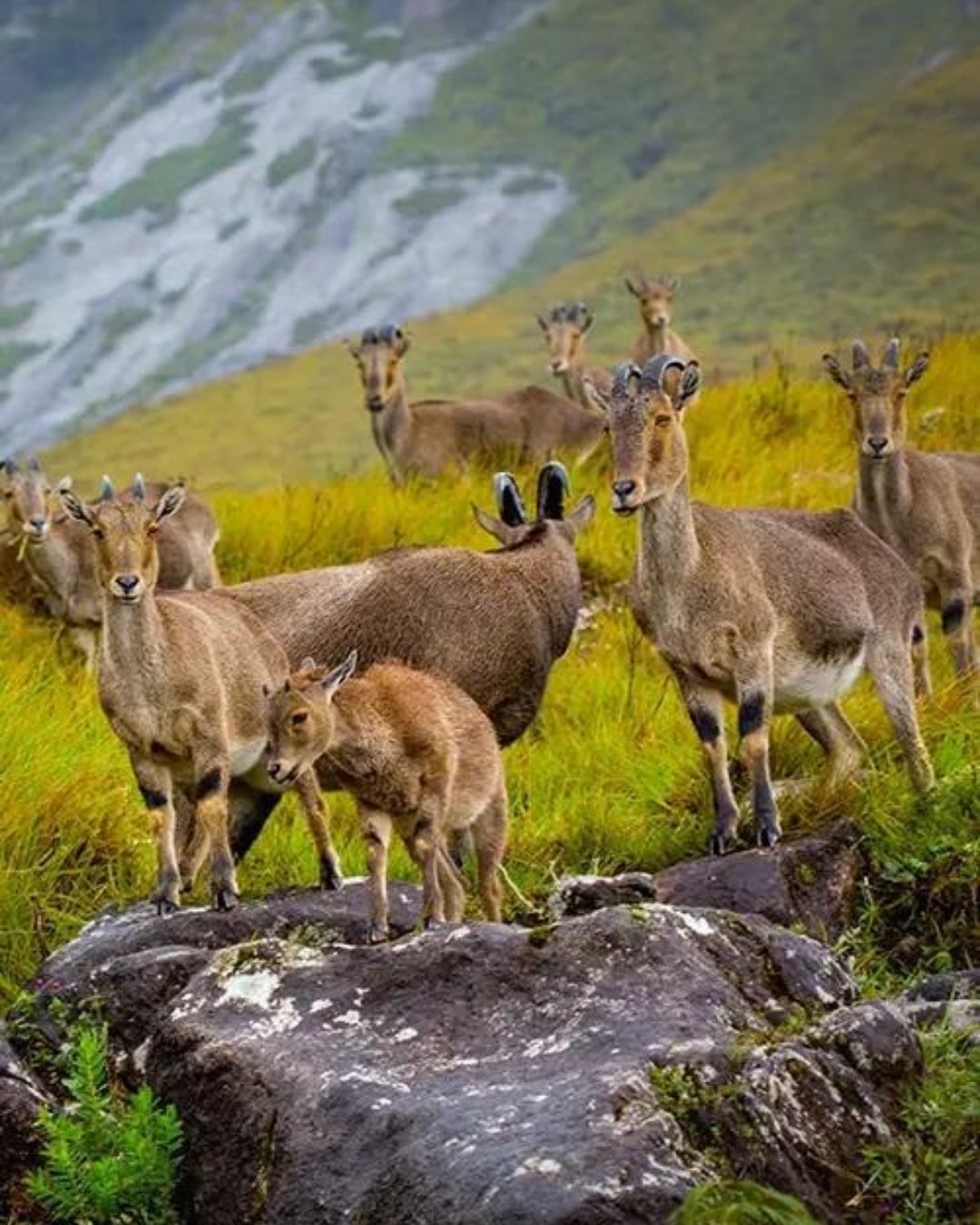
Nilgiri Tahr — endangered, and a large share of the world's population lives on these slopes. They're habituated here and come close to the path.
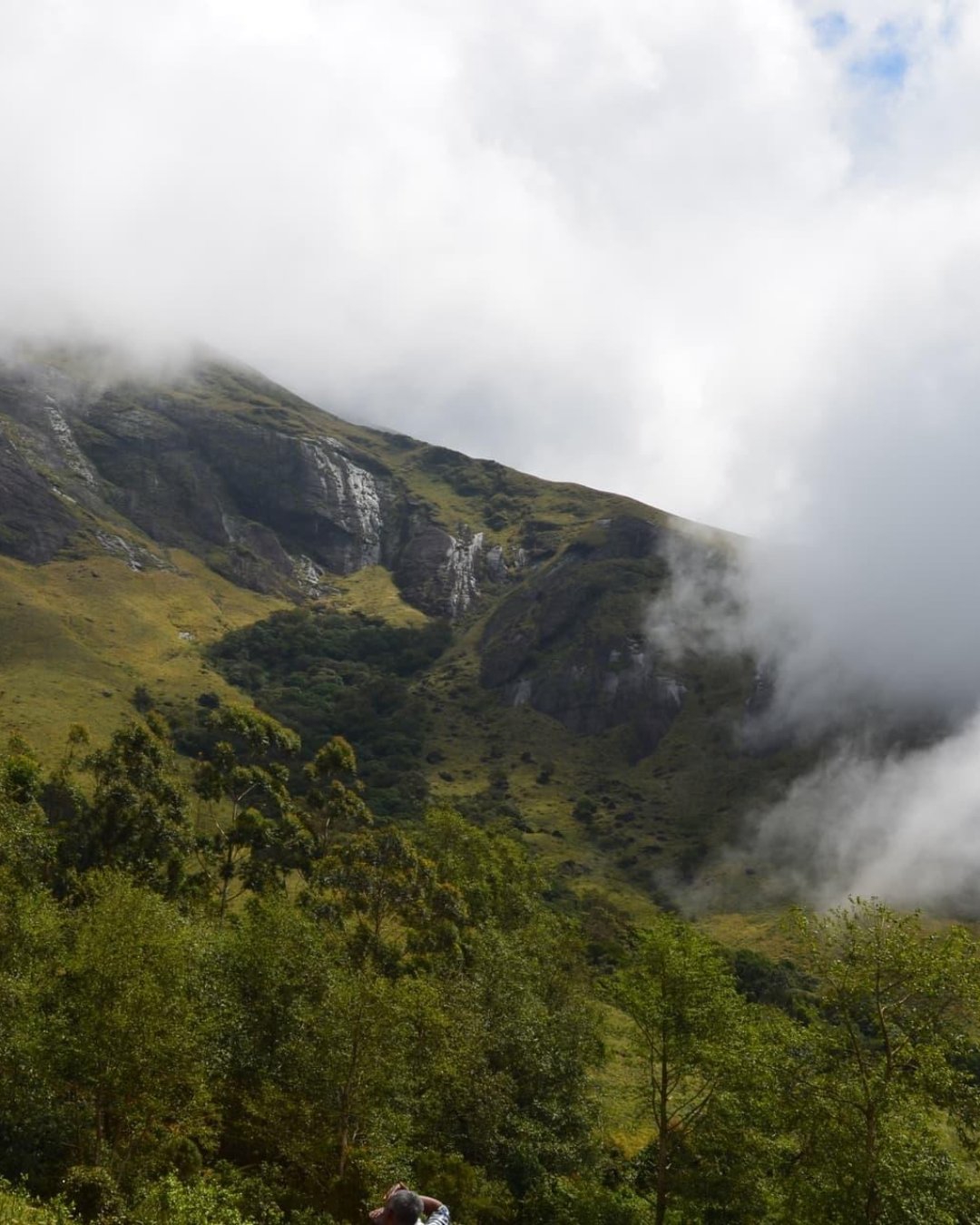
Anamudi — 2,695 m, the highest peak in India south of the Himalayas, standing behind the grassland. You look at it; you don't climb it.
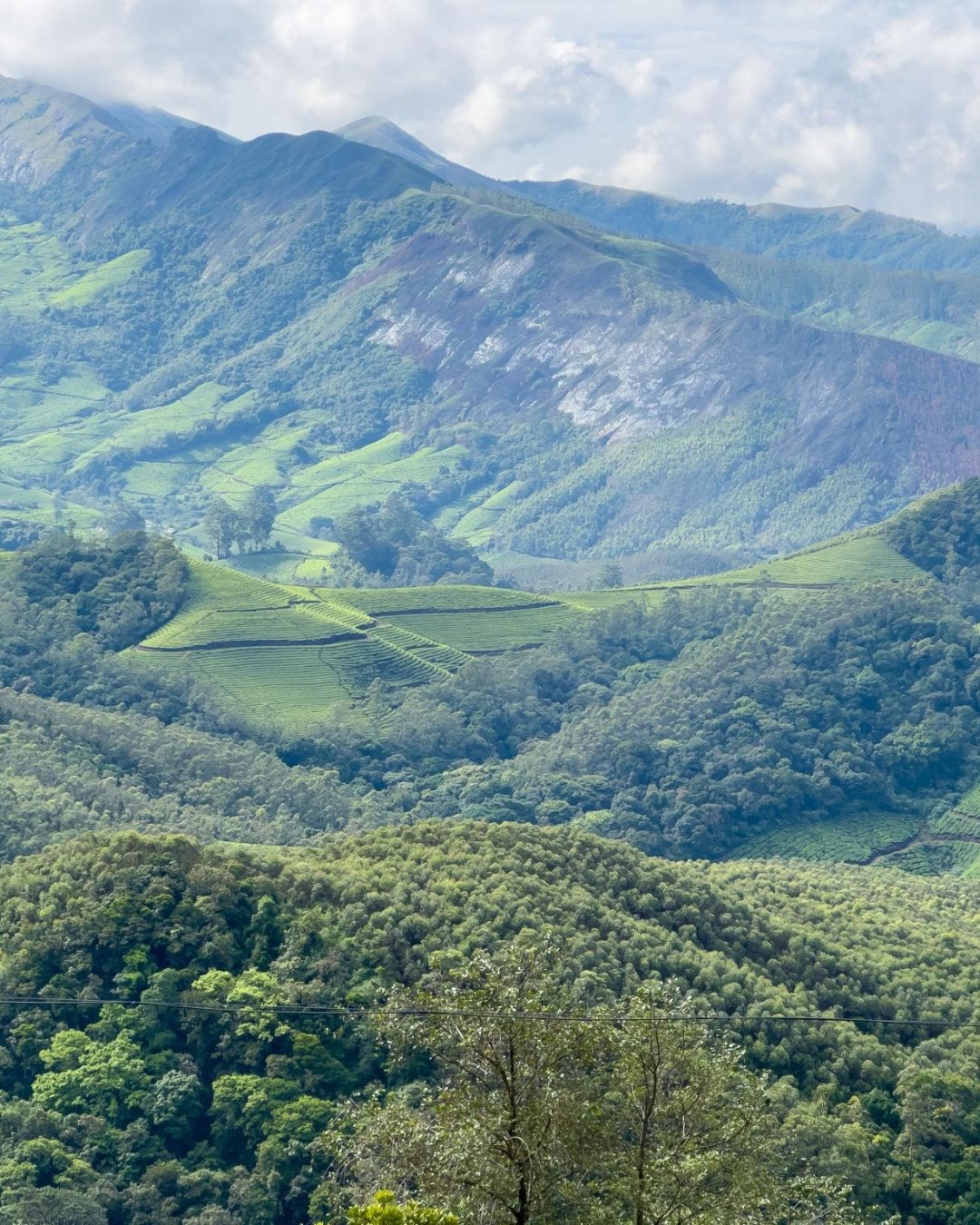
Shola-grassland mosaic — stunted evergreen forest in the folds, grass on the ridges. It's a rare, ancient system and the reason the park exists.
Neelakurinji — the purple bloom that comes once every twelve years. Next expected around 2030. Not before, whatever anyone tells you.
The path — a paved kilometre or so through the zone. That's the whole walk. Fine for most fitness levels.
Take a windproof layer. This is high, exposed grassland and the wind comes across it hard, even on a bright day.
And keep your phone down when a Tahr comes near, which it will. Travellers who've been will tell you the same thing: everyone rushes the animal for a photo and the animal stops behaving like an animal. Stand still and let it walk past you. A wild goat-antelope grazing a metre from your shoe, entirely unbothered, on a mountain in a place where there are only a few thousand of them left — that's the part the photos never quite catch. And don't feed them. It's how habituation turns into a problem.
Pro tip: Book online in advance — the daily quota genuinely runs out in season, and the counter queue is not a strategy. Take the first shuttle of the day: the Tahr are most active early, and the mist that closes the view usually arrives later. Leave plastic bottles behind; they're restricted at the gate. And if you're weighing dates, October–January gives you an open park and clear air.
The mistakes that ruin it
Most first-timers trip over the same few things. They plan for calving season and find it closed. They arrive mid-morning without a booking and queue instead of walk. Or they chase the Tahr around with a camera and wonder why it left.
The easy fix is to have your dates checked against the closure before you book anything, and your ticket held before you arrive.
Ready to see it for yourself?
Eravikulam is the moment most travellers remember from Munnar. Get the dates, the booking and the hour right, and it's effortless.
Want it handled end to end — the right dates, tickets held, first shuttle, no queue? Browse our Munnar Tour Packages, where the park comes built in, along with Top Station, the tea factory and the rest of the high range. Pick your dates and we'll take care of the gate.