

Prayagraj's Temples & Fort
Sri Akshayavat Temple Patalpuri, Prayagraj, India
You've probably come to Prayagraj for the Sangam and figured the rest is filler. Do the confluence, maybe a temple, then head back. But here's the thing nobody tells you: two of the most unusual sacred sites in North India sit just a few minutes from the water, and one of them you may not even be able to enter on the wrong day. There's a reclining Hanuman, a banyan tree believed never to die sealed inside a Mughal fort, and an Army gate that decides whether you see any of it. Turn up unprepared and you may end up photographing a locked entrance.
Let's fix that. Here's how Prayagraj's temples and fort actually work, and how to get it right the first time.
Why access, not timing, is the thing to plan around
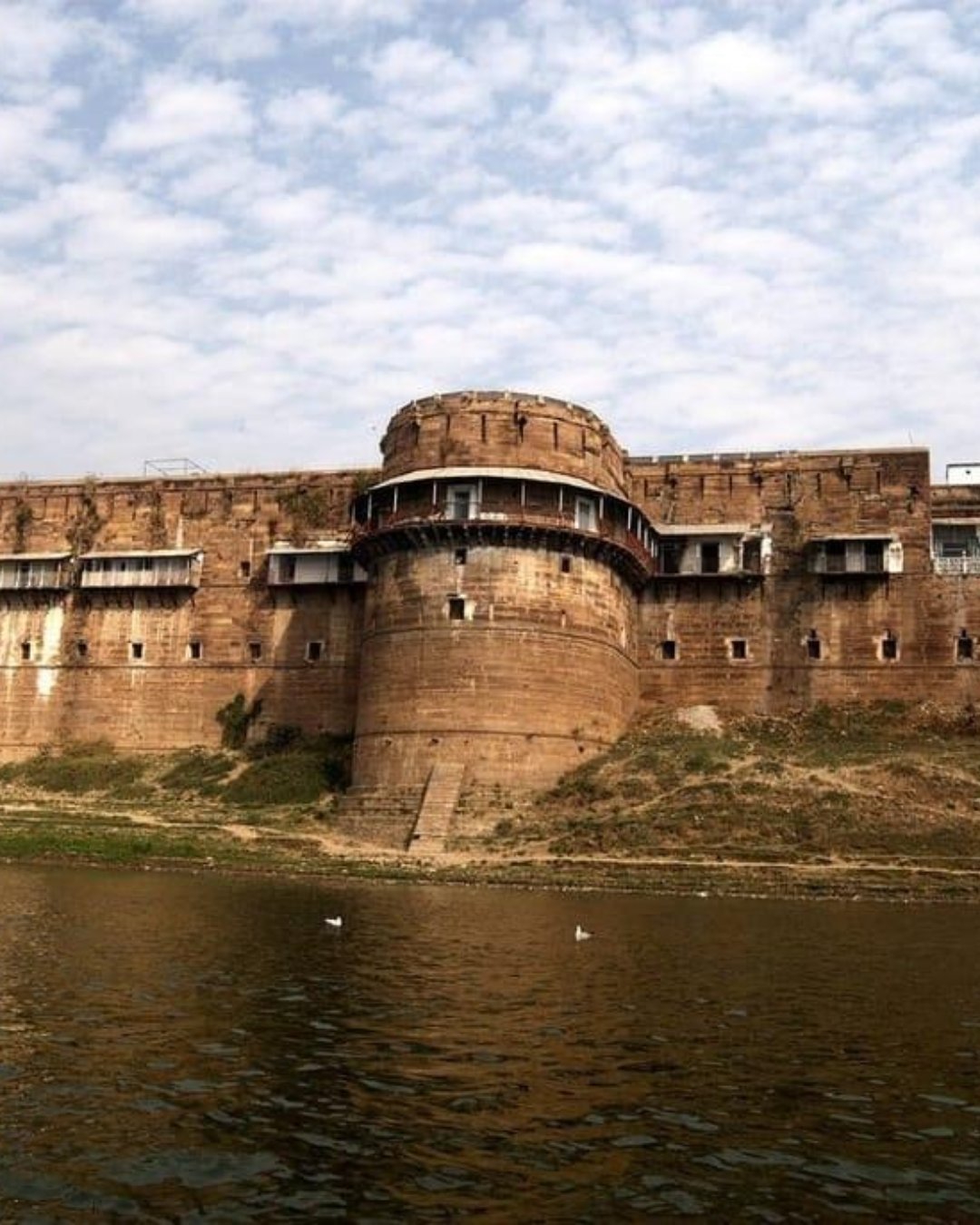
Most of this circuit is straightforward morning sightseeing. The catch is Allahabad Fort. It's a working Indian Army cantonment — built by Emperor Akbar in 1583 at the Sangam — and public access to the sites you've come for, Akshayavat and the underground Patalpuri Temple, is controlled by the Army and can change without much notice. Entry is sometimes expanded during major events like the Magh Mela, but restrictions can vary.
So the single most important thing is to check what's actually open before you build your morning around it. Bade Hanuman Temple, just outside the fort, is generally accessible; the fort's interior sacred sites may not be. Confirm first, and you won't waste time standing at a security barrier.
What you'll actually see
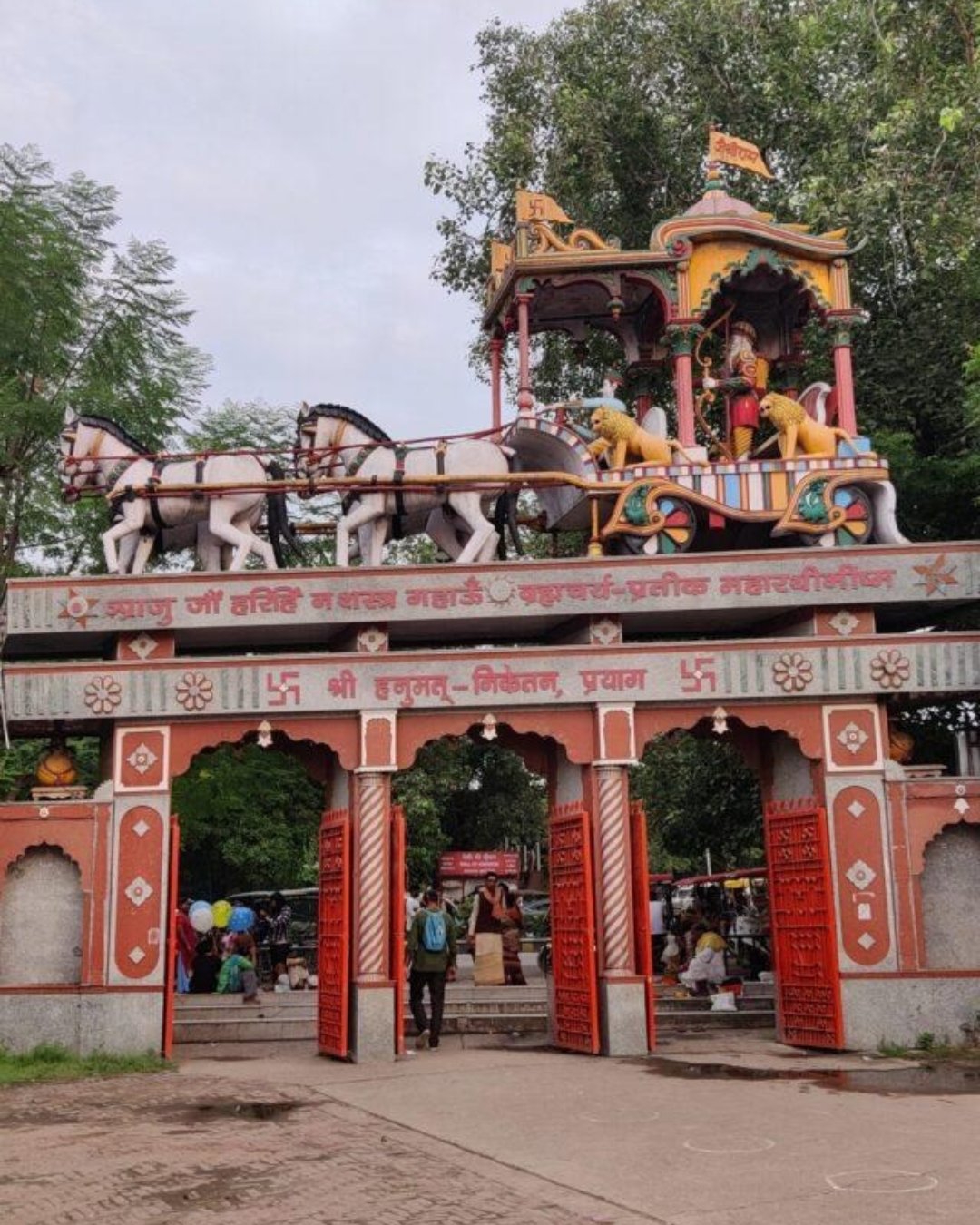
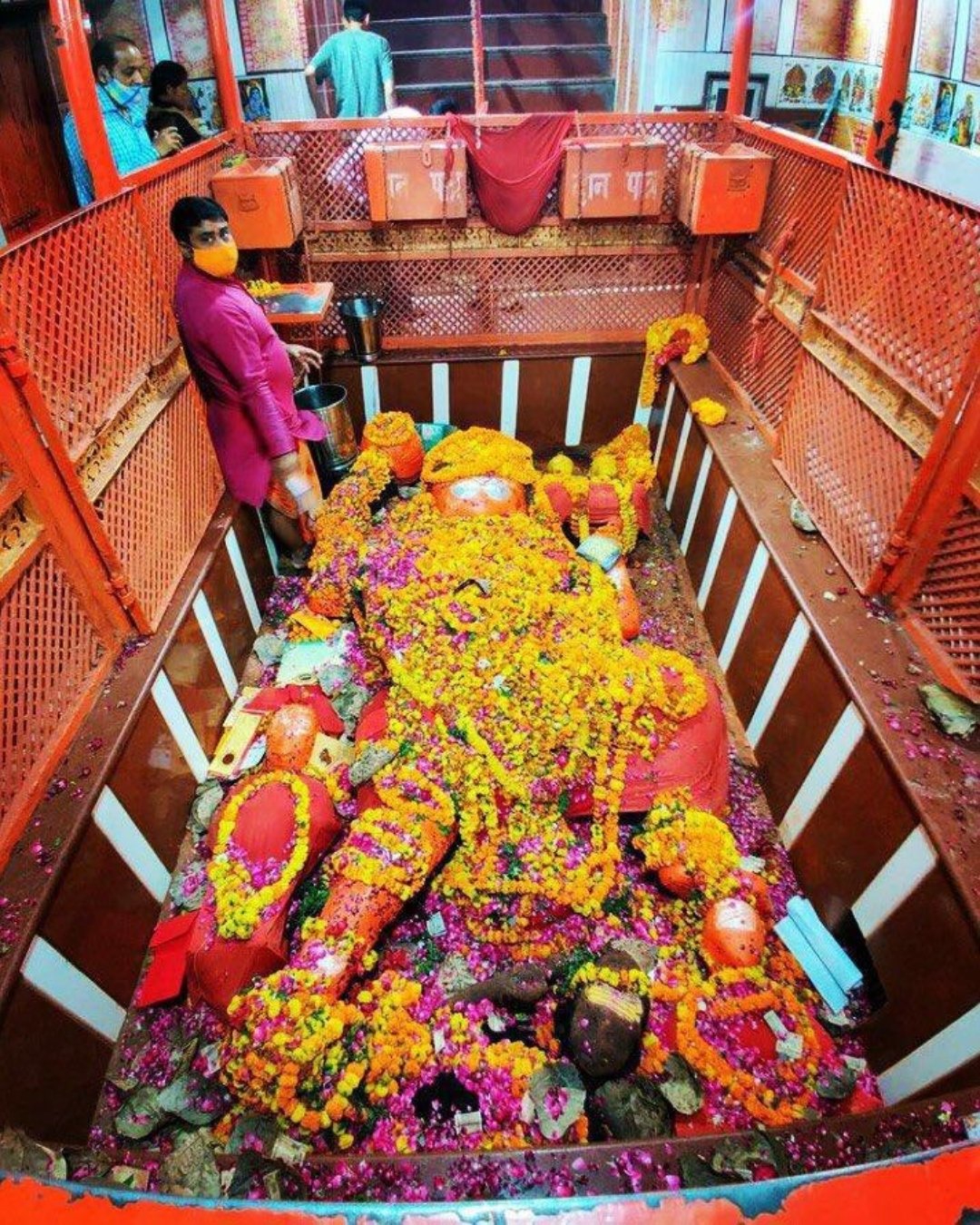
Bade Hanuman Temple (Lete Hanuman) — a rare reclining idol of Lord Hanuman below ground level, believed to be touched by the rising Ganga during annual floods.
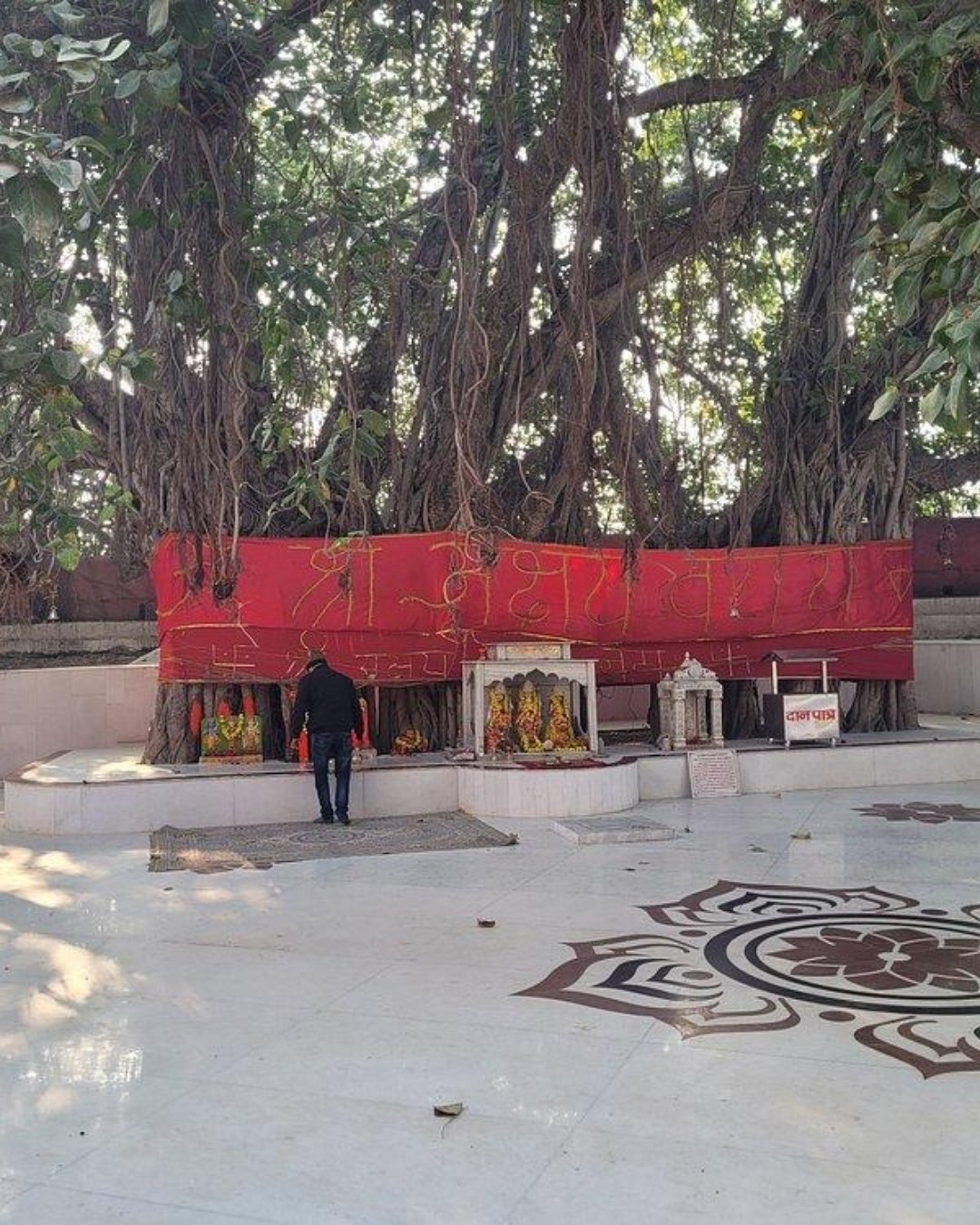
Akshayavat — the legendary "Undying Banyan Tree," associated with ancient Hindu traditions and located inside Allahabad Fort.
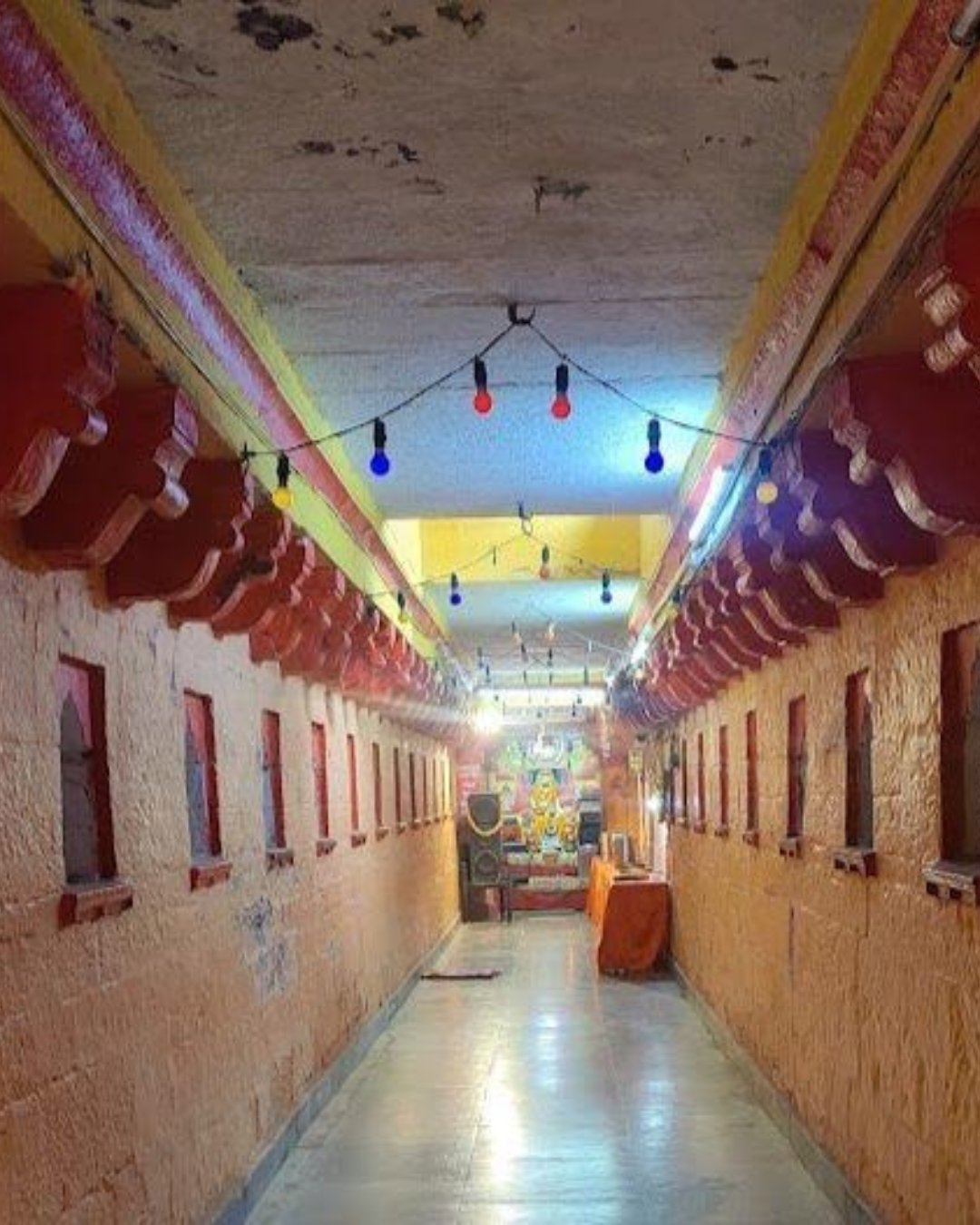
Patalpuri Temple — an ancient underground temple beside Akshayavat, filled with shrines and centuries of religious significance.
Allahabad Fort — Akbar's massive riverside fortress, with the historic Ashokan Pillar standing within its grounds.
Dress modestly and be prepared to remove your shoes at the temples. Carry a valid photo ID, as it may be required for entry into the fort area, along with small cash for offerings and shoe storage.
Keep your phone away inside, both out of respect and because photography is often restricted—especially within the Army-controlled sections of the fort. Travellers who've completed this circuit often say the most memorable moments aren't the photographs, but standing before the reclining Hanuman or beneath the legendary banyan tree, surrounded by centuries of faith and tradition.
Pro tip: Visit these sites immediately after your sunrise boat ride at the Sangam while you're already in the area and before the day gets hot. Check the fort's access status the day before your visit. If Akshayavat and Patalpuri are closed, simply visit Bade Hanuman Temple instead and avoid an unnecessary detour. Carry cash, as many of the nearby temple shops and stalls may not accept cards.
The mistakes that ruin it
Most first-time visitors make the same few mistakes. They assume they'll be able to walk into Allahabad Fort and discover access is restricted. They visit during major festival crowds without planning ahead, or during restricted periods when the interior isn't open at all. Or they attempt photography where it's prohibited and are stopped by security.
The easy fix is to confirm access in advance, combine the temples with your Sangam morning, and travel with an up-to-date itinerary or local guidance—because the fort's access rules are not something you can safely assume.