


Saryu Ghat & the Evening Aarti
Saryu Ghat, Manjha Kala, India
You've probably come to Ayodhya for the Ram Mandir and nothing else. Darshan at the temple, then back to the hotel — you didn't know the town had a riverfront worth an evening. But here's the thing nobody tells you: down at Ram Ki Paidi, on the banks of the Saryu, there's an evening aarti that's Ayodhya's quieter answer to Varanasi's — and the people who skip it, or turn up as it starts and stand at the back, miss the calmest, loveliest hour the town has.
Let's fix that. Here's how the Saryu Aarti actually works, and how to get it right the first time.
Why dusk, and why you arrive early
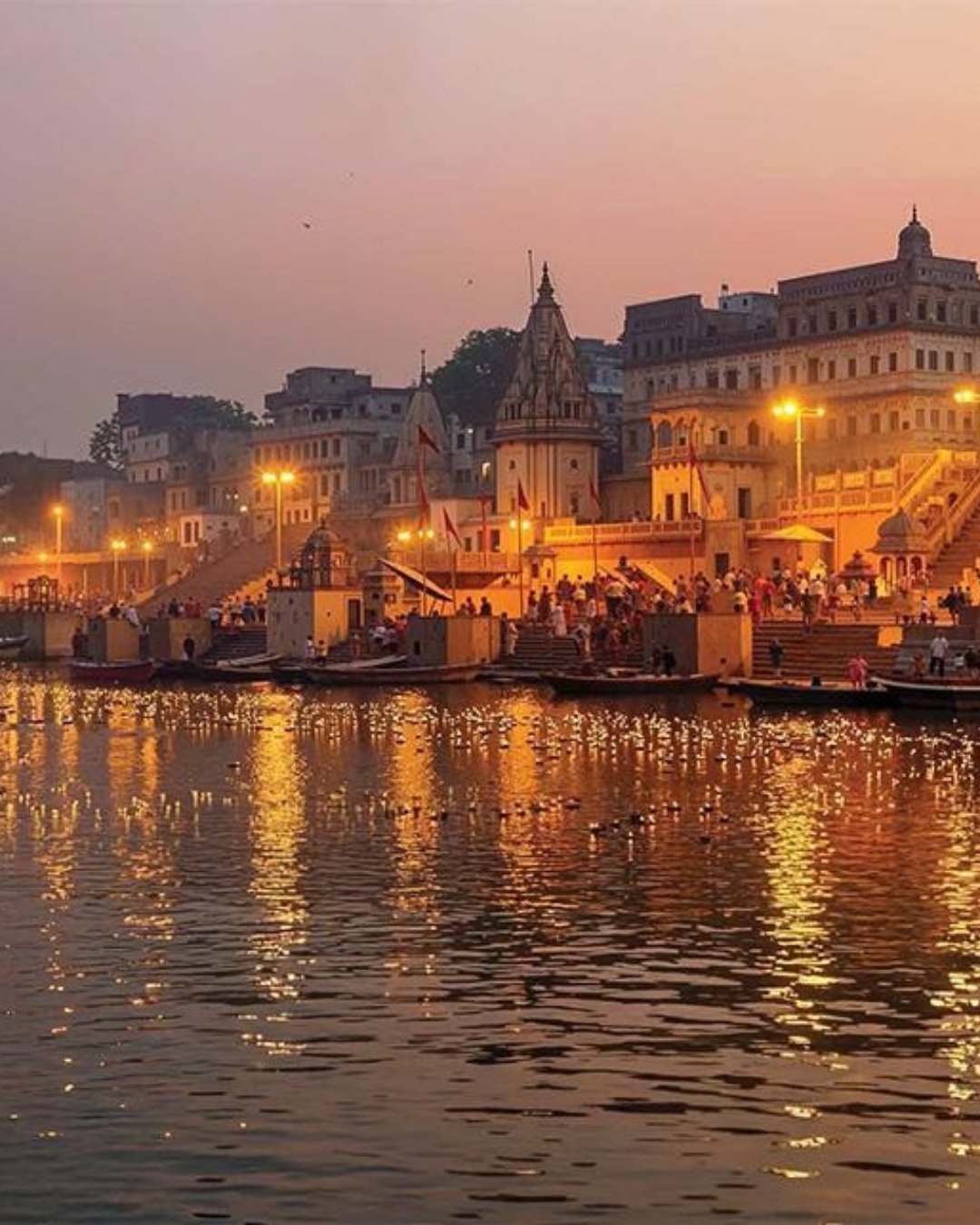
The Saryu is the river Lord Ram is believed to have finally entered, and the aarti here honours it each evening as daylight fades — priests, lamps, bells, and the water turning from gold to deep blue. It runs at dusk, roughly 6:00 to 6:30 p.m. in winter and later in summer, lasting about 45 minutes.
The start time isn't your problem; getting a good place is. Ram Ki Paidi is a long stretch of ghats, and the best spots facing the priests fill well before the first lamp is lit. Don't arrive at the scheduled start time expecting a front-row view. Reach by around 5:30 p.m., settle onto the steps, and let the evening unfold around you. It's much less crowded than Varanasi, but the closest seating still fills early.
What you'll actually see
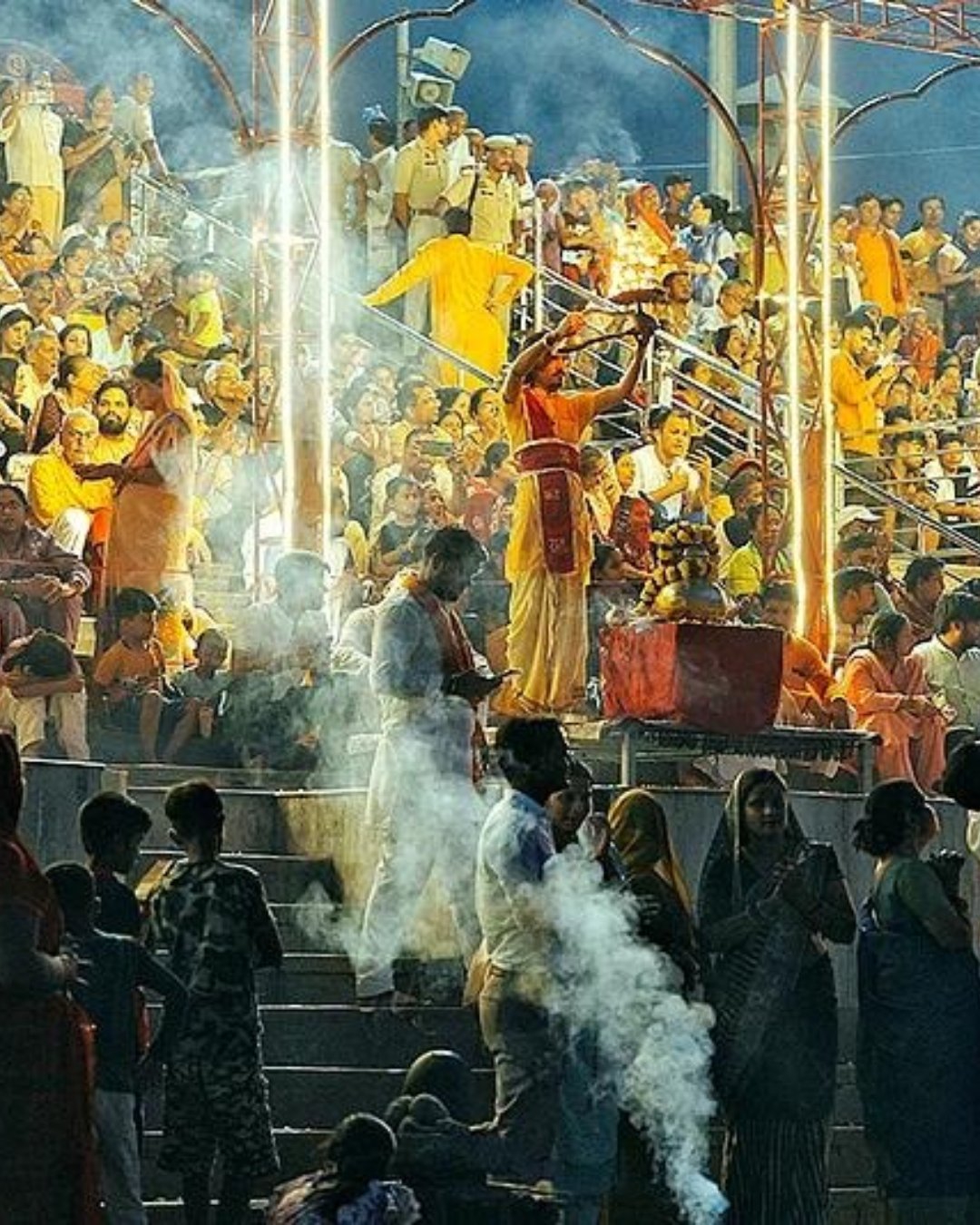
The aarti platform — priests performing synchronized rituals with large brass lamps as darkness falls, their flames reflected across the Saryu.
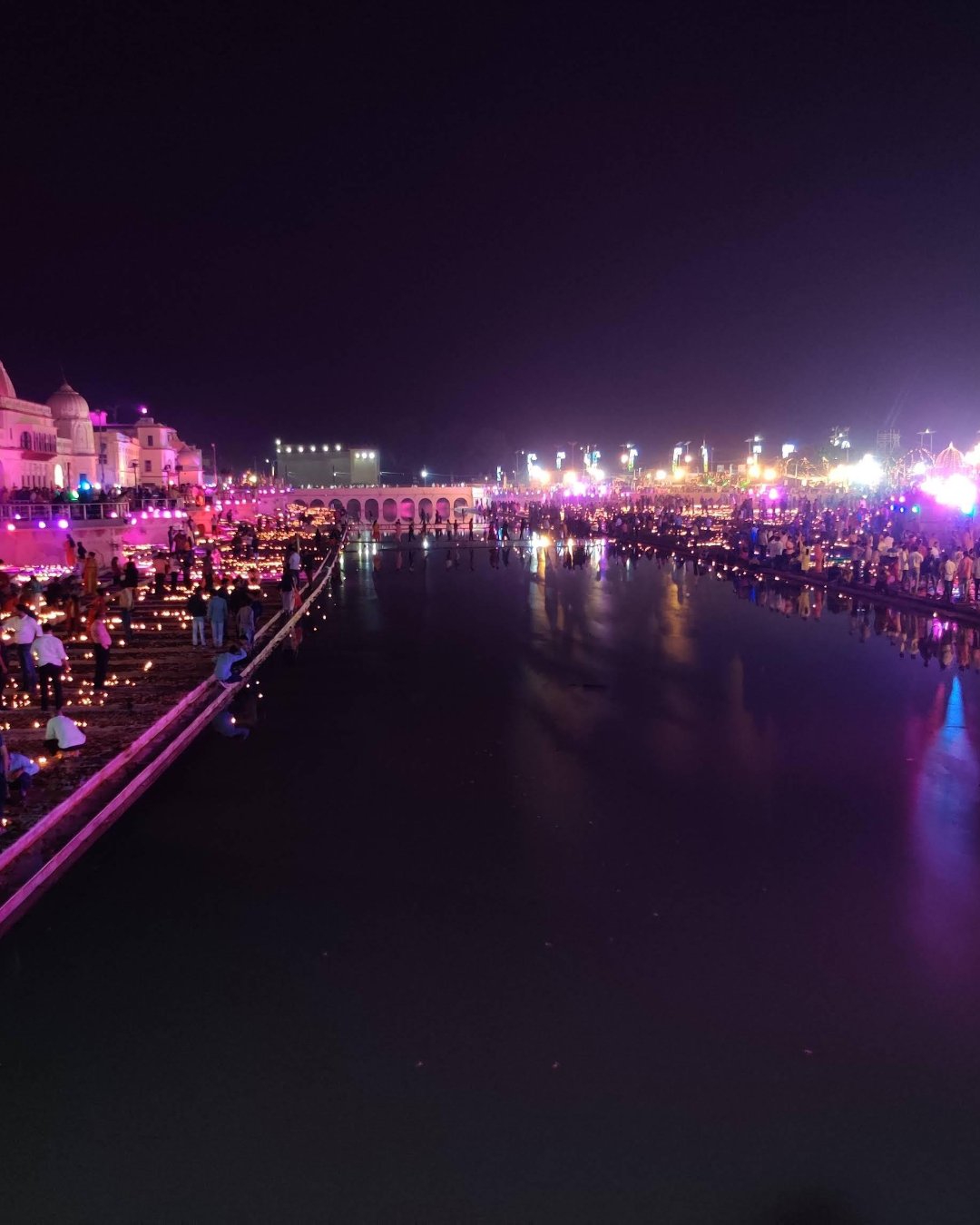
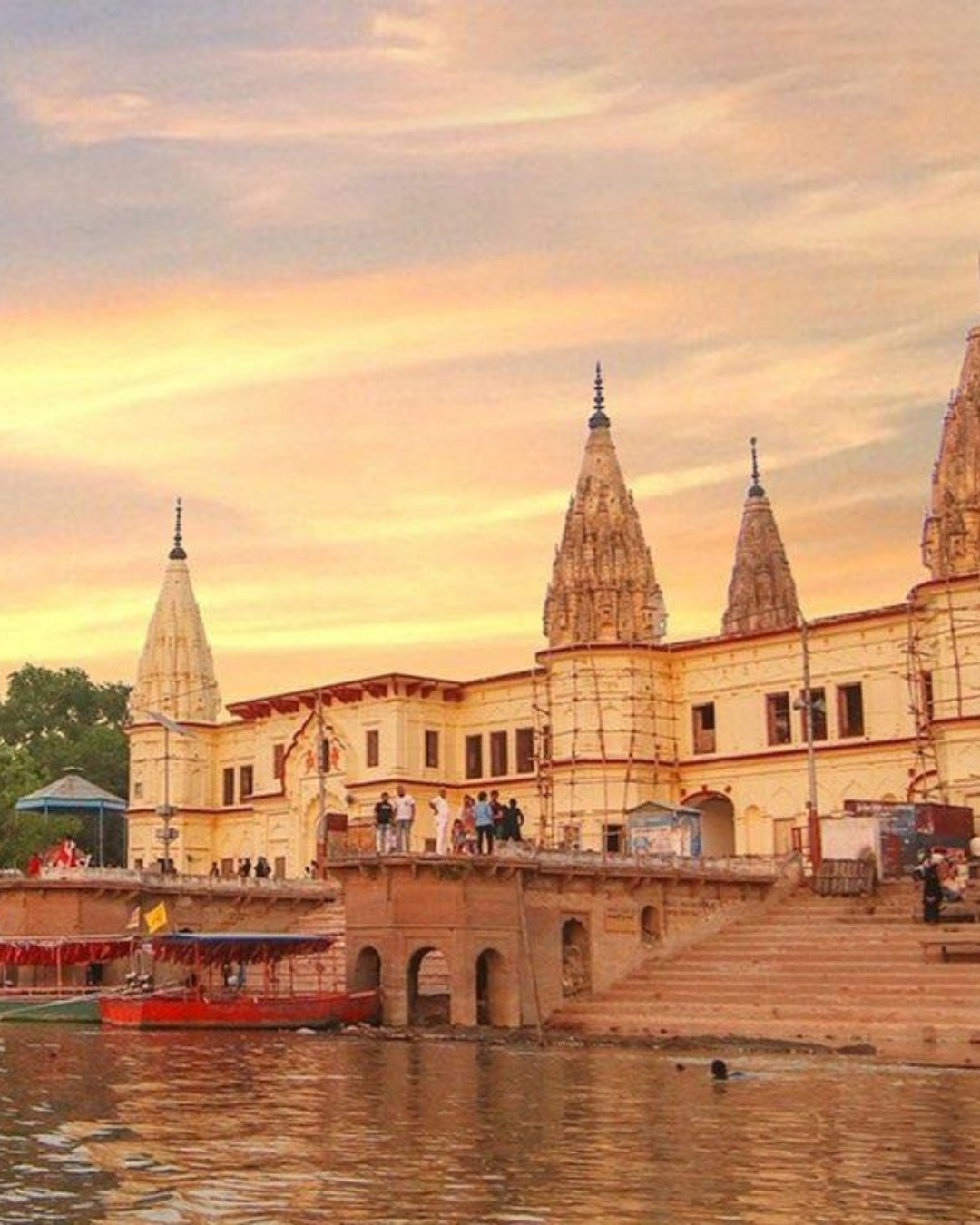
Ram Ki Paidi — the beautifully restored riverfront ghats, illuminated after sunset and worth exploring once the ceremony ends.
Floating diyas — small oil lamps you can place on the river as an offering, creating a peaceful glow across the water.
The far bank — open, quiet, and uncluttered, providing a beautiful natural backdrop to the ceremony.
Bring a light layer even in warmer months. The breeze by the river becomes noticeably cooler once the sun goes down.
And keep your phone tucked away for the first ten minutes. Travellers who've experienced the ceremony will tell you the same thing: the instinct is to record everything, but the aarti feels entirely different when you simply watch it. The ringing bells, the rhythmic chanting, and the shimmering reflections of hundreds of lamps across the river are the moments that no video truly captures.
Pro tip: For the most memorable view, hire a boat on the Saryu and watch the ceremony from the water. You'll have an uninterrupted view of the priests and can float your own diya from the river afterward. Agree the fare and duration before boarding, just as you would in Varanasi. If you prefer staying on the ghats, choose a seat near the centre rather than high up at the back. And don't leave the moment the aarti ends — Ram Ki Paidi illuminated at night is one of Ayodhya's most beautiful sights.
The mistakes that ruin it
Most first-timers trip over the same few things. They visit only the Ram Mandir and never discover the Saryu Aarti. They arrive just as the ceremony begins and end up watching from the back. Or they spend the entire event filming instead of experiencing it.
The easy fix is to plan your evening around the river — arrive at Ram Ki Paidi by around 5:30 p.m., settle in before the ceremony begins, and stay afterward to enjoy the beautifully lit ghats at night.