

Banarasi Silk – The Weavers of Banaras
Madanpura, Varanasi, India
You've probably imagined visiting a traditional Banarasi silk workshop—watching a wooden handloom in action, seeing shimmering silk threads woven into intricate patterns, and meeting the artisans who have preserved this craft for generations.
What many visitors don't realize is that not every "weaver tour" is genuine.
If an auto driver or guide offers to take you to "his family's silk shop," chances are they're earning a commission on whatever you buy. That often means higher prices and, in some cases, machine-made sarees being sold as handcrafted masterpieces.
Here's how to experience the real Banarasi weaving tradition.
WHY WHERE YOU GO MATTERS
Many unsolicited shopping recommendations lead directly to commercial showrooms.
The prices often include large commissions paid to drivers and middlemen.
If you want to see authentic weaving, visit neighborhoods like Madanpura and Lallapura, where weaving is still a part of everyday life.
These are working residential areas where many artisans have handlooms inside their homes.
Morning is usually the best time to visit, when the looms are running and the natural light makes it easier to appreciate the weaving process.
Remember that you're visiting someone's home and workplace, not a retail showroom, so always be respectful and ask before entering.
WHAT YOU'LL SEE
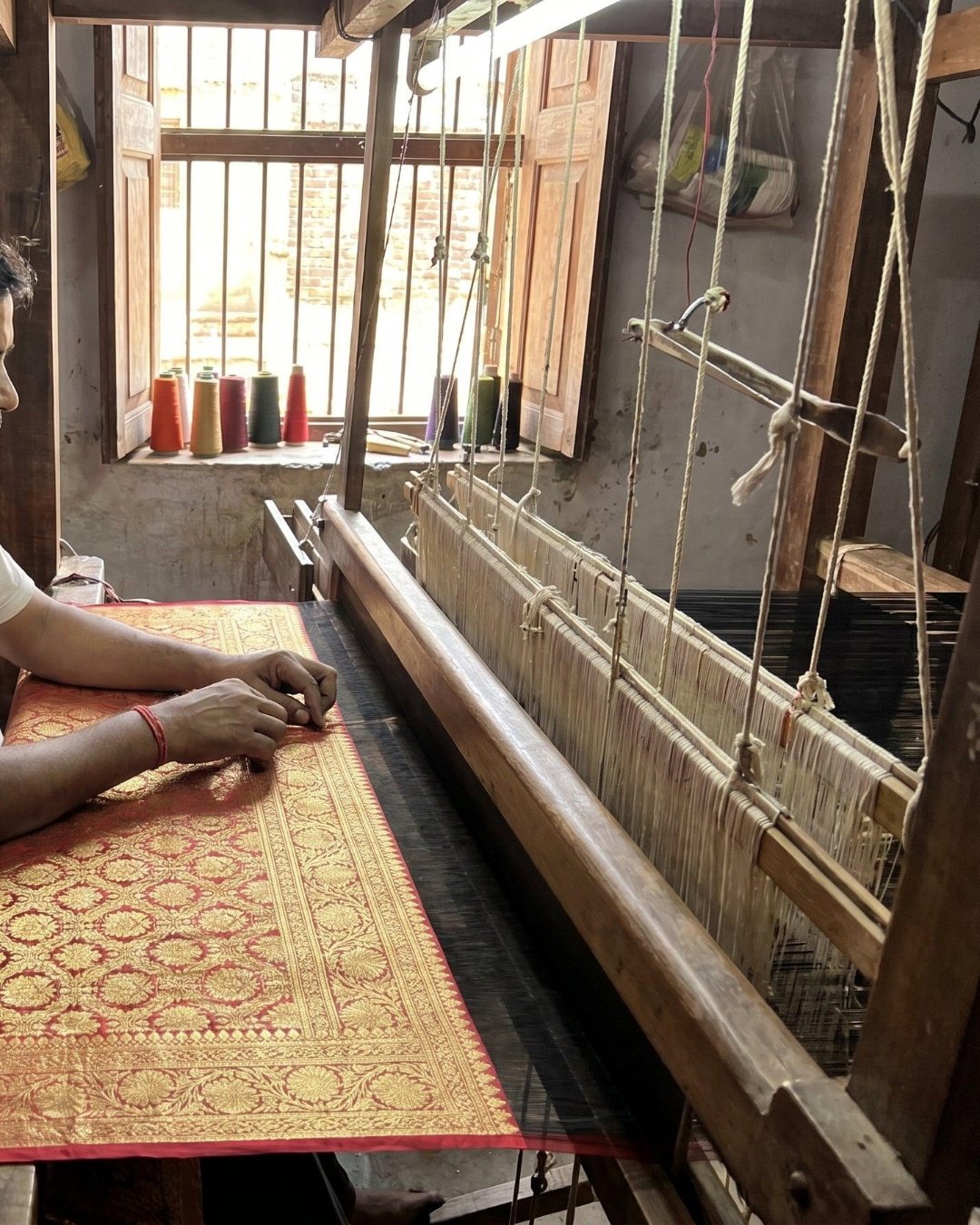
Traditional Pit Loom
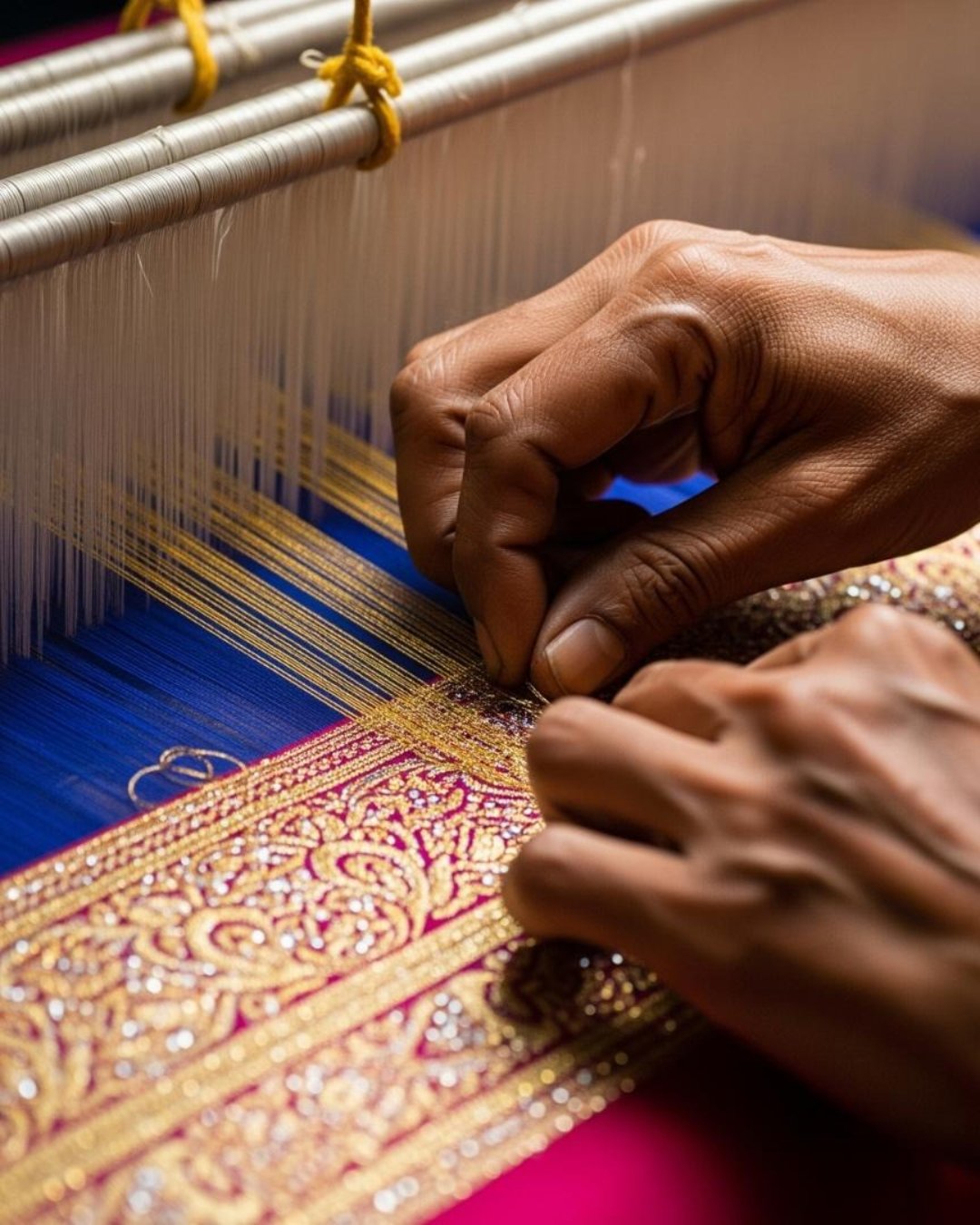
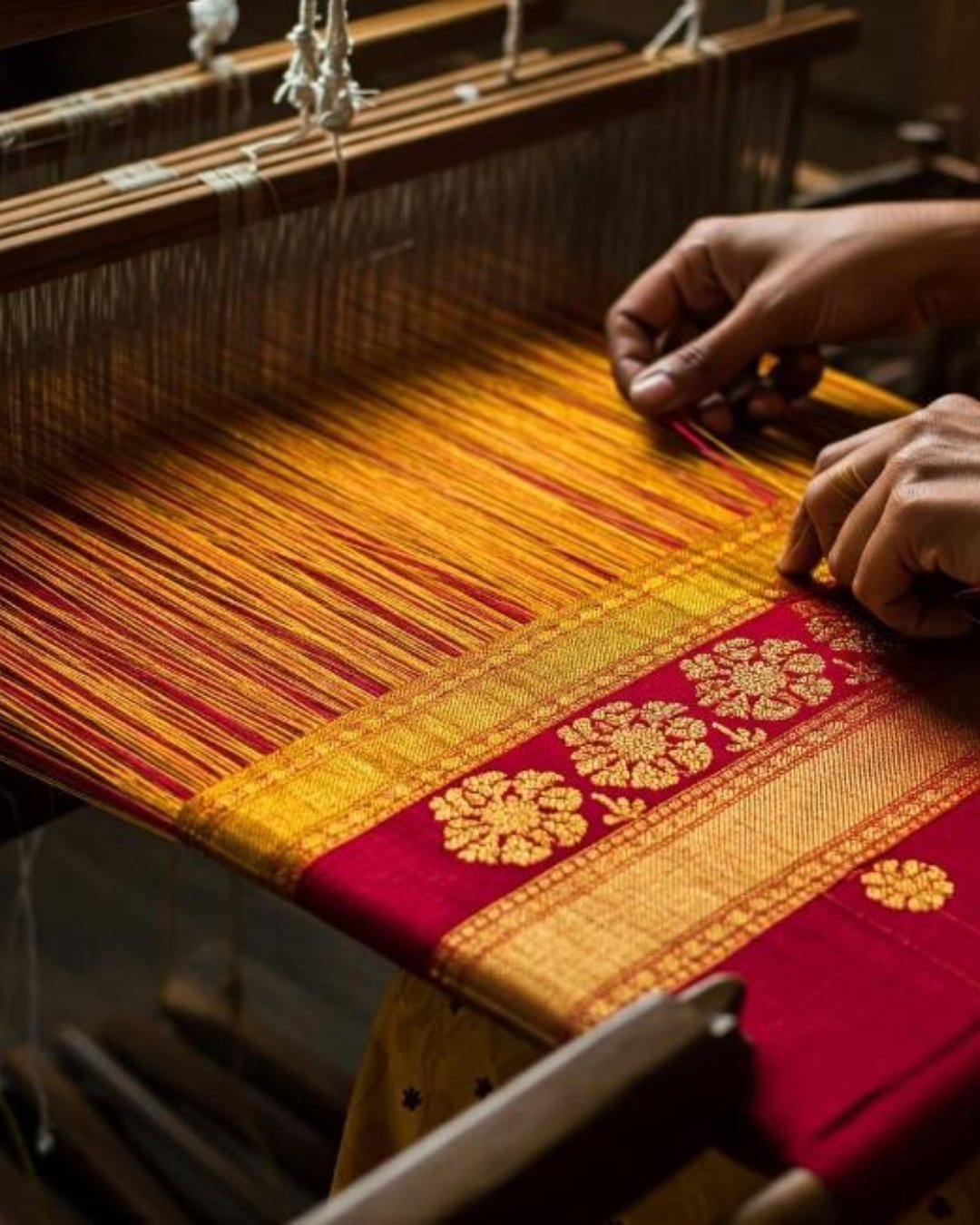
The weaver sits with their legs below floor level, operating the loom with foot pedals while carefully guiding hundreds of silk threads by hand. Watching the rhythm and precision of the weaving process is an experience in itself.
Naksha Design System
Many traditional Banarasi sarees are woven using an intricate pattern-planning system known as Naksha, which guides the creation of complex floral and geometric designs.
Kadhwa Weaving
One of the finest Banarasi weaving techniques, Kadhwa creates each motif individually without loose floating threads, making the saree more durable and significantly more valuable.
Cutwork Technique
In cutwork weaving, extra threads run behind the fabric and are trimmed after weaving. While beautiful, this technique is generally less time-consuming and more affordable than Kadhwa weaving.
GI Tag
Authentic Banarasi silk enjoys Geographical Indication (GI) protection, confirming that it originates from Varanasi and neighboring weaving regions.
Silk Mark
The Silk Mark certifies that the fabric is made from genuine silk. It does not, however, guarantee that the saree is handwoven.
WHAT TO WEAR
Wear comfortable clothing, as you may be invited to sit on the floor while watching the weaving process.
If you plan to purchase a saree, ask in advance whether digital payments are accepted or whether cash is preferred.
ALWAYS ASK BEFORE TAKING PHOTOS
Remember that you're inside someone's home and workplace.
Always ask permission before photographing or filming the weavers, their family members, or their work.
Visitors who show genuine curiosity and respect are often rewarded with a closer look at unfinished masterpieces and the opportunity to learn directly from the artisans.
HOW TO IDENTIFY AN AUTHENTIC HANDLOOM SAREE
Understanding a few important certifications can help you make an informed purchase.
• GI Tag confirms the saree comes from the Banarasi weaving region.
• Silk Mark confirms the fabric is genuine silk.
• Handloom Mark confirms the saree was woven on a handloom.
These certifications serve different purposes, and an authentic saree may carry one or more of them.
You can also examine the reverse side of the fabric.
Handwoven sarees often have slight variations that reflect the artisan's craftsmanship, while machine-made fabrics tend to have perfectly uniform and repetitive patterns.
Be realistic about pricing as well.
A genuine handwoven Banarasi silk saree requires weeks or even months of work and is priced accordingly. If someone offers a "pure handwoven Banarasi silk saree" at an unusually low price, it's unlikely to be authentic.
THE MISTAKES THAT RUIN THE EXPERIENCE
Most first-time visitors make the same mistakes.
They follow commission-based shopping recommendations without realizing it.
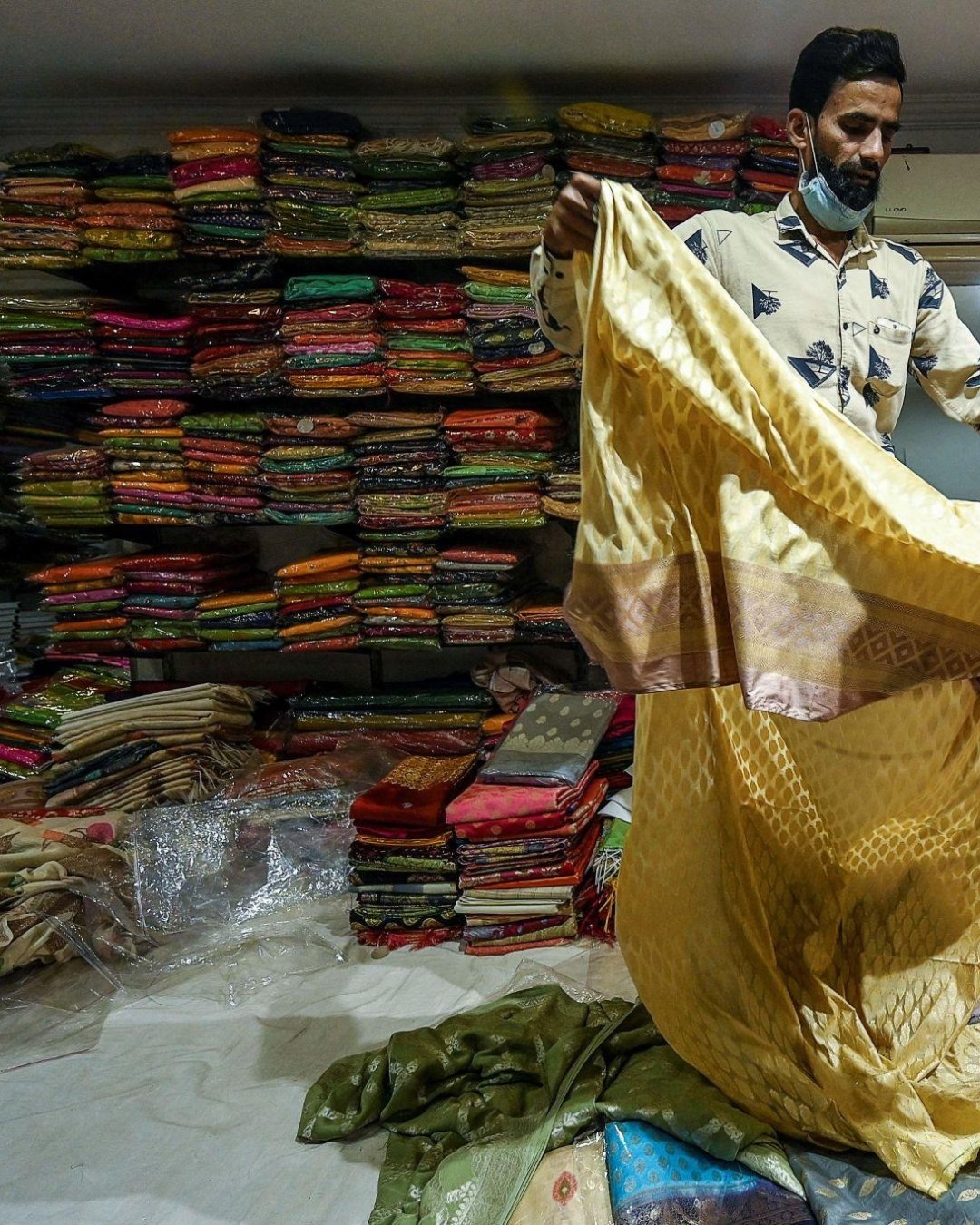
They purchase machine-made sarees at handwoven prices because they don't know what to look for.
Or they buy from airport or tourist shops without ever seeing the craftsmanship behind Banarasi weaving.
The best experience comes from visiting a genuine weaving workshop, learning about the craft directly from the artisans, and making an informed purchase only if you truly find something you love.
WANT TO VISIT A REAL WEAVING WORKSHOP WITHOUT THE COMMISSION GAMES?
Tap Get a Quote and let us arrange an authentic visit where you can meet Banaras' skilled weavers, learn about their craft, and shop directly with confidence.