

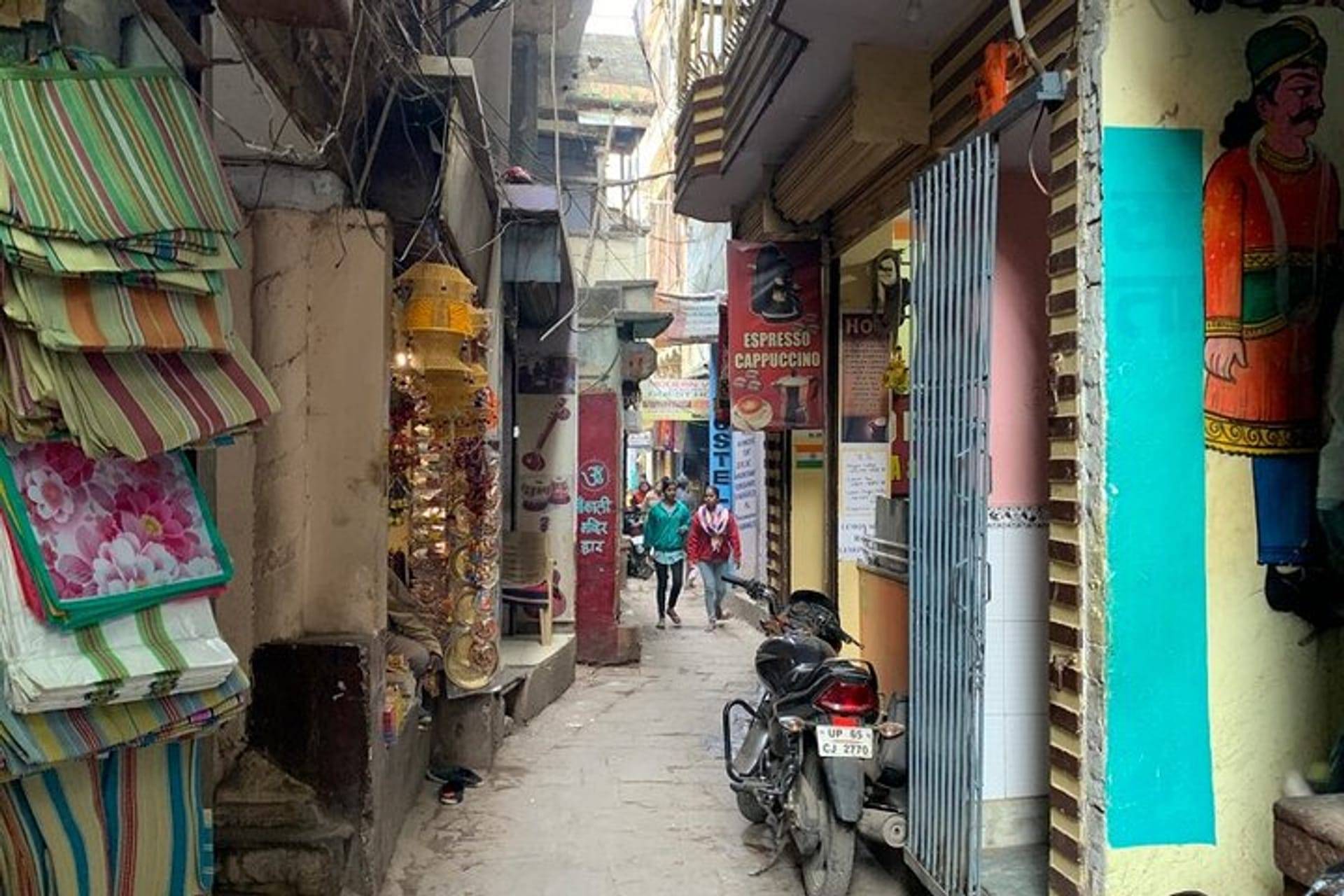


Walking Through The Lanes of City
Assi Ghat, Varanasi, India
You've probably seen the ghats and thought you'd seen Varanasi. But here's the thing nobody tells you: the real city is behind the ghats, in the galis — a maze of lanes barely wide enough for two people and a bull, where the shrines, the sweet shops, the silk weavers and nine-tenths of the actual life of Kashi are hidden. Wander in unprepared and you'll get gloriously, genuinely lost, hassled by a "guide" you didn't ask for, and spat out somewhere you didn't mean to be. Done right, it's the best few hours in the city.
Let's fix that. Here's how walking the old-city lanes actually works, and how to get it right the first time.
Why the morning, and why with someone who knows them
The galis run on their own clock. Early morning they're at their best — cool, waking up, the milk and flower sellers out, the temples opening, and the light slanting down between the buildings. By midday they're hot, crowded and close; after dark they're atmospheric but disorienting.
And they genuinely don't map. Even locals give directions by shrine and sweet shop, not street name, and your phone's GPS gives up entirely between the tall old houses. So this is the one part of Varanasi where a guide isn't a luxury — it's the difference between seeing the lanes and merely surviving them. Go in the morning, with someone who knows which turning leads where.
What you'll actually see
The galis are where the city hides its everyday and its sacred, side by side:
The Vishwanath Gali — the lane trail toward the Kashi Vishwanath temple, lined with stalls of flowers, brass and prasad.
Kachori Gali — the breakfast lane: kachori-sabzi, jalebi, and chai in clay cups at dawn.
The hidden shrines — hundreds of them, tucked into walls and corners, most older than anything you'd guess.
The silk weavers — the looms of the Banarasi silk trade, mostly in the Muslim weaving quarters.
Thateri Bazaar and the brass lanes — the metal-workers' market, all noise and shine.
Wear shoes you can slip off and on easily, and watch your step — the lanes are uneven, wet in places, and shared with cows, dogs and motorbikes.
And keep your phone mostly pocketed as you walk. Travellers who've done this will tell you the same thing: the urge is to film the chaos, but you'll walk into a bull or a bike doing it, and the galis aren't a backdrop — they're people's front doors. Look up at the carved balconies, look into the open shopfronts, follow the smell of frying kachori. The density of it, the sudden shrine, the weaver at his loom through a doorway — that's the part the photos never quite catch.
Pro tip: Eat as you walk, but choose busy stalls with high turnover — a kachori shop with a queue is safer than an empty one, and the chai in disposable clay kulhads is always fine. Keep your bag in front of you and your phone deep in a pocket in the crowded stretches. And fix a meeting point at a ghat before you plunge in, because if you do get separated, "somewhere in the galis" is not a location anyone can find.
The mistakes that ruin it
Most first-timers trip over the same few things. They go in at midday and melt. They wander alone, get lost, and latch onto the first "guide" who offers rescue — usually into a silk shop. Or they spend the whole time staring at a phone map that doesn't work down there.
The easy fix is a morning walk with someone who knows the turnings — so you're free to look up, eat well, and actually take the place in.